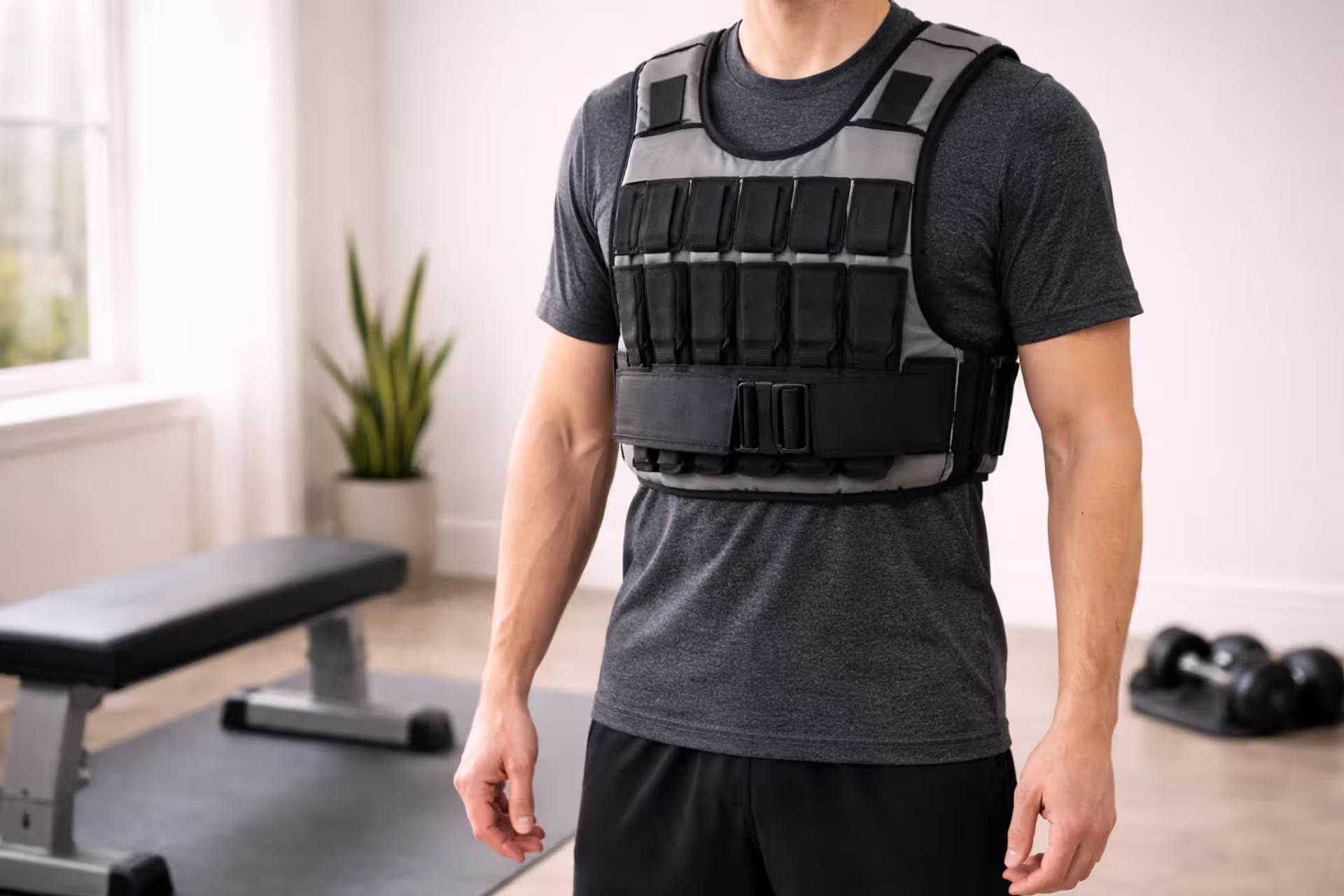
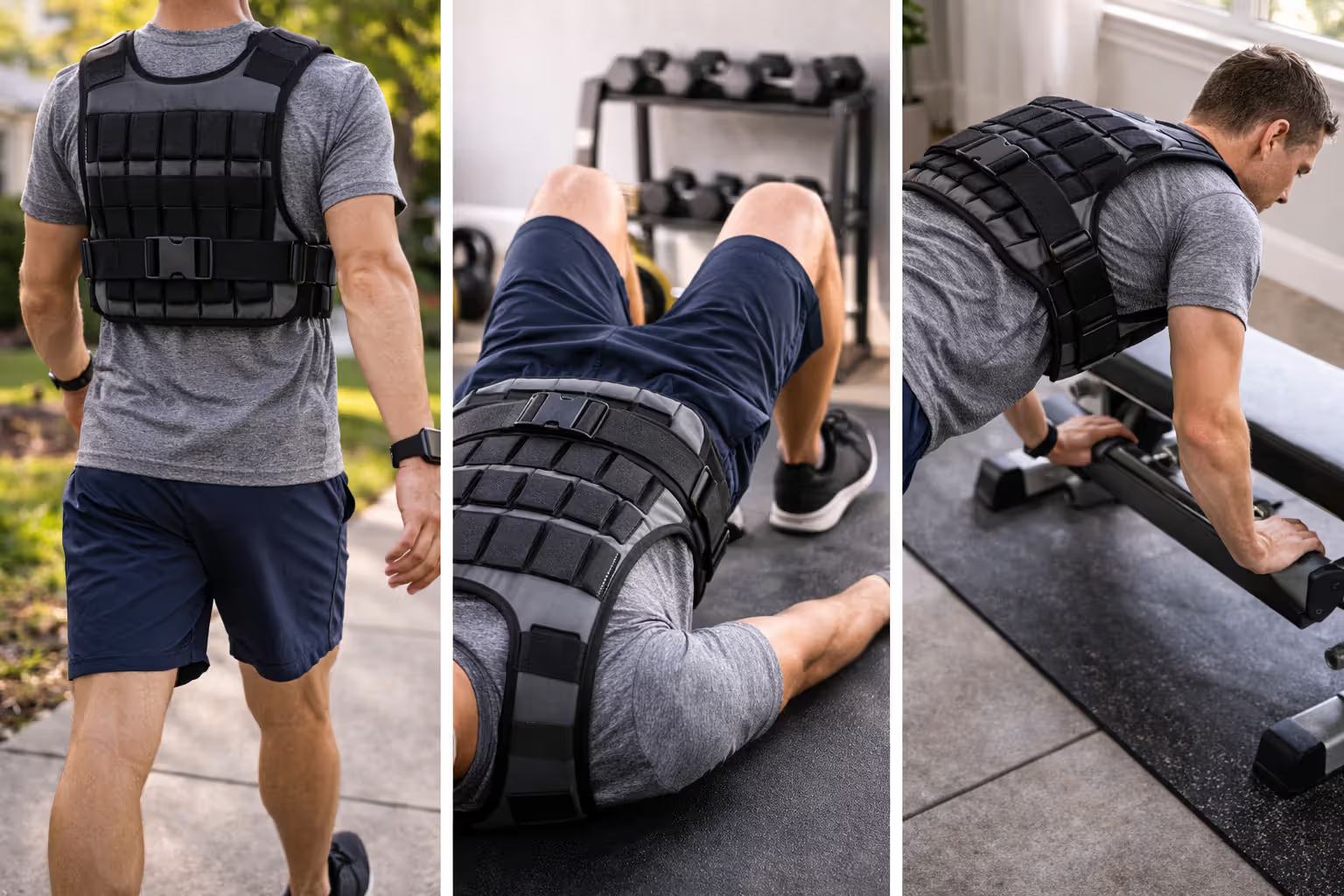
Ever tried walking up a flight of stairs while carrying a toddler? That burning sensation in your thighs and the elevated heart rate you feel—that's essentially what weighted vest training replicates, except you're controlling exactly how much load you're carrying.
Here's the thing: when you strap weight directly to your torso, something interesting happens. Your body can't tell the difference between the vest's 20 pounds and gaining 20 pounds of body weight. It just knows it needs to work harder to move through space. That's powerful because it means you're training every system simultaneously—muscles, bones, heart, lungs—without needing to grip anything or change how you move.
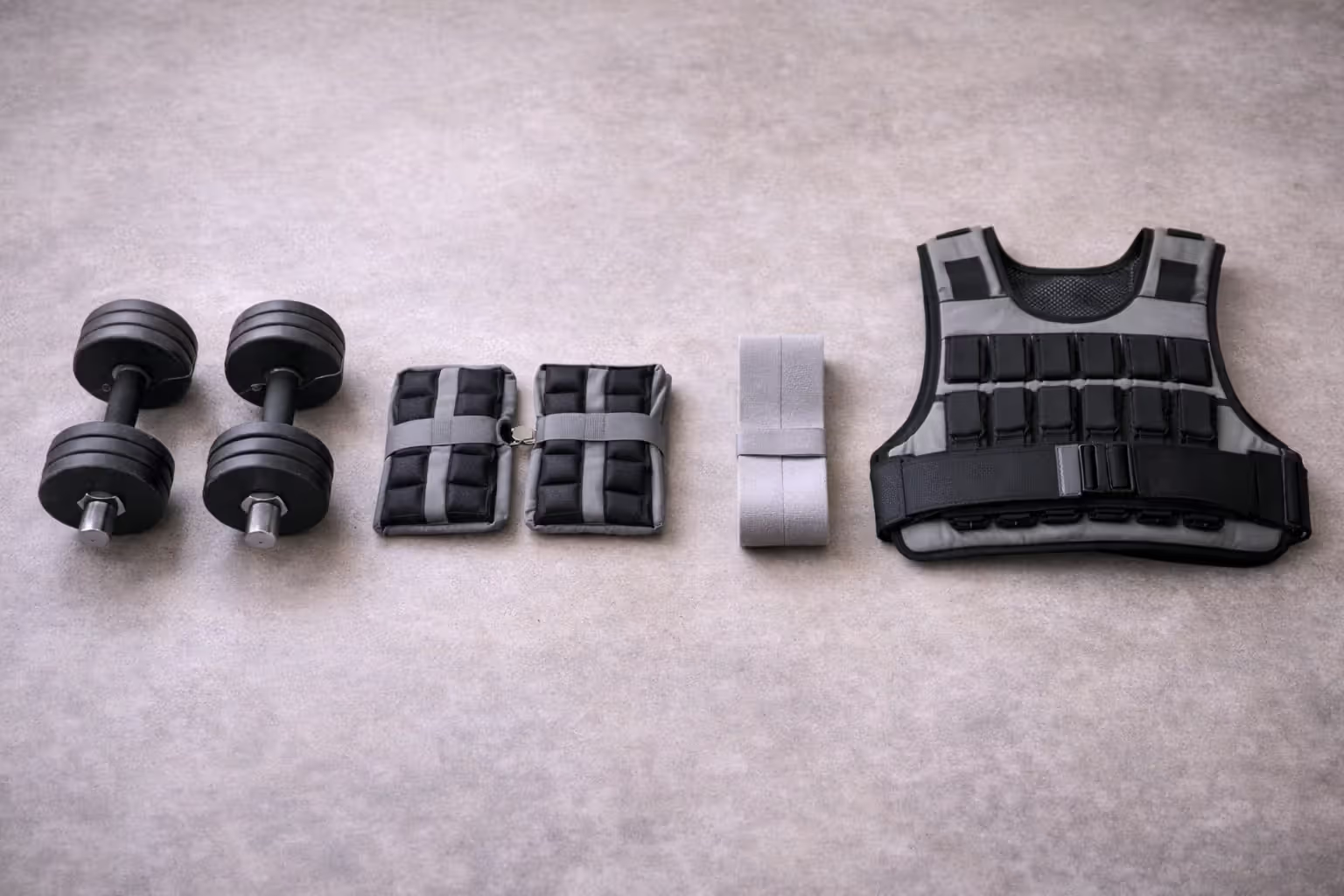
What sets vests apart from dumbbells or resistance bands? Your hands stay free. You're not holding anything, which means you can focus on the movement itself. A runner wearing a 15-pound vest maintains their natural stride. Try jogging with dumbbells and you'll immediately notice how awkward your arm swing becomes.
Military units have understood this for decades. Rucking—marching with loaded packs—remains a training staple because it builds the specific endurance soldiers need. But you don't need to be in the military to benefit. Anyone wanting to carry groceries upstairs more easily, hike longer distances, or simply burn more calories during their morning walk can use the same principles.
What Makes Weighted Vests Effective for Fitness Goals
Think about how your body gets stronger. You stress it, it adapts, you stress it more. Simple concept, but the method matters.
Load training fitness works because adding resistance forces adaptations your body wouldn't make otherwise. But here's where vests get interesting: they load your body along its vertical axis. Stand up right now. That's your vertical axis—head to feet. Vests place weight along that line, which is exactly how your skeleton evolved to handle stress.
Compare this to other resistance tools. Grab dumbbells for lunges and I'll bet your forearms give out before your quads do. I've watched this happen countless times in gyms. Someone's crushing a set of walking lunges, then they cut it short because their grip fails. That's a problem—you wanted to train legs, but your hands became the limiting factor.
Or consider ankle weights. They hang below your joints, creating leverage forces that pull at your knees and hips in ways nature never intended. Physical therapists see the results of this mistake regularly: tendinitis, joint inflammation, movement compensation patterns that persist for months.
Resistance bands? They're useful, but tension changes throughout the movement. At the start of a squat, when you're fighting gravity most, bands provide their least resistance. At the top, when the movement's easiest, bands pull hardest. That's backwards for strength development.
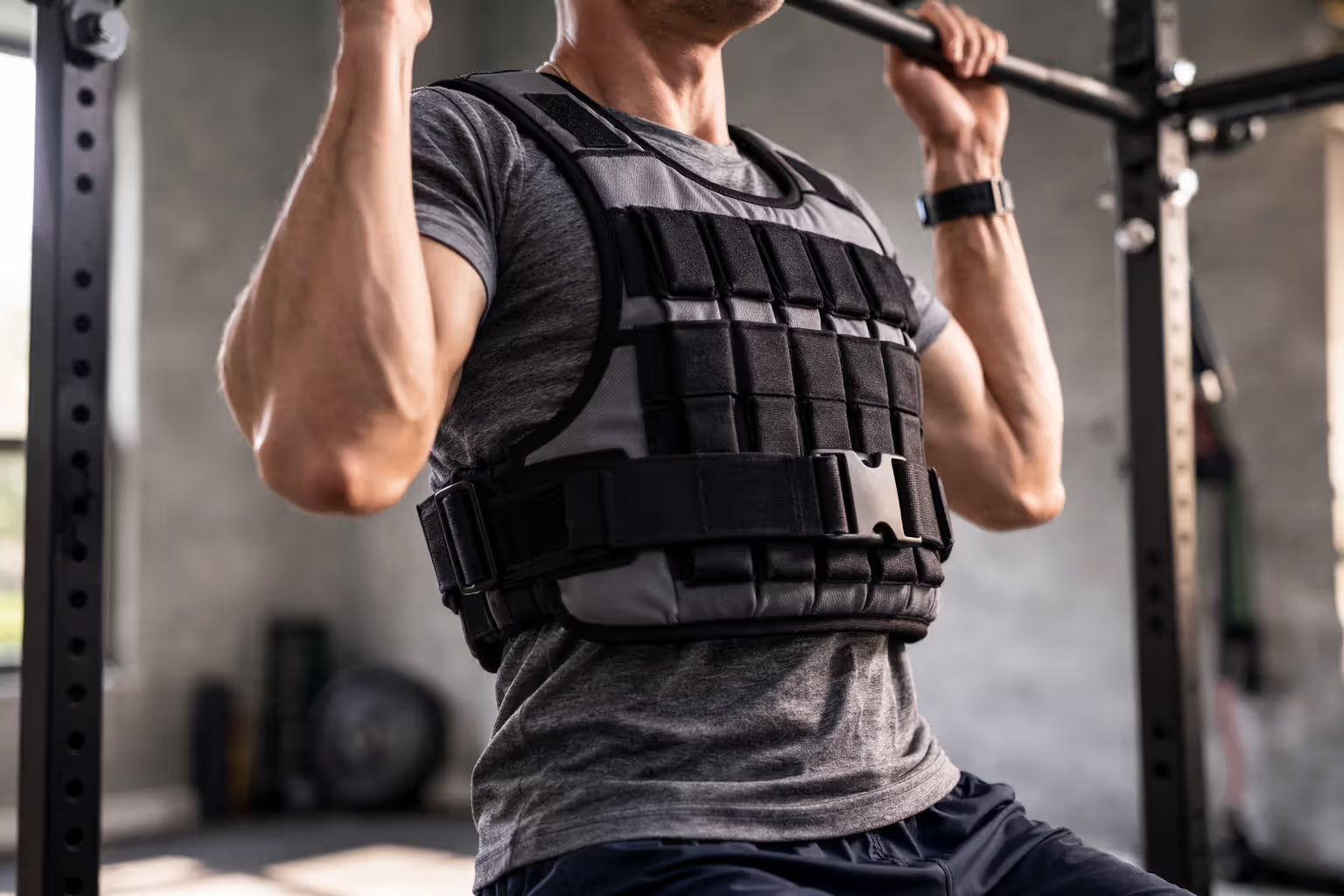
Vests eliminate these frustrations by becoming part of you. Strap on 25 pounds and your body treats it like you've temporarily gained weight. During a squat, the resistance stays constant from top to bottom. During pull-ups, you're lifting your actual mass plus the vest—nothing to grip, nothing to stabilize. The weighted training science here shows something researchers call "transparent loading," meaning the resistance doesn't interfere with your natural biomechanics.
Your bones respond particularly well to this type of stress. Axial compression—weight pushing down through your spine and legs—triggers bone-building cells called osteoblasts. They deposit new mineral tissue where stress occurs. Lift dumbbells and you'll strengthen arm bones. Wear a vest while walking and you'll strengthen your entire skeletal frame from hips to spine.
For runners, this translates to massive advantages. Add 10% of your body weight to your torso and suddenly your legs must generate more power with each stride. Your cardiovascular system works harder pumping blood to those laboring muscles. But your running form? Unchanged. Your coach watching from the sideline wouldn't spot any difference in your mechanics—just more effort, same movement pattern.
Author: Caleb Foster;
Source: thelifelongadventures.com
Proven Benefits of Training with a Resistance Vest
Let's talk results. What actually happens when you start training with added weight on your torso?
Strength improvements show up fast. Military researchers tracked recruits doing push-ups, pull-ups, and sit-ups with 10% body weight added. After eight weeks, the vested group increased their push-up max by 23 reps on average. The control group doing identical exercises without vests? Only 14 additional reps. That's a 64% greater improvement from simply adding weight. The vested group also showed measurably better core stability when researchers tested their ability to resist rotational forces.
Bone density changes matter more as you age, but they're harder to see day-to-day. Still, the research here is compelling. A 12-month study followed postmenopausal women—a group particularly vulnerable to bone loss—who walked three times weekly with weighted vests. Their hip bone mineral density increased measurably. Meanwhile, women who walked the same frequency without vests continued losing bone mass at the typical age-related rate. The compressive loading from vests activates bone-building processes that impact alone can't match.
Your cardiovascular system adapts by becoming more efficient. Strap on a vest for moderate cardio and your heart rate jumps 8-15 beats per minute compared to doing the same activity unweighted. I've tested this personally with a heart rate monitor during walks. At 3.2 mph without a vest, my heart rate settled around 118 bpm. Add a 20-pound vest at the same pace? 132 bpm. Over weeks of training, my heart learned to pump blood more efficiently, improving my VO2 max (oxygen processing capacity) and lactate threshold (the point where fatigue accumulates rapidly).
Calorie burn increases in direct proportion to weight added. Physics doesn't negotiate—moving more mass requires more energy. A 160-pound person walking 3.5 mph expends roughly 280 calories hourly. Add a 16-pound vest (10% body weight) and you're burning about 320 calories covering the same distance. That's 40 extra calories, or 14% more, for identical perceived effort. Your body also spends additional energy afterward repairing muscle tissue stressed by the heavier load.
The functional fitness advantages might be the most practical benefit. When you train wearing a vest, you're strengthening the exact movement patterns you use constantly. Climb stairs with a vest today and you're preparing your body to carry a sleeping child to bed tonight. Do weighted squats and you're building the strength needed to lift boxes when moving apartments. The transfer is immediate because the movement patterns match perfectly.
Author: Caleb Foster;
Source: thelifelongadventures.com
Training Goal
Strength Development
Endurance Gains
Bone Density Benefits
Calorie Expenditure
Optimal Weight Range
Building Muscle
Excellent
Moderate
Excellent
Moderate
15-20% body weight
Cardio Fitness
Limited
Excellent
Moderate
High
5-10% body weight
Fat Loss
Good
Moderate
Moderate
Excellent
8-12% body weight
Bone Health
Moderate
Limited
Outstanding
Low
10-15% body weight
Athletic Power
Excellent
Excellent
Good
Moderate
5-15% body weight
The Science Behind Weighted Training Adaptations
Your body is remarkably adaptable, but it needs a reason to change. Weighted training provides several compelling reasons simultaneously.
Start with mechanical tension—the force your muscles generate when working. Do a pull-up without added weight and your lat muscles contract with enough force to lift your body. Now add a 15-pound vest. Those same muscles must generate 15 additional pounds of force. This increased tension triggers receptors within muscle cells that activate protein synthesis—the process of building new contractile tissue. Studies show even modest load increases of 5-10% substantially elevate muscle protein synthesis rates when maintained across multiple sets.
Then there's metabolic stress, which sounds complicated but isn't. When you perform squats to fatigue, byproducts like lactate and hydrogen ions accumulate in working muscles. That burning sensation? That's metabolic stress. Adding a vest speeds up this accumulation. You reach the same burn in fewer reps, which matters because metabolic stress drives muscle growth through mechanisms involving cell swelling and growth factor release.
Your nervous system undergoes its own adaptations. First-time vest users often feel clumsy—the weight distribution throws off their coordination. I remember my first weighted walk feeling like I was leaning forward constantly, even though I wasn't. Your motor cortex needs time to recalibrate movement patterns. Give it 2-3 weeks and something clicks. Your brain improves what researchers call inter-muscular coordination (different muscles working together) and rate coding (how rapidly nerves fire to activate muscle fibers).
Progressive overload with vests looks different than barbell training. You can't just slap more plates on a vest each week. Instead, progression involves three variables: vest weight, repetitions, or movement complexity. A beginner's path might start with a 10-pound vest for 20-minute walks. After two weeks, increase to 25 minutes. Two weeks later, try jogging intervals with the same 10 pounds. Then return to walking but bump weight to 15 pounds. Each step provides new stimulus without overwhelming your body's adaptive capacity.
Research examining vest training outcomes reveals something important: benefits plateau without continued challenge. Military studies tracked soldiers training with fixed vest weights for 12 weeks. Initial improvements were impressive—cardiovascular gains, strength increases, better endurance. But around week 6, progress stalled. Soldiers following progressive protocols where weight or intensity increased every 2-3 weeks? They continued improving throughout the entire study period.
The specificity principle means you get what you train for. Wear a vest during steady-state cardio and you'll primarily develop cardiovascular endurance plus muscular endurance in your legs. Use a vest for explosive plyometric exercises? You're developing power output—the ability to generate force rapidly. Slow, controlled strength movements with heavier vests build maximum strength and muscle size. Match your training to your goals.
Author: Caleb Foster;
Source: thelifelongadventures.com
8 Effective Vest Workout Exercises by Fitness Level
Selecting the right movements determines whether you build strength or nurse injuries. Here's a progression from foundational exercises to advanced challenges.
Beginner Exercises
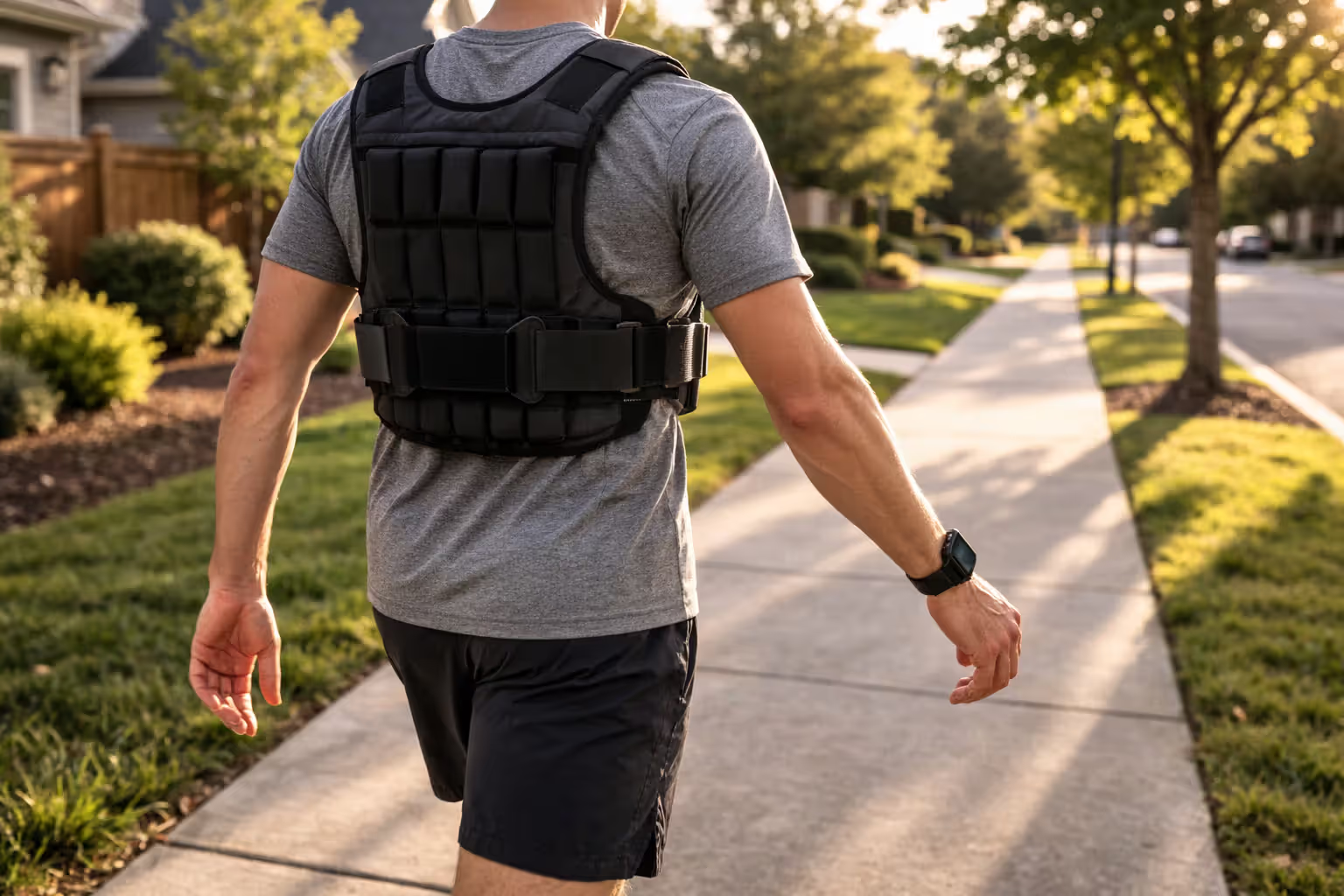
Weighted Walking establishes your foundation. Start conservatively—5% of body weight—and walk at your comfortable pace for 15-20 minutes. Posture is everything here. Many beginners unconsciously lean forward trying to counterbalance the weight. Keep shoulders back, chest open, arms swinging naturally. If you weigh 180 pounds, use a 9-pound vest. Seems light, but you'll feel it in your calves and lower back. This exercise builds work capacity while letting your joints adapt to axial loading with minimal injury risk.
Vest-Loaded Glute Bridges strengthen your posterior chain—glutes, hamstrings, lower back—without loading your spine vertically. Lie face-up on the floor, knees bent, feet flat. Position the vest across your hips and lower torso. Push through your heels, lifting hips until your body creates a straight line from shoulders to knees. Hold for two seconds, lower with control. The vest provides resistance without requiring balance or coordination. Start with 12-15 reps, focusing on squeezing glutes at the top of each rep.
Incline Push-Ups with Vest let you develop pressing strength with less difficulty than floor push-ups. Find a sturdy bench or table edge. Place hands slightly wider than shoulders, body straight from head to ankles. Lower your chest toward the bench, then press back up. The incline reduces the percentage of body weight you're pressing—maybe 50-60% instead of 65-70% from the floor. But the vest adds back resistance. Use 5-8% body weight for 3 sets of 8-12 reps. Your chest, shoulders, and triceps will feel this despite the easier angle.
Intermediate Exercises
Weighted Step-Ups challenge your quads, glutes, and hip stabilizers while testing balance. You'll need a box or bench 16-20 inches high—about knee height. Step up with your right foot, driving through that heel to bring your left foot up to join it. Step back down with the same foot. That's one rep. The vest transforms this simple movement into a serious strength builder. Use 10-12% body weight and expect to manage 3 sets of 10 reps per leg while maintaining upright posture.
Vest Pull-Ups dramatically increase difficulty compared to bodyweight versions. Even 8-10 pounds feels substantial when you're lifting your entire body mass. Only attempt these if you can comfortably perform 8-10 unweighted pull-ups with clean form. Start with 5% body weight. The added load particularly taxes your lats, traps, and grip. If you start swinging or kicking to complete reps, reduce the weight. Partial-range pull-ups don't provide the same training stimulus as controlled full-range reps.
Weighted Farmer's Carries combine the vest's axial load with hand-held weights, creating multi-directional stress. Hold moderate dumbbells or kettlebells and walk 40-50 feet maintaining perfect posture. Your core works overtime stabilizing against the weights pulling your arms down while the vest compresses your spine. Use 8-10% body weight in the vest plus appropriate hand weights—maybe 30-40 pounds per hand for strong men, 20-25 pounds for strong women. This exercise builds core stability and grip strength like few others.
Advanced Exercises
Weighted Box Jumps develop explosive power but demand excellent body awareness. Use a stable box 20-24 inches high with 5-8% body weight in your vest—no more. The emphasis should be landing softly with bent knees absorbing impact, not just achieving height. This plyometric movement significantly stresses joints and connective tissue. Only perform these when fresh, never at the end of a fatiguing workout when coordination deteriorates.
Weighted Pistol Squats rank among the most challenging single-leg movements you can attempt. Stand on your right leg, left leg extended forward. Lower yourself until your right hamstring contacts your calf while keeping the left leg raised. The vest shifts your center of mass, making balance harder while adding resistance simultaneously. Start with just 5% body weight. Even strong athletes find this exercise humbling—I've seen accomplished lifters who can squat 300 pounds struggle with a 10-pound vest pistol squat.
Author: Caleb Foster;
Source: thelifelongadventures.com
Movement
Difficulty
Primary Muscles Working
Vest Load (% Body Weight)
Volume
Walking with Vest
Entry-level
Legs, Core, Heart & Lungs
5-8%
15-30 minutes
Glute Bridge
Entry-level
Glutes, Hamstrings, Spinal Erectors
8-12%
3 sets × 12-15
Incline Press-Up
Entry-level
Chest, Shoulders, Triceps
5-10%
3 sets × 8-12
Step-Up
Intermediate
Quadriceps, Glutes, Hip Complex
10-15%
3 sets × 10 each side
Pull-Up with Vest
Intermediate
Latissimus Dorsi, Traps, Biceps, Forearms
5-12%
3-5 sets × 5-8
Loaded Carry
Intermediate
Core, Trapezius, Grip, Total Body
8-12%
4 rounds × 40-50 feet
Box Jump
Advanced
Quads, Glutes, Calves, Explosive Power
5-8%
4-5 sets × 5
Single-Leg Squat
Advanced
Quads, Glutes, Stabilizers, Balance
5-10%
3 sets × 5 each side
Safety Guidelines and Common Mistakes to Avoid
Understanding how added weight affects your body keeps you training consistently instead of nursing preventable injuries.
Start with the 5-10% guideline. Weigh 150 pounds? Your first vest should be 7.5-15 pounds maximum. This feels conservative—you might think "I could handle more." Maybe. But your joints are experiencing forces that multiply under load. During running, your knees absorb forces equal to 3-4 times your body weight with each footstrike. Add a 10-pound vest and you're effectively creating 30-40 additional pounds of knee stress every single stride. That accumulates fast over a 20-minute run.
Joint stress becomes critical if you're dealing with existing problems. Have you had knee pain, ACL reconstruction, or arthritis? Limit vest weight to 5% body weight maximum and avoid high-impact activities entirely. Stick with walking, swimming (yes, you can wear a vest in the pool for resistance without impact), or strength exercises where you control the pace. Shoulder issues require attention to vest design—ensure weight distributes across your torso via wraparound straps rather than hanging from your shoulders like a backpack.
Posture degradation sneaks up on you. You start a weighted walk standing tall, chest up, shoulders back. Fifteen minutes later, you've unconsciously shifted into a forward lean with rounded shoulders. This anterior tilt shifts stress onto your lower back and can trigger disc irritation over time. Set your phone timer to beep every 5 minutes. When it does, check your posture and reset if needed.
The biggest mistake I see? Wearing vests during technical skill practice. A basketball player shooting free throws with a 20-pound vest will develop compensatory shooting mechanics—leaning back slightly, releasing differently—that persist even after removing the weight. Use vests for conditioning work and general strength development, not sport-specific technique training.
Weight progression should happen gradually—2-5 pounds every 2-3 weeks maximum. Your muscles adapt quickly and might feel ready for more weight within a week. But tendons and ligaments strengthen much more slowly. You might feel capable of jumping to a 30-pound vest, but your Achilles tendons haven't caught up yet. Rushing this process leads to tendinitis, overuse injuries, and forced time off.
Certain people should skip weighted vests altogether. Pregnant women face pelvic floor stress and balance changes that make vests inappropriate. Children and adolescents with open growth plates risk damaging developing bones under compressive loads. Anyone with osteoporosis needs medical clearance first—while vests can build bone density, excessive compression could cause vertebral fractures in seriously compromised bones.
Recovery demands increase proportionally with vest training. The added load creates more muscle damage and greater central nervous system fatigue than equivalent bodyweight exercise. Complete a weighted vest leg workout on Monday? Don't do heavy lower body training again until Wednesday at the earliest. Your body needs that 48-hour window to repair and adapt.
Small disciplines repeated with consistency every day lead to great achievements over time.
— John C. Maxwell
Choosing the Right Weighted Vest: Key Features That Matter
Not all vests function equally, and choosing poorly impacts both safety and results.
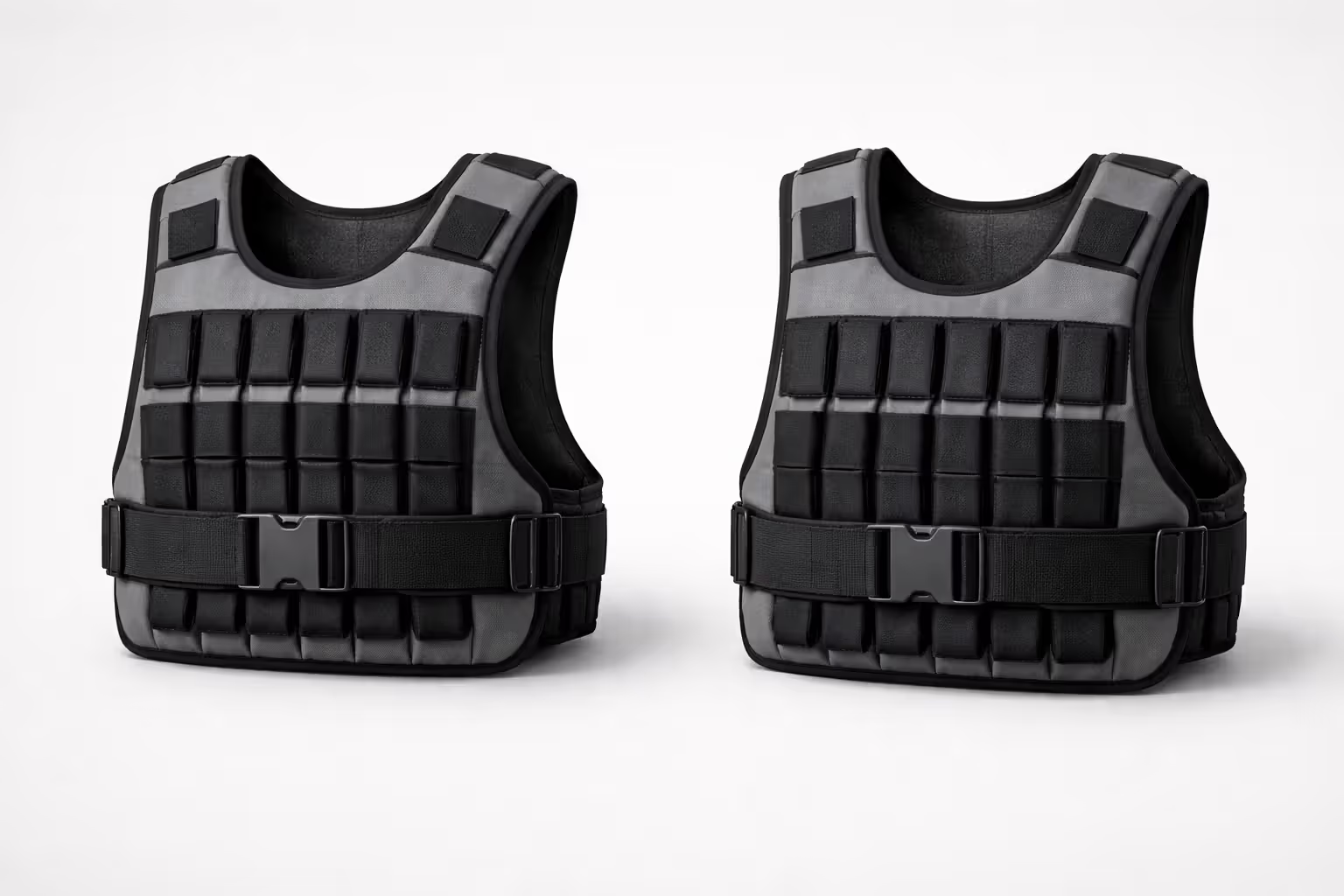
Weight adjustability determines your long-term progression potential. Fixed-weight vests lock you into a single resistance level forever. That works if you're absolutely certain about your needs, but most people benefit from adjustable options. Look for removable weight packets in 2-5 pound increments. This flexibility lets you increase load gradually as you adapt. Some vests use sand or steel shot in pockets, while others feature solid weight bars. Bars tend to stay positioned better during dynamic movements like box jumps or burpees.
Fit quality separates comfortable training from constant frustration. The vest needs to sit snugly against your torso without restricting breathing or arm movement. Test this before buying if possible—perform a few bodyweight squats and arm circles. Does the vest shift or ride up? Too loose. Can you breathe comfortably? Try again with tighter straps. Adjustable straps at shoulders and sides let you customize fit, but vests requiring excessive adjustment probably have poor base designs. Women should specifically seek vests designed for female torsos. Unisex vests often sit too low on women's frames or gap awkwardly at the chest.
Author: Caleb Foster;
Source: thelifelongadventures.com
Weight distribution directly affects movement mechanics. Vests placing all weight on your front create forward pull that strains your lower back throughout the workout. Quality vests distribute weight evenly between front and back panels, maintaining your natural center of gravity. Some tactical-style vests let you position weight packets strategically—useful for athletes mimicking sport-specific load patterns or anyone wanting to fine-tune balance.
Price ranges span from $30 budget options to $300+ professional models. What do you get at each level? Budget vests (under $60) typically use sand filling, offer limited adjustability, and wear out quickly with regular use. Seams fail, straps tear, sand leaks. Mid-range vests ($80-150) provide removable weight bars, better construction quality, and adequate durability for most fitness enthusiasts training 3-4 times weekly. Premium vests ($200+) feature superior materials, precise weight adjustments down to the pound, and designs tested by military and law enforcement units.
Value extends beyond initial cost. A $40 vest falling apart after six months costs more in the long run than a $120 vest lasting five years. Calculate cost per use: training with your vest three times weekly means a $150 vest used for two years costs roughly $0.50 per workout. That's cheaper than a single gym day pass. Read reviews specifically mentioning durability and strap integrity—these components fail first on poorly constructed vests.
Frequently Asked Questions About Weighted Vest Training
How heavy should my first weighted vest be?
Begin with 5-10% of your current body weight, erring toward the lower end if you're planning high-impact activities. Someone weighing 180 pounds should start with a 9-18 pound vest—9 pounds for running, 15-18 pounds for walking or strength exercises. Use this weight consistently for 2-3 weeks before increasing. Yes, your muscles might feel ready sooner, but your connective tissues—tendons, ligaments, joint cartilage—need additional adaptation time. These structures strengthen much more slowly than muscle tissue. Experience joint pain or notice your form deteriorating during sets? Drop the weight by 5 pounds and extend your progression timeline. There's no prize for rushing this process, only potential injuries.
Can I wear a weighted vest all day for extra calorie burn?
This sounds logical but creates more problems than benefits. Your body adapts to constant loads within hours, rapidly diminishing the training stimulus. More critically, sustained spinal compression can trigger disc problems and chronic back pain. The postural muscles supporting your neck and lower back fatigue under continuous load, leading to compensatory movement patterns that persist even after removing the vest. Think of it like this—athletes don't train at maximum intensity 24/7. They apply focused stress, then recover. Limit vest wear to specific 20-60 minute training sessions. Want increased daily calorie expenditure? Add 2-3 short weighted walks throughout the day (morning, lunch, evening) rather than wearing the vest continuously.
Will vest training damage my knees?
Weighted vests increase knee joint stress but won't inherently damage healthy joints when implemented properly. The key lies in progressive loading and intelligent exercise selection. Start with low-impact activities like walking and gradually progress over months, not weeks. Avoid running with a vest if you have existing knee issues—the repetitive impact forces can accelerate cartilage breakdown. However, strength exercises like squats and lunges performed with appropriate vest weight (10-15% body weight) actually strengthen the muscles supporting your knee joint, potentially reducing injury risk over time. Stop immediately if you experience sharp pain or notice swelling. Persistent discomfort? Consult a physical therapist before continuing.
How often should I train with a weighted vest?
Most people see best results from 2-4 vest training sessions weekly, depending on intensity and specific goals. Using the vest for walking or moderate cardio? You can train 4-5 times weekly with adequate recovery between sessions. High-intensity vest workouts involving plyometrics or heavy strength work? You need 48-72 hours recovery between similar sessions. Here's a practical weekly structure: weighted walks Monday, Wednesday, Friday (30 minutes each), plus a weighted strength session Saturday (focusing on upper body). Monitor your recovery carefully—persistent muscle soreness, declining performance across workouts, or joint achiness signal you need additional rest days.
Are weighted vests better than other resistance training methods?
Vests excel for specific applications but don't replace comprehensive resistance training. They provide unmatched functional carryover for activities involving moving your body through space—running, climbing stairs, hiking with a pack. They're superior for building bone density through axial loading. However, traditional free weights allow more precise muscle isolation and much heavier loads for pure strength development. You can't add 100 pounds to a vest comfortably, but you can certainly squat that much with a barbell. The ideal approach combines methods strategically: use vests for conditioning, bodyweight exercises, and functional movement patterns, while incorporating free weights for maximum strength development and targeted muscle building.
Can weighted vests help me lose weight faster?
Vests increase calorie expenditure during exercise, which supports fat loss when combined with proper nutrition. A vest adding 10% body weight increases calorie burn by approximately 8-12% during the same activity. For a 30-minute workout normally burning 250 calories, that's an extra 20-30 calories per session—helpful but not transformative by itself. The greater benefit comes from preserved muscle mass during calorie restriction. Resistance stimulus from vest training signals your body to maintain muscle tissue even when you're in an energy deficit. This keeps your metabolic rate higher than cardio-only weight loss approaches where muscle loss commonly occurs. Use vests as one component within a comprehensive weight loss program including appropriate calorie control and varied exercise, not as a standalone solution expecting miraculous results.
Weighted vest training provides a unique resistance method that simultaneously enhances multiple fitness qualities. The evenly distributed load preserves natural movement patterns while providing progressive overload for strength, endurance, and bone density improvements. Success requires starting conservatively, respecting your body's adaptation requirements, and matching exercises to your current fitness level.
Begin with walking or basic bodyweight exercises using 5-10% of your body weight. Focus intensely on maintaining perfect posture under load—form deterioration leads directly to injury over time. Progress gradually by increasing weight, repetitions, or movement complexity every 2-3 weeks minimum. Match your vest training approach to specific goals: lighter weights for cardiovascular conditioning, moderate weights for functional fitness development, heavier loads for maximum strength.
Invest in quality equipment with adjustable weight and proper fit. The difference between a well-designed vest and a poorly constructed one becomes painfully obvious after your first few workouts. Prioritize comfort and weight distribution over price alone—the right vest will serve you reliably for years of progressive training. Most importantly, listen carefully to your body and adjust your approach when joint stress or persistent fatigue signals you need more recovery time.
A yoga strap isn’t a “beginner crutch.” It’s a precision prop for safer stretching, better alignment, and smarter pose access. Learn strap techniques for hamstrings, hips, shoulders, quads, and calves—plus advanced modifications (Dancer, King Pigeon, inversions), rehab uses, and common mistakes to avoid.
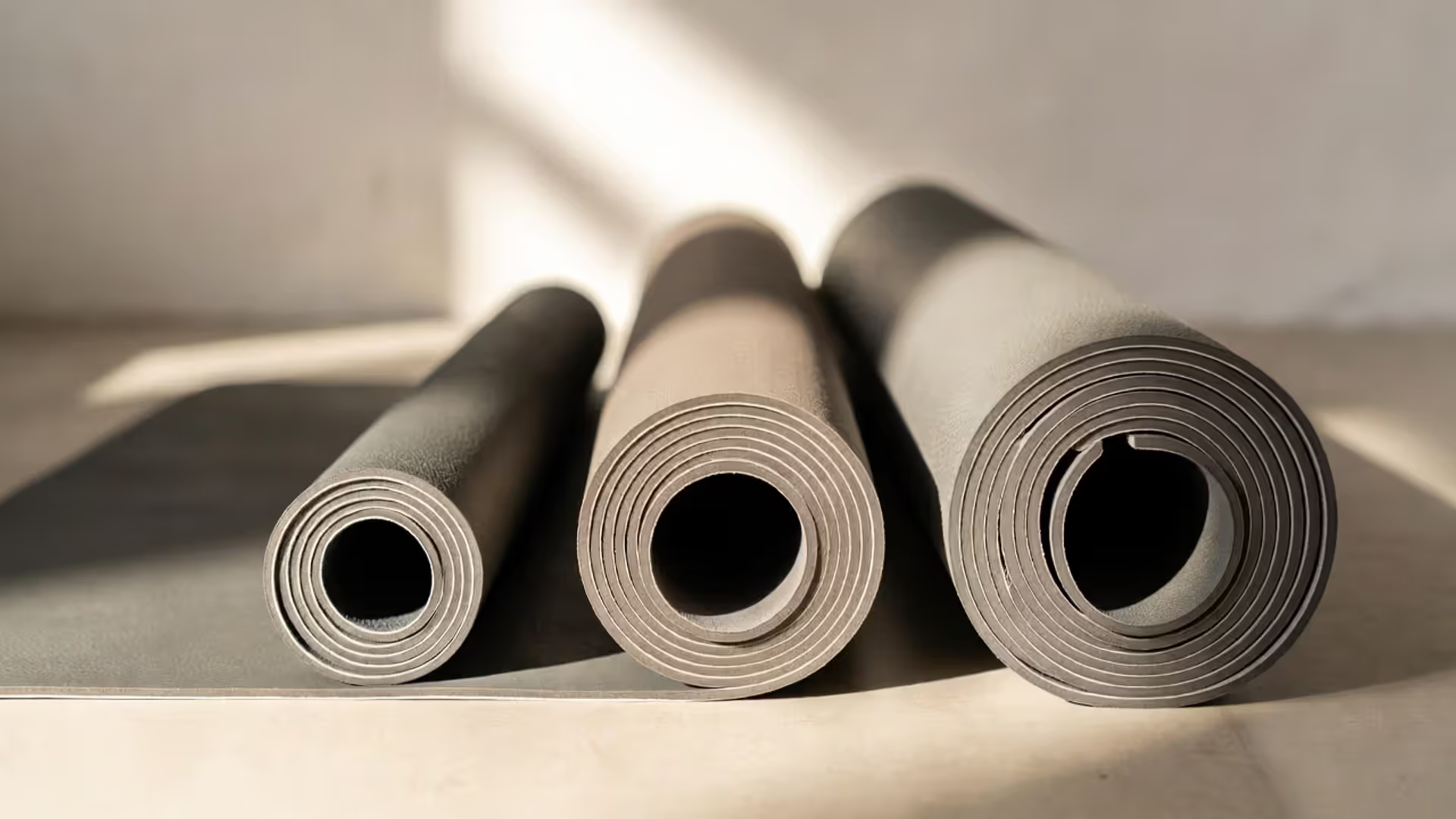
Confused about 3mm vs 6mm yoga mats? This guide explains how thickness affects joint protection, balance and proprioception, portability, and grip. Learn which thickness fits vinyasa, yin, hot yoga, and beginners, how materials change “feel,” and the most common buying mistakes to avoid.
Yoga blocks aren’t “cheating”—they’re alignment tools that help you progress safely. Discover evidence-based benefits, correct block placement for standing, seated, and restorative poses, the biggest mistakes to avoid, and how to choose the right block material, size, and density for your practice.
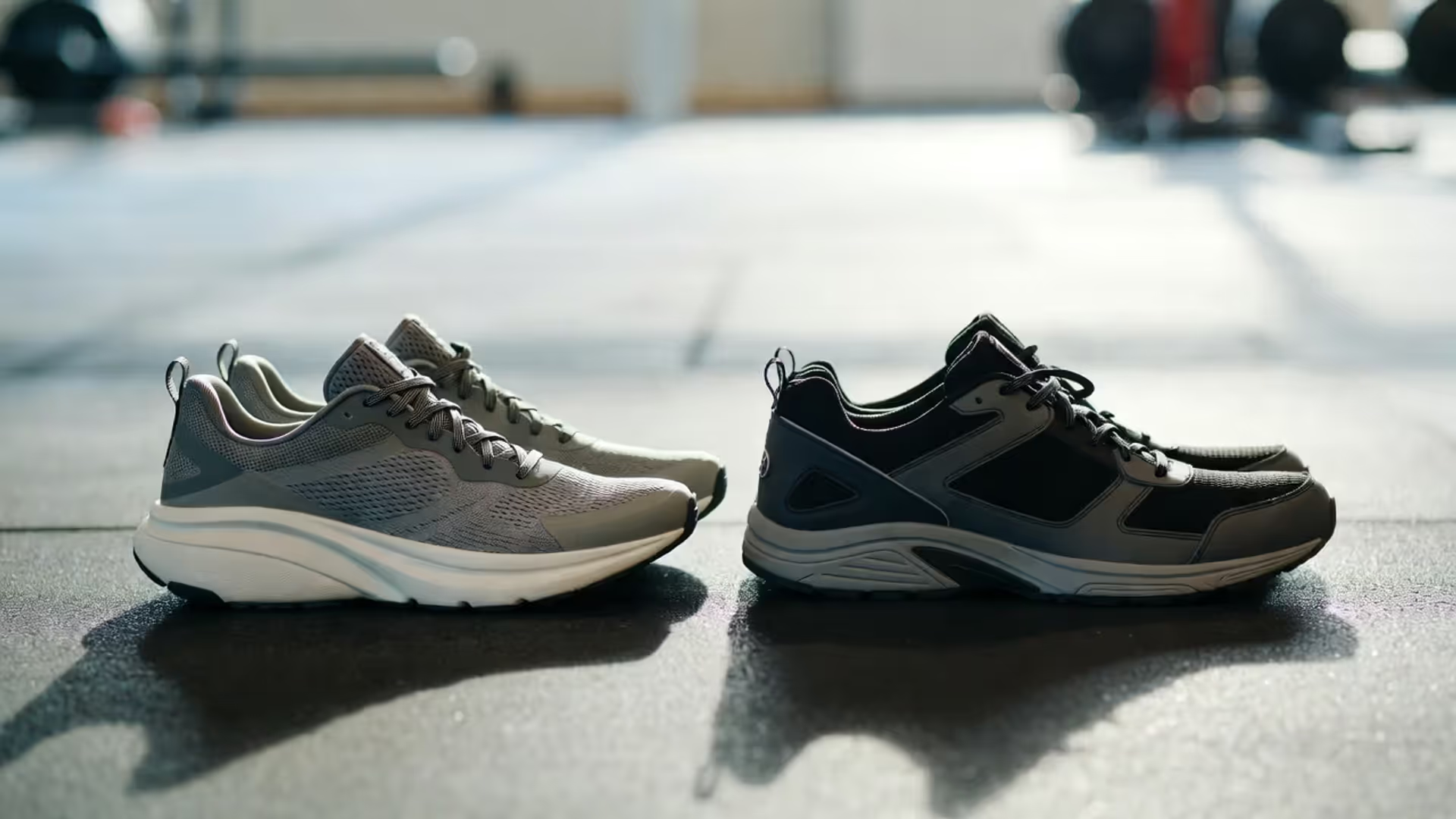
Confused about workout shoes vs running shoes? Learn the real design differences—cushioning, heel drop, flexibility, and lateral stability—plus when each fails, how to match shoes to CrossFit, lifting, or cardio, and when to replace them to reduce injury risk.
The content on this website is provided for general informational and educational purposes related to health, yoga, fitness, and overall wellness. It is not intended to replace professional medical advice, diagnosis, or treatment.
All information, workout suggestions, yoga practices, nutrition tips, and wellness guidance shared on this site are for general reference only. Individual health conditions, fitness levels, and medical needs vary, and results may differ from person to person. Always consult a qualified healthcare provider before starting any new exercise program, dietary plan, or wellness routine.
We are not responsible for any errors or omissions, or for any outcomes resulting from the use of information presented on this website. Your health and fitness decisions should always be made in consultation with appropriate medical and fitness professionals.