Walking into a sporting goods store or scrolling through fitness equipment online can trigger an immediate case of decision paralysis. Hundreds of products promise transformation, but most people starting a home gym make the same expensive mistake: buying too much, too soon, without understanding what actually moves the needle.
The difference between a home gym that collects dust and one that genuinely changes your fitness comes down to strategic selection. You don't need a garage full of chrome-plated machines. You need versatile tools that match your current goals, fit your space, and won't drain your bank account before you've completed your first month of consistent training.
Why Most Beginners Overbuy (And What to Prioritize Instead)
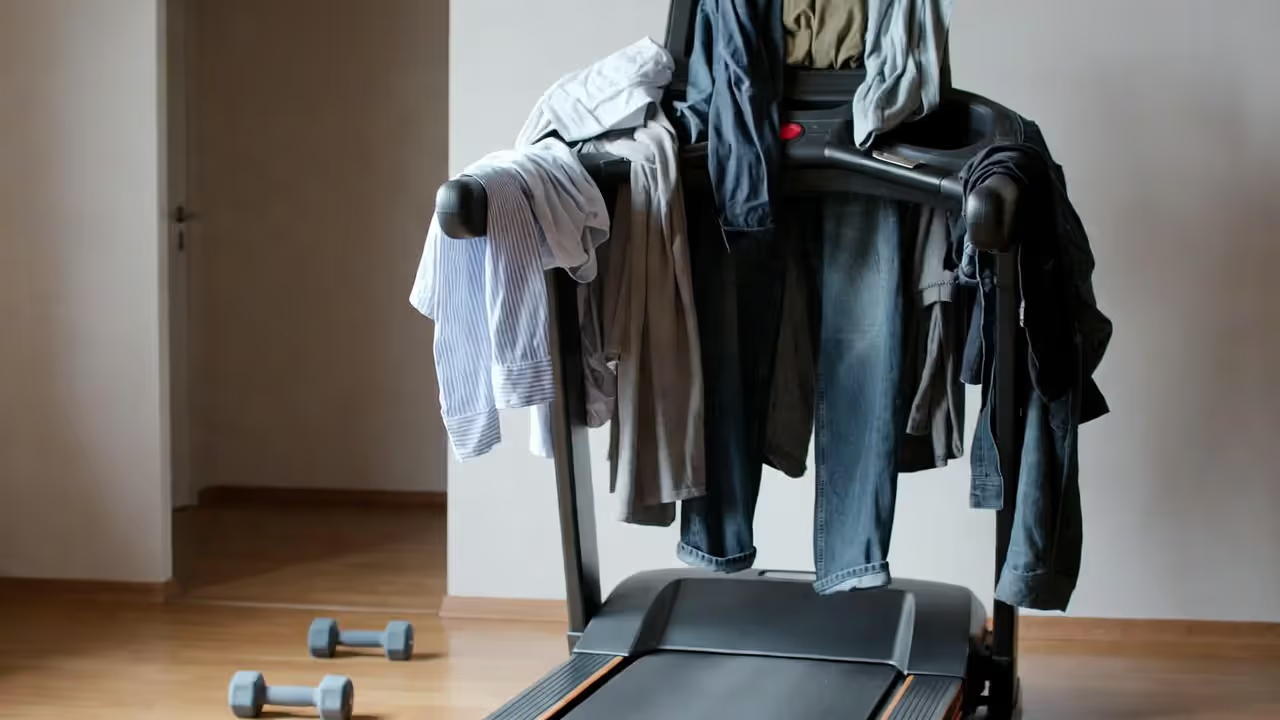
Sarah spent $2,400 on her beginner home gym setup. She bought a treadmill, a complete dumbbell rack from 5 to 50 pounds, a cable machine, an ab roller, a foam roller set, resistance bands, a yoga mat, and a fancy adjustable bench. Six months later, she uses three items regularly: one pair of dumbbells, the bench, and the bands. The treadmill became an expensive coat rack.
This pattern repeats constantly because fitness marketing exploits a simple psychological trigger: the belief that having more equipment creates more motivation. The reverse is usually true. A cluttered space with underutilized gear creates guilt and decision fatigue. Every unused piece of equipment whispers "you're not doing enough."
The essentials-first philosophy flips this approach. Start with equipment that offers maximum exercise variety per square foot and per dollar spent. A single adjustable dumbbell set can facilitate over 100 different exercises. A specialized leg extension machine does exactly one movement. The math isn't complicated.
Versatility beats variety when building your beginner home gym setup. One quality multi-purpose tool will always outperform five single-purpose gadgets that seemed compelling in the moment but don't integrate into your actual workout routine. Before buying anything, ask: "Can this replace three other pieces of equipment, or does it only do one specific thing?"
It’s not about having the best equipment. It’s about using what you have consistently.
— James Clear
The Core Five: Equipment Worth Buying First
These five categories form the foundation of every functional home training space. They work together to cover every major movement pattern: push, pull, squat, hinge, and core stability. Everything else is supplementary.
Adjustable Dumbbells vs. Fixed Weight Sets
Author: Caleb Foster;
Source: thelifelongadventures.com
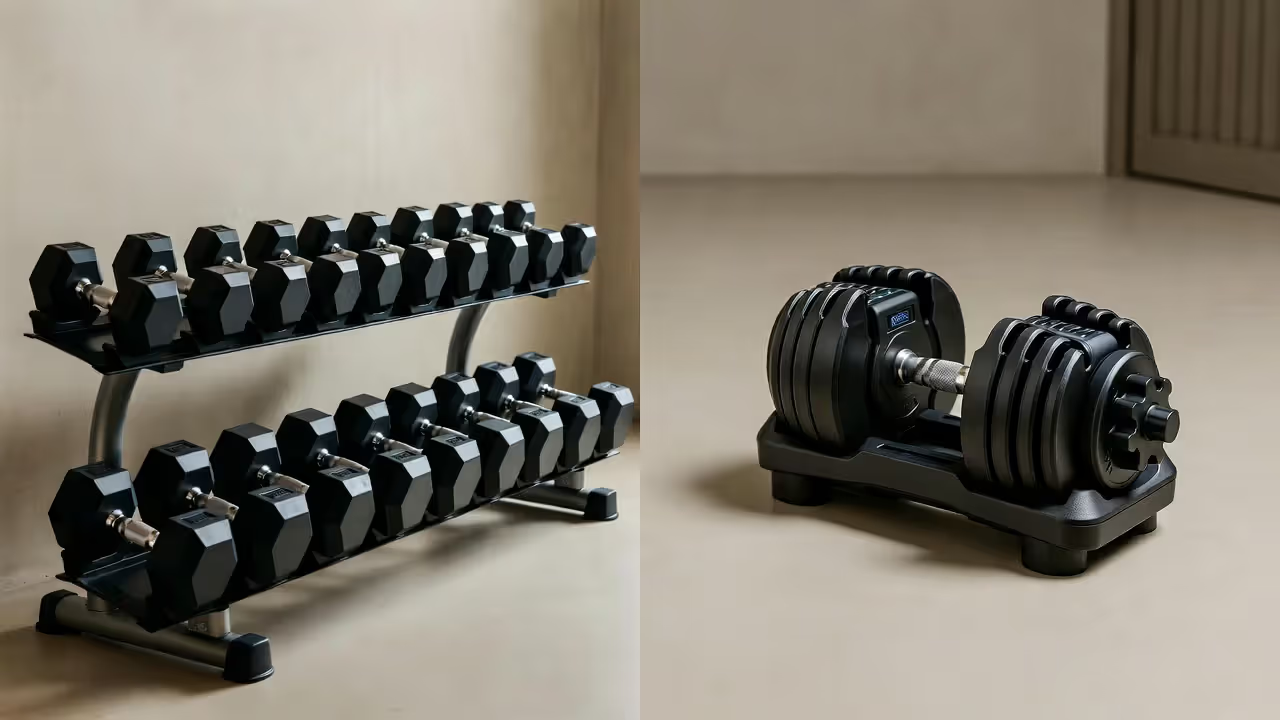
Fixed dumbbell sets look impressive lined up on a rack, but they demand significant space and capital. A complete set from 10 to 50 pounds in 5-pound increments requires 18 individual dumbbells and costs $600-900. That same investment in quality adjustable dumbbells—like PowerBlock, Bowflex SelectTech, or Ironmaster models—gives you the same weight range in a footprint smaller than a microwave.
The adjustment mechanism matters more than most buyers realize. Dial systems (Bowflex) adjust quickly but can develop mechanical issues after years of heavy use. Pin-and-plate systems (PowerBlock) are nearly indestructible but take slightly longer to change weights. Screw-collar adjustables (Ironmaster) offer the most traditional feel but require the most adjustment time between sets.
For most people starting essential fitness equipment home collections, dial-adjustable dumbbells in the 5-52.5 pound range hit the sweet spot. They're fast enough for circuit training, heavy enough for progressive overload in major lifts, and compact enough for apartment living. Expect to spend $300-400 for a quality pair that will last a decade.
Why Resistance Bands Deliver More Than Their Price Tag
Author: Caleb Foster;
Source: thelifelongadventures.com
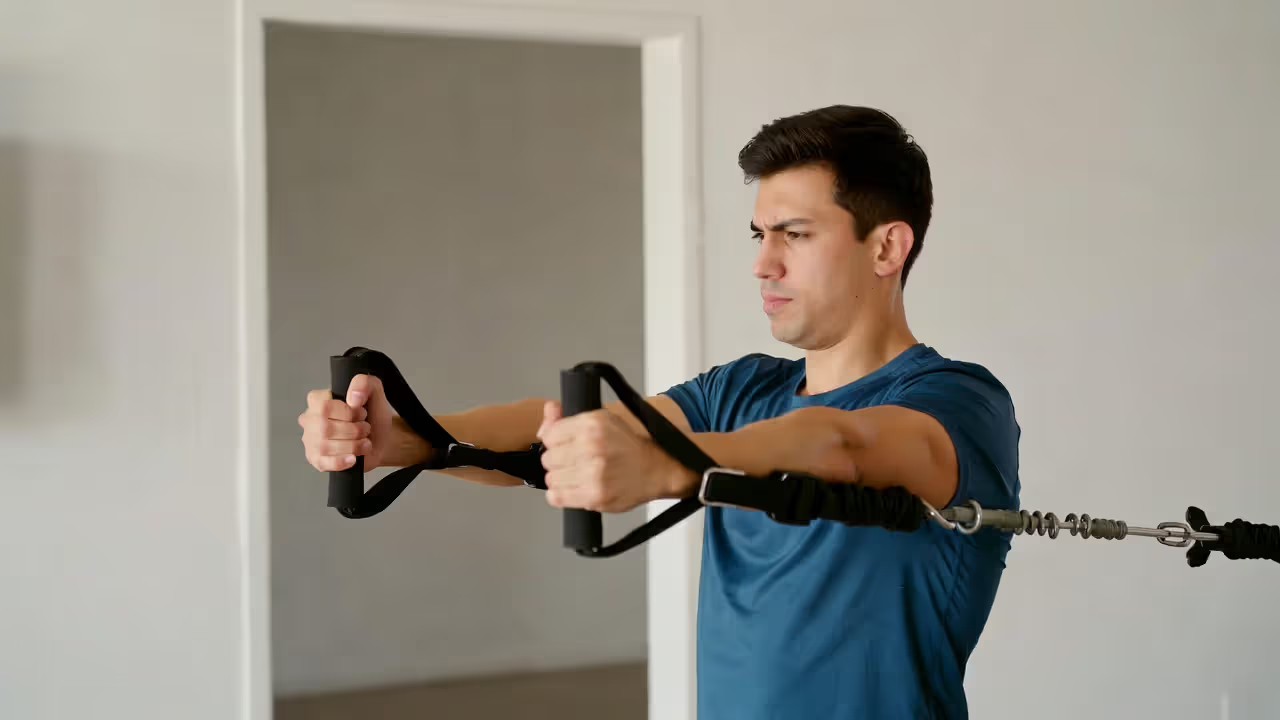
A $30 set of resistance bands might seem trivial compared to hundreds spent on weights, but bands solve problems that dumbbells can't. They provide accommodating resistance—tension increases through the range of motion—which can reduce joint stress while maintaining muscle tension. This makes them invaluable for shoulder health, rehabilitation work, and exercises where dumbbells create awkward leverage.
Bands also travel. Your dumbbells don't fit in a suitcase, but a complete band set weighs less than a pound. This matters more than it seems initially; training consistency often breaks down during travel, and bands eliminate that excuse.
Buy loop bands (continuous circles) and handled tube bands separately rather than a combined set. Loop bands excel for lower body work—glute bridges, lateral walks, squats with accommodating resistance. Tube bands with handles work better for pressing and pulling movements that mimic cable machine exercises. A complete collection of both types costs $50-70 and covers gaps in your training that dumbbells leave open.
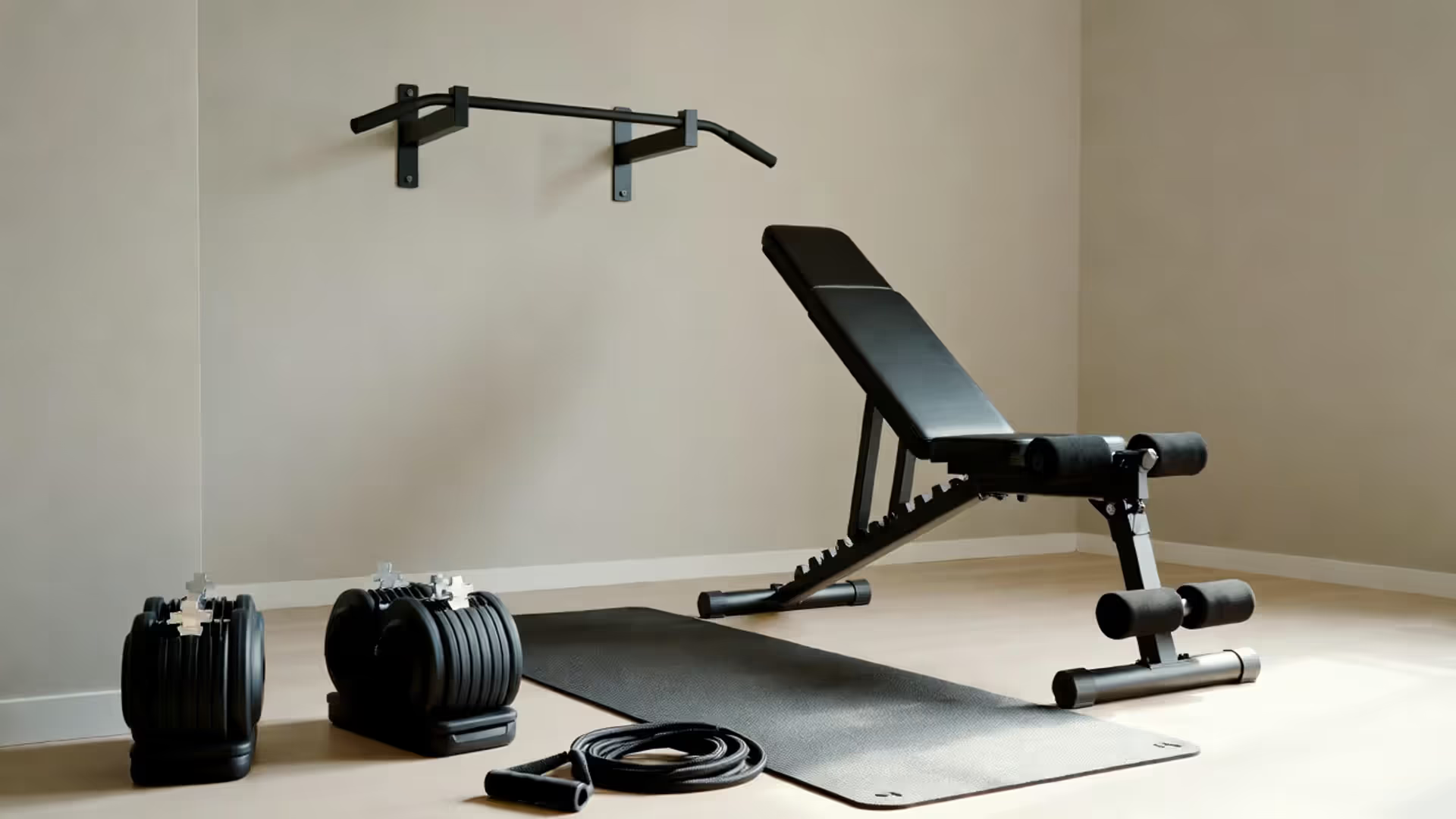
The third essential piece is an adjustable bench. Flat benches cost less, but the inability to incline limits your exercise selection significantly. A quality adjustable bench opens up incline pressing, decline work, seated shoulder exercises, and dozens of single-arm rowing variations. The adjustment mechanism should lock positively without wobbling—test this before buying if possible. Budget $150-250 for a bench that won't shift mid-set.
Pull-up bars come in four types: doorway mount, wall mount, ceiling mount, and freestanding towers. Doorway models ($25-40) work if you have suitable door frames and don't mind installation limits. Wall-mounted bars ($50-100) offer more grip variety and stability. Freestanding towers ($200-400) provide the most exercise options but consume floor space. For most beginner home gym setups, a wall-mounted bar represents the best compromise between cost, stability, and exercise variety.
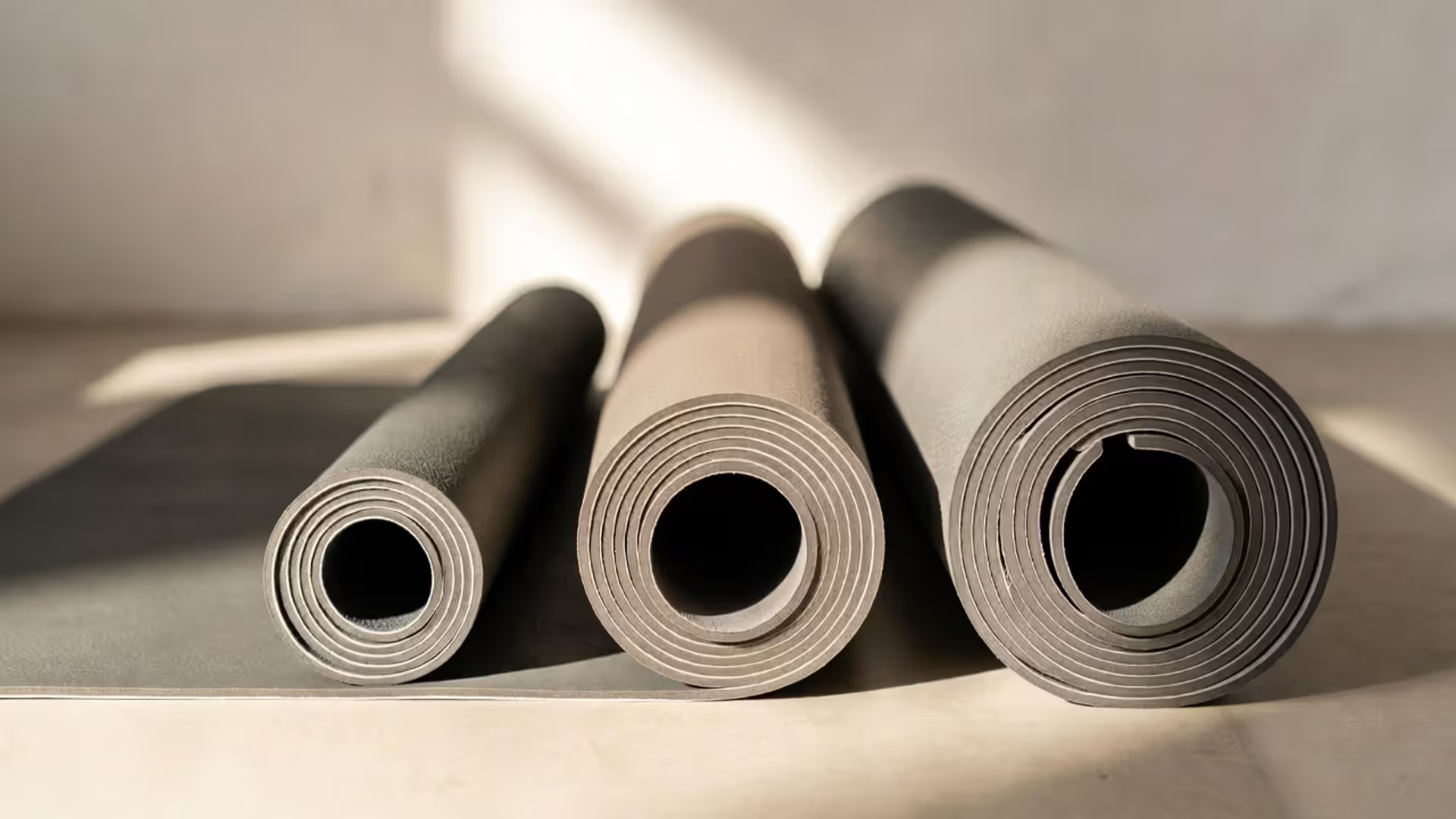
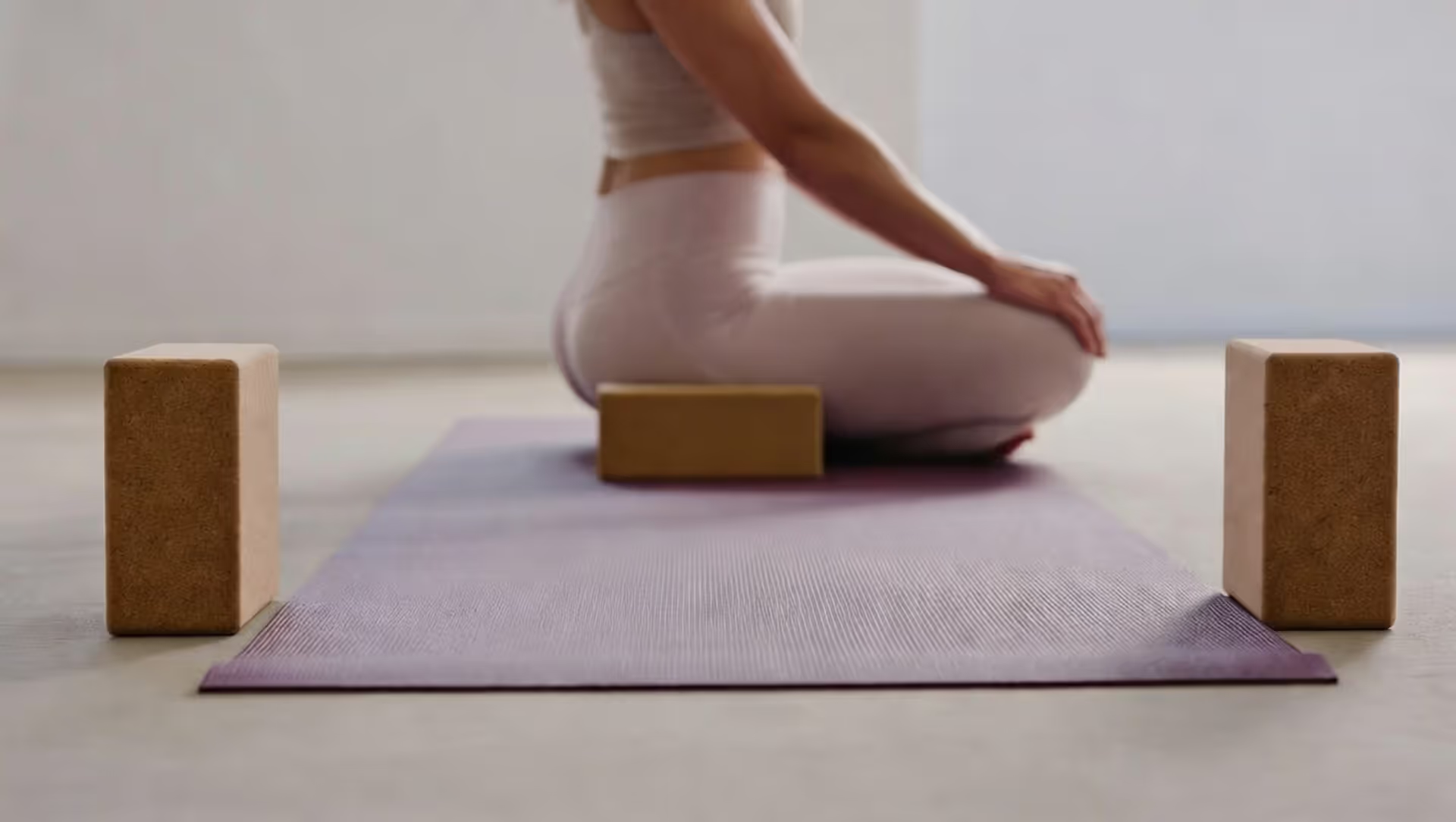
Exercise mats seem like an afterthought, but cheap mats create genuine problems. Thin yoga mats (3-4mm) slide during planks and provide inadequate cushioning for floor exercises. Puzzle mats designed for playrooms compress unevenly under weights. Invest in a 6-8mm thick, non-slip fitness mat that's at least 6 feet long. This creates a defined workout zone and protects both your floors and your body during ground-based movements. Quality mats cost $40-80 and last for years.
Space-Smart Solutions for Apartments and Small Rooms
Author: Caleb Foster;
Source: thelifelongadventures.com
The "I don't have space for a home gym" objection usually means "I don't want equipment permanently visible in my living space." That's a storage problem, not a space problem. A functional training area needs roughly 6 feet by 6 feet of clear floor space during workouts—about the same footprint as a small dining table.
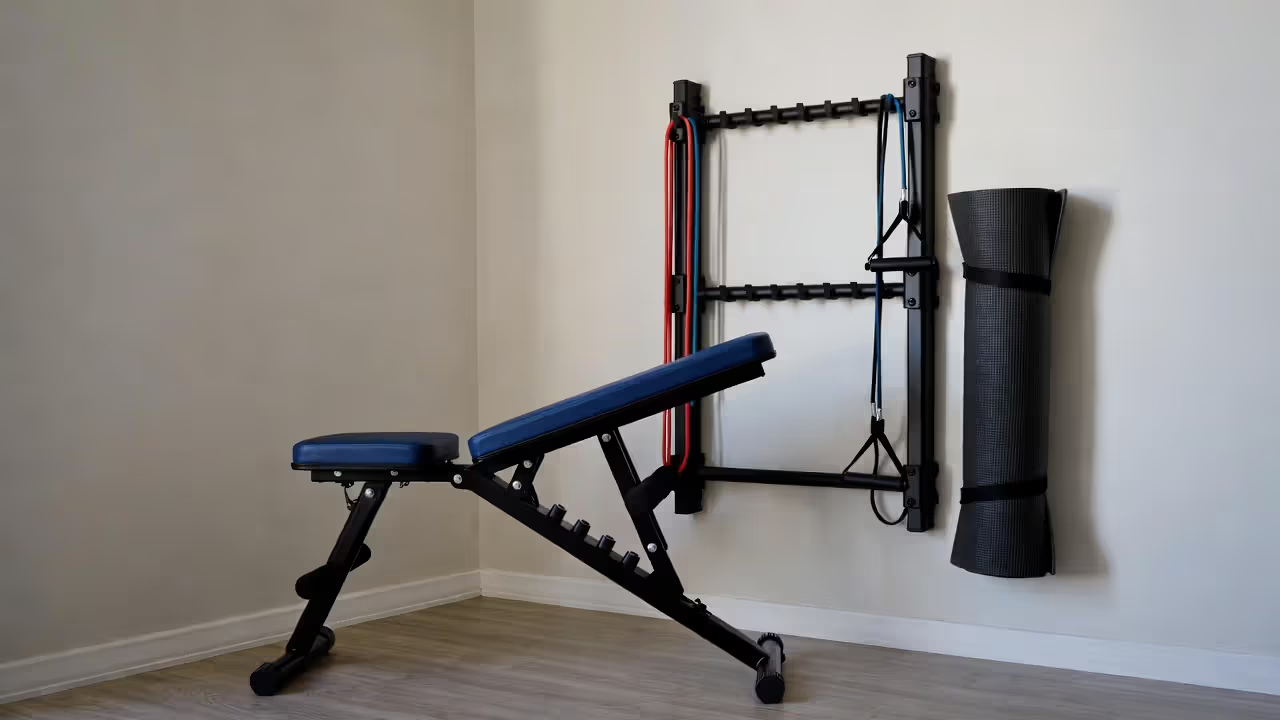
Vertical storage changes everything for compact gym equipment guide strategies. Wall-mounted dumbbell cradles, resistance band hooks, and mat hangers keep equipment off the floor when not in use. A pegboard system with appropriate hooks can organize your entire core five setup on a single wall section that's 4 feet wide and 6 feet tall.
Foldable benches collapse to 6-8 inches thick and slide under beds or behind furniture. Some models include wheels for easier movement. The trade-off is slightly reduced stability compared to fixed benches, but quality foldable options from Fitness Reality or Flybird handle 600+ pound capacities without flex issues.
Multi-purpose equipment deserves priority in tight spaces. An adjustable bench isn't just for pressing—it's an elevated surface for step-ups, a decline platform for core work, and a hip thrust station. Resistance bands attach to door anchors, turning any doorway into a cable station alternative. Dumbbells double as weights for goblet squats and pressing tools for dozens of movements.
The "training zone" concept helps small spaces feel less cluttered. Designate a specific area—even if it's just a 6x6 section of your bedroom—as your workout space. When you're training, that's a gym. When you're done, equipment goes into its storage position and the space reverts to its normal function. This mental separation matters more than the physical square footage.
Budget Breakdown: Three Price Tiers for Home Gym Setups
Price Tier
Total Cost
Core Equipment Included
Best For
Limitations
Starter
$150-300
Resistance band set (loop + tube), exercise mat, doorway pull-up bar, single pair of medium-weight dumbbells (20-30 lbs)
Complete beginners, apartment dwellers, those testing commitment before larger investment
Limited progressive overload options; will need upgrades within 6-12 months for strength gains
Intermediate
$500-800
Adjustable dumbbell set (5-52.5 lbs), resistance band collection, quality exercise mat, wall-mounted pull-up bar, adjustable bench
Committed beginners through intermediate lifters; covers 90% of strength training needs
Lacks barbell options for maximum strength development; limited heavy lower body loading
Advanced
$1,200-2,000
Premium adjustable dumbbells (5-90 lbs), complete band system, commercial-grade mat, multi-grip pull-up station, heavy-duty adjustable bench, optional barbell with plates or kettlebell set
Serious home training; replaces most gym memberships long-term
Requires dedicated space; heavier equipment less portable; higher upfront cost
Author: Caleb Foster;
Source: thelifelongadventures.com
The Starter tier works for testing commitment and building foundational movement patterns. You can train every major muscle group and make genuine progress for several months before hitting equipment limitations. This budget home gym ideas approach minimizes financial risk while you establish consistency.
Intermediate setups represent the sweet spot for most people. The adjustable dumbbells alone provide years of progressive overload potential. Combined with bands and a quality bench, you can replicate 80-90% of what commercial gyms offer for upper body and accessory work. The main gap is heavy barbell training for squats and deadlifts, which matters more for strength specialists than general fitness enthusiasts.
Advanced configurations approach commercial gym capabilities in a home setting. The jump to 90-pound adjustable dumbbells opens up heavy pressing and rowing that intermediate sets can't accommodate. Adding a barbell with 300 pounds of plates (another $400-600) or a kettlebell collection ($200-400) fills the heavy lower body gap. At this tier, you're building a long-term training facility, not just experimenting with home workouts.
Equipment You Can Skip (At Least for Now)
Author: Caleb Foster;
Source: thelifelongadventures.com
Specialized machines top the "not yet" list. Leg press machines, cable crossover stations, and Smith machines cost thousands and do jobs that simpler equipment handles adequately for beginners. A goblet squat with a heavy dumbbell builds the same leg muscles as a leg press machine for your first year of training. The machine becomes relevant when you're moving weights that dumbbells can't accommodate—a problem most people don't have initially.
Cardio equipment represents the biggest waste for most home gym equipment basics setups. Treadmills, ellipticals, and stationary bikes cost $500-2,000, occupy massive floor space, and provide exercise you can get for free by walking or running outside. Unless you live somewhere with genuinely prohibitive weather year-round or have specific medical needs, cardio machines should wait until your strength equipment is comprehensive.
The exception: jump ropes. A $15 speed rope provides intense cardio in a 2-foot square space and travels anywhere. If you need home cardio options, start here before considering machines.
Trendy gadgets flood the market constantly. Vibration plates, ab stimulators, suspension trainers that promise to replace entire gyms—most deliver underwhelming results compared to their marketing. Suspension trainers (TRX-style systems) have legitimate uses for bodyweight training progressions, but they're supplementary tools, not core equipment. Buy them after your foundation is solid, not instead of it.
Excessive accessories create clutter without adding training value. You don't need lifting gloves, wrist wraps, knee sleeves, weight belts, and grip aids as a beginner. Your hands will adapt to gripping weights. Your joints will strengthen through progressive training. Accessories solve problems that emerge after months or years of consistent lifting, not on day one.
Foam rollers, massage guns, and recovery tools fall into the "nice to have" category. They provide genuine benefits for muscle soreness and mobility, but they don't contribute to the actual training stimulus. If your budget is limited, spend it on equipment that creates adaptation—weights and resistance—before buying recovery tools.
Where to Buy and How to Spot Quality Without Overpaying
Major sporting goods retailers (Dick's Sporting Goods, Academy Sports) offer the advantage of hands-on testing before purchase. You can check adjustment mechanisms, sit on benches, and verify build quality. Prices run slightly higher than online options, but return policies are straightforward if something doesn't work out.
Amazon and direct-from-manufacturer purchases typically offer better prices but require more research. Read reviews that mention durability after 6-12 months of use, not just initial impressions. Pay attention to complaints about adjustment mechanisms failing, welds cracking, or padding degrading quickly. One-star reviews often reveal quality issues that five-star reviews gloss over.
Used equipment from Facebook Marketplace, Craigslist, or Play It Again Sports can slash costs by 40-60%. The pandemic created a glut of lightly-used home gym equipment from people who overestimated their commitment. Look for items from smoke-free homes with minimal visible wear. Test adjustment mechanisms in person before buying—if they stick or wobble now, they'll fail quickly with regular use.
Red flags for used equipment include rust on weight plates (indicates moisture exposure that may have damaged other components), torn or compressed padding (expensive to replace), and missing adjustment pins or collars (often impossible to find replacements for discontinued models). Dumbbells and weight plates are nearly indestructible and safe to buy used. Complex adjustable equipment and benches require more careful inspection.
Warranty length signals manufacturer confidence. Quality adjustable dumbbells carry 2-5 year warranties. Benches from reputable brands offer 1-3 years. Anything with less than a one-year warranty should raise questions about expected lifespan. Extended warranties sold separately rarely provide value—they're profit centers for retailers, not genuine protection for buyers.
Material quality indicators separate tools from toys. Steel frames beat aluminum for benches and racks. Urethane-coated weights outlast rubber and are quieter on floors. Nylon-reinforced resistance bands last longer than pure latex. Chrome plating on dumbbell handles resists corrosion better than paint. These upgrades cost 20-30% more upfront but often double the usable lifespan of equipment.
Frequently Asked Questions About Starting Your Home Gym
How much space do I actually need for a functional home gym?
A 6x6 foot clear area handles the core five equipment setup during workouts. You need enough room to lie down fully extended with arms overhead (about 7 feet) and enough width to extend dumbbells to the sides during pressing (about 6 feet). Storage adds minimal space requirements if you use vertical wall mounting. Many people successfully train in spaces smaller than a standard parking spot.
Is it better to buy a complete home gym set or individual pieces?
Individual pieces win for most people. Complete sets bundle equipment you may not need with items you do, and the quality is often inconsistent across the package. Building your home training tools collection piece by piece lets you prioritize based on your specific goals and spread costs over time. The exception: if you find a quality used complete set at a significant discount, it might offer better value than buying new individual items.
What's the minimum equipment needed for full-body strength training?
A pair of adjustable dumbbells and a pull-up bar cover every major movement pattern. Dumbbells handle all pressing (chest, shoulders, triceps), squatting and hinging patterns (legs, glutes), and half of your pulling needs (rows). The pull-up bar covers vertical pulling for back and biceps. Add a resistance band set and you can train every muscle group with sufficient variety to progress for years. This minimal setup costs $350-450 New
Should I invest in cardio equipment or weights first?
Weights first, unless you have specific medical conditions requiring low-impact cardio. Strength training provides more comprehensive health benefits—improved bone density, metabolic rate, functional capacity, and body composition changes. Cardio fitness improves through bodyweight circuits, jump rope work, or outdoor activities without equipment investment. Once your essential fitness equipment home collection is complete, then consider cardio machines if your living situation genuinely limits outdoor exercise options.
How do I know if used gym equipment is still safe to use?
Check three things: structural integrity (no cracks, severe rust, or bent components), mechanical function (adjustment systems work smoothly without sticking), and wear patterns (padding intact, no exposed foam or torn vinyl). For weight-bearing equipment like benches, sit and press on them with significant force—they shouldn't flex excessively or make concerning noises. Weights themselves are nearly impossible to damage beyond cosmetic issues. Avoid used equipment if you can't test it in person before buying.
Can I build muscle effectively with just dumbbells and bodyweight exercises?
Absolutely. Muscle growth requires progressive tension, sufficient volume, and adequate recovery—none of which require specific equipment types. Dumbbells provide progressive overload through added weight. Bodyweight exercises offer progression through leverage changes (regular push-ups to decline to one-arm variations). Competitive bodybuilders need specialized equipment to maximize every muscle group, but people pursuing general fitness, athletic performance, or even impressive physiques can achieve their goals with minimal equipment for years before hitting genuine limitations.
Building Your Foundation the Right Way
Starting a home gym isn't about replicating a commercial fitness center in your garage. It's about removing barriers between you and consistent training. The right equipment makes workouts convenient enough that you actually do them, varied enough that you don't get bored, and effective enough that you see results.
Begin with the core five: adjustable dumbbells, resistance bands, an adjustable bench, a pull-up bar, and a quality mat. This combination costs $500-800 new, less if you buy strategically or find used options. It fits in spaces smaller than most people's closets and enables hundreds of exercise variations covering every movement pattern your body needs to train.
Resist the urge to buy everything at once. Get the basics, use them consistently for three months, then add equipment to address specific gaps you've identified through actual training experience. The person who spends $600 on essentials and uses them five times per week gets better results than the person who spends $3,000 on a complete setup and uses it twice per month.
Your home gym should evolve with your training. What you need in month one differs from month twelve. The equipment that serves a beginner well might not challenge an intermediate lifter. Build incrementally, prioritize versatility, and focus your budget on tools that will still be relevant years from now. The barbell you might add eventually will still be useful in a decade. The gimmick gadget gathering dust in your closet won't be.
The best home gym is the one you actually use. Start simple, start strategic, and start today.
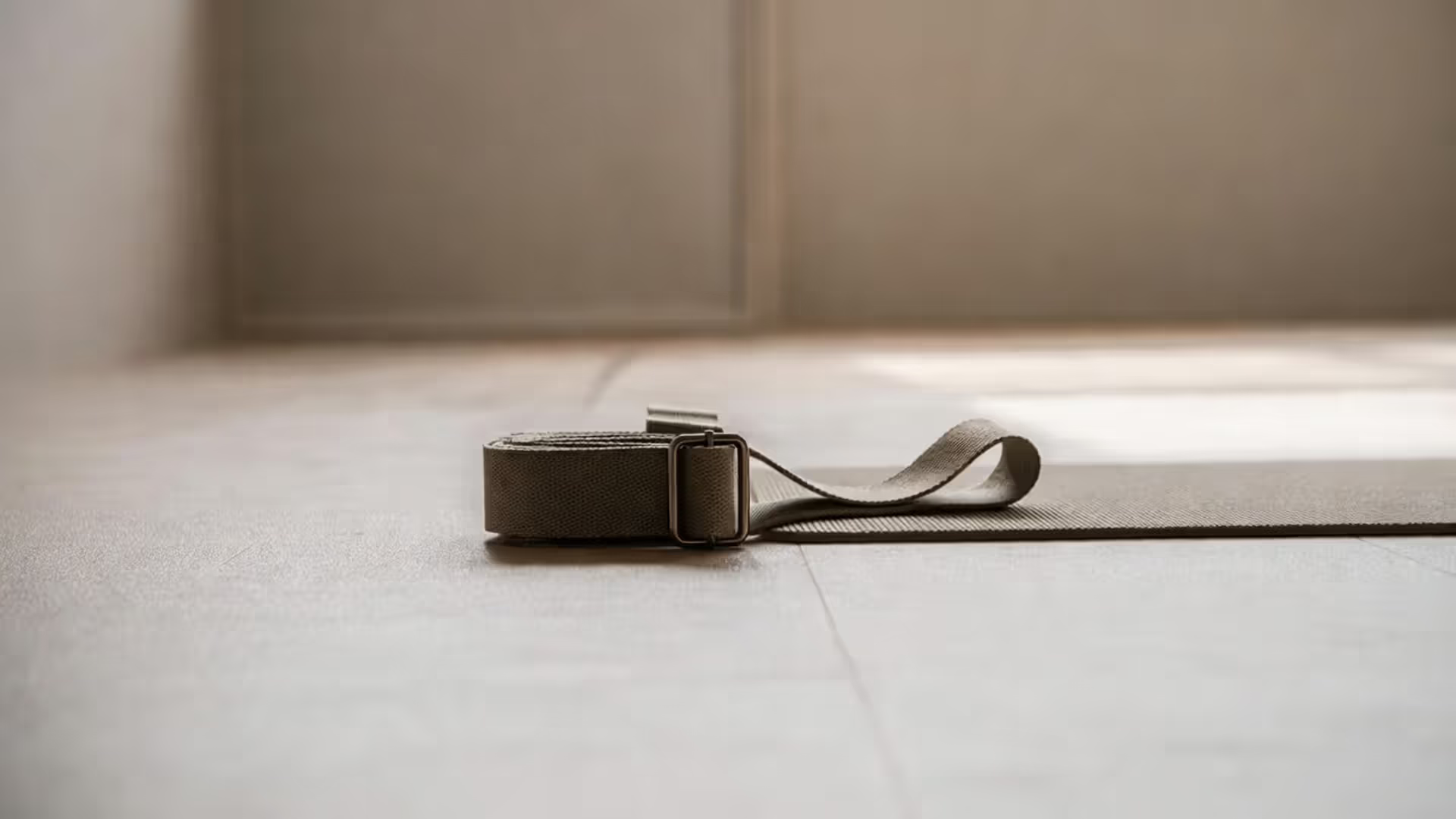
A yoga strap isn’t a “beginner crutch.” It’s a precision prop for safer stretching, better alignment, and smarter pose access. Learn strap techniques for hamstrings, hips, shoulders, quads, and calves—plus advanced modifications (Dancer, King Pigeon, inversions), rehab uses, and common mistakes to avoid.
Confused about 3mm vs 6mm yoga mats? This guide explains how thickness affects joint protection, balance and proprioception, portability, and grip. Learn which thickness fits vinyasa, yin, hot yoga, and beginners, how materials change “feel,” and the most common buying mistakes to avoid.
Yoga blocks aren’t “cheating”—they’re alignment tools that help you progress safely. Discover evidence-based benefits, correct block placement for standing, seated, and restorative poses, the biggest mistakes to avoid, and how to choose the right block material, size, and density for your practice.
Confused about workout shoes vs running shoes? Learn the real design differences—cushioning, heel drop, flexibility, and lateral stability—plus when each fails, how to match shoes to CrossFit, lifting, or cardio, and when to replace them to reduce injury risk.
The content on this website is provided for general informational and educational purposes related to health, yoga, fitness, and overall wellness. It is not intended to replace professional medical advice, diagnosis, or treatment.
All information, workout suggestions, yoga practices, nutrition tips, and wellness guidance shared on this site are for general reference only. Individual health conditions, fitness levels, and medical needs vary, and results may differ from person to person. Always consult a qualified healthcare provider before starting any new exercise program, dietary plan, or wellness routine.
We are not responsible for any errors or omissions, or for any outcomes resulting from the use of information presented on this website. Your health and fitness decisions should always be made in consultation with appropriate medical and fitness professionals.