Athletes who slip on compression tights before a marathon or wear compression sleeves during basketball games often swear by them. But separating marketing hype from measurable physiological effects requires looking at what actually happens when you squeeze muscle tissue into tight-fitting fabric.
Compression garments apply graduated pressure to limbs and torso, theoretically improving blood flow and reducing muscle oscillation during movement. While some benefits have solid research backing, others remain controversial. Understanding which compression clothing benefits are real—and which matter for your specific training—helps you make informed decisions about gear that can cost anywhere from $30 to $300 per piece.
How Compression Wear Actually Works on Your Body
The mechanism behind compression wear isn't mysterious. When you wrap elastic fabric around a limb with calibrated tightness, you create external pressure that affects fluid dynamics and tissue behavior. Medical compression stockings have used this principle for decades to treat venous insufficiency, and athletic compression borrows from that foundation.
The Pressure Gradient Mechanism
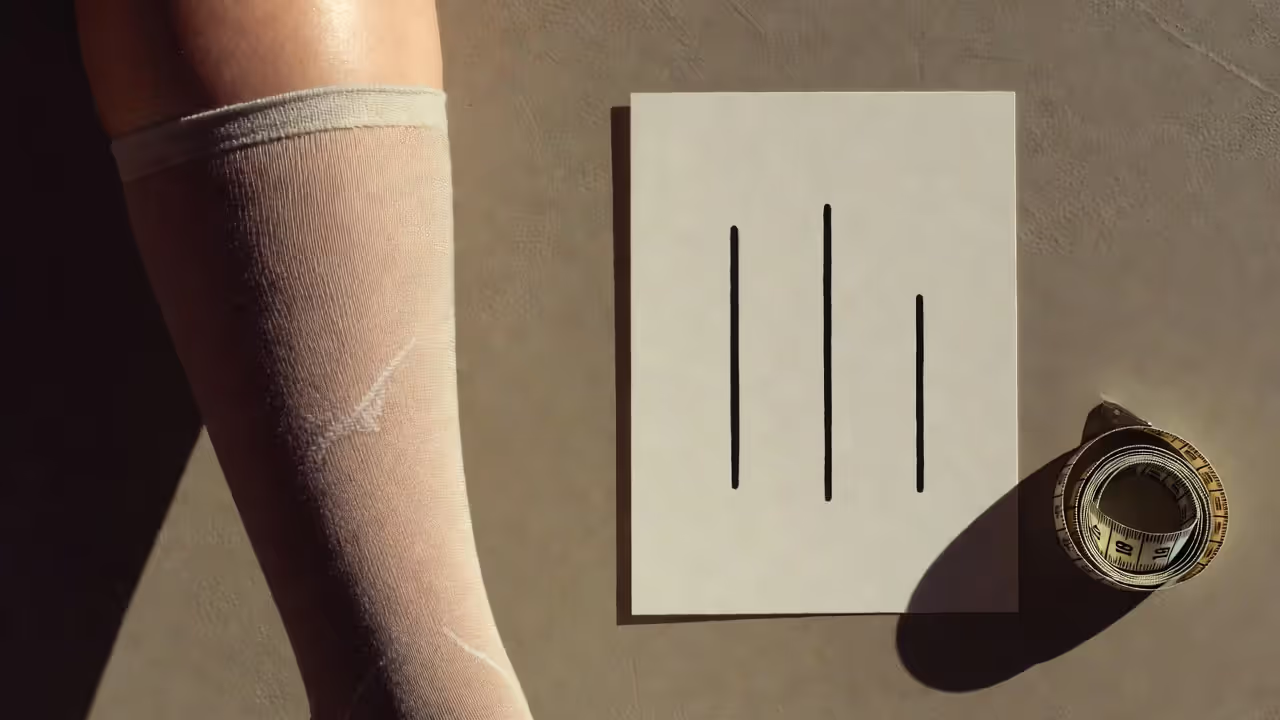
Graduated compression means the garment applies different pressure levels at different points—tightest at the extremities (ankles or wrists) and gradually decreasing toward the torso. A quality compression sock might apply 20-30 mmHg at the ankle, dropping to 10-15 mmHg at the calf.
This pressure gradient matters because blood returning to your heart from your legs fights gravity. The graduated squeeze helps push deoxygenated blood upward through veins, reducing pooling in lower extremities. Without this gradient, uniform compression can actually impede circulation by creating pressure bottlenecks.
Author: Amanda Reeds;
Source: thelifelongadventures.com
Medical-grade compression uses precise mmHg measurements. Athletic compression gear rarely specifies exact pressure, instead using vague terms like "moderate" or "firm." This inconsistency makes comparing products difficult and explains why two "compression" shirts can feel completely different.
Effects on Blood Flow and Lymphatic Drainage
Compression affects two fluid systems: the cardiovascular system (blood) and the lymphatic system (interstitial fluid that carries waste products and immune cells).
Arterial blood flow—oxygen-rich blood traveling from heart to muscles—typically isn't restricted by proper compression. Studies using Doppler ultrasound show that compression up to 30 mmHg doesn't significantly reduce arterial flow in healthy athletes. However, excessive tightness (above 40 mmHg) can become counterproductive, especially around major arteries.
Venous return gets the biggest boost. When muscles contract during exercise, they naturally compress veins and push blood back toward the heart—the "muscle pump" effect. Circulation compression wear amplifies this by maintaining external pressure even during muscle relaxation phases. One study measured 30% faster venous blood velocity in legs wearing graduated compression compared to bare skin during treadmill running.
Lymphatic drainage responds similarly. Exercise creates metabolic waste products and micro-damage that triggers inflammation. Lymph vessels collect this debris, but unlike blood vessels, they lack a muscular pump. External compression provides mechanical assistance, potentially speeding removal of inflammatory markers like creatine kinase and lactate.
The catch: compression only helps if you're moving. Static compression while sitting provides minimal benefit because you lose the synergistic effect of muscle contractions working with external pressure.
Proven Benefits Backed by Sports Compression Research
Researchers have tested compression garments in hundreds of studies, with mixed results depending on what outcome they measured. Some benefits show consistent evidence; others remain speculative.
Reduced Muscle Soreness and Faster Recovery Times
This represents the strongest evidence for muscle recovery clothing. A 2013 meta-analysis examining 12 studies found that wearing compression garments for 24 hours post-exercise reduced delayed-onset muscle soreness (DOMS) by approximately 20-30% compared to no compression.
The soreness reduction peaks around 24-72 hours after intense exercise—exactly when DOMS typically feels worst. Athletes reported being able to train harder in subsequent sessions, though "harder" meant subjective readiness rather than measurable performance improvements.
Recovery compression science suggests multiple mechanisms: reduced muscle oscillation limits micro-tears during the initial workout, improved circulation speeds waste removal afterward, and the pressure may reduce swelling that contributes to soreness perception. One study using MRI imaging showed 15% less muscle swelling in compressed legs 48 hours after eccentric exercise (movements where muscles lengthen under load, like downhill running).
Practical consideration: the compression must be worn immediately after exercise and continuously for at least 12 hours to show benefits. Taking it off after two hours provides minimal effect.
Author: Amanda Reeds;
Source: thelifelongadventures.com
Enhanced Circulation During and After Exercise
Blood lactate clearance—how quickly your body removes lactate produced during hard efforts—improves modestly with compression. Studies show 5-10% faster clearance rates, which matters most during interval training where you need to recover between hard efforts.
One study had cyclists perform repeated 4-minute intervals at threshold power. Those wearing compression tights cleared lactate 8% faster during 4-minute recovery periods, allowing them to complete one additional interval before exhaustion. That's meaningful for training volume, though the effect size is modest.
Oxygenation of working muscles shows inconsistent results. Some near-infrared spectroscopy studies detect slightly higher oxygen saturation in compressed muscles, while others find no difference. The pressure may help redistribute blood from superficial vessels to deeper tissue, but whether this translates to better oxygen delivery remains unclear.
Post-exercise circulation benefits appear more reliable. Wearing compression for several hours after training keeps venous return elevated, potentially delivering more nutrients and oxygen to recovering tissue. Think of it as extending the active recovery period without additional activity.
It’s not the work you do—it’s the recovery you get from it that makes you stronger.
— Joe Friel
Injury Prevention and Stability Support
Compression provides proprioceptive feedback—you're more aware of your limb position when fabric applies consistent pressure. This enhanced body awareness might improve movement patterns and reduce injury risk, though direct evidence is limited.
Ankle and knee compression sleeves do offer mechanical support. Fabric reinforcement around joints provides 10-15% more stability during lateral movements, similar to light taping. Basketball and volleyball players report feeling more confident during cutting movements, and one study found 23% fewer ankle rolls during a season when athletes wore compression ankle sleeves.
However, compression doesn't replace proper strength training or movement mechanics. A weak ankle in a compression sleeve is still a weak ankle. The garment might catch a minor misstep but won't prevent injuries caused by fatigue or poor landing technique.
Muscle oscillation reduction deserves mention. High-speed video shows that uncompressed muscles visibly wobble during impact activities like running. This oscillation creates micro-tears in muscle fibers and connective tissue. Compression reduces oscillation amplitude by 10-20%, theoretically limiting cumulative damage. Long-distance runners might accumulate less tissue damage over 20 miles, though measuring this directly is difficult.
Performance Improvements: What Studies Show (and Don't Show)
Author: Amanda Reeds;
Source: thelifelongadventures.com
Here's where evidence gets weak. Most controlled studies find no significant performance improvements during exercise when wearing compression.
A 2016 meta-analysis of 32 studies concluded that compression garments provide "trivial to small" effects on strength, power, and endurance performance. Time trial performances, vertical jump height, sprint speed, and weightlifting maxes show no consistent improvement.
The few studies showing benefits often have methodological issues—small sample sizes, lack of blinding, or confounding variables like placebo effect. When athletes believe compression helps, they may push harder, making it impossible to separate physiological effects from psychological ones.
One exception: compression might help maintain performance during prolonged events. A study of ultramarathon runners (50+ miles) found those wearing compression socks maintained pace better in the final 20 miles compared to non-compressed runners. The mechanism likely involves reduced muscle damage accumulation rather than enhanced performance capacity.
For practical purposes, don't expect compression gear athletes wear to make you faster or stronger during a single workout. The benefits show up in recovery between sessions and potentially in maintaining output during extremely long efforts.
Compression Gear for Different Types of Athletes
Not all athletes need the same compression approach. The demands of your sport determine which garments provide the most benefit.
Sport/Activity
Primary Benefit Needed
Recommended Garment Type
Optimal Compression Level
Distance Running
Reduced muscle oscillation, calf support
Full-length compression tights or calf sleeves
Moderate (15-20 mmHg)
Basketball/Volleyball
Joint stability, proprioception
Knee sleeves, arm sleeves
Moderate to firm (20-25 mmHg)
Cycling
Recovery between intervals, reduced fatigue
Compression shorts or bibs
Light to moderate (10-15 mmHg)
Weightlifting
Joint support, muscle awareness
Knee sleeves, elbow sleeves
Firm (25-30 mmHg)
Recovery (all sports)
Enhanced circulation, reduced soreness
Full-body compression (tights + top)
Moderate (15-20 mmHg)
Trail Running/Hiking
Reduced impact damage, joint stability
Compression tights with knee reinforcement
Moderate (15-20 mmHg)
Runners benefit most from lower-leg compression because impact forces are highest there. The calf muscle undergoes significant oscillation with each foot strike, and compression demonstrably reduces this movement. Full tights work, but many runners prefer calf sleeves for better temperature regulation.
Court sport athletes prioritize joint stability and proprioception over circulation benefits. A knee sleeve provides confidence during lateral movements and may reduce landing impact forces. Arm sleeves have become popular in basketball, though evidence for upper-body compression is weaker than lower-body.
Cyclists face a different challenge: they're in a fixed position for hours, which can impair circulation despite high power output. Light compression helps prevent blood pooling without restricting the pedaling motion. Many cyclists wear compression only for recovery rather than during rides.
Weightlifters use compression differently—firm knee sleeves provide mechanical support during heavy squats, storing elastic energy during descent and releasing it during ascent. This is equipment assistance rather than recovery aid, and some powerlifting federations regulate sleeve thickness for this reason.
Author: Amanda Reeds;
Source: thelifelongadventures.com
Common Mistakes When Choosing Muscle Recovery Clothing
Athletes waste money and miss benefits by approaching compression incorrectly. Three mistakes account for most problems.
Getting the Compression Level Wrong
Too loose accomplishes nothing. If you can easily pinch the fabric away from your skin, the garment isn't providing meaningful compression. It's just tight-fitting activewear.
Too tight creates problems: restricted movement, discomfort that prevents wearing it long enough to help recovery, and potential circulation impairment. If the fabric leaves deep marks in your skin after 30 minutes, or if your extremities feel tingly or cold, it's too tight.
The "Goldilocks" zone: fabric should feel snug immediately upon putting it on, requiring some effort to pull into place, but shouldn't cause discomfort during normal movement. After 10 minutes of wear, you should barely notice it.
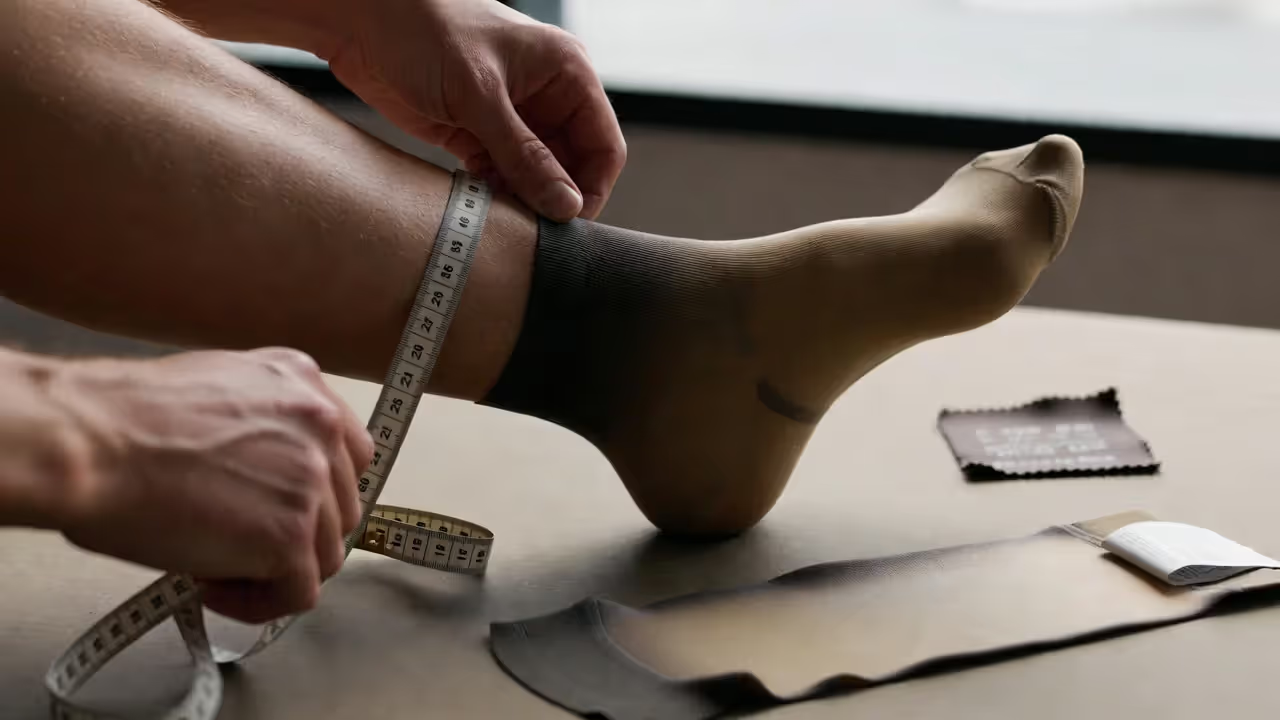
Sizing charts exist for a reason. Compression gear athletes choose often gets sized based on regular clothing size, but compression requires precise measurements of limb circumference. A medium compression sock based on calf circumference might pair with a large sock based on foot size. Measure before buying.
Wearing It at the Wrong Times
Some athletes wear compression only during workouts, expecting immediate performance benefits. As discussed, during-exercise benefits are minimal for most activities. The real value comes from wearing compression immediately after training and continuing for 12-24 hours.
A common scenario: an athlete finishes a hard workout, showers, and changes into regular clothes. They put on compression gear before bed, 3-4 hours post-exercise. This delayed application misses the critical window when inflammation and swelling begin. Compression works best when applied within 30 minutes of finishing exercise.
Another mistake: wearing compression 24/7. Your body needs periods without external pressure. Continuous wear for days can lead to skin irritation and may reduce the effectiveness of compression during key recovery periods. A good rule: wear compression for 12-24 hours post-exercise, then give your skin a break before the next hard session.
Ignoring Fabric Quality and Fit
Cheap compression garments lose elasticity quickly. After 10-15 washes, low-quality fabric provides 30-40% less compression than when new. You're essentially wearing regular tights at that point.
Quality compression uses durable elastic fibers (often a blend with materials like elastane or spandex) that maintain tension through dozens of wash cycles. Seam construction matters too—flatlock seams prevent chafing during long wear, while cheap overlocked seams create pressure points.
Moisture management often gets overlooked. You'll wear recovery compression for hours, including while sleeping. Fabrics that trap sweat against skin promote bacterial growth and odor. Look for moisture-wicking materials with antimicrobial treatments.
Fit variations between brands are substantial. One company's medium might compress like another's small. Read reviews specifically mentioning fit relative to measurements, not just general clothing size. Many serious athletes buy from multiple brands to find what works for their specific body proportions.
What to Look for When Buying Circulation Compression Wear
Author: Amanda Reeds;
Source: thelifelongadventures.com
Navigating compression gear options requires knowing which features matter and which are marketing fluff.
Feature
Why It Matters
What to Look For
Red Flags to Avoid
Graduated Compression
Ensures proper blood flow direction
Specific mmHg ratings at different points; tightest at extremities
"Compression" with no pressure specifications; uniform tightness
Flatlock or bonded seams; minimal seams in high-friction areas
Thick overlocked seams; seams across major muscle bellies
Size Range
Ensures proper fit for your measurements
Detailed sizing chart with multiple measurement points
Generic S/M/L/XL without measurements; one-size-fits-all claims
Compression Zones
Targets specific muscle groups
Anatomically placed panels with varying compression
Uniform compression across entire garment; no variation
Durability Rating
Indicates lifespan and value
Wash cycle guarantees (50+ washes); reinforced high-stress areas
No durability information; very cheap price point (<$20 for full tights)
Graduated compression specifications matter most. Medical-grade compression lists exact mmHg at ankle, calf, and thigh. Athletic compression rarely provides this detail, but better brands at least specify "graduated" and describe the pressure differential. If a product just says "compression fabric" without details, it's probably light compression at best.
Fabric blend determines both performance and longevity. The sweet spot combines durable synthetic base fibers (nylon or polyester) with enough elastic content (15-30%) to provide consistent pressure. Too much elastic makes garments difficult to put on and uncomfortable; too little means they won't compress adequately.
Compression zones—areas of varying tightness targeting specific muscles—separate advanced designs from basic ones. Quality calf sleeves have extra compression around the gastrocnemius and soleus muscles, with less pressure over the shin. This anatomical targeting provides better support than uniform compression.
Price correlates imperfectly with quality. Some $100+ garments offer no real advantage over $50 options from reputable brands. However, $15 compression tights almost certainly cut corners on fabric quality, construction, or both. Expect to pay $40-80 for quality compression tights and $20-40 for sleeves or socks.
Certifications can help: look for products tested to RAL-GZ 387 standards (German compression textile certification) or similar benchmarks. These ensure garments deliver claimed compression levels and maintain them through repeated wear and washing.
Frequently Asked Questions About Recovery Compression Science
How long should I wear compression clothing after a workout?
Research shows maximum benefit from wearing compression for 12-24 hours post-exercise. The critical period is the first 12 hours when inflammation and swelling peak. Wearing compression for only 2-3 hours provides some benefit but misses the window when it matters most. For practical purposes, put compression on immediately after training and wear it until bed (if you trained in the morning) or sleep in it and wear it through the next morning (if you trained in the evening). Wearing it for 48+ hours doesn't add much benefit beyond the first 24 hours.
Is there a difference between compression wear for during vs. after exercise?
Yes, though the garments themselves are often identical. During-exercise compression prioritizes movement freedom and temperature regulation. You might choose lighter compression (10-15 mmHg) or garments with more ventilation panels. Recovery compression can be tighter (15-25 mmHg) since you're not performing athletic movements. Some athletes use the same garments for both purposes, while others keep separate during-exercise and recovery pieces. Recovery-specific compression is often full-coverage (full tights rather than shorts) to maximize circulation benefits across larger muscle areas.
Can compression clothing replace proper warm-up or cool-down?
Absolutely not. Compression provides passive mechanical benefits to circulation and muscle support, but it doesn't prepare muscles for intense activity or actively clear metabolic waste. Warm-up increases muscle temperature, improves range of motion, and primes neural pathways—none of which compression addresses. Cool-down promotes active recovery through light movement that engages the muscle pump far more effectively than compression alone. Think of compression as supplementing proper training practices, not replacing them. An athlete who wears compression but skips warm-up is still at high injury risk.
Does graduated compression matter for athletes?
Yes, graduated compression—tighter at extremities, gradually looser toward the torso—is essential for circulation benefits. Uniform compression can create pressure bottlenecks that impede blood flow rather than helping it. Studies comparing graduated versus uniform compression consistently show better venous return and reduced swelling with graduated designs. The difference is most noticeable in lower legs where blood must travel against gravity. For upper body compression (arm sleeves, tops), graduation matters less because gravity assists blood return. When buying compression, specifically look for products advertised as "graduated" or "progressive" compression.
Are expensive compression brands worth the cost?
Sometimes, but not always. Premium brands ($80-150 for tights) typically offer better fabric durability, more precise graduated compression, and superior construction quality. If you'll wear compression 3-4 times per week for months, investing in quality makes sense—cheap garments lose effectiveness after 10-15 washes. However, mid-range brands ($40-70) often provide 90% of the benefit at half the price. The jump from $70 to $150 usually buys you brand prestige and minor refinements rather than dramatically better recovery. Avoid the cheapest options (<$25 for full tights) as they rarely provide adequate compression or durability. Test mid-range options first; upgrade to premium brands only if you notice limitations.
Can I wear compression gear if I have varicose veins or circulation issues?
Consult your doctor before wearing athletic compression if you have diagnosed circulation problems, varicose veins, peripheral artery disease, or diabetes. Medical-grade compression for these conditions requires specific pressure levels and professional fitting. Athletic compression (typically 15-25 mmHg) may help mild varicose veins by supporting venous return, but it can worsen certain conditions. Deep vein thrombosis (DVT), severe arterial disease, or skin infections are contraindications—compression could be dangerous. Your physician might recommend medical compression stockings instead of athletic compression gear. Never self-treat circulation disorders with athletic compression without medical guidance.
Compression clothing benefits extend beyond placebo effect, but they're not magic. The strongest evidence supports recovery applications: reduced muscle soreness, decreased swelling, and faster subjective recovery between training sessions. Performance improvements during exercise remain largely unproven for most athletes.
Smart use means matching compression type and level to your specific sport, wearing it during the critical 12-24 hour post-exercise window, and investing in quality garments that maintain compression through repeated use. Athletes who treat compression as one tool in a comprehensive recovery strategy—alongside proper nutrition, sleep, and training load management—will see the most benefit.
The gap between marketing claims and research findings remains wide. Compression won't transform your performance, but it can help you recover better and train more consistently. For athletes pushing training volume limits or competing frequently, that marginal recovery gain justifies the investment.
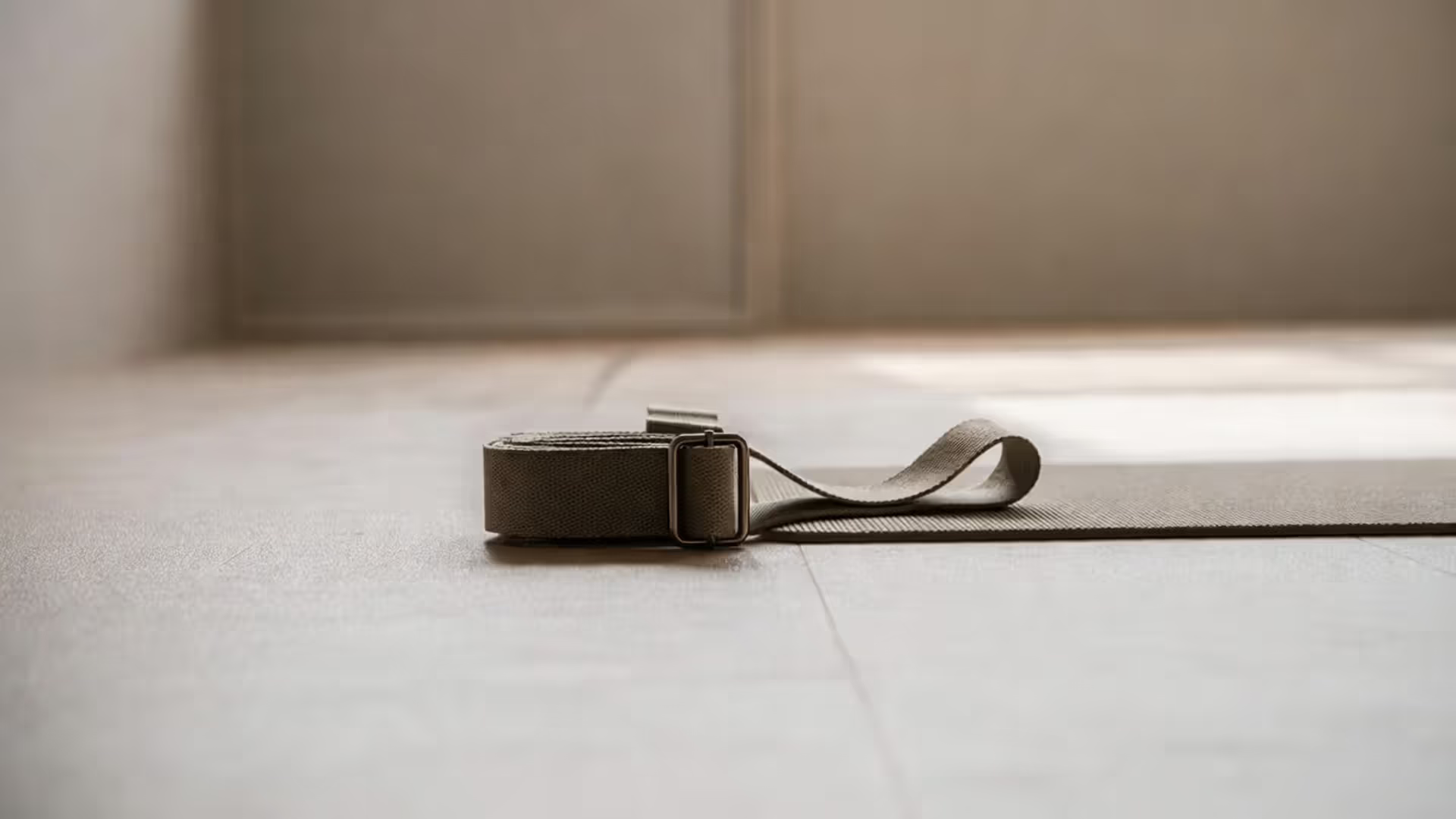
A yoga strap isn’t a “beginner crutch.” It’s a precision prop for safer stretching, better alignment, and smarter pose access. Learn strap techniques for hamstrings, hips, shoulders, quads, and calves—plus advanced modifications (Dancer, King Pigeon, inversions), rehab uses, and common mistakes to avoid.
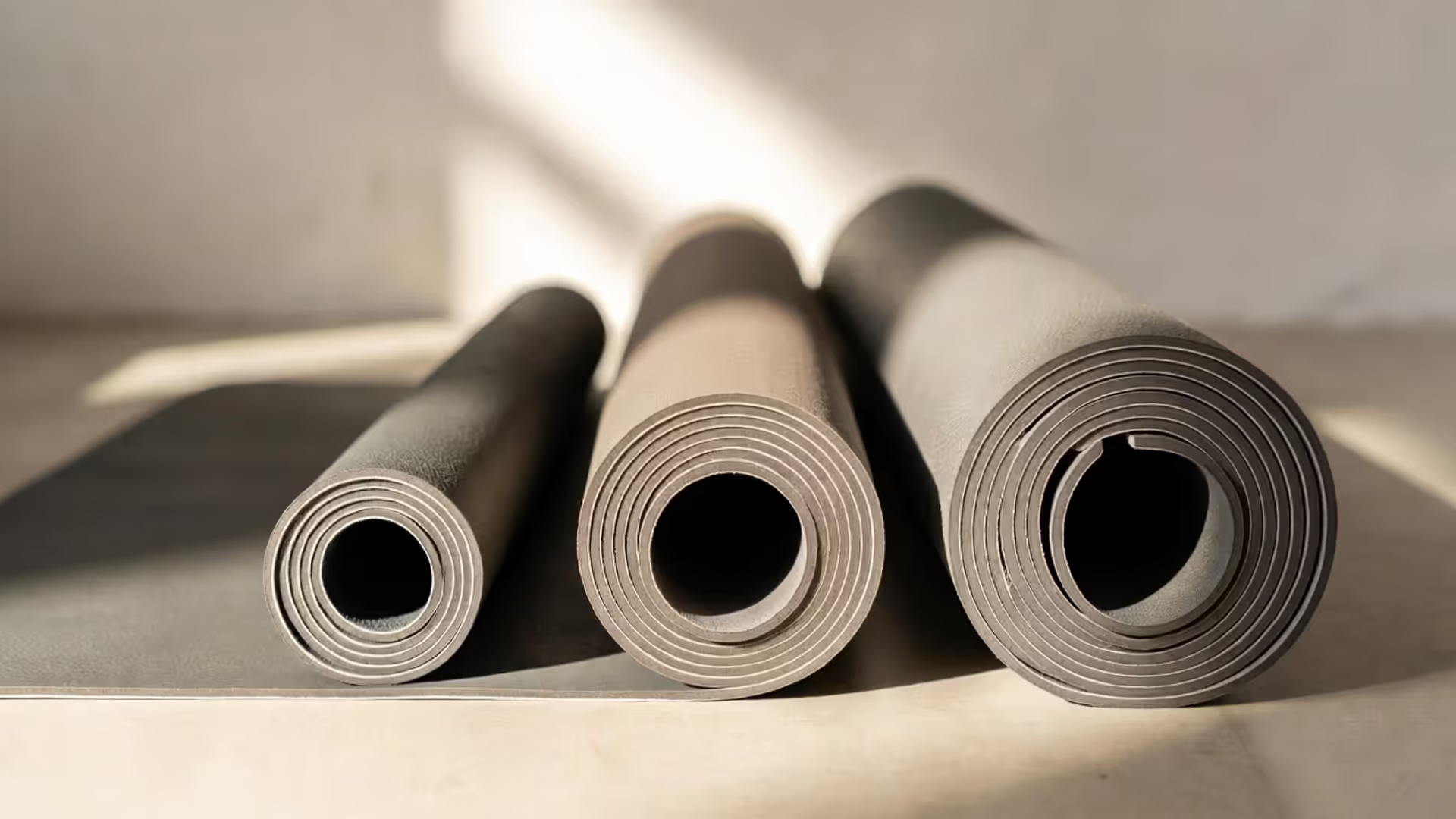
Confused about 3mm vs 6mm yoga mats? This guide explains how thickness affects joint protection, balance and proprioception, portability, and grip. Learn which thickness fits vinyasa, yin, hot yoga, and beginners, how materials change “feel,” and the most common buying mistakes to avoid.
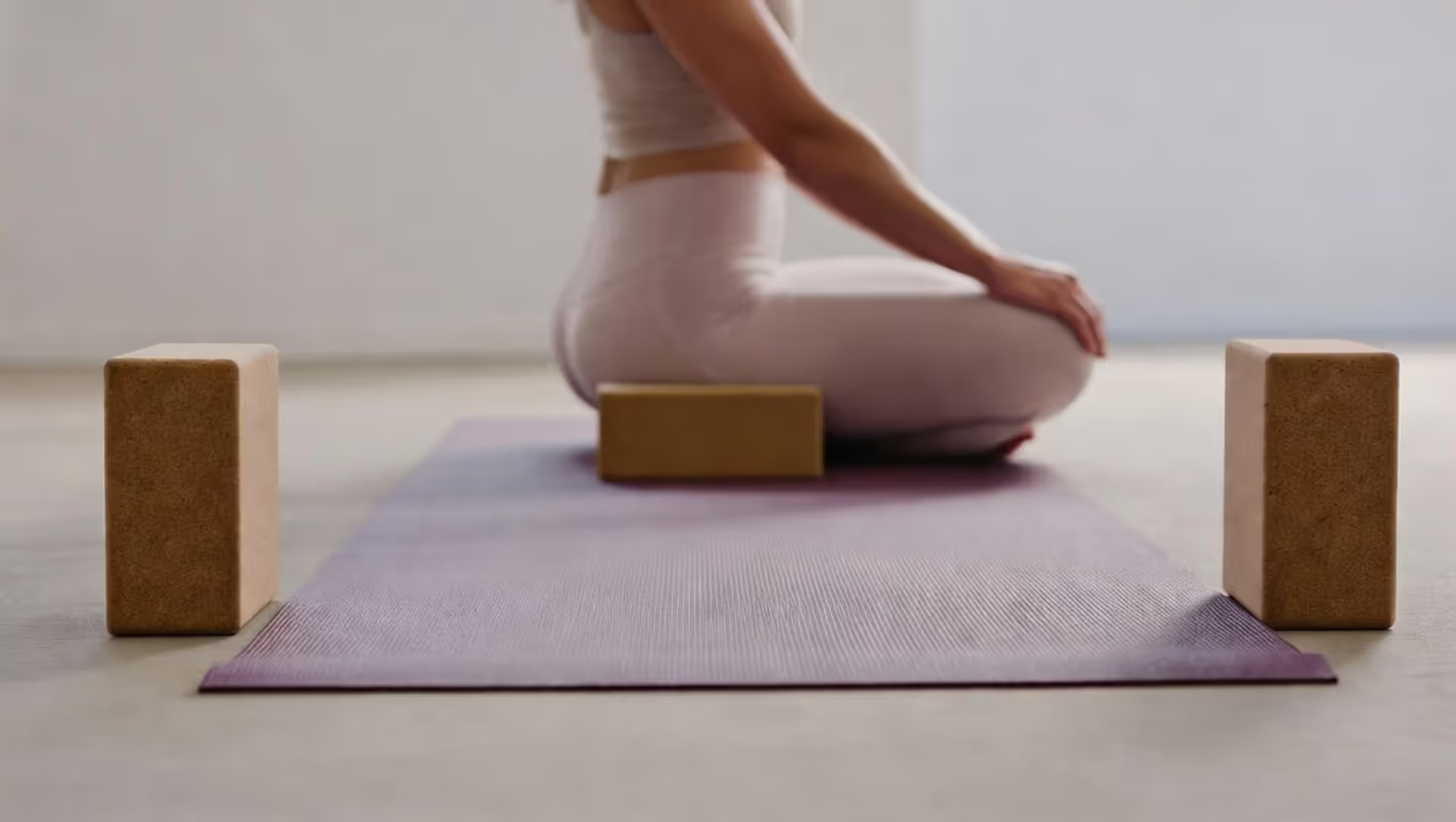
Yoga blocks aren’t “cheating”—they’re alignment tools that help you progress safely. Discover evidence-based benefits, correct block placement for standing, seated, and restorative poses, the biggest mistakes to avoid, and how to choose the right block material, size, and density for your practice.
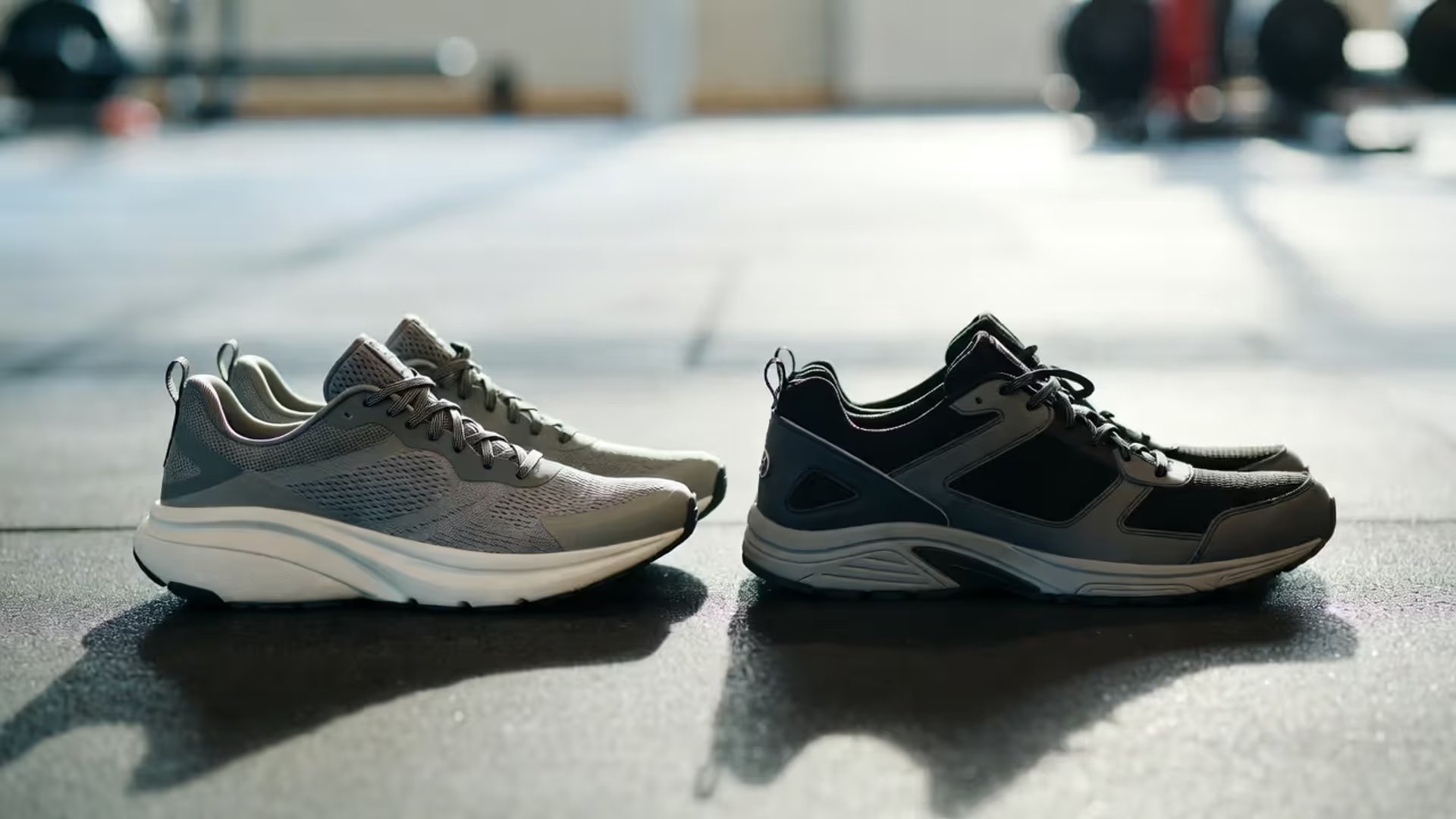
Confused about workout shoes vs running shoes? Learn the real design differences—cushioning, heel drop, flexibility, and lateral stability—plus when each fails, how to match shoes to CrossFit, lifting, or cardio, and when to replace them to reduce injury risk.
The content on this website is provided for general informational and educational purposes related to health, yoga, fitness, and overall wellness. It is not intended to replace professional medical advice, diagnosis, or treatment.
All information, workout suggestions, yoga practices, nutrition tips, and wellness guidance shared on this site are for general reference only. Individual health conditions, fitness levels, and medical needs vary, and results may differ from person to person. Always consult a qualified healthcare provider before starting any new exercise program, dietary plan, or wellness routine.
We are not responsible for any errors or omissions, or for any outcomes resulting from the use of information presented on this website. Your health and fitness decisions should always be made in consultation with appropriate medical and fitness professionals.