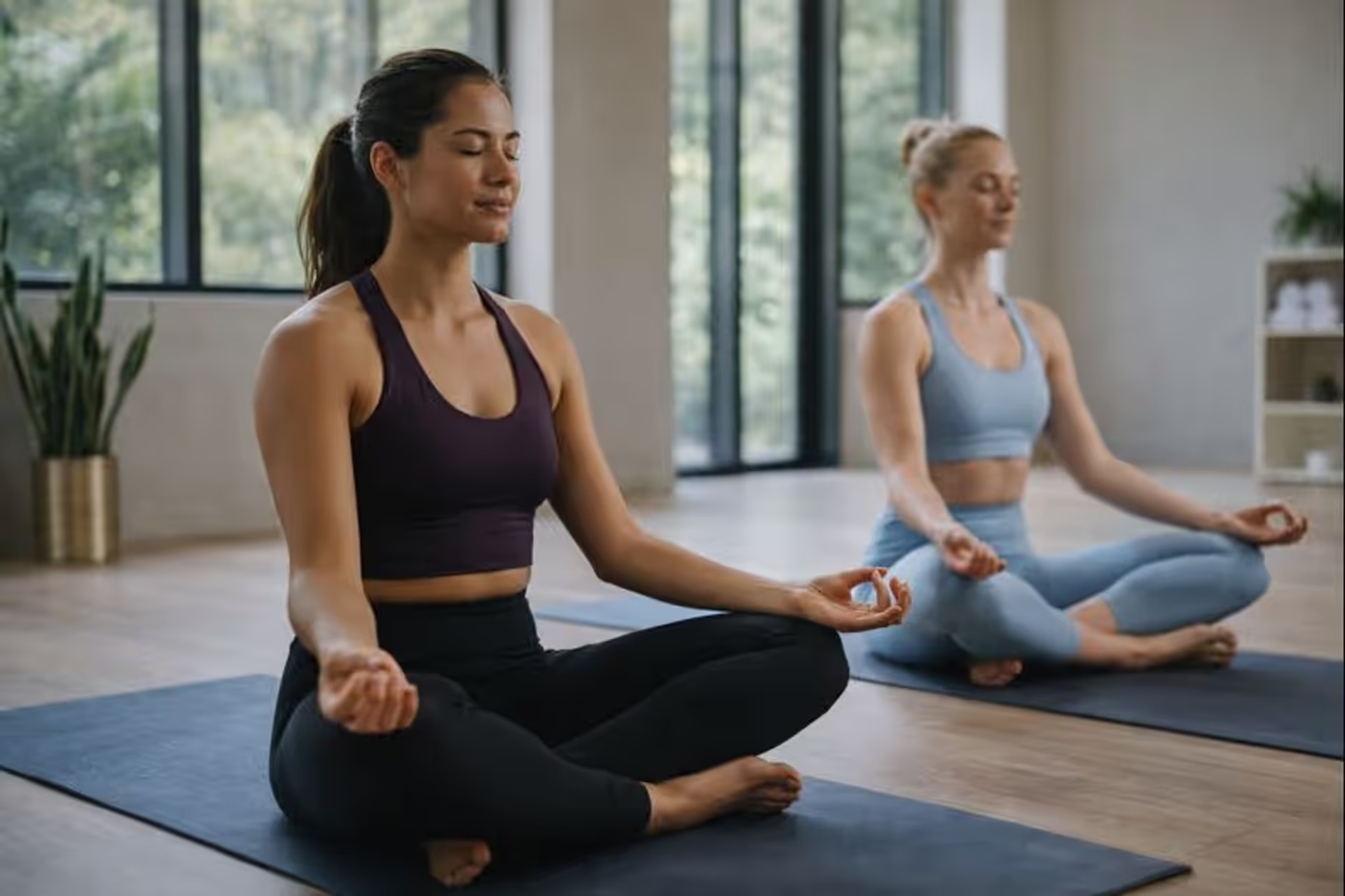
The image persists stubbornly in popular consciousness: a practitioner twisted into an impossibly complex position, demonstrating flexibility that seems reserved for circus performers or those born with joints made of rubber. This narrow perception obscures what yoga actually offers the vast majority of people who will never achieve Instagram-worthy contortions but who can derive profound health benefits from consistent, accessible practice. Yoga is not primarily about flexibility. It is a comprehensive health practice that builds functional strength, improves joint mobility, regulates nervous system function, and cultivates mental balance that supports wellbeing across every dimension of life.
The contemporary understanding of yoga wellness has evolved substantially as research accumulates demonstrating measurable effects on physical function, stress response, and psychological health. What ancient practitioners intuited through centuries of experiential refinement, modern science increasingly validates through controlled studies examining how yoga practices influence everything from inflammatory markers to brain structure to cardiovascular function. This convergence of traditional wisdom and scientific evidence positions yoga as a uniquely well-supported approach to health that bridges physical and mental domains in ways that isolated interventions cannot match.
The accessibility of yoga deserves particular emphasis because misconceptions about flexibility requirements discourage many people who would benefit most from practice. You do not need to touch your toes to begin yoga. You do not need athletic background, prior experience, or particular body type. You need only willingness to show up consistently and engage with practices that meet you wherever you currently are while gradually expanding your capacity over time. This accessibility makes yoga available to populations often excluded from other fitness approaches, including older adults, those recovering from injury, people with chronic conditions, and complete beginners who feel intimidated by conventional exercise environments.
— Jessica Taylor
The holistic nature of yoga distinguishes it from exercise approaches that address only physical dimensions of health. While running primarily develops cardiovascular capacity and weight training primarily builds muscular strength, yoga simultaneously addresses strength, flexibility, balance, coordination, stress response, emotional regulation, and body awareness in integrated fashion. This comprehensiveness makes yoga particularly valuable for those seeking overall wellness rather than isolated fitness components, and for those whose health goals encompass mental and emotional dimensions alongside physical ones.
The Science Behind Yoga and Physical Health
Understanding how yoga produces its health effects requires examining the physiological mechanisms through which postures, breathing techniques, and mindful movement influence body systems. This scientific foundation helps practitioners appreciate why yoga works and how to maximize benefits through intelligent practice rather than simply following sequences without understanding their purpose.
Joint mobility represents one of yoga's most significant contributions to physical health, addressing the progressive movement restriction that sedentary modern lifestyles create. Joints require regular movement through their full available ranges to maintain synovial fluid circulation, cartilage nutrition, and capsular flexibility. Without this movement, joints stiffen gradually, creating restriction that compounds over years into significant functional limitation. Yoga systematically moves joints through varied ranges and directions, maintaining the mobility that daily life often fails to demand but that healthy aging requires.
The National Institutes of Health has funded substantial research into yoga's health effects, documenting benefits for conditions ranging from chronic pain to cardiovascular disease to mental health disorders. This institutional investment in yoga research reflects growing recognition that mind-body practices produce measurable physiological effects worthy of scientific investigation.
Connective tissue health improves through yoga's sustained holds and varied movement patterns that stimulate fibroblast activity and collagen remodeling. Fascia, the connective tissue web that surrounds and connects muscles, organs, and other structures throughout the body, responds to mechanical loading by adapting its architecture. Yoga provides the varied, sustained loading that fascia requires to maintain healthy organization rather than developing the adhesions and restrictions that chronic disuse and repetitive movement patterns create.
The concept of mechanotransduction explains how physical forces applied during yoga practice translate into cellular responses that improve tissue health. When you hold a yoga pose, the mechanical stress on tissues triggers biochemical cascades that influence gene expression, protein synthesis, and cellular behavior. This mechanotransduction mechanism underlies many of yoga's physical benefits, explaining why consistent practice produces tissue adaptations that improve function over time.
Muscular stabilization develops through yoga's demand for controlled movement and sustained positioning that activate stabilizing muscles often neglected in conventional exercise. While large prime movers dominate most exercise approaches, yoga engages the smaller stabilizing muscles that support joint integrity and movement quality. This stabilization capacity protects against injuries that occur when joints lack the muscular support to handle forces that daily activities and sports impose.
The rotator cuff muscles that stabilize shoulders, the hip rotators that support pelvic alignment, and the deep spinal stabilizers that protect the vertebral column all receive attention during yoga practice that conventional exercise often neglects. This stabilizer development proves particularly important because weakness in these muscles underlies many common injuries and chronic pain conditions that practitioners seek to address.
Balance and coordination improve through yoga's single-leg positions, transitional movements, and attention to proprioceptive awareness that develops the neuromuscular coordination underlying controlled movement. This proprioceptive development becomes increasingly important with age as balance capacity naturally declines and fall risk correspondingly increases. Yoga provides safe, progressive balance challenge that maintains and improves the coordination that independent function requires.
The vestibular system, which detects head position and movement, integrates with visual and proprioceptive information to maintain balance. Yoga challenges all three balance systems through positions that alter head orientation, require visual focus during movement, and demand precise body position awareness. This comprehensive balance training produces more robust balance capacity than approaches challenging only single balance systems.
Building Functional Strength Through Yoga
The strength that yoga builds differs fundamentally from the isolated muscle development that conventional resistance training emphasizes, instead creating functional capacity that translates directly into improved movement quality and daily life performance. This functional strength emerges from yoga's characteristic demands for whole-body integration, controlled positioning, and sustained muscular engagement under bodyweight load.
Isometric holds that characterize many yoga postures build strength through sustained muscle activation without joint movement, developing muscular endurance and stability that concentric and eccentric training alone cannot provide. Holding warrior pose for thirty seconds demands continuous muscular engagement that builds endurance patterns different from those developed through repetitive lifting. This isometric capacity proves particularly valuable for postural muscles that must maintain sustained contractions throughout waking hours.
The metabolic demands of isometric holds often surprise practitioners accustomed to conventional exercise where rest occurs between repetitions. Holding plank position or chair pose creates continuous energy demand without the recovery intervals that repetitive exercise provides. This sustained demand builds work capacity and metabolic conditioning alongside strength development.
Controlled transitions between poses require muscular control through ranges of motion that many people lack despite having adequate strength for isolated movements. Moving slowly from standing to forward fold to plank to upward dog demands control throughout each transition rather than merely at start and end points. This transitional control develops the strength-through-range that functional movement requires and that injuries often compromise.
Eccentric strength, meaning the capacity to control lengthening under load, develops particularly well through yoga's slow, controlled movements. The descent into a forward fold requires eccentric hamstring engagement. The lowering phase of chaturanga demands eccentric triceps and chest control. This eccentric capacity proves essential for injury prevention and movement quality in ways that concentric-focused training neglects.
Multi-joint engagement patterns in yoga postures develop the integrated strength that real-world movement demands. Standing balance poses simultaneously challenge ankle, knee, hip, and trunk stability. Arm balances integrate shoulder, core, and hip engagement. This integration teaches muscles to work together in patterns that transfer to athletic performance and daily activities more effectively than isolation training that develops strength in disconnected pieces.
The concept of kinetic chain integration describes how yoga develops coordinated strength throughout connected body segments. Lifting a heavy box safely requires integrated engagement from legs through core through arms. Yoga develops this integration through poses that demand simultaneous engagement across multiple body regions, creating movement patterns that transfer to functional tasks.
The bodyweight loading of yoga builds strength without the joint stress that heavy external loads can create, making yoga appropriate for populations unable to tolerate conventional resistance training. This low-impact strength development serves rehabilitation contexts, aging populations, and anyone seeking strength maintenance without injury risk that aggressive loading presents.
Progressive overload in yoga occurs through pose modifications that increase difficulty rather than through adding external weight. Extended hold durations, reduced base of support, increased range of motion, and progression to more challenging pose variations create the progressive challenge that continued adaptation requires. Understanding these progression mechanisms helps practitioners continue developing rather than plateauing at initial capacity levels.
Author: Jessica Taylor;
Source: thelifelongadventures.com
Mobility and Flexibility: Understanding the Difference
Popular confusion between flexibility and mobility obscures important distinctions that affect how practitioners should approach range of motion development. Flexibility refers to passive range of motion, meaning how far a joint can move when external force is applied. Mobility encompasses active range of motion, meaning how far you can move a joint through your own muscular effort with control. Yoga practices develop both but emphasize mobility because active control through range matters more for functional capacity than passive flexibility alone.
Passive flexibility without corresponding strength creates joint vulnerability rather than movement capability. The person who can be stretched into deep positions but cannot control movement through those ranges faces injury risk when daily activities or sports suddenly demand access to ranges they cannot actively stabilize. Yoga's emphasis on controlled positioning develops the strength through range that makes flexibility functional rather than merely impressive.
The concept of end-range strength describes the capacity to generate force at the limits of available range. Many injuries occur when joints are forced into ranges where muscular support is inadequate. Yoga develops end-range strength by requiring controlled positioning at challenging ranges, building the capacity to stabilize joints throughout their available motion rather than only in mid-range positions.
The nervous system regulates how much range joints can access based on perceived safety. When the nervous system detects inadequate muscular control to stabilize a joint at a given range, it limits access to that range through protective tension that prevents potentially harmful positions. This neurological limitation explains why aggressive stretching often fails to produce lasting flexibility gains. The nervous system simply restores protective limitation once the forcing stops. Yoga's gradual, controlled approach builds the strength and control that convince the nervous system to permit greater range access.
Stretch tolerance, meaning the ability to relax into stretched positions without protective contraction, develops through yoga's repeated exposure to lengthened positions in safe, controlled contexts. As the nervous system learns that these positions are safe, it reduces the protective responses that limit range. This neurological adaptation explains why consistent moderate practice produces better flexibility gains than sporadic intense stretching.
Sustainable progress in mobility requires consistency over intensity. Tissues adapt to repeated gentle stimulus more effectively than to occasional aggressive loading. The practitioner who practices regularly at moderate intensity makes greater long-term progress than one who forces deep stretches sporadically. This principle argues for frequent, sustainable practice rather than periodic intensive efforts that cannot be maintained and that may cause tissue damage that sets progress backward.
The time course of flexibility adaptation varies among different tissue types. Muscles adapt relatively quickly, showing changes within weeks of consistent practice. Connective tissues including tendons and ligaments adapt more slowly, requiring months of consistent stimulus. Neural adaptations affecting stretch tolerance can occur rapidly but require ongoing maintenance. Understanding these different timelines helps practitioners set realistic expectations and maintain patience during the gradual adaptation process.
Joint integrity protection should accompany flexibility development because hypermobility creates problems as significant as restriction. Joints that move beyond their stable ranges become vulnerable to sprains, dislocations, and chronic instability. Yoga practiced intelligently develops mobility within ranges that joints can safely control rather than pursuing maximum flexibility regardless of stability implications.
The concept of optimal mobility describes the range of motion appropriate for each individual's activities and anatomy rather than universal flexibility standards. A desk worker needs different mobility than a gymnast. An older adult has different optimal ranges than a young athlete. Yoga should develop mobility appropriate to individual needs rather than pursuing universal benchmarks that may not suit particular bodies or lifestyles.
Yoga and the Nervous System
Beyond its physical effects, yoga profoundly influences nervous system function in ways that affect stress response, emotional regulation, sleep quality, and overall sense of wellbeing. Understanding these neurological mechanisms helps practitioners appreciate why yoga feels different from conventional exercise and how to optimize practice for nervous system benefits.
Autonomic balance describes the relationship between sympathetic and parasympathetic nervous system activity that determines whether the body operates in stress-response or rest-and-digest modes. Modern life chronically activates sympathetic responses through work pressure, information overload, and environmental stimulation that keep stress systems engaged even when no actual threat exists. Yoga systematically activates parasympathetic responses through breath regulation, slow movement, and relaxation practices that restore autonomic balance compromised by chronic stress.
Harvard Health Publishing has documented how mind-body practices including yoga influence stress response systems, explaining the mechanisms through which breathwork and mindful movement affect physiological stress markers and psychological wellbeing.
The vagus nerve, which connects brain to body and mediates parasympathetic responses, is directly influenced by breathing patterns and body positioning that yoga emphasizes. Deep, slow breathing stimulates vagal activity that calms heart rate, reduces blood pressure, and shifts the body toward restorative states. Certain yoga positions, particularly gentle inversions, further stimulate vagal tone through pressure and positioning effects.
Heart rate variability, a measure of autonomic flexibility and health, improves with regular yoga practice. Higher heart rate variability indicates greater capacity to shift between sympathetic and parasympathetic states as circumstances require, representing more adaptive stress response capacity. Research demonstrates that consistent yoga practice increases heart rate variability, suggesting improved autonomic function.
Breath regulation provides direct access to autonomic function because respiratory patterns both reflect and influence nervous system state. Slow, deep breathing with extended exhalation activates vagal pathways that stimulate parasympathetic response. Yoga's emphasis on breath awareness and deliberate breathing technique leverages this connection, using conscious respiration to shift physiological state in ways that conscious willing cannot achieve directly.
— Jessica Taylor
The respiratory-cardiovascular interaction explains how breathing affects heart function and blood pressure. Inhalation naturally increases heart rate while exhalation decreases it. Extended exhalation, emphasized in many yoga breathing practices, leverages this interaction to promote cardiovascular calming and parasympathetic activation.
Interoceptive awareness, meaning sensitivity to internal body signals, develops through yoga's attention to sensation during practice. This enhanced interoception improves emotional awareness because emotions manifest physically before they register consciously. The practitioner who develops sensitivity to subtle body signals gains earlier recognition of emotional states and greater capacity to regulate them before they escalate into overwhelming intensity.
The insular cortex, a brain region involved in interoceptive processing, shows structural and functional changes in experienced yoga practitioners. These changes correlate with improved body awareness and emotional regulation, suggesting that yoga practice literally reshapes brain regions involved in perceiving and responding to internal states.
The stress buffering effects of regular yoga practice extend beyond immediate practice sessions into improved resilience when stress occurs. Research suggests that consistent practitioners show moderated stress responses to challenges, recovering more quickly than non-practitioners and experiencing less intense reactions to equivalent stressors. This improved resilience represents perhaps yoga's most valuable contribution to modern life where stress elimination remains impossible but stress management determines health outcomes.
Cortisol regulation improves with yoga practice, with research showing reduced baseline cortisol levels and more appropriate cortisol responses to stress in regular practitioners. Since chronic cortisol elevation contributes to numerous health problems including immune suppression, metabolic dysfunction, and cognitive impairment, yoga's effects on cortisol regulation have significant health implications.
Mental Balance and Emotional Resilience
The psychological benefits of yoga emerge from the combination of physical practice, breath regulation, and attention training that together influence mental function across multiple dimensions. These benefits often motivate continued practice more than physical improvements because enhanced mental balance affects quality of life pervasively rather than only during practice sessions.
Focus development occurs through yoga's demand for present-moment attention that cannot coexist with the mental wandering characterizing most waking hours. Holding a challenging pose requires attention to balance, alignment, breath, and sensation that leaves little cognitive capacity for the rumination and distraction that typically dominate. This focused attention builds capacity that transfers into improved concentration during work, conversations, and other activities requiring sustained attention.
The default mode network, a brain network active during mind-wandering and self-referential thought, shows reduced activity during yoga practice and in experienced practitioners generally. This reduced default mode activity correlates with decreased rumination and improved ability to maintain present-moment focus, suggesting that yoga produces lasting changes in attention-related brain function.
Emotional regulation improves through yoga's practice of maintaining equanimity during physical challenge. When poses create discomfort, practitioners learn to observe sensation without reactive aversion, developing tolerance for difficulty that transfers to emotional challenges off the mat. This practiced equanimity provides skills for navigating emotional turbulence that intellectual understanding alone cannot provide.
The prefrontal cortex, involved in executive function and emotional regulation, shows increased activity and connectivity in experienced yoga practitioners. These changes suggest enhanced top-down regulation of emotional responses, providing the neural substrate for improved emotional control that practitioners report.
Body awareness enhancement through yoga practice improves the embodied sense of self that psychological wellbeing requires. Modern life promotes dissociation from physical experience through screen-based activities, cognitive work, and environments that minimize body awareness. Yoga reconnects practitioners with physical experience, developing grounded presence that supports psychological stability and authentic self-understanding.
The meditation components of comprehensive yoga practice train attention in ways that research associates with improved psychological wellbeing, reduced anxiety and depression, and enhanced emotional regulation capacity.
Relaxation practices including savasana and yoga nidra provide systematic training in releasing tension that many people never develop, creating skills for rest that chronic tension otherwise prevents.
Self-efficacy, meaning confidence in one's ability to handle challenges, increases through yoga practice as practitioners discover capacity they did not know they possessed. Successfully holding challenging poses, maintaining calm during difficulty, and progressing over time builds confidence that extends beyond physical practice into broader life domains.
Yoga for Beginners: Starting Safely
Beginning yoga practice requires understanding that unfamiliar does not mean inaccessible and that initial awkwardness fades quickly with consistent exposure. Yoga for beginners should emphasize safety, accessibility, and sustainable habits rather than achieving impressive poses that Instagram might suggest represent yoga's purpose.
Foundational poses establish movement patterns and body awareness that more complex practices require. Standing poses like mountain, warrior, and triangle teach alignment principles. Forward folds and gentle backbends introduce spinal movement. Seated poses develop hip flexibility and core engagement. Mastering these foundations creates the base for safe progression rather than jumping to advanced poses that impressive-looking bodies perform.
Mountain pose, though appearing simple, teaches fundamental alignment principles including foot grounding, leg engagement, pelvic positioning, spinal elongation, and shoulder placement that apply throughout more complex practices. Taking time to understand mountain pose deeply rather than rushing to more impressive positions establishes foundations that serve ongoing practice.
Pacing and rest deserve emphasis because beginners often push too hard in misguided attempts to maximize benefit or prove capability. The effort required for sustainable practice is moderate, challenging enough to stimulate adaptation but not so intense that recovery prevents consistent practice. Rest between poses when needed. Take breaks during sequences. Skip poses that feel wrong. These adjustments make practice sustainable rather than depleting.
Child's pose serves as a resting position that beginners should feel free to take whenever needed during practice. Rather than pushing through fatigue that compromises form and increases injury risk, resting in child's pose allows recovery before continuing with appropriate energy and attention. Experienced practitioners also use child's pose liberally, recognizing that rest supports rather than undermines effective practice.
Common misconceptions that discourage beginners deserve direct address. You do not need to be flexible to begin yoga. Yoga develops flexibility in those who lack it. You do not need special equipment beyond a basic mat. You do not need athletic clothing or expensive accessories. You do not need to attend studio classes, though instruction helps prevent errors that self-teaching might perpetuate. You need only consistent practice over time, starting wherever you are and progressing at whatever pace your body allows.
The comparison trap that social media creates deserves explicit acknowledgment. Bodies performing advanced poses on Instagram represent years of dedicated practice, favorable genetics, and often professional photography that presents idealized images. Comparing beginner practice to these images creates unrealistic expectations and unnecessary discouragement. Yoga is a personal practice where comparison to others serves no constructive purpose.
Modifications and props make poses accessible regardless of current capacity. Blocks raise the floor for those who cannot reach it. Straps extend arm reach for those with tight shoulders or hamstrings. Blankets cushion joints and support seated positions. Using these tools demonstrates intelligent practice rather than inadequacy, allowing practitioners to receive pose benefits without forcing positions their bodies cannot yet achieve.
Qualified instruction, whether through studio classes or reputable online resources, helps beginners avoid errors that self-teaching might perpetuate. Learning from experienced teachers establishes correct alignment patterns from the start rather than requiring correction of ingrained habits later. Investment in initial instruction typically pays dividends through safer, more effective practice throughout subsequent years.
Yoga for Athletes: Enhancing Performance
Athletic populations increasingly recognize yoga's value for supporting performance, accelerating recovery, and extending competitive longevity beyond what sport-specific training alone can provide. Yoga for athletes addresses the imbalances, restrictions, and recovery limitations that intensive training creates while developing body awareness that enhances sport-specific skill execution.
Recovery enhancement represents yoga's most immediate benefit for athletes, providing active recovery modalities that accelerate restoration between training sessions. Gentle movement promotes blood flow that clears metabolic waste. Stretching addresses muscle shortening that intensive training creates. Breathing practices activate parasympathetic responses that shift the body from training stress into recovery mode. These recovery benefits allow athletes to train more consistently without the overtraining that inadequate recovery produces.
The American Council on Exercise has documented how yoga complements athletic training through recovery support, mobility improvement, and injury prevention benefits that enhance rather than replace sport-specific preparation.
The parasympathetic activation that yoga provides proves particularly valuable for athletes whose training chronically stimulates sympathetic stress responses. Intense training creates necessary stress that drives adaptation, but recovery requires parasympathetic dominance that athletes may struggle to achieve without deliberate practice. Yoga's breathing techniques and relaxation practices provide tools for shifting into recovery states that maximize adaptation from training stress.
Mobility improvements through yoga address the movement restrictions that repetitive sport-specific training patterns create. Runners develop hip flexor tightness and hamstring restriction. Cyclists develop thoracic spine stiffness and hip limitation. Swimmers develop shoulder imbalances. Sport-specific demands create sport-specific restrictions that limit performance and predispose to injury. Yoga systematically addresses these restrictions, restoring balance that sport-specific training disrupts.
The concept of movement variability explains why yoga benefits athletes who already engage in intensive physical training. Sport-specific training creates narrow movement patterns repeated thousands of times. Yoga provides movement variety that stimulates tissues in directions that sport-specific training neglects, maintaining comprehensive movement capacity rather than developing specialized but limited patterns.
— Jessica Taylor
Injury prevention emerges from yoga's combination of mobility work, stabilization development, and body awareness enhancement that together reduce injury risk. Adequate mobility prevents compensation patterns that stress vulnerable structures. Stabilization strength protects joints during dynamic athletic movements. Body awareness enables earlier recognition of emerging problems before they develop into injuries requiring extended recovery.
The pre-habilitation concept describes using yoga to prevent injuries before they occur rather than rehabilitating after injury happens. Identifying movement restrictions, stability deficits, and compensation patterns through yoga practice allows correction before these issues cause injuries that interrupt training and competition.
Mental focus training through yoga provides psychological skills that enhance competitive performance. The attention training that yoga develops transfers to the focused presence that optimal athletic performance requires. The stress regulation that breath practices provide helps athletes manage competitive anxiety. The equanimity cultivated through holding challenging poses supports composure during difficult competitive moments.
Flow state access, the psychological state of optimal performance characterized by complete absorption in activity, may be facilitated through yoga's attention training. Athletes report that yoga practice helps them access flow states more reliably during competition, suggesting that yoga's attention development transfers into enhanced performance psychology.
Author: Jessica Taylor;
Source: thelifelongadventures.com
Posture, Circulation, and Everyday Function
Beyond athletic performance and explicit health objectives, yoga improves the everyday physical function that determines quality of daily experience. Posture, circulation, and the ease of ordinary movement affect how bodies feel throughout waking hours in ways that accumulate into significant quality of life differences over time.
Postural improvement through yoga addresses the alignment problems that modern lifestyles create. Desk work promotes forward head position, rounded shoulders, and hip flexor shortening. Device use exacerbates these patterns through sustained positions that progressively worsen postural habits. Yoga counteracts these influences through positions that strengthen postural muscles, stretch shortened tissues, and develop awareness of alignment that enables correction of problematic patterns.
The thoracic spine, which typically becomes progressively stiffer through sedentary living, receives particular attention in yoga through extension, rotation, and lateral flexion movements that maintain mobility often lost by middle age. Thoracic mobility affects shoulder function, breathing capacity, and cervical spine stress, making thoracic attention through yoga particularly valuable for office workers and others whose daily activities promote thoracic stiffness.
Circulation enhancement through yoga's varied positions and breathing practices supports cardiovascular function and tissue health. Inverted positions reverse the gravitational patterns that upright posture creates, facilitating venous return and lymphatic circulation. Breathing practices improve respiratory efficiency and oxygen delivery. Movement patterns stimulate blood flow to tissues that sedentary positioning leaves relatively ischemic.
Lymphatic circulation, which depends on muscular contraction rather than heart pumping, is directly stimulated by yoga's varied movements and positions. The lymphatic system removes cellular waste and supports immune function, making lymphatic circulation enhancement through yoga relevant for both recovery and immune health.
Everyday movement quality improves as yoga develops the mobility, strength, and body awareness that ordinary activities require. Getting up from chairs, climbing stairs, reaching overhead, carrying groceries, playing with children or grandchildren, these activities feel easier when bodies possess the capacity that yoga develops. This improved daily function often motivates continued practice more than explicit health goals because the benefits are experienced constantly rather than only during measurement or practice.
Aging populations benefit particularly from yoga's effects on everyday function because age-related capacity decline threatens independence that younger practitioners take for granted. Maintaining the strength to rise from chairs, the balance to navigate stairs safely, and the mobility to dress independently requires ongoing capacity maintenance that yoga provides. Regular practice throughout aging preserves function that disuse progressively erodes.
Common Mistakes That Limit Benefits
Despite yoga's accessibility and safety, common mistakes can limit benefits or create problems that thoughtful practice avoids. Recognizing these errors helps practitioners extract maximum value from practice while avoiding pitfalls that undermine their efforts.
Pushing through pain represents perhaps the most common and consequential mistake, reflecting misguided beliefs that discomfort indicates productive effort. Pain during yoga practice signals potential tissue damage that continued effort will worsen. Sensation is expected and appropriate. Pain is not. Learning to distinguish these requires attention that aggressive practice prevents. When pain occurs, reduce intensity, modify positions, or skip poses entirely rather than forcing through signals that indicate harm.
The distinction between productive sensation and harmful pain requires development of body awareness that beginners may lack. Productive stretch sensation feels like gentle tension without sharp or alarming qualities. Pain feels sharp, burning, or sends alarm signals that something is wrong. Learning to recognize this difference takes time and attention but proves essential for safe, effective practice.
Inconsistent practice limits benefits more than any technical error because yoga's effects depend on accumulated exposure rather than isolated sessions. The practitioner who practices twenty minutes daily receives far more benefit than one who practices two hours weekly despite equal total time. Consistency creates the adaptation stimulus that sporadic practice cannot provide. Building sustainable habits matters more than optimizing individual sessions.
Ignoring breath awareness transforms yoga into mere stretching that sacrifices the nervous system benefits distinguishing yoga from conventional flexibility work. When attention focuses entirely on physical positioning while breath proceeds unconsciously, practice loses the regulatory effects that conscious breathing provides. Maintaining breath awareness throughout practice ensures that sessions produce the full spectrum of benefits rather than only physical effects.
— Jessica Taylor
Comparing to others distracts from the internal focus that yoga requires while potentially encouraging inappropriate effort to match capabilities that other bodies possess but yours may not. Practice should respond to your body's signals rather than to observations of what others achieve. The practitioner who honors their own limitations while working within them makes better progress than one who forces positions their body cannot safely achieve.
Neglecting relaxation components, particularly savasana at practice end, reduces the integration and nervous system benefits that complete practice provides. The temptation to skip final relaxation when time feels limited sacrifices benefits that cannot be replaced by additional active practice. Savasana allows the body to integrate practice effects while deepening parasympathetic activation that active poses begin.
Integrating Yoga Into Holistic Wellness
Yoga serves best not as an isolated practice but as a component within comprehensive approaches to health that address multiple dimensions through complementary modalities. Understanding how yoga fits alongside other practices helps practitioners design integrated wellness strategies rather than fragmented approaches that miss synergies between different elements.
Strength training and yoga complement each other because each develops capacities the other does not emphasize. Strength training builds maximal force production that yoga's bodyweight loading cannot match. Yoga develops mobility, stabilization, and movement quality that strength training often neglects. Together, they create more complete physical development than either provides alone.
Cardiovascular exercise addresses aerobic capacity that yoga's typically moderate intensity does not substantially develop. Running, cycling, swimming, and other sustained aerobic activities build heart health and endurance that complement yoga's other contributions. Athletes and fitness enthusiasts benefit from including both cardiovascular training and yoga rather than substituting one for the other.
Sports participation benefits from yoga's supportive effects while providing movement variety that yoga alone cannot offer. Sport-specific skills, competitive motivation, and social engagement through team activities complement yoga's individual, non-competitive nature. Many athletes find that yoga enhances their sports performance while sports provide outlets for competitive energy that yoga does not address.
Yoga serves as a connector between physical and mental health domains because its practices influence both simultaneously. This bridging function makes yoga particularly valuable for comprehensive wellness approaches that recognize the inseparability of physical and psychological health. The stress regulation, emotional balance, and body awareness that yoga develops support mental health while physical improvements support embodied wellbeing.
Long-Term Health and Sustainable Practice
The ultimate value of yoga emerges through sustained practice across years and decades rather than through short-term intensive efforts. This long-term perspective shapes how practitioners should approach yoga and what outcomes they should expect from continued engagement.
Adaptability across life stages makes yoga sustainable in ways that more demanding physical practices cannot match. The yoga that serves a twenty-year-old athlete differs from what serves a forty-year-old professional differs from what serves a seventy-year-old retiree. Yet yoga remains available to all these populations because it adapts to changing capacities rather than demanding fixed performance levels. This adaptability enables lifelong practice that maintains health benefits continuously rather than abandoning exercise when younger modalities become inaccessible.
Low injury risk supports sustainability because injuries interrupt practice in ways that break habits and set back progress. Yoga's controlled, self-regulated nature minimizes injury risk compared to activities involving external loads, high speeds, or contact. This safety allows consistent practice without the periodic forced breaks that more aggressive activities impose.
Yoga Alliance provides educational resources and teacher training standards that help practitioners find qualified instruction and understand the foundations of safe, effective practice.
— Jessica Taylor
Progressive development across extended time horizons produces results that short-term practice cannot achieve. The flexibility, strength, and body awareness that decades of practice develop exceed what intensive short-term efforts produce because tissues and neural patterns require extended time to fully adapt. Practitioners committed to lifelong practice eventually achieve capacities that seemed impossible when they began, not through forcing but through patient, consistent effort accumulated across years.
The cumulative benefits of sustained practice extend beyond physical capacities into psychological resilience, stress management skills, and embodied wisdom about health and wellbeing. Long-term practitioners develop intuitive understanding of their bodies that informs decisions about nutrition, sleep, activity, and other lifestyle factors. This accumulated wisdom represents perhaps yoga's greatest gift to those who maintain practice across life spans.
A Practice for Life
Yoga offers something rare in the wellness landscape: a comprehensive health practice accessible to virtually anyone, adaptable across all life stages, and supported by both traditional wisdom and contemporary research. Whether you seek strength, mobility, stress relief, athletic performance enhancement, or simply better quality of daily physical experience, yoga provides pathways toward those goals that you can sustain across however many decades remain in your life.
The yoga wellness that consistent practice creates encompasses physical capacity, nervous system regulation, psychological resilience, and embodied self-understanding that together support health across every dimension. These benefits require no special equipment, no particular body type, no prior athletic experience. They require only consistent practice over time, meeting yourself wherever you currently are while gradually expanding what becomes possible through patient, sustainable effort.
Begin where you are. Practice what you can. Return to the mat regularly rather than intensively. Trust that accumulated practice produces accumulated benefit regardless of how modest any individual session might seem. Over months and years, this approach transforms possibilities in ways that aggressive short-term efforts cannot match. Yoga rewards patience with progress that proves worth waiting for.
Can yoga help you lose weight? Explore what research shows about calorie burn, metabolic impact, hormone balance, and which yoga styles are most effective for supporting fat loss, improving body composition, and building sustainable habits beyond the mat.
Discover proven bedtime yoga stretches and calming breathing techniques designed to help you fall asleep faster and sleep more deeply. Follow a complete 15-minute routine with clear, step-by-step instructions to relax your nervous system, release tension, and prepare your body for restful sleep.
Discover 8 essential yoga poses and a simple 15-minute desk routine designed to correct poor posture, realign your spine, and ease upper back pain. Follow expert guidance to release tension, strengthen postural muscles, improve mobility, and prevent stiffness caused by long hours of sitting.
Discover 8 proven yoga poses designed to relieve neck pain and reduce cervical tension. Follow clear, step-by-step guidance tailored for desk workers to improve mobility, correct posture imbalances, restore healthy alignment, and prevent recurring stiffness caused by long hours of sitting.
The content on this website is provided for general informational and educational purposes related to health, yoga, fitness, and overall wellness. It is not intended to replace professional medical advice, diagnosis, or treatment.
All information, workout suggestions, yoga practices, nutrition tips, and wellness guidance shared on this site are for general reference only. Individual health conditions, fitness levels, and medical needs vary, and results may differ from person to person. Always consult a qualified healthcare provider before starting any new exercise program, dietary plan, or wellness routine.
We are not responsible for any errors or omissions, or for any outcomes resulting from the use of information presented on this website. Your health and fitness decisions should always be made in consultation with appropriate medical and fitness professionals.