Your neck starts throbbing around 2 PM. Without realizing it, your shoulders migrate upward toward your jaw. The persistent ache between your shoulder blades has become so familiar you barely register it anymore. Poor posture develops gradually—the cumulative result of countless hours bent over computers, gripping steering wheels, and staring down at phones until your body loses its sense of what balanced alignment should feel like.
Yoga provides a practical, biomechanically sound approach to postural rehabilitation. Rather than relying on passive stretching or working muscles in isolation, yoga simultaneously lengthens tight tissues, builds strength in weakened areas, and retrains your body's spatial awareness. These practices systematically reverse the specific muscular compensations that pull your skeletal structure out of optimal positioning, while reprogramming your nervous system to identify and sustain correct alignment.
Why Your Posture Deteriorates (And How Yoga Addresses the Root Causes)
Your postural stability relies on a careful equilibrium between muscle groups on opposite sides of your joints. Deep neck flexor muscles position your skull directly above your cervical spine. The rhomboids and lower fibers of your trapezius anchor your scapulae firmly against your ribcage. Your transverse abdominis functions as an internal support belt for your lumbar region, while your hip flexor complex and hamstring muscles govern the orientation of your pelvis.
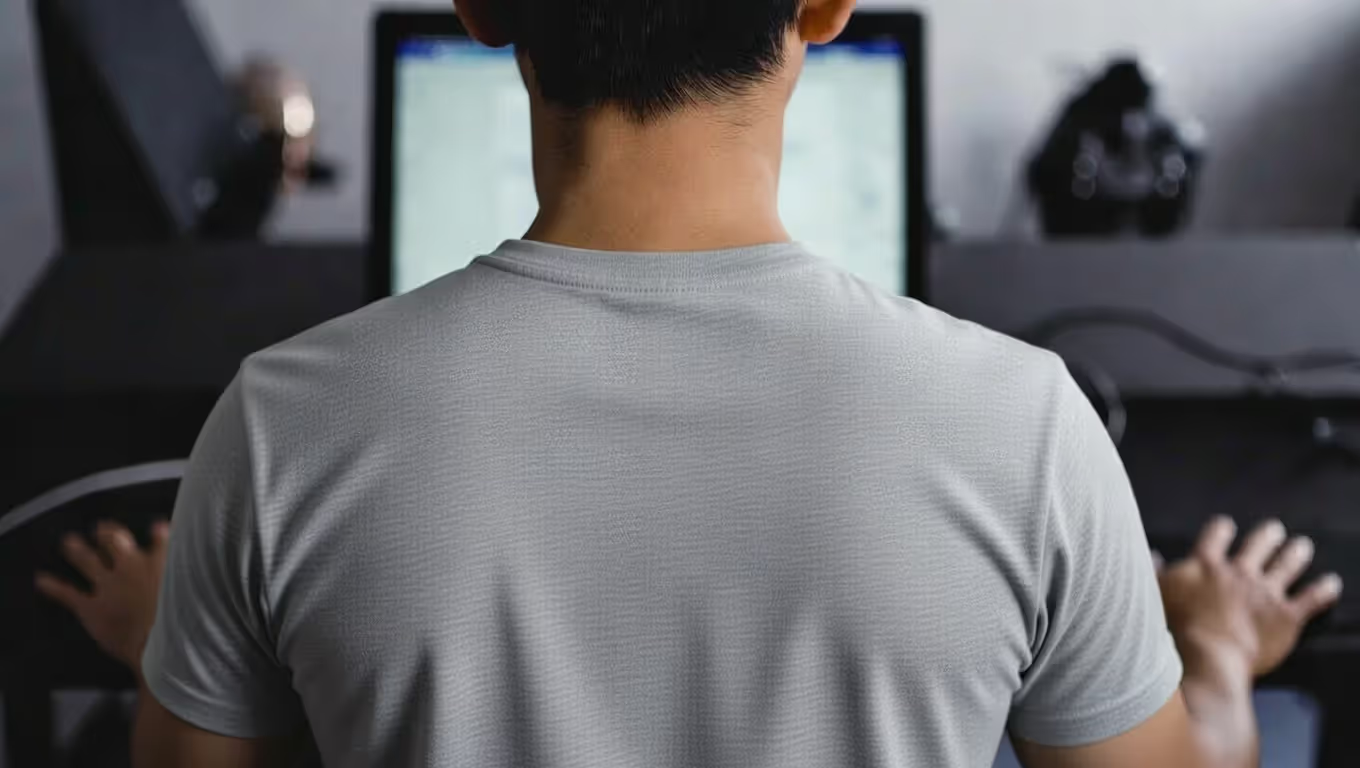
Extended periods of sitting systematically disrupts this equilibrium. Your iliopsoas and rectus femoris remain shortened from continuous hip flexion. Your gluteal muscles atrophy from chronic inactivity. Pectoral muscles contract as your arms reach forward toward keyboards and mobile devices, rotating your shoulders inward and forward. Meanwhile, the interscapular muscles become overstretched and inhibited, unable to generate enough force to counter this anterior pull.
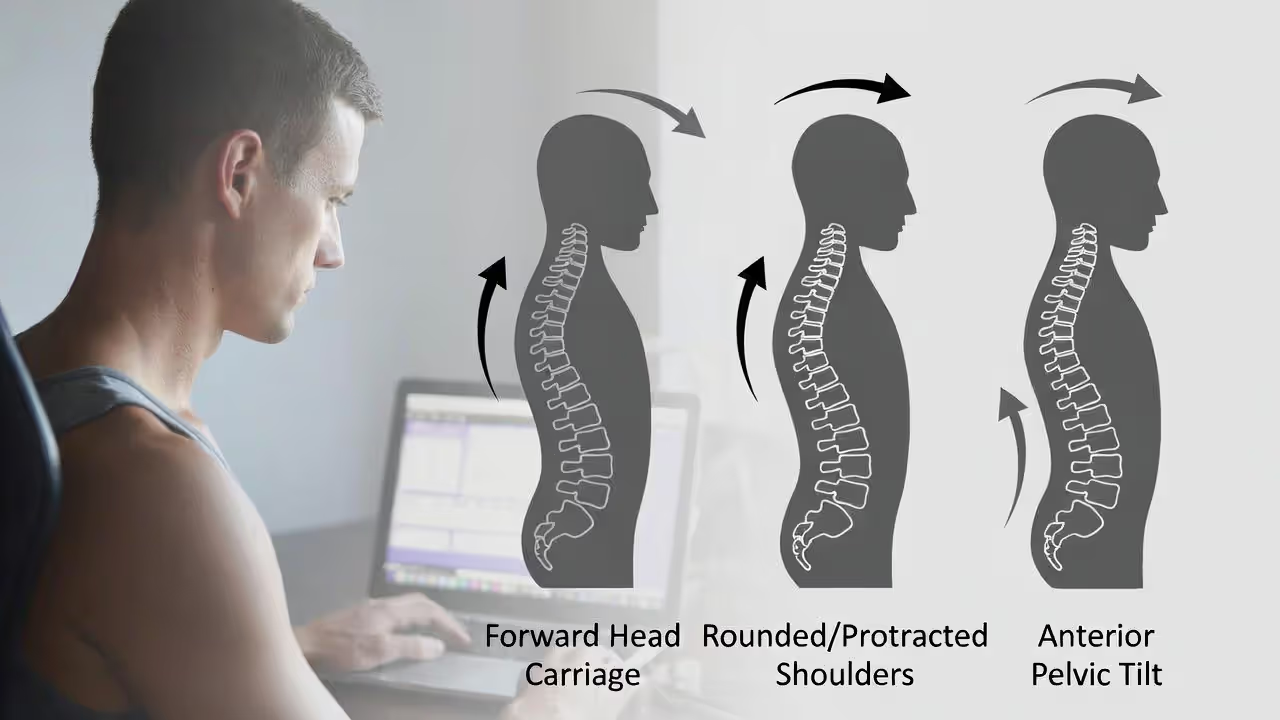
Three specific postural distortions characterize contemporary bodies. Forward head carriage displaces your cranium 2-3 inches anterior to your shoulder girdle, forcing your posterior cervical muscles to counteract 10-12 additional pounds of gravitational force for each inch of forward translation. Protracted shoulders and excessive thoracic flexion compress your anterior chest cavity and limit respiratory capacity. Anterior pelvic rotation—where your pelvis tips forward at the hip joints—creates exaggerated lumbar lordosis and overloads lower back extensors.
Author: Amanda Reeds;
Source: thelifelongadventures.com
Spine alignment yoga addresses these dysfunctional patterns through targeted interventions. Extension-based poses like Cobra and Locust build strength in your spinal erector muscles while simultaneously lengthening your hip flexor group. Flexion movements including forward bends increase hamstring extensibility and decompress lumbar tissues. Positions that externally rotate your glenohumeral joints (such as Reverse Prayer) stretch contracted anterior chest tissues while activating inhibited scapular stabilizers. Core-emphasis poses restore function to the deep postural muscles that maintain neutral spinal curvatures without requiring constant conscious control.
The respiratory dimension carries more significance than most practitioners understand. Shallow upper chest breathing—typical with rounded shoulder posture—perpetuates postural dysfunction by maintaining chronic tension in accessory respiratory muscles (the sternocleidomastoid and scalenes). Yoga's focus on deep diaphragmatic breathing releases these overactive muscles and permits proper vertical stacking of your thorax over your pelvis.
8 Essential Yoga Poses for Spine Alignment and Postural Correction
These positions address the precise imbalances underlying postural dysfunction. Execute them with careful attention to positional cues rather than pursuing maximum range—accurate alignment produces superior results compared to extreme flexibility.
Poses for Upper Back and Shoulders
Cobra Pose (Bhujangasana)
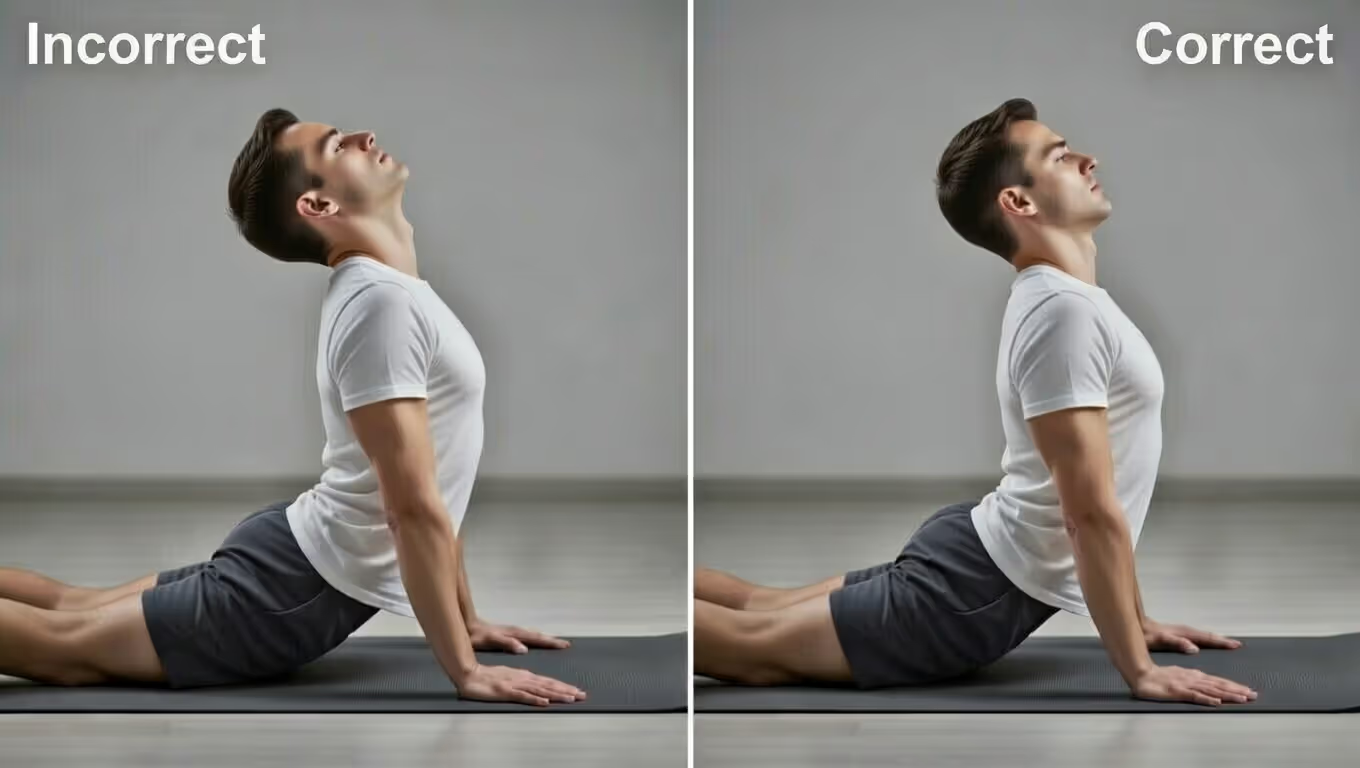
Position yourself prone with your hands placed alongside your ribcage, maintaining your elbows close to your body. Anchor your pelvis and the dorsal surface of your feet firmly into the mat. As you inhale, elevate your sternum forward while maintaining bent elbows and depressing your shoulder girdle. Your floating ribs should remain grounded—this movement emphasizes mid-thoracic strength rather than maximum height.
Sustain the position for 5-8 respiratory cycles. Typical error: extending your elbows completely and collapsing into lumbar hyperextension. Instead, preserve at least 45 degrees of elbow flexion and actively engage your mid-scapular muscles to draw your breastbone upward and forward, not merely upward.
Locust Pose (Salabhasana)
Begin in the same prone position, extending your arms back alongside your torso with palms oriented toward the floor. During inhalation, raise your upper body, both arms, and both legs simultaneously off the surface. Your arms should hover level with your body as you actively retract your scapulae toward your spine.
Maintain this position for 3-5 breaths, rest completely, then repeat twice more. This upper back yoga exercise specifically counters rounded shoulder posture by strengthening your lower trapezius and rhomboid muscles—tissues that become neurologically inhibited through persistent slouching.
Thread the Needle
Start in a tabletop position on all fours. Slide your right arm underneath your left side, rotating your palm upward, until your right shoulder and the side of your head contact the floor. Your left hand may remain planted for stability or reach overhead for increased rotation. This twisting action stretches the paraspinal muscles and intercostal tissues that become restricted in habitual slouched positions.
Hold for 10-12 complete breaths on each side. Direct your breath into your posterior ribcage, sensing the expansion against your scapula.
Poses for Lower Back and Hip Alignment
Author: Amanda Reeds;
Source: thelifelongadventures.com
Low Lunge (Anjaneyasana)
Step your right foot forward between your hands, lowering your left knee to rest on the ground. Position your front knee directly above your ankle joint. Place both palms on your forward thigh and anchor your tailbone downward while simultaneously lengthening your spine upward. You should experience stretching across the front of your left hip—the iliopsoas that remains shortened from extended sitting.
Sustain for 8-10 breaths per side. Resist lumbar hyperextension; instead, visualize lengthening your entire spine skyward while maintaining pelvic neutrality.
Reclining Pigeon
Lie supine with both knees flexed and feet flat. Position your right ankle on your left thigh just proximal to the knee joint. Reach your right arm through the triangle formed by your legs and interlace your fingers behind your left thigh. Draw your legs toward your torso until you perceive stretching in your right hip's external rotators.
Hold for 12-15 breaths per side. Restricted lateral hip rotators create compensatory lower back movement patterns. This position releases these muscles without requiring the balance control needed in upright variations.
Posture is the silent language of your body — it tells the story of how you move, breathe, and carry yourself through life.
— Dr. Kelly Starrett, physical therapist and movement specialist
Core-Strengthening Poses for Postural Support
Plank Pose
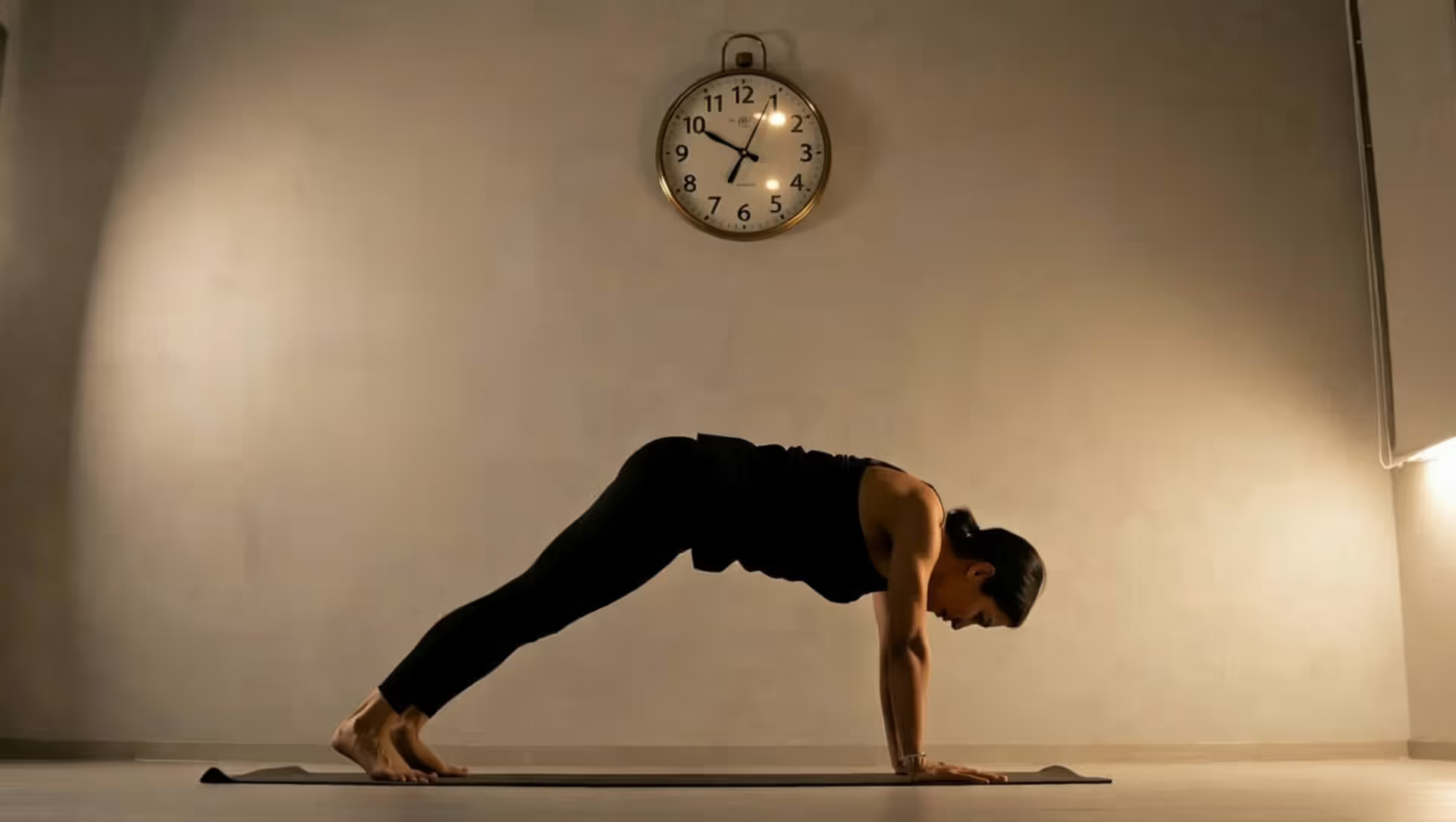
From tabletop position, step both feet backward until your body forms an unbroken diagonal line from heels through head. Your wrists should align beneath your shoulder joints. Engage your lower abdominal wall without restricting breathing. Actively press the floor away to maintain scapular protraction and prevent sagging between your shoulder blades.
Hold for 20-30 seconds initially, progressing toward 60 seconds. Your transverse abdominis—the deepest layer of core musculature—develops the capacity to stabilize your spine against gravitational forces. This strength transfers directly to maintaining upright posture during sitting and standing activities.
Boat Pose (Navasana)
Sit with knees bent and feet grounded. Incline your torso slightly posterior and elevate both feet until your tibias become parallel with the floor. Reach your arms forward at shoulder height. Your chest should lift actively while your lumbar spine maintains its inherent curve—neither flexed into rounding nor hyperextended.
Sustain for 5-8 breaths, rest fully, then complete three total rounds. This simultaneously builds strength in your hip flexors within their shortened range and activates your deep abdominal stabilizers.
Cat-Cow Tilts
In tabletop position, alternate between spinal extension (Cow: allowing your belly to descend while lifting both chest and tailbone) and spinal flexion (Cat: pressing actively into the floor to round your spine while tucking your pelvis and releasing your head). Move deliberately through each transition, taking 3-4 seconds to complete each phase.
Complete 10-12 full cycles. This movement pattern educates your spine to access its complete range of motion while developing kinesthetic awareness of neutral positioning—the midpoint between these two extremes where you should spend the majority of your time.
15-Minute Desk Posture Yoga Routine You Can Do at Work
Author: Amanda Reeds;
Source: thelifelongadventures.com
This sequence needs only a standard office chair and works effectively in professional attire. Implement it mid-morning and again mid-afternoon when postural fatigue reaches its peak.
Seated Cat-Cow (2 minutes): Sit toward the front edge of your chair with hands resting on your thighs. During inhalation, extend your spine while drawing your scapulae down your back. During exhalation, round your entire spine while tucking your chin toward your chest. Move deliberately through 10 complete cycles.
Seated Spinal Twist (2 minutes): Rotate to sit sideways in your chair with knees and feet oriented left. Grasp the chair back with both hands and rotate your torso rightward, gazing over your right shoulder. Maintain the twist for 5-6 breaths, then reverse directions. Perform one additional round in each direction.
Eagle Arms (1 minute): Wrap your right elbow over and across your left, bending both joints, then work to bring your palms together (or press the backs of your hands together if your palms don't connect). Raise your elbows to shoulder level while actively depressing your shoulders. Hold for 5 breaths before switching which arm crosses on top.
Standing Forward Fold at Desk (2 minutes): Stand approximately arm's distance from your desk. Hinge forward at your hip joints and place both palms on the desk surface with straight arms. Step your feet backward until your spine becomes parallel with the floor, creating a right angle at your hips. Actively press your sternum toward the floor between your extended arms. These posture correction stretches release tension throughout your entire posterior chain including hamstrings.
Chair Pigeon (3 minutes): Sit fully in your chair and place your right ankle on your left thigh. Flex your right foot actively to protect the knee joint. Hinge forward from your hip joints while maintaining spinal length. Hold for 8-10 breaths before switching legs.
Desk Cobra (2 minutes): Stand facing your desk with both hands on its edge. Walk your feet rearward until you achieve a standing plank position. Maintaining straight arms, allow your hips to descend slightly while lifting your chest upward, creating a gentle thoracic extension. Hold for 5 breaths, rest briefly, then repeat two more times.
Shoulder Blade Squeezes (2 minutes): Sit or stand with arms hanging naturally. Actively retract your scapulae toward your spine and downward, as though attempting to grip a pencil between them. Maintain this contraction for 5 seconds before releasing. Complete 12-15 total repetitions.
Neck Stretches (1 minute): Allow your right ear to descend toward your right shoulder. For increased intensity, rest your right palm gently on the left side of your head—let gravity and the weight of your arm deepen the stretch without actively pulling. Hold 30 seconds per side.
Practice this desk posture yoga sequence at minimum once daily, optimally twice. Consistency produces superior results compared to duration—fifteen minutes daily yields better outcomes than a weekly hour-long class.
Posture Correction Mistakes That Cancel Your Progress
Author: Amanda Reeds;
Source: thelifelongadventures.com
Overarching the lower back creates the illusion of improved posture because it opposes slouching, yet it's equally problematic. Excessive lumbar extension (hyperlordosis) overloads facet joints and applies damaging compression forces to intervertebral discs. During backbending movements, initiate extension from your thoracic region rather than concentrating all movement in your lumbar segments. Contract your glutes and anchor your tailbone inferiorly to preserve neutral lumbar positioning.
Holding breath during stretches activates your nervous system's protective mechanisms, causing muscles to contract defensively rather than release. Restricted tissues require consistent oxygen delivery to relax effectively. Maintain steady, deep breathing throughout each position, particularly in the most challenging holds where you're most inclined to restrict your breath.
Ignoring hip flexibility appears unrelated to upper body alignment, yet your musculoskeletal system functions as an interconnected chain. Limited hip mobility forces your pelvis into compensatory orientations that cascade up your vertebral column. Restricted hamstrings force lumbar flexion when folding forward. Tight hip flexors rotate your pelvis anteriorly and exaggerate lumbar curvature. Address hip mobility with equal priority to shoulder and spinal work.
Skipping strengthening work while focusing exclusively on stretching creates hypermobile, inadequately supported joints. Your muscles require strength throughout their newly achieved range of motion to maintain improved alignment. Balance every two stretching-focused poses with one strengthening-emphasis pose. Posture improvement yoga demands both tissue extensibility and muscular strength.
Inconsistent practice produces unreliable outcomes. Your body adapts to whatever positions you occupy most frequently. If you sit in collapsed posture for 50 hours weekly while practicing yoga for 2 hours, the sitting patterns dominate. Brief daily practice (15-20 minutes) outperforms longer but sporadic sessions because it repeatedly reinforces optimal alignment patterns in your neuromuscular system.
Comparing Yoga Styles for Maximum Posture Benefits
Author: Amanda Reeds;
Source: thelifelongadventures.com
Different yoga lineages emphasize distinct elements of practice. Select your approach based on your particular postural requirements and preferred learning method.
Style
Primary Focus
Best For
Difficulty Level
Typical Session Length
Hatha
Fundamental poses sustained with alignment emphasis; equilibrium between strength development and flexibility training
Beginners establishing foundational understanding; practitioners requiring explicit instruction on proper form
Significantly restricted muscles and fascial tissues; desk workers with substantial mobility limitations; stress-induced muscular tension
Beginner to Intermediate
60-75 minutes
Restorative
Completely supported positions using extensive props; nervous system down-regulation
Persistent pain conditions; fatigue syndromes; those whose posture deteriorates under stress; balancing intensive strengthening protocols
All levels
60-90 minutes
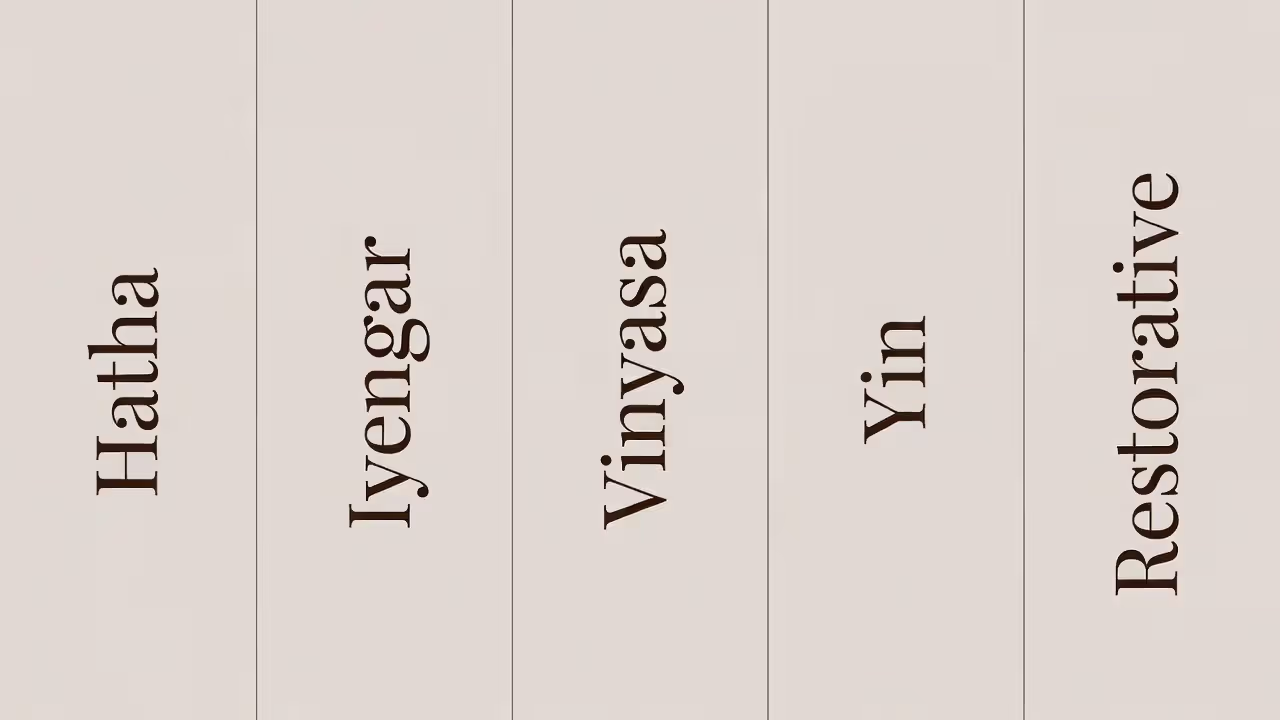
Iyengar yoga provides the most direct postural benefits for the majority of practitioners. The prop-supported modifications enable you to experience accurate alignment before developing sufficient strength or flexibility to achieve it independently. Your nervous system learns optimal positioning even when your musculoskeletal system can't yet maintain it without assistance.
Vinyasa develops the muscular stamina required to sustain proper posture throughout your entire day. However, the continuous flow can compromise precision—you risk reinforcing suboptimal alignment if you haven't yet established solid technical foundations.
Combine approaches strategically: Iyengar or Hatha twice weekly for alignment education, Yin once weekly for deep fascial release, and daily brief sequences (like the desk routine described earlier) for consistency.
Tracking Your Posture Improvement: Benchmarks and Timeline
Author: Amanda Reeds;
Source: thelifelongadventures.com
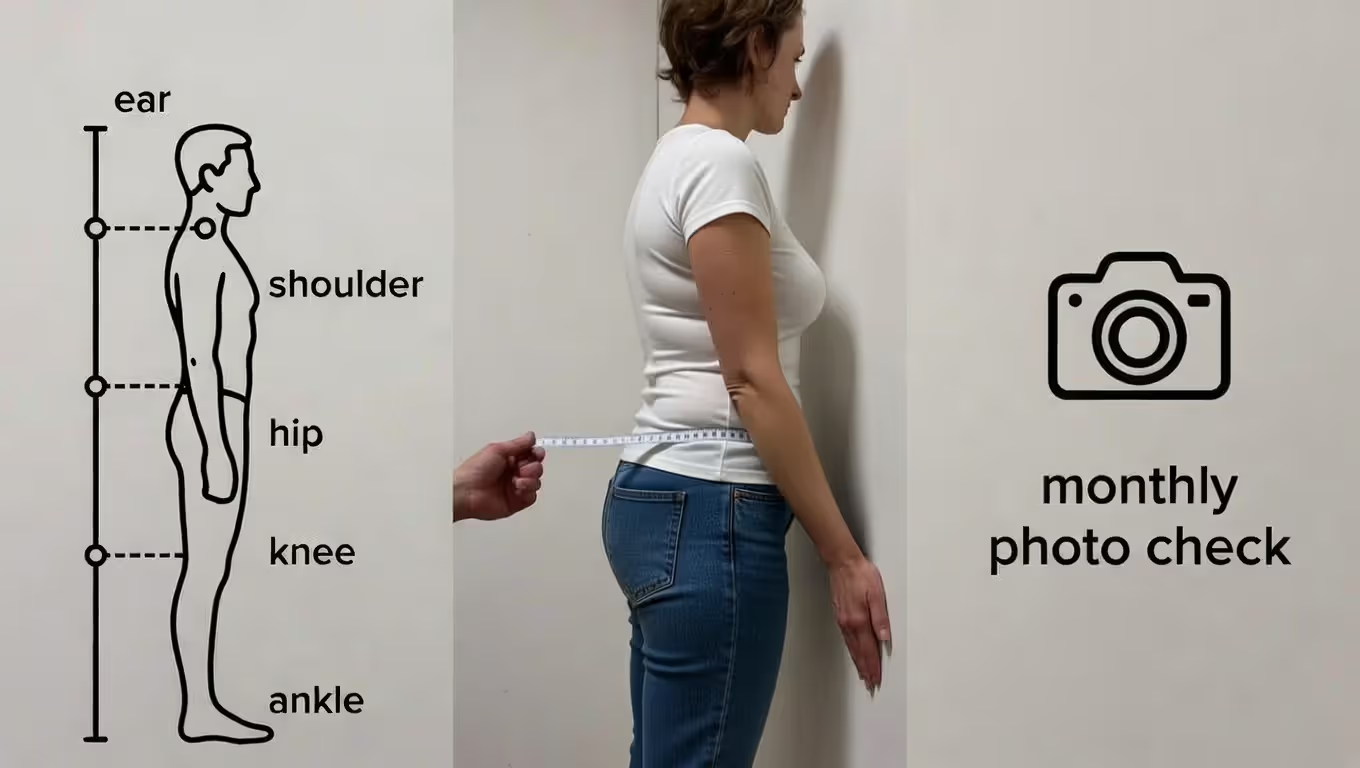
Monitor progress through objective measurements rather than subjective impressions. Stand perpendicular to a mirror in your habitual resting posture. Capture a photograph. Evaluate these anatomical landmarks:
Your external auditory meatus should align vertically above the center of your glenohumeral joint, which should align above your hip joint, knee center, and lateral malleolus. If your ear sits anterior to your shoulder, measure this horizontal displacement—this quantifies your forward head carriage.
When your arms hang naturally at your sides, your palms should face your lateral thighs. If your palms rotate backward, your shoulders display excessive internal rotation.
Position your back against a wall with heels, gluteal region, and scapulae all making contact. Slide your hand behind your lumbar region. Approximately one hand width (roughly 2 inches) should fit between the wall and your lower back—greater space indicates anterior pelvic tilt, less space suggests posterior tilt.
Repeat these assessments monthly. Capture new photographs from identical distance and angle.
Timeline expectations: Within 2-3 weeks of daily practice, you'll develop heightened body awareness—you'll notice when you've collapsed into poor posture and possess sufficient muscular endurance to correct it. At 6-8 weeks, people around you may comment that you appear taller or carry yourself differently. Quantifiable changes in photographic assessments typically emerge at 8-12 weeks with dedicated practice (minimum 15 minutes daily, 5-6 days weekly).
Persistent postural deviations—particularly those established over multiple years—may require 6-9 months of committed practice to resolve completely. Your body remodels connective tissues gradually. Fascial adaptation occurs across months, not weeks.
When to consult a physical therapist: If you experience acute, sharp pain (distinct from mild discomfort) during poses, discontinue practice and seek professional evaluation. If you maintain consistent practice for 12 weeks without any measurable improvement in your assessments, underlying structural pathologies may require examination. Physical therapists can identify joint restrictions, muscular imbalances, or dysfunctional movement patterns requiring targeted interventions beyond general yoga practice.
Numbness, tingling sensations, or radiating pain traveling down your extremities warrants immediate professional evaluation—these neurological symptoms suggest nerve compression that yoga practice alone shouldn't attempt to address.
Frequently Asked Questions About Yoga for Posture
How long does it take to see posture improvements from yoga?
You'll experience enhanced body awareness and decreased muscular tension within 2-3 weeks of consistent daily practice. Observable changes in your resting postural alignment typically become apparent at 8-12 weeks. Complete correction of long-established postural deviations demands 6-9 months because your connective tissues remodel gradually through biological processes that cannot be rushed. Practice 15-20 minutes daily rather than longer sessions 1-2 times weekly—frequency produces superior results compared to duration for postural retraining.
Can yoga fix years of bad posture, or do I need physical therapy?
Yoga successfully addresses functional postural dysfunction resulting from muscular imbalances and habitual positioning patterns. Most desk-related postural issues fall within this category. However, structural pathologies—including scoliosis, significant disc degeneration, or joint damage—require professional assessment. Begin with yoga practice; if you maintain consistent practice for 12 weeks without measurable progress, or if you develop sharp pain or neurological symptoms (numbness, tingling, weakness), consult a physical therapist who can determine whether structural issues require medical intervention.
Should I do yoga before or after sitting at my desk all day?
Ideally, practice at multiple points throughout your day. A brief morning session (10-15 minutes) prepares your postural musculature for the day ahead and establishes proprioceptive awareness. Midday practice (the 15-minute desk routine) interrupts accumulated tension before it becomes deeply established. Evening practice releases the cumulative strain from your day. If selecting only one time, practice at midday—this interrupts prolonged sitting and prevents the progressive postural deterioration that compounds across an 8-hour workday.
Is yoga enough, or do I need strength training for better posture?
Yoga delivers sufficient strength stimulus for most people's postural requirements. Poses like Plank, Locust, and Boat develop the muscular capacity necessary to maintain optimal alignment. However, if you have marked muscle weakness (perhaps from extended inactivity or previous injury), incorporating targeted resistance training accelerates your progress. Emphasize rowing patterns (strengthening posterior scapular muscles), hip hinge movements like deadlifts (strengthening your entire posterior chain), and anti-rotation core exercises. Combining yoga's flexibility and proprioceptive training with strength training's progressive overload principles produces faster results than either modality alone.
Which yoga props help most with posture correction?
A yoga strap enables you to maintain proper spinal positioning in forward folds even with restricted hamstring flexibility—you can grip the strap wrapped around your feet rather than rounding your spine to reach your toes. Blocks facilitate correct positioning in poses before you've developed the flexibility to achieve them without support; for instance, placing blocks beneath your hands in Triangle pose allows you to maintain chest openness rather than collapsing forward. A bolster supports your spine during restorative backbends, permitting your pectoral muscles to release without active muscular effort. Begin with these three props—they offer the greatest versatility for postural work.
Can yoga worsen my posture if I do poses incorrectly?
Absolutely. Practicing with flawed alignment reinforces the identical faulty movement patterns that generated your postural dysfunction initially. The most prevalent harmful pattern: rounding your lumbar spine in forward folds because you prioritize depth over proper spinal mechanics. This overstretches your spinal ligaments rather than your hamstrings and can destabilize your lower back segments. Another problematic pattern: collapsing entirely into lumbar hyperextension during backbends rather than distributing the extension throughout your entire thoracic and lumbar spine. Work with a qualified instructor for your initial 6-8 sessions to establish accurate alignment, or utilize detailed online resources that prioritize form over flexibility demonstrations.
Postural dysfunction accumulates through thousands of repetitions of suboptimal positioning. Correction demands equivalent patience—you're retraining both muscular activation patterns and nervous system defaults that have been reinforced across years. The poses and sequences detailed here target the precise imbalances that create forward head carriage, protracted shoulders, and lower back strain.
Begin with the 15-minute desk routine daily for two weeks. This establishes consistency without overwhelming your schedule. Incorporate the eight essential poses three times weekly, sustaining each for the recommended duration. After one month of dedicated practice, reassess your posture using the wall test and photographic comparison. You should observe increased ease maintaining upright positions and reduced end-of-day fatigue.
Your body will sustain improved posture only if you practice more frequently than you collapse into dysfunction. Brief daily practice outweighs occasional extended sessions because it consistently reinforces optimal alignment in your neuromuscular system. Set mobile phone reminders for mid-morning and mid-afternoon practice—these intervals interrupt prolonged sitting before postural collapse becomes deeply ingrained.
The investment yields returns beyond aesthetic appearance. Optimal spinal alignment reduces mechanical stress on joints and intervertebral discs, decreasing your risk of developing chronic pain syndromes. Proper rib cage positioning enhances respiratory efficiency and oxygen delivery. Reduced muscular tension in your cervical and scapular regions frequently eliminates tension headaches. Your entire system functions more efficiently when its structure cooperates with rather than fights against gravity.
Commit to three months of daily practice. Reassess at that milestone. The visible transformations in your alignment, combined with decreased pain and enhanced energy levels, will provide all the motivation required to continue your practice long-term.
Can yoga help you lose weight? Explore what research shows about calorie burn, metabolic impact, hormone balance, and which yoga styles are most effective for supporting fat loss, improving body composition, and building sustainable habits beyond the mat.
Discover proven bedtime yoga stretches and calming breathing techniques designed to help you fall asleep faster and sleep more deeply. Follow a complete 15-minute routine with clear, step-by-step instructions to relax your nervous system, release tension, and prepare your body for restful sleep.
Discover 8 proven yoga poses designed to relieve neck pain and reduce cervical tension. Follow clear, step-by-step guidance tailored for desk workers to improve mobility, correct posture imbalances, restore healthy alignment, and prevent recurring stiffness caused by long hours of sitting.
Discover how yoga supports cardiovascular health through evidence-based poses, targeted breathing techniques, and structured routines. Learn how mindful movement improves circulation, lowers blood pressure, and enhances heart resilience, with practical safety guidelines and research-backed insights for every fitness level.
The content on this website is provided for general informational and educational purposes related to health, yoga, fitness, and overall wellness. It is not intended to replace professional medical advice, diagnosis, or treatment.
All information, workout suggestions, yoga practices, nutrition tips, and wellness guidance shared on this site are for general reference only. Individual health conditions, fitness levels, and medical needs vary, and results may differ from person to person. Always consult a qualified healthcare provider before starting any new exercise program, dietary plan, or wellness routine.
We are not responsible for any errors or omissions, or for any outcomes resulting from the use of information presented on this website. Your health and fitness decisions should always be made in consultation with appropriate medical and fitness professionals.