Walk into any yoga studio and ask about weight loss. You'll get wildly different answers. One instructor swears her students drop two dress sizes in three months. Another rolls her eyes and says you'd burn more calories washing your car.
Here's what actually happens: a 155-pound person flowing through vinyasa burns about 240 calories per hour. That's less than jogging, roughly equal to washing dishes for the same time. Doesn't sound impressive, right?
Yet I've watched countless people transform their bodies with yoga—losing 20, 30, even 50 pounds—while gym rats spinning their wheels can't shed that last 10. The disconnect isn't mysterious. Your body's fat-burning machinery responds to more than just calories torched during exercise. Stress hormones, muscle tissue, sleep patterns, what you eat at 9 PM when nobody's watching—yoga touches all of it.
Some yoga styles do create genuine calorie deficits. Sixty minutes of power yoga taxes your cardiovascular system similarly to brisk hiking. But the bigger changes happen between sessions: lower stress means fewer midnight snack raids, better sleep means regulated hunger hormones, increased body awareness means you notice feeling satisfied before finishing the entire pizza.
How Yoga Affects Your Metabolism and Body Composition
Your metabolism changes constantly. Right now, it's different than yesterday. Stress slows it down, muscle tissue speeds it up, poor sleep scrambles the hormones controlling it.
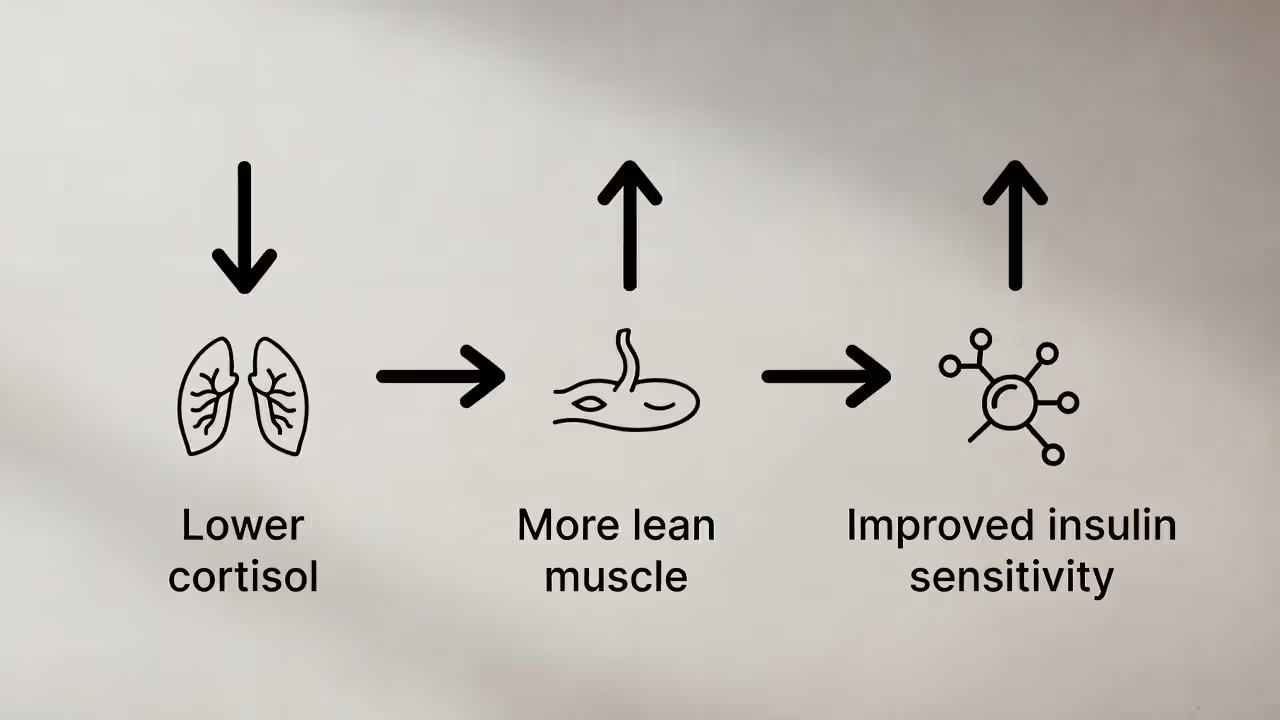
When you're stressed for weeks on end, your adrenal glands pump out cortisol like a broken faucet. Your body reads this signal as "danger ahead, store every possible calorie." Fat accumulates around your midsection because that's where cortisol preferentially deposits it—close to your liver for quick energy access during emergencies. Problem is, binge-watching stressful news isn't actually an emergency requiring stored energy.
Research published in the Journal of Clinical Endocrinology tracked yoga practitioners against sedentary people eating identical diets. The yoga group showed cortisol levels 25% lower. That's not burning fat directly—it's removing the metabolic parking brake that makes fat loss nearly impossible regardless of how little you eat.
Now here's where metabolism yoga effects get interesting. Hold Warrior II for five breaths. Your thighs are screaming, right? That's isometric muscle contraction—sustained tension without movement. Do this regularly and you build lean tissue. Muscle tissue burns calories even when you're sleeping, reading, or watching TV.
Author: Caleb Foster;
Source: thelifelongadventures.com
The numbers: muscle burns roughly 6 calories per pound daily at rest. Fat tissue burns about 2. Add five pounds of muscle—totally achievable in six months—and you've increased resting metabolism by 20 calories daily. Doesn't sound like much until you multiply it out: 7,300 calories yearly, equivalent to two pounds of fat you'd burn doing absolutely nothing extra.
Body composition shifts often hide on the scale. Someone might replace three pounds of fat with three pounds of muscle over four months. The scale doesn't budge a single pound. But their jeans fit completely differently and they've dropped from 28% to 24% body fat. Regular scales can't measure this, which frustrates people making genuine progress.
Your thyroid runs the metabolic show—it's basically the control panel determining how fast your body burns fuel. A 2014 study examined women with hypothyroidism (sluggish thyroid). After six months of regular practice, their thyroid hormone levels improved enough that doctors reduced medication dosages. The mechanism probably involves reduced stress plus better blood circulation to the thyroid gland itself.
The yoga fat loss science gets even better with insulin sensitivity. When your cells respond properly to insulin, you store less incoming food as fat and access stored fat more easily for energy. Regular yoga practice, especially the vigorous styles requiring sustained effort, improves insulin sensitivity at levels comparable to moderate cardio, according to findings in the Journal of Clinical and Diagnostic Research.
Lasting weight loss happens when movement supports your metabolism, steadies your hormones, and strengthens your body — not when you simply try to out-burn what you eat.
— Dr. Frank Lipman, integrative medicine physician
Calorie Burn by Yoga Style: What to Expect from Different Practices
Saying "yoga burns X calories" makes as much sense as saying "food contains X vitamins." Which food? Which yoga? A gentle yin session burns fewer calories than sitting through a business meeting. Vigorous ashtanga can rival moderate running.
Restorative vs. Power Yoga: The Calorie Gap
Restorative yoga puts you in supported poses held for 5-10 minutes each. Props eliminate muscular effort. Your heart rate barely rises above resting. You might burn 50-80 calories hourly—basically what you'd burn reading a book.
These classes offer tremendous value for stress relief and nervous system regulation, but don't expect direct fat burning. Think of it like sleep: essential for recovery and weight management, but not burning meaningful calories during the activity itself.
Power yoga lives on the opposite end. You're moving continuously, holding challenging poses, transitioning through sequences with minimal rest. Heart rate stays elevated in the moderate-to-vigorous zone throughout. A 155-pound person typically burns 300-400 calories per hour—approaching light jogging territory.
The real advantage shows up afterward. Intense exercise creates "afterburn" (technically called excess post-exercise oxygen consumption). Your metabolism stays elevated for 2-4 hours post-practice, burning an additional 30-50 calories while you're showering, dressing, driving home. Restorative yoga creates no such effect.
The weekly math tells the story. Three restorative sessions burn maybe 240 extra calories weekly—less than one large bagel with cream cheese. Three power yoga sessions burn 1,200+ calories weekly, creating a deficit large enough to lose nearly half a pound if you don't compensate by eating more.
Hot Yoga and Calorie Expenditure Claims
Author: Caleb Foster;
Source: thelifelongadventures.com
Studios advertising 600-1,000 calories burned per hot yoga session are being, let's say, optimistic. The 105°F heat does spike your heart rate and trigger impressive sweating. But that cardiovascular response mainly reflects thermoregulation—your body desperately trying to cool itself—not muscular work that builds metabolic capacity.
Colorado State University researchers measured actual calorie burn yoga during 90-minute Bikram sessions. Women averaged 330 calories burned. Men averaged 460. Significant numbers, absolutely, but nowhere near marketing claims suggesting you can eat an entire pizza because you "earned it" in hot yoga.
The elevated heart rate creates an illusion of extreme effort. You feel worked, exhausted even. Yet the metabolic reality proves more modest because elevated heart rate alone doesn't equal high calorie expenditure. Your heart races during a scary movie too, but you're not burning extra calories.
Hot yoga delivers real benefits: dramatically improved flexibility (heat makes tissues more pliable), mental toughness from enduring discomfort, that satisfying feeling of drenching a towel in sweat. Just calibrate expectations about calorie burn to match reality rather than marketing.
Style
125 lb Person (cal/hour)
155 lb Person (cal/hour)
185 lb Person (cal/hour)
Intensity
Primary Benefits
Hatha
120-180
145-220
175-260
Gentle
Foundation work, stress management, accessible entry point
Nervous system recovery, sleep quality, stress hormone reduction
Yin
60-90
75-110
90-130
Minimal
Deep connective tissue work, joint mobility, meditative focus
Real sessions include teacher demonstration, adjustments, water breaks, and rest periods reducing these numbers by 15-25%.
Which Yoga Flows Actually Support Fat Loss
Author: Caleb Foster;
Source: thelifelongadventures.com
Active yoga flow weight loss requires two conditions: sustained elevated heart rate and continuous muscular engagement. Three styles deliver consistently: Vinyasa, Ashtanga, and Power.
Vinyasa synchronizes breathing with movement, creating sequences where poses flow into each other without pause. A typical class might include 15-20 sun salutations before the main sequence even begins. This continuous movement prevents your metabolism from dropping back to baseline, similar to circuit training at the gym. You feel worked but without the joint pounding from running or jumping.
Ashtanga follows the same pose sequence every single practice. Primary Series contains approximately 75 poses over 90 minutes for most practitioners. This predictability becomes a feature, not a bug. You gauge progress clearly: poses that seemed impossible three months ago now feel manageable, you hold longer, you rest less between sequences. This measurability enables progressive overload—the fundamental principle driving physical adaptation.
Power yoga borrows elements from both while emphasizing strength development. Expect longer holds in challenging poses, creative sequencing targeting specific muscle groups, and barely enough rest to catch your breath. Many classes incorporate dedicated core work, arm balances, and standing sequences demanding significant muscular effort. This style mimics traditional strength training more closely than other yoga forms, making it particularly effective for building lean tissue that elevates resting metabolism.
Flow matters tremendously. Static holds alone don't create sufficient cardiovascular demand for meaningful calorie burn yoga. Compare holding Warrior II for five breaths versus flowing through Warrior I, Warrior II, Reverse Warrior, and Extended Side Angle five times consecutively. The second option keeps your heart rate elevated while working muscles through fuller ranges of motion, multiplying both immediate calorie expenditure and long-term strength adaptation.
How teachers sequence classes impacts results dramatically. Alternating between standing poses (high metabolic demand) and floor work (lower demand) creates interval-like effects. Your heart rate spikes during standing sequences, partially recovers during seated poses, then spikes again. This pattern trains cardiovascular efficiency while allowing longer total practice time compared to sustained high-intensity work that would exhaust you in 20 minutes.
Why Yoga Alone May Not Be Enough: Combining Practice with Diet and Cardio
Author: Caleb Foster;
Source: thelifelongadventures.com
Let's run the numbers. A 155-pound person doing power yoga four times weekly burns approximately 1,600 extra calories. Theoretically, that's enough to lose a pound every 2-3 weeks without changing anything else.
Reality delivers different results. Bodies adapt to reduce calorie expenditure—you become more efficient at the movements. Many people unconsciously eat more when exercising regularly, sometimes completely negating the deficit created by exercise. That post-yoga smoothie might contain more calories than the entire practice burned.
Weight management yoga excels as part of a broader strategy rather than a standalone solution. Research shows practitioners consume more fruits and vegetables, less processed junk, compared to people doing other exercises or nothing. The body awareness cultivated on the mat extends to meal choices.
But awareness doesn't override thermodynamics. If you need 2,200 calories daily and eat 2,500, you won't lose weight regardless of yoga frequency or food quality. Eating 2,500 calories of organic, whole foods creates the same surplus as 2,500 calories from drive-thru windows.
Pairing yoga with other exercise addresses its cardiovascular limitations. Add two weekly cardio sessions—running, cycling, swimming, whatever you'll actually do—and you've increased weekly calorie burn by 600-1,000 while building aerobic capacity that makes yoga feel easier. This combination prevents the adaptation occurring when your body masters a single movement pattern.
Moderate dietary changes amplify results without requiring miserable restriction. Cut 300 daily calories (one snack or large beverage) while maintaining four weekly yoga sessions. That's a 3,700-calorie weekly deficit—enough for one pound lost. Neither component alone requires extreme effort, making the combination sustainable for months rather than weeks.
Yoga's psychological benefits support dietary adherence in ways pure calorie-burning exercise never touches. Practitioners report better stress management, improved sleep quality, reduced emotional eating—the actual factors derailing most weight loss attempts. A 2018 study found practitioners maintained weight loss after one year at 40% higher rates compared to those using diet and cardio alone. The mindfulness components apparently create behavioral shifts outlasting initial motivation.
Set realistic expectations from the start. Yoga probably won't create the rapid weight loss that aggressive calorie cutting or high-volume cardio produces. But it might create sustainable changes preventing the regain cycle plaguing 80% of dieters within two years.
Sustainable weight loss isn’t about punishing your body — it’s about creating an internal environment where balance replaces stress, and healthy choices become natural.
— Dr. Sara Gottfried, physician and hormone health expert
Common Mistakes That Sabotage Your Yoga Weight Loss Goals
Choosing exclusively restorative or gentle classes tops the mistake list. Someone attending three weekly yin classes while expecting fat loss will hit month four with unchanged measurements and confusion about why yoga "doesn't work." The practice doesn't match the goal—like expecting to build upper body strength by only stretching.
Inconsistent practice prevents your body from adapting. Attending twice one week, skipping the next, cramming four sessions the following week doesn't allow cardiovascular and muscular capacity to build. Progressive improvement demands regular stimulus. Three weekly sessions consistently produces better results than alternating between zero and six.
Increasing activity without monitoring nutrition creates a surprisingly common trap. Post-practice hunger easily exceeds the session's expenditure. That 400-calorie smoothie after a 300-calorie class creates a net surplus, moving you away from weight loss despite showing up regularly.
Unrealistic timelines lead people to quit just before results appear. Weight loss through yoga typically proceeds at 0.5-1 pound weekly when paired with appropriate diet—slower than aggressive approaches but vastly more sustainable. Someone expecting 2-3 pounds weekly quits after four weeks, missing the long-term benefits emerging after 3-6 months of consistent practice.
Practicing exclusively at home without periodic instruction allows poor form to persist indefinitely. Misaligned poses reduce muscular engagement and calorie burn while increasing injury risk. Someone holding plank with sagging hips burns fewer calories and risks lower back strain compared to properly aligned form. Even if you prefer home practice, occasional in-person instruction ensures your technique supports rather than undermines goals.
Fixating solely on scale weight misses body composition changes entirely. Muscle gain and fat loss occur simultaneously, particularly in beginners, resulting in minimal scale movement despite dramatic physical changes. Someone losing eight pounds of fat while gaining five pounds of muscle over four months sees only three pounds of scale change but experiences complete transformation in how clothes fit and how their body looks and performs.
Building an Effective Yoga Routine for Weight Management
Author: Caleb Foster;
Source: thelifelongadventures.com
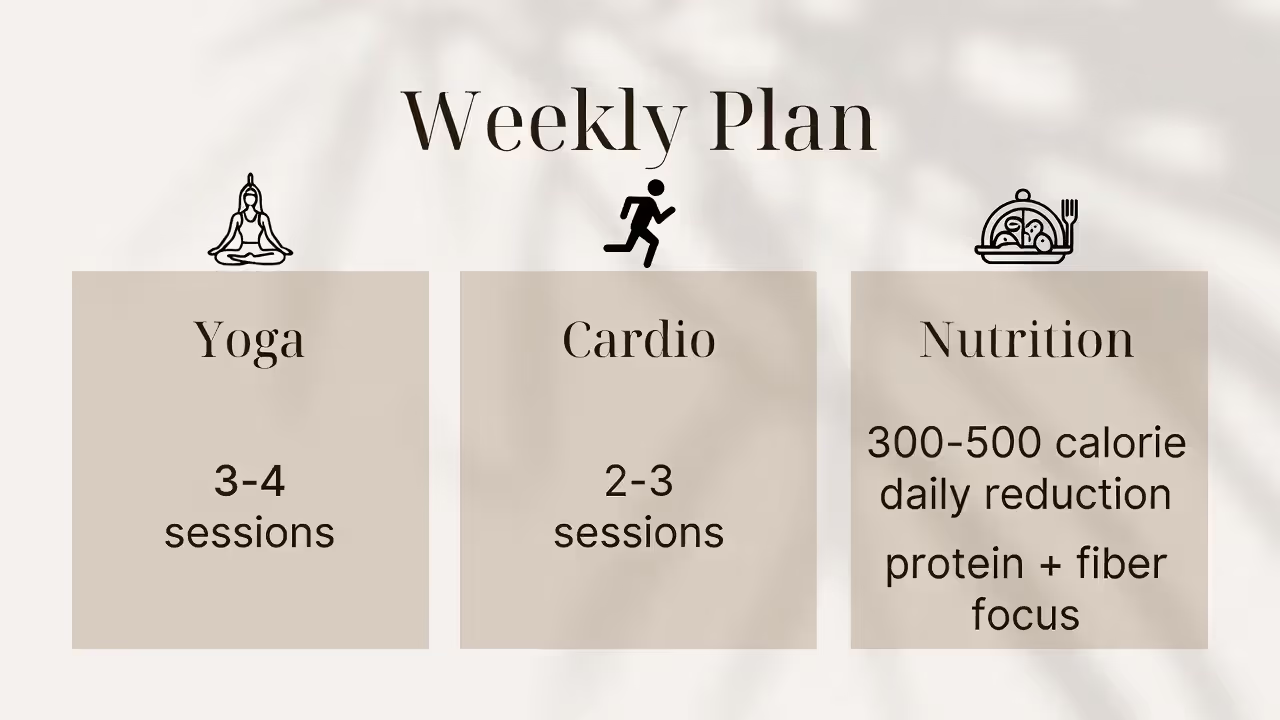
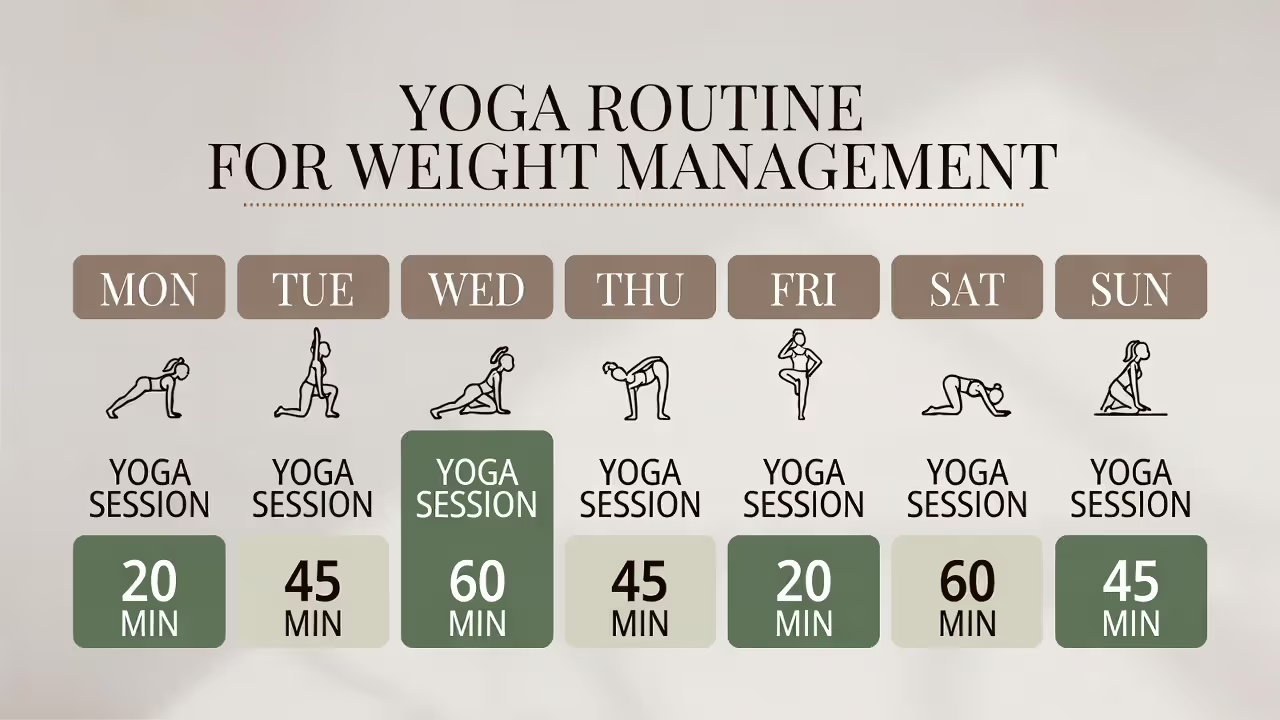
Start with three weekly sessions, 45-60 minutes each. This frequency provides adequate recovery between sessions while supplying enough stimulus to trigger adaptation. Choose at least two active styles (Vinyasa, Power, or Ashtanga) with one gentler practice supporting recovery.
Progress by increasing intensity before adding volume. After 4-6 weeks, move to more challenging pose variations, hold positions longer, or reduce rest between sequences. This approach builds capacity without requiring additional time commitment—crucial for long-term adherence since time scarcity kills more exercise programs than anything else.
Add a fourth session after 8-12 weeks if your schedule permits. This might be another active class or moderate-intensity home practice. Four weekly sessions appear to hit the sweet spot for weight management yoga—enough stimulus for continued progress without the fatigue or time commitment making five-plus sessions unsustainable for people with jobs, families, and other responsibilities.
Track measurements beyond scale weight. Take photos every 2-4 weeks from consistent angles and lighting. Measure waist and hip circumference monthly. Note how clothes fit, particularly items that were snug when starting. These indicators often reveal progress when scales don't, providing motivation during inevitable plateaus.
Combine yoga with 2-3 weekly cardio sessions lasting 20-30 minutes. These don't require intensity—moderate-pace walking, cycling, or swimming works perfectly. You're complementing yoga's strength and flexibility benefits with additional calorie burn and cardiovascular conditioning, not training for marathons.
Schedule practice at consistent times. Morning sessions work well for many because competing demands haven't emerged yet. Others prefer evening practice as a transition buffer between work and personal time. The "best" time is whichever you'll actually maintain consistently—adherence trumps optimization every time.
Adjust nutrition to support modest deficit. Track food intake for one week establishing baseline consumption, then reduce by 300-500 calories daily. Prioritize protein (supports muscle maintenance during weight loss), fiber (promotes fullness), and whole foods (higher satiety per calorie than processed options). Avoid aggressive restriction triggering compensatory hunger and making yoga practice feel exhausting.
Expect plateaus every 6-8 weeks. Weight loss rarely proceeds linearly despite what Instagram transformations suggest. When progress stalls for 2-3 weeks despite consistent effort, adjust one variable: increase practice intensity, add a weekly session, or reduce calories another 100-200 daily. Change only one factor at a time so you can identify what actually works.
Frequently Asked Questions About Yoga and Weight Loss
Can you lose belly fat with yoga alone?
You can't target where fat comes off—your genetics control the pattern. Yoga contributes to overall fat reduction, which eventually includes abdominal fat, but you might lose it from your face, arms, and legs first. Some people shed belly fat early; others find it's the stubborn last area changing. Active styles combined with caloric deficit will reduce total body fat percentage, including what's around your midsection, but nobody can promise timeline or sequence. Core-focused poses do build abdominal muscle, improving appearance even before overlying fat disappears.
How many times per week should I do yoga to see weight loss results?
Three to four sessions weekly of active styles (Vinyasa, Power, Ashtanga) paired with appropriate nutrition typically produces visible results within 6-8 weeks. Fewer than three sessions rarely provides enough stimulus for measurable change. More than five sessions risks fatigue or overuse issues unless you're already well-conditioned. Quality matters more than quantity—three intense, properly executed sessions outperform five mediocre ones where you're just going through motions.
Is yoga better than walking or running for weight loss?
Running burns more calories per minute—a 155-pound person burns approximately 600 calories hourly running at moderate pace versus 300-400 for power yoga. However, yoga offers advantages running doesn't: builds strength simultaneously, improves flexibility, carries lower injury risk, and creates psychological benefits supporting dietary adherence. The "better" choice depends on your preferences, physical limitations, and which activity you'll actually maintain six months from now. Many find combining both produces optimal results.
How long does it take to lose weight with yoga?
Expect 6-8 weeks before visible changes emerge, assuming 3-4 weekly sessions of active styles plus appropriate nutrition. Scale weight might decrease sooner, but body composition changes—how you actually look and feel—typically require 6-8 weeks minimum. Significant transformations like losing 15-20 pounds or dropping multiple clothing sizes usually take 4-6 months. These timelines assume consistency; sporadic practice extends them considerably. Initial improvements often feel dramatic because beginners experience rapid strength and flexibility gains layered on top of fat loss.
Do I need hot yoga to burn enough calories for weight loss?
Nope. Hot yoga burns similar calories to regular power or vinyasa classes—the heat increases perceived effort without dramatically increasing actual calorie expenditure. Some people prefer hot yoga because drenching a towel feels productive. Others find the heat exhausting or uncomfortable. Choose based on personal preference rather than assuming hot yoga offers superior weight loss benefits. Regular power yoga at normal temperatures produces equivalent results with less dehydration risk and lower cardiovascular stress.
Can beginners use yoga for weight loss, or do I need to be advanced?
Beginners often see the most dramatic results because their bodies respond strongly to new stimulus—everything's challenging when you're starting. Begin with beginner-focused Vinyasa or Power classes teaching foundational poses while maintaining moderate intensity. Avoid gentle or restorative classes initially if weight loss is your primary goal—those styles serve different purposes. You don't need to master headstands or splits; consistent practice of basic sequences with proper form produces excellent results. Many studios offer "Power Basics" or similar classes designed specifically for beginners wanting more active practice than traditional beginner classes provide.
Yoga supports weight loss through multiple pathways: direct calorie expenditure during active practices, increased muscle mass elevating resting metabolism, reduced stress hormones that promote fat storage, and improved body awareness influencing food choices throughout the day. How much these effects matter depends entirely on practice style, frequency, intensity, and how yoga integrates with nutrition and other activities.
Active styles like Vinyasa, Power, and Ashtanga create enough metabolic demand to meaningfully contribute toward caloric deficit when practiced 3-4 times weekly. Gentler styles offer different benefits—stress reduction, recovery facilitation, flexibility development—but don't directly support fat loss through calorie expenditure.
Weight management yoga works best as one component within a comprehensive approach rather than a standalone solution. Combining regular practice with modest caloric restriction and complementary cardio exercise produces sustainable results that pure diet or exercise alone often can't match. The psychological and behavioral changes yoga creates may ultimately matter more than calories burned during practice, explaining why practitioners often maintain weight loss more successfully than those using conventional approaches alone.
Start with realistic goals, appropriate class selection, and consistent practice. Measure progress through multiple indicators rather than fixating on scale weight exclusively. Adjust expectations to match yoga's actual effects rather than marketing promises or Instagram transformation posts. These strategies transform yoga from a disappointing weight loss gimmick into a valuable tool supporting long-term health and sustainable body composition changes that actually last beyond the initial motivation phase.
Discover proven bedtime yoga stretches and calming breathing techniques designed to help you fall asleep faster and sleep more deeply. Follow a complete 15-minute routine with clear, step-by-step instructions to relax your nervous system, release tension, and prepare your body for restful sleep.
Discover 8 essential yoga poses and a simple 15-minute desk routine designed to correct poor posture, realign your spine, and ease upper back pain. Follow expert guidance to release tension, strengthen postural muscles, improve mobility, and prevent stiffness caused by long hours of sitting.
Discover 8 proven yoga poses designed to relieve neck pain and reduce cervical tension. Follow clear, step-by-step guidance tailored for desk workers to improve mobility, correct posture imbalances, restore healthy alignment, and prevent recurring stiffness caused by long hours of sitting.
Discover how yoga supports cardiovascular health through evidence-based poses, targeted breathing techniques, and structured routines. Learn how mindful movement improves circulation, lowers blood pressure, and enhances heart resilience, with practical safety guidelines and research-backed insights for every fitness level.
The content on this website is provided for general informational and educational purposes related to health, yoga, fitness, and overall wellness. It is not intended to replace professional medical advice, diagnosis, or treatment.
All information, workout suggestions, yoga practices, nutrition tips, and wellness guidance shared on this site are for general reference only. Individual health conditions, fitness levels, and medical needs vary, and results may differ from person to person. Always consult a qualified healthcare provider before starting any new exercise program, dietary plan, or wellness routine.
We are not responsible for any errors or omissions, or for any outcomes resulting from the use of information presented on this website. Your health and fitness decisions should always be made in consultation with appropriate medical and fitness professionals.