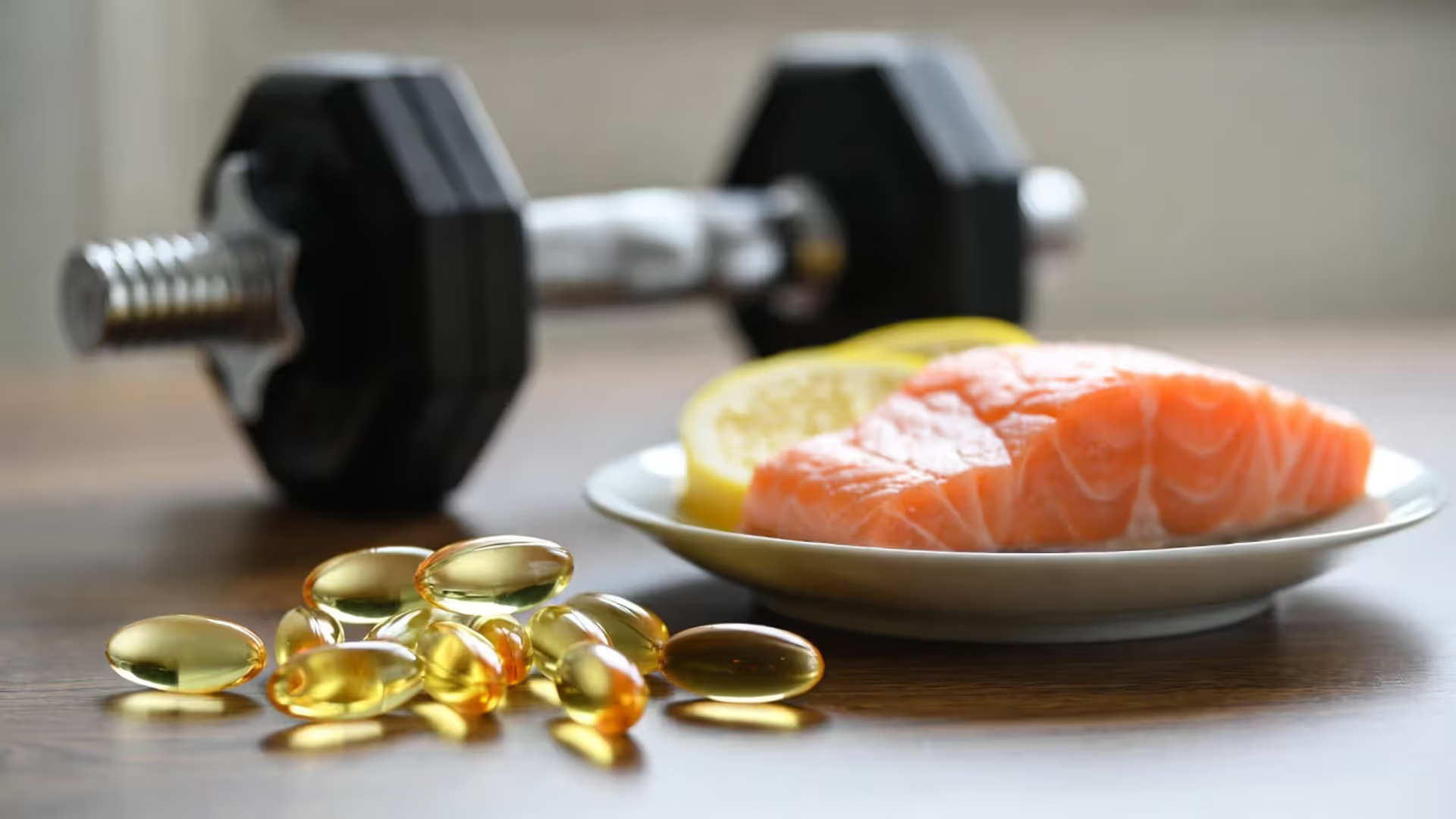
Most gym-goers pop protein powder and creatine without a second thought, but omega-3 fatty acids remain surprisingly overlooked despite their profound impact on training outcomes. These essential fats don't just support general health—they directly influence how quickly you recover, how well your joints hold up under load, and whether your cardiovascular system can sustain high-intensity efforts.
The difference between someone who trains hard and someone who trains hard and recovers efficiently often comes down to managing inflammation at the cellular level. That's where omega-3s enter the picture, functioning as biological raw materials your body uses to resolve inflammatory responses triggered by every squat, sprint, and deadlift.
Why Athletes Need More Omega-3s Than Sedentary People
Your neighbor who walks 3,000 steps daily and your training partner crushing two-a-days don't have the same nutritional requirements. Exercise creates controlled damage—micro-tears in muscle fibers, stress on connective tissue, and systemic inflammatory signals that prompt adaptation. While sedentary individuals might meet baseline omega-3 needs with minimal intake, athletes operate in a different metabolic reality.
Each training session triggers an inflammatory cascade involving cytokines, prostaglandins, and other signaling molecules. Your body requires EPA (eicosapentaenoic acid) and DHA (docosahexaenoic acid)—the two primary omega-3 fatty acids—to manufacture specialized pro-resolving mediators (SPMs). These compounds don't suppress inflammation; they help complete the inflammatory cycle so tissue repair proceeds efficiently.
Research published in the Journal of the International Society of Sports Nutrition found that athletes with higher red blood cell omega-3 levels experienced less severe delayed-onset muscle soreness and maintained better range of motion after eccentric exercise. The athletes weren't avoiding inflammation—they were resolving it faster.
Beyond inflammation management, intense training increases metabolic turnover of cell membranes throughout your body. Muscle cells, neurons, and cardiovascular tissues all incorporate DHA into their phospholipid membranes. When you're breaking down and rebuilding tissue constantly, you burn through these structural fats faster than someone spending their day at a desk.
A 180-pound athlete training six days weekly might need 2,000-4,000 mg combined EPA/DHA daily, while general health recommendations hover around 250-500 mg for inactive populations. That's not a minor difference—it's an entirely different nutritional category.
Author: Logan Brooks;
Source: thelifelongadventures.com
How Omega-3s Reduce Exercise-Induced Inflammation and Speed Recovery
Your quads burning two days after leg day isn't lactic acid—that clears within an hour of finishing your workout. What you're feeling is the inflammatory response to muscle damage, complete with swelling, immune cell infiltration, and the chemical soup that makes sitting down an adventure.
The Science Behind Omega-3s and Muscle Soreness (DOMS)
Delayed-onset muscle soreness stems from structural damage to muscle fibers and surrounding connective tissue. Your immune system responds by sending neutrophils and macrophages to the area, releasing inflammatory cytokines like IL-6 and TNF-α. This process is necessary for adaptation, but when inflammation lingers excessively, it delays recovery and impairs your next training session.
EPA and DHA compete with arachidonic acid (an omega-6 fatty acid) for the same enzymatic pathways. When omega-3s are abundant, your body produces fewer inflammatory eicosanoids (like prostaglandin E2) and more inflammation-resolving compounds (like resolvins and protectins). Think of it as shifting your body's default response from "full alarm" to "controlled repair."
A 2016 study in Clinical Journal of Sport Medicine had participants supplement with 3 grams of omega-3s daily for a week before performing muscle-damaging eccentric exercises. The supplemented group showed significantly reduced muscle soreness, better maintenance of muscle function, and lower circulating markers of muscle damage (creatine kinase) compared to placebo.
The effect isn't about eliminating soreness entirely—some muscle damage signals are necessary for adaptation. Rather, omega-3s appear to prevent the inflammatory response from overshooting, allowing you to maintain training frequency without accumulating excessive fatigue.
Optimal Timing: When to Take Omega-3s for Recovery
Unlike pre-workout stimulants that need precise timing, omega-3s work by changing your baseline cellular composition over weeks. Taking fish oil an hour before training won't do anything acute. The goal is maintaining consistently elevated tissue levels.
That said, research suggests splitting your daily dose improves absorption and reduces the fishy burps some people experience. Taking half your dose with breakfast and half with dinner—both meals containing some dietary fat—optimizes uptake. The fat from your meal stimulates bile release, which emulsifies the omega-3s for better absorption.
Some athletes front-load with higher doses (4-6 grams daily) for 2-3 weeks when starting supplementation, then maintain with 2-3 grams daily. This approach saturates tissue stores faster, though consistency matters more than loading protocols in the long run.
One practical mistake: expecting immediate results. Red blood cell omega-3 levels—the gold standard measurement—take 8-12 weeks to plateau after starting supplementation. If you're three weeks in and not noticing dramatic recovery improvements, that's normal. Give it two full months before evaluating effectiveness.
Joint Health and Mobility: Protecting Your Body During Intense Training
Author: Logan Brooks;
Source: thelifelongadventures.com
Runners, CrossFit athletes, and anyone performing repetitive impact movements eventually face a choice: manage joint health proactively or deal with overuse injuries reactively. Omega-3s won't fix a torn meniscus, but they influence the low-grade inflammatory environment that determines whether your knees feel smooth or crunchy during squats.
Cartilage doesn't receive direct blood supply, relying instead on synovial fluid for nutrition and waste removal. When joint inflammation becomes chronic—common with high training volumes—inflammatory molecules in synovial fluid can degrade cartilage matrix proteins. EPA and DHA help maintain a less inflammatory synovial environment, potentially slowing cartilage breakdown.
A year-long study of athletes with knee osteoarthritis found that 2,000 mg daily omega-3 supplementation reduced joint pain and improved function scores more effectively than placebo. The athletes weren't healing existing damage, but they were creating conditions where further degradation slowed and pain decreased.
For powerlifters and Olympic lifters moving heavy loads through full ranges of motion, joint integrity directly limits training capacity. You can have the strongest muscles in the gym, but if your shoulders or hips hurt too much to train, strength becomes theoretical. Maintaining joint health isn't about longevity in some abstract future sense—it's about whether you can train effectively next week.
Omega-3s also appear to support the production of lubricin, a protein that reduces friction between joint surfaces. While research here remains preliminary, the mechanism makes sense: less friction means less mechanical irritation, which means less inflammatory signaling, which creates a positive feedback loop for joint comfort.
Cardiovascular Benefits That Directly Impact Athletic Performance
Author: Logan Brooks;
Source: thelifelongadventures.com
Heart health sounds like a concern for your 60-year-old self, not something relevant to your current 5K time. But cardiovascular function determines how much oxygenated blood reaches working muscles during intense efforts—directly limiting performance in any activity lasting more than 90 seconds.
DHA comprises about 15-20% of the fatty acids in heart tissue. It influences membrane fluidity, affecting how efficiently cardiac cells contract and respond to electrical signals. Athletes with higher omega-3 status show improved heart rate variability—a marker of autonomic nervous system function and recovery capacity.
More relevant to performance: omega-3s appear to improve endothelial function, helping blood vessels dilate appropriately during exercise. Better vasodilation means improved blood flow, which means better oxygen delivery to muscles and more efficient removal of metabolic waste products. This translates to sustained power output during threshold efforts.
Research in trained cyclists found that 8 weeks of omega-3 supplementation (2.2 grams EPA/DHA daily) improved cycling economy—the oxygen cost of maintaining a given power output decreased. The cyclists weren't getting fitter in the traditional sense; their cardiovascular systems were operating more efficiently at the cellular level.
For high-intensity interval training, omega-3s may help you recover faster between efforts. When your heart can return to lower rates more quickly and blood lactate clears efficiently, you can maintain quality across multiple intervals rather than watching performance crater after the third or fourth rep.
Even if you're primarily focused on strength training, cardiovascular efficiency matters. That burning sensation during a heavy set of 20-rep squats? That's your cardiovascular system struggling to meet metabolic demands. Better cardiac output and oxygen delivery mean you can push those final reps without your heart becoming the limiting factor.
Most athletes obsess over what builds muscle, but far fewer think about what allows them to rebuild it efficiently. Omega-3s don’t make you stronger overnight — they create the cellular environment that lets strength, endurance, and recovery actually happen.
— Dr. Michael Reynolds, Sports Nutrition Researcher
Dosage Guidelines and Best Sources for Active Individuals
The supplement industry loves vague recommendations like "take as directed" or "supports heart health." For athletes, precision matters. Underdosing wastes money and delivers no benefits; overdosing risks side effects without additional gains.
Research supporting athletic performance and recovery benefits typically uses 2,000-3,000 mg combined EPA and DHA daily. That's the actual omega-3 content, not the total fish oil volume. A capsule might contain 1,000 mg fish oil but only 300 mg combined EPA/DHA—you'd need multiple capsules to reach effective doses.
Individual needs vary based on body weight, training volume, dietary omega-6 intake, and baseline inflammation levels. A 220-pound powerlifter training twice daily has different requirements than a 140-pound recreational runner logging 20 miles weekly. Starting at 2,000 mg daily for most athletes provides a reasonable baseline, with adjustments based on response.
The EPA to DHA ratio matters less than total intake for most purposes, though some research suggests higher EPA ratios (around 2:1) may offer slightly better anti-inflammatory effects. Unless you're optimizing for a specific outcome, focusing on total combined dose matters more than ratio minutiae.
Fish Oil vs. Algae Oil vs. Whole Food Sources
Author: Logan Brooks;
Source: thelifelongadventures.com
Each omega-3 source comes with trade-offs. Understanding them helps you make informed choices based on your priorities, budget, and dietary preferences.
More expensive per mg, lower concentration, fewer long-term studies
Vegan athletes, those with fish allergies
Flaxseed (2 Tbsp)
0 mg (contains ALA, not EPA/DHA)
Cheap, shelf-stable, fiber content
Poor conversion to EPA/DHA (under 10%), insufficient alone
Supplementary source only, not primary omega-3 strategy
Flaxseed, chia seeds, and walnuts provide ALA (alpha-linolenic acid), which your body theoretically converts to EPA and DHA. In practice, conversion rates are abysmal—typically under 5% for EPA and under 0.5% for DHA. Relying on ALA sources alone leaves athletes functionally deficient in the omega-3s that matter for performance.
Third-party testing separates quality supplements from garbage. Look for products certified by IFOS (International Fish Oil Standards), NSF, or USP. These organizations test for potency, purity, and contaminants like mercury, PCBs, and dioxins. A cheap fish oil might be rancid or contaminated—you're ingesting oxidized fats that potentially increase inflammation rather than reducing it.
Triglyceride form fish oil shows better absorption than ethyl ester form in most studies, though the difference becomes less significant when taken with meals. If you're spending money on supplements, choosing triglyceride or re-esterified triglyceride forms makes sense.
Common Mistakes Fitness Enthusiasts Make With Omega-3 Supplementation
Author: Logan Brooks;
Source: thelifelongadventures.com
Walking through any gym, you'll find dozens of athletes taking omega-3s incorrectly—wasting money at best, undermining their goals at worst.
Mistake one: buying based on total fish oil rather than EPA/DHA content. That 1,000 mg fish oil capsule might contain only 300 mg combined omega-3s. You're paying for filler oil. Always check the supplement facts panel for actual EPA and DHA amounts. Some athletes proudly announce they take "3,000 mg of fish oil daily" while actually getting only 900 mg of active omega-3s—well below effective doses.
Mistake two: storing supplements improperly. Omega-3s are polyunsaturated fats, meaning they oxidize (go rancid) when exposed to heat, light, or air. Keeping your fish oil in a hot car or sunny windowsill destroys the beneficial compounds and potentially creates harmful oxidation products. Refrigerate your omega-3 supplements and check expiration dates. If your fish oil smells intensely fishy or tastes rancid, throw it out.
Mistake three: expecting omega-3s to compensate for terrible omega-6 ratios. The standard American diet delivers massive omega-6 intake from vegetable oils, fried foods, and processed snacks. If you're consuming 20,000 mg of omega-6s daily and add 2,000 mg omega-3s, you're still operating in a pro-inflammatory state. Omega-3 supplementation works best alongside reduced omega-6 intake—cook with olive oil or avocado oil instead of soybean oil, minimize fried foods, and reduce processed snack consumption.
Mistake four: inconsistent supplementation. Taking fish oil sporadically—a few days on, a week off, occasionally remembering—prevents tissue saturation. You never reach the elevated omega-3 levels where benefits appear. If you're not willing to take omega-3s daily for at least eight weeks, you're probably wasting your time and money.
Mistake five: assuming more is always better. Doses above 5,000 mg daily don't appear to offer additional benefits for most athletes and may increase bleeding risk, particularly if combined with other blood-thinning supplements or medications. There's a therapeutic window—enough to shift inflammatory balance, not so much that you create new problems.
Mistake six: ignoring individual response. Some athletes notice clear improvements in joint comfort, recovery, and training capacity. Others experience minimal subjective changes despite presumably improving their cellular omega-3 status. Genetics, baseline diet, training style, and individual inflammatory profiles all influence response. If you've supplemented consistently for three months at adequate doses and notice zero difference, omega-3s might not be your limiting factor.
Frequently Asked Questions About Omega-3s and Fitness
How long does it take to see fitness benefits from omega-3 supplementation?
Tissue saturation requires 8-12 weeks of consistent supplementation. Some athletes report reduced joint discomfort within 3-4 weeks, but measurable changes in recovery markers, inflammation levels, and performance typically appear after two to three months. Front-loading with higher doses (4,000 mg daily for the first month, then 2,000 mg maintenance) may accelerate benefits slightly, though consistency matters more than loading protocols. If you haven't noticed any changes after 12 weeks at adequate doses, omega-3s might not be addressing your primary limiting factors.
Can omega-3s help with fat loss while building muscle?
Omega-3s aren't fat burners, but they may support favorable body composition changes indirectly. Some research suggests omega-3 supplementation improves insulin sensitivity and may enhance muscle protein synthesis response to training. A 2015 study found that older adults supplementing with omega-3s gained more muscle mass during a resistance training program compared to placebo. The mechanism likely involves reduced systemic inflammation allowing better recovery and adaptation. Don't expect dramatic fat loss from fish oil alone, but omega-3s may optimize the hormonal and inflammatory environment for body recomposition when combined with appropriate training and nutrition.
Should I take omega-3s before or after workouts?
Timing doesn't matter acutely. Omega-3s work by changing your baseline tissue composition over weeks and months, not by providing immediate pre- or post-workout effects. Take your omega-3 supplement whenever you're most likely to remember consistently—with breakfast, dinner, or any meal containing some dietary fat to improve absorption. Splitting your daily dose between two meals may reduce digestive discomfort and improve overall uptake, but the difference is marginal. Consistency trumps timing.
Do I still need omega-3 supplements if I eat fish twice a week?
It depends on the fish type, portion size, and your training demands. Two servings of fatty fish weekly (salmon, mackerel, sardines) might provide 2,000-4,000 mg omega-3s total—adequate for general health but potentially insufficient for athletes training intensely six days weekly. If you're eating 6-8 ounces of wild salmon twice weekly, you're probably meeting baseline needs. If you're eating breaded tilapia or shrimp—both very low in omega-3s—you're not. Most athletes benefit from combining regular fatty fish consumption with targeted supplementation to ensure consistent, adequate intake regardless of weekly meal variations.
Can too much omega-3 thin my blood and affect athletic performance?
Omega-3s have mild blood-thinning effects by reducing platelet aggregation. At typical supplementation doses (2,000-3,000 mg daily), this rarely causes problems for healthy athletes. Doses above 5,000 mg daily or combining high-dose omega-3s with aspirin, NSAIDs, or blood-thinning medications may increase bleeding risk. If you're scheduled for surgery, most surgeons recommend stopping omega-3 supplements 1-2 weeks beforehand. For athletic performance specifically, the mild blood-thinning effect doesn't impair training or competition—if anything, slightly improved blood flow may offer marginal benefits for oxygen delivery.
Are there any side effects of high-dose omega-3s for athletes?
Most athletes tolerate 2,000-3,000 mg daily without issues. Common minor side effects include fishy aftertaste, burping, and mild digestive discomfort—usually resolved by taking supplements with meals, choosing higher-quality products, or switching to enteric-coated capsules. Some people experience loose stools at higher doses. Rarely, athletes report feeling slightly more fatigued during the first few weeks of supplementation as their inflammatory balance shifts, though this typically resolves. Genuine safety concerns emerge mainly with very high doses (above 5,000 mg daily) or in people taking blood-thinning medications. If you experience unusual bruising, prolonged bleeding from minor cuts, or other concerning symptoms, reduce your dose and consult a healthcare provider.
Omega-3 fatty acids won't replace intelligent programming, adequate sleep, or proper nutrition, but they address a specific performance bottleneck that many athletes ignore: the efficiency of inflammatory resolution and tissue recovery. By providing the raw materials your body uses to complete the inflammatory cycle triggered by training, omega-3s help you recover faster, maintain joint health through high training volumes, and support the cardiovascular function that underpins endurance and work capacity.
The athletes who benefit most from omega-3 supplementation are those training frequently and intensely—people accumulating enough inflammatory stress that resolution capacity becomes a limiting factor. If you're working out twice weekly at moderate intensity, omega-3s probably aren't your primary concern. If you're training six days weekly, pushing progressive overload, and struggling with persistent soreness or joint discomfort, omega-3s might be the missing piece.
Start with 2,000 mg combined EPA/DHA daily from a quality source, take it consistently for at least eight weeks, and evaluate based on recovery quality, joint comfort, and training capacity. Some athletes will notice clear improvements; others will experience subtle shifts that only become apparent when they stop supplementing and realize how much better they'd been feeling. Either way, you're addressing a fundamental nutritional need that directly impacts your body's ability to adapt to training stress—which is ultimately what determines whether you're making progress or just accumulating fatigue.
Your arms haven't grown in three months — and the problem isn't your workout split, it's what you ate last Tuesday when you skipped lunch. This guide covers calorie surplus calculations for beginners through advanced lifters, optimal protein intake and distribution across meals, why carbs matter more than you think, meal timing realities vs. bro-science myths, recovery nutrition strategies, supple
Your legs can be trained to perfection, but underfuel them and you're driving cross-country on a quarter tank. This guide covers daily carb requirements by training phase from recovery to peak, workout timing protocols, sweat rate testing and electrolyte thresholds, an 8-week race nutrition practice plan, carb-loading strategy for race week, and the common fueling mistakes that sabotage months of
Your basal metabolic rate burns 65-75% of daily calories — yet most people obsess over the wrong bucket. This guide covers how three calorie-burn systems actually work, 15 foods with documented thermogenic effects and exact calorie-burn increases per serving, seven metabolism myths costing you money, a practical daily eating framework maximizing thermic effect, and why sleep and strength training
Most people die too young while living too long — years marked by declining function and preventable disease. This guide covers how macronutrients trigger cellular aging pathways, five eating patterns linked to extended lifespan, Blue Zone dietary commonalities, seven metabolic biomarkers to track with optimal ranges, exercise types that maximize longevity from Zone 2 to VO2 max intervals, and a 4
The content on this website is provided for general informational and educational purposes related to health, yoga, fitness, and overall wellness. It is not intended to replace professional medical advice, diagnosis, or treatment.
All information, workout suggestions, yoga practices, nutrition tips, and wellness guidance shared on this site are for general reference only. Individual health conditions, fitness levels, and medical needs vary, and results may differ from person to person. Always consult a qualified healthcare provider before starting any new exercise program, dietary plan, or wellness routine.
We are not responsible for any errors or omissions, or for any outcomes resulting from the use of information presented on this website. Your health and fitness decisions should always be made in consultation with appropriate medical and fitness professionals.