You're training four days weekly. Progressive overload? Check. Solid program? Absolutely. Yet your arms haven't grown a millimeter in three months.
The problem isn't your workout split. It's what you ate yesterday. And the day before that. And probably last Tuesday when you skipped lunch because you were "too busy."
Everyone talks protein—sure. But what about the specific calorie threshold separating actual muscle growth from just adding belly fat? Some gym bros eat six times daily. Meanwhile, your coworker does intermittent fasting and somehow looks more jacked every month.
I'm cutting through the nonsense. Here's what research actually shows, minus the bro-science.
How Your Body Builds Muscle: The Role of Nutrition in Hypertrophy
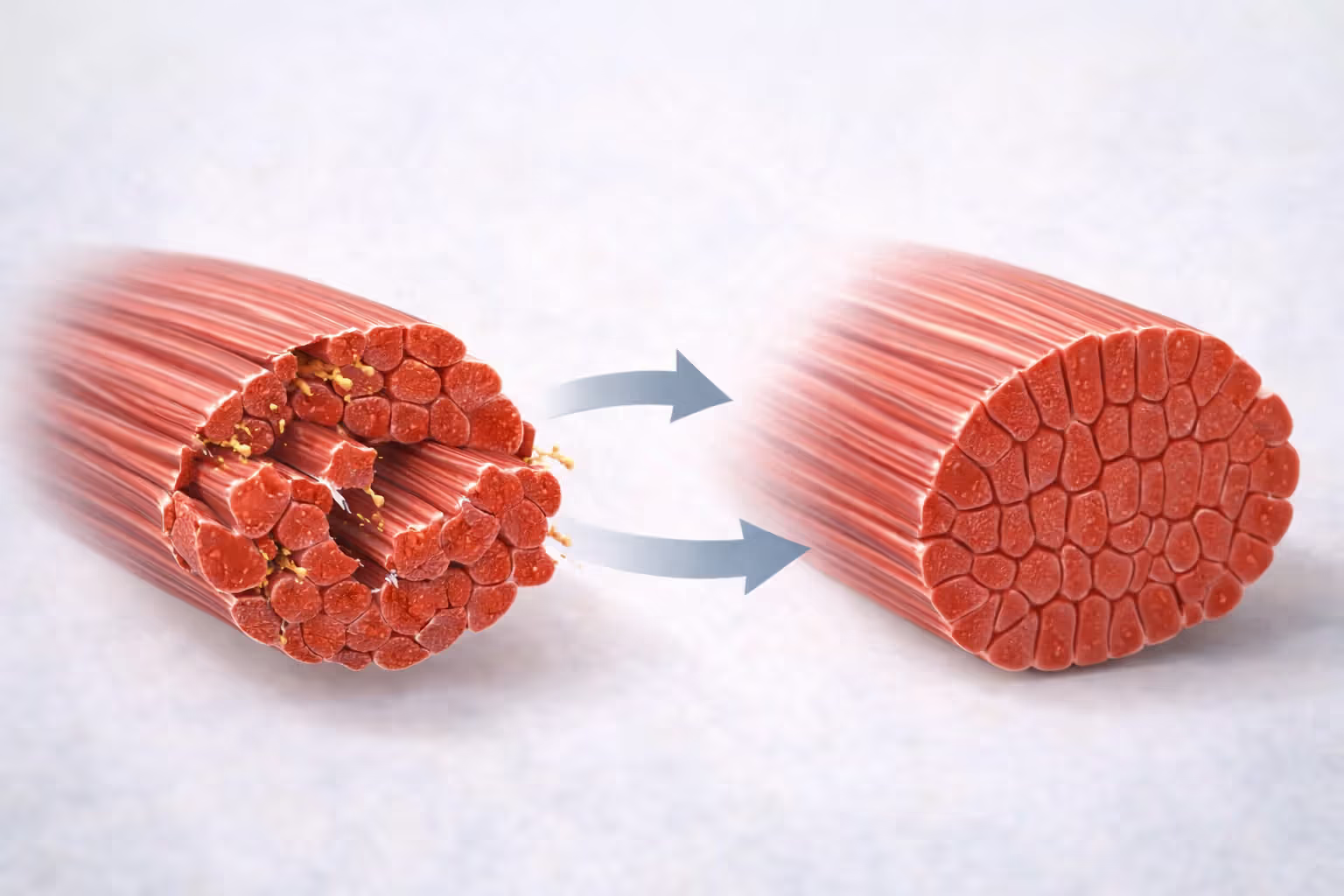
Drop into a deep squat and you're creating microscopic damage throughout your quadriceps. Good news—that's the entire point of lifting.
While you sleep tonight, your body scrambles to repair those micro-tears. It reinforces damaged areas with extra protein strands. The muscle gets denser and slightly larger. Scientists labeled this process muscle protein synthesis (MPS).
The critical detail: MPS needs amino acids as building blocks. Every single amino acid comes from dietary protein. Zero protein intake means zero building materials, regardless of how perfectly you nailed your Romanian deadlifts yesterday.
But ingredients alone won't cut it. Think about construction projects—you need power, scaffolding, and energy to run equipment. Your metabolism works identically. Sufficient calories create an environment where building new tissue becomes priority number one instead of an unaffordable luxury.
Author: Amanda Reeds;
Source: thelifelongadventures.com
Your metabolism exists in one of two states constantly. Anabolic? You're constructing tissue faster than breaking it down. Catabolic? The opposite happens—more breakdown than construction. Your actual workout puts you in a catabolic state temporarily. Food flips you back to anabolic where growth occurs.
Simple formula: keep muscle protein synthesis running higher than muscle protein breakdown consistently. Three factors make it happen—adequate total calories, sufficient protein spread throughout your waking hours, and strategic nutrient timing around training sessions.
Hormones support this whole process. Insulin shuttles nutrients into muscle cells. Testosterone plus growth hormone amplify protein synthesis rates. Here's the limitation—these hormones can't manufacture muscle from nothing. They need the raw materials your meals provide.
Worth mentioning: no supplement or superfood creates an anabolic environment solo. The foundation is regular calories and protein from actual meals. Everything else might add 5% improvements maximum.
Calculating Your Calorie Surplus for Muscle Growth
New muscle tissue requires energy to construct. While complete beginners sometimes add small amounts of muscle at maintenance calories (their bodies are insanely responsive initially), most lifters need extra calories to maximize growth rates.
Author: Amanda Reeds;
Source: thelifelongadventures.com
Start by determining your Total Daily Energy Expenditure—basically, calories your body burns daily including workouts, walking around, and baseline metabolism. Quick estimation: multiply bodyweight by 15. At 180 pounds, you'd estimate roughly 2,700 calories for TDEE.
That's crude, admittedly. Someone hitting 12,000 steps daily with five weekly training sessions burns significantly more than a desk worker training three times weekly. Online calculators improve estimates by factoring your specific activity patterns, though real-world adjustments remain necessary.
How Much of a Surplus Do You Actually Need?
Studies indicate 200-500 calories above TDEE optimizes muscle development while controlling fat accumulation. Beginners should target 500; experienced lifters perform better around 200-300.
To gain weight, you need to be in a calorie surplus. There is no other way.
— Dr. Eric R. Helms
Why different? Newbies possess incredible muscle-building potential. Their bodies respond dramatically to training stimulus. A 500-calorie surplus might produce 2-3 pounds of muscle monthly without excessive fat gain.
Advanced lifters already captured most genetic potential. They might add 4-6 pounds of muscle across an entire year. Huge surpluses just deposit fat. A conservative 200-300 calorie surplus maintains lean tissue gains without the fluff.
The lean bulk approach uses smaller surpluses (200-300 calories) minimizing fat accumulation. Muscle comes slower, but you maintain relative leanness year-round. Aggressive bulking uses 500+ calories for faster muscle accrual while accepting more fat requiring a cutting phase later.
Neither wins objectively. Maintaining leanness feels better mentally and preserves insulin sensitivity. But some lifters prefer maximizing muscle during bulk phases, then aggressively stripping fat. Choose whichever approach you'll sustain consistently.
Common Mistakes When Estimating Your Calorie Needs
Biggest mistake? Failing to track consistently enough to verify whether your estimate is accurate. Weigh yourself every morning—identical time, post-bathroom, before eating anything. Calculate weekly averages. Gaining 0.5-1 pound weekly puts you in the ideal range. Gaining 2+ pounds weekly? You're likely adding excessive fat.
Another error: forgetting that calorie burn increases with weight gain. That 180-pound lifter burning 2,700 calories might burn 2,850 at 190 pounds. Recalculate every 10 pounds gained, or whenever weight plateaus for 2+ weeks despite consistent eating.
People also delude themselves about activity levels. "Lightly active" in calculators means 1-3 workouts weekly with mostly sitting otherwise. Training five days weekly plus walking 10,000 steps daily? That qualifies as "very active." Be brutally honest about total movement, not just gym time.
Macronutrient Targets: Protein, Carbs, and Fats for Muscle Gain
Total calories trump everything, but how you divide protein, carbs, and fats affects muscle quality, training performance, and daily energy levels.
Author: Amanda Reeds;
Source: thelifelongadventures.com
Optimal Protein Intake and Distribution Throughout the Day
Protein supplies amino acids enabling muscle protein synthesis. Current research supports 0.7-1.0 grams per pound of bodyweight daily for muscle development. At 180 pounds, you need 126-180 grams daily.
Higher intake doesn't help. Studies consistently demonstrate protein beyond 1.0 gram per pound provides zero additional muscle-building benefits. Your body synthesizes muscle at a finite rate; excess amino acids just get burned for energy or converted to bodyfat.
How you space protein throughout the day rivals total intake in importance. Each meal should pack 25-40 grams of protein maximizing MPS. Eating 180 grams across three meals (60 grams each) underperforms compared to spreading it across four or five meals (36-45 grams each).
The reason: MPS enters a refractory period post-stimulation. A protein-rich meal triggers synthesis, then your body temporarily loses responsiveness to additional protein. Waiting 3-5 hours before your next protein dose resets that sensitivity.
Distributing protein evenly across meals is a simple way to maximize muscle protein synthesis over the day.
— Dr. Stuart M. Phillips
Timing around workouts deserves attention. Consuming 25-40 grams within 2 hours before training and 2 hours after optimally supports recovery. Exact timing isn't critical—you've got several hours of flexibility, not some emergency 30-minute deadline.
Protein source matters moderately. Complete proteins containing all essential amino acids (meat, fish, eggs, dairy, soy) work best. Plant proteins frequently lack certain amino acids, requiring combinations like rice plus beans for complete profiles.
Why Carbohydrates Matter More Than You Think
Carbs don't directly construct muscle tissue, but they fuel the training triggering growth. They also spike insulin, supporting nutrient absorption and reducing muscle protein breakdown.
For muscle development, target 2-3 grams of carbs per pound of bodyweight daily. At 180 pounds, you need 360-540 grams. Adjust based on training volume—higher volume demands more carbs.
Carbohydrates serve multiple functions for muscle gain. They refill muscle glycogen depleted during workouts. Low glycogen tanks training performance, meaning fewer reps and less mechanical tension—the primary growth trigger.
Carbs also spare protein. When carb intake is adequate, your body preferentially burns them for fuel instead of breaking down amino acids for energy. This preserves more protein for muscle construction.
Strategic carb timing around workouts maximizes these benefits. Eat 30-60 grams of easily digested carbs 1-2 hours pre-workout for energy. Consume another 40-80 grams post-workout alongside protein to replenish glycogen and create favorable hormonal conditions.
Distribute remaining carbs across other meals based on preference. Some people function better with more carbs at breakfast; others prefer them at dinner. Personal preference drives this decision as long as total intake and workout-window nutrition are dialed in.
Fats fill in whatever calories remain after setting protein and carbs. Minimum intake sits at 0.3-0.4 grams per pound of bodyweight for hormone production and vitamin absorption. At 180 pounds, you need at least 54-72 grams daily.
Most lifters thrive with 0.4-0.6 grams per pound (72-108 grams for that 180-pound example). Higher fat intake works but typically requires reducing carbs, potentially compromising training performance.
Lifter Level
Body Weight
Protein (g)
Carbs (g)
Fats (g)
Total Calories
Beginner
150 lbs
120-150
300-375
50-65
2,250-2,800
Intermediate
180 lbs
144-180
360-450
60-80
2,700-3,350
Advanced
200 lbs
160-200
400-500
67-90
3,000-3,750
Meal Timing and Frequency: Does It Really Matter?
Meal timing debates never end in bodybuilding circles. Reality check: it matters, just not nearly as much as hitting daily totals.
Eating 4-6 meals daily, each packing 25-40 grams of protein, optimizes muscle protein synthesis compared to cramming identical total protein into 1-2 massive meals. You don't need clockwork precision eating every 2-3 hours, but reasonable distribution throughout your day helps significantly.
Pre-workout meals should include protein and carbs consumed 1-3 hours before training. This ensures amino acids and energy availability during your session. A meal with 30-40 grams of protein and 40-60 grams of carbs hits the target. Timing depends on your digestion—some lifters crush workouts on a full stomach, others need 2-3 hours post-meal.
Post-workout nutrition has been massively overhyped. That "anabolic window" isn't some critical 30-minute period where missing your shake destroys everything. However, getting protein and carbs within 2 hours post-workout benefits recovery and glycogen restoration.
Training fasted in the morning makes post-workout nutrition more important since you haven't eaten in 8-12 hours. Training in the evening after eating all day? Less urgent—your body still has circulating nutrients from earlier meals.
Intermittent fasting can work for muscle gain but makes hitting protein targets challenging. Cramming 160+ grams of protein into a 6-8 hour eating window requires uncomfortably large meals. Most people find 4-6 smaller meals throughout the day more sustainable for consistent muscle gain.
One practical guideline: never exceed 5-6 waking hours without consuming protein. This ensures you're regularly stimulating MPS throughout your day. Eat breakfast at 7 AM, lunch by 12-1 PM, dinner by 6-7 PM, possibly a pre-bed snack at 10 PM.
Recovery Nutrition: What to Eat Between Training Sessions
Muscle growth happens during recovery, not while you're grinding through sets. Your nutrition between training sessions determines how effectively you repair damage and construct new tissue.
Author: Amanda Reeds;
Source: thelifelongadventures.com
Glycogen replenishment becomes crucial when training frequently. After depleting glycogen during workouts, your body prioritizes refilling these energy stores. Consuming 1-1.5 grams of carbs per kilogram of bodyweight (roughly 0.5-0.7 grams per pound) within a few hours post-workout accelerates replenishment.
For someone weighing 180 pounds, that's 90-126 grams of carbs post-workout. Pair these with protein (25-40 grams) for optimal recovery. Fast-digesting carbs like white rice, potatoes, or fruit work exceptionally well here.
Anti-inflammatory foods support recovery by reducing excessive inflammation from training. Some inflammation is necessary for muscle adaptation—it's part of the growth signal. But chronic, excessive inflammation slows recovery. Include foods rich in omega-3 fatty acids (fatty fish, walnuts, flaxseed), colorful vegetables, berries, and spices like turmeric.
Hydration gets overlooked constantly. Muscle tissue is roughly 75% water. Dehydration impairs protein synthesis, tanks training performance, and slows recovery. Drink at least half your bodyweight in ounces daily—90 ounces minimum at 180 pounds. More if you're sweating heavily during workouts.
Sleep quality dramatically affects recovery. Certain nutrients promote better sleep: magnesium (nuts, seeds, leafy greens), tryptophan (turkey, eggs, cheese), and complex carbs in evening meals. Avoid huge protein-heavy meals right before bed—they disrupt sleep quality for some people.
Recovery nutrition strategies should also consider micronutrients. Zinc and magnesium support testosterone production and protein synthesis. Vitamin D affects muscle function and recovery. Iron carries oxygen to working muscles. A varied diet built on whole foods typically covers these bases, though deficiencies definitely impair muscle development.
Supplements Worth Considering for Muscle Growth
Supplements can't replace eating real food consistently, but a few provide legitimate benefits for muscle development.
Creatine monohydrate stands as the most researched and effective muscle-building supplement available. It increases phosphocreatine stores in muscles, enabling more ATP production during high-intensity exercise. This translates to 1-2 extra reps per set, accumulating into significant additional volume over months.
The standard dose is 5 grams daily, and timing honestly doesn't matter much. Loading phases (20 grams daily for a week) work faster but aren't necessary. Creatine also causes 2-4 pounds of water retention in muscle tissue—this is completely normal and beneficial, not "fake gains."
Protein powder offers convenience, not magic. It helps meet daily protein targets when whole foods are impractical. Whey protein digests quickly, making it ideal around training windows. Casein digests slowly, working well before bed. Plant proteins (pea, rice, hemp) suit those avoiding dairy.
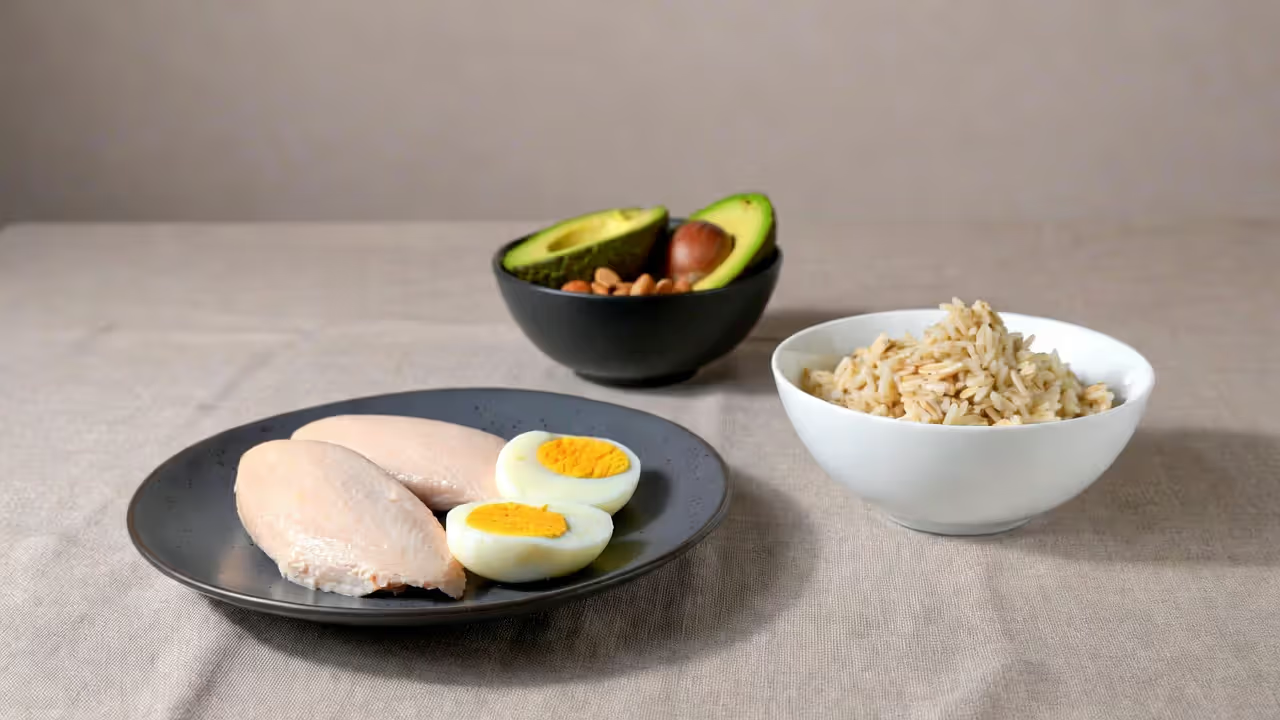
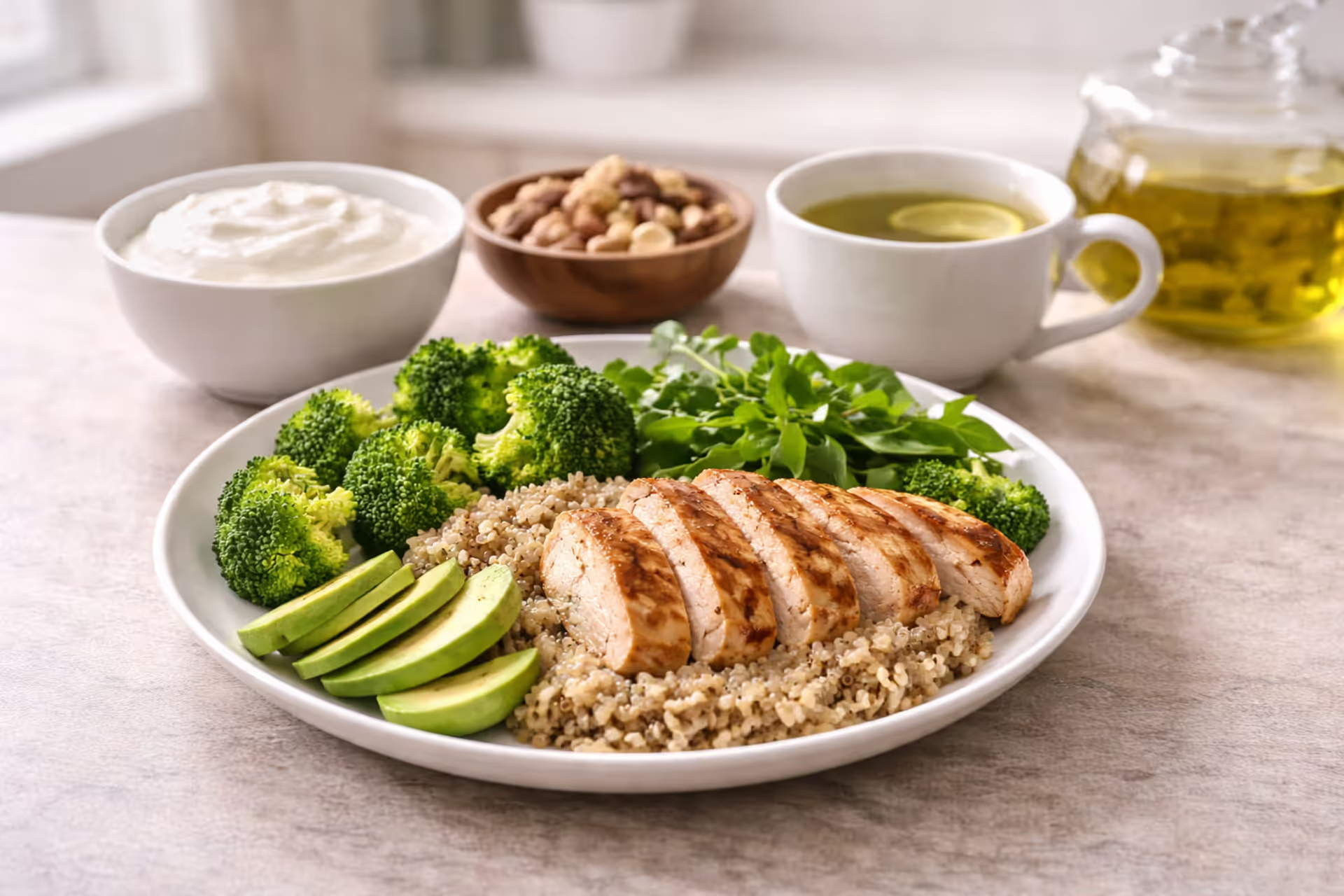
You don't need protein powder if you're hitting targets through food alone. Someone weighing 180 pounds who eats three chicken breasts, six eggs, and a cup of Greek yogurt daily gets plenty of protein without touching supplements.
Caffeine improves training performance by reducing perceived exertion and increasing power output. Coffee or caffeine pills (200-400mg) consumed 30-60 minutes pre-workout provide measurable benefits. Avoid late-day use if it disrupts your sleep.
Essential amino acids (EAAs) or branched-chain amino acids (BCAAs) help only if you're training fasted or struggling to consume adequate protein. When you're eating sufficient protein throughout the day, they provide minimal additional benefit.
Skip testosterone boosters, mass gainers, and most pre-workouts. Testosterone boosters rarely work unless you have a clinical deficiency requiring medical treatment. Mass gainers are overpriced carb-and-protein powders you can replicate cheaper by mixing oats with whey. Most pre-workouts are just caffeine dressed up with marketing hype.
Beta-alanine may help with muscular endurance during high-rep sets. Citrulline malate has shown promise for boosting blood circulation and minimizing workout fatigue. These provide marginal benefits—nice additions but not essential.
The supplement hierarchy: master total calories and protein first, then add creatine, then protein powder if convenient, then everything else if you have money burning a hole in your pocket.
Sample Meal Plans and Practical Implementation
Theory means nothing without practical application. Here are three meal plans at different calorie levels demonstrating how to implement these principles.
Meal prep saves enormous time and ensures consistency. Block off 2-3 hours weekly to batch-cook proteins (chicken, ground beef, salmon), starches (rice, potatoes, pasta), and prep vegetables. Store in containers for grab-and-go convenience throughout the week.
Dining out requires applying the same principles with slight adjustments. Order protein-based entrees (steak, fish, chicken) with sides of rice, potatoes, or pasta. Request extra protein if portions look skimpy. Avoid fried foods not because they're "unhealthy" but because the calorie content becomes nearly impossible to estimate accurately.
Track your food for at least 4-6 weeks when starting out. Use apps like MyFitnessPal or Cronometer. Weigh foods on a kitchen scale for accuracy—eyeballing portions creates massive errors, often 30-50% off. After tracking consistently for weeks, you'll develop solid intuition for portion sizes.
Flexibility matters for long-term sustainability. The 80/20 rule works incredibly well: nail your plan 80% of the time, allow flexibility 20% of the time. When you're hitting weekly calorie and protein targets consistently, occasional pizza or burgers won't derail anything.
Frequently Asked Questions About Muscle-Building Nutrition
Can you build muscle without a calorie surplus?
Yes, though with significant limitations. Beginners and people returning from extended layoffs can build muscle while eating at maintenance calories or even in a slight deficit—a phenomenon called "body recomposition." This works best for people carrying higher bodyfat percentages who can draw on stored fat for energy while constructing new muscle tissue.
Most people will develop muscle faster when eating above maintenance. Advanced lifters especially need surplus calories since they've already captured their "newbie gains." The surplus doesn't need to be massive—adding 200-300 calories above maintenance often outperforms aggressive bulking approaches.
How much protein is too much for muscle growth?
Research consistently demonstrates no muscle-building advantage beyond 1.0 gram per pound of bodyweight daily. Eating 1.5-2.0 grams per pound won't harm you (healthy kidneys handle it fine), but the extra protein simply gets converted to energy or stored as bodyfat.
Very high protein intake can actually make hitting calorie targets harder by crushing your appetite and leaving insufficient room for carbohydrates that fuel intense training. Stick within 0.7-1.0 grams per pound unless you have specific reasons to exceed this range.
Is dirty bulking effective or should I eat clean?
"Dirty bulking"—eating whatever you want to hit calorie targets—works for gaining weight but typically results in excessive fat accumulation. You can only construct muscle tissue at a finite rate; extra calories beyond what supports maximum muscle growth simply become bodyfat.
"Clean bulking" with whole foods isn't inherently superior for muscle growth, but it usually helps you feel better, perform better during workouts, and gain muscle with minimal fat. Food quality significantly affects energy levels, recovery capacity, and health markers even when it doesn't directly affect muscle protein synthesis.
The practical middle ground: get 80-90% of calories from nutrient-dense whole foods, allow 10-20% for treats or less optimal choices. This provides psychological flexibility without compromising your results.
Do I need to eat immediately after working out?
The post-workout "anabolic window" has been wildly exaggerated. You don't need to immediately chug a protein shake within 30 minutes or lose your gains. Research demonstrates the window is actually several hours wide.
That said, consuming protein and carbohydrates within 2 hours post-workout benefits recovery, especially when you train fasted or have another workout scheduled later that day. When you ate a meal 2-3 hours before training, the urgency decreases significantly—nutrients from that meal are still circulating in your bloodstream.
The exception: training first thing in the morning after an overnight fast makes post-workout nutrition more important since you haven't consumed food in 8-12 hours.
What's the best diet approach for muscle gain: high-carb or high-fat?
High-carb diets generally work better for muscle development because carbohydrates fuel high-intensity training and create favorable hormonal conditions. Most successful bodybuilders and strength athletes use higher carb intakes for these reasons.
However, individual responses vary considerably. Some people feel and perform better with moderate carbs and higher fats. The key is ensuring adequate protein intake (0.7-1.0g per pound) and sufficient total calories. Fine-tune your carb-to-fat ratio by monitoring training quality and energy levels throughout the day.
A solid starting point: 40-50% carbs, 25-30% protein, 25-30% fat. Make adjustments after tracking performance and recovery for 2-3 weeks.
How long does it take to see muscle growth with proper nutrition?
Beginners frequently notice muscle growth within 4-6 weeks of consistent training and proper nutrition. You'll observe strength gains sooner (2-3 weeks), which are partly neural adaptations but also indicate muscle development occurring.
Intermediate lifters might require 8-12 weeks to notice visible changes. Advanced lifters may require several months because their rate of muscle growth is substantially slower.
Growth rate depends on training experience, genetics, consistency, and whether you're eating in an adequate surplus. Beginners might gain 1-2 pounds of muscle monthly; advanced lifters might gain 4-8 pounds yearly. Progress photos and strength progression serve as better indicators than the mirror or scale alone.
Building muscle through proper nutrition isn't complicated, though it requires consistency and attention to detail. Calculate your calorie requirements, consume sufficient protein distributed throughout your day, fuel training sessions with adequate carbohydrates, and remain patient with the process.
The lifters who succeed aren't those following perfect meal plans or buying expensive supplements. They're the ones consistently hitting their calorie and protein targets week after week, month after month. Track your intake for at least a month to build awareness, adjust based on actual results, and trust the process.
Your training creates the stimulus for growth. Your nutrition provides the raw materials and energy to make growth happen. Get both components dialed in, and your body has no choice but to build muscle.
Your legs can be trained to perfection, but underfuel them and you're driving cross-country on a quarter tank. This guide covers daily carb requirements by training phase from recovery to peak, workout timing protocols, sweat rate testing and electrolyte thresholds, an 8-week race nutrition practice plan, carb-loading strategy for race week, and the common fueling mistakes that sabotage months of
Your basal metabolic rate burns 65-75% of daily calories — yet most people obsess over the wrong bucket. This guide covers how three calorie-burn systems actually work, 15 foods with documented thermogenic effects and exact calorie-burn increases per serving, seven metabolism myths costing you money, a practical daily eating framework maximizing thermic effect, and why sleep and strength training
Most people die too young while living too long — years marked by declining function and preventable disease. This guide covers how macronutrients trigger cellular aging pathways, five eating patterns linked to extended lifespan, Blue Zone dietary commonalities, seven metabolic biomarkers to track with optimal ranges, exercise types that maximize longevity from Zone 2 to VO2 max intervals, and a 4
Discover how omega-3 fatty acids support recovery, reduce exercise-induced inflammation, protect joint health, and improve endurance and strength output. Learn how EPA and DHA influence muscle repair, heart function, and performance so you can train harder and recover smarter.
The content on this website is provided for general informational and educational purposes related to health, yoga, fitness, and overall wellness. It is not intended to replace professional medical advice, diagnosis, or treatment.
All information, workout suggestions, yoga practices, nutrition tips, and wellness guidance shared on this site are for general reference only. Individual health conditions, fitness levels, and medical needs vary, and results may differ from person to person. Always consult a qualified healthcare provider before starting any new exercise program, dietary plan, or wellness routine.
We are not responsible for any errors or omissions, or for any outcomes resulting from the use of information presented on this website. Your health and fitness decisions should always be made in consultation with appropriate medical and fitness professionals.