Right this second, your body's burning through calories. Heart pumping. Lungs working. Brain firing. Even your liver's processing nutrients while you sit here reading. That background energy burn? It's doing most of the heavy lifting in your daily calorie budget—not your morning jog or that salad you had for lunch.
And yet, here we are. Drowning in headlines about magical foods that'll supposedly "supercharge your metabolism" or "torch fat 24/7." Here's the truth: a few of these claims check out. Most are complete nonsense designed to sell you something.
The real question isn't whether certain foods affect your metabolic rate—some genuinely do. What matters is how much they move the needle, which ones deliver measurable results, and whether you're wasting money on overpriced supplements when a $2 bag of lentils would do more for your metabolism.
I'm breaking down exactly which foods create verifiable changes in how your body burns energy, what the research actually shows (not what supplement companies claim it shows), and how to work these into your meals without turning into one of those people who carries cayenne pepper everywhere.
How Your Metabolism Actually Burns Calories
Your daily calorie burn comes from three distinct buckets, and understanding them matters because people obsess over the wrong one.
Your baseline energy burn—what researchers call basal metabolic rate—handles roughly two-thirds to three-quarters of your total daily expenditure. We're talking about the non-negotiable stuff: keeping your heart beating, maintaining body temperature, filtering toxins, building new cells. A 160-pound adult typically burns somewhere between 1,400-1,600 calories daily just existing, though genetics, age, biological sex, and how much muscle you're carrying all shift that number up or down. More lean mass means higher resting burn because muscle tissue is metabolically expensive to maintain. Your biceps burn calories even when you're asleep.
The thermic effect of feeding accounts for the next 10-15% of daily expenditure. This is literally the energy cost of eating—breaking down food, shuttling nutrients where they need to go, storing what doesn't get used immediately. Here's where calorie burn nutrition gets interesting: different foods cost different amounts of energy to process. Protein's expensive to digest, using up 20-30% of its calories just to break down and absorb. Carbs need maybe 5-10%. Dietary fat? A measly 0-3%. Eat 100 calories of chicken breast, and your body might only extract 70-75 usable calories after paying the processing fee.
Protein has a higher thermic effect than carbohydrate and fat, increasing energy expenditure after meals.
— Dr. Donald K. Layman
Everything else—fidgeting, grocery shopping, walking to your mailbox, standing while you work—falls under non-exercise activity thermogenesis. This bucket captures 15-30% of daily burn and varies wildly between people. Some folks naturally move constantly throughout the day, racking up several hundred extra calories without ever setting foot in a gym.
Individual metabolic rates span a pretty wide range. A 25-year-old carrying 140 pounds of lean tissue will vastly out-burn a 55-year-old with 110 pounds of lean mass, even if they weigh exactly the same on a scale. You can't change your genetics or biological sex. You can influence your muscle mass, daily movement, and what you eat.
What can food realistically do here? You're not going to add 500 calories to your baseline burn by eating ginger and green tea. That's fantasy. But you absolutely can maximize the energy cost of digestion through smart protein choices, and you can support the muscle mass that drives long-term metabolic rate. Small edges, compounded over time.
Author: Logan Brooks;
Source: thelifelongadventures.com
15 Foods That Legitimately Increase Your Metabolic Rate
These aren't magic. They're foods with documented thermogenic effects or proven benefits for maintaining metabolically active tissue. The mechanisms differ—some jack up immediate calorie burn, others help you hang onto muscle or improve insulin response.
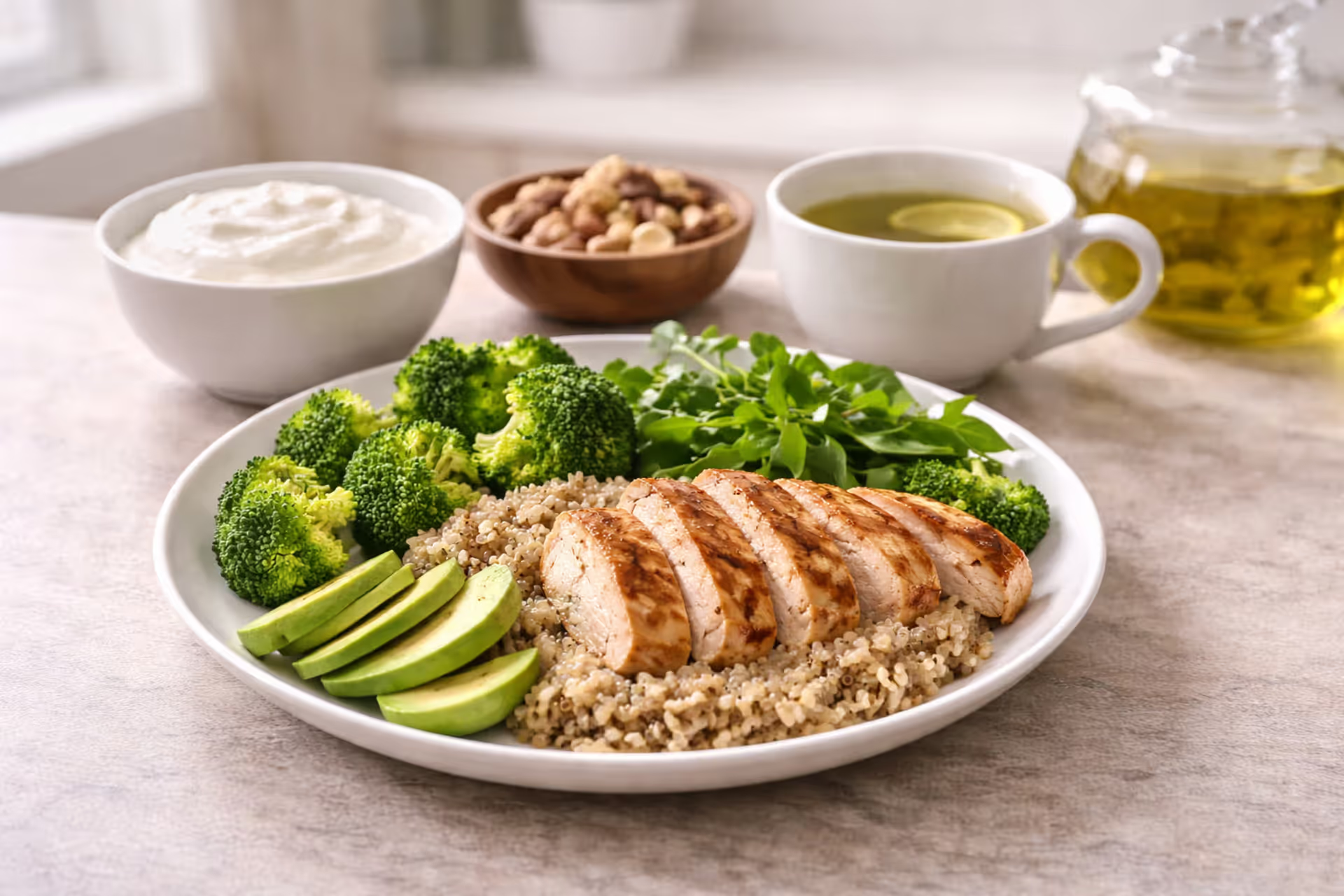
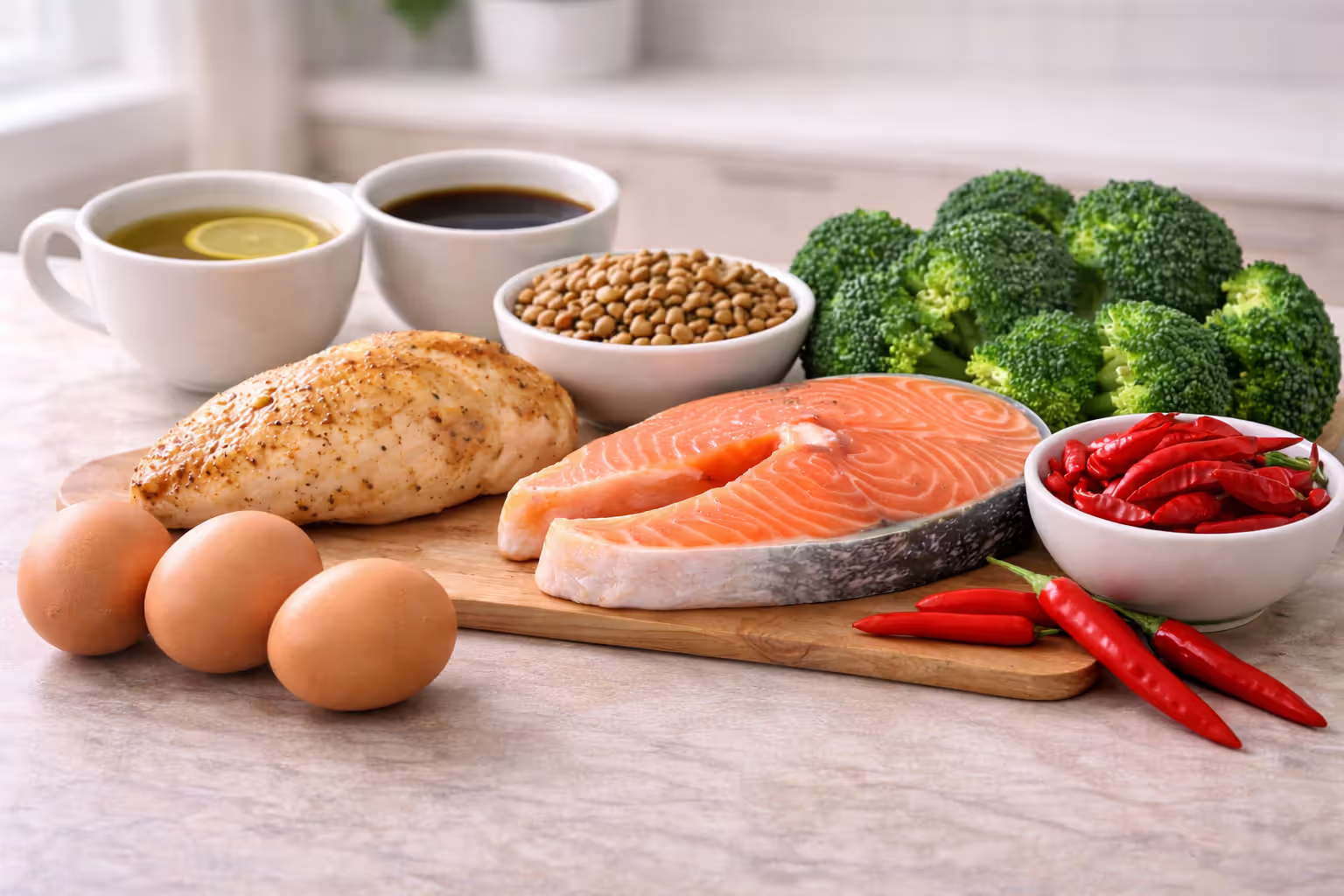
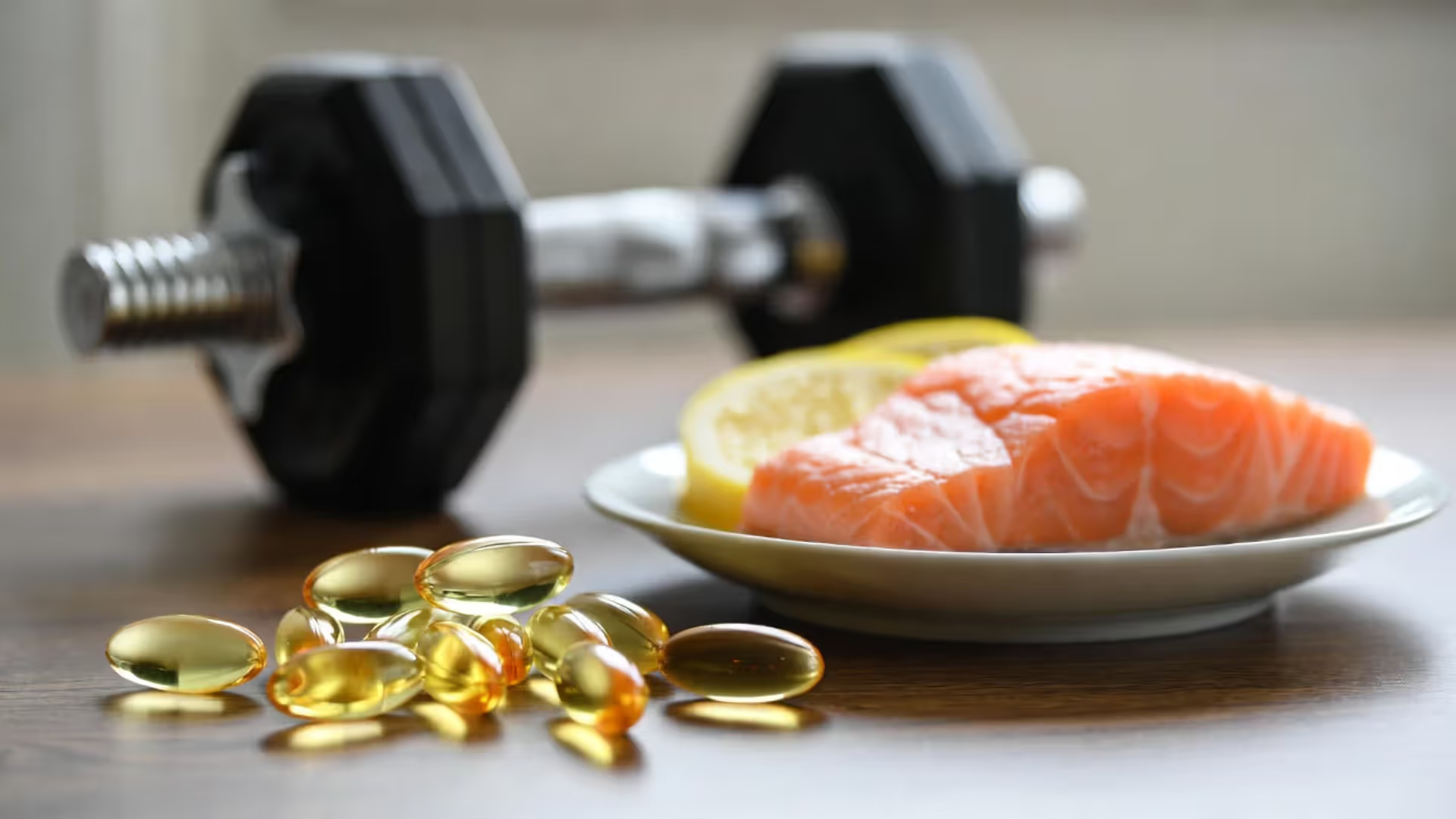
Protein sources dominate this list because they're genuinely expensive for your body to process. Chicken breast, turkey, lean cuts of beef, pork tenderloin—all require substantial energy during digestion. That 6-ounce chicken breast with 180 calories? Your body might spend 45-55 calories just processing it. Fish like salmon, tuna, cod, and halibut deliver identical benefits while throwing in omega-3 fats that combat inflammation and improve how your cells respond to insulin.
Eggs pack complete protein plus leucine, an amino acid that tells your muscles to start building and repairing. Greek yogurt combines protein with beneficial bacteria that support gut health—and emerging research keeps linking gut microbiome health to metabolic function.
Beans, lentils, chickpeas, black beans—legumes give you protein alongside resistant starch, a carbohydrate type that ferments in your intestines and produces short-chain fatty acids. These fatty acids might improve how your body handles insulin and blood sugar.
Thermogenic spices and drinks create measurable spikes in energy expenditure through specific active compounds. Chili peppers contain capsaicin, which activates temperature receptors and triggers a mild increase in heat production and calorie burn. Research shows roughly 10mg of capsaicin—about one gram of cayenne—can bump metabolic rate 4-5% for 30 minutes post-meal.
Ginger delivers gingerol and shogaol compounds with similar (though milder) thermogenic properties. A quarter-teaspoon of ground ginger in your food or tea provides benefits without setting your mouth on fire.
Green tea pairs caffeine with catechins, especially one called EGCG, that work together to increase fat burning and energy output. Studies suggest 3-4 cups daily can add 75-100 calories to your daily burn. Not massive, but meaningful across weeks and months.
Coffee's caffeine content stimulates your central nervous system and raises metabolic rate 3-11%, with stronger effects in leaner people. The boost lasts 3-4 hours, which is why drinking it in the morning or early afternoon makes more sense than evening consumption that'll wreck your sleep.
Whole grain and fiber options cost more energy to digest than their refined counterparts. Steel-cut oats, quinoa, brown rice, barley—they maintain steadier blood sugar while demanding more digestive work than white bread or instant oatmeal. The fiber also feeds beneficial gut bacteria that produce metabolites affecting metabolic health.
Broccoli, cauliflower, Brussels sprouts, kale—cruciferous vegetables pack tons of fiber plus compounds supporting liver detox pathways involved in hormone metabolism.
Strategic fats don't have dramatic thermic effects, but certain types support metabolic function through different pathways. Coconut oil contains medium-chain triglycerides your liver processes differently than regular fats, potentially increasing energy expenditure around 5% compared to other fat sources. Real effect, small magnitude—maybe 50 extra calories daily when you swap 30 grams of regular fat for MCT oil.
Author: Logan Brooks;
Source: thelifelongadventures.com
Avocados and nuts provide monounsaturated fats that help your body respond better to insulin, regulating blood sugar more effectively. Walnuts specifically deliver plant-based omega-3s that reduce inflammation tied to metabolic dysfunction.
Food
Thermogenic Effect
Key Compounds
Serving Size
Best Timing
Approx. Calorie Burn Increase
Chicken breast
25-30%
Complete protein, leucine
6 oz
Any meal works
45-55 calories per serving
Salmon
20-25%
Protein, omega-3s
5 oz
Lunch or dinner
35-45 calories per serving
Eggs
20-30%
Protein, leucine, choline
3 large
Morning meals
30-40 calories per serving
Greek yogurt
20-25%
Protein, probiotics
1 cup
Breakfast or snacks
25-35 calories per serving
Lentils
15-20%
Protein, resistant starch
1 cup cooked
Lunch or dinner
30-40 calories per serving
Chili peppers
5-10%
Capsaicin
1-2 peppers
With any meal
15-25 calories for 30 min
Green tea
4-6%
Caffeine, EGCG catechins
3-4 cups
Morning through afternoon
75-100 calories daily total
Coffee
3-11%
Caffeine
2-3 cups
Morning, early afternoon
50-150 calories for 3-4 hours
Ginger
3-5%
Gingerol, shogaol
1/4 tsp ground
Mixed into meals
10-20 calories per meal
Steel-cut oats
10-15%
Fiber, resistant starch
1/2 cup dry
Morning meals
20-30 calories per serving
Broccoli
8-12%
Fiber, glucosinolates
2 cups
Lunch or dinner
15-25 calories per serving
Coconut oil (MCT)
5-8%
Medium-chain triglycerides
1-2 tbsp
Morning or pre-workout
25-40 calories vs. regular fats
Walnuts
5-10%
Omega-3, protein
1 oz (14 halves)
Snack timing
15-25 calories per serving
Quinoa
10-15%
Complete protein, fiber
1 cup cooked
Lunch or dinner
25-35 calories per serving
Cayenne pepper
5-8%
Capsaicin
1/4-1/2 tsp
Sprinkled on meals
15-25 calories for 30 min
These numbers show additional calories burned compared to eating lower-thermic foods providing identical calories. That chicken breast doesn't burn 45 extra calories versus eating air—it burns that much more than consuming equivalent calories from refined carbs or fats.
Common Metabolism Myths That Waste Your Time and Money
The weight loss industry makes bank on metabolic confusion, pushing expensive products and Byzantine eating schedules that accomplish precisely nothing.
"Eating every 2 hours speeds metabolism" refuses to die despite overwhelming evidence it's wrong. Meal frequency doesn't meaningfully impact total daily energy expenditure. Three meals versus six smaller ones? Your body expends identical total energy processing identical total food. Some people feel better grazing throughout the day, which might help control appetite, but it doesn't elevate metabolic rate. The thermic effect depends on what and how much you eat, not when or how often.
"Negative calorie foods exist" violates basic mathematics. Sure, celery requires energy to digest, but not more than it contains. One celery stalk has roughly 6 calories and maybe uses 1-2 during processing, netting 4-5 usable calories. No food costs more energy to process than it delivers, though high-fiber vegetables come closest to neutral.
"Supplements can replace whole foods" appeals to anyone hunting shortcuts, but isolated compounds rarely replicate whole food benefits. Green tea extract pills don't match the metabolic effects of brewing and drinking actual tea—partly because the beverage's temperature and volume matter. Capsaicin supplements cause stomach problems at doses that'd provide meaningful thermogenic effects. Human bodies evolved processing nutrients in their natural food context, complete with cofactors and compounds enhancing absorption and effectiveness.
"Metabolism-boosting foods cause significant weight loss alone" creates unrealistic expectations. Adding green tea and chili peppers might increase daily calorie burn 100-150 calories—equal to a small apple or 15 minutes walking. Compounded over time, this creates meaningful deficit, but only if you don't unconsciously eat more. Many people accidentally increase intake when they believe they're "boosting metabolism," canceling any benefit.
The idea that metabolism crashes with age contains partial truth but wildly exaggerates the effect. Baseline burn does decline, but recent research shows the decrease is smaller than scientists previously thought—maybe 1-2% per decade after 30, mostly from muscle loss rather than aging itself. Maintaining muscle through resistance training largely prevents this decline.
"Breakfast kickstarts your metabolism" confuses correlation with causation. People eating breakfast often maintain healthier weights, but controlled studies show this relates to overall diet quality and appetite control, not metabolic rate. Skipping breakfast doesn't slow your baseline burn—your body keeps burning calories regardless of meal timing.
The notion that "starvation mode" prevents weight loss misrepresents metabolic adaptation. Severe restriction does reduce metabolic rate, but not enough to stop weight loss entirely. A 500-calorie daily deficit might trigger a 50-100 calorie adaptive response, slowing but definitely not stopping progress. The real problem with crash diets? Muscle loss permanently reduces your baseline burn.
Building a Daily Eating Pattern for Optimal Metabolic Health
Forget rigid meal plans. Focus on principles supporting metabolic function throughout your day.
Author: Logan Brooks;
Source: thelifelongadventures.com
Protein distribution matters more than when you hit your total. Consuming 25-40 grams per meal maximizes muscle protein synthesis, maintaining the metabolically active tissue driving your baseline burn. A 160-pound person targeting 130 grams daily might eat 35 grams at breakfast (three eggs plus Greek yogurt), 40 at lunch (6-ounce chicken breast), 40 at dinner (salmon), with remaining 15 grams from snacks like nuts or a shake.
Spreading protein prevents the common pattern of 10 grams at breakfast, 20 at lunch, 80 at dinner—your body can't stockpile excess amino acids for later, so that monster dinner doesn't work better than balanced distribution.
Meal timing matters less than consistency. Some research suggests front-loading calories aligns with circadian rhythms and improves insulin sensitivity, but the effect's modest. What matters more: eating at predictable times helps regulate hunger hormones. Lunch at noon one day, 3 PM the next? Your ghrelin patterns go haywire, making appetite control harder.
Exception: late-night eating can disrupt sleep quality. Finishing your last meal 2-3 hours before bed allows digestion to settle and body temperature to drop—both support quality sleep, and sleep quality dramatically impacts metabolic health.
Hydration's often overlooked. Drinking 500ml water temporarily raises metabolic rate 10-30% for roughly an hour as your body expends energy warming the fluid to body temperature. Cold water requires slightly more energy than room temperature, though the difference is small. More importantly, even mild dehydration tanks physical performance and cognitive function, both affecting daily movement and exercise capacity.
Practical approach: drink 8-12 ounces with each meal and snack, plus additional water during and after exercise. Urine should run pale yellow—darker signals dehydration, completely clear suggests overhydration.
Sample day framework (not a prescription, just principles in action):
Morning: Coffee or green tea upon waking. Breakfast within 1-2 hours includes 30-40 grams protein (eggs, Greek yogurt), fiber from oats or fruit, small portion of healthy fat (nuts, avocado). This combination provides sustained energy and maximizes thermic effect.
Midday: Lunch built around palm-sized protein portion (chicken, fish, legumes), two servings vegetables including at least one cruciferous option, moderate portion whole grains or starchy vegetables. Cayenne pepper or ginger added to the meal provides mild thermogenic boost.
Afternoon: Snack if needed, emphasizing protein and fiber—Greek yogurt with berries, vegetables with hummus, handful of nuts. This prevents extreme hunger leading to dinner overeating.
Evening: Dinner similar structure to lunch, with protein, vegetables, smaller carb portion if you're less active evenings. Stop eating 2-3 hours before bed.
Throughout: 8-10 glasses water, with green tea or coffee providing 2-3 servings.
This framework emphasizes foods increasing metabolism through high thermic effect while maintaining stable blood sugar and supporting muscle mass. Flexible enough for different schedules and preferences.
Lifestyle Factors That Amplify Food's Metabolic Benefits
Food choices work synergistically with other lifestyle factors—optimizing one while ignoring others produces limited results.
Sleep quality and metabolic rate share bidirectional relationship. Poor sleep disrupts leptin and ghrelin—the hormones controlling hunger and fullness. After inadequate sleep, you'll feel hungrier and crave calorie-dense foods, while your body becomes less insulin-sensitive, storing more calories as fat. Sleep deprivation also reduces daily movement—you sit more without realizing it.
Even one bad night can tank metabolic rate 5-20%, depending on individual factors. Chronic restriction (under 6-7 hours nightly) leads to muscle loss even with adequate protein, permanently lowering baseline burn.
Prioritize 7-9 hours quality sleep through consistent bed and wake times, cool dark bedroom, avoiding screens an hour before bed. This single change often produces more metabolic benefit than any dietary adjustment.
Strength training and muscle mass provide the most significant controllable influence on baseline burn. A pound of muscle burns roughly 6 calories daily at rest versus 2 calories per pound of fat. Adding 10 pounds muscle increases baseline burn maybe 40 calories daily—modest in isolation, meaningful compounded over months and years.
More importantly, resistance training creates "afterburn effect" (excess post-exercise oxygen consumption) elevating metabolic rate 24-48 hours after training. A challenging full-body session might burn 200 calories during the workout but increase total daily expenditure 300-400 calories when accounting for recovery and repair.
You don't need gym membership—bodyweight exercises, resistance bands, household objects provide sufficient stimulus. The key: progressive overload, gradually increasing resistance or reps over time.
Resistance training is essential to preserve lean mass, the primary driver of resting metabolic rate.
— Dr. Stuart M. Phillips
Stress management and cortisol affect both food choices and metabolic efficiency. Persistent stress keeps cortisol elevated, which encourages fat storage, especially around your midsection. High cortisol also increases cravings for calorie-dense comfort foods while reducing insulin sensitivity.
The stress-metabolism connection explains why two people eating identically and exercising equally can see different results. The person sleeping well and managing stress effectively will build more muscle, burn more fat, feel more energetic.
Practical stress management doesn't mean hour-long meditation. Brief practices like 5-minute breathing exercises, short nature walks, maintaining social connections provide measurable cortisol reduction.
Realistic result timelines prevent discouragement. Metabolic adaptations happen gradually. After boosting protein and adding thermogenic foods, you might burn an additional 100-200 calories daily. This creates 700-1,400 calorie weekly deficit, translating to 0.2-0.4 pounds fat loss weekly from dietary changes alone.
Combined with strength training (adding muscle and increasing daily movement), improved sleep (optimizing hormone function), stress management (reducing cortisol), realistic progress runs 0.5-1.5 pounds fat loss weekly while maintaining or building muscle. Seems slow compared to crash diet promises, but it's sustainable and leads to permanent changes rather than yo-yo cycles.
Author: Logan Brooks;
Source: thelifelongadventures.com
Energy levels often improve within 1-2 weeks implementing these changes. Physical changes become visible around 4-6 weeks. Significant body composition improvements need 12-16 weeks consistency.
Frequently Asked Questions About Metabolism and Diet
Can certain foods actually speed up metabolism enough to lose weight?
Foods alone won't create dramatic weight loss, but they contribute meaningfully within comprehensive approach. High-protein options increase calorie burn 20-30% during digestion, and thermogenic choices like green tea and chili peppers add another 50-150 calories daily. Over a year, this 200-300 calorie daily boost from dietary changes could produce 20-30 pounds fat loss if you don't compensate by eating more. The catch: most people unconsciously increase intake when believing they're "boosting metabolism." Track your food a few weeks to ensure you're actually maintaining deficit.
What's the difference between thermogenic foods and metabolism boosters?
These terms get used interchangeably, but technically thermogenic foods create immediate heat production and calorie burn—think chili peppers raising body temperature. Metabolism boosters include thermogenic options but also encompass anything supporting long-term metabolic rate, like protein maintaining muscle mass or foods improving insulin sensitivity. All thermogenic foods boost metabolism, but not all metabolism-boosting foods are thermogenic. Protein has high thermic effect without generating noticeable heat, while capsaicin creates warmth you actually feel.
How much protein do I need daily to support metabolic rate?
Target 0.7-1.0 grams per pound body weight, adjusted for activity level. A sedentary 150-pound person needs roughly 105 grams daily, while someone doing regular strength training should aim for 130-150 grams. This supports muscle maintenance and maximizes thermic feeding effect. Distribute protein across meals—25-40 grams per meal optimizes muscle protein synthesis. Exceeding these amounts doesn't provide additional metabolic benefit and may displace other nutrients. If you're significantly overweight, calculate based on goal weight rather than current weight to avoid excessive protein.
Do metabolism-boosting foods work if I have a thyroid condition?
Thyroid disorders fundamentally affect metabolic rate, and food can't compensate for untreated hypothyroidism. However, once thyroid hormone levels are optimized through medication, metabolism-boosting foods work identically as in people without thyroid conditions. Focus on selenium-rich options (Brazil nuts, fish) and adequate iodine (seaweed, iodized salt) supporting thyroid function. Avoid excessive raw cruciferous vegetables with hypothyroidism—compounds called goitrogens can interfere with thyroid hormone production when eaten raw in large quantities, though cooking deactivates them. Work with your endocrinologist ensuring medication is properly adjusted before expecting significant results from dietary changes.
Is it better to eat metabolism-boosting foods in the morning or evening?
Timing matters less than consistency, with one exception: caffeine-containing foods and beverages (coffee, green tea) should stay before early afternoon to avoid sleep disruption. Protein distribution matters more than timing—spread intake across meals rather than loading it all at dinner. Some research suggests front-loading calories slightly improves insulin sensitivity, but the effect's modest and shouldn't override personal preference. If you're not hungry mornings, don't force breakfast just for "metabolic benefits." Eat when hunger aligns with your schedule, emphasizing food quality over clock-watching.
How long does it take to see results from eating these foods?
Energy levels often improve within 1-2 weeks as blood sugar stabilizes and nutrient intake improves. Physical changes like reduced bloating or better digestion appear around 2-3 weeks. Measurable body composition changes—visible fat loss or muscle definition—need 6-8 weeks consistency. Metabolic adaptations like improved insulin sensitivity or increased muscle mass develop over 12-16 weeks. Timeline varies based on starting point: someone transitioning from processed-food diet sees faster initial changes than someone already eating relatively well. Track progress through multiple metrics—energy, sleep quality, strength improvements, measurements—rather than fixating on scale weight, which fluctuates daily due to water retention and doesn't distinguish fat loss from muscle gain.
Making Metabolism Work For You, Not Against You
Metabolism isn't a switch you flip or a fire you stoke. It's a complex system influenced by dozens of factors, some within your control and others completely not. The foods I've covered here provide genuine, measurable benefits, but they work best as part of broader strategy including adequate sleep, regular strength training, stress management, and consistent eating patterns.
The 100-200 extra calories you might burn daily from strategic food choices won't transform your body alone, but compounded over weeks and months, they create meaningful change. More importantly, these foods support the muscle mass, hormone balance, and insulin sensitivity determining whether your metabolism works efficiently or struggles.
Rather than chasing the next miracle food or expensive supplement, focus on building sustainable habits around protein-rich meals, thermogenic spices and beverages, whole food sources of carbs and fats, and adequate hydration. These choices support metabolic health regardless of your age, genetics, or current fitness level.
Your metabolism will never be "fast" enough to compensate for poor sleep, chronic stress, or sedentary lifestyle. But when you address those factors while strategically incorporating foods that increase metabolism, you create an environment where your body naturally regulates weight, maintains energy, and supports long-term health. That's not marketing hype. It's basic physiology applied consistently over time.
Your arms haven't grown in three months — and the problem isn't your workout split, it's what you ate last Tuesday when you skipped lunch. This guide covers calorie surplus calculations for beginners through advanced lifters, optimal protein intake and distribution across meals, why carbs matter more than you think, meal timing realities vs. bro-science myths, recovery nutrition strategies, supple
Your legs can be trained to perfection, but underfuel them and you're driving cross-country on a quarter tank. This guide covers daily carb requirements by training phase from recovery to peak, workout timing protocols, sweat rate testing and electrolyte thresholds, an 8-week race nutrition practice plan, carb-loading strategy for race week, and the common fueling mistakes that sabotage months of
Most people die too young while living too long — years marked by declining function and preventable disease. This guide covers how macronutrients trigger cellular aging pathways, five eating patterns linked to extended lifespan, Blue Zone dietary commonalities, seven metabolic biomarkers to track with optimal ranges, exercise types that maximize longevity from Zone 2 to VO2 max intervals, and a 4
Discover how omega-3 fatty acids support recovery, reduce exercise-induced inflammation, protect joint health, and improve endurance and strength output. Learn how EPA and DHA influence muscle repair, heart function, and performance so you can train harder and recover smarter.
The content on this website is provided for general informational and educational purposes related to health, yoga, fitness, and overall wellness. It is not intended to replace professional medical advice, diagnosis, or treatment.
All information, workout suggestions, yoga practices, nutrition tips, and wellness guidance shared on this site are for general reference only. Individual health conditions, fitness levels, and medical needs vary, and results may differ from person to person. Always consult a qualified healthcare provider before starting any new exercise program, dietary plan, or wellness routine.
We are not responsible for any errors or omissions, or for any outcomes resulting from the use of information presented on this website. Your health and fitness decisions should always be made in consultation with appropriate medical and fitness professionals.