Most people die too young while living too long—years marked by declining function, metabolic dysfunction, and preventable disease. The gap between lifespan and healthspan continues to widen in developed nations, but emerging research shows that specific nutrition and fitness interventions can compress morbidity into a shorter window at life's end.
The science is clear: what you eat, when you eat, and how you move directly influence the biological aging processes happening in your cells right now. This isn't about adding a decade to a nursing home stay. It's about maintaining strength, metabolic flexibility, and cognitive sharpness into your 80s and beyond.
How Diet Composition Affects Cellular Aging and Lifespan
Your macronutrient choices trigger molecular cascades that either accelerate or slow cellular aging. Protein intake activates mTOR (mechanistic target of rapamycin), a growth pathway that builds muscle but, when constantly elevated, may shorten lifespan. Carbohydrates spike insulin, which over time can lead to insulin resistance—one of the strongest predictors of accelerated aging. Fats influence membrane fluidity and inflammatory signaling.
Anti aging diet science points to protein cycling as a practical compromise. Rather than maintaining constant high protein intake, alternating between higher protein days (1.6g/kg bodyweight) and moderate days (0.8-1.0g/kg) may provide muscle-building benefits while allowing periodic mTOR downregulation. A 70kg person might consume 112g protein on training days but only 70g on rest days.
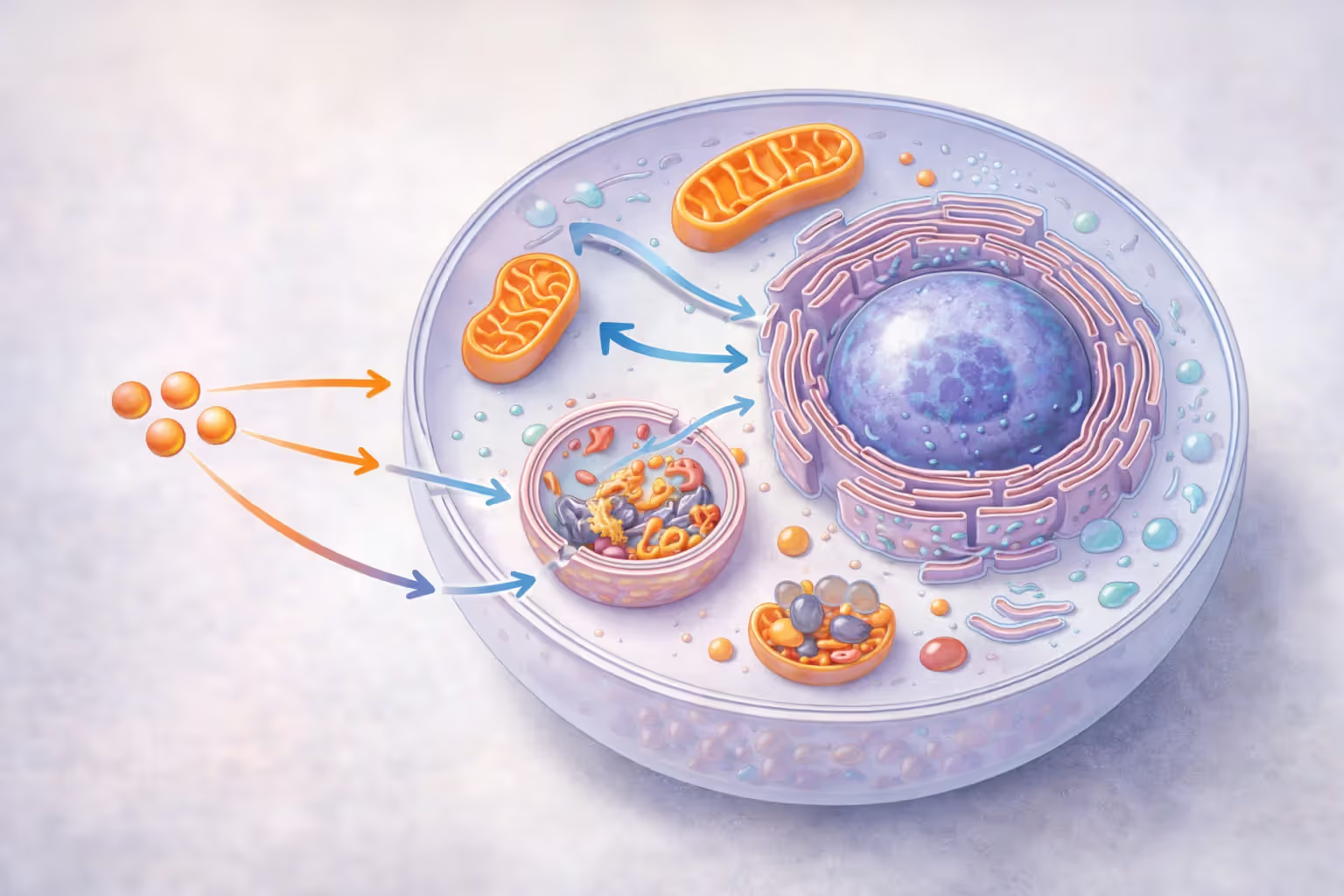
Caloric restriction remains the most robust intervention for extending lifespan across species, but sustained 30-40% restriction isn't realistic for most humans. Caloric restriction mimetics—compounds that trigger similar pathways without severe restriction—show promise. Resveratrol, spermidine, and rapamycin analogs activate autophagy, your cells' recycling system that breaks down damaged proteins and organelles.
Author: Logan Brooks;
Source: thelifelongadventures.com
Autophagy typically kicks in after 16-18 hours of fasting, though exercise and certain phytonutrients can trigger it earlier. The practical application: a daily 16-hour fast combined with polyphenol-rich foods (green tea, berries, dark chocolate) may deliver autophagy benefits without extreme measures.
Lifespan nutrition research increasingly focuses on amino acid restriction, particularly methionine and branched-chain amino acids (BCAAs). Plant proteins naturally contain less methionine than animal proteins, which may partially explain the longevity advantages seen in plant-forward diets. This doesn't mean eliminating animal foods—a 70/30 plant-to-animal ratio appears to balance nutrient density with longevity benefits.
5 Eating Patterns Linked to Extended Lifespan in Population Studies
Population studies reveal consistent patterns among the longest-lived groups, though no single "perfect" diet emerges. Instead, several approaches share common elements: high plant food intake, moderate protein, extended overnight fasting periods, and minimal processed foods.
The Mediterranean diet—rich in olive oil, fish, vegetables, legumes, and moderate wine—reduces all-cause mortality by 20-25% in multiple studies. The mechanism likely involves anti-inflammatory polyphenols, omega-3 fatty acids, and fiber's effects on the microbiome. A typical Mediterranean lunch might include grilled sardines, a large mixed salad with olive oil, white beans, and a small portion of whole grain bread.
Okinawan elders traditionally consumed a diet 85% plant-based, featuring sweet potatoes, bitter melon, seaweed, and small amounts of pork. Their caloric intake averaged 1,800-1,900 calories—roughly 20% less than mainland Japanese. Notably, Okinawans practice "hara hachi bu," eating until 80% full, which naturally enforces mild caloric restriction.
Hara hachi bu: eat until you are 80% full.
— Okinawan proverb
Time-restricted feeding compresses eating into an 8-10 hour window. A 2022 study found that limiting eating to before 3 PM improved insulin sensitivity and blood pressure more than the same diet spread across 12 hours. The mechanism involves aligning food intake with circadian rhythms—insulin sensitivity peaks in morning hours and declines by evening.
Plant-forward diets (not necessarily fully plant-based) consistently outperform standard Western diets. The Adventist Health Study-2 found that vegetarians and pescatarians lived 4-7 years longer than regular meat-eaters, with most benefit coming from replacing processed and red meat rather than eliminating all animal products.
The Nordic diet—featuring root vegetables, berries, fatty fish, and whole grains—shows metabolic benefits comparable to Mediterranean eating. What matters more than geography: whole foods, high fiber (30-40g daily), omega-3 dominance over omega-6, and eating mostly unprocessed ingredients.
Author: Logan Brooks;
Source: thelifelongadventures.com
What Blue Zone Diets Reveal About Longevity Nutrition
Blue Zones (regions with exceptional longevity) share dietary commonalities despite geographic separation. Beans appear in every Blue Zone diet—a half-cup daily correlates with a 7-8% reduction in mortality risk. These populations eat meat rarely, typically 3-5 times monthly rather than daily.
Carbohydrates make up 50-65% of calories in most Blue Zones, contradicting low-carb trends. However, these are low-glycemic complex carbs—sweet potatoes, whole grains, legumes—not refined flour and sugar. Centenarians in Ikaria, Greece consume 6 times more beans and one-third the meat of Americans.
Another consistent pattern: nuts. Loma Linda Adventists who ate nuts 5+ times weekly lived 2-3 years longer than those who rarely ate them. A small handful (1 ounce) provides protein, healthy fats, and minerals without spiking blood sugar.
Intermittent Fasting Protocols and Metabolic Health Markers
Intermittent fasting (IF) improves metabolic health markers independent of weight loss. A 2023 meta-analysis found that time-restricted eating reduced fasting insulin by 15-20% and improved insulin sensitivity even when total calories remained constant.
The 16:8 protocol (16 hours fasting, 8-hour eating window) offers the best adherence for most people. Eating between 10 AM and 6 PM aligns with circadian biology better than skipping breakfast and eating late. During the fasting window, black coffee, tea, and water are permitted—small amounts of cream (under 50 calories) likely don't break the metabolic benefits.
Alternate-day fasting (eating normally one day, restricting to 500 calories the next) produces more dramatic metabolic improvements but proves harder to sustain. A modified approach—two non-consecutive 500-calorie days per week—delivers 70-80% of the benefit with better compliance.
The longevity eating habits that matter most: consistency over perfection. A 14-hour overnight fast practiced 6 days weekly likely beats a strict 18-hour fast managed only 3 days weekly.
Metabolic Health Biomarkers You Should Track
Numbers matter more than how you feel. You can have metabolic dysfunction years before symptoms appear. Tracking specific biomarkers reveals whether your nutrition and fitness interventions are working at the cellular level.
Biomarker
Optimal Range
Nutrition Impact
Fitness Impact
Fasting Insulin
<5 μIU/mL
Reduced by carb quality, meal timing, fiber intake (30g+ daily)
Improved 25-40% with regular resistance training and Zone 2 cardio
hs-CRP
<0.5 mg/L
Lowered by omega-3s, polyphenols, eliminating processed foods
Reduced by consistent moderate exercise; elevated by overtraining
ApoB/LDL-P
<80 mg/dL / <1000 nmol/L
Decreased by replacing saturated fat with MUFA/PUFA, increasing fiber
Modest reduction (5-10%) from endurance training
HbA1c
<5.4%
Improved by low-glycemic foods, meal timing, adequate protein
Reduced 0.3-0.6% with combined resistance and aerobic training
VO2 Max
>35 mL/kg/min (varies by age/sex)
Supported by iron, B-vitamins, nitrate-rich vegetables
Increased 15-25% with high-intensity interval training
Grip Strength
>40 kg men, >25 kg women
Maintained by adequate protein (1.6g/kg), leucine-rich foods
Improved with progressive resistance training 2-3x weekly
IGF-1
100-200 ng/mL (context-dependent)
Elevated by high protein; reduced by caloric restriction
Increased by resistance training; balanced by endurance work
Fasting insulin deserves particular attention. Levels above 8-10 μIU/mL indicate insulin resistance even if glucose remains normal. You can have "normal" HbA1c (5.7%) while your pancreas overproduces insulin to maintain that glucose level—a pre-diabetic state that accelerates aging.
Author: Logan Brooks;
Source: thelifelongadventures.com
ApoB measures the number of atherogenic particles in your blood, providing better cardiovascular risk assessment than standard LDL cholesterol. Levels above 100 mg/dL warrant intervention through diet modification, particularly increasing soluble fiber and replacing saturated fats.
VO2 max—the maximum oxygen your body can utilize during exercise—predicts mortality better than almost any other metric. Each 1 mL/kg/min improvement correlates with a 10-15% reduction in mortality risk. A 50-year-old with VO2 max of 40 has the mortality risk of someone a decade younger.
Exercise Types and Intensities That Maximize Lifespan
Healthy aging diet fitness requires both components working synergistically. You can't out-exercise a poor diet, but optimal nutrition without movement leaves longevity benefits unrealized.
Zone 2 cardio—exercise at a conversational pace where you can speak in full sentences but not comfortably sing—builds mitochondrial density and metabolic flexibility. Aim for 150-180 minutes weekly. This intensity keeps your heart rate at roughly 60-70% of maximum (180 minus your age provides a rough estimate).
Author: Logan Brooks;
Source: thelifelongadventures.com
A 50-year-old might target 120-130 beats per minute during Zone 2 work. This feels "too easy" for most people conditioned to associate exercise with suffering, but the metabolic adaptations occur precisely because you're not depleting glycogen or triggering excessive cortisol release.
VO2 max training requires high-intensity intervals—4 minutes at 90-95% max heart rate, followed by 3 minutes recovery, repeated 4 times. Once weekly suffices. This protocol, developed by Norwegian researchers, produces the most efficient VO2 max improvements: 10-15% gains in 8-10 weeks.
Resistance training maintains muscle mass and bone density—both critical for longevity. After age 40, you lose 3-8% of muscle mass per decade without intervention. Two to three sessions weekly, focusing on compound movements (squats, deadlifts, rows, presses), preserve strength and metabolic rate.
The repetition range matters less than progressive overload—gradually increasing weight, reps, or sets over time. An effective minimalist approach: 3 sets of 6-12 reps on 4-5 compound exercises, twice weekly, increasing weight when you can complete all sets with good form.
Exercise is the most potent longevity drug we have.
— Dr. Peter Attia
Movement throughout the day—walking breaks, taking stairs, standing periodically—adds metabolic benefit beyond structured exercise. Hunter-gatherer populations walk 8-12 kilometers daily while maintaining low-intensity movement during waking hours. A target of 8,000-10,000 steps daily approximates this pattern in modern contexts.
Common Mistakes That Undermine Your Anti-Aging Nutrition Plan
Extreme restriction backfires. Dropping calories too low (below 1,200 for women, 1,500 for men) triggers metabolic adaptation, reduces muscle mass, and often leads to rebound weight gain. A moderate 10-15% caloric deficit—achieved through food quality rather than deprivation—proves more sustainable.
Protein needs increase with age due to anabolic resistance—older muscles require more protein to trigger the same growth response. After 40, aim for 1.6g/kg daily, with at least 30g per meal to maximize muscle protein synthesis. A 70kg person needs roughly 110g daily, split across 3-4 meals.
Many people hit 20g at breakfast, 30g at lunch, and 60g at dinner. Better distribution: 35g at each main meal. Your body can only process about 30-40g of protein for muscle building in a single sitting; excess gets oxidized for energy or converted to glucose.
Supplement misconceptions waste money and sometimes cause harm. NAD+ precursors (NR, NMN) show promise in animal studies but lack human longevity data. Metformin, prescribed off-label for anti-aging, may blunt exercise adaptations. Resveratrol requires doses far beyond what supplements provide to match research effects.
The supplements with strongest evidence: vitamin D (if deficient), omega-3s (2g EPA/DHA daily), and magnesium (glycinate form, 400mg). Everything else should come from food unless blood work reveals specific deficiencies.
Neglecting muscle mass proves catastrophic for longevity. Sarcopenia (age-related muscle loss) predicts disability and mortality independent of body weight. A 70-year-old with high muscle mass has better metabolic health than a thin 70-year-old with low muscle. Muscle acts as a metabolic sink for glucose, produces beneficial myokines, and prevents frailty.
Ignoring sleep and stress management undermines nutrition and fitness efforts. Poor sleep elevates cortisol, impairs insulin sensitivity, and increases appetite for high-calorie foods. Chronic stress activates inflammatory pathways that accelerate cellular aging. Seven to eight hours of quality sleep and daily stress reduction practices (meditation, nature exposure, social connection) are non-negotiable.
Building Your Personalized Longevity Protocol: A 4-Week Framework
Week 1: Establish baseline metrics and eating window. Get blood work (fasting insulin, HbA1c, lipid panel including ApoB, hs-CRP). Test VO2 max (fitness facilities offer this) or use a 12-minute run test as proxy. Measure grip strength with a dynamometer. Implement a 12-hour overnight fast (8 PM to 8 AM) if you're currently eating across 14+ hours.
Week 2: Adjust macronutrients and add Zone 2 cardio. Shift toward a 40% carb, 30% protein, 30% fat ratio, emphasizing whole food sources. Add 30 minutes of Zone 2 cardio three times this week—a brisk walk or easy bike ride where you can hold a conversation. Track your heart rate to ensure you're in the target zone.
Week 3: Extend fasting window and begin resistance training. Move to a 14-hour overnight fast (7 PM to 9 AM). Start resistance training twice this week—full body sessions with squats, deadlifts, rows, and presses. Three sets of 8-12 reps with weight that makes the last 2 reps challenging. Add a fourth Zone 2 session.
Week 4: Implement protein cycling and add VO2 max work. Alternate higher protein days (1.6g/kg on training days) with moderate days (1.0g/kg on rest days). Add one VO2 max session—4x4 minute intervals at 90% max heart rate with 3-minute recovery between. Maintain 14-hour fasting window and 3-4 Zone 2 sessions.
Beyond week 4: Refine based on biomarker response. Retest fasting insulin and HbA1c at 12 weeks. If insulin remains above 5 μIU/mL, extend fasting to 16 hours or reduce carbohydrate intake further. If VO2 max hasn't improved, increase interval training frequency to twice weekly. If grip strength plateaus, increase resistance training volume or frequency.
The goal isn't perfection but consistent implementation of evidence-based practices. An 80% adherence rate—following the protocol 5-6 days weekly—delivers most benefits while remaining sustainable long-term.
Frequently Asked Questions About Longevity Nutrition and Fitness
How much does nutrition vs. fitness contribute to longevity?
Both matter, but they affect different pathways. Nutrition primarily influences metabolic health and inflammation—poor diet can shorten lifespan by 10-15 years through cardiovascular disease and diabetes. Fitness affects cardiovascular capacity and muscle preservation—sedentary living costs 7-10 years. The combination provides synergistic benefits: people with both optimal diet and high fitness live 15-20 years longer than those with neither. If forced to choose, prioritize nutrition for metabolic health in your 30s-40s, then add fitness focus in your 40s-50s to preserve muscle and VO2 max.
What's the minimum effective dose of exercise for lifespan extension?
Fifteen minutes of vigorous activity daily reduces all-cause mortality by 20-25%. That's roughly 100 minutes weekly of intense exercise. Alternatively, 150 minutes of moderate activity (brisk walking) provides similar benefits. The sweet spot for maximum longevity benefit appears around 300 minutes weekly of moderate activity or 75 minutes of vigorous activity. Beyond this, additional exercise provides marginal longevity gains while injury risk increases. Two resistance training sessions weekly prevents muscle loss—30-40 minutes per session suffices if you focus on compound movements.
Do longevity diets require expensive supplements or specialty foods?
No. Blue Zone populations achieve exceptional longevity on inexpensive staples: beans, sweet potatoes, whole grains, seasonal vegetables, and small amounts of fish or meat. A longevity-focused grocery list costs less than a standard American diet heavy in processed foods and restaurant meals. Dried beans cost $1-2 per pound and provide 10-12 servings. Frozen vegetables retain nutrients and cost 50-70% less than fresh. Canned sardines deliver omega-3s for $2-3 per serving. The most expensive component might be high-quality olive oil, but a $15 bottle lasts a month when used appropriately.
At what age should I start focusing on anti-aging nutrition strategies?
Metabolic health habits established in your 30s determine disease risk in your 60s-70s. Insulin resistance develops slowly over decades—intervention at 35 prevents diabetes at 55. Muscle mass peaks around 30 then declines without resistance training. Starting earlier provides more benefit, but meaningful improvements occur at any age. A 60-year-old implementing these strategies can still add 5-7 years of healthspan and significantly improve quality of life. The second-best time to start is now, regardless of your age.
How long before I see measurable improvements in metabolic health markers?
Fasting insulin responds quickly—improvements appear within 2-4 weeks of dietary changes and fasting protocols. HbA1c reflects 3-month glucose averages, so expect 8-12 weeks before changes register. Inflammatory markers like hs-CRP can drop within 4-6 weeks of eliminating processed foods and adding omega-3s. VO2 max improvements become measurable after 6-8 weeks of consistent training. Grip strength increases slowly—expect 8-12 weeks of progressive resistance training before significant gains. Body composition changes (muscle gain, fat loss) typically require 12-16 weeks to become visually apparent, though metabolic improvements precede visible changes.
Can you reverse aging damage with diet and exercise changes?
Partially. You can reverse insulin resistance, reduce inflammation, improve arterial stiffness, and rebuild lost muscle mass. A 2019 study found that one year of lifestyle intervention reversed biological age by 3.23 years based on DNA methylation patterns. However, some damage accumulates irreversibly—advanced atherosclerosis, certain epigenetic changes, and telomere shortening can't be fully undone. The earlier you intervene, the more reversible the damage. Even with late intervention, you can halt progression and dramatically improve function. A sedentary 60-year-old can regain the metabolic health and physical capacity of an active 50-year-old within 1-2 years of consistent effort.
The evidence is unambiguous: your daily choices around food timing, macronutrient composition, and movement patterns directly influence how long you live and how well you function during those years. Longevity nutrition fitness isn't about exotic supplements or punishing exercise regimens—it's about consistently applying evidence-based practices that optimize metabolic health, preserve muscle mass, and maintain cardiovascular capacity.
Start with the highest-leverage interventions: establish a 14-16 hour overnight fast, increase protein to 1.6g/kg bodyweight, add 150 minutes of Zone 2 cardio weekly, and implement resistance training twice weekly. Track your biomarkers every 12 weeks and adjust based on results. The goal is reaching 80 with the metabolic health and physical capacity of someone 20 years younger—entirely achievable with the strategies outlined here.
Your arms haven't grown in three months — and the problem isn't your workout split, it's what you ate last Tuesday when you skipped lunch. This guide covers calorie surplus calculations for beginners through advanced lifters, optimal protein intake and distribution across meals, why carbs matter more than you think, meal timing realities vs. bro-science myths, recovery nutrition strategies, supple
Your legs can be trained to perfection, but underfuel them and you're driving cross-country on a quarter tank. This guide covers daily carb requirements by training phase from recovery to peak, workout timing protocols, sweat rate testing and electrolyte thresholds, an 8-week race nutrition practice plan, carb-loading strategy for race week, and the common fueling mistakes that sabotage months of
Your basal metabolic rate burns 65-75% of daily calories — yet most people obsess over the wrong bucket. This guide covers how three calorie-burn systems actually work, 15 foods with documented thermogenic effects and exact calorie-burn increases per serving, seven metabolism myths costing you money, a practical daily eating framework maximizing thermic effect, and why sleep and strength training
Discover how omega-3 fatty acids support recovery, reduce exercise-induced inflammation, protect joint health, and improve endurance and strength output. Learn how EPA and DHA influence muscle repair, heart function, and performance so you can train harder and recover smarter.
The content on this website is provided for general informational and educational purposes related to health, yoga, fitness, and overall wellness. It is not intended to replace professional medical advice, diagnosis, or treatment.
All information, workout suggestions, yoga practices, nutrition tips, and wellness guidance shared on this site are for general reference only. Individual health conditions, fitness levels, and medical needs vary, and results may differ from person to person. Always consult a qualified healthcare provider before starting any new exercise program, dietary plan, or wellness routine.
We are not responsible for any errors or omissions, or for any outcomes resulting from the use of information presented on this website. Your health and fitness decisions should always be made in consultation with appropriate medical and fitness professionals.