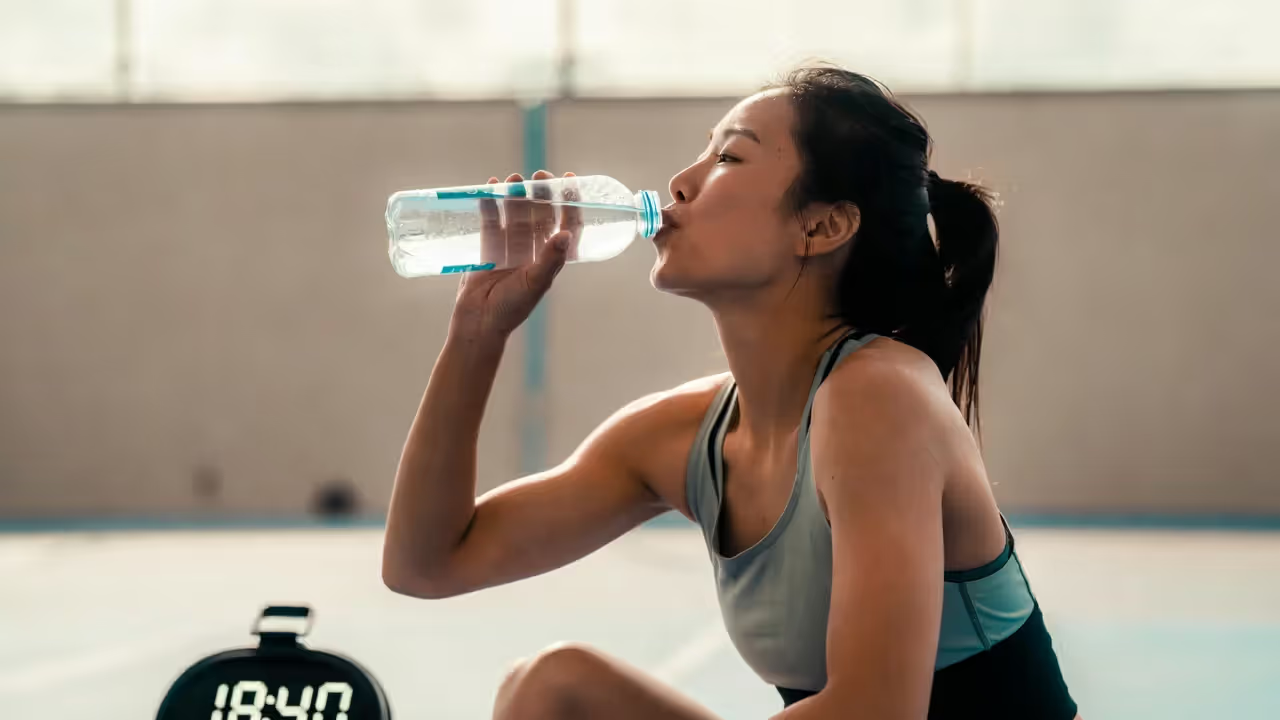
Last spring, a Division II basketball player hit the floor during what seemed like a routine practice session. The training staff rushed over expecting the usual—maybe heat exhaustion, maybe cardiac issues. Lab results told a different story: her sodium levels had crashed to dangerous territory after she'd consumed roughly six liters of plain water across three hours. She thought she was being extra careful about staying hydrated. Instead, she'd created the opposite problem.
Here's what makes that story worth remembering: hydration screwups don't just happen to people who forget their water bottles. You can mess this up in either direction, and both mistakes will trash your performance whether you're training for your first 10K or competing at elite levels.
Why Proper Hydration Matters More Than You Think for Athletic Performance
Think of your body during a hard workout—it's basically running its own climate control system, and water makes the whole thing work. Drop your fluid levels by 2% of what you weigh (that's only 3 pounds if you're 150), and the performance hits start showing up. Your endurance tanks by 10-20%. Strength output? Down about 2%. High-intensity efforts suffer similar drops.
Here's the sequence of events. As you lose water, your total blood volume shrinks. With less blood circulating, your cardiovascular system has to work overtime just to keep oxygen moving to your legs, arms, and everywhere else that's working hard. Your core temperature climbs faster because sweating becomes less effective. Your body starts burning through stored glycogen at an accelerated rate since its metabolic processes lose efficiency. That cyclist who can normally hold 250 watts for a solid hour? Dehydration might knock them down to 220 watts—a massive difference in competitive situations.
Your brain takes the hit right alongside your muscles. Reaction times get sluggish. You make worse decisions. Everything feels harder even though your actual power output has decreased. Basketball players who lose just 2% of their weight through sweat show a 5% drop in shooting accuracy and sprint performance falls off by 9%. If you play sports where you need to make quick calls—cutting left versus right, when to pass, reading an opponent's movement—this mental haze becomes just as limiting as tired legs.
Dehydration of as little as 2% body weight can impair physiological and cognitive performance in athletes, even in highly trained individuals.
— Dr. Lawrence E. Armstrong, University of Connecticut, hydration researcher
The cardiovascular stress deserves special mention. Dehydrated blood gets thicker, which makes your heart work harder to pump it. For every 1% of body weight you lose through sweat, your heart rate climbs 3-5 beats per minute. Picture a runner whose comfortable pace normally registers 140 bpm. That same effort while dehydrated? They're looking at 152 bpm. String together weeks or months of training with this added cardiac load, and you'll develop overtraining symptoms even if your mileage hasn't changed.
Author: Logan Brooks;
Source: thelifelongadventures.com
How Much Water Do Athletes Actually Need? Breaking Down the Numbers
That old "drink eight glasses a day" rule? Completely useless for anyone who exercises seriously. Your fluid requirements shift dramatically based on how much you're training, how much you sweat, what the weather's doing, and your individual biology.
Daily Baseline Requirements vs. Exercise Needs
Let's establish a starting point: people who don't exercise much need about 30-35 ml of water per kilogram of body weight each day. Someone weighing 70 kg (154 pounds) would need 2.1-2.45 liters just existing. For athletes, that's your floor, not your goal.
Now add exercise. An hour of moderate training might cost you 0.5-1.5 liters through sweat. Intense summer sessions? You could lose 2-3 liters in an hour. Marathon runners putting in three hours during warm weather might sweat out 6-9 liters—basically double their entire daily baseline in one training session.
Here's a practical way to calculate it: consume 35-40 ml per kg on days you don't train. On workout days, add back 125-150% of whatever you lost through sweat. That extra 25-50% compensates for the fluid you'll continue losing through urination while you're recovering.
Sweat Rate Testing: Calculate Your Personal Fluid Loss
Author: Logan Brooks;
Source: thelifelongadventures.com
Individual sweat rates are all over the map—anywhere from 400 ml to more than 2,500 ml per hour. Genetics, fitness level, how well you've adapted to heat, and how hard you're working all affect this number. Testing your personal rate eliminates the guesswork.
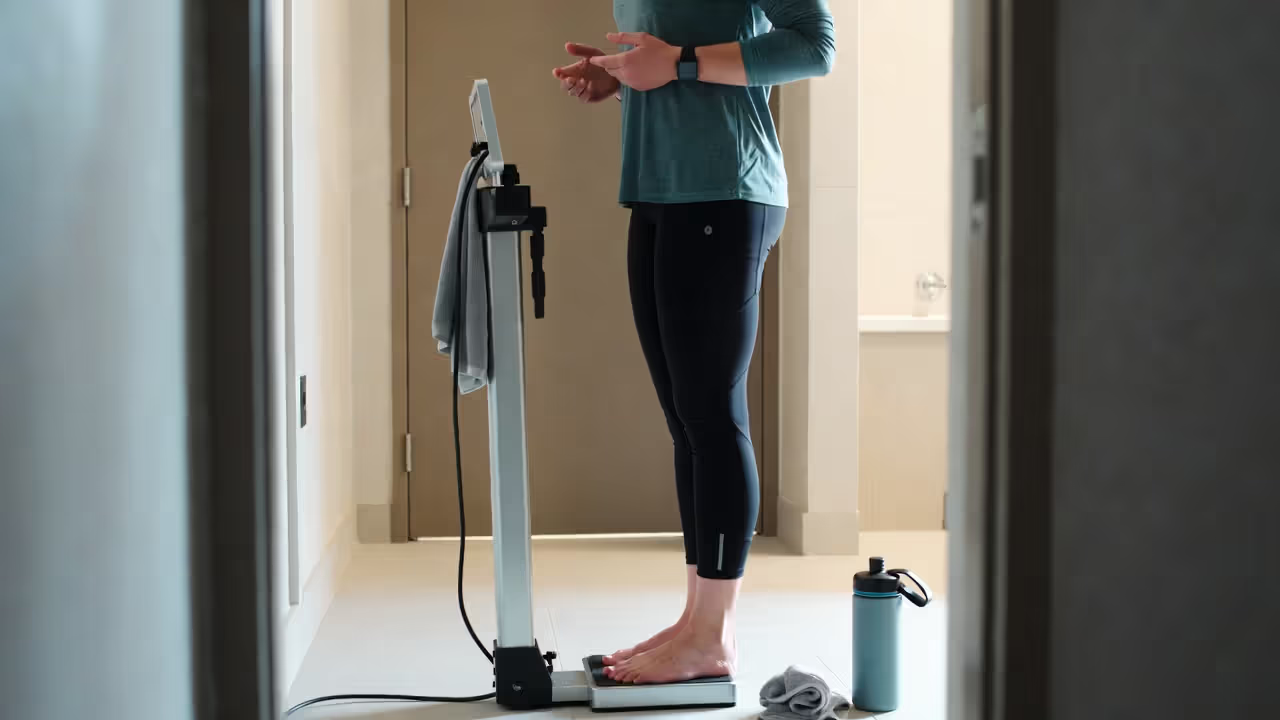
The process is simple. Strip down and weigh yourself before your workout. Train for exactly 60 minutes at your typical race pace or standard training intensity. Don't use the bathroom during this time. Immediately after, dry off any sweat and weigh yourself again. Each kilogram you've lost represents one liter of fluid deficit. If you drank anything during that hour, add the volume to your loss.
Let's say you weighed 68.2 kg before running and 67.4 kg after. You also drank 400 ml while running. Your total sweat loss: 0.8 kg (800 ml) plus the 400 ml you drank equals 1,200 ml per hour. Test this under different conditions—early morning coolness versus afternoon heat, easy recovery pace versus tempo efforts—so you understand your full range.
Retest monthly as your fitness improves. Better conditioning often increases sweat efficiency, which paradoxically means higher rates as your body's temperature regulation gets better at its job. A beginner might lose 600 ml hourly while a trained version of that same person six months later could hit 1,000 ml at identical effort levels.
Individual sweat rates vary dramatically, which is why personalized hydration strategies outperform one-size-fits-all recommendations.
— Dr. Douglas J. Casa, Korey Stringer Institute
Electrolyte Balance: When Water Alone Isn't Enough
Straight water replaces volume but ignores the minerals you're losing. For quick workouts, this doesn't matter much. For longer sessions or really high sweat rates, skipping electrolytes creates legitimate problems.
Author: Logan Brooks;
Source: thelifelongadventures.com
Sodium, Potassium, and Magnesium: What Gets Lost in Sweat
Sodium dominates your sweat makeup at 500-2,000 mg per liter, though individuals vary enormously. "Salty sweaters"—people who get white, crusty residue on their skin or clothing—sit at the high end and might lose more than 3,000 mg across a two-hour session. Potassium losses run much lower, typically 150-300 mg per liter. Magnesium exits at about 10-40 mg per liter.
These minerals handle more than just preventing cramps. Sodium maintains your blood volume and drives how well your intestines actually absorb the fluid you're drinking. Without enough sodium, water basically passes straight through without getting retained properly. Potassium keeps muscle contractions and nerve signals functioning. Magnesium enables energy production and helps muscles relax after contracting.
The dangerous scenario happens when someone drinks huge volumes of plain water during extended exercise without replacing any sodium. Their blood sodium concentration drops—doctors call this dilutional hyponatremia—causing confusion, nausea, swelling, and in really bad cases, seizures or death. Ironman triathletes and ultramarathon runners face the highest risk, but any athlete consuming more than three liters during a workout should prioritize getting sodium back in.
Sports Drinks vs. Electrolyte Supplements vs. Whole Foods
Different options offer distinct advantages depending on when you're using them and what kind of training you're doing.
Source
Sodium (mg)
Potassium (mg)
Carbs (g)
Cost per Serving
Best Used For
Commercial sports drinks (500ml)
200-400
60-120
30-40
$1.50-3.00
Active consumption during moderate-to-hard sessions lasting 60+ minutes
Coconut water (500ml)
125-250
600-800
12-15
$2.00-4.00
Recovery after training, lower-intensity activities
Homemade solution (500ml)
400-600*
50-100*
15-30*
$0.30-0.60
Budget-friendly option, customizable to personal needs
Electrolyte tablets (per tablet)
300-1,000
100-200
0-4
$0.40-0.80
Low-carb training approaches, mixing with plain water
*Recipe varies: standard formula uses 500ml water, 2-3 tablespoons sugar, 1/4 teaspoon salt, squeeze of citrus
Commercial sports drinks bundle fluid, electrolytes, and quick carbs together—useful while you're actually exercising when convenience matters and those carbs can help performance. The 6-8% carbohydrate mix optimizes how fast your stomach empties and how well you absorb everything.
Electrolyte tablets or powders work great for athletes doing low-carb or keto, or when you need to limit calorie intake. They deliver minerals without the sugar payload. That said, for efforts pushing past 90 minutes at moderate-to-high intensity, carbohydrate becomes its own performance factor separate from just staying hydrated.
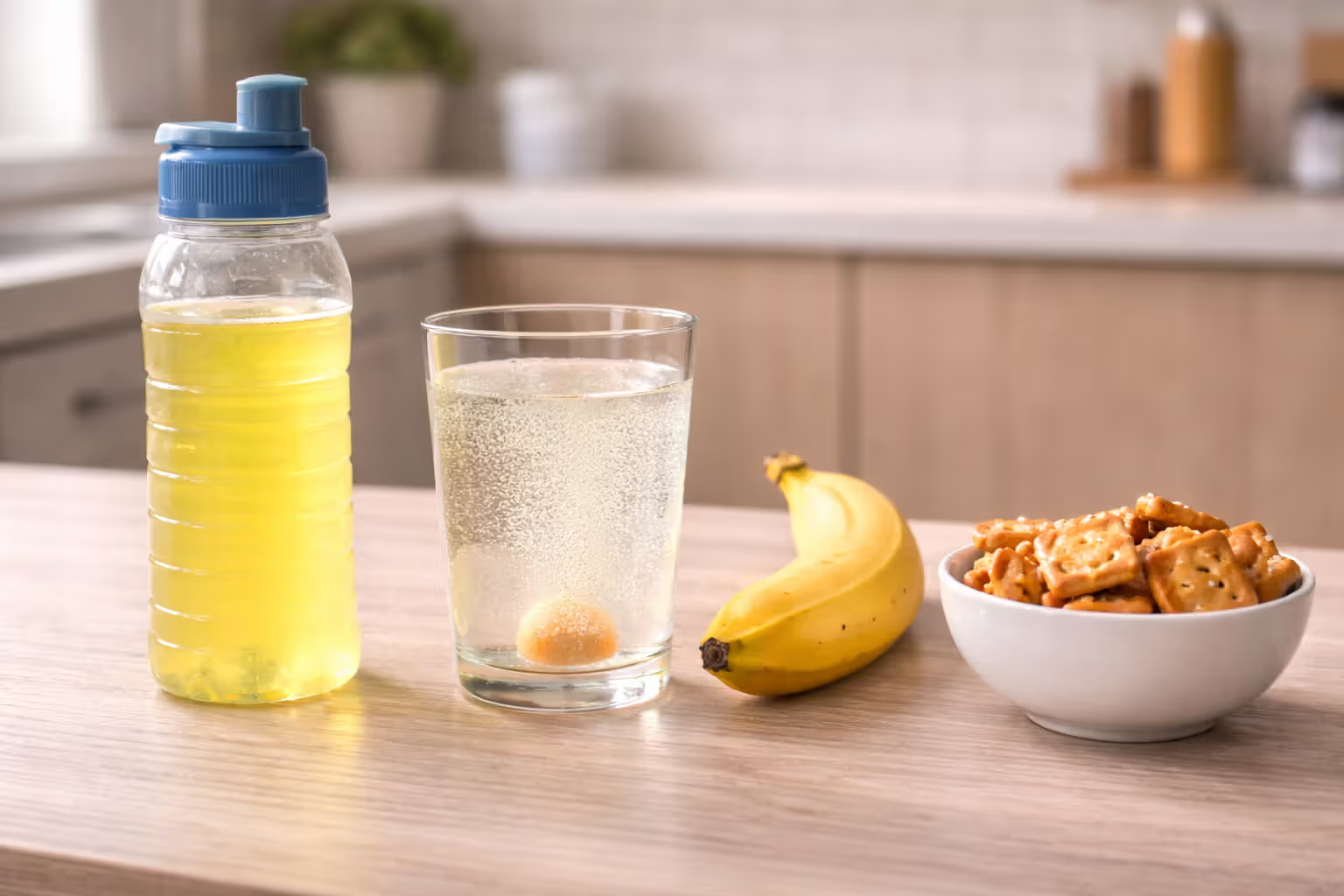
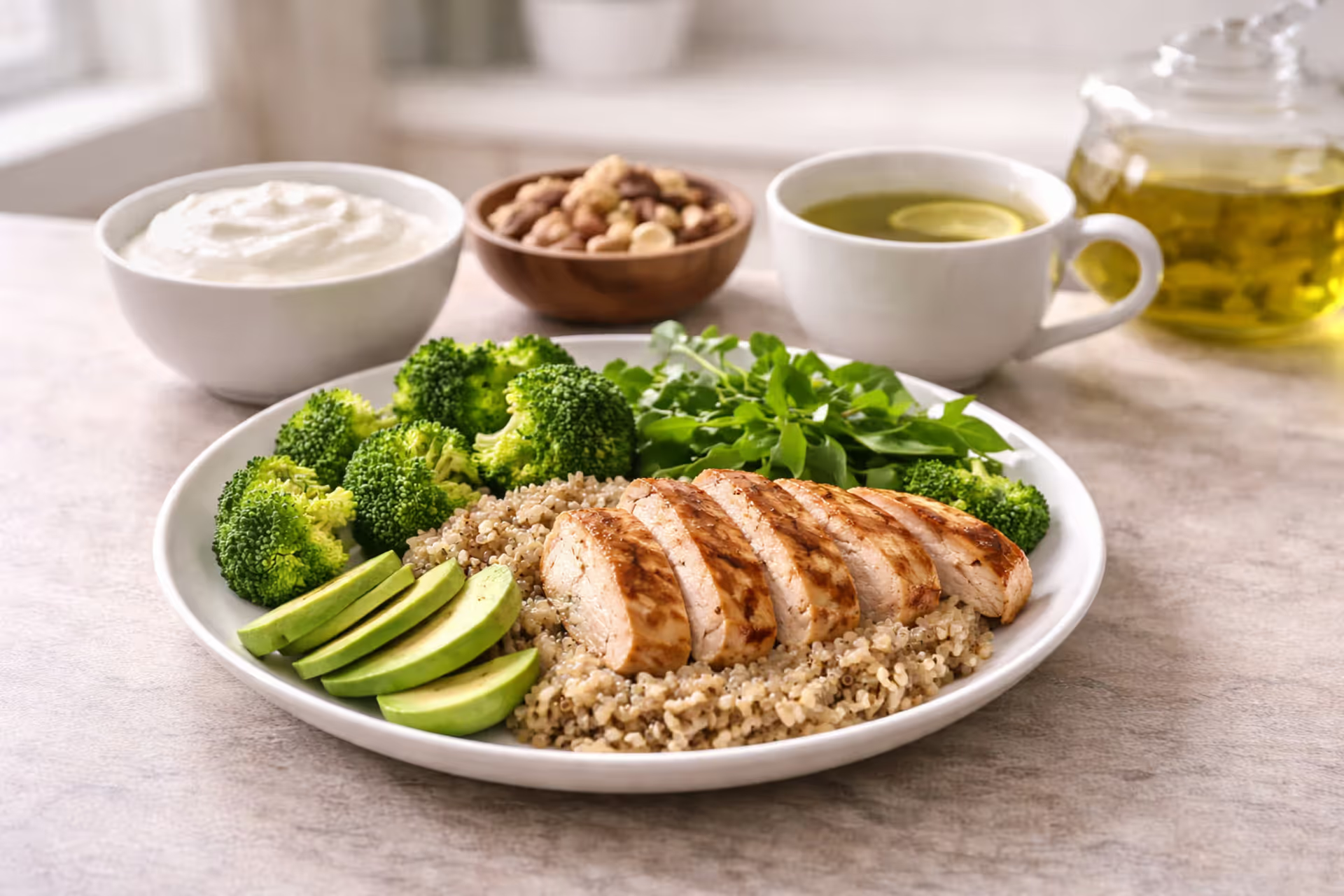
Whole food sources shine before and after training. A recovery meal with chicken, rice, and vegetables delivers sodium, potassium, and magnesium alongside protein and complex carbs. Bananas, oranges, potatoes, and yogurt pack excellent potassium. Salted nuts, pickles, and soup broths offer sodium in satisfying, food-based forms.
Hydration Timing: The Before, During, and After Protocol
When you drink matters as much as how much. Downing two liters all at once produces completely different results than spreading that same amount across several hours.
Pre-Exercise Hydration Loading (2-4 hours before)
Start your sessions already hydrated instead of trying to catch up mid-workout. Drink 5-7 ml per kg of body weight 2-4 hours before you begin. For someone weighing 70 kg, that's 350-490 ml—roughly 12-16 ounces.
This window allows absorption while giving your body enough time to clear excess through urination. Drinking 30 minutes before you start often creates that uncomfortable sloshing sensation and urgent bathroom needs right in the middle of your workout.
Use urine color as a rough hydration gauge. Pale yellow (think lemonade shade) means you're well-hydrated. Dark yellow (closer to apple juice) means you need more fluid. Crystal clear might indicate overhydration—possible but less common than under-hydration.
Add a small sodium source if you sweat heavily or you're training in heat. A handful of pretzels or some salted rice cakes with your pre-workout fluids helps with retention. Skip this for easy recovery runs or shorter sessions where sweat loss stays minimal.
During-Workout Fluid Replacement Guidelines
You don't need to perfectly match your sweat rate during exercise—that's not practical or always necessary. Aim for 80-100% replacement during efforts under two hours. For longer sessions, accept 60-80% since your stomach's tolerance becomes the limiting factor.
Workout Duration
Intensity Level
Fluid Intake (ml/hour)
Electrolyte Needs
Timing Notes
Under 30 min
Any level
0-200
None needed
Pre-workout hydration handles most situations
30-60 min
Low-moderate
200-400
Minimal
Plain water works unless you're a heavy sweater
30-60 min
High
400-600
300-500mg sodium/hour
Consider sports drink or electrolyte-enhanced water
60-90 min
Any level
600-800
500-700mg sodium/hour
Start adding electrolytes around the 45-minute mark
Beyond 90 min
Moderate-high
800-1,200
700-1,000mg sodium/hour
Pair with 30-60g carbs/hour for sustained efforts
Set drinking intervals instead of waiting until you feel thirsty. Drink 150-250 ml every 15-20 minutes rather than gulping 1,000 ml once an hour. Smaller, frequent doses leave your stomach faster and cause less digestive distress.
Adjust for environmental conditions. Humidity reduces how well sweat evaporates, which raises your core temperature even if you don't see as much visible sweat. Cold weather tricks you into under-drinking because thirst signals get weaker. Both scenarios need conscious attention to your drinking schedule.
Post-Exercise Rehydration Recovery Window
Rehydration continues 4-6 hours after your workout ends. Drink 125-150% of whatever fluid deficit you finished with during this recovery window. If you ended training 1.2 kg lighter, consume 1.5-1.8 liters over the next several hours.
The extra volume accounts for ongoing urinary losses during recovery. Drinking exactly what you lost leaves you incompletely rehydrated because your kidneys keep producing urine while you're replacing fluids.
Include sodium in your recovery drinks or food to improve how well your body retains what you're drinking. Chocolate milk provides fluid, electrolytes, protein, and carbs all together. Smoothies made with fruit, yogurt, and a pinch of salt accomplish similar goals. Plain water works but gets excreted faster without sodium helping with retention.
Split your post-workout fluids across multiple servings. Drinking 1.5 liters immediately overwhelms your absorption capacity and just makes you urinate more. Instead, drink 400-500 ml right after finishing, then 300-400 ml every 30-60 minutes until you've reached your target.
Author: Logan Brooks;
Source: thelifelongadventures.com
7 Dehydration Warning Signs Athletes Ignore Until It's Too Late
Catching early warning signs prevents performance disasters. Once severe symptoms show up, you've already done significant damage.
1. Thirst shows up late to the party. When you actually feel thirsty during exercise, you're already down 1-2% in hydration. Thirst works like a warning light, not a prevention tool. Competitive athletes can't rely solely on thirst because it lags too far behind actual needs.
2. Bathroom breaks disappear or urine runs dark. Normal hydration means urinating every 2-3 hours throughout the day. Going 4-5 hours between bathroom visits or producing small amounts of dark, concentrated urine signals a deficit. Morning urine naturally runs darker, but midday darkness indicates trouble.
3. Heart rate stays stubbornly elevated. Your normal easy pace suddenly feels harder, and heart rate runs 5-10 beats higher than usual at identical power output. This cardiovascular strain points to reduced blood volume from fluid loss.
4. Headaches appear during or after training. Dehydration restricts blood flow to your brain and creates electrolyte imbalances that trigger headaches. Consistently finishing workouts with head pain means your hydration approach needs fixing.
5. Cramping happens in weird patterns. Cramps have multiple causes, but frequent or severe cramping—especially hitting multiple muscle groups at once—often signals electrolyte depletion. Cramps in muscles you weren't even using heavily during the activity raise particular red flags.
6. Standing up makes you dizzy. Orthostatic hypotension (blood pressure dropping when you stand) gets worse with dehydration. Feeling lightheaded when transitioning from sitting or lying to standing suggests inadequate blood volume.
7. Recovery between sessions drags on unusually long. Chronic under-hydration impairs waste removal, nutrient delivery, and tissue repair. Consistently staying sore longer than expected or watching performance decline across multiple workouts means hydration status deserves investigation before you blame training load.
Common Hydration Mistakes That Sabotage Training Results
Even well-informed athletes fall into predictable traps that undermine their careful training plans.
Overhydration before important events. Nervously chugging water for hours before competition creates hyponatremia risk and turns you into a bathroom-seeking missile. Stick with your tested pre-race routine instead of drinking "extra" for insurance. Your body can't stockpile surplus water for later use.
Ignoring acclimatization requirements. Moving from cool climates to hot environments requires 10-14 days for your sweat rate and composition to adapt. Training in air conditioning then racing in outdoor heat amplifies dehydration risk. Practice in target conditions whenever possible, or substantially increase fluid and sodium intake for the first two weeks.
Misunderstanding caffeine's actual effects. Moderate caffeine (3-6 mg per kg body weight) boosts performance without causing dehydration in regular users. A 70 kg athlete can consume 200-400 mg (roughly 2-4 cups of coffee) without hydration penalties. However, mega-doses or use by people who rarely consume caffeine may increase fluid losses. Pre-workout supplements packing 300+ mg caffeine plus other stimulants deserve closer monitoring.
Drinking only during "official" training time. Your hydration status reflects your entire day, not just workout hours. Office workers sipping maybe 400 ml between 9 AM and 5 PM then trying to rehydrate during evening training never catch up. Keep water accessible all day long, targeting consistent intake instead of compensation patterns.
Using sweat rate from easy workouts for race planning. A tempo run generates completely different sweat rates than an easy recovery jog. Test your sweat rate at race intensity, not comfortable training pace, to avoid underestimating fluid needs on competition day.
Assuming all sports drinks deliver the same thing. Sodium content ranges from 100 mg to over 500 mg per serving across different brands. Carbohydrate concentrations vary from 4% to 10%. Actually read labels and match products to your specific requirements rather than grabbing whatever's available. A 4% solution works well during exercise, while 10% concentrations may trigger digestive issues.
Neglecting temperature adaptation. Your first hot training session in spring produces different sweat composition than midsummer workouts. Early-season heat exposure results in saltier sweat because your body hasn't adapted yet to conserve sodium. Boost electrolyte intake during the first weeks of temperature changes.
FAQ: Hydration Questions Athletes Ask Most
Can you drink too much water during exercise?
Absolutely, and it's actually more dangerous than mild dehydration. Excessive plain water consumption dilutes your blood sodium levels, causing hyponatremia. Symptoms range from nausea and confusion to swelling, and severe cases can trigger seizures. This typically requires drinking 1.5+ liters per hour during prolonged exercise without adequate sodium replacement. Ironman triathletes and ultramarathon runners face the highest risk. Prevent this by matching fluid intake to actual sweat losses (not exceeding them) and including electrolytes in anything lasting beyond 90 minutes.
Do I need electrolytes for workouts under an hour?
Most athletes don't for single sessions under 60 minutes. Your body maintains sufficient sodium and mineral stores to handle short efforts. Exceptions include heavy sweaters who develop salt crusts on skin or clothing, athletes doing multiple daily sessions (electrolytes matter across cumulative training), or anyone exercising in extreme heat where sweat rates exceed 1.5 liters per hour even in short durations. For typical 45-minute gym sessions or 5K runs, plain water handles the job.
Is drinking when thirsty enough for athletes?
Not during exercise. Thirst lags 15-30 minutes behind your actual hydration requirements, which means you're already 1-2% dehydrated when thirst signals finally arrive. For competitive athletes where 2% dehydration creates measurable performance losses, thirst-based drinking results in preventable declines. Use thirst as one indicator among several, but follow a planned drinking schedule during training and competition. Thirst works better for daily hydration outside exercise when performance demands are lower and you have time to respond gradually.
How do I know if I'm properly hydrated before a workout?
Check three indicators. First, urine color should be pale yellow (lemonade shade, not apple juice or totally clear). Second, you should have urinated at least once in the 2-4 hours before training. Third, your body weight should stay within 1% of your normal morning weight. If you typically weigh 70 kg in the morning and you're at 69 kg before an afternoon workout, you're starting from a deficit. Drink 500 ml with a salty snack 2-3 hours before training to correct this.
Does coffee or pre-workout count toward my fluid intake?
Yes, with minor qualifications. Caffeinated beverages contribute to daily hydration for habitual users—your body adapts to regular caffeine consumption, minimizing any diuretic effects. A cup of coffee provides roughly 90-95% of the hydration value that plain water offers. However, don't count mega-dose pre-workout supplements (300+ mg caffeine) at full value if you're not accustomed to high caffeine intake. For most athletes drinking 1-3 cups of coffee daily, count those fluids toward your hydration total while ensuring you're also consuming plain water throughout the day.
What's the fastest way to rehydrate after intense training?
Drink fluids with sodium and carbohydrates for optimal absorption speed. Consume 500 ml immediately post-workout, then 300-400 ml every 30 minutes until you've replaced 150% of your fluid loss. Adding 20-30g protein to your first post-workout drink supports recovery beyond just rehydration. Cool (not ice-cold) beverages leave your stomach faster than warm ones. Avoid alcohol for at least 2-3 hours since it impairs rehydration by increasing urination. Weigh yourself before and after training to calculate exact losses—every kilogram lost needs 1.25-1.5 liters of replacement fluid.
Wrapping It Up
Hydration strategy separates athletes who consistently perform at their potential from those who mysteriously underperform when it matters. The gap between optimal and inadequate hydration—often just 2-3% of body weight—creates measurable differences in endurance, power, and mental sharpness.
Start by testing your personal sweat rate to understand your individual requirements instead of following generic advice. Build a hydration protocol addressing the before, during, and after phases of training with specific volume targets and electrolyte considerations. Monitor warning signs like elevated heart rate, reduced urination, and performance declines that signal your strategy needs adjustment.
Remember: hydration status reflects your entire day, not just workout hours. Consistent intake patterns throughout the day, paired with strategic timing around training, produce better results than attempting to compensate with large volumes immediately before or after exercise. Test your protocols during training so race day execution becomes automatic instead of experimental.
Your training plan, nutrition strategy, and recovery protocols all depend on adequate hydration to actually deliver results. Master this fundamental element, and you'll remove a common performance limiter affecting even well-trained athletes.
Your arms haven't grown in three months — and the problem isn't your workout split, it's what you ate last Tuesday when you skipped lunch. This guide covers calorie surplus calculations for beginners through advanced lifters, optimal protein intake and distribution across meals, why carbs matter more than you think, meal timing realities vs. bro-science myths, recovery nutrition strategies, supple
Your legs can be trained to perfection, but underfuel them and you're driving cross-country on a quarter tank. This guide covers daily carb requirements by training phase from recovery to peak, workout timing protocols, sweat rate testing and electrolyte thresholds, an 8-week race nutrition practice plan, carb-loading strategy for race week, and the common fueling mistakes that sabotage months of
Your basal metabolic rate burns 65-75% of daily calories — yet most people obsess over the wrong bucket. This guide covers how three calorie-burn systems actually work, 15 foods with documented thermogenic effects and exact calorie-burn increases per serving, seven metabolism myths costing you money, a practical daily eating framework maximizing thermic effect, and why sleep and strength training
Most people die too young while living too long — years marked by declining function and preventable disease. This guide covers how macronutrients trigger cellular aging pathways, five eating patterns linked to extended lifespan, Blue Zone dietary commonalities, seven metabolic biomarkers to track with optimal ranges, exercise types that maximize longevity from Zone 2 to VO2 max intervals, and a 4
The content on this website is provided for general informational and educational purposes related to health, yoga, fitness, and overall wellness. It is not intended to replace professional medical advice, diagnosis, or treatment.
All information, workout suggestions, yoga practices, nutrition tips, and wellness guidance shared on this site are for general reference only. Individual health conditions, fitness levels, and medical needs vary, and results may differ from person to person. Always consult a qualified healthcare provider before starting any new exercise program, dietary plan, or wellness routine.
We are not responsible for any errors or omissions, or for any outcomes resulting from the use of information presented on this website. Your health and fitness decisions should always be made in consultation with appropriate medical and fitness professionals.