What Is Energy Metabolism and Why Does It Matter for Fitness?
Think of energy metabolism as your body's power grid. It's converting breakfast into bench press reps, lunch into a 5K run, dinner into muscle repair while you sleep. More precisely, it's the chemical process that transforms calories from food into adenosine triphosphate (ATP)—the only energy currency your cells actually accept.
Here's why this matters beyond biochemistry class: A sprinter who understands why their quads scream after 30 seconds can adjust their interval timing to maximize recovery. An ultramarathoner who knows their fuel tank switches around mile 18 can plan nutrition to avoid bonking. Without this foundation, you're guessing. With it, you're engineering results.
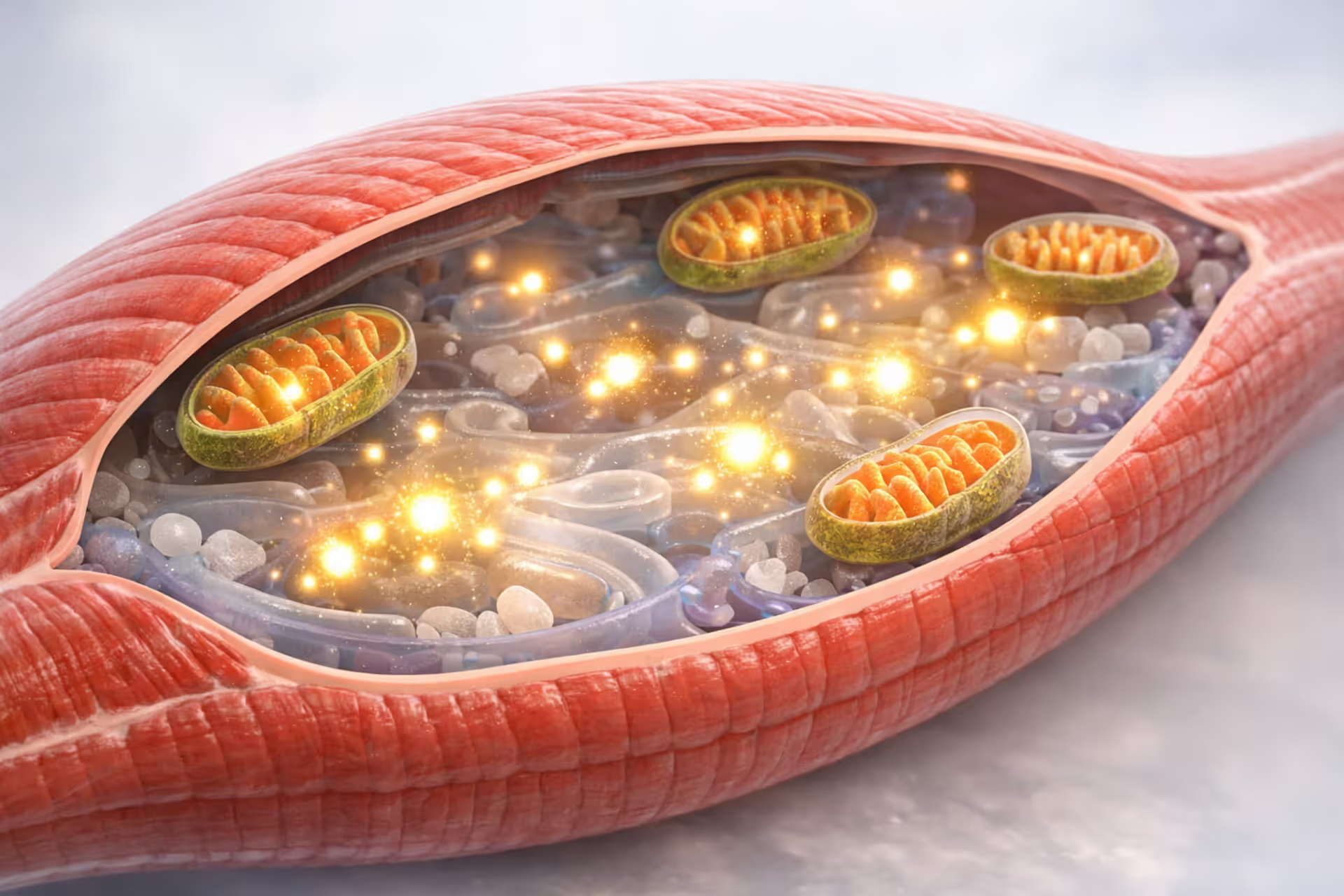
Your cells manufacture ATP through cellular respiration, mostly inside mitochondria (though some reactions kick off in the cytoplasm first). Which pathway dominates depends on three factors: how hard you're working, what fuel's available, and whether oxygen supply keeps pace with demand. Your body never completely shuts off one system to activate another—they're all running simultaneously, just contributing different percentages based on what you're demanding right now.
One more thing: storing ATP directly doesn't work well. Your muscles hold maybe 2-3 seconds worth at any moment. Everything beyond that requires real-time manufacturing, which is where things get interesting.
Author: Caleb Foster;
Source: thelifelongadventures.com
The Three ATP Energy Systems Your Body Use During Exercise
Your muscles can't stockpile much ATP. Once you burn through those first couple seconds, you need regeneration systems that work at vastly different speeds and capacities.
The Phosphagen System (Immediate Energy)
Muscle cells store phosphocreatine—essentially a rapid-response ATP battery. An enzyme called creatine kinase strips a phosphate group off phosphocreatine and slaps it onto ADP, instantly rebuilding ATP. No oxygen required. No glucose breakdown needed.
This system peaks during the first 10 seconds of all-out effort. Picture a vertical jump, the first three reps of a max-effort deadlift set, a 40-yard dash. By 30 seconds into a maximal sprint, phosphocreatine stores drop to roughly half. Power output craters accordingly.
Recovery between efforts becomes critical here. Three to five minutes of rest restores about 95% of phosphocreatine. Give yourself only 30 seconds? You'll barely hit 50% restoration. Watch powerlifters at a meet—they're not scrolling their phones for five minutes between attempts because they're lazy. They're waiting for biochemistry to complete.
All models are wrong, but some are useful.
— George E. P. Box
The Glycolytic System (Short-Term Power)
Once phosphocreatine tanks but you're still pushing hard, glycolysis takes over. Your body rips glucose or stored glycogen apart into pyruvate molecules, cranking out ATP without needing oxygen present. Fast, but wildly inefficient—you get just 2 ATP per glucose molecule this way, versus 30-32 when oxygen's available.
Glycolysis dominates during efforts lasting 30 seconds to maybe 2 minutes. A 400-meter sprint. That brutal CrossFit workout with minimal rest. Leg press sets of 15-20 reps approaching failure. The ceiling isn't running out of glycogen (you've got enough stored for hours of moderate work). It's the hydrogen ions piling up faster than your body can buffer them, interfering with muscle contraction. That burning sensation during a hard set? Metabolic acidosis courtesy of rapid glycolysis.
The Oxidative System (Long-Duration Fuel)
Author: Caleb Foster;
Source: thelifelongadventures.com
When oxygen delivery matches oxygen demand, your mitochondria shift into high gear. Pyruvate gets processed through the Krebs cycle and electron transport chain—an elegant system producing ATP much slower than the other pathways but vastly more efficiently. You'll squeeze 30-32 ATP from each glucose molecule. A single palmitate molecule from fat breakdown yields 106 ATP.
This system powers everything lasting beyond a few minutes at low to moderate intensity. Distance running, cycling centuries, swimming miles, even walking your dog. Fat becomes increasingly important as duration extends, sparing precious glycogen. Elite endurance athletes develop ridiculous mitochondrial density through years of training—picture more power plants per muscle cell, plus the vascular network to fuel them.
Aerobic vs Anaerobic Energy: Key Differences That Impact Your Workouts
The oxygen-dependent versus oxygen-independent split shapes every training decision you'll make. Aerobic metabolism needs oxygen to completely oxidize fuel inside mitochondria, producing carbon dioxide and water. Clean byproducts, sustainable for hours. Anaerobic pathways (phosphagen and glycolytic) operate when oxygen's scarce or you're moving too fast for complete oxidation, generating ATP rapidly but accumulating metabolites that force you to stop or slow down.
Intensity dictates the blend. Below roughly 60-70% of max heart rate, oxidative metabolism handles almost everything. Push above lactate threshold (around 80-90% max for most people), and glycolysis floods your muscles with lactate and hydrogen ions faster than you can clear them. The phosphagen system only contributes substantially during the opening seconds of maximal efforts or when you superimpose explosive movements onto steady work—like surging during a race.
Recovery timelines reflect these metabolic differences. Phosphocreatine resynthesis needs only ATP and completes within minutes. Clearing lactate and restoring muscle pH takes 30-60 minutes. Fully restocking glycogen after serious depletion? You're looking at 24-48 hours plus deliberate carbohydrate intake. Programs that ignore these windows stack fatigue on top of fatigue until adaptation stalls.
Feature
Aerobic Metabolism
Anaerobic Metabolism
Oxygen requirement
Must have oxygen present
Works fine without oxygen
Duration of activity
Sustained work beyond 2-3 minutes
Brief, explosive efforts under 2 minutes
Exercise intensity
Low to moderate (conversational pace)
High to absolute max (can't sustain long)
Primary fuel source
Fats and carbohydrates together
Phosphocreatine first, then glucose/glycogen
Byproducts
Carbon dioxide and water
Lactate, hydrogen ions, considerable heat
Recovery time
Minimal between bouts
Ranges from 30 seconds to multiple days
Training examples
Long runs, zone 2 cycling, easy swimming
Max lifts, track sprints, HIIT intervals
Fatigue mechanism
Fuel depletion, overheating
Metabolite buildup, dropping pH
Author: Caleb Foster;
Source: thelifelongadventures.com
How Metabolic Pathways Convert Food Into Usable Energy
The journey from chicken breast or sweet potato to muscular contraction involves multiple interconnected pathways. Each contributes based on what substrate's available and what your cells need right now.
Glycolysis: Breaking Down Carbohydrates
Glucose entering muscle tissue gets processed through glycolysis right in the cytoplasm. Enzymes break the six-carbon molecule into two three-carbon pyruvate molecules. The reaction actually costs 2 ATP upfront but generates 4 ATP, netting 2 ATP per glucose. When oxygen's scarce or energy demand exceeds what mitochondria can handle, pyruvate converts to lactate. This regenerates NAD⁺, a coenzyme required for glycolysis to continue running.
Lactate isn't waste—that's outdated thinking. It shuttles to your liver where gluconeogenesis rebuilds it into glucose (the Cori cycle). Less-active muscles and cardiac tissue can oxidize it directly for fuel. Well-trained athletes produce plenty of lactate during hard efforts but clear it much faster than untrained folks, which raises lactate threshold and allows harder sustainable paces.
The Krebs Cycle and Electron Transport Chain
With adequate oxygen, pyruvate enters mitochondria and feeds into the Krebs cycle (some people call it the citric acid cycle or TCA cycle). The cycle itself only directly produces 2 ATP per glucose—not much—but it generates high-energy electron carriers called NADH and FADH₂. These molecules power the real money-maker: the electron transport chain.
The electron transport chain sits embedded in the inner mitochondrial membrane. It uses electrons from NADH and FADH₂ to pump protons across the membrane, building up an electrochemical gradient. When protons flow back through ATP synthase (like water through a turbine), they drive ATP production—roughly 26-28 additional ATP per glucose. This explains why aerobic metabolism is so efficient compared to glycolysis alone: complete oxidation yields 15-16 times more ATP.
Fat and Protein Oxidation Pathways
Fat breakdown starts with lipolysis. Hormones like epinephrine trigger the release of fatty acids from stored triglycerides. These fatty acids undergo beta-oxidation inside mitochondria, where enzymes cleave two-carbon units that enter the Krebs cycle as acetyl-CoA. A 16-carbon palmitate molecule generates 106 ATP—tremendous energy density, though requiring more oxygen per ATP than carbohydrate.
Fat dominates fuel provision during low-intensity long efforts and between meals. But there's a catch: fat oxidation slows dramatically without adequate carbohydrate availability. The Krebs cycle needs intermediates that come from carbohydrate metabolism to run efficiently. This interdependence explains why extreme low-carb diets often hammer high-intensity performance even when fat stores are abundant.
Protein contributes minimally during most exercise—typically under 5-10% of total energy except during prolonged fasting or ultra-endurance events exceeding several hours. Amino acids can be deaminated and converted into Krebs cycle intermediates, but this process is metabolically expensive. Your body reserves it for emergencies, not routine fuel provision.
Practical Applications: Matching Energy Systems to Your Training Goals
Author: Caleb Foster;
Source: thelifelongadventures.com
Smart programming targets specific pathways based on what you're trying to accomplish. Each system adapts to training stress, but those adaptations are highly specific—train the phosphagen system, and your oxidative capacity won't improve much.
Developing the phosphagen system requires maximal or near-maximal efforts lasting 5-10 seconds with complete recovery. Olympic lifts, box jumps, short sprints. Rest 3-5 minutes between sets to allow full phosphocreatine restoration. Cutting rest to save time defeats the purpose—you'll just train glycolytic capacity instead. Creatine monohydrate supplementation (3-5g daily) can boost phosphocreatine stores 10-40%, especially benefiting people who start with lower baseline levels (often those eating little red meat).
Building glycolytic capacity needs repeated high-intensity intervals that accumulate serious metabolic stress. Try 6-10 × 400 meters with 2-3 minute recoveries, or 4-6 sets of 60-90 second efforts at 90-95% max heart rate. These sessions are brutally taxing and require 48-72 hours for complete recovery. Program them more than twice weekly and you're flirting with overtraining while getting diminishing returns.
Expanding oxidative capacity requires sustained aerobic work stimulating mitochondrial biogenesis and capillary development. Long steady runs or rides at 60-75% max heart rate, tempo efforts at lactate threshold, even high-volume resistance training with abbreviated rest can drive these adaptations. Consistency trumps intensity here—three to five aerobic sessions weekly produce better results than sporadic heroic efforts followed by couch time.
Effective periodization integrates these approaches across training cycles. A strength athlete might emphasize the phosphagen system during power phases, add glycolytic work during hypertrophy blocks, maintain baseline aerobic fitness year-round. An endurance athlete builds an aerobic base over months, then layers in lactate threshold and VO₂ max intervals as competition approaches, preserving some explosive work to maintain neuromuscular qualities.
Common Mistakes That Sabotage Your Metabolic Efficiency
Too many athletes train in what I call the "gray zone"—working too hard to build aerobic capacity effectively but not hard enough to stress glycolytic pathways meaningfully. This moderate-intensity trap generates fatigue without driving clear adaptations. Easy days should be truly easy (you could hold a conversation). Hard days should be genuinely hard (talking becomes impossible during work intervals). The middle ground is mostly just accumulated junk mileage.
The dose makes the poison.
— Paracelsus
Scheduling high-intensity sessions too close together prevents full glycogen restoration and metabolic recovery. Back-to-back interval workouts, or even spacing them just 24 hours apart, means starting the second session with depleted substrates and accumulated fatigue. Both quality and adaptation suffer. You'd get more from one high-quality session than two mediocre ones.
Poor nutrition timing undermines specific adaptations. Training fasted can enhance fat oxidation capacity for aerobic work. But attempting high-intensity glycolytic intervals without adequate carbohydrate availability? You'll struggle through the session and recover poorly afterward. Consuming 30-60g of carbs within 30 minutes post-workout maximizes glycogen resynthesis rates—timing actually matters here, unlike the overblown "anabolic window" for protein.
Fuel availability mismatches create frustrating limitations. Athletes following very low-carb approaches often hit walls during high-intensity work because glycolytic flux fundamentally requires glucose. Conversely, training exclusively at high intensity without developing fat oxidation leaves you vulnerable during long events when glycogen inevitably depletes regardless of fitness level.
Misunderstanding intensity zones produces ineffective training distribution. Heart rate monitors help, but most people misjudge their actual intensity. "Moderate" often creeps into "moderately hard." Lactate threshold testing, the talk test, or power meter data provide more accurate guidance, ensuring you're genuinely training the intended energy system rather than just accumulating fatigue.
Frequently Asked Questions About Exercise Metabolism
How quickly can the body regenerate ATP?
Your cells regenerate ATP continuously at rates matching current demand. During normal daily activity, you'll theoretically produce close to your body weight in ATP over 24 hours. The phosphagen system regenerates ATP fastest—within milliseconds—but exhausts within 10-15 seconds of all-out effort. Glycolysis operates at moderate speed, sustaining high-intensity work for 1-2 minutes before metabolite accumulation forces a slowdown. Oxidative metabolism generates ATP relatively slowly but can maintain output for hours, limited mainly by fuel availability and heat dissipation rather than pathway capacity itself.
What causes you to "hit the wall" during endurance exercise?
"The wall" usually strikes when liver and muscle glycogen stores run empty during prolonged moderate-to-hard efforts, typically around 90-120 minutes of continuous work. Your brain depends almost exclusively on glucose for fuel. When blood glucose drops sharply, perceived exertion skyrockets while pace plummets. Fat oxidation continues humming along, but the absolute power output sustainable on fat alone sits considerably lower than when glycogen's available. Consuming 30-60g of carbohydrates hourly during extended efforts prevents depletion and pushes the wall back indefinitely, or eliminates it entirely.
Does creatine supplementation improve ATP production?
Creatine monohydrate increases muscle phosphocreatine stores by 10-40%, with the biggest gains seen in people starting with lower levels (vegetarians, people who don't eat much meat). It doesn't accelerate ATP production rates but expands the reservoir available to the phosphagen system. Think bigger battery, not faster charging. This extends maximal effort duration by 1-2 seconds and improves recovery between explosive bouts. Benefits show up most clearly in repeated sprint performance, heavy strength work, and power development. Creatine doesn't directly touch glycolytic or oxidative pathways, though enhanced training capacity indirectly improves all systems over time.
Is the "fat-burning zone" real or a myth?
There's truth buried under misleading marketing. At lower intensities around 60-70% max heart rate, fat contributes a higher percentage of total calories burned—maybe 60% fat versus 40% carbohydrate. Crank intensity higher, and carbohydrate percentage increases. But total calorie burn rises dramatically. A 30-minute easy jog might burn 200 calories with 120 from fat. A 30-minute hard interval session could burn 400 calories with 160 from fat—more absolute fat despite the lower percentage. For fat loss, total energy expenditure and dietary intake matter infinitely more than substrate utilization during any single workout. The "zone" concept is technically accurate but practically irrelevant.
How does metabolic adaptation affect weight loss?
Extended calorie restriction triggers metabolic adaptations reducing energy expenditure beyond what body composition changes would predict. Your body downregulates thyroid hormones, reduces spontaneous movement (fidgeting, posture shifts), and increases metabolic efficiency—extracting more ATP from less substrate. These adaptations can slash daily energy expenditure by 200-500 calories, making continued fat loss frustratingly difficult. Periodic diet breaks, sufficient protein intake, and consistent resistance training help preserve metabolic rate. Understanding these adaptations as protective biological responses rather than personal failures helps maintain realistic expectations during extended fat-loss phases.
Can you train your body to switch energy systems faster?
The systems don't actually "switch" since all three operate simultaneously with shifting contributions based on demand. But you absolutely can improve your ability to sustain higher intensities aerobically, effectively raising lactate threshold. High-intensity interval training, tempo work near threshold, and consistent aerobic volume increase mitochondrial density, enhance lactate clearance capacity, and improve oxygen delivery. These adaptations allow working at higher absolute intensities while relying more on oxidative metabolism, preserving glycolytic capacity for truly hard surges. The result feels like faster switching but reflects improved metabolic efficiency across all pathways simultaneously.
Understanding energy metabolism converts guesswork into precision. When you recognize that a 10-second sprint depletes phosphocreatine, a 400-meter effort taxes glycolytic capacity, and a 10K depends on oxidative efficiency, you can design workouts targeting specific adaptations instead of hoping random hard work produces results.
The interplay between ATP systems, substrate availability, and recovery requirements creates complexity. But it's navigable complexity. Training one system exclusively leaves metabolic gaps in your capabilities. Attempting to hammer all systems simultaneously produces mediocre adaptations across the board plus chronic fatigue. Periodization, intelligent intensity distribution, and nutrition timing aligned with energy system goals create conditions for meaningful progress.
Your body already possesses remarkable metabolic machinery. Understanding its operation gives you the knowledge to stress these systems appropriately, recover adequately, and adapt progressively toward whatever performance objectives you've set. The biochemistry might seem abstract, but its applications are concrete and immediately useful.
Your arms haven't grown in three months — and the problem isn't your workout split, it's what you ate last Tuesday when you skipped lunch. This guide covers calorie surplus calculations for beginners through advanced lifters, optimal protein intake and distribution across meals, why carbs matter more than you think, meal timing realities vs. bro-science myths, recovery nutrition strategies, supple
Your legs can be trained to perfection, but underfuel them and you're driving cross-country on a quarter tank. This guide covers daily carb requirements by training phase from recovery to peak, workout timing protocols, sweat rate testing and electrolyte thresholds, an 8-week race nutrition practice plan, carb-loading strategy for race week, and the common fueling mistakes that sabotage months of
Your basal metabolic rate burns 65-75% of daily calories — yet most people obsess over the wrong bucket. This guide covers how three calorie-burn systems actually work, 15 foods with documented thermogenic effects and exact calorie-burn increases per serving, seven metabolism myths costing you money, a practical daily eating framework maximizing thermic effect, and why sleep and strength training
Most people die too young while living too long — years marked by declining function and preventable disease. This guide covers how macronutrients trigger cellular aging pathways, five eating patterns linked to extended lifespan, Blue Zone dietary commonalities, seven metabolic biomarkers to track with optimal ranges, exercise types that maximize longevity from Zone 2 to VO2 max intervals, and a 4
The content on this website is provided for general informational and educational purposes related to health, yoga, fitness, and overall wellness. It is not intended to replace professional medical advice, diagnosis, or treatment.
All information, workout suggestions, yoga practices, nutrition tips, and wellness guidance shared on this site are for general reference only. Individual health conditions, fitness levels, and medical needs vary, and results may differ from person to person. Always consult a qualified healthcare provider before starting any new exercise program, dietary plan, or wellness routine.
We are not responsible for any errors or omissions, or for any outcomes resulting from the use of information presented on this website. Your health and fitness decisions should always be made in consultation with appropriate medical and fitness professionals.