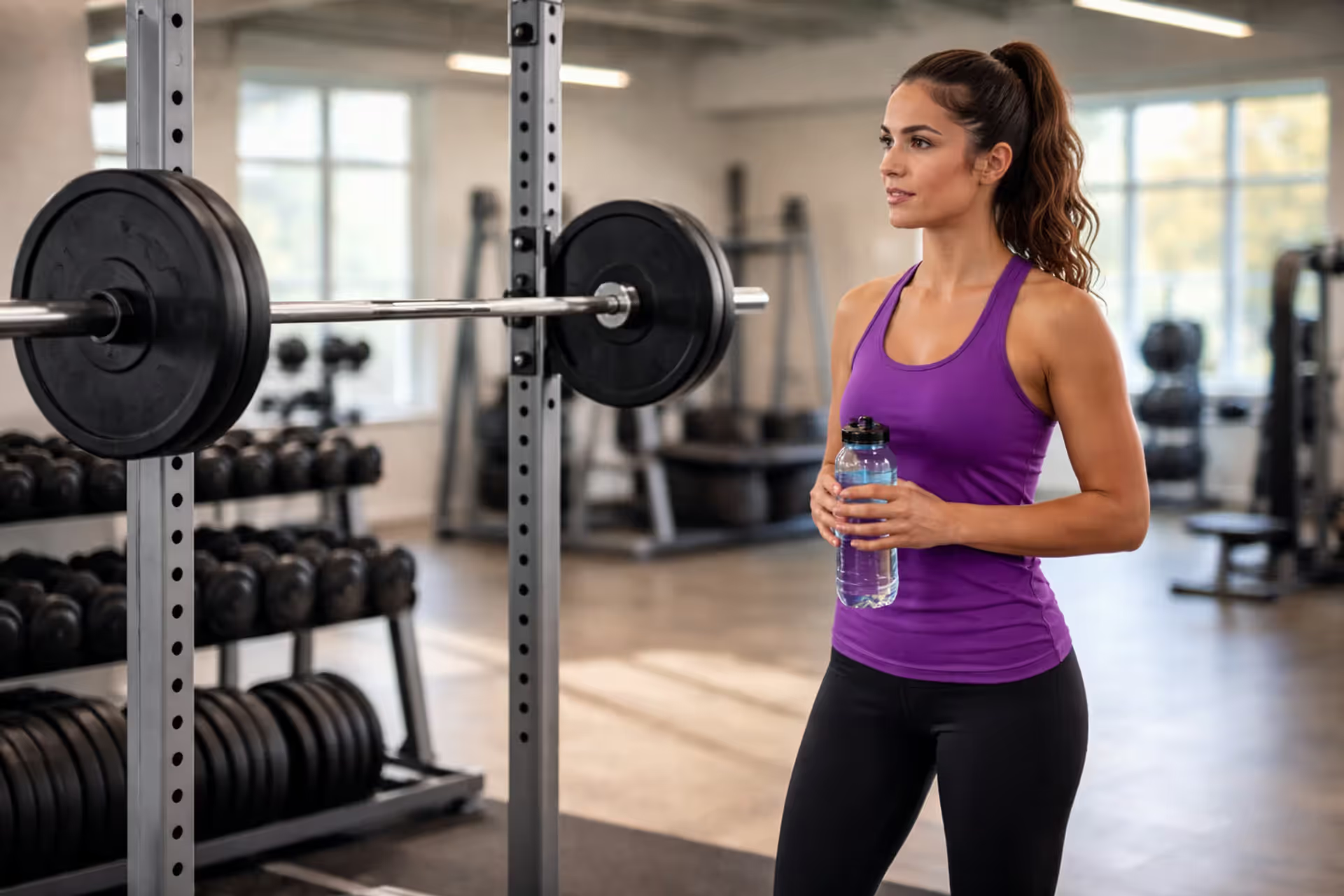
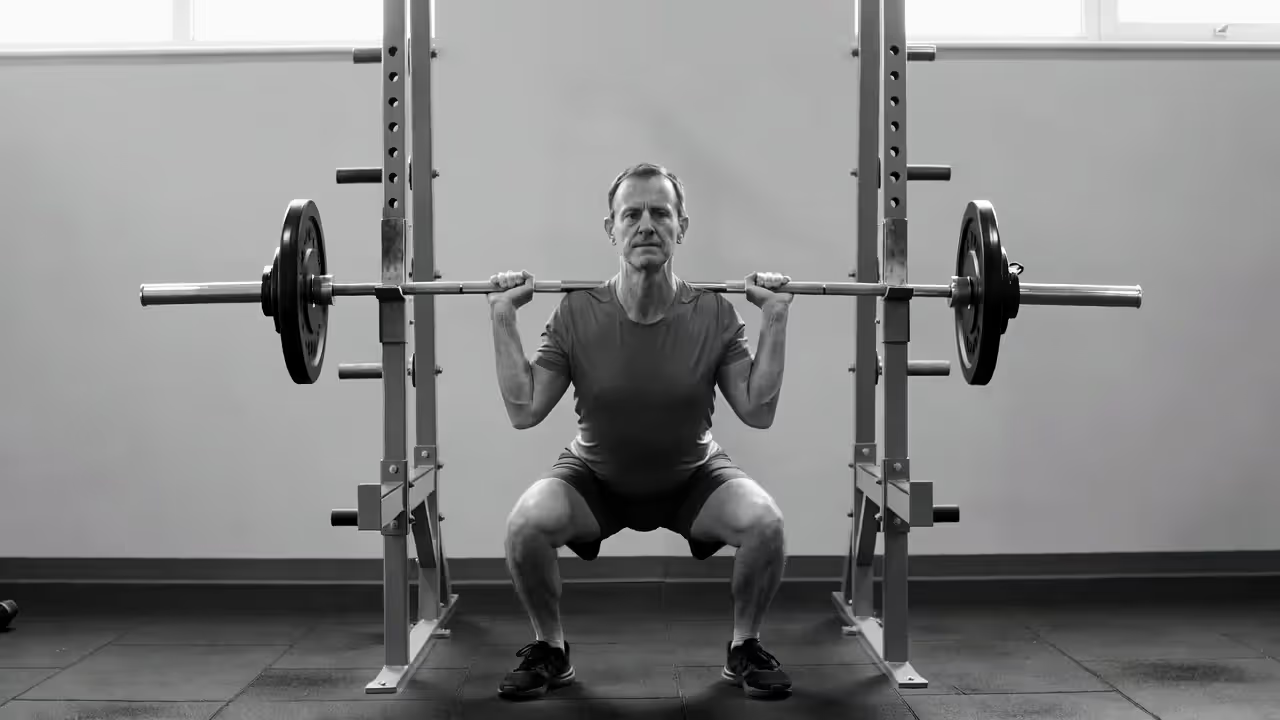
That first step into a weight room hits differently than you expect. The mirrors reflect versions of yourself you're not used to seeing. Equipment you've never touched before sits waiting. Everyone else seems to know exactly what they're doing while you're still figuring out where to put your water bottle.
Here's the truth that should comfort you: every single person confidently loading plates onto a barbell right now once stood exactly where you're standing, equally confused and uncertain. The difference between them and you is simply time and repetition.
Strength training reshapes your body through mechanisms that hours on a treadmill can't replicate. These next 90 days will introduce you to movement patterns your body recognizes instinctively, now refined with proper technique and progressive challenge.
Why Resistance Training Matters More Than Cardio for Long-Term Health
Starting around age 30, your body begins surrendering roughly 3-8% of its muscle tissue every ten years. This isn't merely aesthetic—it's a metabolic catastrophe developing in slow motion. Muscle tissue functions as your body's calorie-burning furnace, consuming energy around the clock. As that furnace shrinks, your metabolism crawls to a slower pace, fat storage becomes easier, and activities you took for granted suddenly feel harder.
Resistance training reverses this decline. Research published in the Journal of Bone and Mineral Research during 2019 tracked postmenopausal women through nine months of twice-weekly lifting sessions. These women increased bone density by 2-3%, while women who didn't lift actually lost bone density during the same period. That gap translates directly to fewer broken hips, maintained independence, and dramatically improved quality of life in your seventh, eighth, and ninth decades.
Strength training is the closest thing we have to a fountain of youth.
— Dr. Jordan Feigenbaum
The heart benefits catch most people off guard. Steady jogging certainly strengthens your cardiovascular system, but compound movements like squats and deadlifts create intense heart rate spikes during each set, followed by recovery periods between sets. This interval-style demand trains your heart through a different stimulus than continuous cardio. A 2018 meta-analysis in Medicine & Science in Sports & Exercise demonstrated that people incorporating resistance training reduced their cardiovascular disease risk by 17% compared to non-lifters.
Protection from injury becomes increasingly critical with each birthday. Muscular strength shields your joints by absorbing forces and stabilizing movement through full ranges of motion. Weak hip muscles contribute to knee pain. Underdeveloped shoulder stabilizers create rotator cuff problems. Developing balanced strength throughout your entire body constructs protective armor against everyday wear and tear. Physical therapists frequently observe that if resistance training existed as a prescription medication, it would outsell every other drug combined.
Author: Amanda Reeds;
Source: thelifelongadventures.com
What You Actually Need Before Your First Workout
Essential Gym Equipment vs. Nice-to-Have Gear
The fitness industry wants you drowning in accessories, but your actual needs stay remarkably simple. During your initial three months, you genuinely require only: athletic shoes featuring flat, stable soles (cushioned running shoes with elevated heels actually destabilize you during squats and deadlifts), one water bottle, and either a pocket notebook or your phone for workout logging.
Leave the lifting gloves at the store. They actually prevent your grip from developing naturally and create artificial confidence that doesn't serve you long-term. Your palms will form small calluses over time—this is protective tissue, not damage. Weightlifting belts have their place in your future training, but not during month one. Your core needs to develop natural stability before you introduce external support. This principle applies equally to wrist wraps, knee sleeves, and lifting straps—useful tools for advanced training that beginners don't yet need.
A quality gym membership outperforms home equipment for beginners because you immediately access barbells, squat racks, and adjustable weights that would require thousands in upfront investment. Planet Fitness memberships start around $10-25 monthly. Traditional gyms offering better equipment typically run $30-60. The specific price matters less than location—the facility closest to your home or workplace becomes the one you'll consistently visit.
What to Wear and Bring
Choose clothing that permits unrestricted movement without shifting around during exercises. Basketball shorts allow better squat depth than restrictive joggers. A fitted t-shirt lets you monitor your form in mirrors more effectively than an oversized hoodie. Pack a lock for securing your belongings, headphones if music enhances your focus, and perhaps a small towel for wiping equipment between uses.
Include a post-workout snack combining protein with carbohydrates—options like Greek yogurt, a protein shake, or a turkey sandwich work well. While the mythical 30-minute "anabolic window" has been largely debunked, consuming nutrients within two hours of training does support recovery processes. Bring deodorant because you'll definitely need it, and the person using the bench after you will silently appreciate your consideration.
7 Fundamental Lifting Techniques Every Beginner Must Master
These movement patterns create the foundation for every effective strength workout plan. Perfect these fundamentals, and you possess the tools to build muscle throughout your entire life.
Exercise Name
Primary Muscles Worked
Common Beginner Mistakes
Key Form Cue
Goblet Squat
Quadriceps, glutes, core stabilizers
Knees collapsing inward, weight shifting to toes
"Drive your knees outward while keeping heels planted"
Romanian Deadlift
Hamstrings, glutes, spinal erectors
Excessive spinal rounding, too much knee bend
"Hinge at your hips like you're trying to touch a wall behind you with your butt"
Push-Up
Chest, shoulders, triceps, core
Hips dropping or rising, arms flaring excessively
"Maintain rigid body alignment from ankles through shoulders"
Dumbbell Row
Upper back muscles, lats, biceps
Excessive momentum, torso rotation
"Draw your elbow straight back toward your hip pocket"
Overhead Press
Deltoids, triceps, upper chest
Excessive lower back arching
"Contract your glutes and abs before initiating each press"
Plank
Core muscles, anterior shoulders
Breath-holding, sagging or piking hips
"Create tension as if anticipating a punch to your midsection"
Glute Bridge
Glutes, hamstrings, lower back
Overextension through the spine, pushing from toes
"Press through your heels and pause with glutes fully contracted at the top"
The goblet squat develops your ability to sit backward into your hips rather than pitching forward with your knees. Grasp a single dumbbell or kettlebell at chest level, position your feet slightly wider than your hips. At the bottom position, your elbows should pass just inside your knees. When your heels leave the ground, you're either descending beyond your current mobility allows or your weight has shifted too far forward. Correct this by practicing unweighted repetitions, lowering until you lightly contact a bench, then driving back to standing.
Author: Amanda Reeds;
Source: thelifelongadventures.com
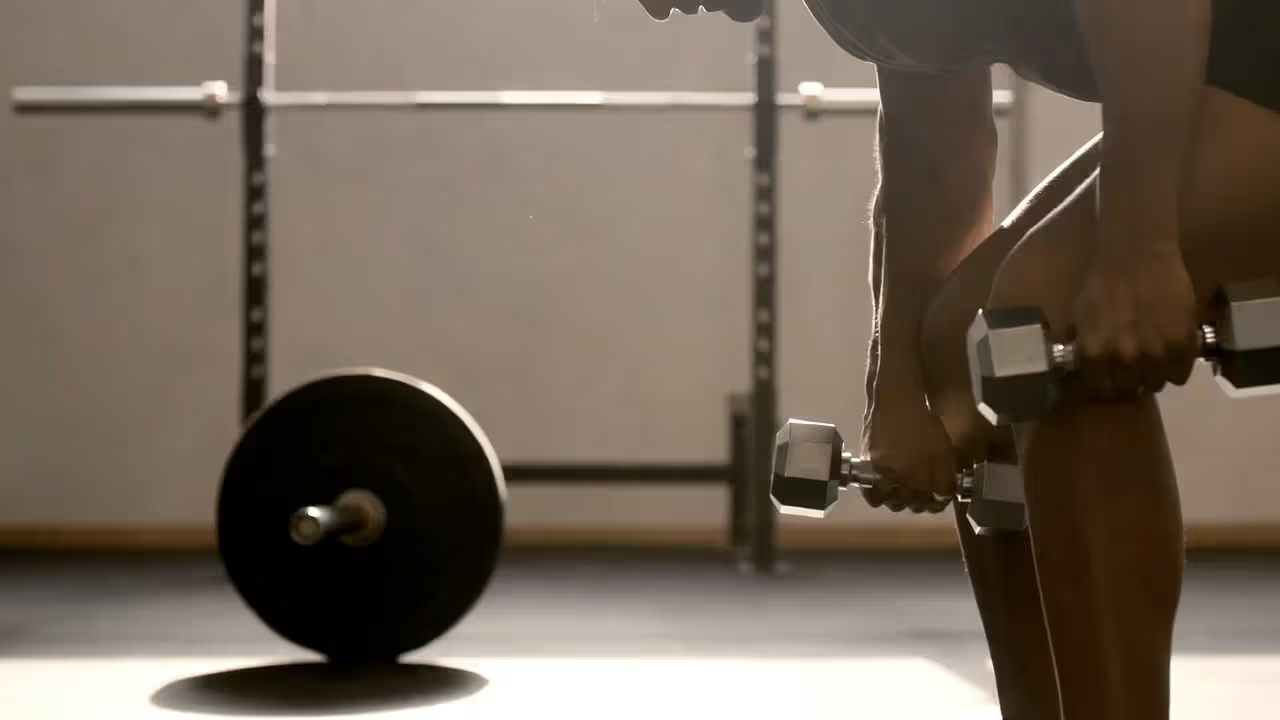
Romanian deadlifts strengthen your posterior chain—those muscles running along your backside that desk jobs systematically weaken. Begin with the weight at hip level, not resting on the ground. Shift your hips rearward while keeping your spine in neutral alignment. The weight should descend in a straight vertical line along your thighs. You want tension through your hamstrings, not discomfort in your lumbar spine. When your back begins rounding, you've descended too far or selected too much weight.
Push-ups appear straightforward until you attempt them with strict form. Most beginners either drop their hips downward (reducing difficulty) or pike their hips upward (also easier). Proper execution maintains unwavering body rigidity from your head through your heels. If you can't complete ten strict repetitions, elevate your hands on a bench or stable box. As strength increases, progress to lower surfaces until you reach floor level.
Rows create balance against all your pressing movements. Every push demands an equivalent pull. Dumbbell rows teach shoulder blade retraction while maintaining torso stability. Rest one knee and one hand on a bench, holding the dumbbell in your free hand. Pull the weight toward your hip rather than your shoulder. Keep your working arm close to your ribcage. Imagine trying to pinch something between your shoulder blades when you reach the top position.
The overhead press immediately reveals any shoulder mobility restrictions you're carrying. If pressing a barbell overhead causes excessive lower back arching, begin with dumbbells instead. They permit more natural shoulder movement patterns. Before starting each repetition, inhale deeply and brace your entire core musculature. Drive the weight straight overhead, allowing your head to shift slightly forward once the weight clears it. At full extension, the weight should sit directly above your shoulder joints, not positioned in front of them.
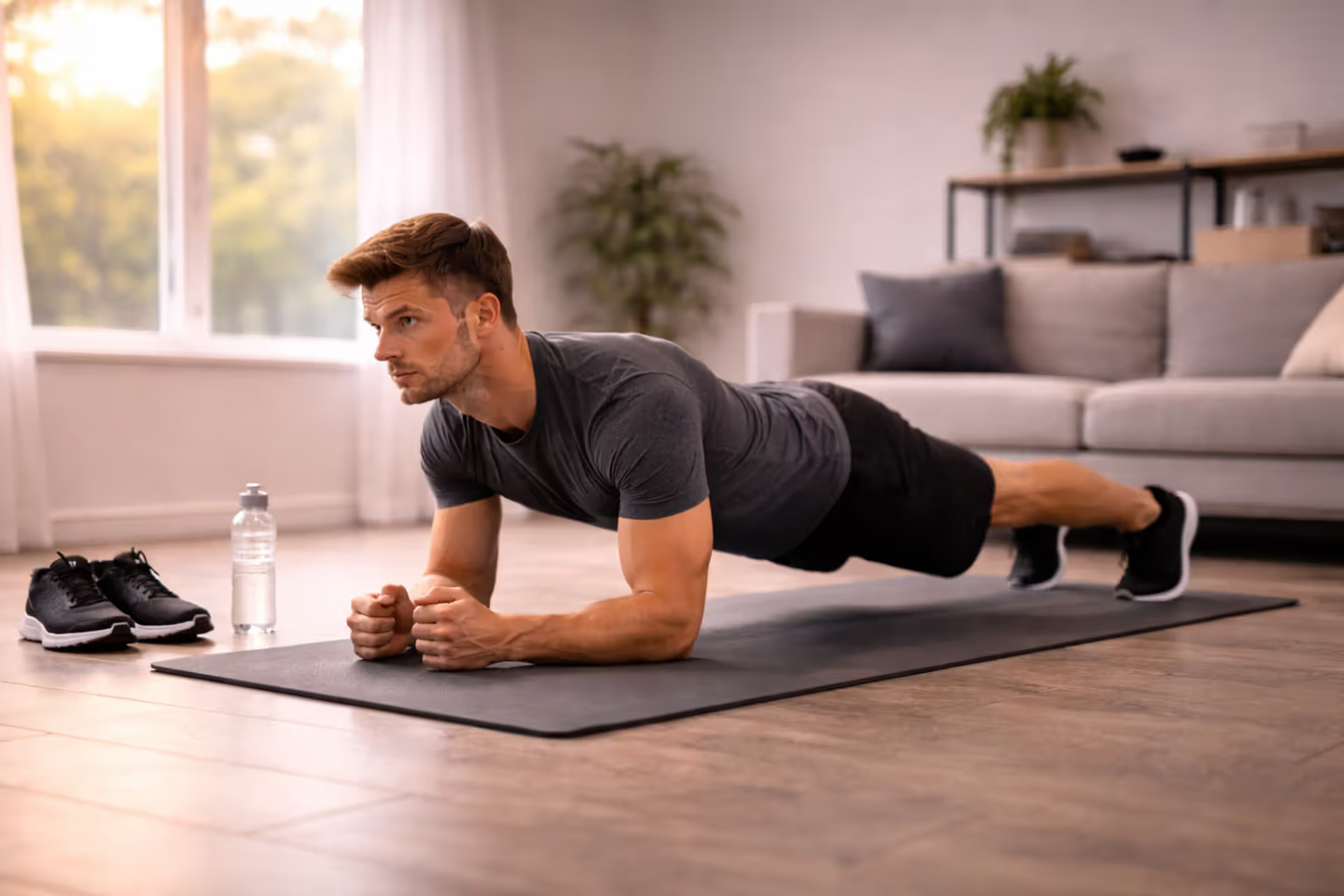
Planks develop anti-movement strength—your core's capacity to resist unintended motion. Most people hold planks far too long with deteriorating form rather than shorter durations maintaining perfect tension. Thirty seconds of an absolutely solid plank surpasses two minutes of sagging, mouth-breathing misery. Set your elbows directly beneath your shoulders, generate full-body tension, and maintain steady nasal breathing throughout.
Glute bridges teach hip extension, the movement pattern you'll eventually apply to deadlifts and Olympic variations. Lie supine with feet flat on the floor positioned approximately hip-width apart. Drive through your heels to elevate your hips upward. At the peak, your body should form an unbroken line from knees through shoulders. Contract your glutes hard for a full second, then lower under control. If you feel this primarily in your lower back rather than your glutes, focus on a slight posterior pelvic tilt and intensify your glute contraction.
Your First 8-Week Strength Workout Plan
This beginner weight training program prioritizes competence before loading intensity. You'll practice movements frequently with manageable loads, developing the neurological pathways that transform lifting from foreign to familiar.
Weeks 1-4: Foundation Phase
Your opening month emphasizes learning correct movement patterns and building work capacity. You'll train three days weekly—Monday, Wednesday, Friday creates an effective schedule, though any three non-consecutive days work equally well. Each session requires 45-60 minutes including your warm-up.
Alternate between these two workouts each training session. Week one follows A-B-A. Week two becomes B-A-B. Week three returns to A-B-A. Week four completes as B-A-B.
Select weights that present a challenge while permitting you to finish all prescribed repetitions with proper form. If the final two reps of each set feel difficult yet achievable, you've identified appropriate loading. If you could easily perform five additional reps, increase the weight next session. If you can't complete all reps maintaining proper technique, reduce the weight.
Weeks 5-8: Progressive Overload Introduction
Your second month introduces progressive overload—the systematic increase in training demands that forces adaptive responses. You'll gradually add weight, repetitions, or sets while preserving excellent form throughout.
Continue alternating between workouts three times weekly. Each week, target either adding 2.5-5 pounds to your exercises, completing one additional rep per set, or reducing rest intervals by 15 seconds. Only adjust one variable at a time. If you increase weight, maintain the same rep range. If you add repetitions, keep the same weight.
Week
Days per Week
Sets × Reps
Focus
1-2
3
3 × 10
Learning correct movement patterns, moderate challenge
3-4
3
3 × 8-10
Refining technique, introducing small weight increases
5-6
3
4 × 8-10
Increasing total volume, preserving form under fatigue
Ego lifting destroys more beginner progress than any other single error. You watch someone else squatting 225 pounds and suddenly your 65-pound goblet squat feels inadequate. So you load weight you can't properly control, your technique falls apart, and you either sustain an injury or cement terrible movement patterns into your nervous system. The load on your barbell matters infinitely less than movement quality. A flawlessly executed goblet squat with 35 pounds develops more muscle and strength than a sloppy barbell squat with 135 pounds.
Skipping warm-ups appears efficient until an injury sidelines you for weeks. Your first set should never use your working weight. Invest 5-10 minutes in light cardiovascular activity to raise your core temperature—jumping jacks, rowing machine, or stationary cycling all work. Then perform movement-specific preparation: unweighted squats before loaded squats, arm circles and light overhead reaches before pressing movements. Complete 1-2 lighter warm-up sets before your working weight. This preparation dramatically reduces injury risk while actually improving performance by properly activating targeted muscle groups.
Inconsistent scheduling destroys momentum faster than imperfect programming. Training Monday, Wednesday, Friday one week, then Tuesday and Saturday the next week, then randomly three times scattered across ten days—this inconsistency prevents meaningful adaptation. Your body responds to regular stress applied consistently over time. Three weekly workouts spaced relatively evenly outperforms four perfect workouts distributed randomly across two weeks. Select your training days, schedule them into your calendar like medical appointments, and protect that time fiercely.
Ignoring nutrition undermines even perfectly executed training. You cannot build muscle tissue without sufficient protein and adequate calories. Most beginners consume dramatically insufficient protein. Target 0.7-1 gram of protein per pound of bodyweight daily. A 150-pound person requires 105-150 grams of protein. That translates to roughly 4-5 palm-sized portions of meat, fish, eggs, Greek yogurt, or protein powder distributed throughout your day. You also need adequate total calories—if you're attempting simultaneous fat loss and muscle gain as a beginner, eat at maintenance or a modest deficit (200-300 calories below maintenance). If you're focused on building size, eat 200-300 calories above maintenance.
Poor sleep quality undermines everything else you're doing correctly. Your muscles don't actually grow during workouts—they grow during recovery, predominantly during sleep. Consistently sleeping under seven hours nightly impairs muscle protein synthesis, reduces testosterone production, and elevates cortisol levels. You'll feel weaker in workouts, recover more slowly between sessions, and see minimal progress despite consistent training. Prioritize 7-9 hours of quality sleep nightly. If you must choose between an extra hour of sleep or an extra workout, choose sleep every time.
How to Track Progress Beyond the Scale
Scale weight fluctuates 2-5 pounds daily based on hydration status, digestive system contents, and hormonal fluctuations. Checking the scale every morning and experiencing emotional turmoil over a two-pound increase wastes mental energy on meaningless statistical noise.
What gets measured gets managed.
— Peter Drucker
Track strength performance instead. Document the weight, sets, and repetitions for each exercise every single workout. When you complete 3 sets of 10 reps with a weight that previously challenged you for only 3 sets of 8, you've objectively gotten stronger. That's measurable, meaningful progress. After eight weeks, you should lift significantly heavier loads or perform significantly more repetitions than week one. If you haven't, something within your training approach, nutritional intake, or recovery protocol requires adjustment.
Take body measurements on a monthly basis. Measure your waist at its narrowest point, hips at their widest point, both thighs at mid-thigh, both arms flexed at bicep peak, and chest at nipple level. Record these measurements with the corresponding date. Fat loss frequently appears in measurements before manifesting on the scale. Muscle gain might increase your scale weight while simultaneously decreasing your waist circumference—that's excellent progress the scale alone would misrepresent.
Performance metrics reveal improvements you might otherwise overlook. Can you now climb three flights of stairs without heavy breathing? Can you carry all grocery bags in one trip? Do you recover more quickly between training sets? These functional improvements ultimately matter more than any number appearing on a scale or measuring tape.
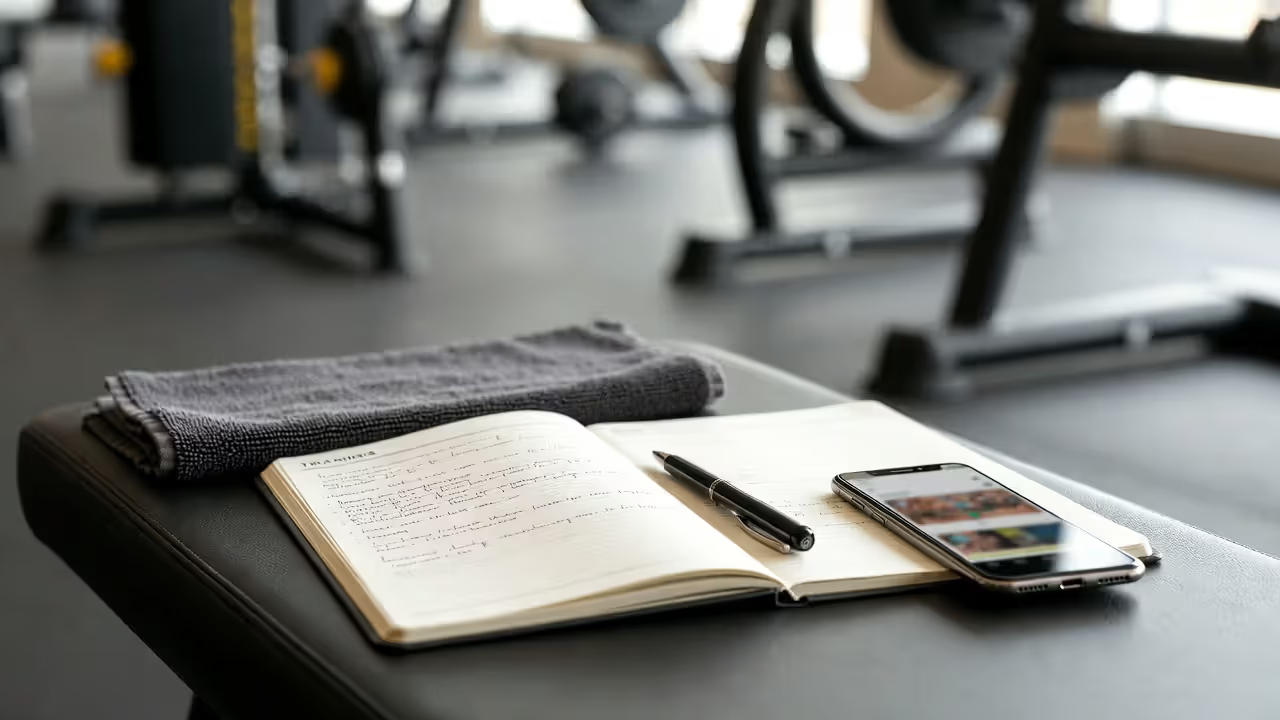
Progressive overload tracking demands written documentation. Use a simple notebook or phone applications like Strong, Fitbod, or even a basic spreadsheet. Record the date, exercise name, weight used, sets completed, and reps achieved. Add brief notes about subjective difficulty. This training log becomes invaluable for identifying patterns, planning progression, and maintaining motivation when you flip back through pages and witness how dramatically you've improved.
Author: Amanda Reeds;
Source: thelifelongadventures.com
Frequently Asked Questions About Starting Strength Training
How much muscle soreness should I expect after my first strength workout?
Delayed onset muscle soreness (DOMS) typically reaches peak intensity 24-48 hours following your initial few workouts. You'll experience stiffness, tenderness, and potentially struggle with stairs or raising your arms for hair washing. This represents normal adaptation, not tissue damage. The soreness decreases dramatically after your first 3-4 training sessions as your muscles begin adapting. Future workouts should produce mild soreness or tightness, not incapacitating pain. If you can barely move for an entire week, you performed excessive volume or used excessive weight. Sharp pain, joint discomfort, or pain that intensifies over several days signals a potential problem—stop performing that movement and consider professional consultation.
How do I determine appropriate starting weights?
Begin with lighter loads than your ego suggests. Pick up a dumbbell or load a barbell with just the unloaded bar (45 pounds for standard Olympic barbells, 15 pounds for many fixed barbells). Perform 5-6 repetitions. If this feels absurdly easy, add weight and repeat the test. Continue adding small increments until you discover a load where 8-10 reps feels challenging yet achievable with good technique. That becomes your starting weight. For goblet squats, most beginners begin with 15-35 pounds. For Romanian deadlifts, women frequently start with 25-40 pounds, men with 45-65 pounds. For overhead pressing, women might begin with 10-15 pound dumbbells, men with 15-25 pounds. These represent rough guidelines—your actual starting point depends on your current strength levels, which vary enormously between individuals.
Will lifting weights make me look bulky? (especially concerned for women)
Building substantial muscle mass requires years of dedicated training, caloric surplus, and frequently genetic advantages. Women produce 15-20 times less testosterone than men, making it physiologically challenging to accidentally build large muscles. The "bulky" female bodybuilders you might envision train for decades using specific programming and often utilize performance-enhancing drugs. Lifting weights following this resistance training guide will make you stronger, leaner, and more defined—not bulky. You'll develop visible muscle tone and a more athletic physique, but you won't suddenly wake up resembling a bodybuilder unless that's your specific goal pursued with extreme dedication over many years.
Am I too old at 40/50/60 to start strength training?
These ages actually represent ideal times to begin because the consequences of avoiding strength training become increasingly severe. Sarcopenia (age-related muscle wasting) accelerates after age 50. Bone mineral density declines, especially dramatically in post-menopausal women. Balance deteriorates, substantially increasing fall risk. Strength training reverses all these concerning trends. A 2017 study published in Frontiers in Physiology demonstrated that adults in their seventies who began resistance training increased their strength by 30-50% within just 12 weeks. Start with lighter loads and emphasize technical proficiency more than younger beginners might, but the fundamental muscle building basics remain identical. Many people report feeling physically superior at 55 after one year of strength training compared to how they felt at 45 before starting.
Can I successfully build muscle training at home without gym access?
Yes, though with certain limitations. Bodyweight movements (push-ups, squats, lunges) build muscle during initial months. Adding a set of adjustable dumbbells (like PowerBlocks or Bowflex SelectTech) plus a sturdy bench dramatically expands your exercise options. You can perform most exercises in this program at home with minimal equipment investment. The primary limitation emerges later—progressive overload requires continually increasing resistance. Eventually, you'll need heavier weights than home equipment practically provides. For the initial 6-12 months, home training works excellently. Beyond that point, most people benefit from either gym access or investing in a home barbell setup (power rack, barbell, weight plates), which costs approximately $500-1500 for quality equipment.
How long until I see visible muscle definition?
Most beginners notice strength improvements within 2-3 weeks—weights that initially felt heavy become manageable. Visible physical changes require more time. If you're losing fat while building muscle simultaneously, you might observe definition emerging in 6-8 weeks. If you're starting very lean, you might notice muscle growth in 8-12 weeks. If you're carrying significant body fat, you might not see definition for 4-6 months, despite actively building muscle underneath. The muscle exists there, just obscured. Consistency matters infinitely more than specific timelines. Someone training three times weekly for six months will see dramatically better results than someone training intensely for six weeks, taking three weeks off, training sporadically for two weeks, taking another break, and continuing this inconsistent pattern. Trust the process, track your strength and measurements diligently, and visual changes will inevitably follow.
Moving Forward With Confidence
Your first 90 days of strength training establish the foundation for years of continued progress. You've learned fundamental movement patterns that transfer to every advanced program you'll eventually explore. You've constructed the habit of consistent training. You've proven to yourself that you belong in the weight room just as much as anyone else there.
After completing this eight-week program, several pathways forward exist. You can repeat this exact program using heavier weights—many beginners benefit substantially from running this identical structure 2-3 times, adding 5-10 pounds to each exercise. You can progress to a four-day training split, working upper body twice and lower body twice weekly. You can explore specialized programs like Starting Strength, StrongLifts 5×5, or GZCLP.
The specific program you choose matters less than maintained consistency. Keep appearing three times per week. Keep adding small weight increments when possible. Keep consuming adequate protein daily. Keep sleeping seven-plus hours nightly. Continue this for one year, and you'll transform not merely your physical body, but your fundamental relationship with physical challenge itself.
Strength training teaches you that difficult tasks become manageable through consistent effort over time. This lesson extends far beyond gym walls. The confidence you develop by progressively lifting heavier loads transfers into every area of your life. You discover that you're considerably more capable than you previously believed.
The weight room no longer intimidates you. You understand what to do, how to execute it properly, and why it matters for your long-term health. Now you simply need to maintain consistency and let time work its magic.
Research shows eight weeks of band training produces strength gains statistically identical to free weights — yet bands cost $30-50 total with zero commute. This guide covers how variable resistance builds muscle, a band selection table by type and tension, 12 essential exercises with form cues, three structured plans for beginners through fat loss, progression tactics without traditional weights,
Each inch your head drifts forward adds ten pounds of stress to your neck — and "sit up straight" exhausts you in fifteen minutes. This guide delivers a 5-minute desk routine you can do seated, a complete back strengthening workout hitting every muscle that holds you upright, an 8-week progressive schedule, common form mistakes that make posture worse, and tracking methods that prove your progress
Your PRs stalled, sleep feels useless, and you're snapping at coworkers — these aren't character flaws, they're overtraining red flags. This guide covers 12 physical and mental warning signs from elevated resting heart rate to hormonal disruption, who's most at risk, a science-backed recovery protocol for the first critical weeks, training load monitoring tools including HRV tracking, and the prev
Most morning workout plans die within three weeks — not from lack of willpower but from friction points nobody addresses. This guide covers five mistakes that sabotage routines before they start, a 15-minute zero-equipment circuit framework, a step-by-step first-week program, night-before preparation systems that eliminate decision fatigue, and why 66 days — not 21 — is the real habit formation ti
The content on this website is provided for general informational and educational purposes related to health, yoga, fitness, and overall wellness. It is not intended to replace professional medical advice, diagnosis, or treatment.
All information, workout suggestions, yoga practices, nutrition tips, and wellness guidance shared on this site are for general reference only. Individual health conditions, fitness levels, and medical needs vary, and results may differ from person to person. Always consult a qualified healthcare provider before starting any new exercise program, dietary plan, or wellness routine.
We are not responsible for any errors or omissions, or for any outcomes resulting from the use of information presented on this website. Your health and fitness decisions should always be made in consultation with appropriate medical and fitness professionals.