Here's something most people don't realize: those elastic bands sitting in your closet can deliver the same muscle-building stimulus as a fully-equipped weight room. Not "decent enough for travel" results—legitimate strength gains that make you wonder why anyone hauls themselves to crowded gyms.
The game-changer isn't just convenience. Bands fundamentally alter resistance curves in ways dumbbells can't match. Pull them longer, resistance increases. Your muscles battle hardest precisely when they're biomechanically strongest. Contrast that with iron—plates feel heaviest during your weakest joint angles.
Sounds convenient to the point of suspicion, right? Yet the science backs it up. Zero commute. No membership fees. Skip the equipment queue. Grab your elastic and get moving.
Why Resistance Bands Work for Muscle Building and Fat Loss
Imagine stretching an elastic hairband between your fingers. Initial tension feels manageable, then skyrockets as you pull wider. Apply this principle to strength training. Traditional dumbbells create maximum difficulty mid-range, then ease up. Your muscles actually produce peak force when fully shortened—yet conventional weights offer minimal challenge there.
Elastic resistance reverses this mismatched relationship. Load increases exactly where you're mechanically dominant. Exercise scientists label this "variable accommodating resistance," though that phrase makes simple concepts sound academic.
Variable resistance is a game changer.
— Bret Contreras
A 2019 study published in the Journal of Human Kinetics compared eight weeks of weight training against elastic training. One cohort lifted iron, another pulled bands. Strength improvements? Statistically identical. The fascinating discovery came from muscle activation analysis—elastic users demonstrated significantly higher motor unit recruitment during movement endpoints when tension peaked.
Consider fat reduction. A solid 30-minute circuit session burns 200-300 calories during activity. Nothing groundbreaking there. The substantial benefit? Simultaneous muscle tissue development, which elevates resting metabolism for extended periods post-workout. Cardio torches calories during movement. Resistance training at home constructs calorie-burning machinery operating around the clock.
Home strength bands eliminate fitness's unspoken obstacle: maintaining consistency. Skipped sessions accumulate fast—facility closed unexpectedly, business travel, nasty weather, plain exhaustion. Equipment you'll genuinely use destroys sophisticated machines gathering dust. Every single time.
Author: Logan Brooks;
Source: thelifelongadventures.com
Choosing the Right Resistance Bands for Your Fitness Level
Visit any fitness retailer and you'll confront shelves packed with colorful elastic options. Marketing departments promise each design builds muscle fastest. Let's eliminate confusion.
Band Style
Primary Applications
Available Tensions
Travel-Friendliness
Investment Required
Key Advantages & Limitations
Compact Loop Bands
Lower body training, glute activation, movement preparation
Medium Tension (Green/Blue): 15-30 pound range—where most newcomers actually begin, higher repetition work
Heavy Tension (Black/Purple): 30-50 pound range—intermediate practitioners, leg-focused sessions
Extra Heavy (Silver/Gold): 50-80+ pound range—advanced athletes, pull-up assistance
Select resistance making 12-15 repetitions demanding, not comfortable. Adaptation happens shockingly fast—anticipate needing heavier options within four weeks of regular training.
Here's what manufacturers skip: verify latex allergies first. Most bands contain natural rubber. Fabric-covered or synthetic alternatives cost slightly more but prevent skin reactions.
12 Essential Resistance Band Exercises by Muscle Group
These resistance band exercises establish foundations for effective portable workouts. Perfect the mechanics before obsessing over resistance selection or execution speed.
Author: Logan Brooks;
Source: thelifelongadventures.com
Upper Body Exercises (Chest, Back, Shoulders, Arms)
Banded Chest Press
Wrap your band around something solid at chest level—doorframe, pole, secure fixture. Turn away from the anchor, gripping handles beside your pectorals. Step forward until experiencing substantial tension with arms bent. Drive both handles straight ahead like pushing a heavy door. Return with control.
Critical error? Positioning too near your anchor point. You require meaningful tension from movement start, not exclusively at full extension. Otherwise you're essentially shadow-boxing through half the range.
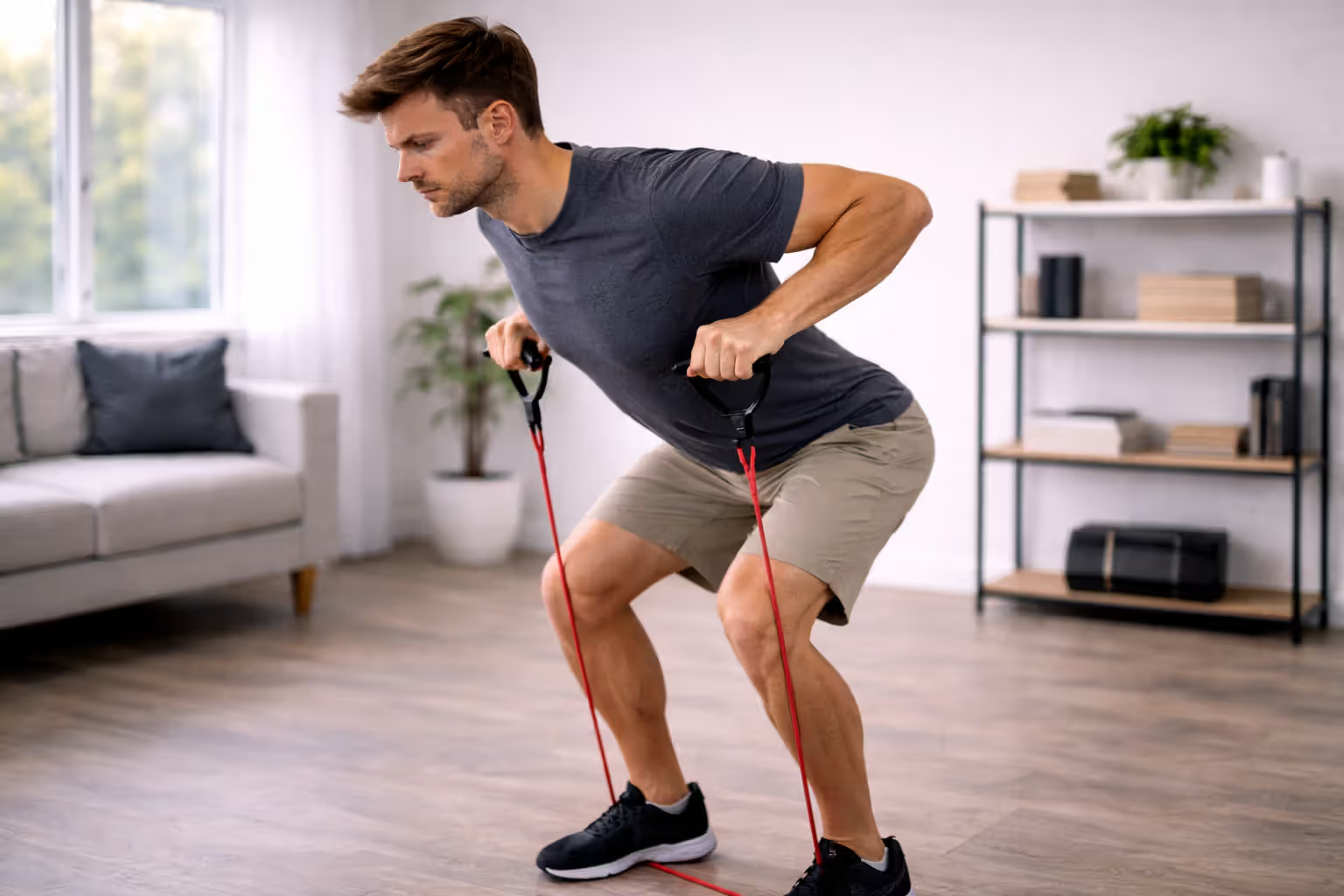
Bent-Over Row
Position the band's center beneath both feet, hip-width stance. Hinge at your hip joints—maintaining spinal alignment, knees slightly flexed. Draw both handles toward your ribcage while contracting shoulder blades together. Lower deliberately.
Pin those elbows tight to your torso. Allow them to flare outward and you're targeting shoulders rather than back musculature. Completely defeats the purpose.
Overhead Press
Plant your band beneath both feet shoulder-width. Grip handles at shoulder height, palms forward-facing. Press directly overhead until achieving full arm lockout. Return to shoulder position.
That progressive resistance hammers the top range harder than dumbbells manage. Develops serious overhead stability.
Bicep Curl
Position yourself atop the band center. Handles in both hands, arms completely extended downward. Curl your fists toward shoulders while maintaining stationary elbows against your sides. Contract intensely at peak position before lowering.
Tricep Extension
You'll require overhead attachment for this—needs door anchor or permanent mounting. Face opposite direction while gripping the band with both hands positioned behind your head. Extend arms forward and downward until straight. Control the return path.
Overhead attachment requires initial setup, true. However the resistance angle outperforms nearly any dumbbell variation for tricep development.
Lower Body Exercises (Glutes, Quads, Hamstrings)
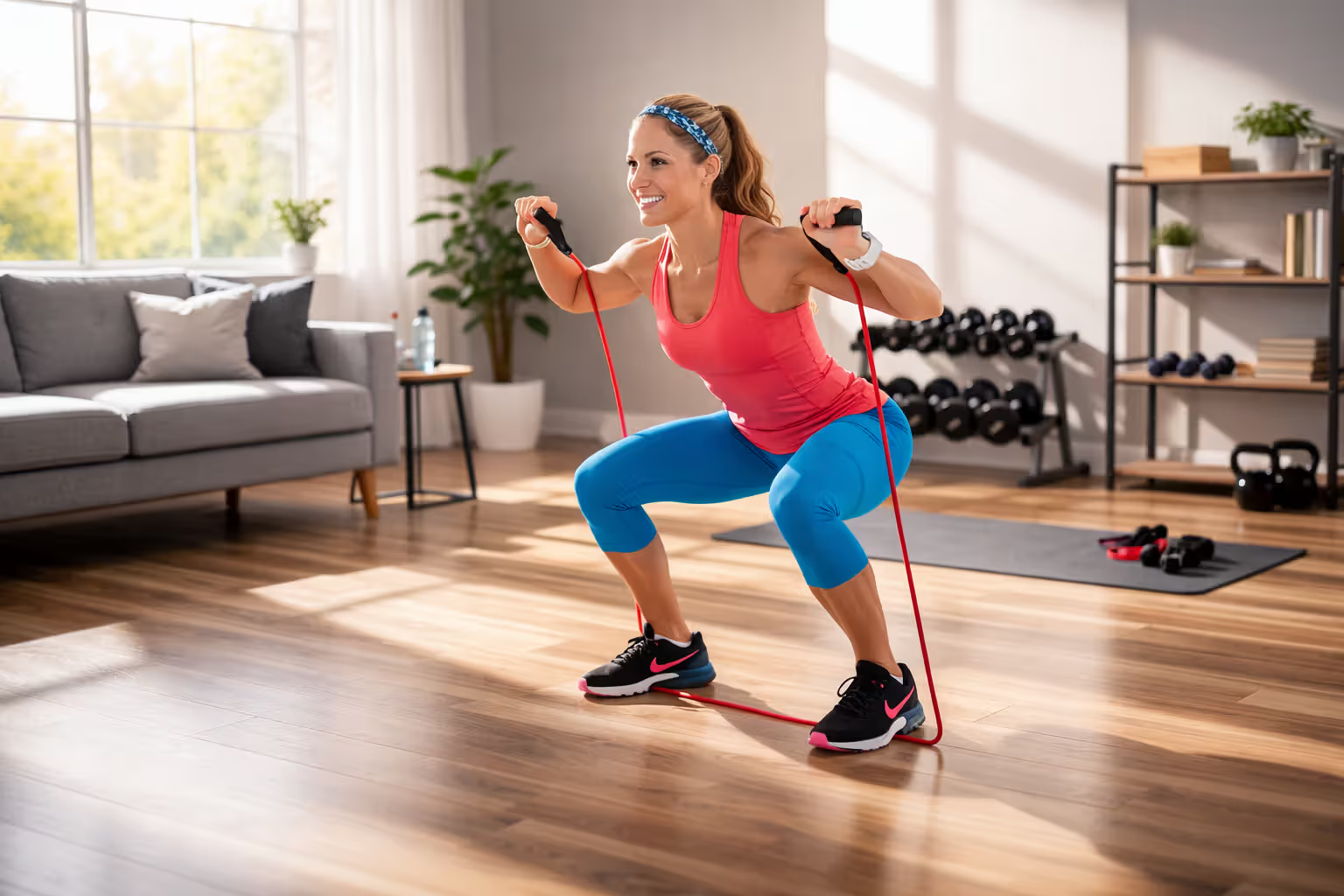
Banded Squat
Position yourself atop your band, feet shoulder-width, handles at shoulder level. Descend until thighs reach parallel—knees tracking above toes. Drive through your heels returning upright.
Notice how resistance battles you hardest during the standing portion? That's exactly when your legs generate maximum force. Regular squats challenge you most at the bottom when you're mechanically disadvantaged. Bands make superior biomechanical sense.
Romanian Deadlift
Position the band beneath feet hip-width apart, gripping handles before your thighs. Drive your hips backward, lowering handles along your legs. Maintain neutral spine throughout the entire movement. Thrust hips forward returning upright.
This pattern hammers hamstrings and glutes harder than virtually anything else achievable with bands.
Lateral Band Walk
Loop a band around both legs just above kneecaps. Assume a quarter-squat stance. Step sideways while maintaining constant tension—10-15 steps. Reverse your direction.
Physical therapists universally prescribe this exercise. Activates your gluteus medius, preventing knee valgus collapse. Injury prevention treasure.
Glute Bridge
Position yourself supine, knees flexed, feet planted. Loop a band above your kneecaps. Drive through your heels, elevating hips until creating a straight line from shoulders through knees. Contract glutes intensely at the peak. Lower deliberately.
Adding that band creates an outward tension component. Activates your glutes far beyond standard bridges.
Core and Stability Movements
Pallof Press
Secure your band at chest level. Stand perpendicular to it, gripping with both hands at your sternum. Press directly forward, resisting the rotational force attempting to twist your torso. Return to sternum and repeat.
Anti-rotation training builds functional core strength actually transferring to daily activities. Crunches don't approach this effectiveness.
Standing Crunch
Attach the band overhead. Face the anchor point, gripping it behind your skull. Crunch by driving your elbows toward your knees, fighting the upward pull.
Woodchop
Band positioned at shoulder height. Stand perpendicular, both hands gripping the band. Rotate your torso, drawing the band diagonally from high to low across your body. Control the reverse motion.
This rotational movement appears constantly in athletics and daily life—lifting children, loading vehicles, swinging sports equipment.
Author: Logan Brooks;
Source: thelifelongadventures.com
Sample Resistance Band Workout Plans for Different Goals
These structured routines require only bands and 20-40 minutes. Execute exercises sequentially with minimal rest intervals.
Beginner Full-Body Workout (3x weekly)
This beginner band workout establishes foundational strength while drilling proper mechanics.
Banded Squat: 3 sets × 12 repetitions
Bent-Over Row: 3 sets × 12 repetitions
Banded Chest Press: 3 sets × 12 repetitions
Glute Bridge: 3 sets × 15 repetitions
Overhead Press: 3 sets × 10 repetitions
Pallof Press: 3 sets × 10 repetitions per side
Rest 60-90 seconds between sets. Emphasize control—two seconds lowering phase, one second lifting phase. Total duration: 25-30 minutes.
Begin with light or medium bands. When you can complete all sets with flawless form, increase either resistance or repetitions before advancing difficulty.
Lower Body Days (Tuesday/Friday): - Banded Squat: 4 sets × 12 repetitions - Romanian Deadlift: 4 sets × 10 repetitions - Lateral Band Walk: 3 sets × 15 steps each direction - Glute Bridge: 4 sets × 15 repetitions - Standing Crunch: 3 sets × 20 repetitions
Allow 90-120 seconds between sets. Select resistance making those final 2-3 repetitions genuinely challenging. Each session runs 35-45 minutes.
Fat-Loss Circuit (5x weekly)
Circuits maintain elevated heart rate while developing muscle. Execute all exercises continuously without stopping, rest 90 seconds after completing the full circuit, then repeat. Complete 4-5 total rounds.
Squat: 15 repetitions
Chest Press: 15 repetitions
Romanian Deadlift: 12 repetitions
Bent-Over Row: 15 repetitions
Lateral Band Walk: 10 steps each direction
Overhead Press: 12 repetitions
Woodchop: 10 repetitions per side
Glute Bridge: 20 repetitions
Total duration: 20-25 minutes. Incinerates significant calories during activity while creating extended metabolic elevation afterward compared to traditional strength protocols.
How to Progress Your Resistance Training at Home
Progressive overload drives physiological adaptation. Without systematically escalating difficulty, your body adapts and plateaus. Bands lack neat weight numbers, requiring creative progression tactics.
Tension Adjustment Methods
Simplest progression? Modify your geometry. Position yourself farther from anchor points or adopt wider stances atop bands. Instantly adds 5-10 pound equivalents without purchasing anything new.
With tube bands, choke down—grip nearer to the anchor or wrap material around your hand once. Shortens the functional length, amplifying resistance throughout.
Stacking multiple bands works once you've advanced. Two bands simultaneously essentially doubles available resistance. Works particularly well for legs and back since those muscle groups tolerate heavier loads.
Tempo Manipulation
Slowing execution increases time under tension—massive for developing muscle. Try 4-2-1 tempo: four seconds lowering, two-second hold, one second lifting. Moderate resistance suddenly feels punishing.
Pausing at the most difficult point eliminates momentum. During chest presses, hold at complete extension. During rows, hold handles against your torso. Two to three seconds.
Volume and Frequency Increases
Add one set per exercise every two weeks. Progressing from 3 to 4 sets increases weekly volume by 33%—substantial stimulus.
Increase training frequency carefully. Adding a fourth weekly session provides additional stimulus but demands sufficient recovery. Most people achieve better results with four quality sessions than six mediocre ones.
Consistency beats intensity when it’s repeatable.
— James Clear
Tracking Progress Without Traditional Weights
Bands lack precise measurement like plate-loaded barbells. Makes tracking trickier. Try these alternatives:
Document everything. If you completed 3 sets of 12 chest presses with the blue band last week, target 3 sets of 13 this week or advance to 4 sets of 12.
Mark floor positions with tape. Place strips indicating foot placement during squats or distance from anchors during presses. Consistent positioning ensures you're comparing equivalent efforts.
Capture monthly progress photos and body measurements. Visual documentation and tape measures around arms, chest, waist, and thighs provide objective feedback when you can't measure exact resistance.
Performance metrics trump equipment specifics. When you complete additional reps, finish workouts faster, or recover quicker, you're progressing. Period.
Author: Logan Brooks;
Source: thelifelongadventures.com
Common Mistakes That Reduce Band Workout Effectiveness
Even experienced lifters make these errors when transitioning to elastic resistance. Avoiding them accelerates results and prevents injuries.
Inadequate Anchoring
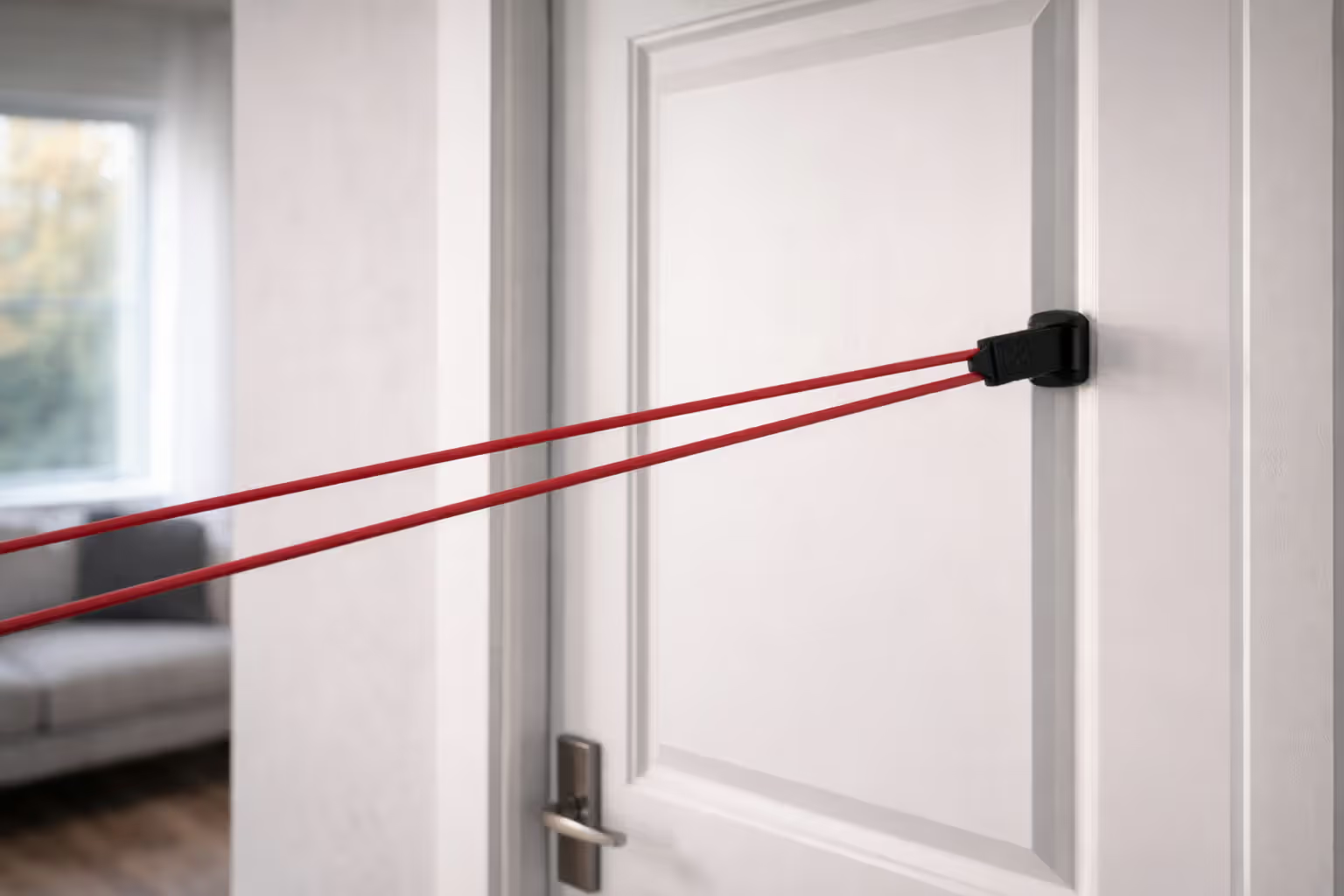
Bands breaking loose mid-repetition cause injuries and property damage. Test every attachment thoroughly before applying maximum effort. Door anchors work excellently but must sit above hinges with doors closed toward you.
When positioning bands beneath feet, wear shoes. Training barefoot allows material to slip, especially on smooth flooring. Shoes provide traction and protect your feet if bands fail.
Never anchor to furniture that might topple. Chairs, lightweight tables, unsecured objects—all hazardous. Use permanent fixtures like doorframes, stair railings, or proper anchor systems.
Choosing Insufficient Resistance
Newcomers often select bands that feel ridiculously easy, assuming they should start extremely light. While learning technique matters initially, you need adequate resistance to challenge muscles within 10-15 repetitions.
Easily completing 20+ repetitions? Resistance is too light for strength gains. You're training endurance instead—valuable for specific objectives but not optimal for most people wanting muscle growth or fat reduction.
Purchase variety packs containing multiple resistance levels. You need options to match exercise demands. Leg exercises require heavier bands than arm movements. Pulling often needs more resistance than pressing.
Neglecting Warm-Up Protocols
Cold muscles and cold rubber both perform poorly. Invest 5-7 minutes on dynamic preparation before resistance work: arm circles, leg swings, bodyweight squats, light cardio.
Bands themselves lose elasticity when cold. Storing equipment in garages or vehicles during winter? Bring them inside 30 minutes before training. Cold rubber loses flexibility and tears easier.
Poor Body Positioning
Minor stance modifications dramatically affect difficulty and safety. During chest presses, staggered foot positioning provides vastly better stability than feet together. For rows, proper hip hinges with neutral spines protect your back better than standing upright.
Maintain continuous tension throughout each repetition. Starting from slack wastes the initial movement. Step forward or adjust grips until experiencing moderate tension before you begin.
Rushing Through Repetitions
Elastic resistance rewards control more than free weights. Momentum provides zero advantages—actually reduces effectiveness by decreasing time under tension.
Count two full seconds during every lowering phase. This eccentric component builds substantial strength and muscle but disappears when people rush.
Watch for elastic snap-back. At each repetition's conclusion, control the return rather than allowing bands to yank your arms or legs back. That jerking motion stresses joints and reduces muscle activation.
Frequently Asked Questions About Resistance Band Workouts
Can you build muscle with resistance bands alone?
Absolutely. Bands provide sufficient resistance for muscle development in most practitioners. Research comparing elastic resistance with free weights demonstrates similar muscle growth when volume and intensity match.
Progressive overload matters most—continuously challenging muscles with increased resistance, repetitions, or complexity. The implement matters less than the principle.
Elastic tools work exceptionally well from novices through intermediate trainees. Advanced competitive bodybuilders eventually need heavier absolute loads than bands supply, but that represents maybe 1% of training populations. For constructing an athletic, strong physique? Bands deliver completely.
That progressive resistance characteristic might actually stimulate growth superior in certain movements. Peak contraction under maximum tension—what bands naturally provide—triggers massive motor unit recruitment.
How much resistance should a beginner start with?
Bands making 12-15 repetitions challenging but achievable with proper form. For most newcomers, that's light to medium resistance—roughly 10-25 pound equivalent.
Test before purchasing when possible. Execute several chest presses or rows. Easily hitting 20+ repetitions? Go heavier. Can't reach 10 repetitions with decent form? Lighter.
Purchase sets containing multiple levels rather than individual bands. Different muscle groups require different tensions. Your legs tolerate considerably more resistance than shoulders or arms.
Within four weeks, most beginners outgrow initial selections. Plan to add medium-heavy or heavy bands as strength develops.
How often should you do resistance band workouts per week?
Three to five weekly sessions produce optimal results for most objectives. Three full-body workouts suit newcomers, providing recovery between sessions. Four to five works better with split routines hitting different muscles on separate days.
Recovery equals training in importance. Muscles grow during rest, not workouts. Training identical muscle groups consecutively prevents adequate recovery and slows progress.
Listen to your body. Persistent soreness, declining performance, or joint discomfort signal insufficient recovery. Take extra rest days rather than forcing training through fatigue.
Active recovery days—gentle cardio, stretching, yoga—can fill gaps between resistance sessions without hindering muscle repair.
Do resistance bands work better than dumbbells for home workouts?
Neither wins objectively—each offers distinct advantages. Bands excel at portability, affordability, and joint-friendly progressive resistance. Dumbbells provide precise weight increments, familiar movements, and unlimited resistance scaling.
For home training specifically, bands win practically. They cost less, store compactly, make zero noise—critical in apartments or shared spaces. You can pack bands for travel, maintaining consistency during trips.
Dumbbells offer psychological benefits. Seeing "25 lbs" printed provides clear progression feedback that elastic lacks. Some people maintain motivation better with traditional equipment.
The ideal home setup combines both. A set of adjustable dumbbells plus quality bands covers virtually every exercise for under $300 total.
What's the best way to anchor resistance bands safely at home?
Door anchors provide the most versatile solution residentially. These fabric or rubber attachments slide over door tops, which you then close to secure. Position high for pulldowns, middle for rows, low for curls.
Always close doors toward yourself, never away. Prevents anchors from sliding beneath doors during exercise. Test with moderate force before applying full resistance.
Staircase railings work well for waist-level attachment points. Wrap bands around sturdy posts, avoiding decorative spindles that might snap.
Permanent wall-mounted anchors offer maximum security. These screw into wall studs and support hundreds of pounds. Cost $15-40 and install in minutes with basic tools.
For exercises where you position bands beneath feet, no anchor needed. Covers squats, deadlifts, overhead presses, curls, and numerous core movements—roughly half of all resistance band exercises.
Can resistance bands replace a gym membership?
For many practitioners, absolutely. Bands provide enough resistance for building muscle, losing fat, and improving fitness without facility access. Combined with bodyweight exercises and minimal supplemental equipment (perhaps a pull-up bar), you can create comprehensive programming at home.
Exceptions exist. Powerlifters and serious strength athletes eventually need heavier absolute loads than bands supply. Sports requiring specialized equipment—pools, climbing walls, martial arts studios—obviously need dedicated facilities.
Financial analysis strongly favors bands. Gym memberships run $300-800 yearly. Comprehensive band collections cost $50-100 once. After three months, you're financially ahead.
Convenience matters more than equipment variety. Eliminating commute time, equipment waits, and schedule restrictions increases workout adherence. Consistency drives results more powerfully than equipment sophistication.
Consider hybrid approaches: maintain basic gym access for specialized equipment while handling 70% of training at home with bands. Reduces costs while providing access to unique machines when beneficial.
Bands transform any location into a functional training space. They're not compromises or backup options—they're legitimate training implements that develop strength, muscle, and work capacity when applied systematically.
What matters? Treating elastic training as seriously as traditional resistance training. Design progressive schedules, document sessions, pursue gradual improvements, maintain consistency. Bands don't produce transformation by themselves. Your commitment to systematic protocols does.
Begin with that beginner full-body routine outlined earlier. Execute it for 4-6 weeks, emphasizing perfect movement quality and controlled execution. When exercises become comfortable, increase resistance or volume rather than coasting. Within three months, you'll notice measurable changes in strength, body composition, and how clothes fit.
Portability maintains consistency during life's disruptions—travel, schedule changes, facility closures. That consistency compounds over months and years into genuine transformation that temporary motivation never achieves.
Every person confidently loading plates once stood exactly where you are — confused and uncertain. This guide bridges that gap with seven fundamental lifting techniques, a complete 8-week plan progressing from foundation to overload, essential gear vs. marketing waste, how to pick starting weights, five mistakes that destroy beginner progress, and tracking methods that reveal real gains the scale
Each inch your head drifts forward adds ten pounds of stress to your neck — and "sit up straight" exhausts you in fifteen minutes. This guide delivers a 5-minute desk routine you can do seated, a complete back strengthening workout hitting every muscle that holds you upright, an 8-week progressive schedule, common form mistakes that make posture worse, and tracking methods that prove your progress
Your PRs stalled, sleep feels useless, and you're snapping at coworkers — these aren't character flaws, they're overtraining red flags. This guide covers 12 physical and mental warning signs from elevated resting heart rate to hormonal disruption, who's most at risk, a science-backed recovery protocol for the first critical weeks, training load monitoring tools including HRV tracking, and the prev
Most morning workout plans die within three weeks — not from lack of willpower but from friction points nobody addresses. This guide covers five mistakes that sabotage routines before they start, a 15-minute zero-equipment circuit framework, a step-by-step first-week program, night-before preparation systems that eliminate decision fatigue, and why 66 days — not 21 — is the real habit formation ti
The content on this website is provided for general informational and educational purposes related to health, yoga, fitness, and overall wellness. It is not intended to replace professional medical advice, diagnosis, or treatment.
All information, workout suggestions, yoga practices, nutrition tips, and wellness guidance shared on this site are for general reference only. Individual health conditions, fitness levels, and medical needs vary, and results may differ from person to person. Always consult a qualified healthcare provider before starting any new exercise program, dietary plan, or wellness routine.
We are not responsible for any errors or omissions, or for any outcomes resulting from the use of information presented on this website. Your health and fitness decisions should always be made in consultation with appropriate medical and fitness professionals.