Your knees protest every time you tackle the stairs at work. Maybe your physician mentioned dropping 30 pounds, but jogging feels impossible with your bum knee from that college basketball injury. You might be carrying an extra 60 pounds and worry that exercise will wreck your joints even more.
What most fitness content won't admit: brutal training doesn't guarantee better outcomes. Real cardiovascular gains, meaningful calorie burn, and legitimate strength building happen without treating your joints like expendable parts. The trick? Knowing which movements safeguard your body while generating actual progress.
These protective training approaches deliver whether you're bouncing back from rotator cuff surgery, navigating rheumatoid arthritis, dealing with obesity, or returning to fitness after a decade of couch-dwelling. We'll dig into exercising smartly without compromising your health goals.
What Makes a Workout Low Impact (And Why It Matters)
The biomechanics break down like this: high impact movements involve an aerial component. You completely leave the ground. During that landing from a jump rope session or marathon training, your skeletal system handles impact equal to 3-5 times what you weigh. Picture a 180-pound runner—that's up to 900 pounds hammering through ankles, knees, and hips each time a foot strikes pavement.
Joint friendly exercises maintain ground contact with at least one foot throughout—or eliminate floor contact altogether. Think about regular walking. Add cycling, water aerobics, and gliding on elliptical trainers. Without that launching-and-crashing cycle, you avoid the collision stress.
Author: Amanda Reeds;
Source: thelifelongadventures.com
Cartilage—the slick buffer inside your joints—lacks its own blood supply. It receives nutrition via a compression-release mechanism, basically functioning like when you squeeze water from a sponge then watch it soak up more liquid. Regular movement maintains cartilage health. Constant pounding destroys it quicker than your system can repair the damage, triggering chronic inflammation and permanent deterioration.
Motion is lotion.
— Dr. Vonda Wright
Who needs this approach most? Osteoarthritis patients experience dramatic discomfort reduction when they select appropriate activities. Carrying substantial excess weight creates another concern: running generates roughly 3x your body weight per footfall. A 250-pound person endures 750 pounds of pressure with every stride—quite a demand on already-compromised joints. Seniors dealing with reduced bone density require exercise but can't risk compression fractures. Expecting mothers, post-op patients, and total beginners all advance faster starting with reduced-impact selections.
Another underreported benefit: you can train longer before hitting exhaustion. Recovery between sessions accelerates. HIIT training sounds impressive on Instagram, but leaving you limping for 72 hours means you'll actually move less than someone maintaining consistent moderate sessions. Long-term transformation favors sustainability over impressive Instagram stories.
12 Most Effective Low Impact Exercises You Can Start Today
These techniques activate various muscle chains and energy pathways while protecting your skeletal system. Begin with whatever feels doable, then slowly broaden your exercise vocabulary.
Author: Amanda Reeds;
Source: thelifelongadventures.com
Upper Body Movements
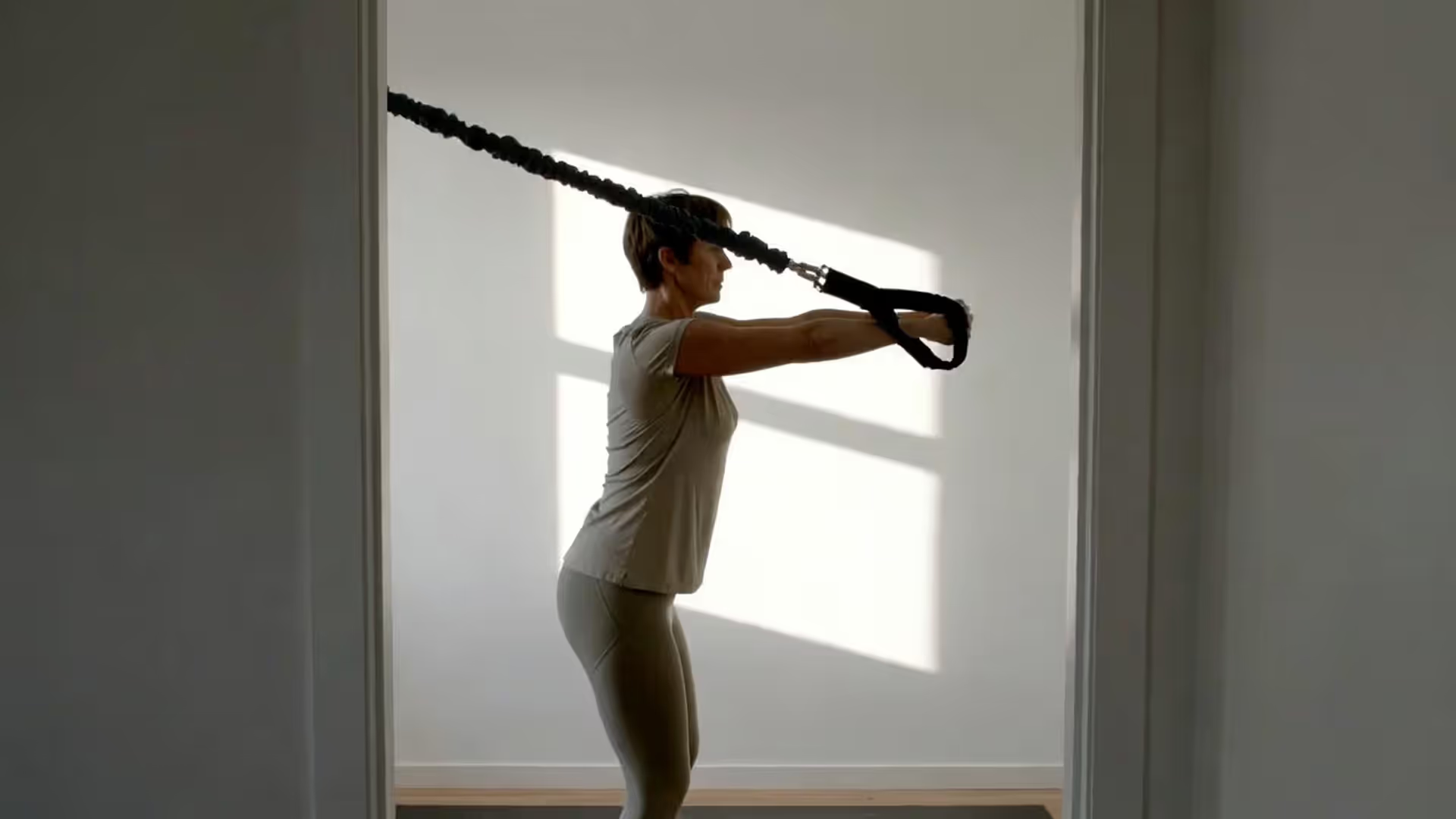
Resistance Band Rows: Secure a resistance band around something immovable at chest height—a locked doorknob behind a closed door works perfectly. Grip both handles and step backward until you create tension. Drive your elbows rearward, pinching your shoulder blades like you're crushing a walnut between them. This develops back musculature without compressing vertebrae. Maintain abdominal tension and avoid letting your lumbar spine hyperextend. Target 12-15 repetitions across 2-3 sets.
Wall Push-Ups: Position yourself roughly an arm's distance from any wall. Plant your hands against it at shoulder width. Lower your chest toward the surface by bending your elbows, then drive back to start. This variation eliminates the wrist and shoulder compression that makes floor versions painful for countless people, yet targets identical muscles. Step your feet farther back to increase difficulty.
Seated Shoulder Press: Settle into a stable chair holding light dumbbells—or 16-ounce water bottles for absolute beginners—at shoulder height. Drive the weights overhead until your arms completely extend, then control them downward slowly. The seated arrangement removes balance complications and shields your lumbar spine. Begin with 3-5 pounds per hand.
Arm Circles: Raise both arms laterally to shoulder height. Create small circular motions moving forward for 30 seconds, then switch directions. Gradually expand the circle diameter. This dynamic approach lubricates shoulder mechanisms and enhances mobility without any equipment investment.
Author: Amanda Reeds;
Source: thelifelongadventures.com
Lower Body Movements
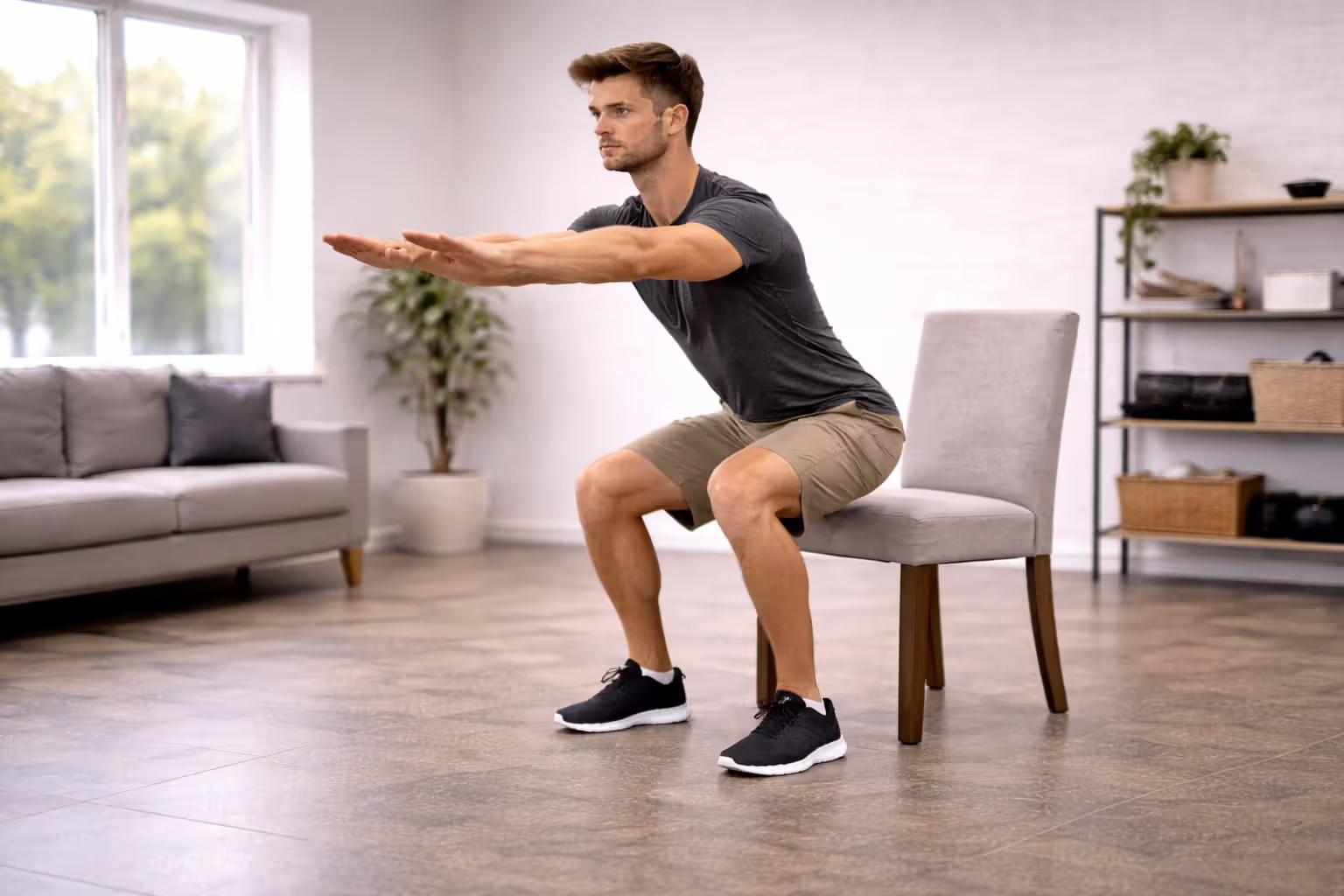
Chair Squats: Stand facing away from a sturdy chair. Descend until your glutes barely make contact with the seat, then drive through your heels back to standing. The chair functions as both a depth marker and safety mechanism while you develop leg power and master proper squat patterns. Maintain heel-weighted pressure and verify your knees travel in line with your toes—internal collapse stresses the joint.
Glute Bridges: Position yourself supine with bent knees and planted feet. Contract your glutes and elevate your pelvis until your torso forms a straight angle from shoulders through knees. Hold two seconds at the top, then descend with control. This knee friendly workout strengthens your posterior chain without forward knee pressure. Target 15-20 repetitions.
Standing Leg Lifts: Grip a countertop for stability. Raise one leg laterally while maintaining forward-facing toes. Lower slowly and deliberately. Alternate legs after 10-12 reps per side. This isolates hip stabilizers crucial for balance and injury avoidance. Keep your torso upright—movement should originate exclusively from the hip joint.
Calf Raises: Stand with feet hip-width, using a counter for stability if necessary. Elevate onto your toes, pause at the peak, then drop your heels below starting position for complete range. Strong calves boost walking efficiency and ankle stability. Execute 15-20 raises.
Full Body Options
Swimming or Water Walking: Water creates 12 times more resistance than air yet supports 90% of your mass when chest-deep. Hydrostatic pressure actually decreases joint inflammation. Lap swimming engages every primary muscle group. Even simple chest-deep walking provides challenging safe cardio routine with absolute zero impact.
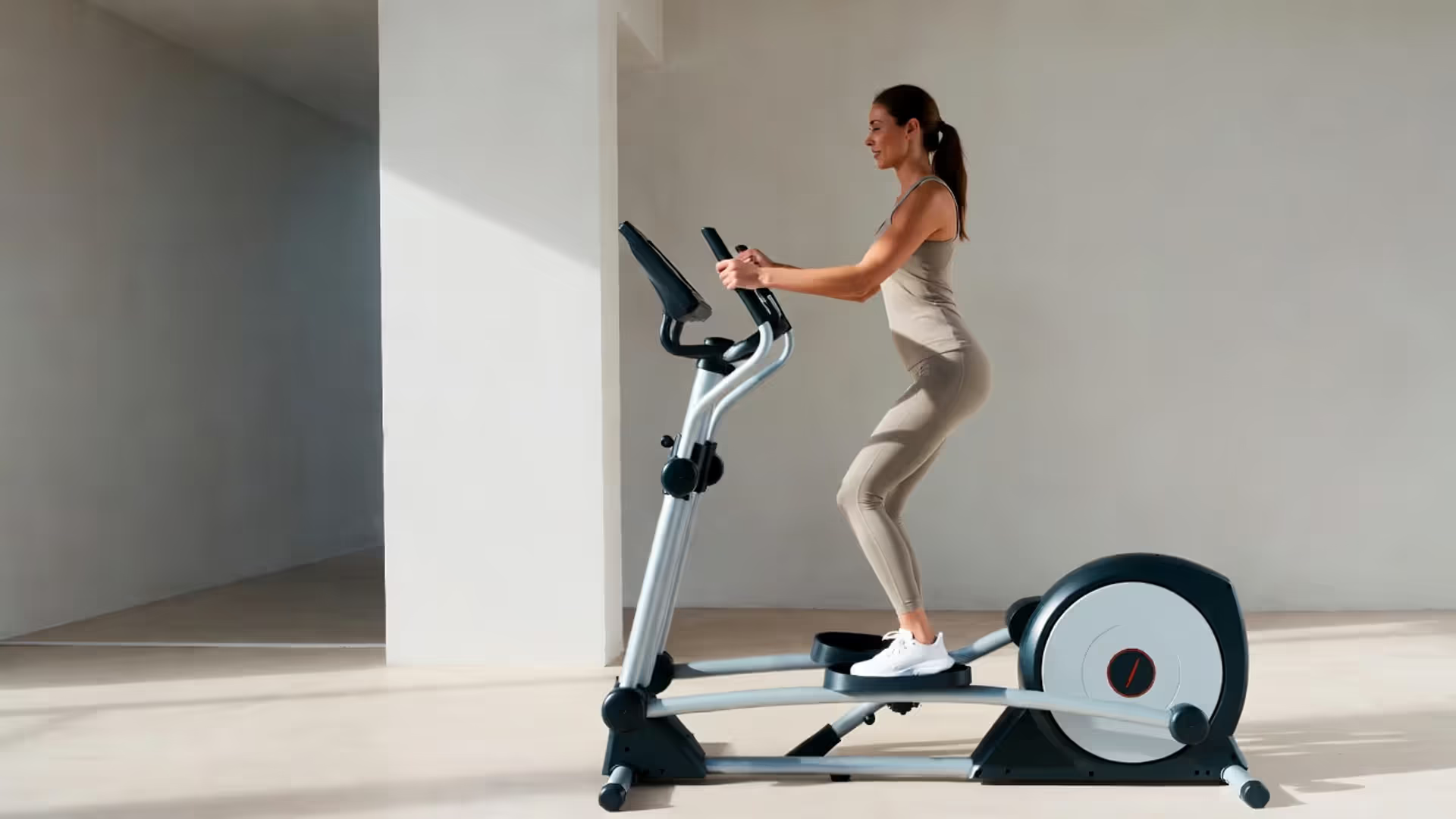
Elliptical Training: These contraptions replicate running biomechanics minus the landing collision. Your feet remain planted on pedals throughout the complete stride. Grab the reciprocating arm handles to recruit your upper body simultaneously. Begin with 10-15 minutes at a conversational pace. The fluid gliding action accommodates people with knee troubles who struggle with treadmill ambulation.
Rowing Machine: Rowing distributes effort across legs, core, and upper body while you stay seated continuously. The sliding seat mechanism eliminates impact entirely. Proper sequence: initiate with leg drive, then lean back marginally, finally draw the handle to your lower ribs. Reverse this pattern returning forward. Start with 5-minute intervals.
Tai Chi: This ancient discipline merges flowing movement sequences with breath regulation and mental concentration. The deliberate, managed motions enhance balance, flexibility, and strength while lowering stress hormones. Research demonstrates Tai Chi reduces fall incidence in older populations and diminishes pain intensity for osteoarthritis patients. Most community centers host beginner sessions.
Exercise Name
Calories Burned (30 min)
Equipment Needed
Best For (joints/conditions)
Difficulty Level
Swimming
180-250
Pool access
Universal joint protection, arthritis, obesity
Beginner-Advanced
Elliptical
150-200
Elliptical machine
Knee troubles, hip concerns, overall fitness
Beginner
Rowing Machine
200-280
Rowing machine
Complete body conditioning, spine-safe positioning
Intermediate
Water Walking
100-150
Pool access
Severe joint conditions, surgical recovery
Beginner
Chair Squats
60-90
Sturdy chair
Knee restrictions, balance challenges
Beginner
Glute Bridges
50-80
Yoga mat (optional)
Lumbar pain, hip weakness
Beginner
Tai Chi
80-120
None
Balance difficulties, stress, arthritis
Beginner
Resistance Band Rows
70-100
Resistance band
Shoulder concerns, posture
Beginner
Cycling (stationary)
140-200
Stationary bike
Knee safeguarding, weight loss
Beginner-Intermediate
Walking (flat surface)
90-130
Comfortable shoes
General wellness, fitness beginners
Beginner
Yoga (gentle)
80-120
Yoga mat
Flexibility, stress, mild discomfort
Beginner
Standing Leg Lifts
40-70
None
Hip stability, balance
Beginner
Building Your First Safe Cardio Routine: A Week-by-Week Plan
Haphazard, inconsistent exercise sessions rarely generate meaningful transformation. Structured advancement develops fitness capacity while controlling injury risk. This beginner low impact workout blueprint assumes you're currently inactive or haven't trained in several months.
Author: Amanda Reeds;
Source: thelifelongadventures.com
Week 1: Establishing Baseline
Prioritize consistency over impressive achievements this week. Select one activity from the previous list—walking accommodates most people. Exercise for 10 minutes daily, or extend to 15 minutes every other day if daily feels overwhelming. Maintain conversational pacing where you can speak complete sentences without gasping. Your perceived effort should register around 3-4 out of 10.
Monitor your body's feedback. Some muscular soreness is expected. Sharp sensations, joint swelling, or discomfort persisting beyond 48 hours signals you exceeded tolerance.
Week 2: Adding Duration
Extend your session length by 5 minutes. Last week's 10-minute daily walks become 15 minutes this week. Maintain that comfortable effort level. Your system's adapting to movement patterns and developing the connective tissue resilience that prevents injuries.
Consider introducing a second activity type on alternating days. Walking Monday, Wednesday, Friday? Add chair squats and resistance band rows on Tuesday and Thursday. This variety prevents overuse injuries while activating different muscle groups.
Week 3: Introducing Intervals
Keep your Week 2 duration, but insert brief intensity surges. During a 15-minute walk, accelerate for 30 seconds every 3-4 minutes, then resume comfortable pace. These bursts stimulate cardiovascular adaptation without sustained stress that creates complications.
For strength movements, insert a second set of each exercise. Previously completing one set of 12 chair squats? Execute two sets this week with 60-second rest intervals between.
Week 4: Consolidating Gains
Target 20-25 minutes of cardiovascular activity most days. Your intensity surges can extend to 45-60 seconds. You should feel challenged without feeling demolished. The "talk test" remains your compass—inability to form brief sentences during harder intervals means you're pushing excessively.
Incorporate a third exercise into your strength routine. A complete beginner session might include chair squats, resistance band rows, and glute bridges—one movement each targeting legs, upper body, and core.
Beyond Week 4
Advance by appending 5 minutes to cardio sessions every 1-2 weeks until reaching 30-45 minutes. Escalate strength training resistance gradually—when 15 reps feel effortless, add weight or select more challenging variations. Most people should strength train 2-3 times weekly with minimum one-day recovery between sessions hitting identical muscle groups.
Track your effort using your personal exertion scale. For steady cardio work, aim for 4-6 out of 10. During intervals, reach 6-7 but never surpass 8. Your breathing should quicken without becoming desperate. You should perspire while maintaining proper technique.
Common Mistakes That Turn Low Impact Workouts Into High Risk
Even joint friendly exercises provoke problems when executed incorrectly. These blunders account for most preventable training injuries.
Doing Too Much, Too Soon: Excitement often trumps wisdom. You feel fantastic during a session, so you double the duration or aggressively increase weight. The consequences manifest 24-48 hours later when inflammation develops. Escalate either volume or intensity by maximum 10% weekly. Your tendons and ligaments adapt more gradually than your cardiovascular system—they demand patient progression.
Ignoring Pain Signals: Discomfort and pain represent different experiences. Discomfort is effort—burning muscles, accelerated heart rate, labored breathing. Pain signals tissue damage—sharp sensations, grinding sounds in joints, stabbing feelings. Halt immediately when pain emerges. Pushing through converts minor problems into serious injuries demanding weeks of recovery.
Skipping Warm-Ups: Cold muscles and rigid joints resist efficient movement. Initiate every session with 5 minutes of gentle activity—marching in place, arm swings, or leisurely walking. This enhances blood flow, elevates tissue temperature, and expands range of motion. Your actual workout becomes safer and more productive.
Poor Form Under Fatigue: Technique crumbles as muscles tire. That's precisely when knees collapse inward during squats, backs round during rows, or shoulders hike upward during presses. These compensation patterns stress joints and connective tissues. Terminate your set when you can't maintain form, regardless of whether you've achieved your target rep count.
Using Momentum Instead of Muscle: Swinging weights or jerking through movements might enable you to lift heavier loads or complete additional reps, but it sabotages the purpose. Controlled motions with lighter resistance build strength more safely than heavier weights hoisted with sloppy technique. Each rep should require 2-3 seconds in both directions.
Neglecting Recovery: Your body improves during rest periods, not during exercise sessions. Workouts create microscopic damage; recovery reconstructs tissues stronger. Training intensely daily without rest produces overtraining syndrome—persistent fatigue, declining performance, elevated injury vulnerability, and mood disturbances. Schedule minimum one complete rest day weekly, and avoid working identical muscle groups on consecutive days.
Wearing Inadequate Footwear: Worn-out shoes with compressed cushioning amplify impact forces. Fashion sneakers lack the support structures required for exercise. Invest in proper athletic shoes engineered for your chosen activity, and replace them every 300-500 miles. For water activities, water shoes prevent slipping and shield feet from abrasive pool surfaces.
Adapting Workouts for Knee Problems and Weight Concerns
Knee discomfort influences exercise selection more than any other joint complication. Your knee operates as a hinge connecting your femur and tibia, with your patella gliding through a groove anteriorly. Misalignment, cartilage damage, or inflammation anywhere in this apparatus produces pain.
Knee Friendly Workout Modifications
Skip deep knee bending if you experience anterior knee pain. Restrict your squat depth to 45 degrees—roughly standard chair height. This diminishes patellar compression while still activating your quadriceps and gluteal muscles.
For posterior knee pain, limit range of motion in the opposite direction. Don't completely straighten your leg during movements like leg extensions. Maintaining slight flexion decreases stress on the joint capsule and surrounding ligaments.
Lateral knee pain frequently stems from IT band tightness or hip weakness. Strengthen your gluteus medius through side-lying leg raises and clamshell exercises. Foam roll your IT band and outer thigh. Verify your knees track over your toes during all movements—inward collapse stresses lateral structures.
Weight-Bearing vs. Non-Weight-Bearing Options
When carrying considerable extra weight, even reduced-impact activities can stress joints. Water-based exercises for overweight beginners provide the optimal starting point. Lap swimming, water aerobics, and pool ambulation deliver excellent cardiovascular training with minimal joint stress. Buoyancy diminishes effective body weight by 50-90% depending on immersion depth.
Seated exercises eliminate lower body weight-bearing completely. Stationary cycling, rowing machines, and chair-based strength training permit fitness development while joints adapt. As weight decreases and strength increases, gradually introduce standing activities.
Recumbent bikes offer lumbar support and distribute weight across larger seat surfaces than upright bikes. The semi-reclined position reduces hip flexor tightness common among people with extensive sitting habits. Initiate with 10-15 minute sessions and progress slowly.
Equipment That Helps
Knee sleeves provide compression and warmth, diminishing discomfort during exercise. They're not a substitute for proper technique or medical intervention, but they can make movement more tolerable. Choose sleeves that fit snugly without restricting circulation.
Trekking poles transform walking into upper-body engagement while reducing knee impact by 20-30%. The poles assist with balance and enable arm-driven propulsion, decreasing leg stress. They're particularly valuable on inclines or uneven terrain.
Cushioned exercise mats protect knees during floor exercises. Standard yoga mats often aren't thick enough for people with knee sensitivity. Seek mats at least 0.5 inches thick, or stack two standard mats.
Equipment Worth Buying vs. Free Alternatives
Fitness marketing manufactures artificial requirements. Most beginners squander money on unused equipment. Here's what actually delivers value versus what you can bypass.
Equipment Type
Average Cost
Free Alternative
Effectiveness Rating
Best Use Case
Resistance Bands
$15-30
Water bottles filled with sand, body weight
9/10
Home strength training, travel workouts
Yoga Mat
$20-60
Thick towel on carpeting
7/10
Floor exercises, stretching, yoga practice
Dumbbells (set)
$50-150
Soup cans, milk jugs filled with sand
8/10
Developing progressive strength
Stability Ball
$15-35
Regular chair or floor
6/10
Core engagement, balance training
Foam Roller
$15-40
Tennis ball, wooden rolling pin
7/10
Muscle recovery, releasing tight IT bands
Jump Rope
$10-25
High knees in place
5/10
Skip for low impact objectives
Pedometer/Fitness Tracker
$25-300
Free phone applications
6/10
Activity tracking, maintaining motivation
Workout Bench
$80-200
Sturdy chair, stair step
5/10
Advanced strength exercises
Suspension Trainer
$30-200
Resistance bands
7/10
Bodyweight strength work
Stationary Bike
$200-2000
Outdoor cycling, walking
9/10
Home cardiovascular training, knee-safe conditioning
Starting From Zero
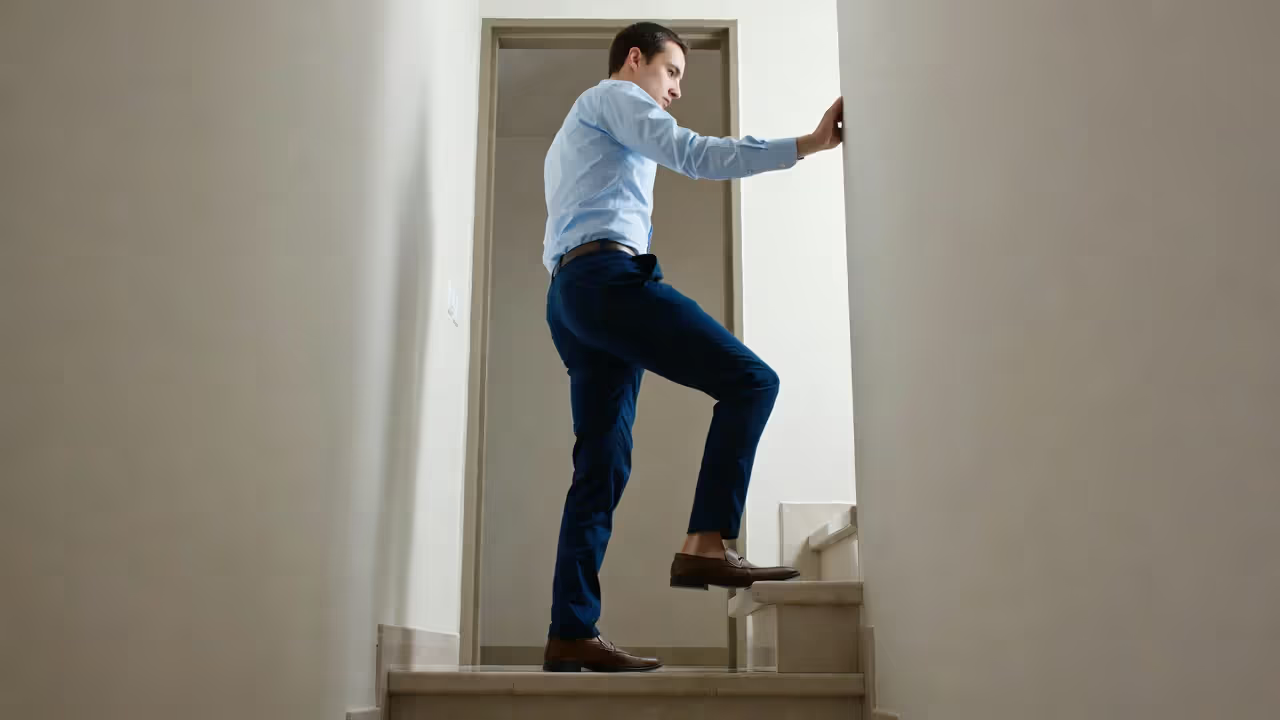
Don't purchase anything initially. Utilize your body weight, household items, and outdoor spaces. Quality athletic shoes ($60-120) represent your sole essential purchase at first. Walk, execute chair exercises, and use stairs or curbs for step-ups.
Start where you are. Use what you have. Do what you can.
— Arthur Ashe
Following 4-6 weeks of consistent training, consider resistance bands. They're budget-friendly, portable, and versatile. A set with multiple resistance levels costs $20-30 and enables dozens of exercise variations.
If you execute floor-based work regularly and hard surfaces hurt, purchase a quality exercise mat. Spending $40-60 on a thick, non-slip mat makes sense if you'll use it multiple times weekly.
Dumbbells become worthwhile when bodyweight exercises feel too simple. Start with one pair of light weights (5-10 pounds for most women, 10-20 pounds for most men). You can always purchase heavier weights later. Adjustable dumbbells conserve space and money long-term but cost more upfront ($150-300 for quality sets).
Equipment to Skip
Ab-specific contraptions rarely outperform basic planks and crunches. Vibrating platforms, electric muscle stimulators, and other passive devices don't replace actual exercise. Expensive cardio machines only justify their cost if you'll use them 3+ times weekly for years—otherwise, gym access or outdoor activity proves more economical.
Wearable fitness trackers motivate some people but aren't necessary for results. Free phone apps count steps and track workouts adequately. Conserve the $100-300 unless you specifically want the extra features.
Frequently Asked Questions About Low Impact Exercise
Can low impact workouts actually help me lose weight?
Absolutely, though weight loss hinges far more on your calorie deficit than exercise intensity. A 180-pound person burns roughly 150-200 calories during 30 minutes of moderate elliptical work or brisk walking. That equals one large apple or a tablespoon of peanut butter. You can't out-exercise a terrible diet.
Low impact exercise contributes to weight loss by increasing your total daily calorie expenditure, preserving muscle tissue during calorie restriction, and improving insulin sensitivity. The sustainability factor matters most—you'll maintain a walking routine far longer than a brutal running program that causes injuries. Consistency over months and years drives genuine results.
Combine your exercise program with a moderate calorie deficit (300-500 calories below maintenance) for sustainable fat loss of 0.5-1 pound weekly. More aggressive weight loss accelerates muscle loss and increases rebound probability.
How long should I do low impact cardio to see results?
Cardiovascular improvements manifest within 2-3 weeks of consistent training. Stairs feel easier. Your resting heart rate drops. Visible body composition changes require 6-8 weeks, assuming you're also managing your food intake.
For general health maintenance, target 150 minutes of moderate-intensity cardio weekly—that's 30 minutes five days per week or 50 minutes three times weekly. This recommendation comes from the American Heart Association and reduces heart disease risk, improves mental health, and helps maintain healthy weight.
For weight loss objectives, increase to 200-300 minutes weekly combined with dietary modifications. Break this into manageable chunks—two 25-minute sessions daily totals 350 minutes weekly. Quality beats quantity; 150 minutes of focused effort beats 300 minutes of distracted, minimal-effort movement.
Are low impact workouts suitable if I have arthritis?
Definitely. Exercise ranks among the most potent arthritis treatments available. Movement lubricates joint surfaces, strengthens supporting muscles, and reduces pain and stiffness. Inactivity worsens arthritis by allowing muscle weakening and joint stiffening.
Select activities that don't aggravate your specific affected joints. Water exercise works exceptionally well for arthritis because buoyancy reduces joint stress while water resistance strengthens muscles. Pedaling maintains knee motion through full range without impact forces. Tai Chi improves balance and reduces fall risk while gently mobilizing joints.
Skip exercise during acute inflammatory flare-ups when joints appear hot, swollen, and hurt intensely. During these periods, focus on gentle range-of-motion movements rather than strengthening or cardio. Once inflammation subsides, gradually return to your established routine. Collaborate with your rheumatologist or physical therapist to create an appropriate program.
Some discomfort at exercise start is normal and typically decreases as you warm up. Pain that worsens during activity or persists for hours afterward indicates you've exceeded your current tolerance. Reduce intensity, duration, or choose a different activity.
What's the difference between low impact and low intensity?
Impact describes force transmitted to your joints; intensity measures how hard your cardiovascular and respiratory systems work. These concepts operate independently.
Low impact means reduced joint stress—think walking, water aerobics, or pedaling. High impact involves jumping and running where both feet leave the ground simultaneously. Low intensity means easy effort where conversation flows without breathlessness. High intensity leaves you gasping and unable to speak complete sentences.
You can combine these factors four ways: Low impact/low intensity (leisurely strolling), low impact/high intensity (fast cycling or swimming sprints), high impact/low intensity (slow jogging), and high impact/high intensity (sprinting or box jumps).
For joint protection plus cardiovascular benefits, select low impact/moderate-to-high intensity options. Swimming intervals or cycling at challenging pace deliver excellent fitness improvements without joint damage. You don't need jumping or running to elevate your heart rate significantly.
Can I do low impact workouts every day?
Yes, with appropriate variety. Your body tolerates low impact activities better than high impact movements because recovery demands are lower. Many people walk daily without complications. Swimming, cycling, or using an elliptical daily works fine if you vary intensity and duration.
The trick involves avoiding repetitive stress injuries. Executing the exact same workout at identical intensity every single day can cause overuse problems even with low impact activities. Rotate between different exercises, vary your intensity (alternate hard days and easy days), and include at least one complete rest day or active recovery day (very gentle movement) weekly.
Listen to your body. Persistent fatigue, declining performance, sleep problems, or lingering soreness indicate you need more recovery. Strength training demands more recovery than cardio—train the same muscle groups no more than 2-3 times weekly with rest days in between.
Do I need a gym membership for effective low impact exercise?
No. Walking costs nothing beyond quality shoes. Bodyweight exercises, resistance band workouts, and online yoga or Tai Chi videos provide complete training programs at home. Parks, trails, and school tracks offer free outdoor exercise spaces.
Gyms provide specific advantages: climate control, equipment variety, class offerings, and social motivation. If you'll actually use these features regularly, membership justifies the cost ($20-80 monthly). Many people pay for memberships they rarely use—evaluate your actual habits honestly before committing.
Community centers, YMCAs, and municipal pools often cost less than commercial gyms while offering pools, classes, and basic equipment. Some health insurance plans reimburse gym memberships or provide discounted access. Senior centers frequently offer free or low-cost exercise programs for older populations.
Trial periods help you assess whether you'll genuinely use a facility. Most gyms offer free day passes or week-long trials. Visit during times you'd normally work out to check crowding and equipment availability.
Low impact workouts eliminate the obstacles that keep people inactive. They demonstrate that productive exercise doesn't demand suffering, that you can develop fitness while respecting your body's current limitations, and that sustainable habits outweigh impressive intensity. Begin with activities that feel comfortable, advance gradually using structured plans, and prioritize consistency above everything else. Your joints—and your future self—will thank you.
Every person confidently loading plates once stood exactly where you are — confused and uncertain. This guide bridges that gap with seven fundamental lifting techniques, a complete 8-week plan progressing from foundation to overload, essential gear vs. marketing waste, how to pick starting weights, five mistakes that destroy beginner progress, and tracking methods that reveal real gains the scale
Research shows eight weeks of band training produces strength gains statistically identical to free weights — yet bands cost $30-50 total with zero commute. This guide covers how variable resistance builds muscle, a band selection table by type and tension, 12 essential exercises with form cues, three structured plans for beginners through fat loss, progression tactics without traditional weights,
Each inch your head drifts forward adds ten pounds of stress to your neck — and "sit up straight" exhausts you in fifteen minutes. This guide delivers a 5-minute desk routine you can do seated, a complete back strengthening workout hitting every muscle that holds you upright, an 8-week progressive schedule, common form mistakes that make posture worse, and tracking methods that prove your progress
Your PRs stalled, sleep feels useless, and you're snapping at coworkers — these aren't character flaws, they're overtraining red flags. This guide covers 12 physical and mental warning signs from elevated resting heart rate to hormonal disruption, who's most at risk, a science-backed recovery protocol for the first critical weeks, training load monitoring tools including HRV tracking, and the prev
The content on this website is provided for general informational and educational purposes related to health, yoga, fitness, and overall wellness. It is not intended to replace professional medical advice, diagnosis, or treatment.
All information, workout suggestions, yoga practices, nutrition tips, and wellness guidance shared on this site are for general reference only. Individual health conditions, fitness levels, and medical needs vary, and results may differ from person to person. Always consult a qualified healthcare provider before starting any new exercise program, dietary plan, or wellness routine.
We are not responsible for any errors or omissions, or for any outcomes resulting from the use of information presented on this website. Your health and fitness decisions should always be made in consultation with appropriate medical and fitness professionals.