You squat down to pick up a toddler. You twist to grab groceries from the back seat. You push a stalled car in a parking lot. None of these movements happen on a leg extension machine or while lying on a bench press. They require coordination, balance, and the ability to move through multiple planes of motion simultaneously.
That's the foundation of functional fitness training—a method that prioritizes how your body actually moves outside the gym. Instead of isolating your biceps or training chest and triceps on Monday, you learn to master movement patterns that translate directly to real-world tasks. Whether you're an athlete looking to improve performance or someone who wants to carry groceries without tweaking your back, this approach reshapes how you think about strength.
What Makes Functional Fitness Different from Traditional Strength Training
Traditional gym programs often follow a bodybuilding blueprint: chest day, back day, leg day. You sit on machines designed to isolate specific muscles, moving through a fixed range of motion. This approach builds muscle mass and can increase strength in that particular movement, but it doesn't teach your body how to coordinate multiple muscle groups during dynamic, unpredictable activities.
Functional fitness training flips this model. Instead of asking "which muscle am I working?", you ask "which movement am I training?" Your body doesn't think in terms of individual muscles—it thinks in patterns. When you lift a heavy box, your brain doesn't activate your quadriceps, then your glutes, then your core in sequence. It fires them together as a coordinated system.
This training philosophy emerged from physical therapy and athletic performance fields. Therapists noticed that patients who could leg press 200 pounds still struggled to climb stairs without pain. Strength coaches observed that athletes with impressive bench press numbers couldn't generate power when pushing opponents on the field. The missing link was training movements, not muscles.
The body will do what the mind believes.
— Jim Afremow
Machine-based training offers stability and isolation, which has value for rehabilitation or targeted muscle growth. But machines also eliminate the need for stabilization—your core doesn't have to work to keep you balanced, and smaller stabilizer muscles stay dormant. Free weights and bodyweight exercises force your body to control the movement in three-dimensional space, engaging the nervous system in ways that machines can't replicate.
The practical difference shows up quickly. Someone who can barbell squat 300 pounds might still lose balance when picking up an awkwardly shaped object from the floor. Someone trained in functional movement patterns learns to hinge at the hips, brace their core, and adjust their stance based on the object's weight distribution—skills that prevent injury and build usable strength.
Author: Logan Brooks;
Source: thelifelongadventures.com
The 7 Core Movement Patterns You Need to Master
Every human movement can be broken down into seven fundamental patterns. Master these, and you've built a foundation for nearly any physical task you'll encounter. These aren't exercises—they're categories of movement that dozens of exercises can train.
Squat: Any movement where you lower your hips while keeping your torso relatively upright. You squat when sitting in a chair, picking something up from a low shelf, or playing with kids on the floor. This pattern requires ankle mobility, hip flexibility, and core stability to maintain an upright spine.
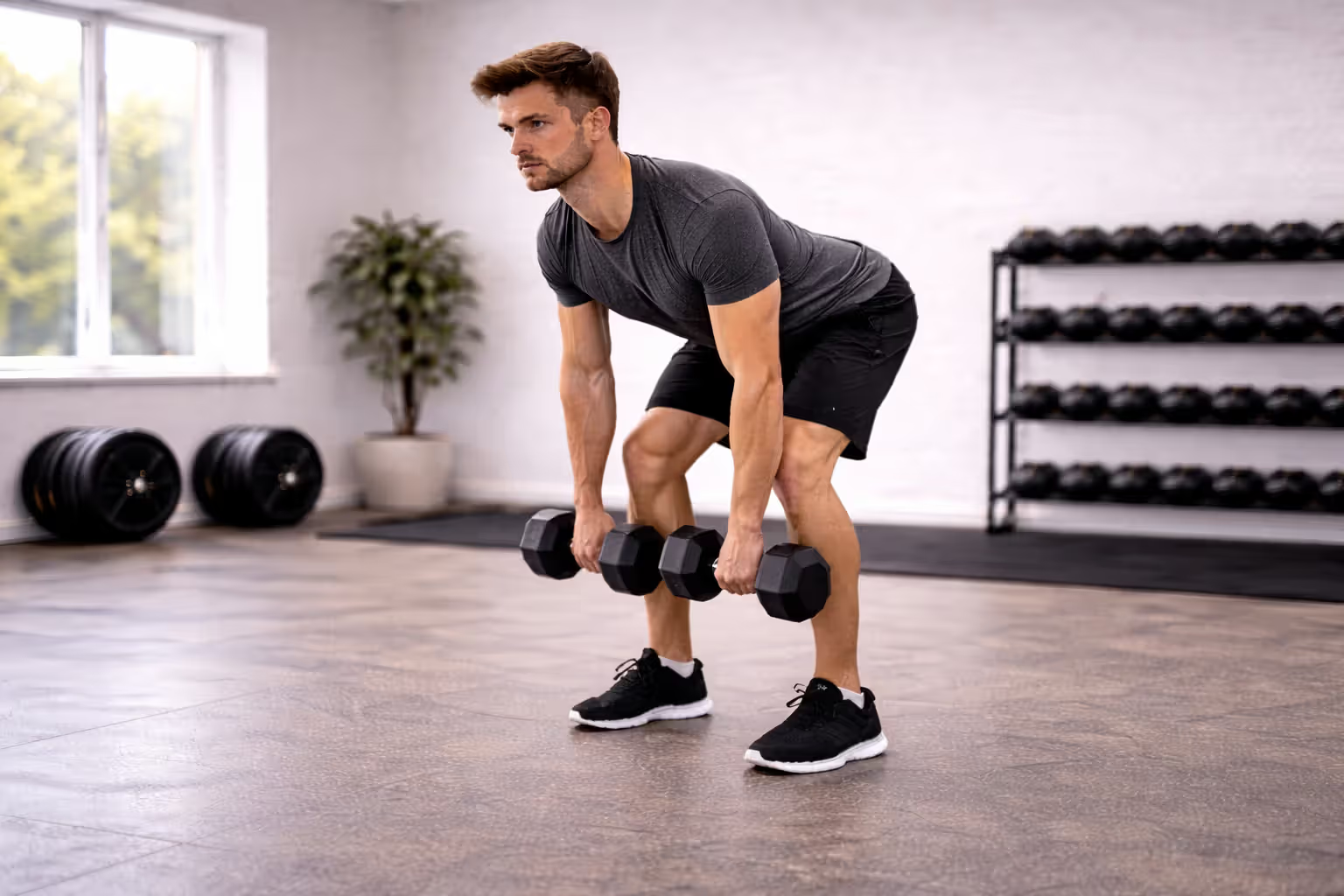
Hinge: A hip-dominant movement where you push your hips back while maintaining a neutral spine. You hinge when picking up heavy objects from the ground, bending to tie your shoes, or loading luggage into an overhead compartment. Poor hinging mechanics cause most lower back injuries.
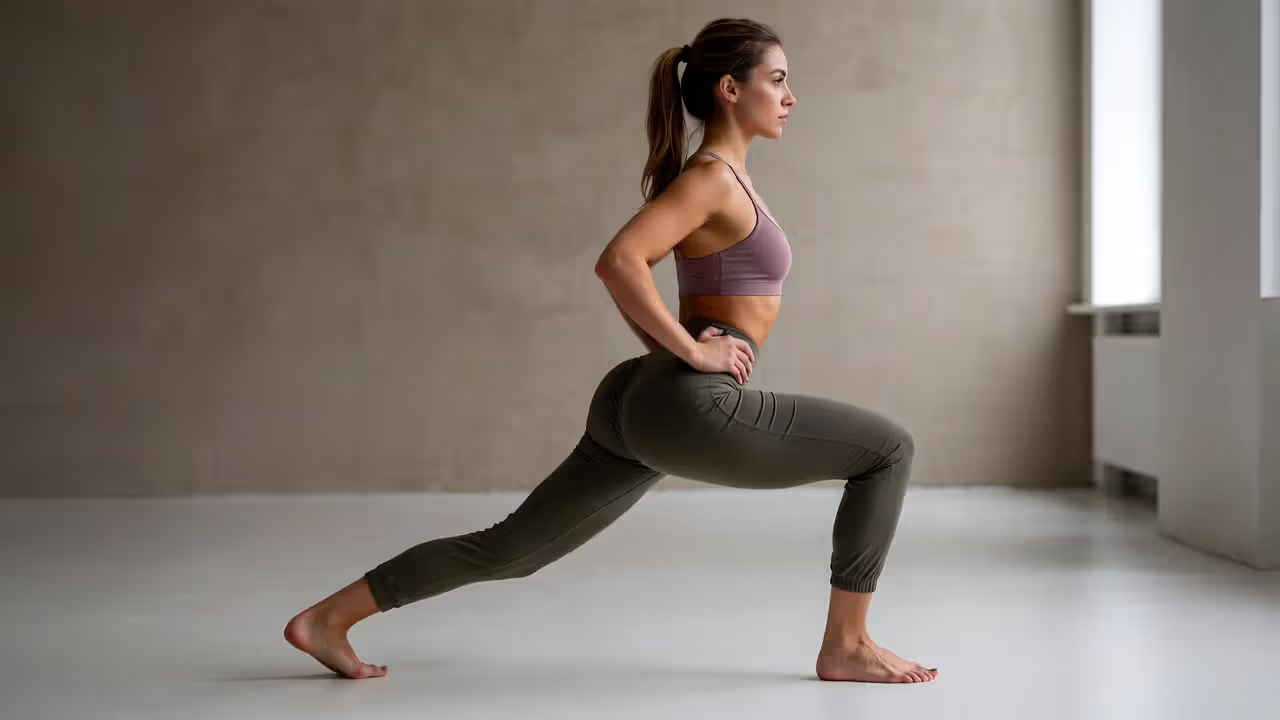
Lunge: Any single-leg movement where you step forward, backward, or laterally while lowering your body. You lunge when climbing stairs, stepping over obstacles, or catching yourself from a trip. This pattern challenges balance and reveals strength imbalances between legs.
Push: Pressing movements that move resistance away from your body. You push when opening a heavy door, moving furniture, or getting up from the ground. This pattern includes both horizontal pushes (like a push-up) and vertical pushes (like an overhead press).
Pull: Drawing movements that bring resistance toward your body. You pull when opening a car door, starting a lawnmower, or climbing. Like pushing, pulling happens both horizontally (rowing motions) and vertically (pull-ups, pulling yourself up from the ground).
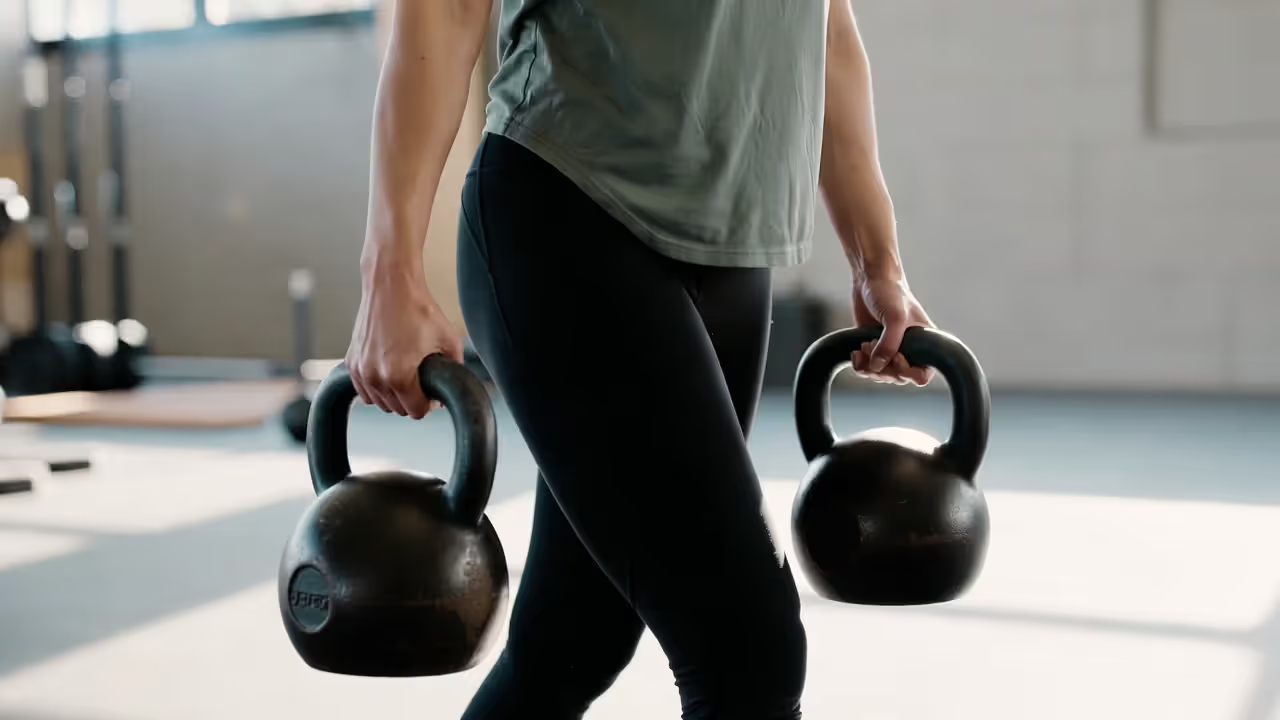
Carry: Supporting and transporting load while maintaining posture and moving. You carry when hauling groceries, moving boxes, or holding a child. This pattern trains grip strength, core stability, and the ability to maintain position under sustained load.
Rotation: Twisting movements that involve your torso turning while your hips remain stable, or vice versa. You rotate when swinging a golf club, throwing a ball, or reaching across your body to grab something. Most daily activities involve some rotational component, yet traditional training often neglects this pattern entirely.
Author: Logan Brooks;
Source: thelifelongadventures.com
Upper Body Patterns: Push, Pull, and Carry
Upper body functional movement exercises train your ability to interact with your environment. Pushing develops the chest, shoulders, and triceps through movements like push-ups, overhead presses, and landmine presses. The key distinction from traditional training is that functional pushing requires core stability—you're not lying on a bench with your back supported.
A proper push-up trains your body to maintain a rigid plank position while moving your arms. Your core fights rotation, your glutes keep your hips level, and your shoulders stabilize throughout the range of motion. That's why someone who can bench press 225 pounds might struggle with 20 push-ups—the stabilization demand is completely different.
Pulling balances pushing and builds the back, biceps, and grip. Rows, pull-ups, and carries with one arm all train pulling mechanics. Most people are push-dominant from daily activities (typing, driving, reaching forward), which creates postural imbalances. Functional training typically includes twice as much pulling volume as pushing to correct this.
Carries might seem simple, but they're among the most effective functional movement exercises. Farmer carries (weight in each hand), suitcase carries (weight in one hand), and overhead carries (weight held above head) all challenge your body to maintain position under load while moving. A farmer carry with heavy kettlebells for 40 yards will humble most people regardless of their gym strength.
Lower Body Patterns: Squat, Hinge, and Lunge
Lower body patterns generate power and build the foundation for athletic movement. Squatting trains your quads, glutes, and core while improving ankle and hip mobility. Goblet squats, front squats, and pistol squats all train this pattern with different loading strategies.
Most people squat poorly because they've lost ankle mobility from wearing shoes with elevated heels. Your ankle needs to flex forward (dorsiflexion) to keep your torso upright during a squat. Limited ankle mobility forces your torso to lean forward or your heels to lift, both of which compromise the movement. Functional training addresses these limitations rather than working around them with machines.
Author: Logan Brooks;
Source: thelifelongadventures.com
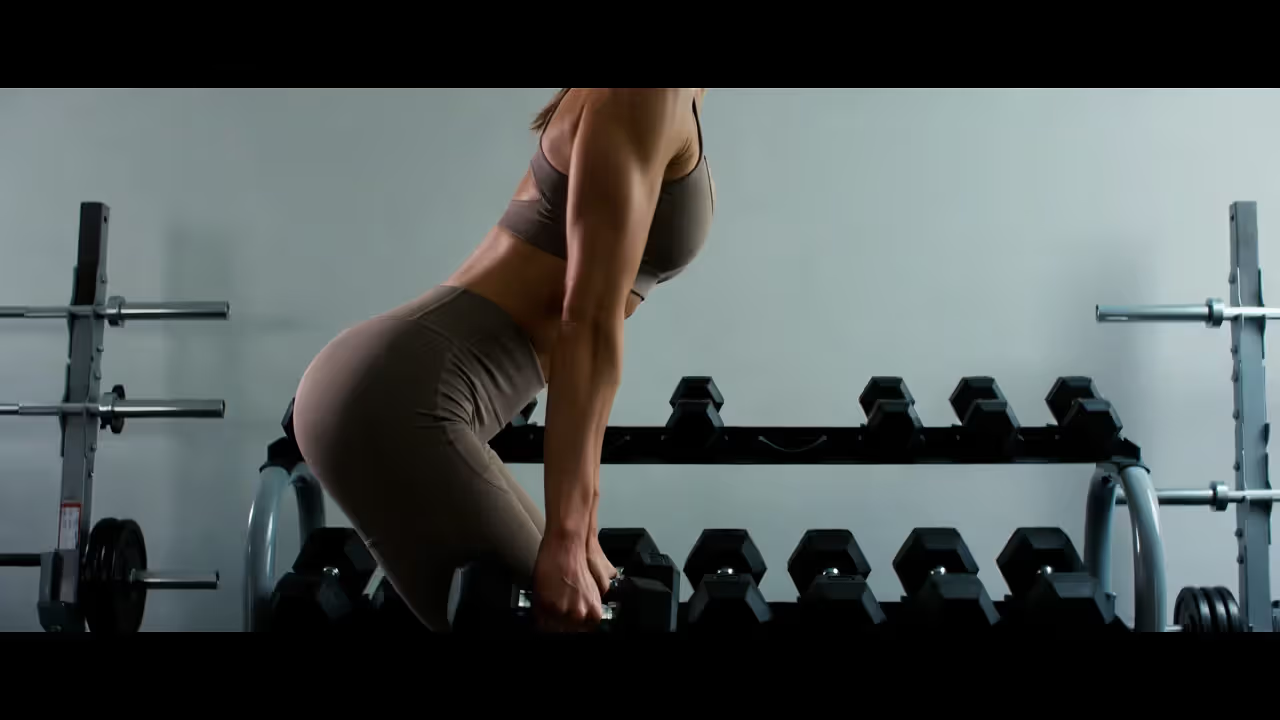
Hinging is the most important pattern for injury prevention. Deadlifts, Romanian deadlifts, and kettlebell swings all train the hip hinge. The critical skill is learning to move from your hips while keeping your spine neutral—no rounding your lower back or hyperextending at the top.
A good cue: imagine closing a car door with your butt. Your hips push backward while your torso hinges forward to counterbalance. Your spine stays in the same position throughout the movement. This mechanics protects your lower back whether you're deadlifting 400 pounds or picking up a pencil.
Lunges build single-leg strength and expose weaknesses. If one leg is significantly weaker, you'll notice immediately during split squats or walking lunges. This pattern also trains the stabilizers around your knee and ankle, which prevents common injuries. Reverse lunges are easier on the knees than forward lunges, making them a better starting point for beginners.
How to Build Your First Functional Workout Plan
A functional workout plan balances all seven movement patterns across a week while allowing adequate recovery. Most people train 3-4 days per week, though athletes might train 5-6 days with carefully managed intensity.
Start by categorizing workout days as either lower-body dominant or upper-body dominant, with core and carries included in both. A simple three-day split might look like:
Day 1: Lower Body + Push - Squat variation (goblet squat, front squat) - Hinge variation (deadlift, Romanian deadlift) - Horizontal push (push-up variation) - Carry (farmer carry)
Day 3: Full Body + Conditioning - Lunge variation (reverse lunge, Bulgarian split squat) - Hinge (kettlebell swing) - Push-pull superset (push-up + row) - Loaded carry variation (suitcase carry, overhead carry)
Each session should take 45-60 minutes including warm-up. Your warm-up isn't optional—spend 10 minutes on mobility work that addresses your specific limitations. If your ankles are stiff, do ankle mobility drills. If your hips are tight, work on hip flexor stretches and 90/90 stretches.
Progressive overload still applies, but you have more variables to manipulate than just weight. You can increase load, add repetitions, slow down the tempo, reduce rest periods, or progress to a more challenging variation. A goblet squat becomes a front squat becomes a pistol squat—each progression increases difficulty without necessarily adding weight.
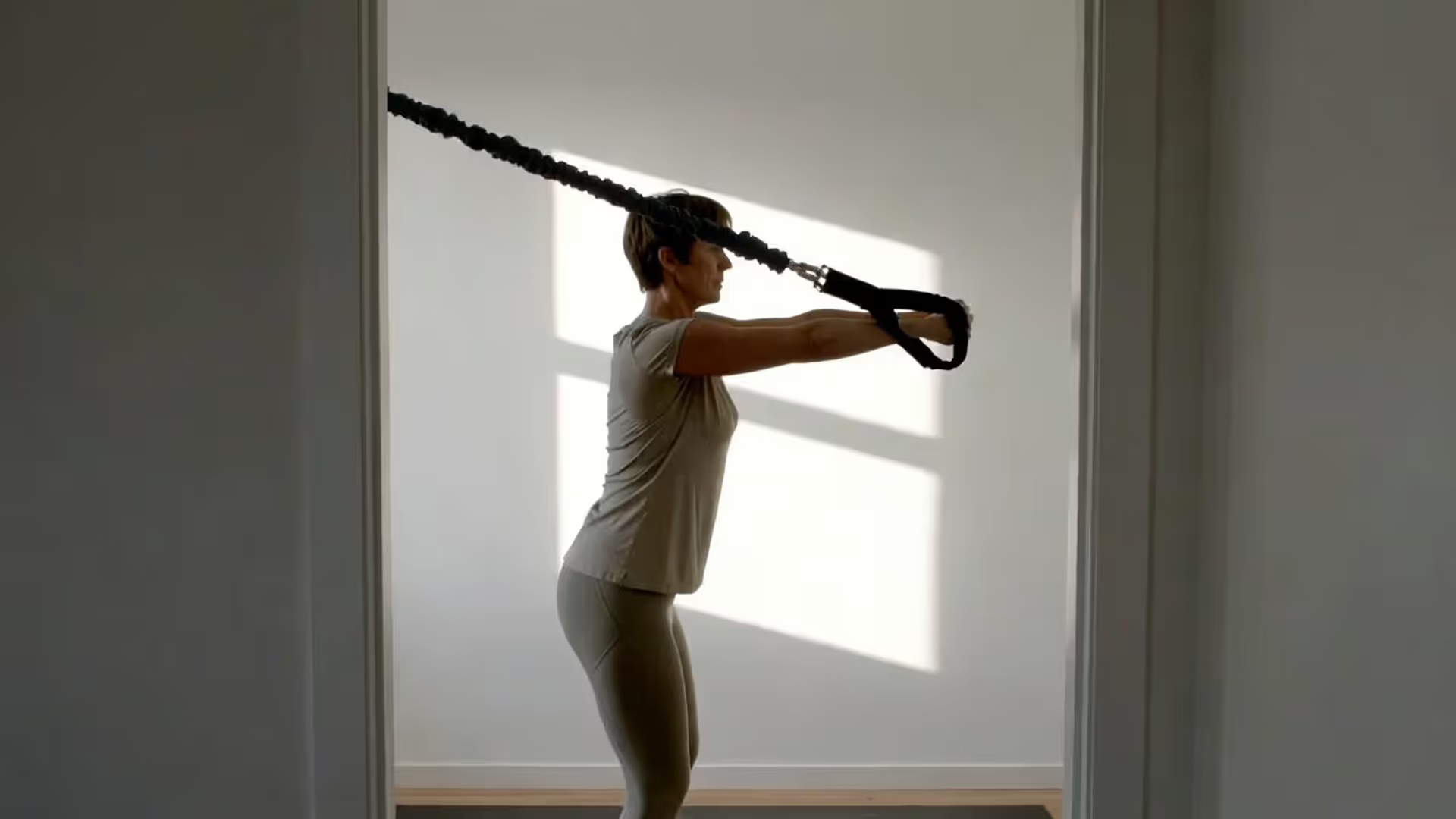
Equipment needs are minimal. A pair of kettlebells or dumbbells, a pull-up bar, and some space is enough for months of training. Resistance bands add variety for warm-ups and assistance work. A suspension trainer (TRX) opens up dozens of exercise variations. You don't need a full commercial gym—many people build exceptional everyday strength workout routines at home.
Frequency depends on your recovery capacity and life stress. Three days per week with a day of rest between sessions works for most people. Four days allows more volume spread across the week. Training the same movement patterns on consecutive days usually leads to poor performance and increased injury risk.
12 Essential Functional Movement Exercises by Skill Level
Beginner Level:
Goblet Squat: Hold a kettlebell or dumbbell at chest height and squat. The front-loaded weight helps you maintain an upright torso and provides a counterbalance. Most people can perform a better squat while holding weight in front than with an empty barbell on their back.
Romanian Deadlift: Start standing with dumbbells in front of your thighs. Push your hips back while maintaining a slight knee bend and neutral spine. Feel the stretch in your hamstrings, then drive your hips forward to return to standing. This teaches the hip hinge without the complexity of lifting from the floor.
Push-Up from Knees or Elevated Surface: Standard push-ups are too difficult for many beginners. Elevating your hands on a bench or performing push-ups from your knees reduces the load while maintaining proper mechanics.
Inverted Row: Set a bar at waist height (or use suspension straps). Lie underneath and pull your chest to the bar while keeping your body rigid. This trains pulling mechanics and builds the strength needed for pull-ups.
Intermediate Level:
Front Squat: Hold a barbell across your shoulders in the front rack position. This variation demands more core stability and mobility than a back squat. Your torso must stay upright or the bar rolls forward.
Conventional Deadlift: The king of hinges. Start with the bar over mid-foot, grip just outside your legs, and drive through your heels while keeping the bar close to your body. This movement trains nearly every muscle and reveals any weak links in your chain.
Single-Arm Dumbbell Press: Press one dumbbell overhead while holding another at your side. Your core must resist rotation while your shoulder presses. This trains stability and strength simultaneously.
Pull-Up: The ultimate bodyweight pull. If you can't do one yet, use a band for assistance or perform negative pull-ups (jump to the top position, lower slowly). Pull-ups build back strength and grip like nothing else.
Advanced Level:
Pistol Squat: A single-leg squat to full depth with the non-working leg extended in front. This movement requires mobility, balance, and significant strength. Most people need months or years to build up to a clean pistol squat.
Single-Leg Romanian Deadlift: Hinge on one leg while extending the other leg behind you for balance. This challenges hip stability and reveals any imbalances between sides.
Handstand Push-Up: An inverted vertical push performed against a wall. This requires shoulder strength, core stability, and body awareness. Progress by elevating your feet on a box and gradually increasing the angle.
Weighted Carry Variations: Once you can farmer carry heavy loads, progress to uneven carries (different weights in each hand), overhead carries, or waiter carries (one arm overhead, one at side). These variations increase the stabilization demand dramatically.
Common Mistakes That Limit Your Functional Training Results
The biggest mistake is confusing complexity with functionality. Standing on a BOSU ball while doing bicep curls doesn't make the exercise more functional—it just makes it unstable in a way that doesn't transfer to real life. True functional movement exercises challenge your body in ways that mirror actual demands you'll face.
Neglecting mobility work undermines everything else. You can't squat properly if your ankles don't flex. You can't hinge correctly if your hamstrings are tight. You can't overhead press safely if your shoulders are immobile. Spend the first 10 minutes of every session on targeted mobility work for your limitations.
Skipping foundational patterns to jump to advanced variations is a recipe for injury. You need to master a bodyweight squat before adding load. You should be able to perform a proper hip hinge with a PVC pipe before attempting heavy deadlifts. Build the movement pattern first, then add resistance.
Strength does not come from physical capacity. It comes from an indomitable will.
— Mahatma Gandhi
Poor progression strategy stalls results. Adding weight every session works for beginners but quickly becomes unsustainable. Sometimes you need to increase repetitions. Sometimes you need to slow down the tempo or reduce rest periods. Sometimes you need to progress to a harder variation at a lighter weight. Have multiple progression strategies available.
Ignoring recovery, particularly for athletes training intensely, leads to overtraining and injury. Functional fitness training can be demanding on your nervous system and connective tissues. If you're constantly sore, sleeping poorly, or seeing performance decline, you're not recovering adequately. More training isn't always better.
Neglecting unilateral work allows imbalances to persist. If your right leg is stronger than your left, bilateral exercises (squats, deadlifts) will allow the strong side to compensate. Single-leg and single-arm variations force each side to carry its own weight, exposing and correcting imbalances.
Author: Logan Brooks;
Source: thelifelongadventures.com
Functional Fitness vs. CrossFit vs. HIIT: Which Approach Fits Your Goals
These three training methodologies overlap but differ in philosophy, intensity, and goals. Understanding the distinctions helps you choose the right approach for your situation.
Category
Functional Fitness
CrossFit
HIIT
Training Focus
Movement pattern mastery, real-world strength, injury prevention
Variable (can be bodyweight-only or use various equipment)
Intensity Level
Moderate to high, emphasis on quality movement
Very high, competition-focused, often to failure
Very high during intervals, structured rest periods
Best For
Building usable strength, improving daily function, longevity
Athletes seeking competition, those who thrive in group settings, improving work capacity
Fat loss, cardiovascular fitness, people with limited time
Injury Risk Factors
Low when properly progressed; focuses on movement quality
Moderate to high; high volume and intensity can compromise form
Moderate; repetitive high-intensity work can cause overuse injuries
Functional fitness prioritizes movement quality over intensity. Sessions are challenging but not exhausting. You leave feeling worked but not destroyed. This approach suits people who want to build strength that serves their life and activities without the recovery demands of high-intensity training.
CrossFit incorporates functional movements but adds competitive elements, Olympic lifting, and workouts designed to push you to your limits. The community aspect and competitive nature motivate many people, but the high intensity and volume require careful management to avoid overtraining. Athletic fitness training at this level demands attention to recovery, nutrition, and injury prevention.
HIIT focuses on cardiovascular conditioning and calorie burn through short bursts of maximum effort followed by rest. While effective for fat loss and conditioning, HIIT doesn't emphasize movement quality or strength development the way functional training does. Many HIIT workouts use functional exercises (burpees, kettlebell swings) but perform them at a pace that can compromise form.
You can combine approaches strategically. A base of functional fitness training three days per week can be supplemented with one HIIT session for conditioning. Some people follow functional training programs most of the year and incorporate CrossFit-style workouts occasionally for variety. The key is ensuring one approach doesn't undermine the others—if your HIIT session leaves you too fatigued to maintain good form in your functional training, you're doing too much.
FAQ: Your Functional Fitness Questions Answered
Do I need special equipment for functional fitness training?
No. You can build an effective everyday strength workout with minimal equipment. A pair of medium-weight kettlebells or dumbbells (25-35 pounds for most women, 35-50 pounds for most men to start), a pull-up bar, and space to move covers most needs. Resistance bands add variety for warm-ups and assistance work. Many people train effectively for years with just these basics. As you advance, you might add heavier weights, a barbell, or specialty items like a suspension trainer, but these aren't required to see significant results.
How long before I see results from functional movement exercises?
Movement quality improves within 2-3 weeks as your nervous system adapts. You'll notice better balance, coordination, and control. Strength gains become noticeable around week 4-6 for beginners. Visible changes in body composition typically take 8-12 weeks with consistent training and proper nutrition. But the most meaningful results—carrying groceries without strain, playing with kids without getting winded, moving through daily activities with ease—often show up within the first month. These functional improvements matter more than how you look in the mirror.
Can beginners start functional fitness, or do I need a base level of strength?
Beginners are ideal candidates for functional training. Unlike programs that require you to lift heavy weights immediately, a functional workout plan scales to your current ability. You start with bodyweight variations and basic movement patterns, building a foundation before adding load. Many people find functional training more accessible than traditional gym programs because the movements feel natural and purposeful rather than arbitrary. If you can walk, sit, and stand without assistance, you can start functional training. Modifications exist for nearly every exercise to match your current capacity.
How many days per week should I do functional training?
Three to four days per week works for most people. Three days allows adequate recovery between sessions and fits busy schedules. Four days lets you spread volume across more sessions, which can improve recovery and allow more focused work on specific patterns. Training more than four days requires careful programming to manage fatigue and prevent overtraining. Two days per week can maintain fitness but won't drive significant progress. Rest days aren't passive—your body adapts and grows stronger during recovery, not during the workout itself.
Is functional fitness effective for weight loss?
Yes, but nutrition drives weight loss more than exercise. Functional training builds muscle, which increases your metabolic rate and improves body composition. The compound movements burn significant calories and create an afterburn effect where your metabolism stays elevated post-workout. However, you can't out-train a poor diet. For weight loss, think of functional training as a tool that builds a stronger, more capable body while supporting a caloric deficit created through nutrition. The strength and movement quality you gain make daily activity easier, which naturally increases your overall activity level and calorie expenditure.
Can I combine functional training with running or sports?
Absolutely. Functional fitness training complements other activities by building strength and movement quality that improve performance and reduce injury risk. Runners benefit from single-leg strength and hip stability work that prevents common running injuries. Team sport athletes improve their change-of-direction ability and power. The key is managing total training volume—if you're running four days per week, add two to three functional training sessions rather than four. Your body needs adequate recovery from the combined stress of all your activities. Many athletes use functional training in the off-season to build strength, then maintain that strength with reduced frequency during their competitive season.
Building strength that serves your life requires a different approach than building strength that looks impressive in the gym. Functional fitness training teaches your body to move efficiently through the patterns you use every day, whether you're an athlete preparing for competition or someone who wants to age without losing independence.
The seven fundamental movement patterns form the foundation. Master these through progressive training that challenges your current capacity without overwhelming it. Balance all patterns across your week, address mobility limitations, and progress systematically. The equipment requirements are minimal, the time commitment is manageable, and the results extend far beyond the gym.
Start with three days per week focusing on quality movement. Choose one exercise for each major pattern, perform 3-4 sets of 6-12 repetitions, and progress when the movement feels controlled and strong. Add variety gradually, not because complexity equals effectiveness, but because different exercises challenge movement patterns in slightly different ways.
Your body was designed to move. Functional training removes the barriers that modern life has created and rebuilds the strength, mobility, and coordination that humans developed over thousands of years. The result isn't just a stronger body—it's a more capable, resilient, pain-free body that serves you in everything you do.
Every person confidently loading plates once stood exactly where you are — confused and uncertain. This guide bridges that gap with seven fundamental lifting techniques, a complete 8-week plan progressing from foundation to overload, essential gear vs. marketing waste, how to pick starting weights, five mistakes that destroy beginner progress, and tracking methods that reveal real gains the scale
Research shows eight weeks of band training produces strength gains statistically identical to free weights — yet bands cost $30-50 total with zero commute. This guide covers how variable resistance builds muscle, a band selection table by type and tension, 12 essential exercises with form cues, three structured plans for beginners through fat loss, progression tactics without traditional weights,
Each inch your head drifts forward adds ten pounds of stress to your neck — and "sit up straight" exhausts you in fifteen minutes. This guide delivers a 5-minute desk routine you can do seated, a complete back strengthening workout hitting every muscle that holds you upright, an 8-week progressive schedule, common form mistakes that make posture worse, and tracking methods that prove your progress
Your PRs stalled, sleep feels useless, and you're snapping at coworkers — these aren't character flaws, they're overtraining red flags. This guide covers 12 physical and mental warning signs from elevated resting heart rate to hormonal disruption, who's most at risk, a science-backed recovery protocol for the first critical weeks, training load monitoring tools including HRV tracking, and the prev
The content on this website is provided for general informational and educational purposes related to health, yoga, fitness, and overall wellness. It is not intended to replace professional medical advice, diagnosis, or treatment.
All information, workout suggestions, yoga practices, nutrition tips, and wellness guidance shared on this site are for general reference only. Individual health conditions, fitness levels, and medical needs vary, and results may differ from person to person. Always consult a qualified healthcare provider before starting any new exercise program, dietary plan, or wellness routine.
We are not responsible for any errors or omissions, or for any outcomes resulting from the use of information presented on this website. Your health and fitness decisions should always be made in consultation with appropriate medical and fitness professionals.