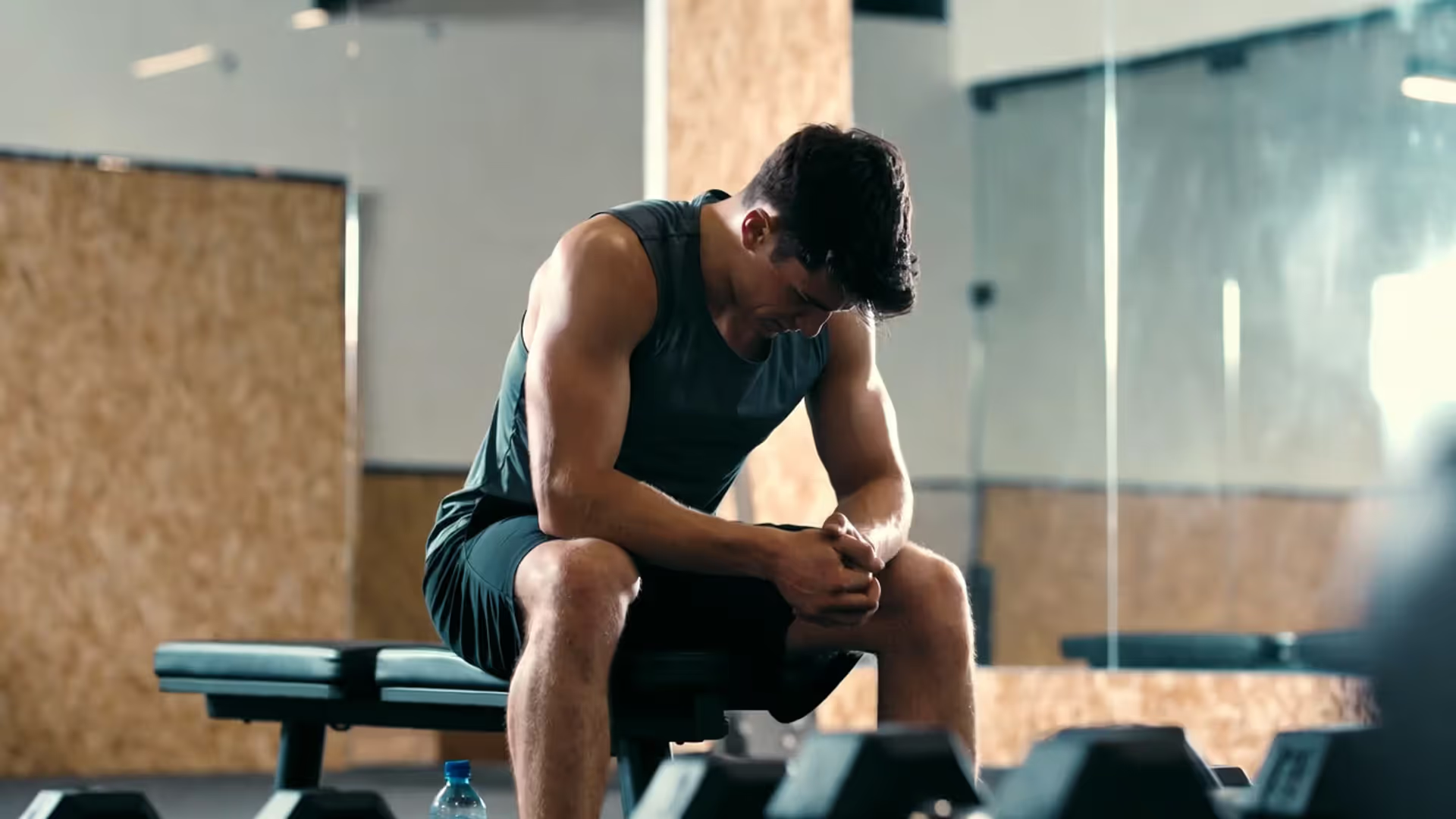
You've just crushed the last set of your training session. Heart pounding, muscles fatigued, sweat dripping—and you're already mentally checking out. Maybe you grab your phone to check messages, or you're calculating how quickly you can hit the shower and leave.
Stop right there.
Your pulse is sitting somewhere around 165 beats per minute. Blood vessels throughout your legs and arms are dilated to about three times their resting diameter. Lactate and hydrogen ions are swimming through muscle tissue. If you shut everything down this second, your cardiovascular system gets stuck managing this biological traffic jam without any help from movement.
Those final 10-15 minutes most people treat as optional? They determine whether tomorrow you'll bounce out of bed or need five minutes just to straighten your legs. Your body isn't a light switch. You can't go from maximum output to complete shutdown without consequences—similar to how you'd never redline your car's engine and immediately kill the ignition.
The transition from hard training back to normal function requires a structured wind-down. Skip it, and you're setting yourself up for excessive soreness, slower recovery, and eventually, preventable injuries.
Why Skipping Your Cool Down Damages Recovery
During intense training, your pulse hits 170-180 BPM. Blood vessels expand dramatically to shuttle oxygen to working muscles. When you stop moving suddenly, your heart rate drops quickly, but those expanded vessels stay open for several more minutes. Blood pools in your arms and legs instead of returning efficiently to your heart and brain.
Ever felt lightheaded after finishing a brutal workout? That's insufficient blood reaching your brain. Some people actually pass out because they ignored this basic physiological need. But immediate dizziness is just the surface problem.
Metabolic waste products pile up in muscle tissue during training. Lactate, hydrogen ions, and various byproducts need evacuation through your circulatory system. Continued light movement acts like a sump pump, clearing this debris away from fatigued muscles. Stop completely, and you're guaranteeing that tomorrow's soreness arrives with a vengeance. I've watched people limp for three days after leg workouts simply because they rushed straight to their car without any cool-down protocol.
Recovery is as important as the work itself.
— Greg LeMond
The injury prevention angle matters equally. Your muscles contract and shorten during training, and they'll remain shortened without intervention. Next time you reach down to grab something or start another workout, those tight muscles can't respond appropriately. They become injury magnets. Understanding cooldown importance fitness means recognizing that these final minutes directly impact your injury risk tomorrow, next week, or during your next training session.
Your nervous system requires this transition period as well. Hard training activates your sympathetic nervous system—cortisol elevation, heightened alertness, accelerated pulse. Without a structured cool-down, many athletes remain amped for hours afterward. They report feeling exhausted yet wired, lying in bed unable to shut their brain off. Proper cool-down protocols help shift from "performance mode" into "recovery mode" where actual adaptation occurs.
How Cool Down Exercises Lower Your Heart Rate Safely
Author: Amanda Reeds;
Source: thelifelongadventures.com
Your primary objective after finishing your main training: reduce heart rate gradually rather than letting it plummet. Target roughly 25 beats per minute of reduction every 2-3 minutes until you reach approximately 100-110 BPM. Once you hit that zone, stretching becomes appropriate while your pulse continues descending toward resting levels.
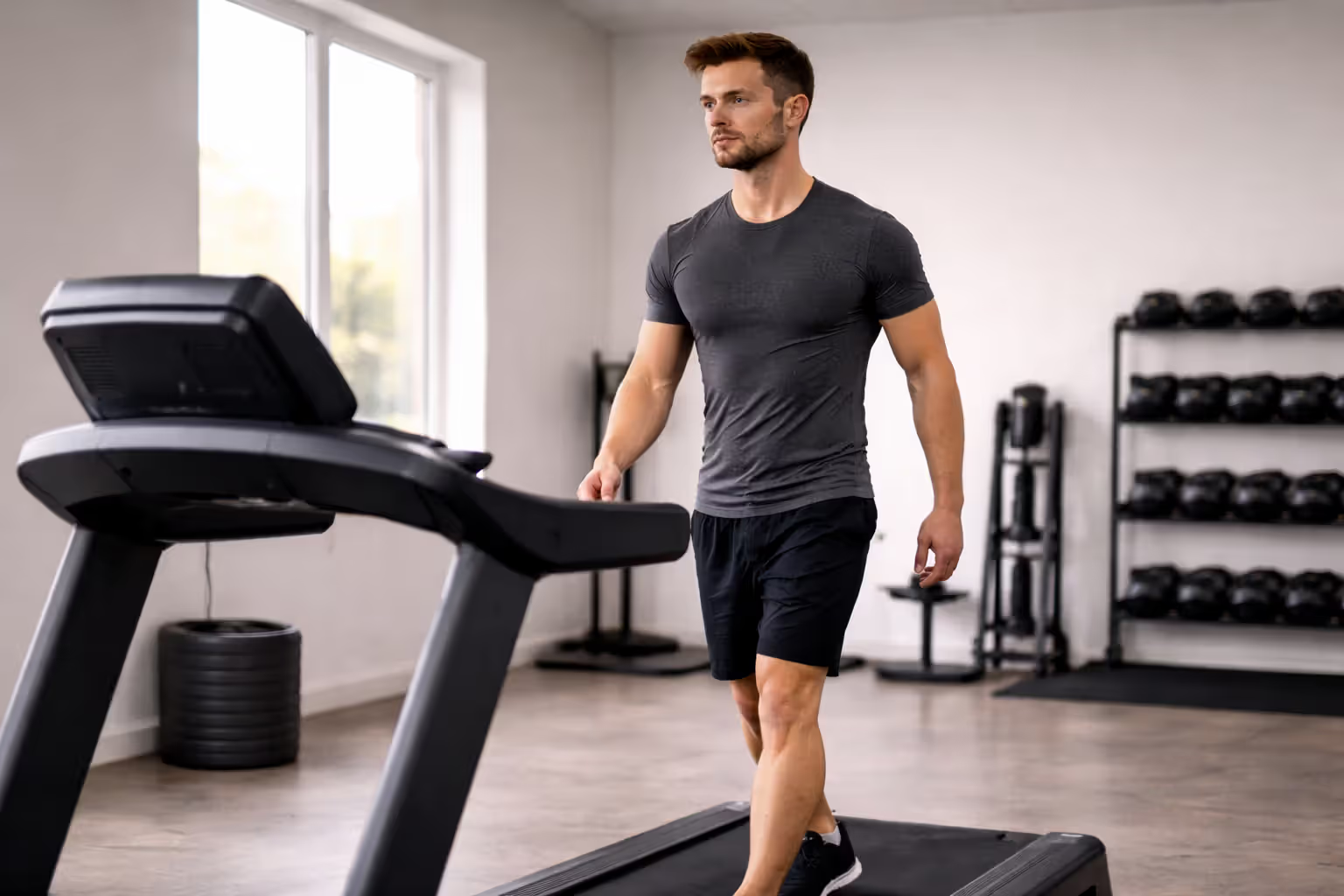
Light cardio forms the foundation of heart rate recovery exercises. You want low intensity—around 30-40% of maximum effort, easy enough that you could carry on a full conversation without any breathlessness. After running, walk with purpose for 4-6 minutes. Following cycling sessions, keep pedaling with minimal resistance. Just finished lifting weights? Walk around the gym or perform unloaded versions of movements you trained.
Duration should match your workout intensity. A casual 30-minute jog might only need 3 minutes of walking. High-intensity intervals that pushed you to absolute failure deserve 7-10 minutes of easy movement. Your breathing rate provides excellent feedback—by the end of this phase, you should breathe comfortably enough to hold a normal conversation.
Swimming requires modified approaches since you can't simply stop and stand. After your main sets, swim several easy laps using whichever stroke feels most relaxed. Emphasize long, smooth movements rather than speed or power. Even a few minutes of gentle swimming manages heart rate safely while the horizontal position aids blood return toward your heart.
Post-Workout Stretching: Static vs. Dynamic Movements
Once you've started lowering your heart rate, flexibility work takes center stage. The distinction between these two stretching approaches matters because what works after exercise differs completely from pre-workout preparation.
When to Use Static Stretches After Training
Author: Amanda Reeds;
Source: thelifelongadventures.com
Static stretching involves holding a position without movement. This technique belongs exclusively in your post-workout routine—never before training begins. Your muscles are thoroughly warm from exercise, creating optimal conditions for flexibility development. Research suggests 20-30 seconds per stretch works effectively, though extending to 60 seconds can accelerate flexibility gains if you're targeting specific mobility restrictions.
Focus on the muscles you just trained while also addressing your entire body. A lower-body session demands extra attention to quads, hamstrings, glutes, and calves. But don't ignore hip flexors, back muscles, and your upper body. Training creates tension throughout connected muscle chains, not just in primary movers.
The sensation should register as moderate tension, never sharp or painful. You want gentle pulling that feels consistent throughout the hold. If discomfort increases while you're holding position, you've gone too deep. Ease off slightly until you find that zone where you feel meaningful stretch while still breathing naturally.
Dynamic Stretches That Aid Recovery
Post-workout dynamic stretching involves controlled movements through your available range of motion. While static positions help lengthen muscle tissue, movement circulates fluid through joints and reinforces the neuromuscular connections you just trained.
Gentle leg swings, easy arm circles, and controlled torso rotations complement your static stretching. These movements should feel considerably gentler than dynamic warm-up drills. Consider them active mobility work rather than preparatory exercises.
Some people prefer alternating between both approaches throughout their routine. You might hold a hamstring stretch for 30 seconds, perform ten controlled leg swings, then return to a deeper hamstring position. This combination captures benefits from both methods while keeping your cool-down from becoming monotonous.
10-Minute Recovery Stretching Routine You Can Do Anywhere
This recovery stretching routine requires zero equipment and works after any training style. The sequence progresses from standing to seated to lying positions, which naturally supports continued heart rate reduction.
Author: Amanda Reeds;
Source: thelifelongadventures.com
Minutes 1-2: Standing Lower Body Work
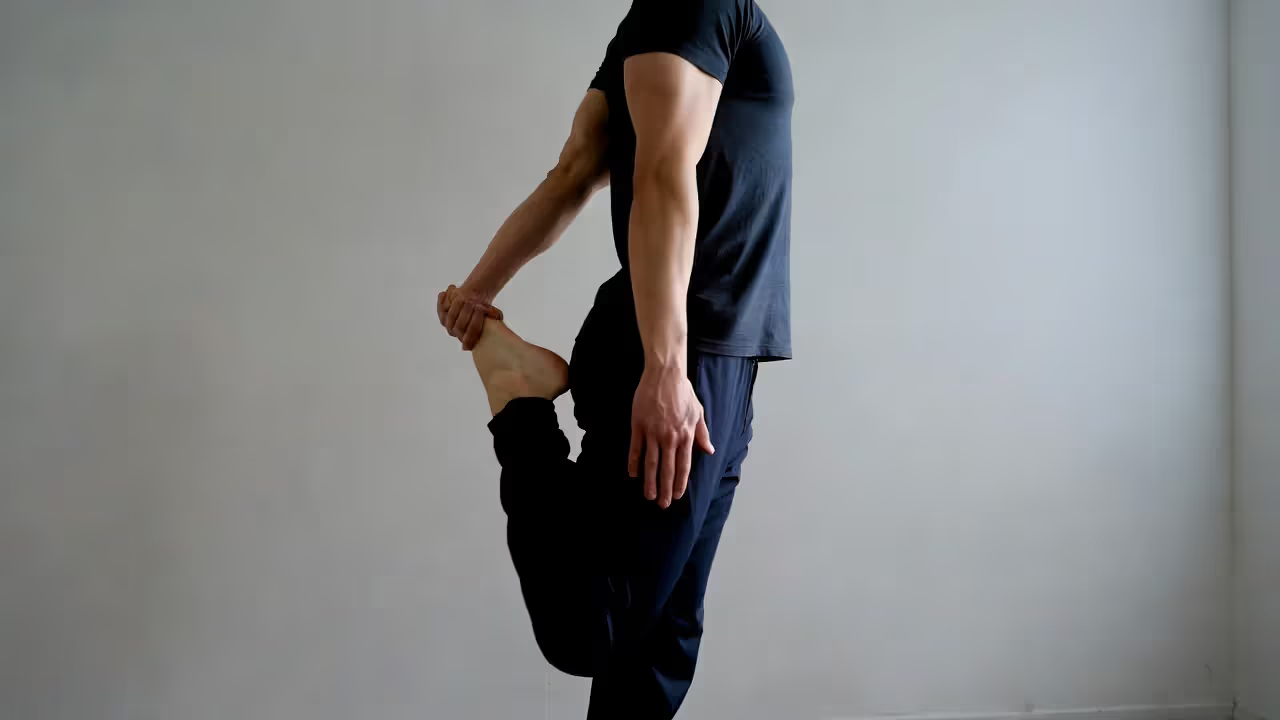
Balance on your right leg and grab your left foot behind you, keeping both knees pointing down. Hold 30 seconds, then switch sides. Next, place both hands on a wall, step your left foot back, and press that heel down to stretch your calf. Switch legs after 30 seconds per side.
Minutes 3-4: Hip and Hamstring Focus
Sink into a lunge with your back knee hovering off the ground. Push your hips forward gently to feel tension along the front of your rear hip. Hold 30 seconds per leg. Then straighten your front leg and fold forward at the hips, keeping your back flat, to stretch your hamstring. Another 30 seconds each side.
Minutes 5-6: Seated Floor Positions
Sit with both legs extended forward. Reach toward your toes, folding from your hips rather than rounding your spine. Hold 45 seconds. Then bring your feet together sole-to-sole and let your knees drop toward the floor in butterfly position for another 45 seconds.
Minutes 7-8: Glute and Spinal Stretches
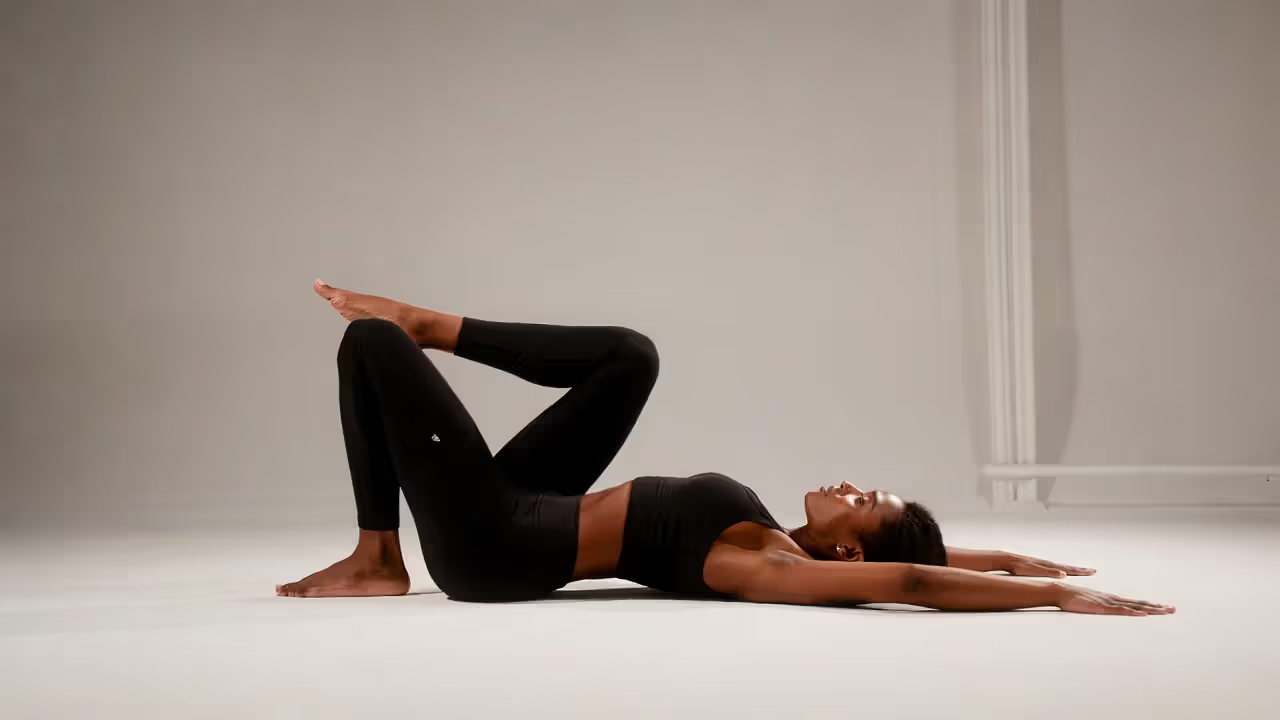
Lie on your back and pull your right knee toward your chest while your left leg stays extended. Hold 30 seconds, then switch. Follow with a supine twist by guiding your bent knee across your body while keeping both shoulders flat on the ground. Hold each side 30 seconds.
Minutes 9-10: Full-Body Integration
Get on all fours for cat-cow movements—alternate between arching and rounding your spine five times, moving slowly. Finish in child's pose by sitting back on your heels with arms reaching forward, holding this final position for 60 seconds while taking deep breaths.
During these stretches, coordinate breathing with each position. Try breathing in for a slow count of four, then releasing air for a count of six or seven. This breathing pattern activates your parasympathetic nervous system and naturally deepens each stretch as you release tension with every exhale.
Cool Down Mistakes That Slow Your Progress
The biggest mistake is treating cool-down work as optional. You tell yourself you're too tired, too pressed for time, or you'll stretch later at home. That "later" almost never materializes, and even when it does, stretching cold muscles hours after training delivers maybe 30% of the benefit compared to addressing warm tissue immediately.
Racing through positions defeats the entire purpose. Holding a stretch for just 8 seconds might feel like you've checked a box, but your muscle fibers need sustained time to actually release and lengthen. If you're genuinely short on time, pick three stretches and perform them properly instead of rushing through twelve ineffectively.
Author: Amanda Reeds;
Source: thelifelongadventures.com
Adding bouncing or pulsing movements during static stretches backfires spectacularly. This ballistic approach triggers the stretch reflex—a protective mechanism that contracts muscles when they experience rapid lengthening. You're literally fighting against your own nervous system. Steady, sustained holds produce better results with lower injury risk.
Many people also ignore breathing during cool-down work. Shallow chest breathing or breath-holding keeps your body in a semi-stressed state. Intentional, deep breathing from your diaphragm signals to your nervous system that the workout has ended and recovery can begin. Each exhale should carry away accumulated tension.
Take care of your body. It’s the only place you have to live.
— Jim Rohn
Selective stretching happens frequently after focused training. After an intense chest and arms workout, you thoroughly stretch your upper body while completely ignoring your legs and back. This selective approach can create or worsen muscle imbalances over time. Comprehensive cool-downs address your entire body, though you'll naturally spend extra time on areas you just worked.
The opposite problem—overly aggressive stretching after workout—causes issues too. Pushing into painful ranges immediately post-training, when muscles are fatigued and your body awareness is slightly compromised, increases injury risk. Save your deepest flexibility work for dedicated mobility sessions, not your post-training cool-down when tissues are most vulnerable.
Cool Down Activities by Workout Type
Workout Type
Recommended Cool Down Activity
Duration
Key Stretches
HIIT
Walk or light jog at conversational pace, gradually decreasing intensity
7-10 minutes
Hip flexors, quads, hamstrings, calves, chest
Strength Training
Walk or use cardio machine with minimal resistance
5-7 minutes
Trained muscles plus opposing muscle groups
Running
Walk starting briskly and gradually slow down
5-8 minutes
Calves, hamstrings, quads, hip flexors, glutes
Cycling
Easy pedaling with resistance at lowest setting
5-7 minutes
Quads, hip flexors, lower back, calves, glutes
Swimming
Relaxed laps using your easiest stroke
5-10 minutes
Shoulders, chest, lats, hip flexors, quads
Frequently Asked Questions About Cooling Down
How long should I cool down after a workout?
Plan for 10-15 minutes total, splitting time between 5-7 minutes of light cardio to bring your heart rate down and 5-8 minutes for stretching after workout. After extremely intense sessions, use the full 15 minutes. Moderate workouts can work well with 10 minutes as long as you consistently include both the cardiovascular and flexibility components.
Can I skip cooling down if I'm short on time?
Skipping your cool-down to save ten minutes creates more problems than it solves. You'll spend more time dealing with excessive soreness, reduced performance in your next workout, or addressing preventable injuries. When time is genuinely tight, prioritize the light cardio portion for safe heart rate reduction, then hit 2-3 key stretches for your primary working muscles. A shortened protocol beats skipping it entirely.
What's the difference between warming up and cooling down?
Your warm-up raises body temperature, increases circulation, and activates muscles for upcoming work through progressive cardio and dynamic movements. Your cool-down does the opposite—it transitions your body from high-intensity exertion back toward resting state. Post-workout protocols emphasize sustained stretching and low-intensity movement. One prepares you for performance; the other facilitates recovery from it.
Should my cool down change based on workout intensity?
Absolutely. After light or moderate training, a 10-minute protocol with 3-5 minutes of walking and 5-7 minutes of stretching works well. Following high-intensity sessions, extend your gentle cardio phase to 7-10 minutes and add extra stretches for particularly tight areas. Your breathing and heart rate provide clear feedback—if you're still breathing hard after five minutes of easy movement, keep going until it normalizes.
Can stretching during cool down prevent soreness?
Stretching helps reduce soreness but won't eliminate it completely. The light cardio component actually does more heavy lifting for soreness prevention by clearing metabolic waste from muscle tissue. Post workout stretching supplements this by reducing muscle tension and maintaining blood flow to recovering areas. Together, they deliver optimal results. Extreme muscle damage from unusually intense or unfamiliar training will cause soreness regardless of how thorough your cool-down is.
Is walking enough for a proper cool down?
Walking handles the cardiovascular aspect of cooling down but misses the flexibility and tension-release benefits that stretching provides. If you absolutely must choose only one component, walking takes priority because it safely reduces heart rate. Complete protocols include both elements though. Think of walking as your baseline requirement and stretching as what elevates your recovery from adequate to excellent.
Moving Forward With Better Recovery
The minutes immediately following training represent a critical window for your recovery processes. Your body is positioned to clear byproducts, restore normal circulation, and initiate the adaptations that build fitness. Proper cool-down work takes advantage of this window rather than slamming it shut by stopping all movement immediately.
Building consistent cool-down habits demands similar commitment to showing up for workouts themselves. The difference? Cool-downs don't require grinding effort or mental toughness—they ask only for 10-15 minutes of controlled, gentle activity. This small time investment pays significant dividends in how you feel the next day, how well you perform in subsequent workouts, and your physical resilience across months and years of training.
Start by making your cool-down as non-negotiable as the workout before it. Don't touch the shower controls until you've completed at least a basic routine. As this behavior becomes automatic, you'll notice the improvements in recovery quality, and the habit will sustain itself. Your body six months from now will thank you for those extra minutes you invested when it mattered most.
Every person confidently loading plates once stood exactly where you are — confused and uncertain. This guide bridges that gap with seven fundamental lifting techniques, a complete 8-week plan progressing from foundation to overload, essential gear vs. marketing waste, how to pick starting weights, five mistakes that destroy beginner progress, and tracking methods that reveal real gains the scale
Research shows eight weeks of band training produces strength gains statistically identical to free weights — yet bands cost $30-50 total with zero commute. This guide covers how variable resistance builds muscle, a band selection table by type and tension, 12 essential exercises with form cues, three structured plans for beginners through fat loss, progression tactics without traditional weights,
Each inch your head drifts forward adds ten pounds of stress to your neck — and "sit up straight" exhausts you in fifteen minutes. This guide delivers a 5-minute desk routine you can do seated, a complete back strengthening workout hitting every muscle that holds you upright, an 8-week progressive schedule, common form mistakes that make posture worse, and tracking methods that prove your progress
Your PRs stalled, sleep feels useless, and you're snapping at coworkers — these aren't character flaws, they're overtraining red flags. This guide covers 12 physical and mental warning signs from elevated resting heart rate to hormonal disruption, who's most at risk, a science-backed recovery protocol for the first critical weeks, training load monitoring tools including HRV tracking, and the prev
The content on this website is provided for general informational and educational purposes related to health, yoga, fitness, and overall wellness. It is not intended to replace professional medical advice, diagnosis, or treatment.
All information, workout suggestions, yoga practices, nutrition tips, and wellness guidance shared on this site are for general reference only. Individual health conditions, fitness levels, and medical needs vary, and results may differ from person to person. Always consult a qualified healthcare provider before starting any new exercise program, dietary plan, or wellness routine.
We are not responsible for any errors or omissions, or for any outcomes resulting from the use of information presented on this website. Your health and fitness decisions should always be made in consultation with appropriate medical and fitness professionals.