Want to know something liberating? You don't need a gym. That $60 monthly membership sitting unused in your wallet—cancel it. Your cardiovascular system responds to one thing: intensity. Whether you're sweating in a high-end fitness club or breathing hard in your bedroom matters exactly zero to your heart.
Here's what actually happens: elevate your heart rate consistently, and your body adapts. Period. That cramped apartment? It works. That cluttered garage? Perfect. Even that 8x10 spare bedroom crammed with boxes can transform into your personal training ground.
Why Home-Based Cardio Works for Heart Health and Weight Loss
Let's talk biology for a second. When you push your heart rate up and keep it there, your cardiovascular system responds predictably. The heart muscle itself gets stronger. Each beat pumps more blood (that's stroke volume increasing). Your cells become more efficient oxygen processors. This happens whether you're at Equinox or in your kitchen.
The American Heart Association's data is pretty clear: 150 weekly minutes of moderate aerobic work cuts your risk of heart disease, stroke, and type 2 diabetes significantly. Notice they don't specify location. Your basement counts the same as a boutique studio.
Now for the calorie math. A 155-pound person doing jumping jacks for 30 minutes torches roughly 280 calories. Switch to high knees? That same person burns about 320. Compare that to what most people accomplish when you factor in driving to the gym, changing clothes, waiting for equipment, chatting at the water fountain, driving home. The home workout often wins on pure efficiency.
But here's the real advantage nobody talks about: friction elimination. The average gym commute eats 15-20 minutes each direction. That's 40 minutes gone—enough time for a complete workout. Train at home five days weekly? You've just reclaimed 3+ hours per week. That's 156 hours annually. Almost a full week of your life back.
You do not rise to the level of your goals. You fall to the level of your systems.
— James Clear
Heart health exercises done at home also slip into your existing schedule like nothing else can. Got 20 minutes before your morning shower? Done. Lunch break? Perfect. Waiting for laundry to finish? Why not? This isn't trivial—scheduling flexibility drives long-term adherence better than motivation ever will.
Essential Equipment vs. No-Equipment Options
Author: Logan Brooks;
Source: thelifelongadventures.com
People overthink this equipment question constantly. Some assume they need a full home gym setup. Others think bodyweight won't cut it. Both groups are wrong.
Equipment Type
Cost Range
Space Needed
Calorie Burn Potential
Best For
Bodyweight only
$0
6'×6' clear space
240-400 cal/30 min
Anyone starting out, tight budgets, renters who move frequently
Jump rope
$8-$30
8'×10' floor + 9' ceiling
300-450 cal/30 min
Coordination work, taking workouts anywhere, maximum results per dollar
Resistance bands
$15-$40
Fits in a drawer
180-280 cal/30 min
Combining resistance with cardio, travel workouts, injury recovery
Apartments with noise concerns, knee-friendly options
Stationary bike
$300-$2,000
4'×2' space
260-400 cal/30 min
Bad joints, multitasking during cardio, sustainable longer sessions
Bodyweight movements win on immediacy. Decision to workout? You're exercising 30 seconds later. No setup. No equipment assembly instructions. Zero learning curve.
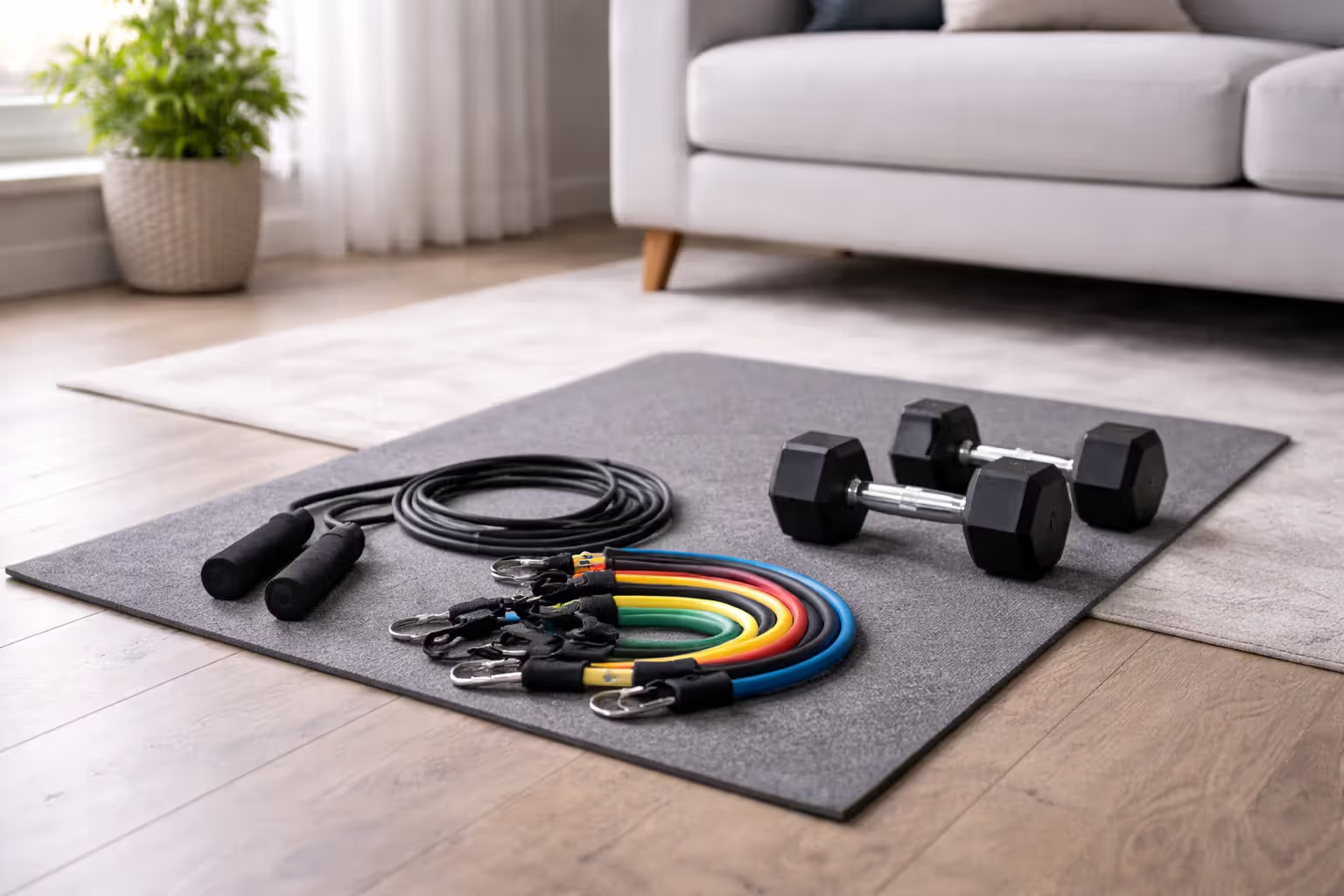
Equipment adds dimension and variety, though. Jump rope drills coordination while delivering intense cardiovascular stimulus. Bands let you emphasize upper body in movements that typically hammer legs. Dumbbells transform basic exercises into cardio-strength combinations that build muscle while spiking heart rate.
Your "best" choice depends on noise tolerance, budget reality, and what you'll actually use. Living above neighbors? Jumping and running in place might create problems. A stepper or bike solves this. Own your place with a dedicated workout room? High-impact movements are fair game.
12 Most Effective Indoor Cardio Exercises by Intensity Level
Indoor cardio exercises span from gentle to absolutely brutal. Matching intensity to your current fitness and daily energy levels determines whether you build capacity or burn out.
High-Intensity Moves for Maximum Fat Burning
Author: Logan Brooks;
Source: thelifelongadventures.com
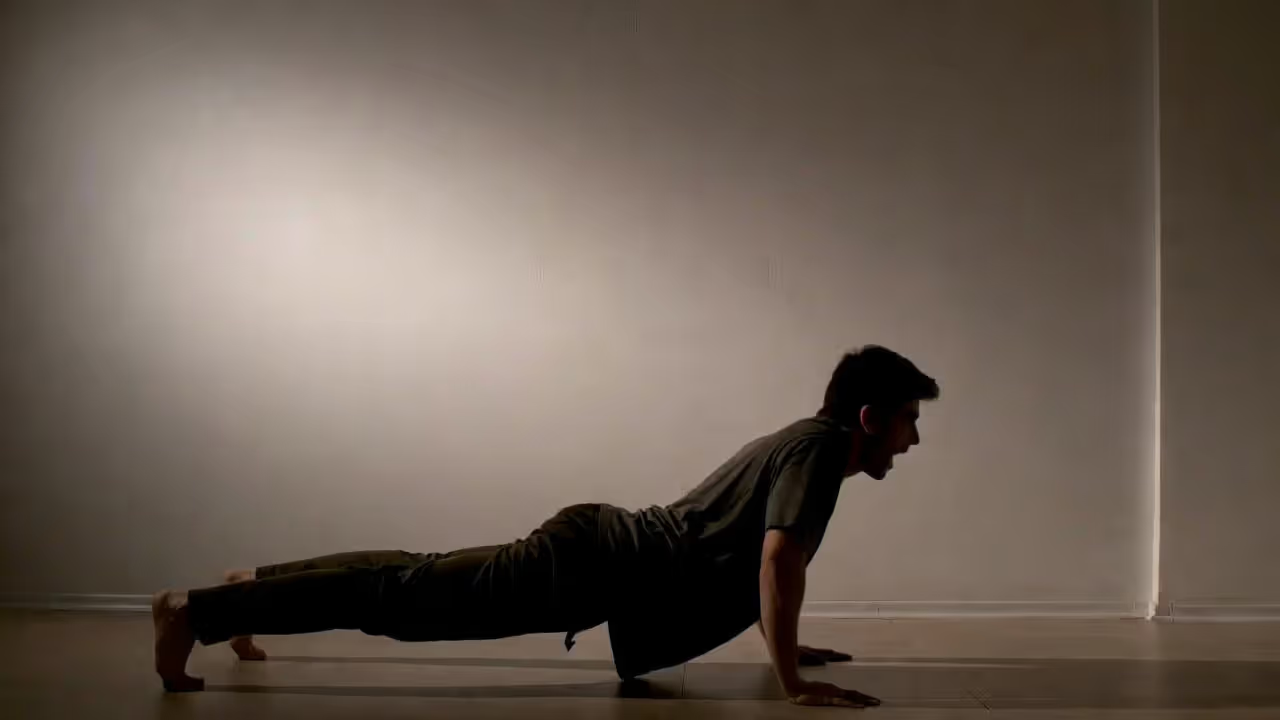
Burpees challenge everything at once. Begin standing. Drop your hands to the floor and kick both feet back into plank position. Complete one push-up. Jump your feet back toward your hands. Launch yourself upward with arms reaching overhead. That's one rep. Most people sag their hips during the plank (wrong) or land with locked knees (dangerous). A 150-pound person burns 10-12 calories per minute during sustained burpee work.
High knees replicate sprinting without forward movement. Drive each knee up to hip level while pumping your arms like you're running fast. The most common mistake? Barely lifting knees and basically shuffling in place. Actually drive those knees UP. Keep your gaze forward. Land on your forefoot, not your heel. This burns 8-10 calories per minute when done correctly.
Mountain climbers combine plank holds with cardiovascular demand. Set up in plank position—hands under shoulders, body straight. Now alternate driving your knees toward your chest rapidly. Your hips should stay level throughout. When hips pike upward, you've lost proper form and reduced the effectiveness. Expect 8-9 calories per minute while simultaneously strengthening shoulders and core.
Jump squats develop explosive leg power. Lower yourself into a squat position—thighs parallel to the floor. Now explode upward with enough force to leave the ground. The landing matters enormously: touch down with bent knees, absorbing impact smoothly. Stiff-legged landings or knees collapsing inward lead straight to injury. This fat burning cardio movement delivers 10-11 calories per minute.
Moderate-Intensity Exercises for Endurance
Jumping jacks provide sustainable cardio work most people can maintain. You learned these in grade school, but probably perform them wrong—minimal arm extension, shallow leg splits. Go full range: arms actually touching overhead, legs splitting to wider than shoulder-width. This increases burn to 7-8 calories per minute.
Skater hops involve jumping laterally from one foot to the other. Land on your right foot while your left leg crosses behind. Then jump left, landing on your left foot while your right leg crosses behind. This mimics speed skating. The balance component adds difficulty beyond simple cardiovascular stress. Burns 7-8 calories per minute while developing lateral stability that forward-only movements ignore.
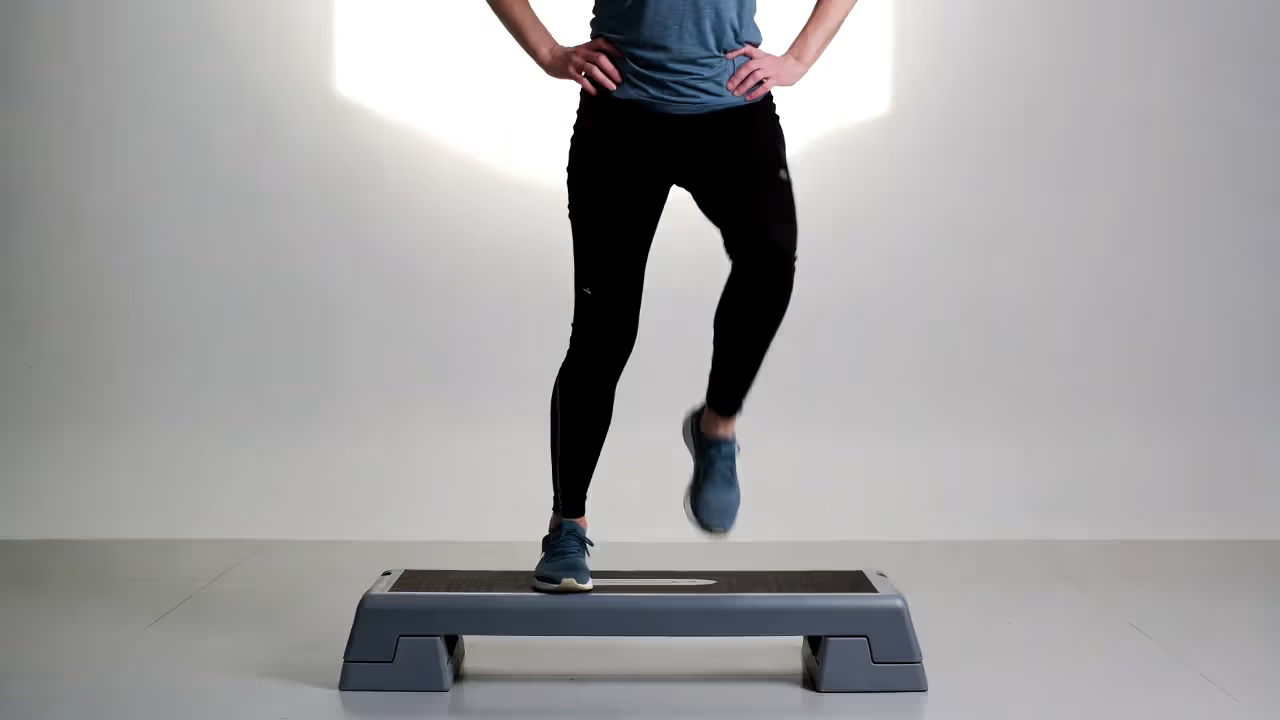
Step-ups create rhythmic cardiovascular loading using stairs or a sturdy box. Alternate which leg leads every 30-60 seconds to balance muscular demand. Form requirement: place your entire foot on the step, not just your toes. Drive through your heel. Expect 6-7 calories per minute at moderate pace.
Shadow boxing engages upper body while driving heart rate upward. Throw punches in combinations: jab-cross-hook-uppercut, whatever feels natural. Maintain active footwork. Keep shoulders relaxed. Rotate from your core, not just extending arms. This burns 6-7 calories per minute and provides mental variety from constant lower-body work.
Low-Impact Alternatives for Joint Protection
Author: Logan Brooks;
Source: thelifelongadventures.com
Marching in place with arm raises suits recovery days or significant joint limitations. Lift knees to comfortable height while raising arms overhead in rhythm with your steps. Gentle doesn't mean worthless—this burns 4-5 calories per minute without stress.
Side steps with arm movements involve stepping laterally (right, together, right, together, then left, together, left, together) while performing arm patterns. Try arm circles, overhead reaches, or chest openers. This low impact cardio routine option burns 4-5 calories per minute while improving mobility.
Standing oblique crunches alternate bringing your right elbow down toward your right knee (which comes up), then left elbow to left knee. The standing foot stays planted throughout. Burns 5-6 calories per minute while engaging core muscles without getting on the floor.
Wall push-offs use any wall for incline plyometric work. Stand arm's length from a wall. Place hands on it. Lean in, then push off forcefully so your hands briefly leave the wall. This provides upper-body cardiovascular stimulus at 5-6 calories per minute without joint impact.
Sample Home Cardio Workout Plans for Different Goals
Random exercise doesn't produce results. Structure does. These plans assume 3-5 weekly training days with at least one rest day between intense sessions.
Easy marching, side steps, standing crunches, comfortable pace throughout
Low-Impact Routine
Monday
Sustained moderate
25 min
60-70% max HR
March with arms (5 min), step-ups (5 min), side steps (5 min), repeat twice
Wednesday
Circuit approach
30 min
65-75% max HR
Standing crunches (3 min), wall push-offs (3 min), modified skater hops (3 min), repeat three times
Friday
Endurance building
35 min
60-70% max HR
March (5 min), step-ups (10 min), shadow boxing (10 min), side steps (5 min), march cooldown (5 min)
Advanced Plan
Monday
HIIT pyramid
30 min
85-95% max HR
Burpees: 30 sec work/30 sec rest, then 40/40, then 50/50, back down 40/40, 30/30; repeat pattern with high knees
Tuesday
Tempo intervals
35 min
75-85% max HR
Alternate 5 min moderate with 3 min hard; complete five cycles using varied exercises
Thursday
Tabata protocol
28 min
90-95% max HR
Mountain climbers max effort 20 sec/rest 10 sec for 8 rounds, rest 2 min, repeat pattern with jump squats, then burpees
Saturday
Active recovery
25 min
55-65% max HR
Mix of moderate-intensity exercises, conversational pace maintained
These home cardio workout plan templates need individual adjustment. Can't complete the prescribed duration? Cut time by 25-30% and build weekly. Too easy? Increase work intervals or decrease rest rather than immediately extending session length.
Common Mistakes That Reduce Results or Cause Injury
Skipping warm-up to "save time" guarantees either injury or subpar performance. Cold muscles lack elasticity. Cold connective tissue tears easily. Five minutes of gradual intensity building—starting with easy marching, progressing to light jogging in place, finishing with dynamic stretches—prepares everything. Skip this and you "save" five minutes but risk weeks sidelined with injury.
Ignoring heart rate zones creates chronic medium-intensity training. Not easy enough for recovery. Not hard enough for real adaptation. True high-intensity work should feel uncomfortable—speaking full sentences becomes impossible. Recovery days should feel almost too easy. Most people train in the middle zone constantly, producing minimal results and maximum fatigue.
Landing heavily during jumping movements transmits excessive force through every joint. Proper mechanics involve touching down on your forefoot with slightly bent knees. Your joints absorb impact gradually. Stiff-legged landings or heel-first contact multiply injury risk exponentially. If neighbors downstairs complain about noise, your landing mechanics need work.
Progressing too quickly tempts every enthusiastic beginner. Adding 10-15 minutes weekly or jumping from 3 to 6 training days creates unsustainable stress. Useful guideline: increase total weekly training time by maximum 10% per week. Currently doing 60 minutes weekly? Add only 6 minutes next week, not double your volume.
Performing exercises with deteriorating form when fatigued defeats the purpose entirely. Those last three burpees with sagging hips and half-push-ups provide less benefit than two perfect repetitions followed by rest. Quality beats quantity every single time. Form deteriorates? Set ends—regardless of timer or target reps.
Neglecting rest and recovery prevents adaptation from occurring. Your cardiovascular system strengthens during rest between workouts, not during the workouts themselves. Training provides stimulus. Rest provides adaptation. Someone hammering intense cardio seven days weekly will plateau or regress compared to someone training five days with two complete recovery days.
How to Track Progress and Stay Motivated Without a Gym
Tracking progress at home requires different metrics than gym-based training. Without machines displaying watts or miles, you need alternative approaches.
If you can’t measure it, you can’t improve it.
— Peter Drucker
Resting heart rate provides objective cardiovascular improvement data. Measure your pulse for 60 seconds immediately upon waking, before leaving bed. Record this 3-4 times weekly. As heart health exercises take effect, resting heart rate typically decreases 5-10 beats per minute over 8-12 weeks. Dropping from 72 to 65 BPM indicates meaningful cardiovascular adaptation.
Talk test delivers real-time intensity feedback equipment-free. During moderate work, you should speak short sentences but not comfortably hold conversations. During high-intensity intervals, speaking more than a few words should feel difficult. During recovery periods, normal conversation should be possible. This subjective measure correlates remarkably well with heart rate zones.
Workout density means completing identical exercises in less time or more exercises in identical time. Your initial 20-minute session included three circuit rounds. Four weeks later you complete four rounds in 20 minutes? You've improved. Track rounds completed, total reps, or time required for fixed work amounts.
Recovery speed indicates improving fitness directly. Time how long your heart rate takes to drop after intense intervals. Initially you might need 90-120 seconds feeling recovered enough for the next interval. After several consistent training weeks, that recovery might shrink to 60-75 seconds. Faster recovery signals improved cardiovascular efficiency.
Author: Logan Brooks;
Source: thelifelongadventures.com
Body composition changes matter more than scale weight for most people. Take waist, hip, and thigh measurements every 2-3 weeks. Progress photos every four weeks reveal changes daily mirror familiarity obscures. Someone might maintain identical weight while losing two waist inches and gaining muscle—significant victory invisible on any scale.
Consistency streaks leverage psychology effectively. Track consecutive weeks with minimum three workouts completed. Many people find protecting a 12-week streak provides more motivation than abstract fitness goals. Missing one workout doesn't break the weekly streak, removing all-or-nothing thinking that derails most programs.
Performance benchmarks create concrete targets. Time yourself performing a standard sequence: 10 burpees, 20 high knees, 30 jacks, 40 mountain climbers, 50 step-ups. Retest monthly. Improvements of 15-30 seconds demonstrate real fitness gains and provide satisfaction vague "feeling better" cannot match.
Frequently Asked Questions About Home Cardio Workouts
How long should a cardio workout at home last to see results?
Minimum effective dose: 20-25 minutes actual work time (excluding warm-up and cool-down), three times weekly, at moderate-to-high intensity. Beginners typically notice energy improvements and faster recovery within 3-4 weeks at this frequency. For fat loss specifically, aim for 30-40 minutes per session, 4-5 times weekly—this produces measurable results in 6-8 weeks when nutrition supports your goals. That said, even 10-minute sessions provide value. They're infinitely superior to zero minutes. When you're pressed for time, choose consistency over duration every time. Three weekly 15-minute sessions beat sporadic 45-minute workouts.
Can indoor cardio exercises burn as many calories as running outside?
Absolutely, yes. Calorie burn depends entirely on intensity and duration—location is irrelevant. High-intensity burpees or jump rope intervals can actually exceed outdoor running's per-minute calorie burn. A 155-pound person running at 6 mph (10-minute miles) burns approximately 9-10 calories per minute. That same person performing maximum-intensity burpees burns 10-12 calories per minute. Outdoor running's advantage is sustainability—most people maintain moderate running pace longer than they can sustain max-intensity burpees. However, indoor interval training often produces superior fat loss results because intensity variability creates metabolic effects persisting well after the workout ends. The "best" option? Whichever one you'll actually do consistently.
What's the best low-impact cardio routine for bad knees?
Step-ups on a 4-6 inch platform, marching in place with exaggerated arm movements, and stationary cycling (if you own a bike) protect knees while delivering cardiovascular benefits. The key: avoid repetitive jumping and maintain proper landing mechanics on any exercise where feet leave ground. For a complete 30-minute low impact cardio routine, try this: warm up with 5 minutes easy marching, then alternate 4 minutes step-ups, 3 minutes standing oblique crunches, 3 minutes shadow boxing, and 2 minutes side-to-side steps. Repeat this 20-minute circuit, then cool down with 5 minutes easy walking and stretching. This combination elevates heart rate to 60-70% maximum while minimizing knee stress. Experience actual pain (distinct from muscle fatigue)? Reduce range of motion or switch to even gentler movements like seated exercises.
How many times per week should I do home cardio for fat loss?
Four to five weekly sessions produces optimal fat loss results for most people when combined with moderate caloric deficit. This frequency provides sufficient training stimulus while allowing adequate recovery. Structure might include three moderate-intensity 30-35 minute sessions plus two high-intensity 20-25 minute sessions. More isn't automatically better—six or seven weekly sessions frequently elevate cortisol, impair recovery, and cause muscle loss alongside fat loss. Rest days allow hormonal normalization and muscle repair. Someone training seven days weekly often achieves less fat loss than someone training five days with two complete rest days. New to exercise? Begin with three weekly sessions for 4-6 weeks before adding a fourth day. Adaptation requires progressive overload, not immediate maximum volume.
Do I need equipment for an effective fat burning cardio workout?
Not at all. Your body provides all necessary resistance for effective fat burning cardio. Exercises like burpees, high knees, mountain climbers, and jump squats require zero equipment yet deliver exceptional calorie burn and metabolic stimulus. A 25-minute bodyweight interval session—alternating 40 seconds work with 20 seconds rest—burns 250-350 calories during the session and elevates metabolism for hours afterward. Equipment adds variety and specific training angles but isn't required for results. The most crucial equipment is consistency and progressive challenge. Someone doing bodyweight exercises four times weekly for six months achieves dramatically better results than someone buying $2,000 in equipment but training sporadically. Enjoy equipment and it increases adherence? It's valuable. Equipment becomes a barrier to starting? It's counterproductive.
How do I know if my home cardio is improving my heart health?
Track resting heart rate weekly—decreasing trends indicate improved cardiovascular efficiency. Monitor recovery time between intervals; faster recovery signals adaptation occurring. Notice daily activities: climbing two flights of stairs no longer leaves you winded? Your heart health exercises are working. Blood pressure improvements (if you own a home monitor) provide objective data—many people see 5-10 point reductions in both systolic and diastolic readings after 8-12 weeks consistent training. Subjective measures matter too: improved sleep quality, more stable daily energy, and better stress resilience all indicate cardiovascular improvement. For comprehensive assessment, annual physical exams with your doctor can track cholesterol, blood glucose, and other cardiovascular risk markers. Most people notice subjective improvements within 3-4 weeks and measurable cardiovascular changes within 8-12 weeks of consistent training.
Building Your Sustainable Home Cardio Practice
Effective cardiovascular training at home needs nothing more than commitment and movement space. The exercises, plans, and tracking methods outlined here provide everything required for building genuine fitness without gym access. Your results depend not on equipment or location but on consistency and progressive challenge.
Begin with workouts matching your current fitness level—not your aspirations or ego. A beginner completing three 15-minute moderate-intensity sessions weekly for three months builds a foundation supporting years of training. Someone attempting advanced protocols immediately often quits within weeks from excessive soreness or injury.
Expect weeks 1-3 to feel difficult as your body adapts to new demands. Energy might dip slightly. Muscles will feel sore. Motivation may waver. This is normal and temporary. Week four typically brings noticeable improvements: exercises feeling impossible become merely challenging, recovery speeds up, daily energy stabilizes.
Progress isn't linear ever. Some weeks you'll feel strong and complete workouts easily. Other weeks, identical routines feel harder due to sleep quality, stress levels, or nutrition factors. This variability is completely normal. The person continuing training through "off" weeks builds resilience and long-term results.
Your home cardio practice succeeds when it integrates seamlessly with your life rather than dominating it. Twenty-five minutes of focused training beats an hour of distracted, low-intensity movement every time. Four weekly sessions completed consistently for six months produce better results than six weekly sessions maintained for six weeks before burnout.
The cardiovascular fitness, fat loss, and health improvements you seek don't require gym membership or expensive equipment. They require only your decision to begin, your commitment to continue, and your willingness to progressively challenge yourself over time. Your living room can become the training ground where you build the healthiest version of yourself—starting today.
Every person confidently loading plates once stood exactly where you are — confused and uncertain. This guide bridges that gap with seven fundamental lifting techniques, a complete 8-week plan progressing from foundation to overload, essential gear vs. marketing waste, how to pick starting weights, five mistakes that destroy beginner progress, and tracking methods that reveal real gains the scale
Research shows eight weeks of band training produces strength gains statistically identical to free weights — yet bands cost $30-50 total with zero commute. This guide covers how variable resistance builds muscle, a band selection table by type and tension, 12 essential exercises with form cues, three structured plans for beginners through fat loss, progression tactics without traditional weights,
Each inch your head drifts forward adds ten pounds of stress to your neck — and "sit up straight" exhausts you in fifteen minutes. This guide delivers a 5-minute desk routine you can do seated, a complete back strengthening workout hitting every muscle that holds you upright, an 8-week progressive schedule, common form mistakes that make posture worse, and tracking methods that prove your progress
Your PRs stalled, sleep feels useless, and you're snapping at coworkers — these aren't character flaws, they're overtraining red flags. This guide covers 12 physical and mental warning signs from elevated resting heart rate to hormonal disruption, who's most at risk, a science-backed recovery protocol for the first critical weeks, training load monitoring tools including HRV tracking, and the prev
The content on this website is provided for general informational and educational purposes related to health, yoga, fitness, and overall wellness. It is not intended to replace professional medical advice, diagnosis, or treatment.
All information, workout suggestions, yoga practices, nutrition tips, and wellness guidance shared on this site are for general reference only. Individual health conditions, fitness levels, and medical needs vary, and results may differ from person to person. Always consult a qualified healthcare provider before starting any new exercise program, dietary plan, or wellness routine.
We are not responsible for any errors or omissions, or for any outcomes resulting from the use of information presented on this website. Your health and fitness decisions should always be made in consultation with appropriate medical and fitness professionals.