
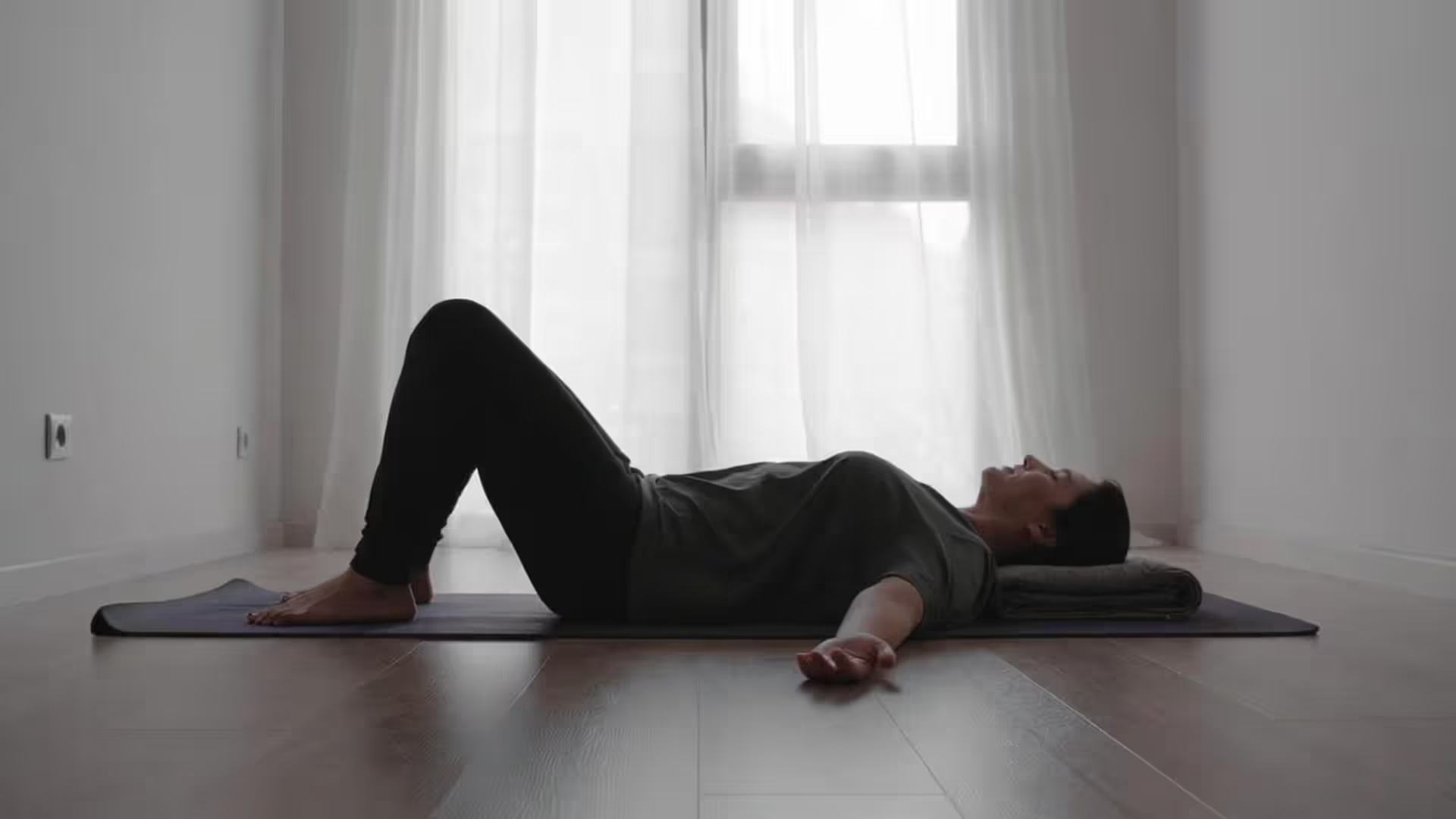
Person lying on their back with knees bent in constructive rest position on a yoga mat.
Yoga for Chronic Pain Guide

Living with persistent pain changes how you move through the world. Simple tasks like reaching for a coffee mug or bending to tie your shoes become calculated risks. While pharmaceutical interventions and surgical options dominate conventional treatment, mounting research shows that specific yoga practices can rewire pain pathways and restore functional movement patterns without invasive procedures.
The distinction matters: this isn't about contorting into Instagram-worthy poses or achieving peak flexibility. Therapeutic applications of yoga target the neurological mechanisms that perpetuate pain cycles, offering measurable relief for conditions ranging from degenerative disc disease to fibromyalgia.
How Yoga Addresses Chronic Pain at the Neurological and Muscular Level
Your nervous system doesn't simply report pain—it interprets, amplifies, and sometimes fabricates it. Chronic pain conditions often involve central sensitization, where your spinal cord and brain become hypersensitive to stimuli that shouldn't hurt. A light touch feels like burning; normal movement triggers disproportionate discomfort.
Pain management yoga therapy works through several validated mechanisms. Controlled breathing activates the parasympathetic nervous system, shifting your body from threat-response mode into a state where healing processes function optimally. When you hold a gentle pose for 90 seconds or longer, mechanoreceptors in your fascia and muscles send signals that can override pain messages traveling to your brain—a phenomenon called gate control theory.
The inflammatory component deserves attention. Chronic pain typically involves persistent low-grade inflammation in affected tissues. Research published in the Journal of Clinical Psychology demonstrates that regular yoga practice reduces pro-inflammatory cytokines (IL-6, TNF-alpha) while increasing anti-inflammatory markers. One study tracking participants over 12 weeks found a 23% reduction in C-reactive protein levels among those practicing therapeutic yoga exercises three times weekly.
Muscular dysfunction compounds the problem. Protective guarding—unconsciously tensing muscles around painful areas—creates secondary trigger points and restricts blood flow. Therapeutic yoga systematically releases these holding patterns through progressive muscle relaxation combined with conscious awareness. You're not just stretching; you're retraining motor patterns that have reinforced pain for months or years.
The mind-body integration component isn't mystical—it's neuroscience. Chronic pain alters brain structure, particularly in regions processing sensory input and emotional regulation. Functional MRI studies show that consistent yoga practice increases gray matter density in the insula and prefrontal cortex, areas involved in pain modulation and emotional resilience. Participants report not just reduced pain intensity but improved pain tolerance and decreased catastrophizing.
Author: Logan Brooks;
Source: thelifelongadventures.com
8 Therapeutic Yoga Exercises for Different Types of Chronic Pain
These poses prioritize safety and accessibility over aesthetic form. Use props liberally—blocks, blankets, and walls provide support that allows your nervous system to relax rather than brace against perceived threats.
Lower Back Pain Relief Poses
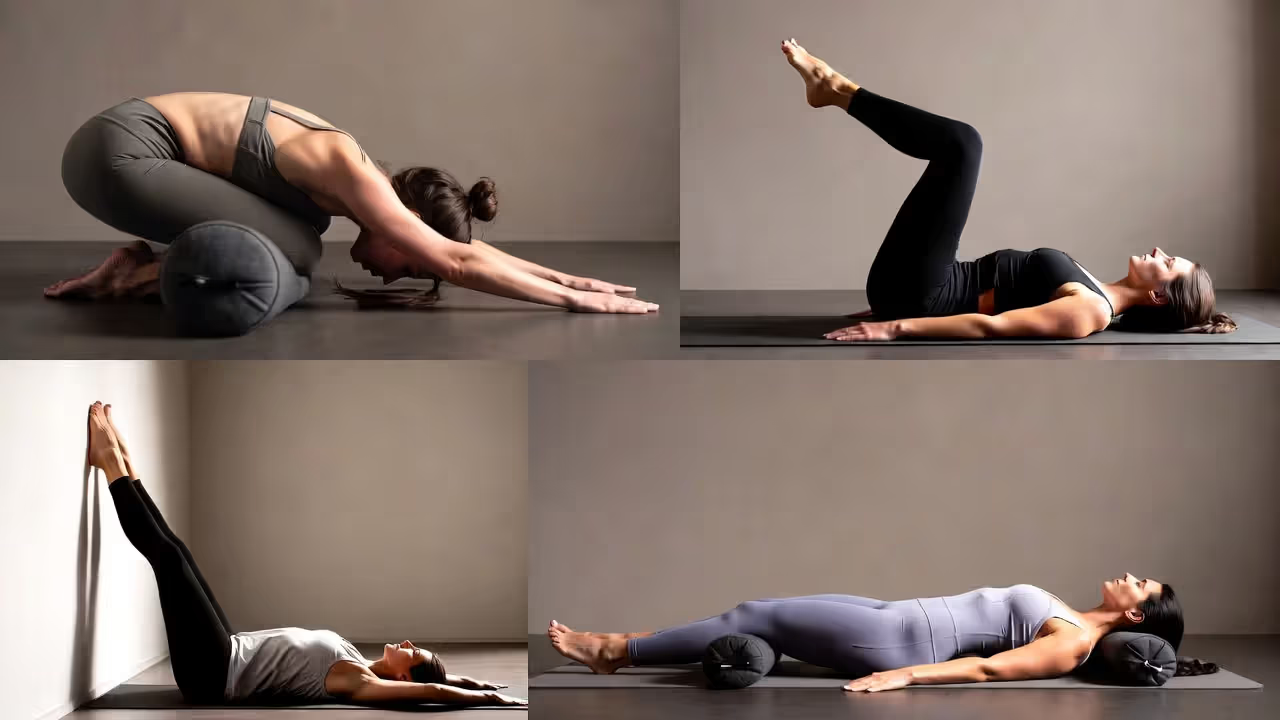
Supported Child's Pose (Balasana): Place a bolster or stacked blankets lengthwise between your knees. Kneel with knees wide, big toes touching, and drape your torso over the support. Arms extend forward or rest alongside your body. This position gently tracts the lumbar spine while supporting your weight completely, removing the muscular effort that often aggravates lower back issues. Hold for 3-5 minutes, breathing into your back ribs.
Constructive Rest Position: Lie on your back with knees bent, feet hip-width apart and 12-16 inches from your hips. Let your knees lean against each other for support. This neutral spine position allows psoas muscles (major lower back pain contributors) to release without stretching. Stay here 5-10 minutes while practicing diaphragmatic breathing—your belly should rise on inhales, fall on exhales.
Cat-Cow Variations: On hands and knees, move through spinal flexion and extension at whatever range feels manageable. The key modification: reduce the range of motion to 20-30% of your maximum. Chronic pain stretching shouldn't push into discomfort. Move slowly enough that you can reverse direction at any moment. Ten micro-movements often provide more relief than three large ones.
Neck and Shoulder Tension
Supported Reclined Twist: Lie on your right side with a bolster or several folded blankets positioned along your spine. Roll onto your back so the support runs from tailbone to head. Extend arms out to sides, palms up. This passive chest opener releases chronically shortened pectoral muscles that pull shoulders forward and strain neck muscles. The support prevents overextension. Hold 3-4 minutes per side.
Ear-to-Shoulder Release: Sit or stand with neutral spine. Gently tilt your right ear toward your right shoulder—only move until you feel mild sensation, not pain. Place your right hand on the left side of your head (not pulling, just resting). The weight of your arm provides enough traction. Hold 90 seconds, then switch sides. This addresses upper trapezius tension without the aggressive stretching that often backfires.
Hip and Joint Mobility
Supine Figure-4 Stretch: Lie on your back, knees bent. Cross your right ankle over your left thigh just above the knee. Thread your right arm through the space between your legs and clasp hands behind your left thigh (not on the knee joint). Draw your left thigh toward your chest until you feel sensation in your right hip. Keep your sacrum grounded. This mobility pain relief yoga position addresses piriformis tightness and hip external rotator restriction without requiring weight-bearing through painful joints. Hold 2-3 minutes per side.
Supported Squat: Place a yoga block or thick books under your hips and squat down to sit on the support. Feet are wider than hip-width, toes turned slightly out. This removes the strength requirement of a traditional squat while maintaining the hip-opening benefits. Let your torso fold forward between your thighs if comfortable. Hold 2-4 minutes.
The natural healing force within each one of us is the greatest force in getting well.
— Hippocrates
Fibromyalgia and Widespread Pain
Legs-Up-the-Wall (Viparita Karani): Sit sideways next to a wall, then swing your legs up as you lower your torso to the floor. Your hips should be 6-12 inches from the wall—closer if you're more flexible, farther if you feel strain in your hamstrings. Place a folded blanket under your pelvis for support. This gentle inversion improves circulation without cardiovascular demand and activates the relaxation response. Start with 5 minutes and gradually increase to 15 minutes.
Supported Savasana with Bolster: Lie on your back with a bolster or rolled blanket under your knees, another small roll under your neck. Cover yourself with a blanket—temperature regulation is often impaired with fibromyalgia. Use an eye pillow if available. This isn't merely resting; you're systematically releasing muscle groups while maintaining awareness. Start at your feet, consciously softening each body region as you move toward your head. Practice for 10-15 minutes.
Common Mistakes That Make Chronic Pain Worse During Yoga
Author: Logan Brooks;
Source: thelifelongadventures.com
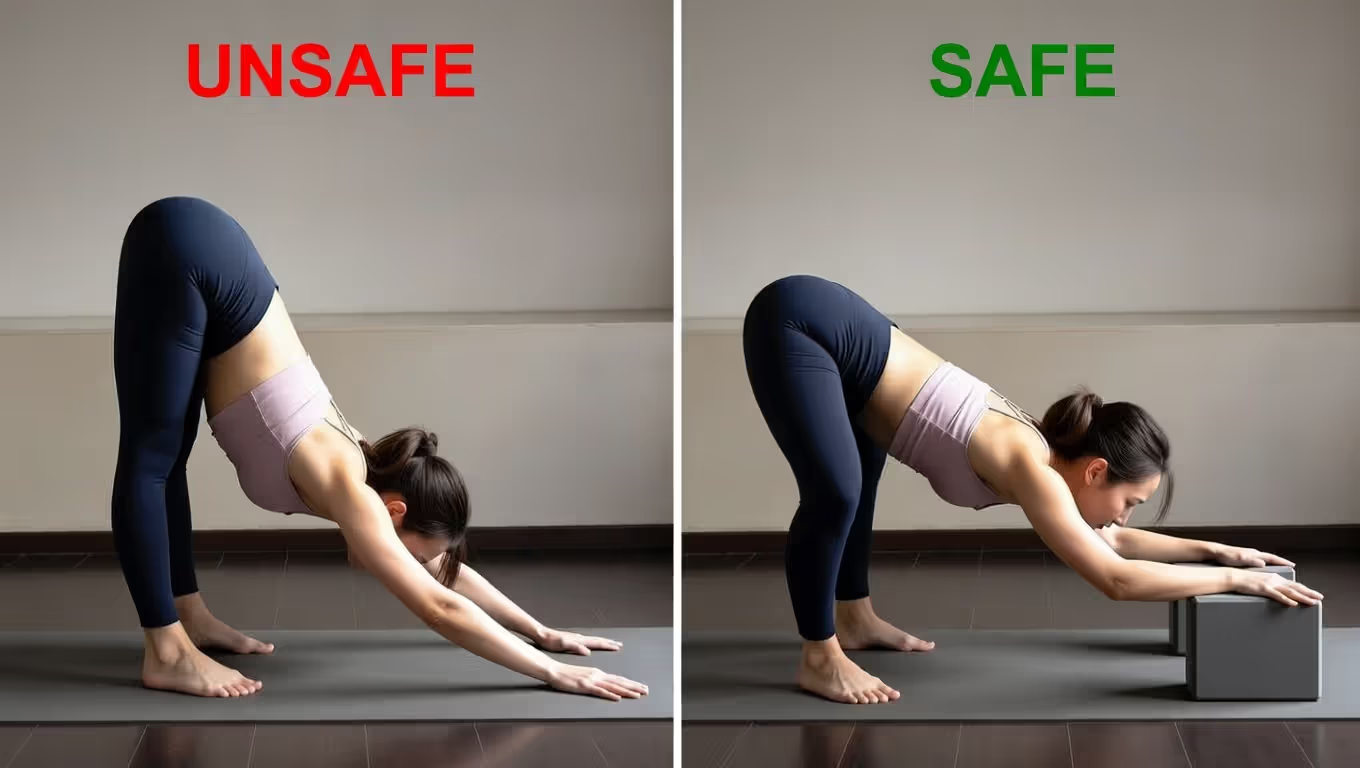
The "no pain, no gain" mentality destroys therapeutic potential. Pain signals indicate threat, triggering protective responses that increase muscle tension and inflammation. Your target sensation during gentle rehabilitation yoga should be 2-3 on a 10-point scale—noticeable but not uncomfortable. When you push into pain (6+ on that scale), you activate the sympathetic nervous system, releasing cortisol and adrenaline that heighten pain sensitivity for hours afterward.
Improper alignment creates compensatory patterns. If your knees collapse inward during a standing pose because your hips are tight, you're loading knee joints in ways that accelerate degeneration. Better to modify the pose dramatically—use a chair for support, reduce the range of motion, or skip it entirely—than to practice misalignment repeatedly. One student with chronic knee pain insisted on full lunges despite obvious valgus collapse. After six weeks, her pain intensified. When she switched to supported split-stance positions with proper alignment, pain decreased within two weeks.
Skipping warm-ups seems efficient but backfires physiologically. Cold muscles and fascia have reduced elasticity and increased injury risk. More importantly, your nervous system needs time to assess safety before allowing deeper ranges of motion. Start every session with 5-10 minutes of gentle movement: neck rolls, shoulder circles, spinal waves while seated. This preparatory phase isn't optional—it's when you establish the mind-body connection that makes therapeutic yoga exercises effective.
Breath-holding during challenging positions activates stress responses. When you hold your breath, you signal danger to your nervous system. Practice this rule: if you can't maintain smooth, even breathing in a pose, you've gone too far. Back off until your breath flows naturally. This biofeedback mechanism prevents overexertion more reliably than any external guideline.
Inconsistent practice undermines neurological adaptation. Your nervous system requires regular input to establish new patterns. Practicing intensely once weekly produces less benefit than gentle 15-minute sessions five days weekly. The cumulative effect of frequent, moderate practice allows your brain to consolidate new motor patterns and pain-processing strategies.
Building Your First 4-Week Gentle Rehabilitation Yoga Routine
Author: Logan Brooks;
Source: thelifelongadventures.com
Progressive overload applies to therapeutic yoga, but the progression is subtler than adding weight at the gym. You're gradually increasing your nervous system's tolerance for movement and teaching your brain that certain positions are safe.
| Week | Session Frequency | Pose Hold Time | Focus Area | Intensity Level |
| 1 | 3-4 sessions | 30-60 seconds | Basic positions, breath awareness | 2/10 sensation |
| 2 | 4-5 sessions | 60-90 seconds | Adding gentle transitions | 2-3/10 sensation |
| 3 | 4-5 sessions | 90-120 seconds | Increasing hold times, introducing variations | 3/10 sensation |
| 4 | 5-6 sessions | 2-3 minutes | Combining poses into short sequences | 3-4/10 sensation |
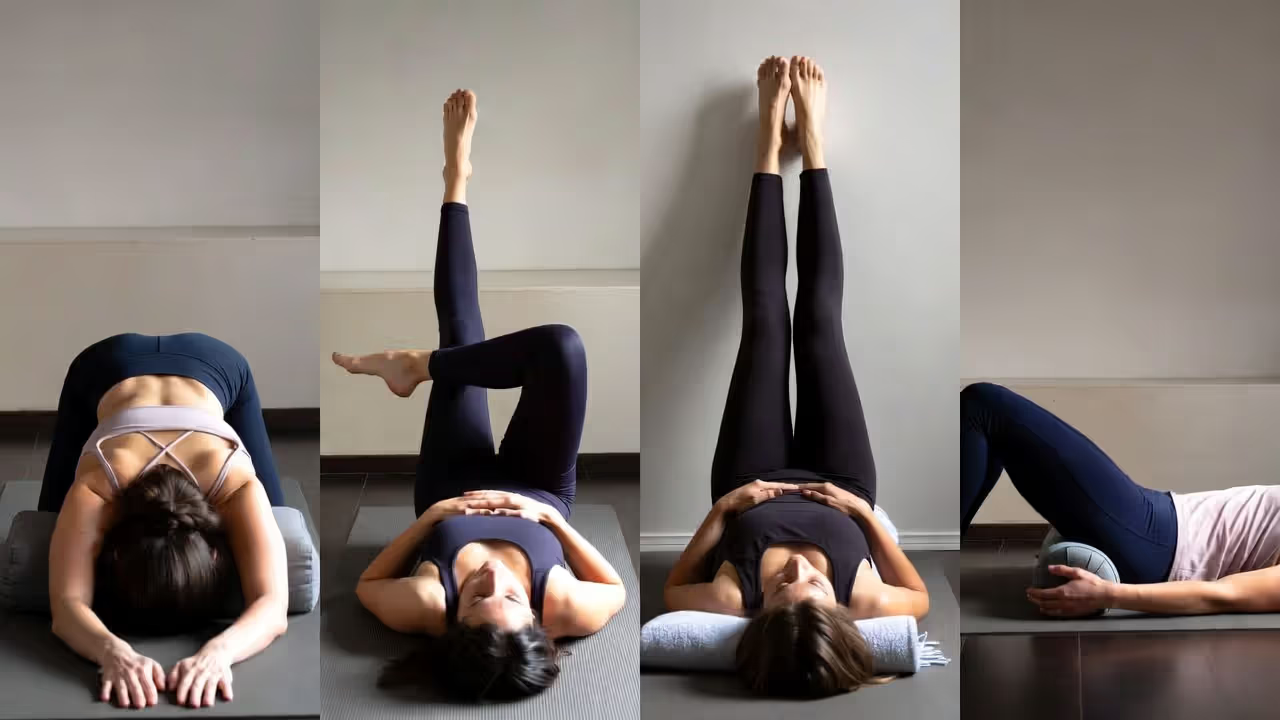
Week One: Focus on three poses total—Constructive Rest Position, Supported Child's Pose, and Legs-Up-the-Wall. Practice 15 minutes per session. Your primary goal is establishing consistent practice and learning what 2/10 sensation feels like in your body. Spend time in each position noticing where you hold tension and consciously releasing it. End every session with 3-5 minutes in Supported Savasana.
Week Two: Add Supine Figure-4 Stretch and Ear-to-Shoulder Release. Increase session length to 20 minutes. Begin connecting poses with slow transitions—the movement between positions matters as much as the holds. When moving from lying to sitting, roll to your side first and use your arms to press yourself up. Avoid jackknifing at the waist.
Week Three: Introduce Cat-Cow Variations and Supported Reclined Twist. Your sessions now last 25-30 minutes. Start noticing patterns: which poses feel better in the morning versus evening? Does practicing before or after meals affect your experience? This self-knowledge allows you to optimize timing.
Week Four: Add Supported Squat and practice all eight positions across your sessions (you don't need all eight every day). Create mini-sequences: Cat-Cow flowing into Child's Pose, or Supine Figure-4 followed by Constructive Rest. Sessions extend to 30-35 minutes. By now, you should notice improved ease in daily activities—bending, reaching, or sitting for extended periods.
Rest days matter. Schedule at least one complete rest day weekly. Active recovery—gentle walking or swimming—works well on off days. Your tissues need time to adapt to new movement patterns.
When to Choose Yoga Therapy vs. Regular Yoga Classes
Author: Logan Brooks;
Source: thelifelongadventures.com
The distinctions aren't merely semantic—they reflect fundamentally different approaches to pain management yoga therapy.
| Approach | Average Cost | Personalization Level | Medical Integration | Best For |
| Yoga Therapy | $75-150/session | Highly individualized assessment and programming | Coordinates with medical team, reviews imaging/diagnoses | Complex conditions, multiple pain sites, past treatment failures |
| Studio Classes | $15-30/class | General modifications offered, self-adaptation required | Minimal; instructors cannot provide medical advice | Stable conditions, self-motivated learners, budget-conscious |
| Physical Therapy | $50-150/session (often insurance-covered) | Individualized but exercise-focused | Direct medical supervision, prescription-based | Acute injuries, post-surgical, need insurance coverage |
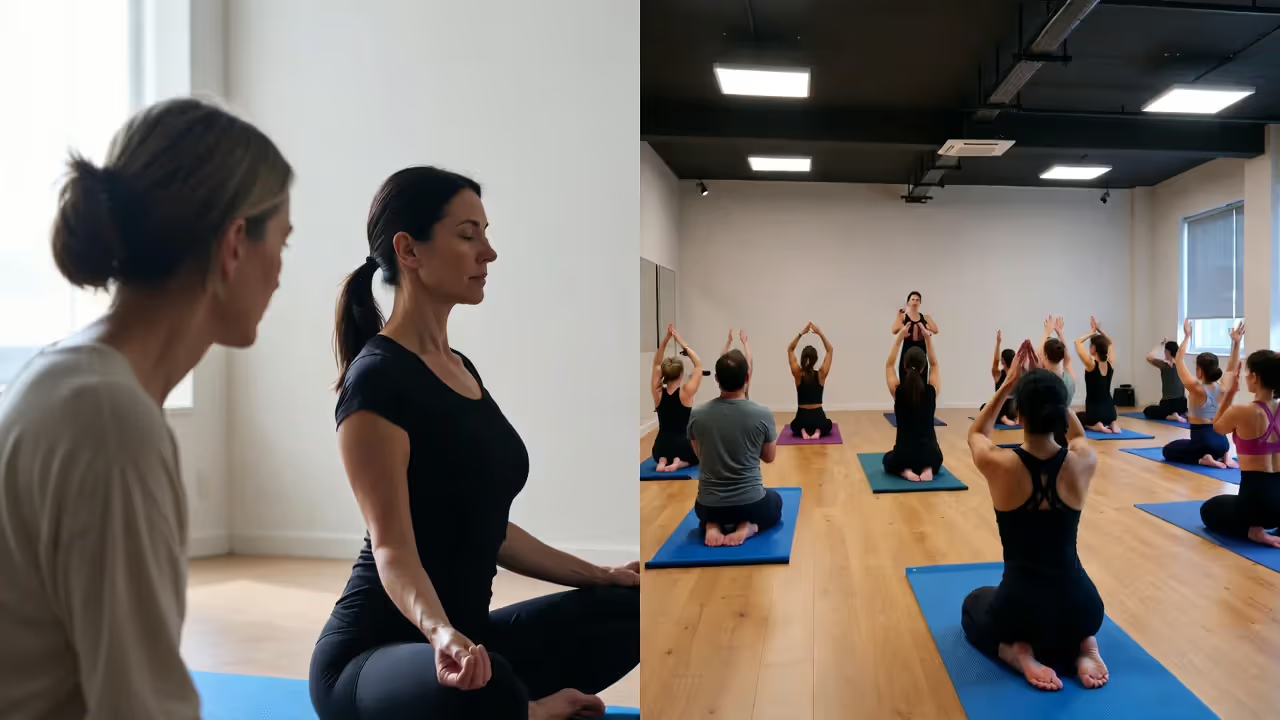
Yoga therapists complete 1,000+ hours of specialized training beyond standard teacher certification. They conduct intake assessments similar to medical appointments: reviewing your history, observing movement patterns, identifying compensatory strategies. Sessions are private or small-group, allowing real-time adjustment of poses to your specific limitations.
A yoga therapist might spend 30 minutes of your first session simply watching you sit, stand, and walk. They're identifying whether your right hip hikes during gait, if you shift weight to avoid loading one side, whether your shoulders round forward. This assessment informs a customized practice addressing your unique dysfunction patterns.
Regular studio classes follow predetermined sequences. Instructors offer modifications, but you must recognize when and how to apply them. This works well if you have body awareness and a stable condition. If your pain is unpredictable or you're unsure which modifications to choose, you risk practicing ineffectively or harmfully.
Cost considerations are real. Yoga therapy rarely accepts insurance (though some practitioners provide documentation for HSA/FSA reimbursement). If budget is limited, consider this hybrid approach: invest in 3-4 yoga therapy sessions to establish a personalized practice, then maintain it through home practice or carefully selected studio classes. Many therapists offer this model explicitly, providing video recordings of your custom sequence for home use.
Physical therapy excels at acute injury rehabilitation and post-surgical recovery. PTs use manual therapy techniques (joint mobilization, soft tissue work) that yoga therapists don't. However, PT often emphasizes strengthening and functional movement over the nervous system regulation and mind-body integration central to yoga approaches. Some conditions benefit from combining both: PT for tissue-level healing, yoga for pain processing and stress management.
Frequently Asked Questions About Yoga for Pain Management
Chronic pain creates isolation—you stop activities that once brought joy, decline invitations, and gradually shrink your world to accommodate limitations. Therapeutic yoga offers a path back to embodiment, helping you reclaim movement and rebuild trust in your body's capabilities.
The practice requires patience. You're not fixing a mechanical problem with a quick repair; you're retraining neurological patterns established over months or years. Some days will feel discouraging—pain may spike despite consistent practice, or you'll notice minimal progress. These plateaus are normal. The nervous system doesn't adapt linearly; it consolidates new patterns through periods of apparent stagnation before sudden improvements emerge.
Track your progress through functional measures rather than pain scores alone. Can you sit through a movie without needing to stand? Reach into the back seat of your car without bracing? Play with grandchildren for longer periods? These real-world improvements often precede numerical pain reductions and provide motivation during difficult phases.
Consider your yoga practice as a laboratory for self-discovery. Each session provides information about your body's current state, your habitual tension patterns, and your relationship with discomfort. This awareness extends beyond your mat—you'll notice when you're clenching your jaw during stressful meetings or hiking your shoulders while driving. These insights allow you to intervene before pain escalates.
The poses themselves matter less than the attention you bring to them. A simple constructive rest position practiced with full awareness provides more therapeutic benefit than a dozen poses performed mechanically. Quality of presence outweighs quantity of movement.
Your pain story doesn't define your future. While chronic conditions may not disappear completely, the relationship you have with pain can transform. Through consistent, intelligent practice, many people shift from being controlled by pain to managing it effectively, reclaiming activities and engagement with life they thought were permanently lost.
Related Stories
Read more

Read more




The content on this website is provided for general informational and educational purposes related to health, yoga, fitness, and overall wellness. It is not intended to replace professional medical advice, diagnosis, or treatment.
All information, workout suggestions, yoga practices, nutrition tips, and wellness guidance shared on this site are for general reference only. Individual health conditions, fitness levels, and medical needs vary, and results may differ from person to person. Always consult a qualified healthcare provider before starting any new exercise program, dietary plan, or wellness routine.
We are not responsible for any errors or omissions, or for any outcomes resulting from the use of information presented on this website. Your health and fitness decisions should always be made in consultation with appropriate medical and fitness professionals.