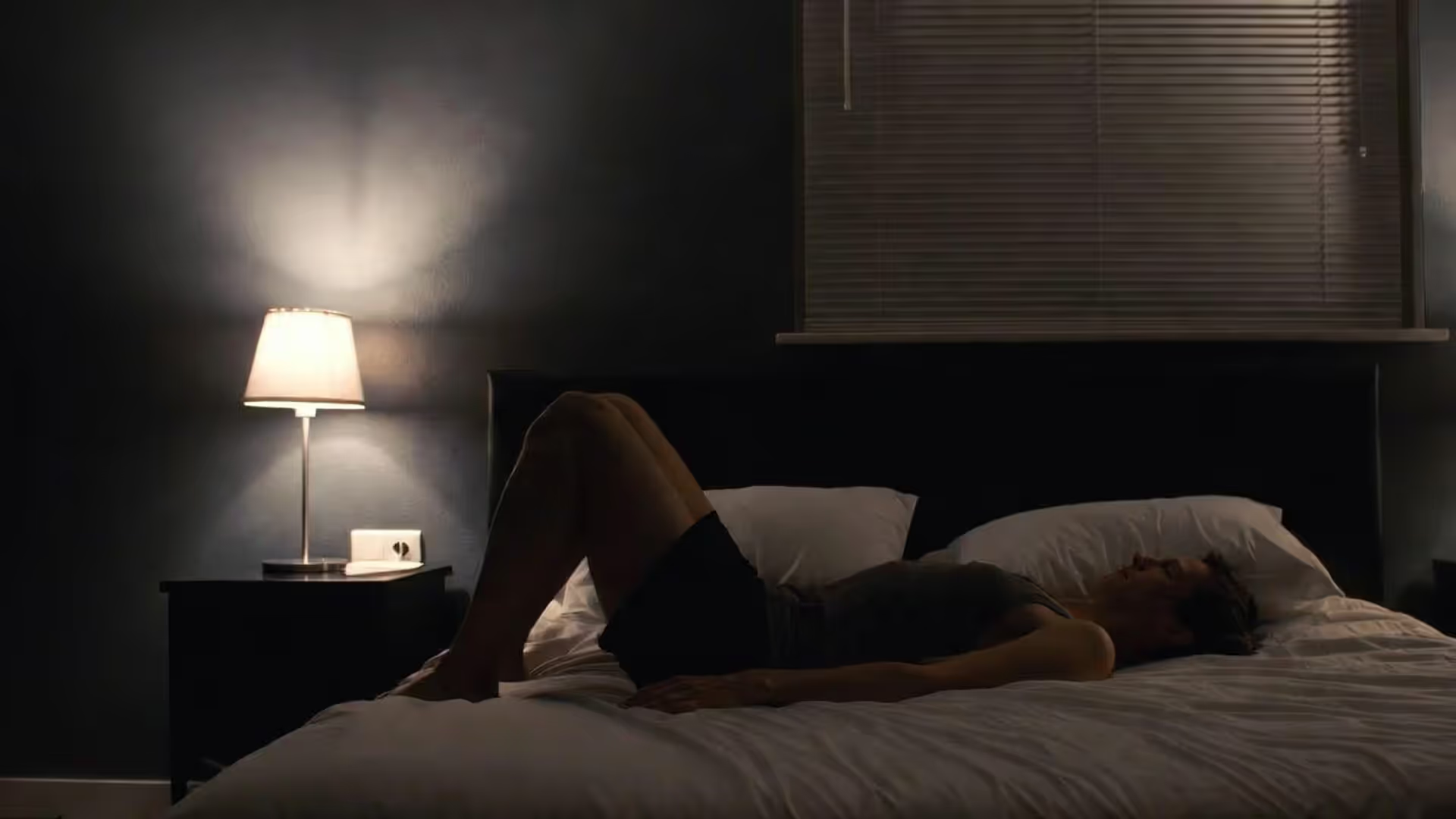
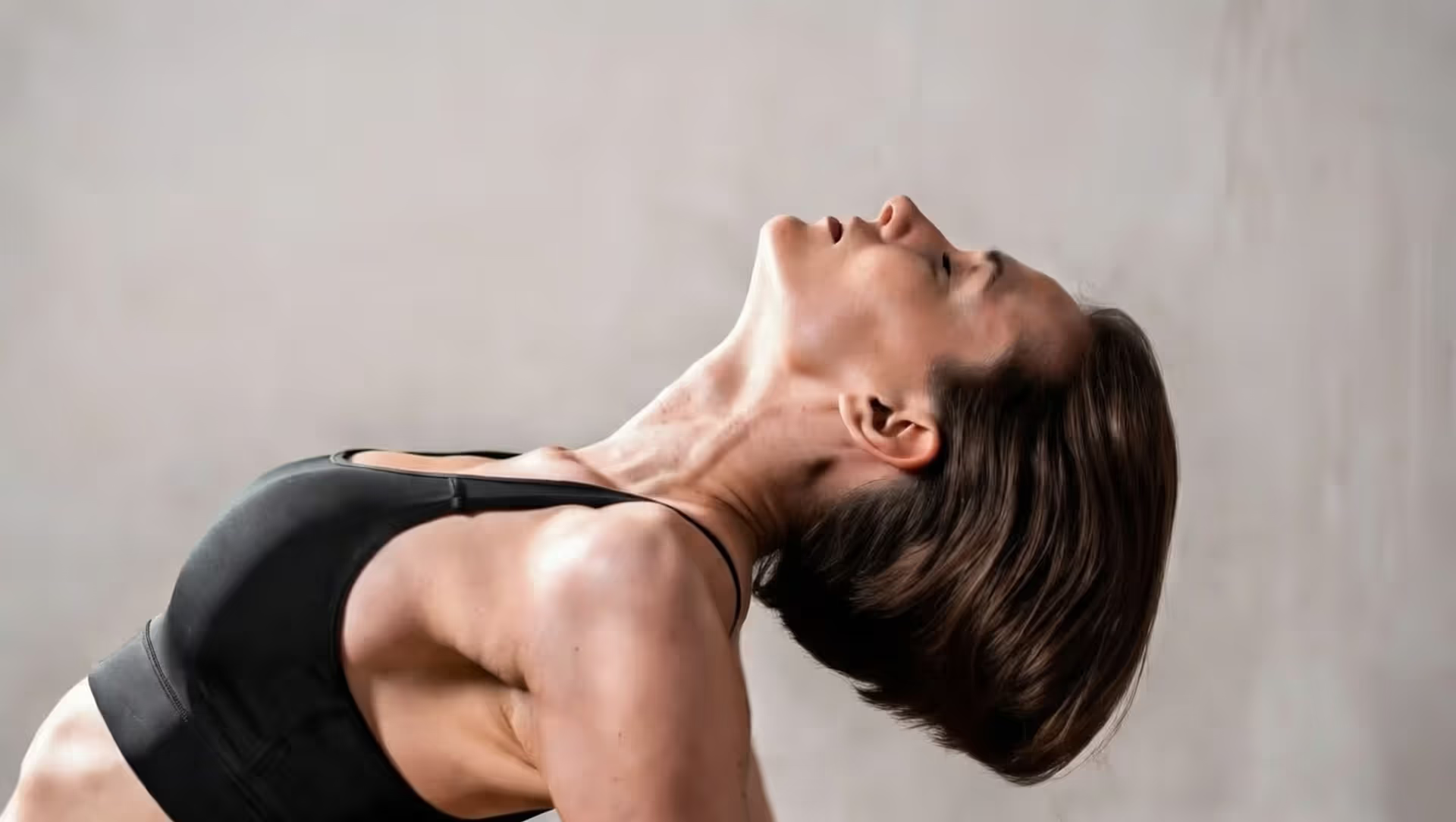
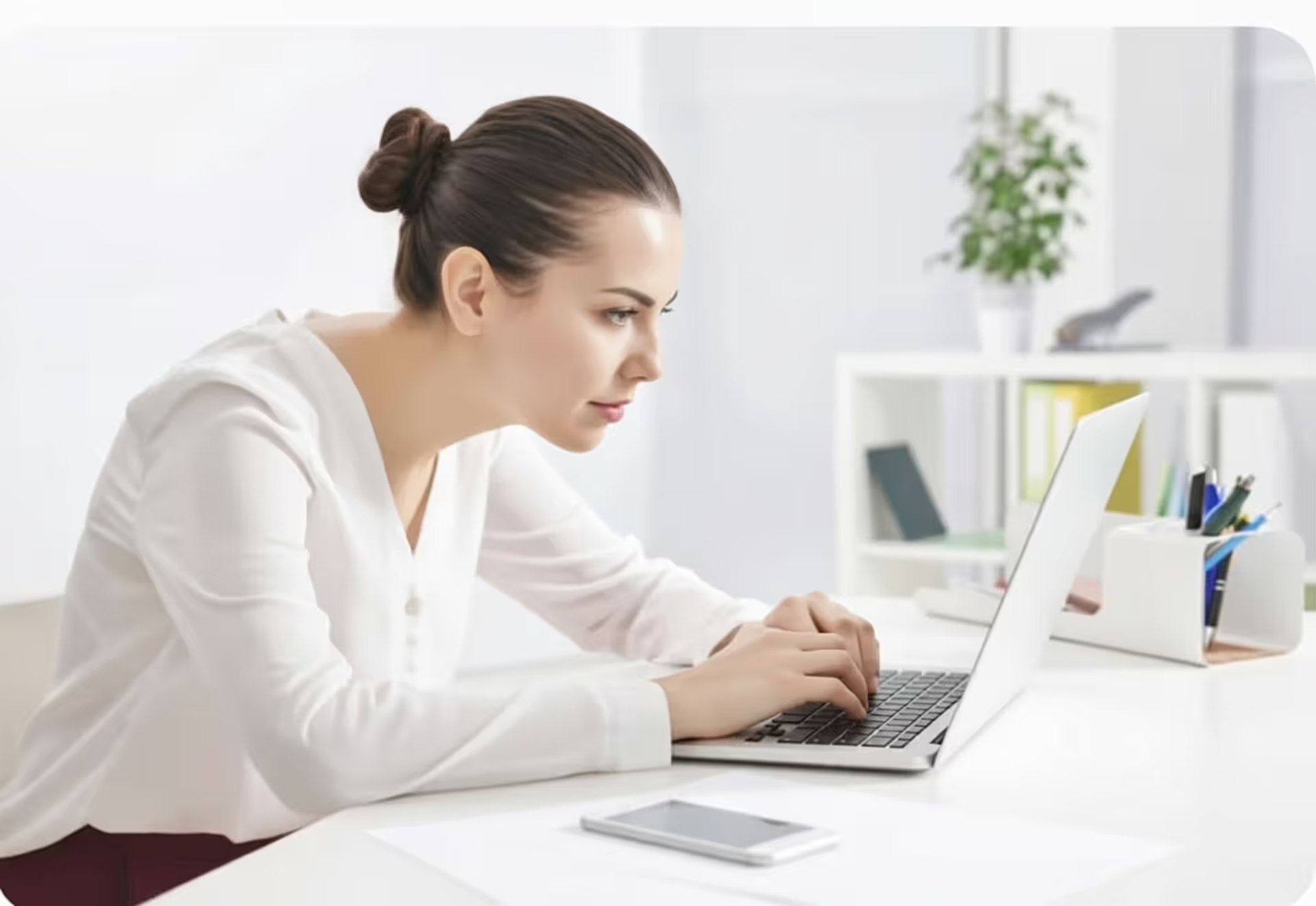
Remember that last presentation where your hands wouldn't stop shaking? Or when your chest felt so tight during an argument that you couldn't catch a full breath? Maybe you lay awake last night replaying every awkward conversation from the past week.
Here's what's happening: your nervous system is stuck in overdrive. It's treating everyday stress like life-threatening danger. And here's the surprising part—specific yoga movements can flip that switch in under 20 minutes.
I'm not talking about generic relaxation or "just breathe" advice. Physical pressure on certain body parts literally stimulates the vagus nerve. Extending your exhale past your inhale duration triggers measurable chemical changes. Some poses work fast; others need time. And weirdly, the trendiest yoga classes (looking at you, hot vinyasa) often make anxiety worse.
Let's break down exactly which practices work, why they work, and how to use them when panic hits at 3 a.m.
How Yoga Reduces Anxiety at the Nervous System Level
Picture the vagus nerve as a massive information highway connecting your brain to your heart, lungs, and digestive system. When it's working properly, it acts like your body's brake pedal. During anxiety? That brake fails.
Your sympathetic nervous system—the gas pedal—takes over completely. Heart racing. Breathing shallow. Muscles clenched. Here's where yoga gets interesting: certain positions physically squeeze your torso in ways that press on the vagus nerve. Forward folds do this. So do inversions where your legs go higher than your heart.
That physical pressure? It sends a direct message to your brain: "We're safe. Stand down."
Breathing mechanics matter just as much. Every inhale slightly speeds your heart rate. Every exhale slows it down. When you make your exhale longer—say, breathing in for 4 counts and out for 6—you're essentially hacking your biology. Your body can't maintain panic mode when you're breathing like someone completely relaxed.
A 2020 study in the Journal of Psychiatric Practice tracked people doing gentle yoga three times weekly. After eight weeks? Their anxiety scores dropped 30%. That's comparable to certain medications, without the side effects.
Your stress hormone cortisol measurably decreases after just 20 minutes. Those chronically tight shoulders? That clenched jaw you don't notice until it aches? They're feeding your anxiety through a feedback loop. Release the physical tension, and the mental spiral loses fuel.
Brain scans show something even more remarkable. Regular practitioners develop thicker prefrontal cortexes—the brain region responsible for rational thinking and emotional regulation. Your amygdala (the alarm system triggering panic) becomes less reactive. You're literally rewiring neural pathways.
8 Essential Anxiety Relief Stretches You Can Do Anywhere
Author: Jessica Taylor;
Source: thelifelongadventures.com
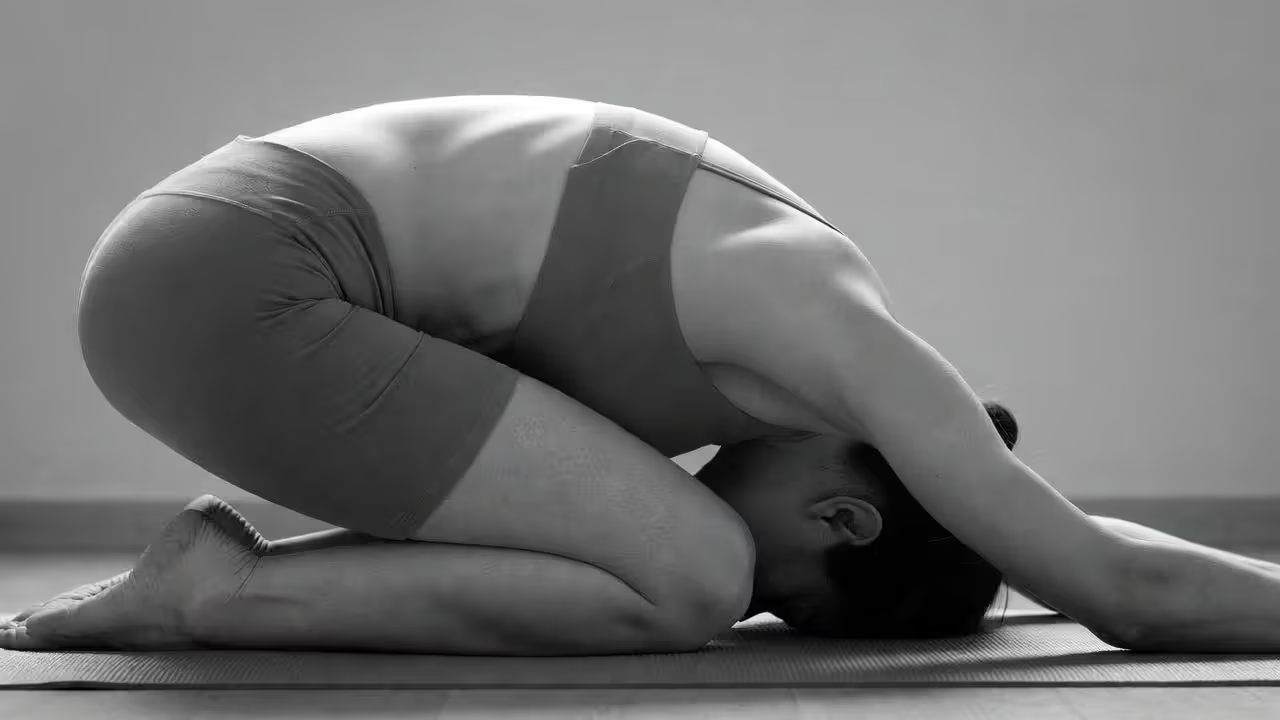
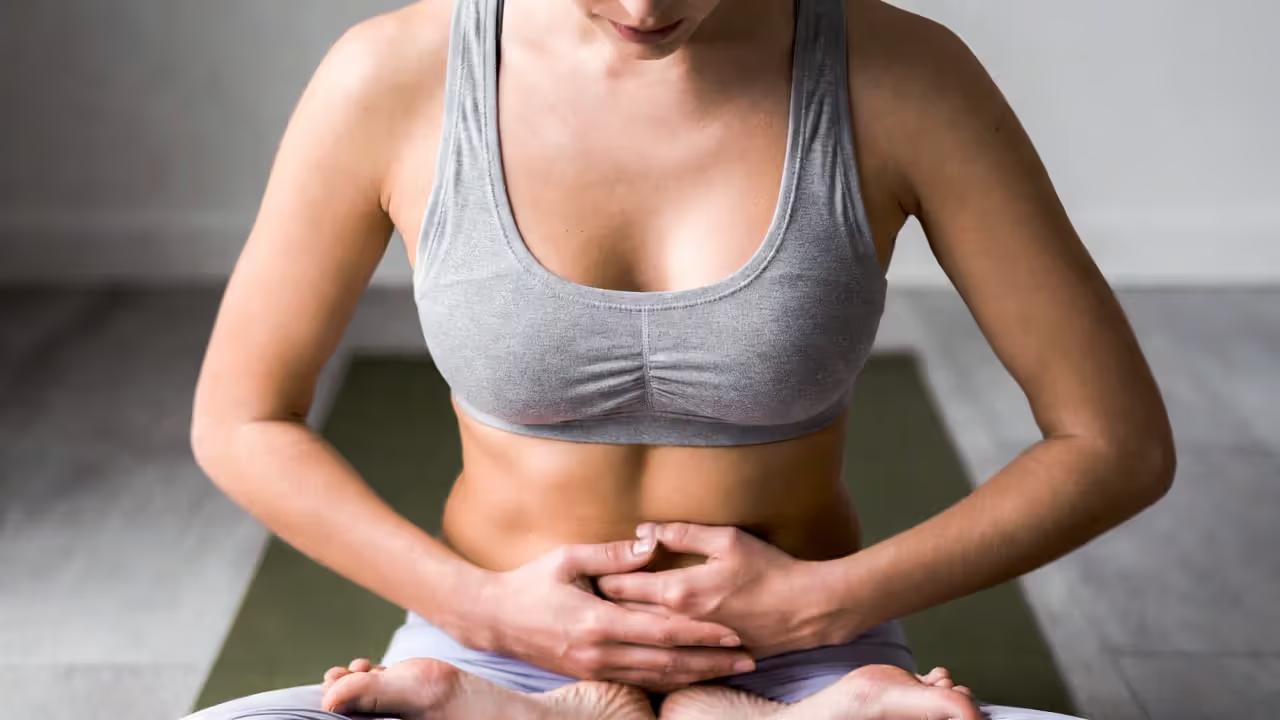
Child's Pose (Balasana): Kneel down and separate your knees wide while keeping your big toes touching. Fold forward, draping your torso between your thighs. Arms can stretch forward or rest back by your sides—whatever feels natural.
This compresses your belly gently, massaging the vagus nerve. Your breath automatically slows. Can't get your butt to your heels? Roll up a towel and tuck it in the back of your knees. Stay here 2-5 minutes. Focus on making each breath out longer than the one before.
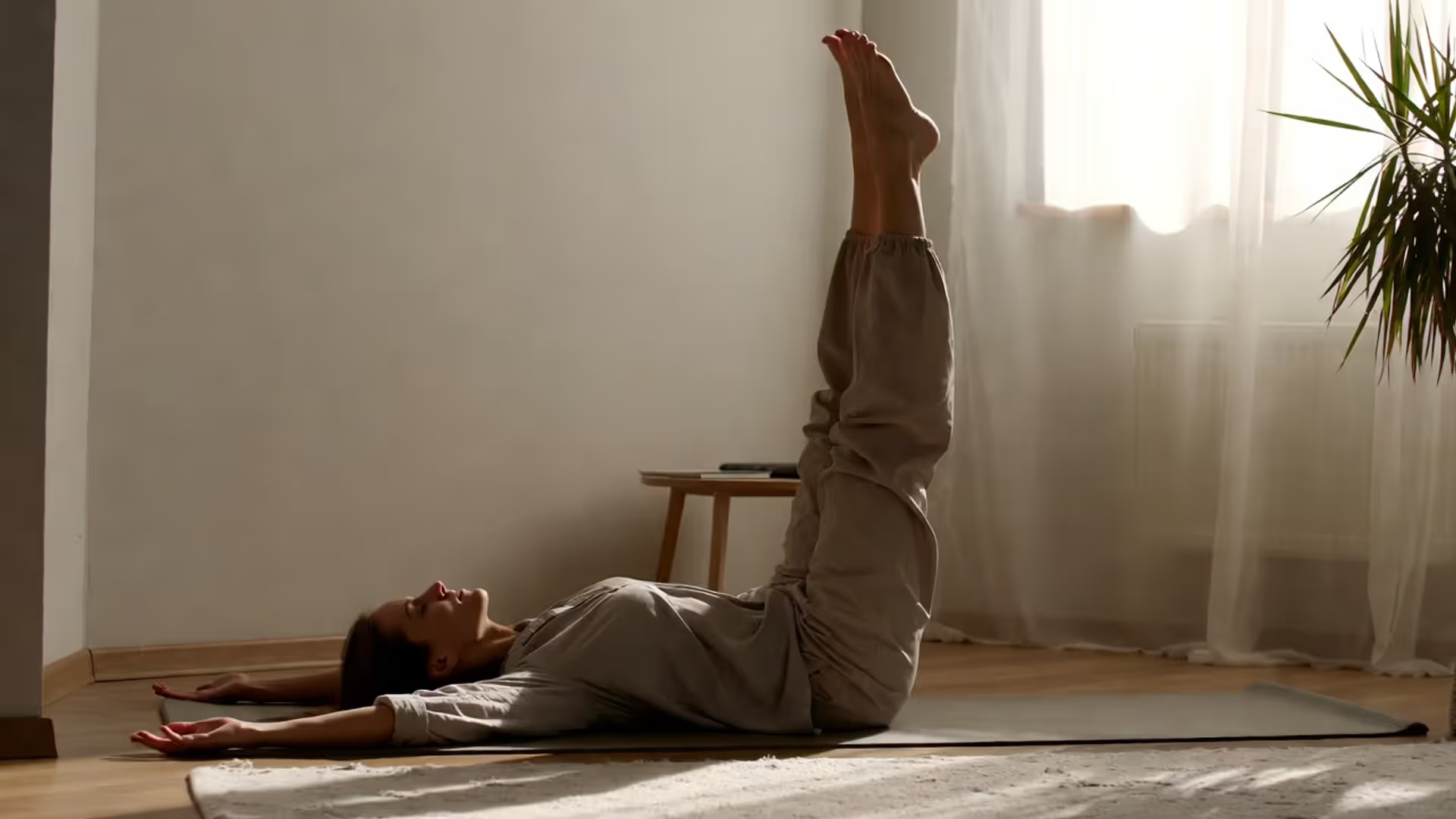
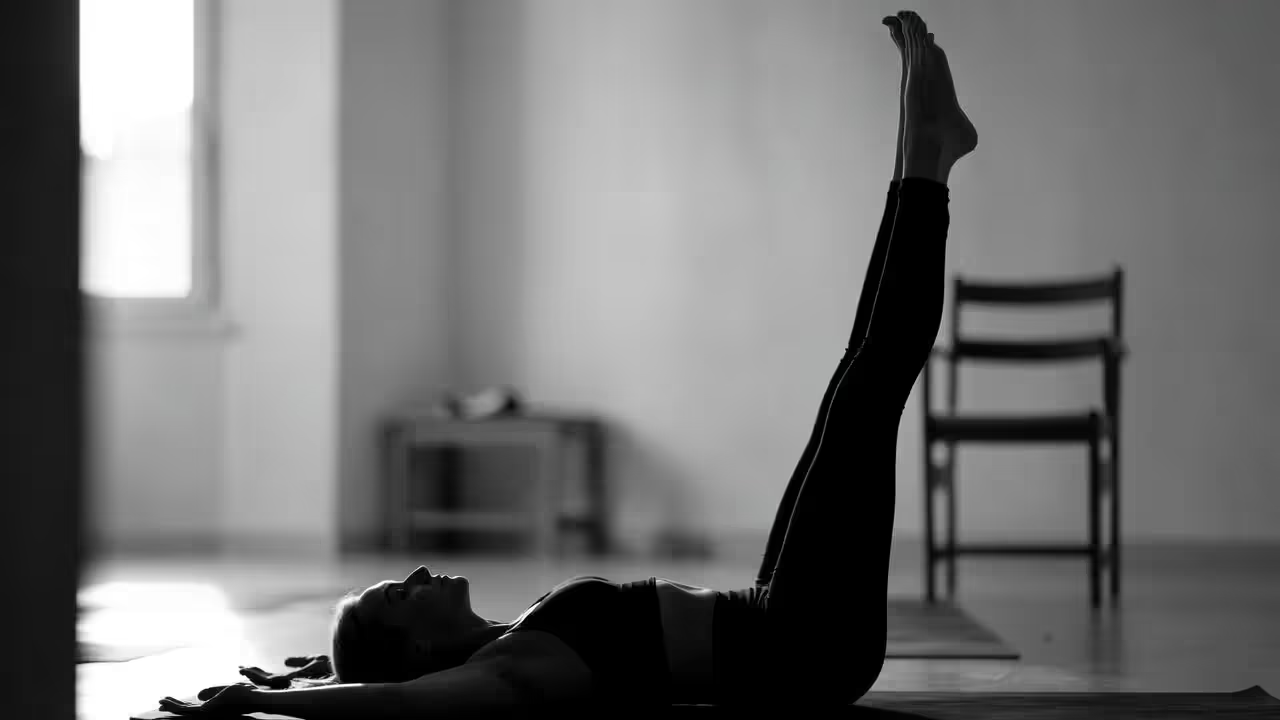
Legs-Up-the-Wall (Viparita Karani): Sit sideways next to a wall, then swing your legs up as you lower your back to the floor. Your butt doesn't need to touch the wall—a few inches away actually feels better for most people.
This mild inversion reverses blood flow from your legs, reducing your heart's workload. Your nervous system interprets this as: time to rest. Let your arms fall open, palms up. This works exceptionally well for racing thoughts and restless energy. Hold 5-10 minutes.
Seated Forward Fold (Paschimottanasana): Sit with legs extended. Flex your feet. Hinge at your hips—not by rounding your lower back. Don't worry about touching your toes. Seriously. The goal is lengthening your spine while breathing into your back.
Tight hamstrings? Bend your knees generously. The compression of torso to thighs stimulates that vagus nerve again. Forward folds naturally turn your attention inward. Hold 2-3 minutes, letting gravity do the work.
Supported Fish Pose: Grab a yoga block or firm couch cushion and place it lengthwise under your shoulder blades. Another block or folded blanket supports your head. Stretch your legs out, arms at 45 degrees from your sides, palms facing up.
This opens your entire chest, counteracting that suffocating feeling anxiety creates. The support means you can hold it 3-5 minutes without strain, giving your chest muscles time to fully release.
The mind and body are not separate. What affects one, affects the other.
— B.K.S. Iyengar
Standing Forward Fold (Uttanasana): Stand up, then fold forward from your hips. Let your upper body hang completely. Bend your knees deeply—this isn't about flexibility, it's about calming your nervous system.
Grab opposite elbows or let your arms dangle. Your head hanging upside down increases blood flow to your brain while the dangling motion releases your back muscles. Stay 1-2 minutes. Gentle swaying side to side feels amazing.
Supine Twist: Lie on your back. Draw your right knee to your chest, then guide it across your body to the left. Extend your right arm out perpendicular to your torso. Turn your head right.
The twisting action massages your digestive organs (anxiety often shows up as stomach issues) and releases spinal tension. The gentle compression activates your parasympathetic response. Hold 1-2 minutes per side.
Cat-Cow (Marjaryasana-Bitilasana): Get on all fours. Alternate between arching your spine (dropping belly, lifting gaze) and rounding it (tucking chin, curving back). Match the movement to your breath.
Inhale into the arch. Exhale into the round. This rhythmic motion releases stored tension while the breath coordination creates a meditative state. Move slowly enough that each position gets a full breath. Continue 1-2 minutes.
Reclining Bound Angle (Supta Baddha Konasana): Lie on your back. Press the soles of your feet together and let your knees fall open. Crucial part: place blocks or cushions under each knee for support.
Unsupported knees create tension instead of releasing it. Rest one palm on your belly, one on your chest. This hip opener simultaneously expands your chest and puts you in a vulnerable position—which paradoxically signals safety to your nervous system. Hold 3-5 minutes.
Calming Breathing Techniques to Pair With Your Practice
Breath control—pranayama in yoga terminology—changes your state faster than any pose. While positions take several minutes to create effects, strategic breathing patterns shift your physiology in seconds.
Author: Jessica Taylor;
Source: thelifelongadventures.com
4-7-8 Breath for Immediate Relief
Dr. Andrew Weil popularized this pattern that forces a relaxation response. Empty your lungs completely through your mouth with an audible whoosh. Close your mouth. Breathe in silently through your nose for 4 counts. Hold for 7 counts. Release all air through your mouth for 8 counts.
That extended exhale combined with the hold activates your parasympathetic nervous system. Do four complete cycles at first—more can make you lightheaded. Use this when you feel panic starting, before stressful events, or when anxiety wakes you up at night. The counting itself gives your mind something to focus on besides worst-case scenarios.
Alternate Nostril Breathing for Balance
Nadi shodhana balances your brain hemispheres while calming your system. Lift your right hand. Press your thumb against your right nostril to close it. Breathe in through your left nostril for 4 counts. Pause briefly with both nostrils closed. Release your thumb and exhale through your right nostril for 4 counts. Now inhale right side. Close both briefly. Exhale left. That's one full round.
Do 5-10 rounds with smooth, even breathing throughout. This helps when anxiety shows up as mental chaos or decision paralysis. Practice before bed if thoughts won't stop spinning, or mid-afternoon when you feel mentally scattered.
Box Breathing for Grounding
Navy SEALs use this technique to stay calm under extreme pressure. Each phase of breathing gets equal time. Breathe in for 4 counts. Hold full for 4 counts. Breathe out for 4 counts. Hold empty for 4 counts.
The equal timing creates a sense of control and stability. The holds strengthen your respiratory system and improve CO2 tolerance—helpful since anxiety often involves shallow, rapid breathing. Visualize tracing a square's edges as you breathe: up the left side on the inhale, across the top on the full hold, down the right side on the exhale, across the bottom on the empty hold.
Practice 2-5 minutes when you feel disconnected from your body or reality. The structure makes it easier to concentrate compared to less rigid techniques.
When the breath wanders, the mind is unsteady; but when the breath is calmed, the mind too will be still.
— Hatha Yoga Pradipika
Building a 15-Minute Daily Routine for Nervous System Regulation
Consistency beats duration for managing anxiety. Fifteen minutes daily outperforms a weekly hour-long class because you're repeatedly signaling safety to your nervous system.
Morning routine (preventive): Start in child's pose for 2 minutes to set a calm foundation. Flow through 1 minute of cat-cow to wake your spine gently. Do standing forward fold for 1 minute, head hanging heavy. Move to legs-up-the-wall for 5 minutes—this becomes your anchor pose. Slowly sit up and practice 5 minutes of alternate nostril breathing.
This sequence prepares your nervous system for daily challenges without activating stress responses.
Evening routine (wind-down): Begin with 2 minutes of cat-cow to shed accumulated tension. Hold seated forward fold for 2 minutes. Move into supine twist, 90 seconds each side. Transition to reclining bound angle for 3 minutes. Finish with 5 minutes of 4-7-8 breathing.
This sequence specifically targets tension patterns that build during waking hours and primes your body for deep sleep.
Acute anxiety protocol (when panic strikes): Skip poses entirely at first—go straight to breathwork. Start with box breathing for 2 minutes to regain control. Once breathing steadies, move to child's pose for 3 minutes, focusing on lengthening exhales. Transition to legs-up-the-wall for 5 minutes. Close with 4-7-8 breathing for 2 minutes.
This sequence prioritizes immediate nervous system regulation over flexibility or strength.
Here's the key distinction: preventive practice can include more movement and variety. Acute anxiety demands stillness and simplicity. When your system is already activated, complex sequences or challenging poses add stress instead of relief.
Grounding Exercises: When You Need to Come Back to Your Body
Author: Jessica Taylor;
Source: thelifelongadventures.com
Anxiety often creates dissociation—that floaty, disconnected feeling where you're not fully present in your body. Grounding techniques use physical sensation to anchor your awareness back into the current moment.
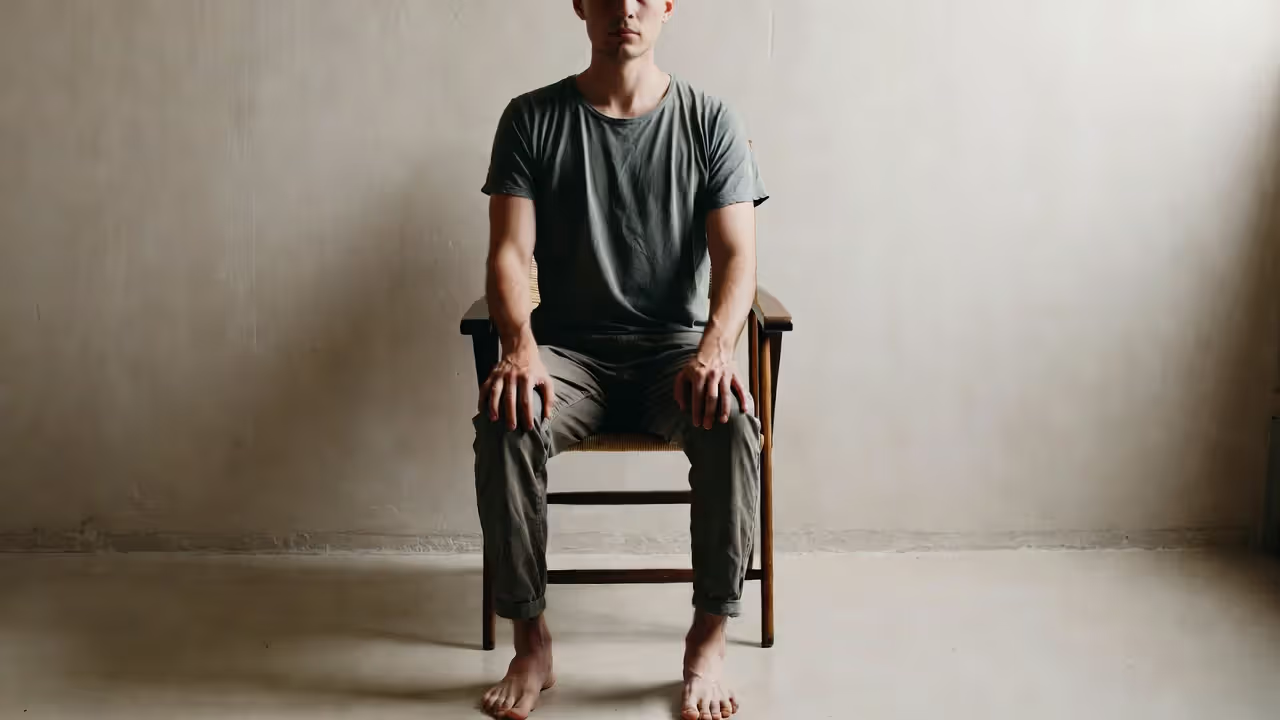
Seated grounding: Sit in a solid chair with both feet flat on the floor. Press down hard through your feet and notice the pressure against the ground. Feel the chair supporting your entire weight. Place your palms flat on your thighs and press down firmly, engaging your arm muscles.
Now catalog five things you can see, four sounds you hear, three textures you can touch, two scents you notice, one taste. This sensory inventory combined with physical pressure redirects attention from anxious thoughts to immediate reality.
Standing mountain pose with weight shifting: Stand with feet hip-width apart. Slowly rock your weight forward toward your toes, then back into your heels, then toward the outer edges of your feet, then inner arches. Return to center.
This subtle movement requires enough focus that anxious thoughts recede. The weight shifts stimulate proprioceptors—sensors that tell your brain where your body is in space.
Hand pressing: Bring your palms together at chest level. Press hard enough that your arm muscles engage substantially. Hold 30 seconds while breathing steadily. Release and notice the sensations lingering in your hands and arms.
The physical effort interrupts anxiety's mental loops. The pressure stimulates nerve endings, increasing body awareness.
Foot stomping: Stand and deliberately stomp each foot hard against the ground 10 times. Notice the sensation traveling up through your legs. This activates large leg muscles and creates vibration through your skeleton—both signal to your nervous system that you're solid and present.
Particularly effective when anxiety creates feelings of unreality or floating.
Wall pressing: Stand an arm's length from a solid wall. Place both palms flat against it and push hard as if trying to move the structure. Hold 20 seconds, engaging your chest, arms, and core.
The isometric muscle contraction grounds you through effort. The wall's resistance provides concrete sensory feedback.
Common Mistakes That Make Anxiety Worse During Yoga
Author: Jessica Taylor;
Source: thelifelongadventures.com
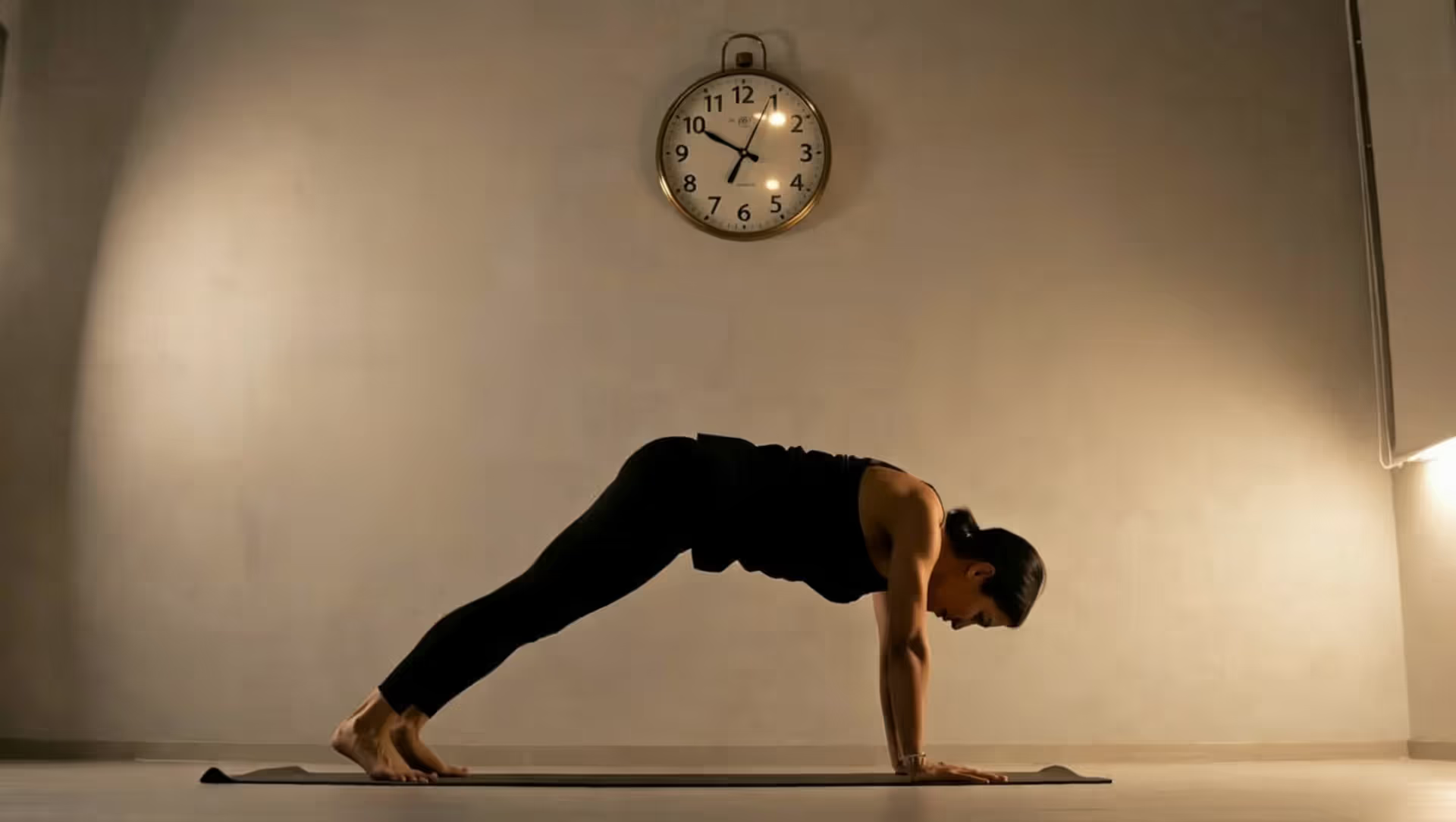
Choosing power or hot yoga when you're already activated: Vigorous, fast-paced practices increase heart rate and body temperature—the same physiological changes that happen during anxiety. If you're already revved up, these styles intensify the problem.
Save intense practices for when you feel grounded and want energizing. When anxious, choose restorative, yin, or gentle hatha styles.
Forcing your breath into uncomfortable patterns: Pranayama should never feel strained or suffocating. If a breathing technique causes gasping, dizziness, or increased anxiety, stop immediately. Your nervous system interprets struggling to breathe as danger.
Start with simple exhale lengthening before trying complex patterns. Always prioritize smooth, comfortable breathing over hitting specific counts.
Skipping savasana: That final resting pose isn't optional—integration happens during this time. Your nervous system needs those 5-10 minutes of stillness to consolidate the physiological changes created during practice.
Leaving your mat immediately after poses is like cooking a meal and never eating it. If lying still triggers anxiety, use legs-up-the-wall as your closing pose instead.
Comparing yourself to others: Flexibility and "perfect" form don't correlate with anxiety relief. Someone barely reaching their shins in a forward fold gets the same nervous system benefits as someone pressing their chest to their legs—if they're breathing correctly.
Focus on internal sensation over external appearance. Use props liberally; they're therapeutic tools, not beginner labels.
Practicing only when anxiety peaks: Yoga works best as prevention, not emergency response. Waiting until full panic makes it much harder to access the calm focus needed for effective practice.
Short daily practices prevent anxiety from building rather than trying to dismantle it after it peaks.
Holding your breath in challenging poses: When a pose feels difficult, people instinctively hold their breath—exactly the opposite of what helps anxiety. Breath-holding signals danger to your nervous system.
If you can't maintain steady breathing in a position, modify it or skip it. Continuous breath matters more than position shape.
Comparison: Best Yoga Poses for Different Anxiety Symptoms
Anxiety Symptom
Recommended Pose
Why It Works
Time to Hold
Racing thoughts
Child's Pose
Belly compression stimulates vagus nerve
2–5 min
Chest tightness
Supported Fish Pose
Opens chest cavity, allows deeper breathing
3–5 min
Restlessness
Legs-Up-the-Wall
Redirects blood flow, calms central nervous system
Frequently Asked Questions About Yoga for Anxiety Relief
How quickly does yoga work for anxiety?
Breathing techniques can shift your nervous system in 2-5 minutes—fast enough to use during acute episodes. Physical poses typically produce noticeable effects within 10-15 minutes. For lasting changes to baseline anxiety, expect 4-6 weeks of consistent practice (3-5 sessions weekly). Research shows measurable anxiety reductions after 8 weeks. That said, even your first session should provide some immediate relief, especially for physical symptoms like muscle tension and elevated heart rate.
What's the best time of day to practice yoga for anxiety relief?
Morning practice sets a calm baseline before daily stressors accumulate. Evening practice helps discharge built-up tension and improves sleep quality. For chronic anxiety, mornings work better; for anxiety that builds throughout the day, evenings are ideal. If you experience both patterns, try a short morning session (even 5 minutes of breathwork) plus a longer evening practice for full coverage. During acute anxiety episodes, practice whenever they occur—anxiety doesn't follow schedules.
Do I need special equipment or a studio membership?
No. The most effective anxiety-relief poses require only floor space. A yoga mat provides cushioning but isn't necessary—carpet or a doubled blanket works fine. Helpful but not essential: two blocks or thick hardcover books, a bolster or firm couch cushion, a folded blanket. Studio classes provide structure and community, which some find helpful, but they can also trigger social anxiety or comparison traps. Home practice allows self-pacing without external pressure. Free online videos offer guidance if you want direction without studio costs.
Is it safe to use yoga instead of anxiety medication or therapy?
No, and be wary of anyone who claims otherwise. Yoga is a powerful complementary tool, not a replacement for medical treatment. Research shows it enhances therapy outcomes and may allow some people to reduce medication—but only under medical supervision. Think of yoga like exercise and sleep: essential for mental health but not sufficient alone for treating clinical anxiety disorders. If your anxiety interferes with daily life, see a mental health professional. Yoga can be part of your treatment plan, not the entire plan.
Which yoga style is most effective for anxiety—Hatha, Yin, or Restorative?
Restorative yoga, using lots of props to support completely passive positions held 5-10 minutes, generates the strongest parasympathetic response. Yin yoga, holding floor positions 3-5 minutes, offers similar benefits with slightly more physical sensation. Gentle hatha provides middle ground with more variety. Avoid vinyasa, power, or heated yoga when anxious—these styles activate rather than calm. The best style is whichever you'll practice consistently. Try each and notice how your body responds in the hours after class, not just during it.
How is mindfulness integrated into yoga for anxiety?
Mindfulness within yoga happens through sustained attention on physical sensation and breath. Instead of letting your mind wander to worries, you repeatedly redirect attention to how your body feels in each pose: the stretch sensation in your hamstrings, the pressure of the floor against your back, the temperature of air entering your nostrils. This trains your brain toward present-moment awareness instead of future catastrophizing or past rumination—the two main modes of anxious thinking. Each time you notice your mind wandering and bring attention back to sensation, you strengthen your ability to regulate attention. This skill transfers off the mat, helping you interrupt anxiety spirals during daily life.
Anxiety thrives on disconnection—from your body, your breath, and the present moment. Yoga rebuilds those connections through concrete physical practices that shift your nervous system from threat detection to safety recognition. The poses and breathing techniques described here aren't about achieving flexibility, building strength, or perfect form. They're about creating specific physiological changes that make sustained anxiety physiologically impossible.
Start with just one technique: legs-up-the-wall for 5 minutes, or 4-7-8 breathing for four cycles. Notice what shifts in your body. Build gradually from there, keeping what resonates and discarding what doesn't. Your anxiety has unique triggers and expressions; your yoga practice should be equally personalized.
The goal isn't eliminating anxiety completely—anxiety is a normal human emotion. The goal is preventing it from hijacking your nervous system and having reliable tools to return to baseline when it does spike. With consistent practice, these techniques become automatic responses rather than effortful interventions. Your body learns what safety feels like physically and how to return there, even when your mind insists otherwise.
Can yoga help you lose weight? Explore what research shows about calorie burn, metabolic impact, hormone balance, and which yoga styles are most effective for supporting fat loss, improving body composition, and building sustainable habits beyond the mat.
Discover proven bedtime yoga stretches and calming breathing techniques designed to help you fall asleep faster and sleep more deeply. Follow a complete 15-minute routine with clear, step-by-step instructions to relax your nervous system, release tension, and prepare your body for restful sleep.
Discover 8 essential yoga poses and a simple 15-minute desk routine designed to correct poor posture, realign your spine, and ease upper back pain. Follow expert guidance to release tension, strengthen postural muscles, improve mobility, and prevent stiffness caused by long hours of sitting.
Discover 8 proven yoga poses designed to relieve neck pain and reduce cervical tension. Follow clear, step-by-step guidance tailored for desk workers to improve mobility, correct posture imbalances, restore healthy alignment, and prevent recurring stiffness caused by long hours of sitting.
The content on this website is provided for general informational and educational purposes related to health, yoga, fitness, and overall wellness. It is not intended to replace professional medical advice, diagnosis, or treatment.
All information, workout suggestions, yoga practices, nutrition tips, and wellness guidance shared on this site are for general reference only. Individual health conditions, fitness levels, and medical needs vary, and results may differ from person to person. Always consult a qualified healthcare provider before starting any new exercise program, dietary plan, or wellness routine.
We are not responsible for any errors or omissions, or for any outcomes resulting from the use of information presented on this website. Your health and fitness decisions should always be made in consultation with appropriate medical and fitness professionals.