Back pain has this way of infiltrating everything. Getting out of bed becomes a calculated maneuver. You're reaching for something on a shelf when—bam—your back seizes up without warning. That dull ache shadows you through meetings, grocery shopping, even watching TV on the couch.
Here's what the numbers tell us: About 8 in every 10 Americans will deal with serious back pain at some point. We're spending over $100 billion annually on this problem—doctor visits, pain meds, missed work days, reduced productivity.
Most people reach for pills first. Some start researching surgeons. But there's compelling evidence for trying something else before going down those roads. A study in the Annals of Internal Medicine tracked people who added yoga to their treatment plan. What happened? They reported markedly lower pain and better day-to-day function than folks who stuck with conventional medical care alone.
Why does this work? Yoga isn't just covering up symptoms. It builds up the muscles protecting your spine, releases chronic tension in overworked areas, sharpens your movement awareness, and calms inflammation by regulating your nervous system. You're not a passive patient anymore—you're learning to manage your own condition.
Why Yoga Works for Different Types of Back Pain
Your spine needs to be both stable and mobile—think of it like stacked blocks that must stay aligned while also allowing you to bend and twist. When something goes wrong—an injury, too many hours sitting, weak supporting muscles—pain is your body's alarm bell.
The timeline of your pain matters tremendously because recent pain and long-standing pain need different approaches.
With acute issues (less than six weeks old), gentle movement actually speeds recovery. A 2017 study in the Journal of Orthopaedic & Sports Physical Therapy confirmed what rehab specialists have known for years: people who keep moving carefully heal faster than those who stay in bed. Back relief yoga delivers exactly this—enough activity to maintain blood flow and prevent stiffness, but controlled enough not to make things worse.
Chronic pain lasting beyond three months? That's a different beast entirely. Your nervous system gets hypersensitive, overreacting to signals from your back. Muscles develop stubborn trigger points. You start moving in weird, protective ways that become habits.
This is yoga's sweet spot—it tackles things medication can't touch. Breathing techniques activate your parasympathetic nervous system, turning down pain signal amplification. The mindfulness component breaks the vicious cycle: pain triggers fear, fear leads to avoiding movement, avoiding movement makes pain worse.
Different problems require different solutions. If you're hunched over a keyboard all day, you've got compression issues that need gentle traction and lengthening. If you've had an injury that left things unstable, you need strengthening work to rebuild that protective support.
Researchers at Boston Medical Center followed chronic back pain patients through a 12-week yoga program. The results? 70% cut back significantly on pain medication. Better yet, objective measurements showed real improvements—more spinal mobility and stronger core muscles. The key factor? Showing up two or three times weekly. Sporadic practice didn't produce the same results.
You can’t stop the waves, but you can learn to surf.
— Jon Kabat-Zinn
8 Essential Poses for Lower Back Relief
These movements target the most common causes of back dysfunction. You'll need a yoga mat or non-slip surface. One non-negotiable rule: stop immediately if any position creates sharp pain or sends symptoms shooting down your leg.
Author: Caleb Foster;
Source: thelifelongadventures.com
Poses for Lumbar Compression
Cat-Cow (Marjaryasana-Bitilasana)
Get on all fours—hands under shoulders, knees under hips. Breathe in and let your belly drop toward the floor while lifting your chest and tailbone up (cow). Breathe out and reverse it: round your spine up, tuck your pelvis, pull your navel toward your backbone (cat). Flow between these shapes for 8-10 breaths.
This lumbar stretch yoga movement decompresses your vertebrae and wakes up mobility in each spinal segment. People who work at desks often lose this segmental movement—some areas lock up while others overwork. The flowing pattern prevents you from straining in any single position.
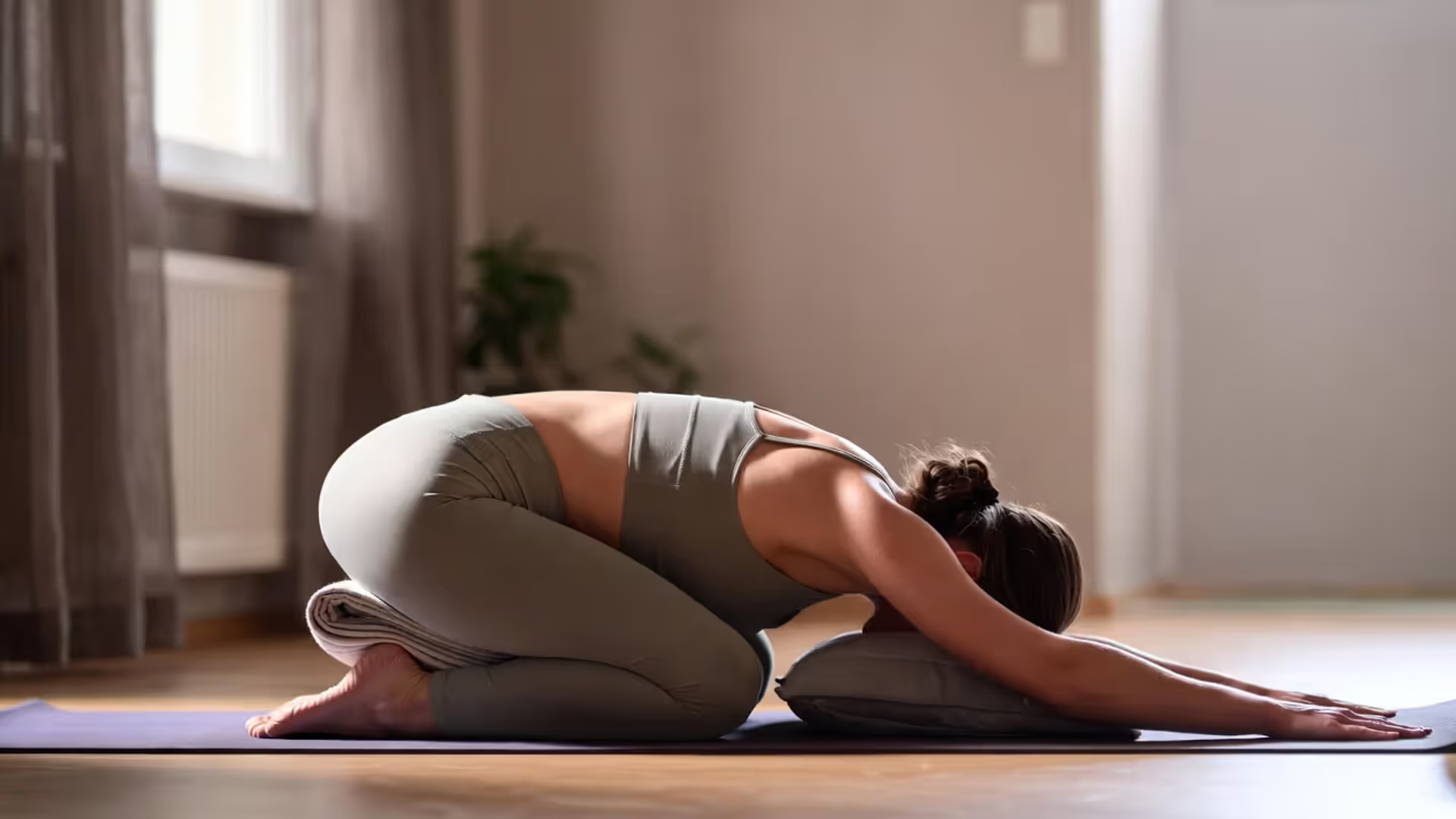
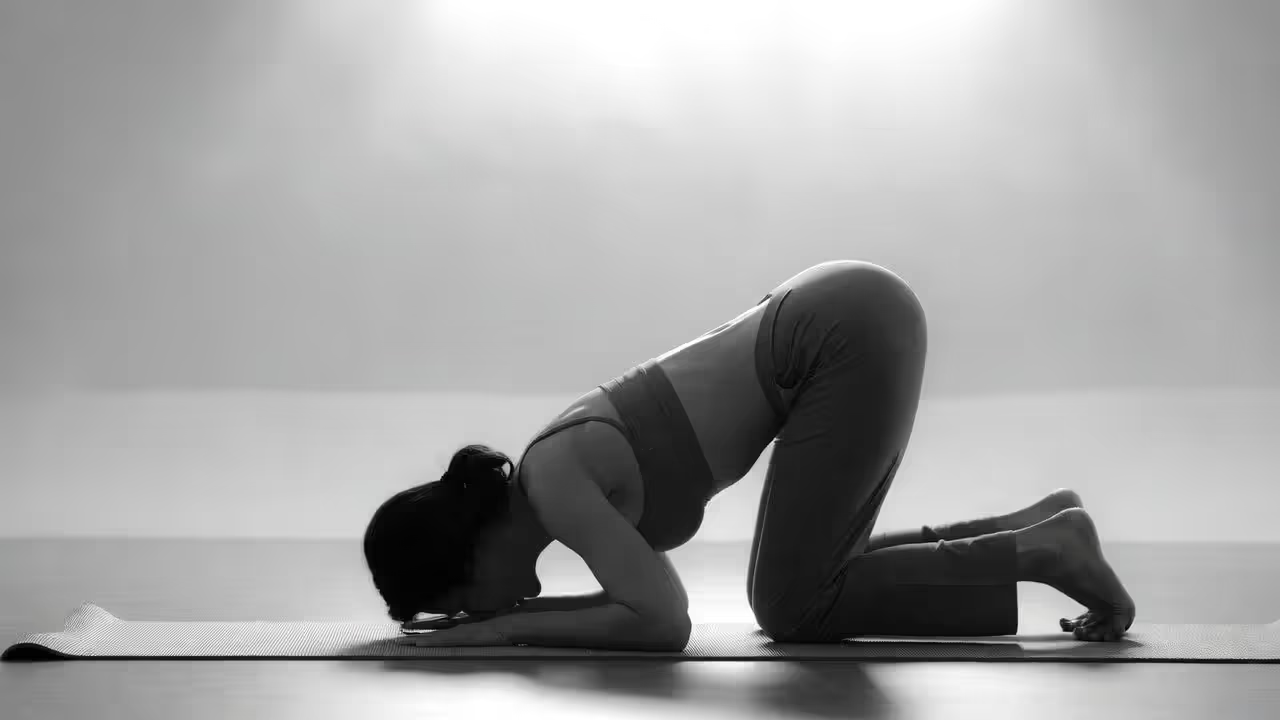
Child's Pose with Extended Arms (Balasana)
Kneel down with big toes together, knees apart. Walk your hands forward and let your torso melt down, forehead on the mat. Stretch your arms way out in front to increase the lengthening through your lower back. Stay here 1-2 minutes.
This creates mild traction through your lower spine and lets those tight back muscles completely relax. Can't get your hips back to your heels? Stuff a folded blanket between your butt and calves. Knees complaining? Roll up a towel and tuck it behind each knee to eliminate pressure.
Downward-Facing Dog (Adho Mukha Svanasana)
Start on hands and knees. Tuck your toes and lift your hips up and back, making an upside-down V. Press the floor away through your hands and slide your shoulder blades down your back. If your hamstrings are screaming, keep your knees bent. Hold for 5-8 breaths.
This stretches your entire back body—calves, hamstrings, glutes, back muscles. All these tissues get short and cranky from too much sitting. The inverted position also takes pressure off your lumbar discs. Beginners: seriously, bend those knees. Straight legs plus a rounded back defeats the whole purpose.
Supine Spinal Twist (Supta Matsyendrasana)
Lie on your back. Pull your right knee toward your chest, then guide it across to the left side. Stretch your right arm straight out to the side. Turn your head right if your neck allows it. Stay 1-2 minutes, then switch sides.
This yoga spine mobility exercise targets rotation—something we barely do in normal life. The gentle twisting rehydrates your discs and releases the quadratus lumborum and oblique muscles. Keep the shoulder of your extended arm on the floor. Knee floating? Prop it with a block or pillow.
Poses for Muscle Tension
Author: Caleb Foster;
Source: thelifelongadventures.com
Sphinx Pose (Salamba Bhujangasana)
Lie face-down with forearms flat, elbows directly under your shoulders. Press down through your forearms and lift your chest, keeping your pelvis heavy on the floor. Draw your shoulder blades together and down. Hold 1-2 minutes.
This gentle backbend counteracts all the forward hunching we do. It specifically wakes up the multifidus—tiny stabilizing muscles that often shut off after back injury. Being face-down also reduces spinal load compared to standing backbends. If this bothers you, just rest on your elbows without actively lifting.
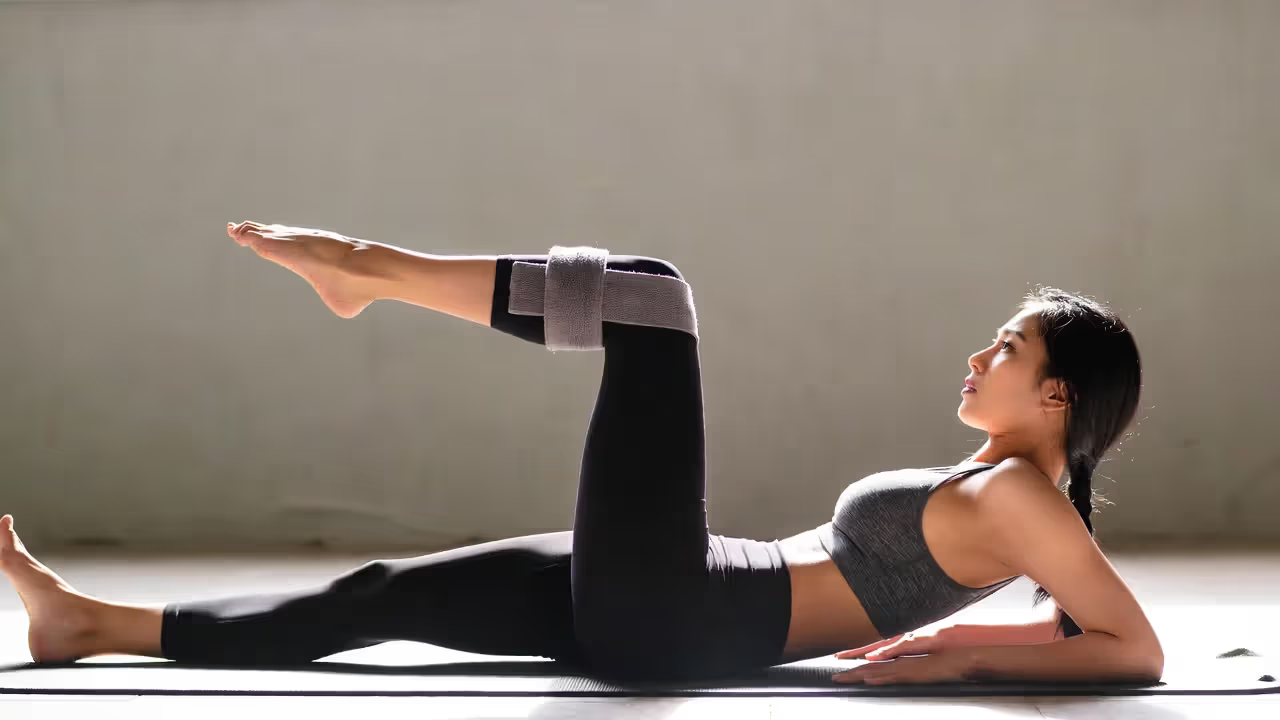
Reclined Pigeon (Supta Kapotasana)
Lie on your back, both feet planted, knees up. Cross your right ankle over your left thigh above the knee. Thread your right arm through the gap and clasp both hands behind your left thigh. Draw that left leg slowly toward your chest. Hold 1-2 minutes each side.
Tight hip rotators—especially the piriformis—constantly refer pain into the lower back and can pinch the sciatic nerve. This releases that tightness without stressing your spine. Keep your tailbone down and your neck soft. Can't reach your thigh? Loop a strap or towel around it.
Bridge Pose (Setu Bandha Sarvangasana)
Lie on your back, knees bent, feet hip-width apart with heels close to your butt. Press down through your feet and lift your hips up. Clasp your hands under you and press your arms into the floor. Hold 5-8 breaths.
This strengthens your glutes, hamstrings, and back extensors while opening your hip flexors. Most people with back pain have weak glutes and tight hip flexors from sitting too much—this pose hits both problems at once. Keep knees over ankles. If they want to splay out, squeeze a block between your inner thighs.
Legs-Up-the-Wall (Viparita Karani)
Sit sideways next to a wall. Swing your legs up the wall while lowering your torso to the floor. Scoot so your sit bones are close to the wall—touching or a few inches away depending on your hamstring flexibility. Let your arms rest by your sides, palms up. Stay here 5-10 minutes.
This gentle inversion reduces swelling and tension in your lower back by reversing gravity. The relaxation response makes it especially good for stress-related pain. Want a gentle supported backbend? Put a folded blanket under your pelvis. Hamstrings too tight? Move farther from the wall.
Building a Spinal Health Routine: Frequency and Duration
Author: Caleb Foster;
Source: thelifelongadventures.com
Regular short practices beat occasional marathon sessions. A 2016 study in Evidence-Based Complementary and Alternative Medicine proved this: people practicing 20-30 minutes three times weekly got better results than those doing single 90-minute weekly sessions.
Start with just 10-15 minutes daily, picking 4-5 poses that address your specific issues. Morning practice tackles the stiffness many people wake up with. Your spine actually loses hydration overnight as discs compress slightly—you're measurably shorter in the morning than evening. Gentle movement rehydrates those discs and sets good movement patterns for the day ahead.
Evening practice serves a different purpose. It releases accumulated tension and signals your nervous system to shift into recovery mode. For nighttime sessions, focus on slower, more restorative positions. Skip vigorous backbends or inversions that might energize you before bed.
Most people notice better mobility within 2-3 weeks—you'll feel less stiff before pain actually decreases. Meaningful pain reduction usually takes 6-8 weeks of consistent work. Why so long? Your muscles don't just need more length or strength—they need to learn completely new firing patterns. That takes repetition.
Here's a reasonable progression: Weeks 1-2, focus on gentle mobility (cat-cow, child's pose, simple twists). Weeks 3-4, add moderate strengthening (bridge, sphinx). Weeks 5-6, try more challenging variations (longer holds, adding resistance with straps).
Keep a simple practice log. Write down which poses you did, how long, and pain levels before and after. This data shows which movements give you the most benefit and reveals patterns—maybe your pain gets worse after certain activities or better at certain times. These insights guide your practice far better than generic advice.
Common Mistakes That Worsen Back Pain During Yoga
Author: Caleb Foster;
Source: thelifelongadventures.com
Forcing Flexibility
Many people bring a "no pain, no gain" mindset into yoga, pushing into stretches until they feel intense burning. This triggers protective muscle guarding—exactly what you don't want. Tight tissues often protect unstable joints or compensate for weakness somewhere else. Aggressive stretching doesn't fix these root causes.
Work at about 60-70% of your max stretch. You should feel mild tension while breathing easily and relaxing into the position. Holding your breath? Clenching your jaw? You've gone too far. Posture yoga exercises should feel like gentle opening, not a fight.
Rounding the Lower Back in Forward Folds
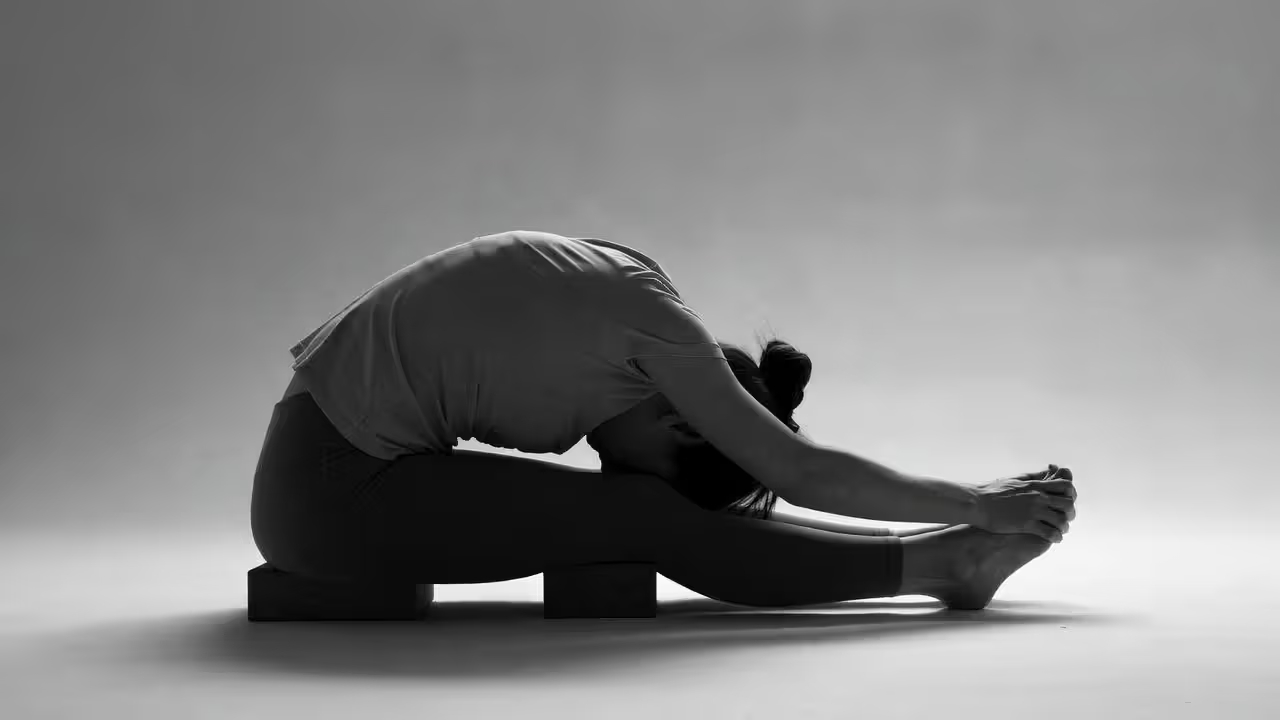
When hamstrings are tight, people compensate by curving their lower back in forward bends. This crushes the back of the disc and overstretches the ligaments holding your spine together. Instead, bend your knees generously in any forward fold until you can keep your spine neutral. The stretch should be in your hamstrings, not your spine.
Try this cue: think about lengthening your spine forward rather than folding down. Lead with your breastbone, not your head. If you can't maintain this, the pose is currently too advanced for your flexibility.
Skipping Core Engagement
Your core muscles provide essential spinal stability during movement. Many yoga practitioners stretch everything tight but never strengthen what's weak. Every position should involve some core activation—gently drawing your navel toward your spine without holding your breath.
This isn't about constantly sucking in. Think of creating a supportive cylinder around your midsection. In standing poses, this prevents excessive lower back arching. In backbends, it protects your lower spine from compression. In twists, it maintains length while rotating.
Ignoring Asymmetries
Most bodies have one side that's tighter or weaker. Spending equal time on each side perpetuates these imbalances. If your right hip is way tighter, spend an extra 30-60 seconds stretching that side. If your left glute is noticeably weaker, do an extra bridge pose emphasizing that side.
Notice which side feels harder or more uncomfortable. That information is gold—it shows where you need extra work. Over time, your goal is creating relatively similar sensations on both sides, though perfect symmetry isn't realistic or necessary.
Practicing Through Sharp Pain
Dull, achy feelings during stretching? Usually fine. Sharp, shooting, or burning pain? Not fine. If any pose creates pain radiating down your leg, causes numbness or tingling, or produces a catching or pinching sensation, stop immediately. These symptoms suggest nerve involvement or joint irritation that won't improve by continuing.
Similarly, if you feel significantly worse the next day, you've overdone it. Dial back both intensity and duration until you find a level that leaves you feeling better, not worse, the following morning.
When to Choose Therapeutic Yoga Over General Classes
Regular yoga classes follow set sequences designed for mixed groups. They help many people but don't account for individual limitations or specific injuries. Spinal yoga therapy, by contrast, starts with assessment and creates customized programming for your unique situation.
Red Flags Requiring Professional Guidance
You need specialized instruction if you're experiencing:
Pain traveling below your knee (suggests possible disc herniation or nerve root compression)
Numbness, tingling, or weakness anywhere in your legs or feet (indicates nerve involvement)
Pain that's worse at night or doesn't change with position (could signal serious underlying pathology)
Loss of bowel or bladder control (this is a medical emergency—get help immediately)
History of spinal surgery, fractures, or diagnosed conditions like spondylolisthesis or stenosis
Pain that hasn't budged despite 6-8 weeks of self-care
A yoga therapist with proper credentials can adapt poses based on your diagnosis and movement restrictions. They know which movements to avoid with specific conditions and can safely progress your practice as you improve.
Training and Qualifications
Look for instructors holding certification from the International Association of Yoga Therapists (IAYT). This credential requires at least 800 hours of specialized training beyond basic yoga teacher training. Many yoga therapists also have backgrounds in physical therapy, occupational therapy, or related healthcare fields.
Physical therapists who've added yoga to their toolkit bring valuable diagnostic skills and biomechanical knowledge. They can spot movement dysfunctions and create targeted interventions. Some complete yoga teacher training specifically to blend these approaches.
Insurance Coverage
Some insurance plans cover yoga therapy when a doctor prescribes it and it's delivered by a licensed healthcare professional (like a physical therapist using yoga techniques). Coverage varies wildly, so check your specific plan details. Health Savings Accounts (HSAs) and Flexible Spending Accounts (FSAs) typically cover yoga therapy with proper documentation.
Group therapeutic yoga classes—often called "yoga for back pain" or "gentle yoga"—rarely qualify for insurance but cost significantly less than private sessions. These classes split the difference between general classes and individual therapy, with instructors trained to offer modifications and spot warning signs.
Complementary Practices: Strengthening Your Core and Improving Posture
Yoga alone might not address every factor contributing to your back pain. What you do off the mat matters just as much for long-term spinal health.
Author: Caleb Foster;
Source: thelifelongadventures.com
Core Strengthening Beyond Yoga
While yoga builds functional strength, adding targeted core exercises speeds progress. The McGill Big Three—curl-ups, side planks, and bird dogs—specifically target spinal stabilizers with minimal disc stress. Do these on non-yoga days or add them after your practice.
For curl-ups, lie flat with one knee bent and both hands under your lower back to preserve its natural curve. Lift just your head and shoulders slightly off the floor, holding for 10 seconds. This builds endurance in your abs without the excessive spinal flexing that happens in regular sit-ups.
Side planks strengthen the quadratus lumborum and obliques—muscles critical for lateral stability. Start with a modified version on your knees if needed, gradually working up to full side planks held 10-30 seconds per side.
Bird dogs develop coordination between your core and limbs. From all fours, extend your right arm and left leg simultaneously while keeping your spine neutral. The real challenge is preventing rotation or sagging—quality beats range of motion every time.
Posture Awareness Throughout the Day
Your spinal health depends more on how you move during the 23 hours you're not practicing than on that one hour you are. Set hourly phone reminders to check your posture: Are your shoulders hunched forward? Is your head jutting toward the screen? Is your lower back excessively arched or totally collapsed?
Good sitting posture maintains your spine's natural curves. Picture your ears stacked over your shoulders, shoulders over hips. Plant both feet flat, knees at roughly 90 degrees. Every 30 minutes, stand up and do 5-10 cat-cows to reset your spinal position.
Standing alignment matters too. Spread your weight evenly across both feet. Gently engage your core and imagine a string pulling the top of your head toward the ceiling. Don't lock your knees—that creates too much curve in your lower back.
Ergonomic Adjustments
Your workspace dramatically affects your posture. Monitor height significantly impacts neck and upper back position—set the top of the screen at or slightly below eye level. Your keyboard and mouse should let your elbows rest at 90 degrees with relaxed shoulders.
If you sit a lot, get a chair with lumbar support or place a small rolled towel in your lower back curve. Your butt should touch the chair back, not perch on the front edge. Consider a standing desk converter to alternate positions throughout the day—but don't stand constantly either, as that creates its own problems.
Sleep position affects spinal health too. Side sleepers should put a pillow between their knees to keep pelvic alignment. Back sleepers benefit from a pillow under their knees to reduce lower back strain. Stomach sleeping generally creates excessive neck rotation and lumbar extension—if you can't kick this habit, use a very thin pillow or none at all.
Movement Variety
The best posture is your next posture. Any static position—even a biomechanically "perfect" one—causes problems over time. Change positions frequently, take walking breaks, and incorporate varied movement throughout your day. Walk during phone calls, take stairs instead of elevators, park farther from entrances.
This movement variety complements your yoga practice by preventing the repetitive stress of any sustained position. Your spine evolved for constant variation, not prolonged stillness.
Comparison of Yoga Styles for Back Pain Relief
Yoga Style
Intensity Level
Primary Focus
Best For
Typical Class Duration
Beginner-Friendly
Hatha
Low to Moderate
Balanced mix of flexibility and strength
General back discomfort, learning basic yoga concepts
60-75 minutes
Very High
Iyengar
Low to Moderate
Precise alignment with extended holds
Chronic discomfort, structural problems, those wanting detailed instruction
60-90 minutes
High (lots of modifications offered)
Restorative
Very Low
Deep relaxation through passive stretching
Acute pain flare-ups, stress-related discomfort, recovery days
60-90 minutes
Very High
Yin
Low
Deep stretching of connective tissues
Chronic stiffness, limited mobility, evening practice
Low to Moderate (faster pace with fewer modifications)
Frequently Asked Questions About Yoga for Back Pain
Can yoga make back pain worse if done incorrectly?
Absolutely. Certain poses can aggravate specific conditions when done wrong. Deep forward bending might worsen disc herniations, while excessive backbending can irritate facet joints in people with stenosis. The solution is matching poses to your specific condition and listening to your body's feedback. Sharp pain, numbness, or tingling means stop immediately. Mild discomfort that decreases as you warm up is generally fine. Working with a qualified instructor initially helps you learn which movements to emphasize and which to modify or skip entirely.
How long before I see improvement in my back pain with yoga?
Most people notice increased mobility within 2-3 weeks of regular practice. Pain reduction typically takes longer—6-8 weeks for noticeable improvement in chronic conditions. Acute pain often responds faster, sometimes within days, though complete resolution may still take several weeks. Your timeline depends on multiple factors: your specific diagnosis, how long you've had pain, practice consistency, and whether you're addressing contributing factors like poor ergonomics or weak core strength. Keep a simple log tracking pain levels and function to monitor progress objectively—improvements often happen gradually enough that you don't notice day-to-day changes.
Should I do yoga if I have a herniated disc?
Yoga can help disc herniations, but modifications are absolutely necessary. Avoid deep forward folding and poses that round your lumbar spine—these increase pressure on the back of the disc where most herniations occur. Instead, emphasize gentle extension (like sphinx pose) and neutral spine positions. Core strengthening becomes especially important to stabilize your spine and prevent excessive movement at the affected segment. Many people with disc herniations find that certain yoga approaches—particularly those emphasizing extension and stabilization—reduce pain and improve function. That said, work with a healthcare provider or yoga therapist initially to ensure you're doing appropriate movements. If you experience increasing leg pain, numbness, or weakness, stop practicing and contact your doctor.
Is hot yoga or gentle yoga better for back pain?
Gentle, restorative styles generally work better for back pain than vigorous or heated practices. Heat increases flexibility, which sounds good, but excessive flexibility without matching strength and control creates instability. Hot yoga also risks overstretching—the heat masks protective pain signals, letting you push beyond safe ranges. Plus, some people find heat worsens inflammatory pain. Gentle styles like Iyengar, restorative yoga, or therapeutic yoga let you build strength and mobility gradually while maintaining awareness of your body's limits. Once your pain improves and you've built a foundation of strength and stability, you might cautiously explore more vigorous styles if you want.
Do I need props like blocks and straps for back pain yoga?
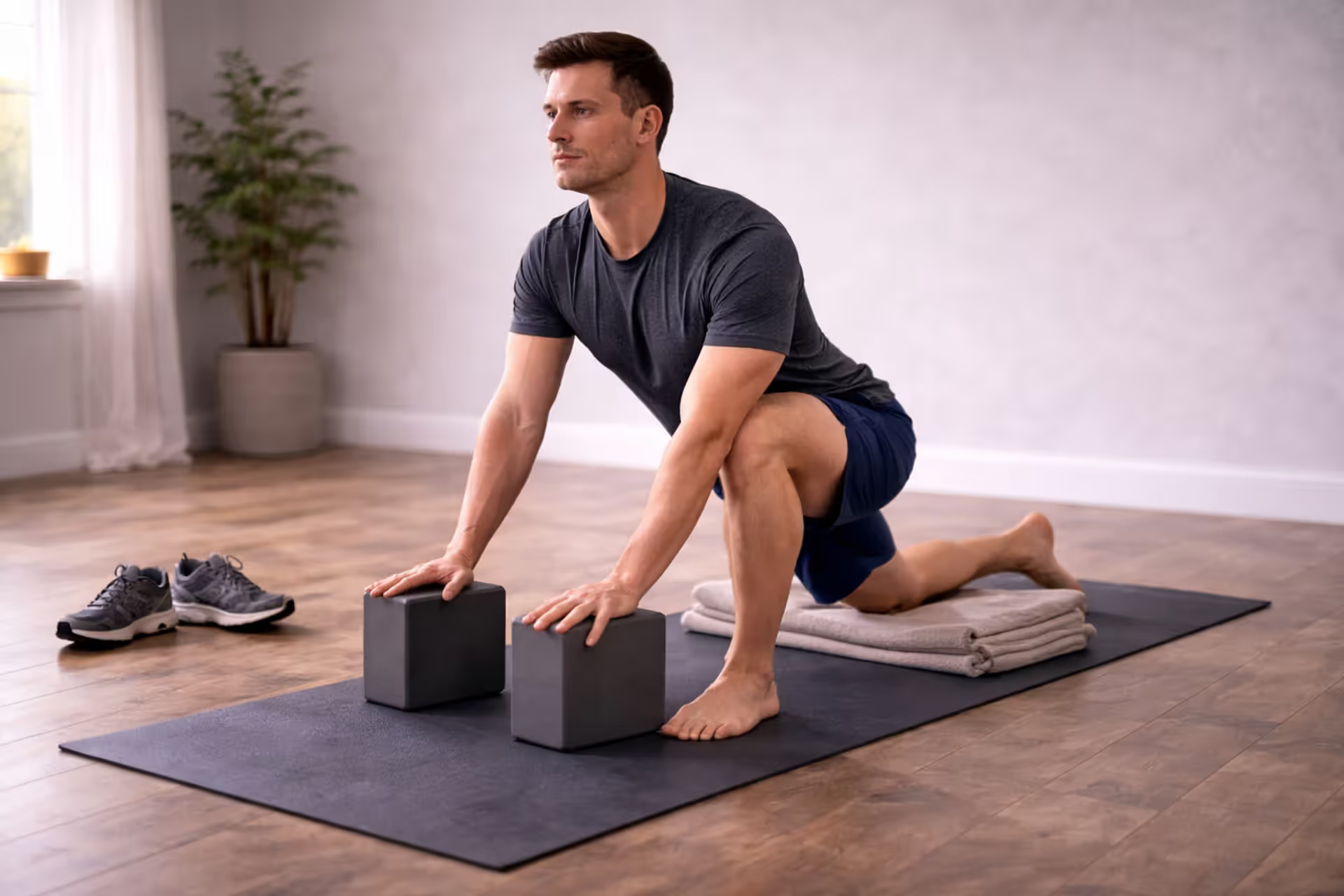
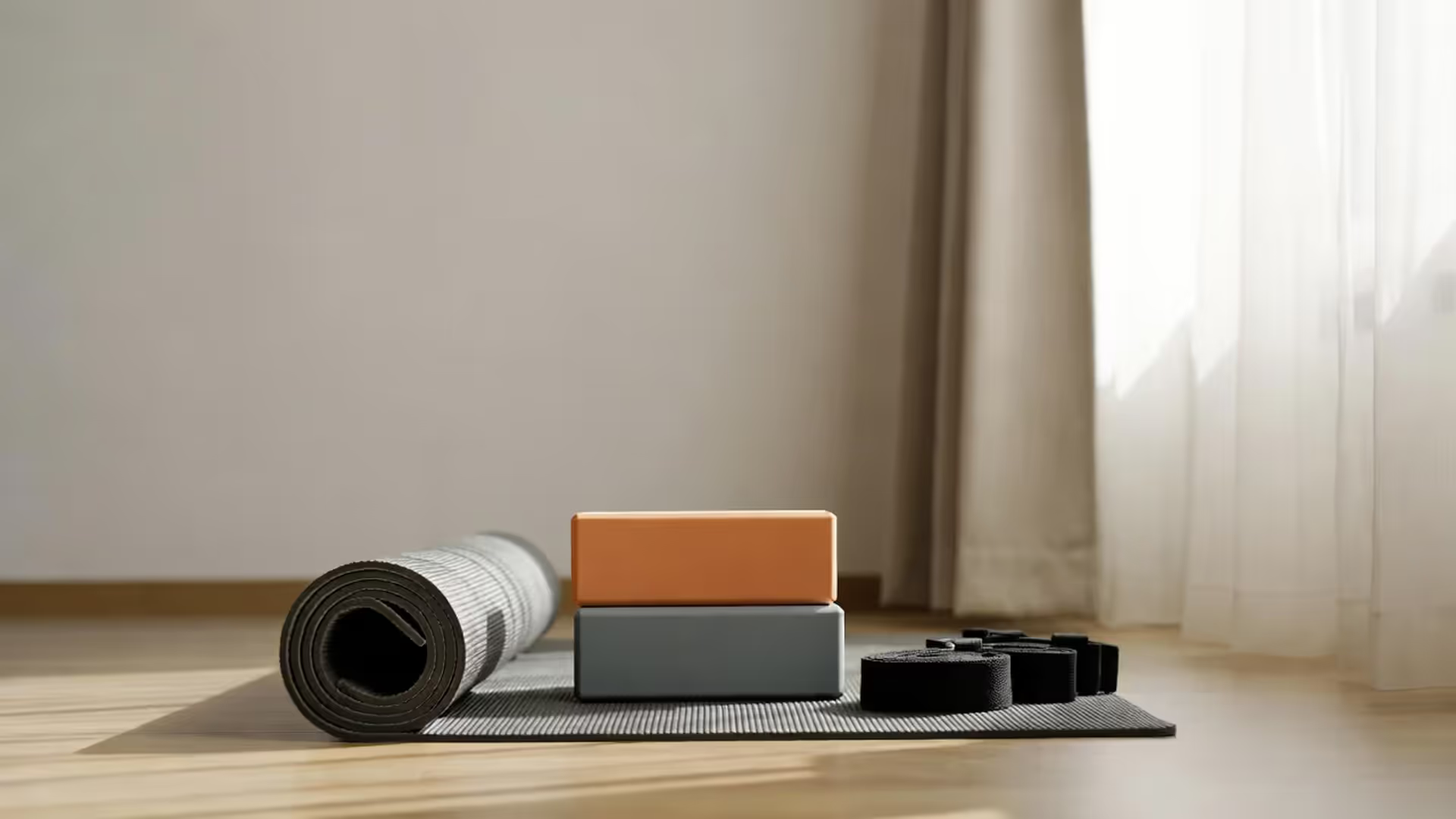
Props aren't required, but they dramatically improve your ability to do poses safely and effectively. Blocks bring the floor up to you in poses where tight hamstrings or hips prevent reaching it with proper alignment. This lets you maintain a neutral spine rather than rounding your back to compensate. Straps extend your reach, making poses accessible that would otherwise require excessive strain. A bolster supports restorative poses, allowing complete relaxation. Blankets cushion sensitive knees or can be folded to support your spine. While you can substitute household items—books for blocks, a belt for a strap, pillows for bolsters—actual yoga props are inexpensive and purpose-built. They're especially valuable when starting out or working with significant limitations.
Can yoga replace physical therapy for chronic back issues?
Yoga and physical therapy overlap in some ways but serve different purposes. Physical therapy involves assessment, diagnosis, hands-on manual therapy, and targeted exercises based on your specific dysfunction. A physical therapist can identify movement impairments, muscle imbalances, and joint restrictions you might not recognize on your own. They also measure objective progress and adjust treatment as you improve. Yoga provides tools for long-term self-management and addresses the mind-body aspects of chronic pain that physical therapy may not emphasize. The best approach often combines both: physical therapy for assessment and initial treatment, then yoga for ongoing maintenance and prevention. Some physical therapists incorporate yoga techniques into their treatment, providing integrated care. If your back pain is severe, persistent, or associated with neurological symptoms, start with physical therapy to ensure proper diagnosis and rule out serious underlying problems.
Back pain doesn't have to be your permanent companion. Yoga provides practical tools for addressing both the physical mechanics and psychological dimensions of spinal discomfort. The poses outlined here target the most common sources of back pain, while the principles of proper alignment, gradual progression, and body awareness apply regardless of which specific poses you practice.
Start conservatively with just a few poses done for short durations. Pay attention to how your body responds, adjusting your practice based on that feedback rather than pushing through discomfort. Remember that improvement doesn't follow a straight line—you'll have better days and worse days. The trend across weeks and months matters more than daily fluctuations.
Combine your yoga practice with attention to daily posture, core strengthening, and ergonomic adjustments for comprehensive spinal care. Consider working with a qualified instructor or therapist initially to ensure you're doing movements appropriately for your specific condition.
The goal isn't achieving Instagram-worthy poses or extreme flexibility. It's building a sustainable practice that reduces pain, improves function, and enhances your quality of life. With patience and consistency, yoga can transform your relationship with your back from one of limitation and fear to one of strength and confidence.
Runners get tight hip flexors, stubborn calves, and underactive glutes from thousands of repetitive strides. This guide shows the best yoga poses for common running issues, when to do dynamic vs recovery yoga, a 15-minute cooldown sequence, and how often to practice for mobility without overstretching.
Struggling with tight hips, hamstrings, or shoulders? This guide explains why yoga improves flexibility better than static stretching—by retraining your nervous system and building strength at end range. Learn 12 essential poses, follow 15/30/45-minute routines, and avoid the mistakes that stall progress.
New to yoga? This beginner guide explains the real, science-backed benefits, the only gear that matters, and how to choose classes or practice at home. Learn 10 foundational poses with form cues, then follow a 20-minute routine—plus common mistakes to avoid and the best styles for your goals.
Discover how pranayama differs from normal breathing and how to use it safely. Learn 7 essential techniques—diaphragmatic breathing, ujjayi, alternate nostril, kapalabhati, bhramari, sitali, and box breathing—plus timing, common mistakes, and how to blend breathwork with yoga and daily life.
The content on this website is provided for general informational and educational purposes related to health, yoga, fitness, and overall wellness. It is not intended to replace professional medical advice, diagnosis, or treatment.
All information, workout suggestions, yoga practices, nutrition tips, and wellness guidance shared on this site are for general reference only. Individual health conditions, fitness levels, and medical needs vary, and results may differ from person to person. Always consult a qualified healthcare provider before starting any new exercise program, dietary plan, or wellness routine.
We are not responsible for any errors or omissions, or for any outcomes resulting from the use of information presented on this website. Your health and fitness decisions should always be made in consultation with appropriate medical and fitness professionals.