Walk into any fitness studio today and you'll find yourself choosing between two low-impact practices that look deceptively similar but deliver remarkably different results. Both involve mats, controlled movements, and focused breathing. Yet practitioners often develop fierce loyalty to one over the other—and for good reason.
Understanding which practice aligns with your specific goals requires looking past surface similarities. A 28-year-old runner recovering from IT band syndrome needs something different than a 45-year-old desk worker battling chronic neck tension. The wrong choice won't harm you, but it might leave you frustrated when results don't match expectations.
What Makes Yoga and Pilates Different?
Yoga originated in ancient India over 5,000 years ago as a spiritual practice connecting mind, body, and consciousness. The physical postures (asanas) represent just one branch of a comprehensive philosophical system. Traditional yoga encompasses meditation, ethical principles, and breathwork designed to achieve mental clarity and spiritual growth.
Joseph Pilates created his namesake method in the early 20th century with purely physical rehabilitation goals. A German physical trainer, he developed the system to strengthen injured soldiers during World War I. The practice focuses on core stabilization, precise movement patterns, and controlled muscle engagement. No spiritual component exists—Pilates remains strictly a physical conditioning method.
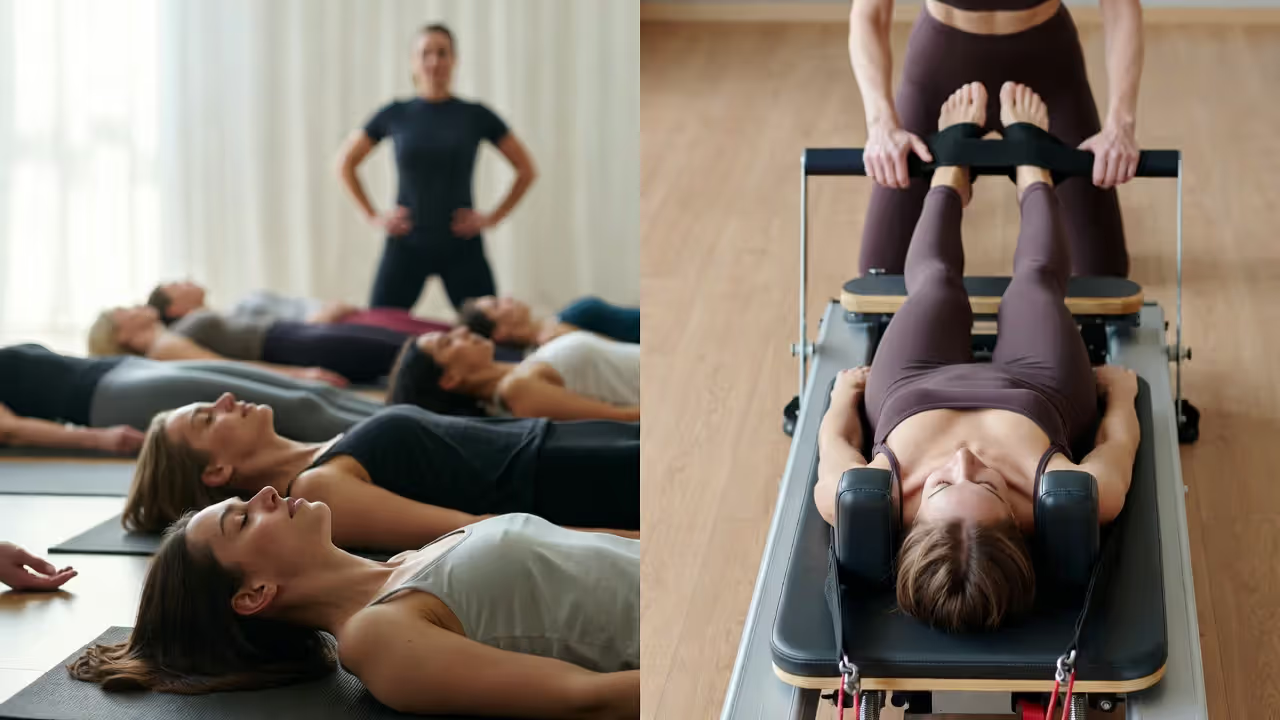
These different origins shape everything about how each practice feels and functions. Yoga classes often include chanting, meditation periods, or philosophical teachings. Pilates instructors use anatomical cues and count repetitions like traditional fitness training. One asks you to "find your breath and surrender into the pose." The other directs you to "engage your transverse abdominis and hold for eight counts."
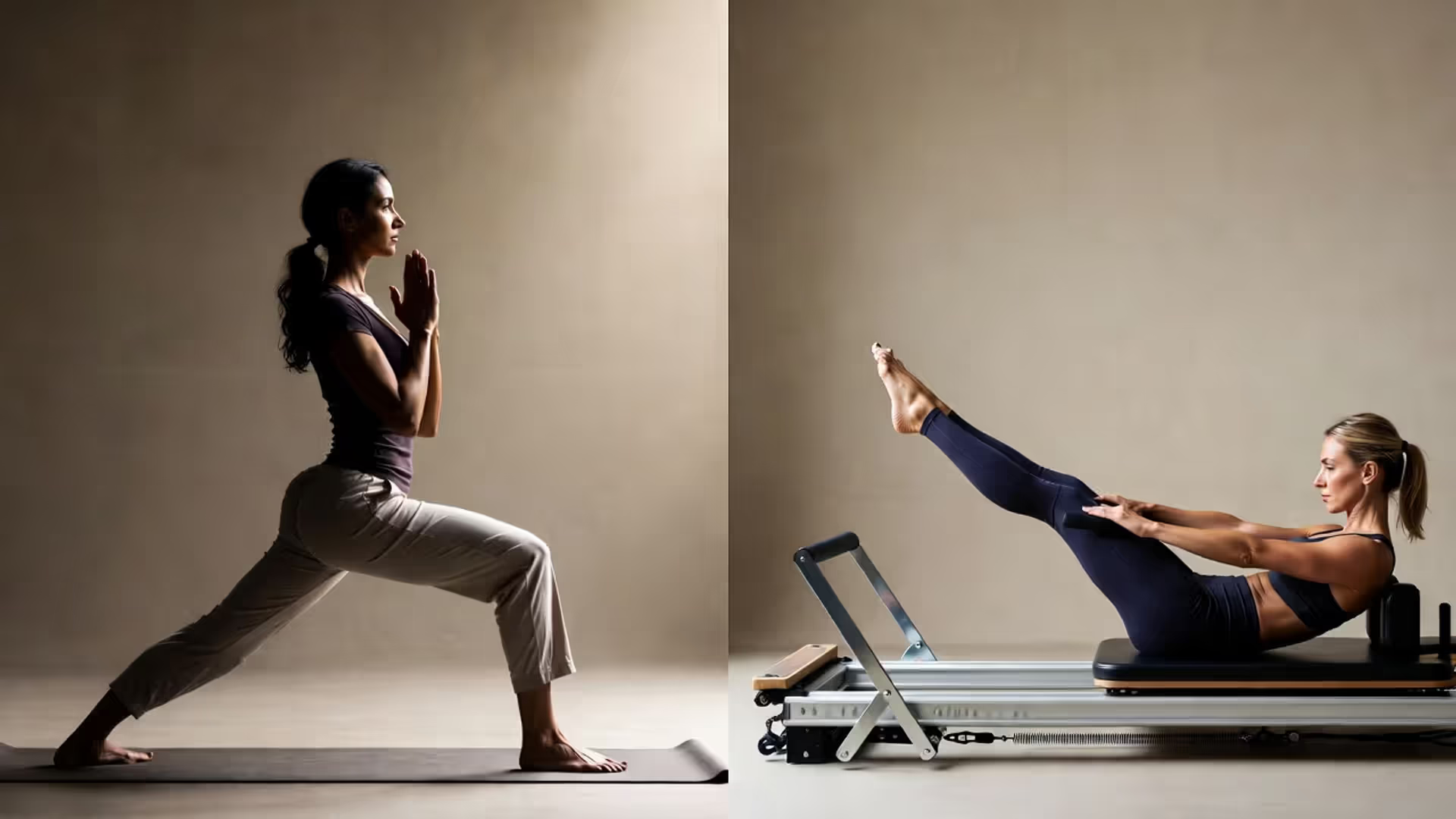
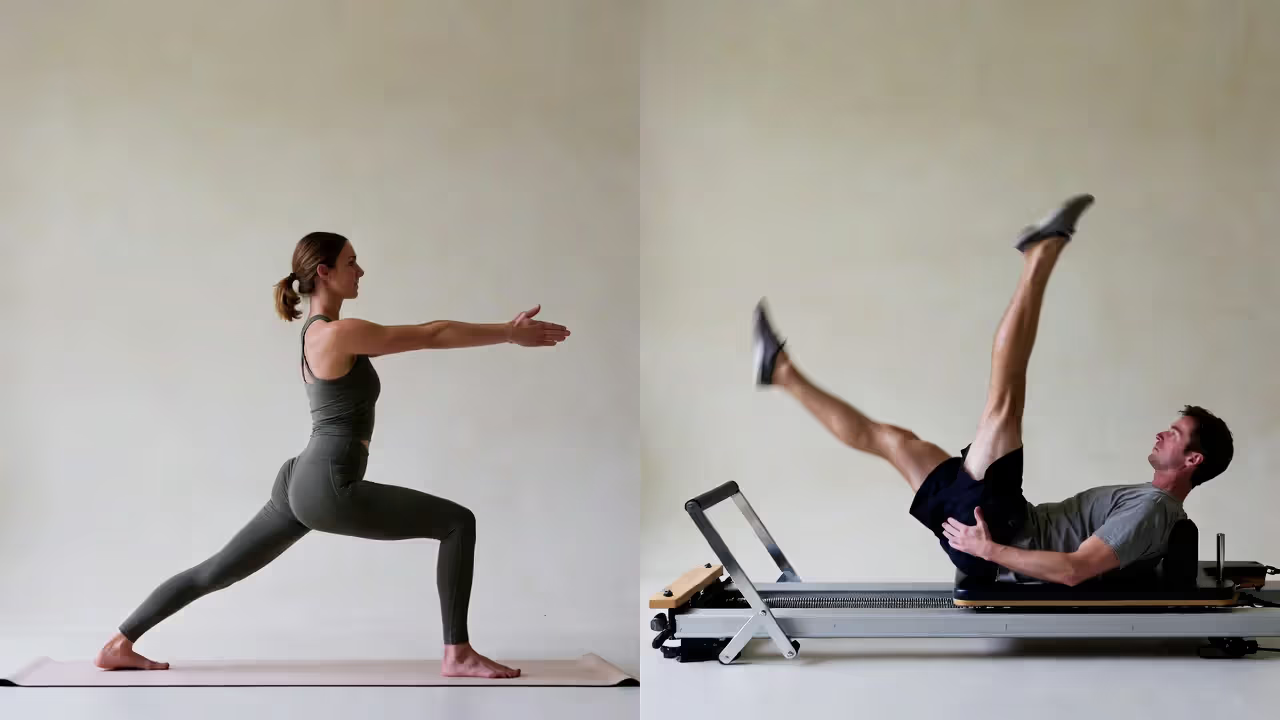
The movement styles diverge significantly too. Yoga involves holding static positions—sometimes for several minutes—while focusing on breath and alignment. Pilates emphasizes continuous, flowing movements with spring-based resistance or body weight. A yoga warrior pose stays fixed; a Pilates hundred involves constant pulsing motion.
Author: Amanda Reeds;
Source: thelifelongadventures.com
Breaking Down the Physical Benefits: Strength, Flexibility, and Beyond
Feature
Yoga
Pilates
Primary focus
Flexibility, balance, mind-body connection
Core strength, stability, controlled movement
Equipment needed
Mat only (for most styles)
Mat, reformer, resistance bands, magic circle
Calorie burn (avg per hour)
180-360 depending on style
250-400
Flexibility gains
High, especially hamstrings and hips
Moderate, focused on spine and shoulders
Strength building
Moderate, using body weight
High, especially deep stabilizers
Injury risk
Low to moderate (shoulder/knee in advanced poses)
Very low with proper form
Learning curve
Moderate for basics, steep for advanced
Moderate, requires understanding of core engagement
Class duration (typical)
60-90 minutes
45-60 minutes
Flexibility and Range of Motion Results
Yoga delivers superior flexibility gains, particularly through the posterior chain—hamstrings, calves, and back muscles that tighten from sitting and standing. A consistent practice (three times weekly) typically produces noticeable hip and hamstring flexibility within four to six weeks. Styles like Yin yoga, which holds poses for three to five minutes, specifically target fascial release and joint mobility.
Pilates improves flexibility more selectively. The spine receives the most attention through exercises like spine stretch forward and saw, which articulate each vertebra. Shoulder mobility improves significantly due to arm-focused movements. However, you won't achieve the same deep hip opening or hamstring length that yoga provides. A dancer wanting extreme flexibility should prioritize yoga; someone needing spinal mobility after years of desk work finds Pilates sufficient.
The trade-off matters for specific goals. Runners often need aggressive hamstring stretching—yoga delivers this. Golfers require thorso rotation and shoulder mobility—Pilates addresses both while building the core stability golf swings demand.
Muscle Building and Core Strength
Pilates builds functional strength more efficiently than yoga, especially in deep core stabilizers like the transverse abdominis and pelvic floor. The reformer machine provides adjustable resistance that progressively challenges muscles. Exercises like the teaser or leg pull demand significant abdominal endurance. Most practitioners notice improved core strength within three weeks of regular practice.
Yoga builds strength through isometric holds—maintaining poses against gravity using body weight. Chaturanga (low plank) and chair pose challenge muscles, but the strength remains somewhat static. Power yoga and Ashtanga styles incorporate more dynamic strength work, but even these don't match Pilates for targeted muscle building.
Neither practice bulks muscles like weightlifting. Instead, both create long, lean muscle tone. The difference lies in application: Pilates strength translates better to athletic performance and injury prevention, while yoga strength supports balance and functional movement patterns.
Balance and Posture Improvements
Yoga excels at balance training through one-legged poses like tree, warrior III, and half moon. These positions challenge proprioception—your body's spatial awareness—and strengthen stabilizing muscles in ankles and hips. Older adults concerned about fall prevention benefit enormously from yoga's balance emphasis.
Pilates transforms posture by addressing the root cause of slouching: weak deep core muscles that fail to support the spine. The practice retrains movement patterns, teaching your body to maintain neutral spine alignment during daily activities. People who sit at computers for eight hours often see dramatic posture changes within two months of consistent Pilates practice.
Both practices combat forward head posture and rounded shoulders, though through different mechanisms. Yoga opens the chest and stretches tight pectoral muscles. Pilates strengthens the muscles between shoulder blades that pull shoulders back. Combining both approaches yields the fastest posture correction.
Mental Health and Stress Relief: How Each Practice Affects Your Mind
Author: Amanda Reeds;
Source: thelifelongadventures.com
Yoga incorporates formal meditation and pranayama (breathing exercises) as core components. Many classes dedicate the final ten minutes to savasana—a guided relaxation that activates the parasympathetic nervous system. The practice explicitly aims to calm mental chatter through breath awareness and present-moment focus.
Research shows yoga significantly reduces cortisol levels and anxiety symptoms. A 2018 study in the Journal of Clinical Psychology found that participants practicing yoga three times weekly for eight weeks showed a 30% reduction in anxiety scores compared to control groups. The meditative aspects create this effect more than the physical postures alone.
Pilates offers stress relief through focused concentration rather than meditation. The precise, controlled movements demand complete mental attention—your mind can't wander to work deadlines while executing a complex reformer sequence. This creates a "moving meditation" effect. Many practitioners describe leaving class feeling mentally refreshed because they've had an hour of enforced presence.
The breathing differs fundamentally. Yoga emphasizes slow, deep breathing through the nose, often with specific patterns like ujjayi (ocean breath). Pilates uses lateral thoracic breathing—expanding the ribcage sideways while maintaining core engagement. Yoga breathing directly stimulates the vagus nerve for relaxation. Pilates breathing supports movement efficiency.
Someone managing clinical anxiety or seeking spiritual development finds yoga's explicit mindfulness practices more beneficial. A Type-A personality who struggles with traditional meditation but needs mental relief often prefers Pilates' movement-based focus.
The best movement practice isn’t the one that looks the most impressive — it’s the one that supports your body, fits your goals, and keeps you coming back consistently.
— Joseph Pilates
Cost Comparison: Classes, Equipment, and Getting Started
Studio drop-in classes cost similarly for both practices, ranging from $20 to $35 per session in most US cities. Unlimited monthly memberships run $120 to $200. Boutique studios in major metros charge $30 to $45 per class, with Pilates reformer classes typically $5 to $10 more expensive than mat classes.
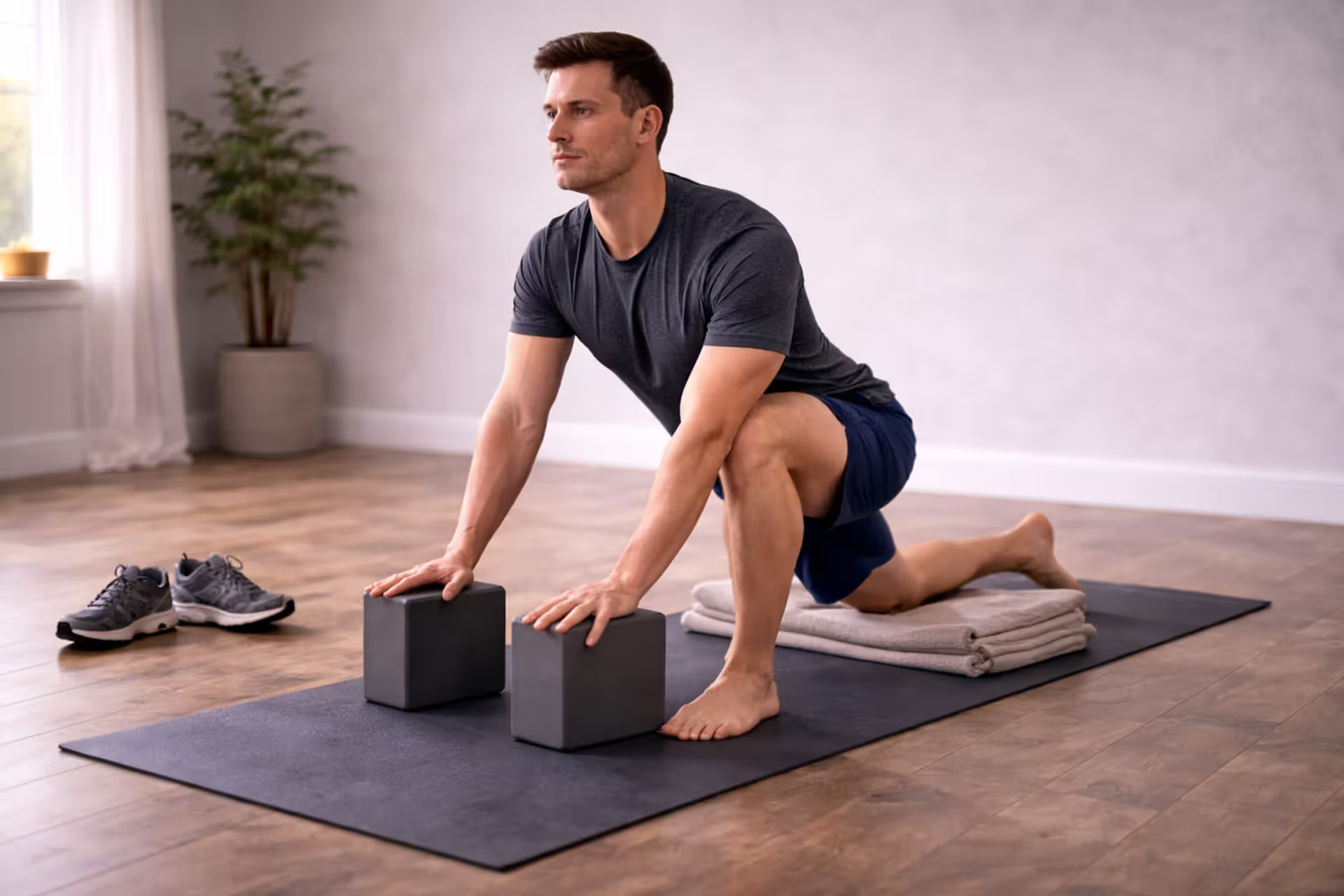
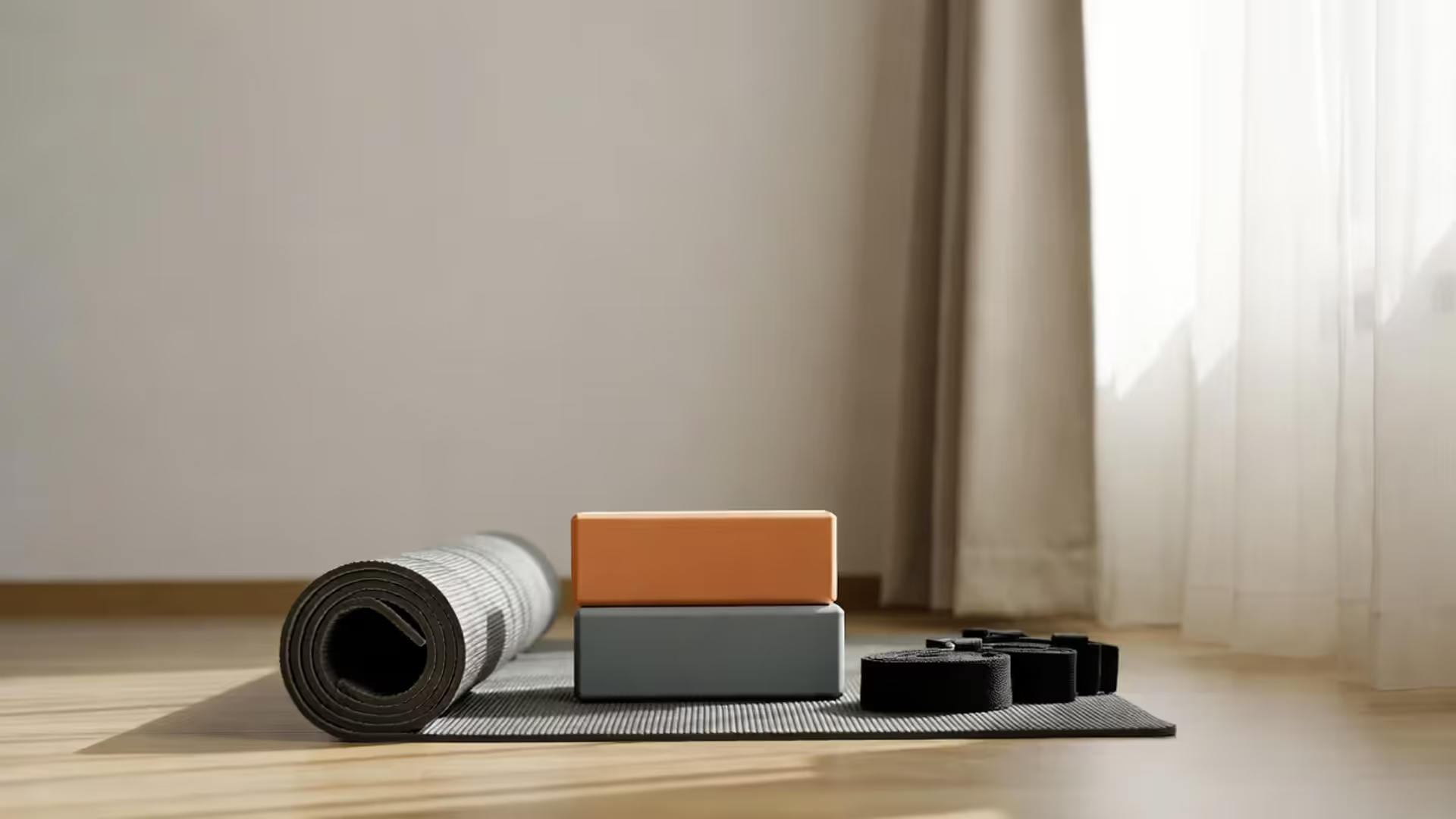
Home practice costs diverge significantly. Yoga requires minimal investment—a quality mat costs $40 to $80, and optional props (blocks, strap, bolster) add another $50. Thousands of free YouTube classes exist, and premium apps like Alo Moves or Glo charge $20 monthly.
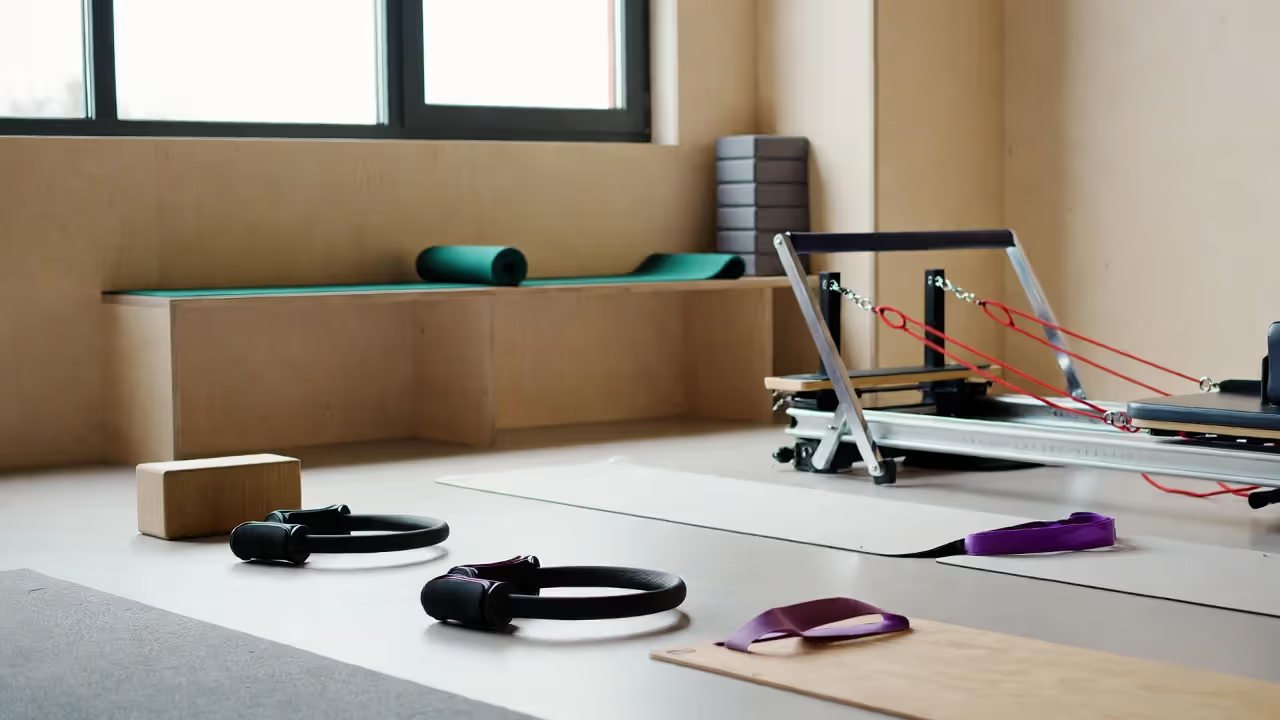
Pilates home practice becomes expensive if you want equipment. A reformer costs $300 for basic models to $5,000 for professional-grade machines. Most home practitioners stick with mat Pilates using resistance bands ($15), a magic circle ($25), and small balls ($10). Quality mat Pilates apps cost $15 to $30 monthly.
The learning curve affects costs too. Yoga beginners can safely follow video classes after learning basic alignment principles. Pilates requires more initial instruction—poor form reduces effectiveness and risks injury. Most people need at least five to ten instructor-led sessions before practicing independently at home.
Budget-conscious beginners should start with yoga. Free resources abound, and minimal equipment needs mean low barriers to consistent practice. Once you've established a routine and confirmed your commitment, investing in Pilates equipment or classes makes sense.
Who Should Choose Yoga? Best Candidates and Scenarios
Author: Amanda Reeds;
Source: thelifelongadventures.com
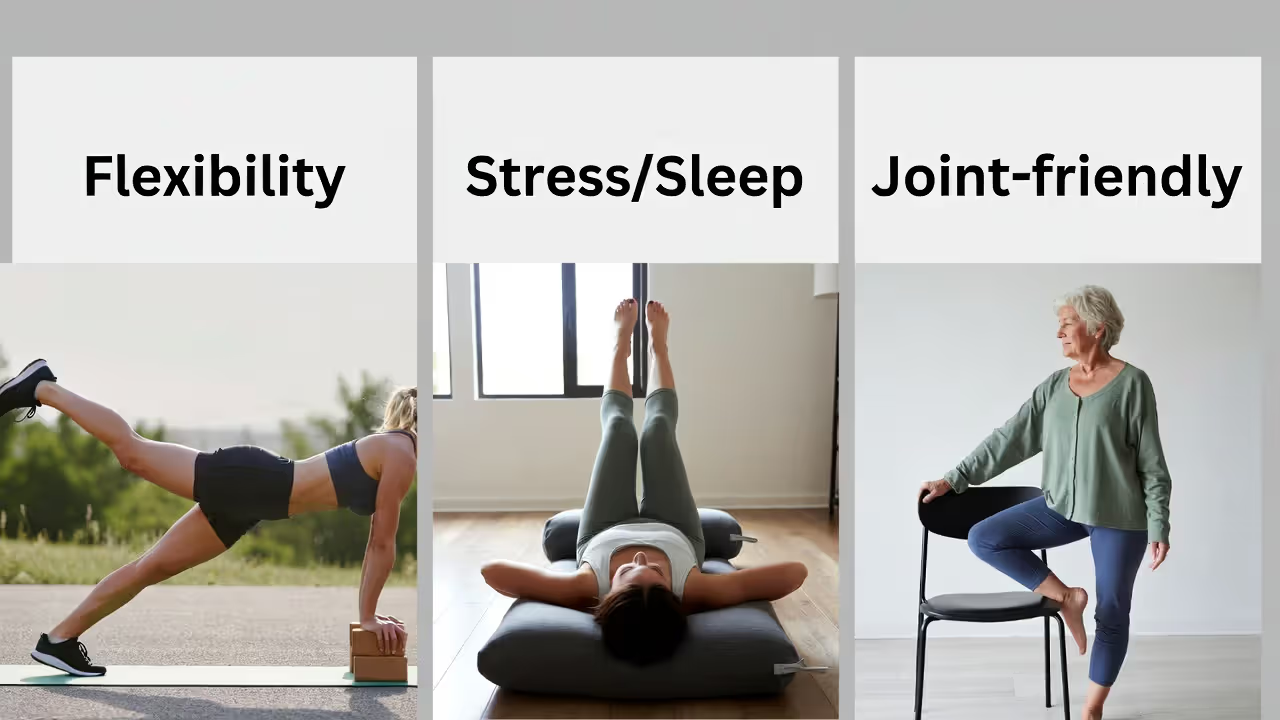
Yoga suits people seeking flexibility improvements above all else. Runners, cyclists, and athletes in sports requiring explosive movements often develop tight muscles that yoga addresses effectively. A marathon runner adding two weekly yoga sessions typically notices reduced muscle soreness and improved recovery.
Anyone experiencing high stress or anxiety benefits from yoga's explicit relaxation techniques. The combination of physical movement, breath focus, and meditation creates multiple stress-reduction pathways. People dealing with insomnia often find evening restorative yoga classes improve sleep quality within weeks.
Yoga works well for those interested in spiritual or philosophical dimensions of practice. Studios often incorporate teachings from yogic philosophy, offering community and meaning beyond physical fitness. Someone seeking both exercise and personal growth finds this appealing.
Joint issues sometimes favor yoga over high-impact exercise. Gentle or restorative styles provide movement without aggravating arthritis or previous injuries. However, avoid advanced poses that stress vulnerable joints—work with experienced instructors who offer modifications.
Budget constraints make yoga practical. The low equipment needs and abundance of free resources mean anyone can start immediately. Community centers and libraries often offer free or low-cost classes.
Who Should Choose Pilates? Ideal Practitioners and Goals
Pilates serves athletes wanting to improve performance through core strength and stability. Golfers, tennis players, and skiers gain significant advantages from Pilates-developed rotational power and balance. Professional sports teams increasingly incorporate Pilates into training programs.
Postpartum recovery represents one of Pilates' strongest applications. The practice specifically addresses diastasis recti (abdominal separation) and pelvic floor weakness common after pregnancy. Many physical therapists recommend Pilates starting six weeks postpartum with medical clearance.
Chronic back pain sufferers often find relief through Pilates when other approaches fail. The focus on core stability and neutral spine alignment addresses mechanical causes of pain. Research published in Medicine & Science in Sports & Exercise showed Pilates reduced chronic low back pain more effectively than standard physical therapy exercises.
People who dislike traditional meditation but want mind-body benefits prefer Pilates. The movement-focused approach provides mental clarity without requiring sitting still or explicit mindfulness practice.
Anyone rehabilitating from injury benefits from Pilates' controlled, low-impact movements. Physical therapists frequently incorporate Pilates exercises into rehabilitation protocols. The adjustable resistance on reformers allows precise progression as strength returns.
Can You Do Both? Combining Practices for Maximum Results
Author: Amanda Reeds;
Source: thelifelongadventures.com
Practicing both yoga and Pilates creates complementary benefits that address nearly all fitness needs. Pilates builds the core strength and stability that allows deeper, safer yoga poses. Yoga provides the flexibility that enhances Pilates movement quality and range.
A balanced weekly schedule might include two Pilates sessions for strength and core work, two yoga sessions for flexibility and stress relief, and one or two days of cardiovascular exercise. This combination addresses strength, flexibility, balance, and mental health without overtraining any single system.
Many practitioners alternate practices by season or life phase. Someone might emphasize Pilates during athletic training seasons when core strength and injury prevention matter most, then shift toward yoga during recovery periods or high-stress times requiring more meditation and relaxation.
The timing within individual weeks matters too. Pilates works well early in the week when energy runs high—the precise, demanding movements require focus. Yoga fits naturally into evenings or week's end when your body needs stretching and your mind needs calming.
Cost considerations affect combination approaches. If budget allows only one studio membership, choose based on which practice you can't effectively do at home. Pilates equipment costs make studio access valuable, while yoga translates well to home practice with video guidance.
Some studios now offer fusion classes blending both practices. These provide introduction to both methods but rarely deliver the depth of dedicated classes. Use fusion classes for variety, not as your sole practice.
Frequently Asked Questions
Is yoga or pilates better for weight loss?
Neither practice burns calories as efficiently as cardiovascular exercise like running or cycling. Pilates edges ahead slightly, burning 250-400 calories per hour compared to yoga's 180-360, depending on intensity. However, both build lean muscle that increases resting metabolism. For weight loss, combine either practice with dedicated cardio sessions and dietary changes. Power yoga styles like Ashtanga burn more calories than gentle yoga, while reformer Pilates burns more than mat work.
Can beginners start with either yoga or pilates safely?
Both practices welcome beginners, but yoga offers more accessible entry points. Beginner yoga classes move slowly with detailed alignment instruction. Pilates requires understanding core engagement concepts that take time to develop—poor form reduces effectiveness. Complete beginners should take several instructor-led Pilates sessions before attempting home practice. Yoga beginners can safely follow video classes after learning basic poses. Both practices carry low injury risk when you respect your body's limits and avoid forcing positions.
How long before I see results from yoga vs pilates?
Pilates produces noticeable core strength improvements within three weeks of practicing three times weekly. Posture changes become apparent within six to eight weeks. Yoga flexibility gains appear within four to six weeks for most people, though hip opening may take longer. Mental benefits from both practices emerge faster—many people report reduced stress and better sleep within two weeks. Visible muscle tone changes require eight to twelve weeks of consistent practice. Results depend heavily on practice frequency—twice weekly produces slower progress than four times weekly.
Do I need special equipment for yoga or pilates at home?
Yoga requires only a mat for most practices. Optional props include blocks ($10-15 each), a strap ($8-12), and a bolster ($30-50), but substitutes work fine initially—books replace blocks, a belt replaces a strap, and pillows replace bolsters. Mat Pilates similarly needs just a mat, though small props like resistance bands ($15), a magic circle ($25), and a small ball ($10) expand exercise options. Reformer Pilates obviously requires a reformer, but quality machines cost $300 to $5,000. Most home practitioners stick with mat Pilates or attend studio classes for reformer access.
Which is harder: yoga or pilates?
Difficulty depends on your starting fitness level and natural abilities. People with existing flexibility find yoga easier initially, while those with core strength adapt to Pilates faster. Advanced yoga poses like arm balances and deep backbends require significant strength and flexibility. Pilates challenges muscular endurance—maintaining core engagement through long sequences burns intensely. Many practitioners find Pilates mentally easier because instructions are straightforward ("engage your core, lift your leg"), while yoga requires interpreting more abstract cues ("root down to rise up"). Try both to discover which challenges you appropriately.
Can yoga or pilates help with back pain?
Both practices effectively address back pain, but through different mechanisms. Pilates specifically targets core stability and neutral spine alignment—the mechanical factors underlying most chronic back pain. Studies show Pilates reduces low back pain more effectively than general exercise. Yoga addresses back pain through improved flexibility, stress reduction, and gentle spinal movement. Gentle yoga styles work well for acute pain flare-ups, while Pilates better prevents recurrence by building supporting strength. Avoid advanced yoga backbends during acute pain. Consult healthcare providers before starting either practice if you have severe or unexplained back pain.
Choosing between yoga and Pilates ultimately comes down to honest assessment of your primary goals. Someone wanting maximum flexibility, stress relief, and spiritual exploration will thrive with yoga. A person prioritizing core strength, athletic performance, and posture correction finds better results with Pilates.
The good news: you don't face a permanent, exclusive choice. Many people start with one practice, then add the other as their fitness evolves and goals shift. A new mother might begin with Pilates for postpartum core recovery, then incorporate yoga later for flexibility and stress management. An athlete might emphasize Pilates during competition season, then shift toward yoga during off-season recovery.
Pay attention to how your body responds during the first month of practice. Feeling energized and noticing steady progress suggests you've chosen well. Persistent frustration or lack of results might mean the other practice suits your body better. Most studios offer introductory packages—take advantage of these to experiment before committing to long-term memberships.
Your schedule and budget also deserve consideration. Yoga's lower costs and easier home practice make it more accessible for many people. Pilates delivers faster core strength results but requires more financial investment, especially for reformer access.
Whatever you choose, consistency matters more than perfection. Two weekly sessions maintained for months produce better results than four weekly sessions you abandon after six weeks. Start with the practice that fits most naturally into your life, then build from there. Both yoga and Pilates offer legitimate paths to improved fitness, reduced stress, and better body awareness—you simply need to choose the path that calls to you.
Runners get tight hip flexors, stubborn calves, and underactive glutes from thousands of repetitive strides. This guide shows the best yoga poses for common running issues, when to do dynamic vs recovery yoga, a 15-minute cooldown sequence, and how often to practice for mobility without overstretching.
Struggling with tight hips, hamstrings, or shoulders? This guide explains why yoga improves flexibility better than static stretching—by retraining your nervous system and building strength at end range. Learn 12 essential poses, follow 15/30/45-minute routines, and avoid the mistakes that stall progress.
New to yoga? This beginner guide explains the real, science-backed benefits, the only gear that matters, and how to choose classes or practice at home. Learn 10 foundational poses with form cues, then follow a 20-minute routine—plus common mistakes to avoid and the best styles for your goals.
Back pain is common—but yoga can reduce pain and improve function when done right. Learn why it works for acute vs chronic pain, 8 proven relief poses, how often to practice, mistakes that worsen symptoms, when to seek yoga therapy, and posture/core habits that protect your spine daily.
The content on this website is provided for general informational and educational purposes related to health, yoga, fitness, and overall wellness. It is not intended to replace professional medical advice, diagnosis, or treatment.
All information, workout suggestions, yoga practices, nutrition tips, and wellness guidance shared on this site are for general reference only. Individual health conditions, fitness levels, and medical needs vary, and results may differ from person to person. Always consult a qualified healthcare provider before starting any new exercise program, dietary plan, or wellness routine.
We are not responsible for any errors or omissions, or for any outcomes resulting from the use of information presented on this website. Your health and fitness decisions should always be made in consultation with appropriate medical and fitness professionals.