Notice how your jaw clenches when someone cuts you off in traffic? Or maybe you've caught yourself with shoulders practically touching your ears during a tense Zoom call. That's stress doing its thing—creating physical knots that stick around long after the stressful moment passes.
Here's what makes yoga different from, say, listening to a meditation podcast while scrolling Instagram: you're actually moving your body in ways that flip specific biological switches. We're talking measurable changes—the kind researchers can track in blood work and brain scans. A 2020 study in the Journal of Clinical Psychology found something pretty remarkable: people who practiced yoga three times weekly for two months showed cortisol levels that dropped by 27% compared to folks who didn't practice.
But—and this matters—doing yoga wrong can actually make things worse. Push yourself too hard? Compete with the person on the next mat? Skip the rest at the end? You might leave class more wound up than when you arrived.
How Yoga Lowers Cortisol and Rewires Your Stress Response
Your body doesn't distinguish between a genuine emergency and imagining one. Whether you're running from a bear or catastrophizing about tomorrow's presentation, the same hormonal cascade kicks in. Your hypothalamic-pituitary-adrenal axis dumps cortisol and adrenaline into your system. Heart rate spikes. Blood pressure climbs. Digestion shuts down.
This worked brilliantly for our ancestors facing occasional predators. The problem? Modern life serves up constant low-grade threats without the physical resolution our biology expects.
Cortisol reduction yoga interrupts this loop by activating your parasympathetic nervous system—what scientists call the "rest and digest" state. The mechanism isn't mystical. Specific poses combined with controlled breathing literally change your biochemistry.
Your vagus nerve runs from your brainstem down through your chest and into your abdomen. It's the main communication highway between your brain and organs. When you compress your torso in a forward fold, activate your diaphragm during slow breathing, or flip upside down in a gentle inversion, you're stimulating vagal fibers. Strong vagal signals tell your adrenal glands to ease up on cortisol production.
The brain changes are even more interesting. Imaging studies show that eight weeks of regular practice increases gray matter in your hippocampus (where you process memories and emotions) while simultaneously quieting your amygdala (your brain's alarm system). You're not just feeling calmer temporarily. You're building new neural pathways that make resilience your default setting instead of an occasional lucky break.
Author: Caleb Foster;
Source: thelifelongadventures.com
8 Calming Yoga Poses That Target Tension Hot Spots
Stress creates predictable patterns. Your neck and shoulders tighten from hunching over screens. Hips lock up from sitting. These calming yoga exercises target exactly those areas while triggering full-body relaxation.
Forward Folds and Hip Openers
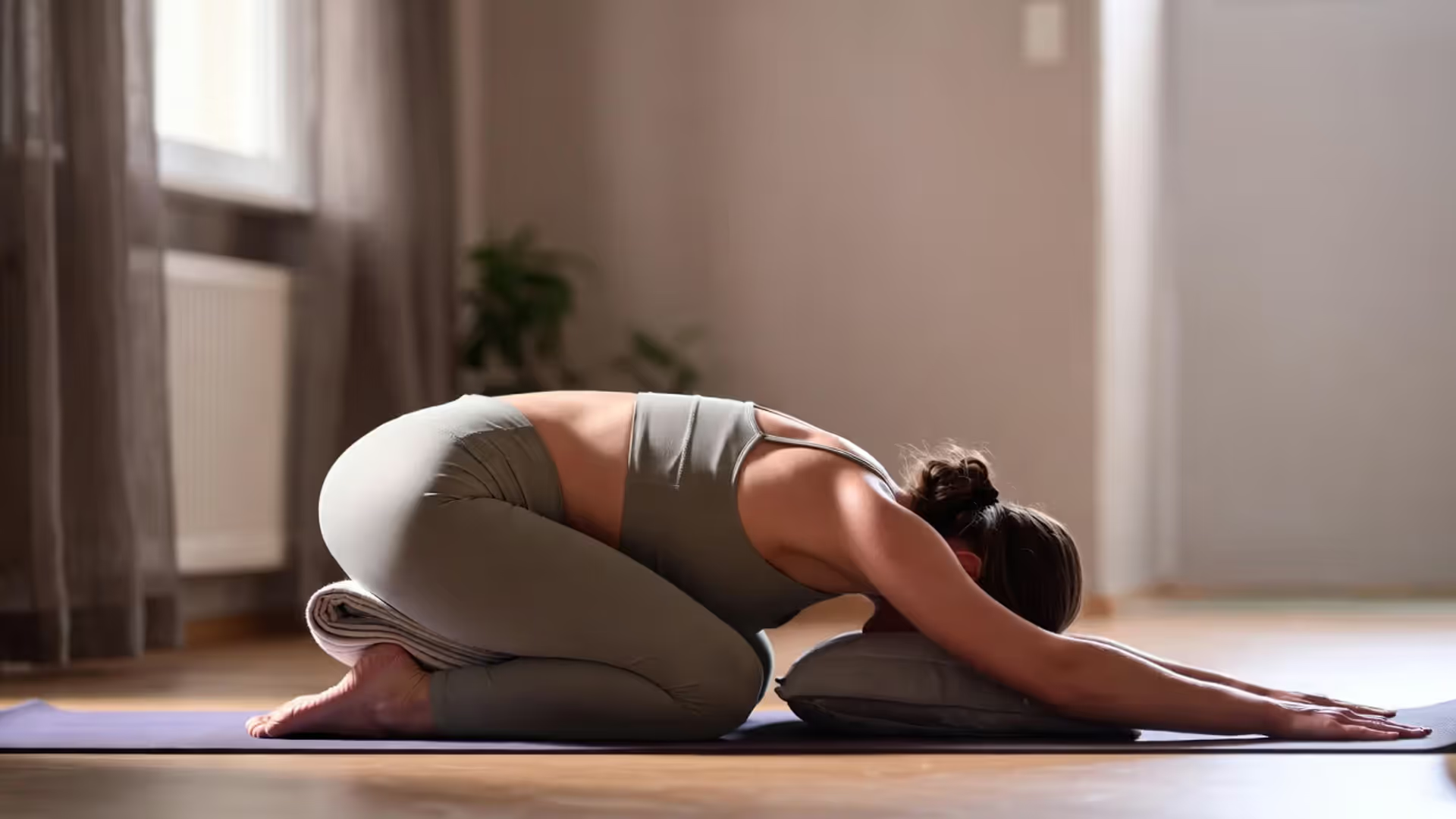
Child's Pose (Balasana): Kneel down and separate your knees wider than your ribs. Sit your hips back toward your heels while stretching your arms forward. Rest your forehead on the mat—or prop it up with a block if that's more comfortable.
Why it works: Each breath gently compresses your belly, massaging internal organs and stimulating vagal pathways. Stay 2-5 minutes, making each exhale noticeably longer than each inhale. Tight hips? Tuck a rolled blanket between your calves and thighs.
Standing Forward Fold (Uttanasana): Stand with feet hip-width apart. Keep your knees significantly bent as you fold forward from your hips. Let your upper body dangle. Release your neck completely—your head should feel heavy. Grab opposite elbows and sway gently side to side.
This mild inversion increases blood flow to your brain while decompressing your lower back. Those bent knees aren't optional if you have tight hamstrings. Straight legs turn a stress-relieving pose into a stress-creating one.
Pigeon Pose (Eka Pada Rajakapotasana): Start on hands and knees. Slide your right shin forward at whatever angle works for your body. Extend your left leg straight back. Square your hips toward the front of your mat, then drape your torso over your front leg.
Use lots of props here—bolsters, blocks, stacked blankets—so you can completely relax instead of muscling through. Your hips store emotional tension alongside physical tightness. Hold 3-5 minutes per side, breathing steadily into the discomfort without forcing deeper range.
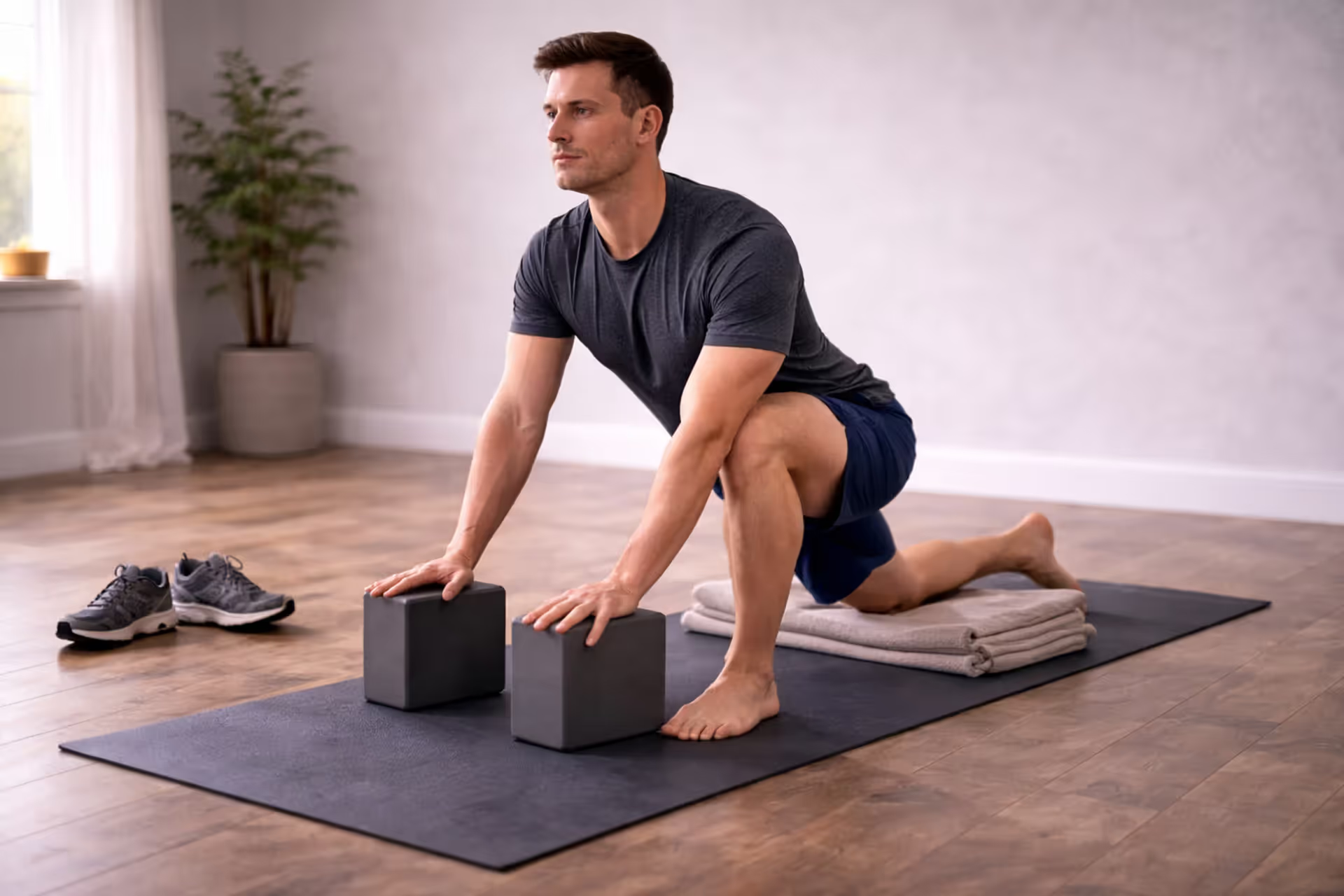
Reclined Bound Angle (Supta Baddha Konasana): Lie on your back and bring the soles of your feet together, letting your knees fall open. Slide a block or folded blanket under each thigh for support—unsupported legs create groin strain that prevents relaxation. Place one hand on your belly, the other on your chest.
This opens chronically tight hip flexors (which contract during stress responses) while the fully supported position allows complete muscular release.
Stress lives in the body before it shows up in the mind. When you slow your breath and soften physical tension, you’re not escaping stress — you’re retraining your nervous system to respond differently.
— Emily Carter, PhD, Mind-Body Medicine Specialist
Restorative Backbends and Inversions
Supported Bridge Pose: Lie on your back with knees bent and feet flat. Press through your feet to lift your pelvis, then slide a yoga block under your sacrum—that broad, flat bone at the base of your spine. Use the block's lowest or middle height. This should feel supportive, not like an extreme arch.
Your chest opens moderately, reversing the protective hunching that accompanies stress and depression. Stay 5-10 minutes.
Legs-Up-The-Wall (Viparita Karani): Sit sideways next to a wall, then swing your legs up as you lower your torso to the floor. Position your sitting bones close to (or touching) the wall, with arms resting by your sides.
This gentle inversion helps venous blood return from your legs while shifting your nervous system toward parasympathetic mode. Lower back hurting? Scoot farther from the wall or elevate your pelvis with a folded blanket.
Supported Fish Pose: Place one yoga block lengthwise under your shoulder blades and another supporting your head. Straighten your legs or keep knees bent—whatever feels better for your lower back.
Significant chest opening can trigger emotional vulnerability. That's therapeutically valuable, not something to avoid. Start with 2-minute holds and gradually increase as you adapt.
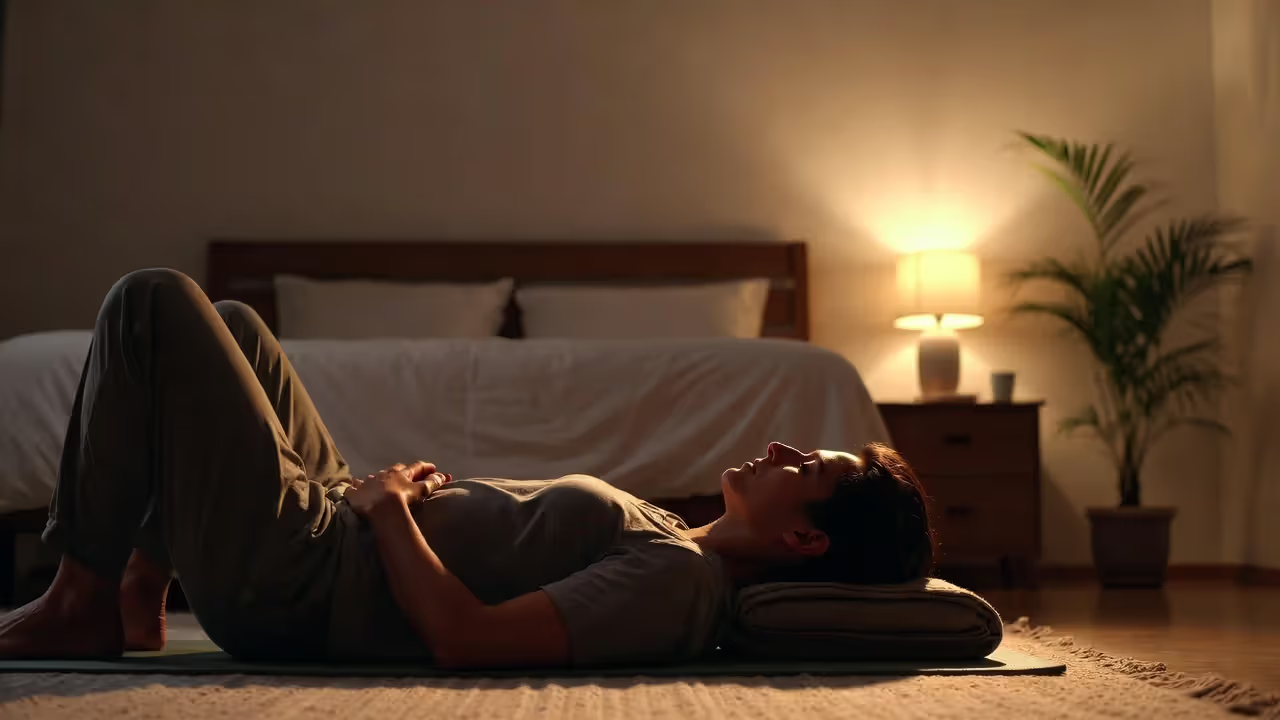
Corpse Pose with Bolster (Savasana): Lie on your back with a bolster or several folded blankets under your knees. Cover your eyes with an eye pillow or folded cloth.
This isn't just resting. It's deliberate relaxation training. Set a timer for 10-20 minutes. Your only job: noticing when your mind wanders toward worries and gently redirecting attention to the physical sensation of your body contacting the floor. This builds attention control circuits that deteriorate under chronic stress.
Stress Reduction Breathing Techniques to Pair With Your Practice
Author: Caleb Foster;
Source: thelifelongadventures.com
Breathing is the only automatic body function you can consciously control. That makes stress reduction breathing yoga your most accessible anti-anxiety tool—no equipment, no special clothes, no designated space required.
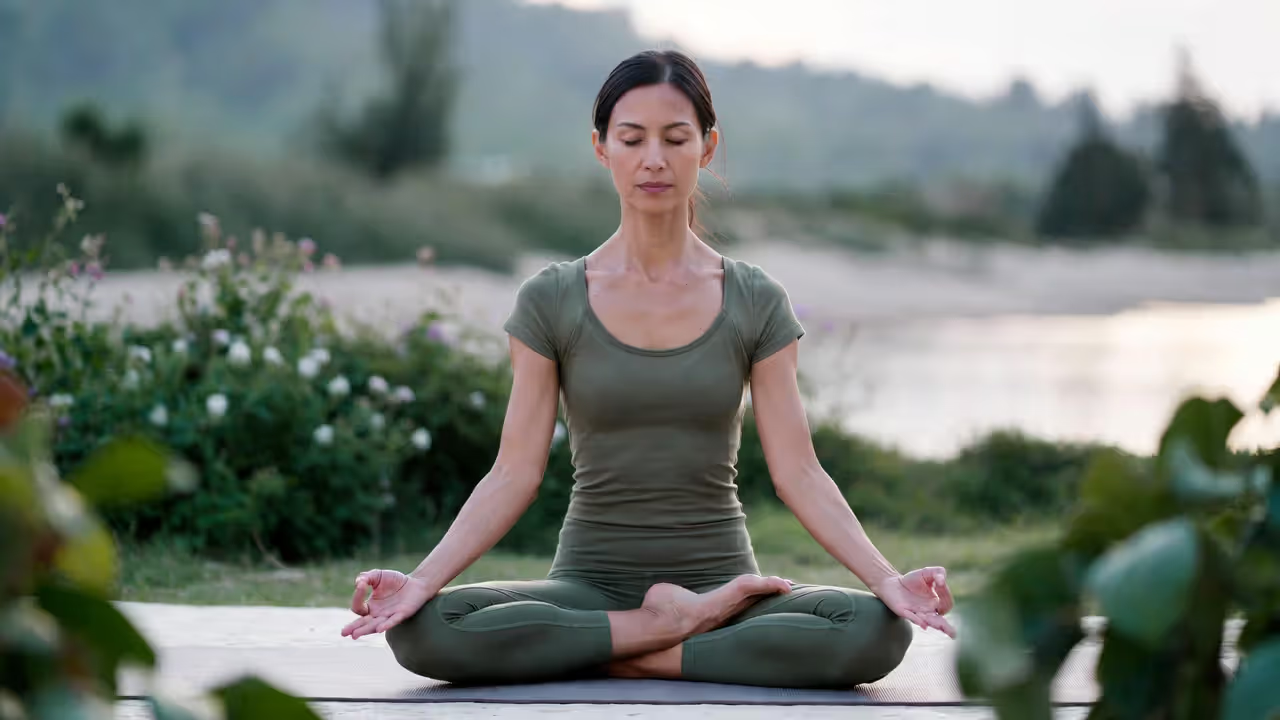
Extended Exhale Breathing (2:1 Ratio): Sit with your spine upright. Breathe in through your nose for four counts. Breathe out through your nose for eight counts.
Making your exhale twice as long as your inhale activates parasympathetic mechanisms more powerfully than balanced breathing. Continue 5-10 minutes. If eight counts feels strained, try 3:6 or 4:6 instead. The key: doubling exhale length relative to inhale without creating tension.
Alternate Nostril Breathing (Nadi Shodhana): Close your right nostril with your right thumb. Inhale through your left nostril for four counts. Use your right ring finger to close your left nostril while releasing your thumb, then exhale through your right nostril for four counts. Inhale right, switch fingers, exhale left—continuing this alternating pattern.
Practice 5-10 minutes. Research shows this technique specifically lowers cortisol while raising heart rate variability—a validated marker of stress resilience. Stuffy nose? Skip this one and focus on extended exhales instead.
Humming Bee Breath (Bhramari): Inhale deeply through your nose. As you exhale, make a low humming sound like a bee while keeping your lips gently closed.
The vibration stimulates vagal nerve fibers throughout your throat and chest. Do 10-15 rounds. This works exceptionally well for racing thoughts at bedtime or sudden anxiety spikes. The auditory focus gives your mind something to latch onto besides anxious thoughts.
Square Breathing: Inhale four counts, hold four counts, exhale four counts, hold empty four counts. Repeat for five minutes.
Navy SEALs and emergency responders use this technique because the rhythmic equality overrides stress-driven breathing patterns. Anxiety typically creates rapid, shallow chest breathing. This pattern imposes slow, diaphragmatic breathing that signals safety throughout your system.
Use extended exhale breathing during yoga practice and throughout your day when you notice tension building. Save alternate nostril breathing for dedicated practice time when you can sit quietly. Deploy humming bee breath for acute anxiety episodes. Square breathing excels before predictably stressful events (presentations, difficult conversations, medical appointments) to preemptively stabilize your system.
15-Minute Relaxation Yoga Flow for Morning or Evening
Author: Caleb Foster;
Source: thelifelongadventures.com
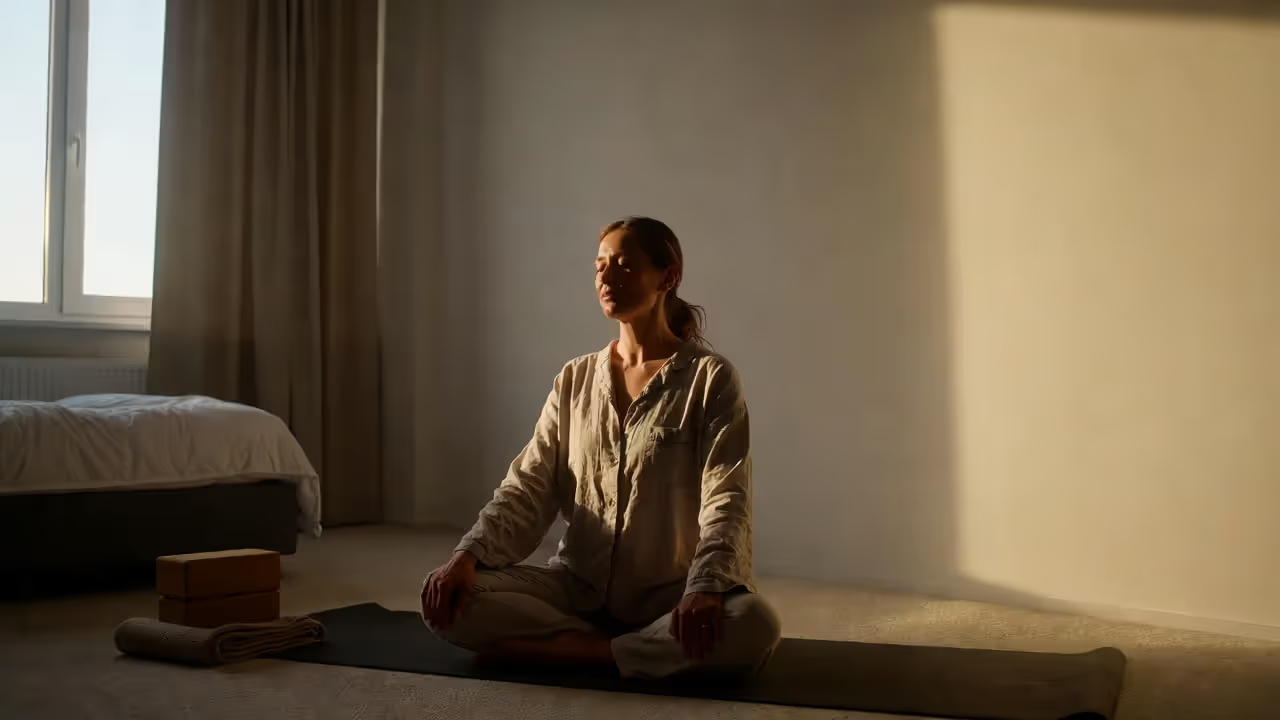
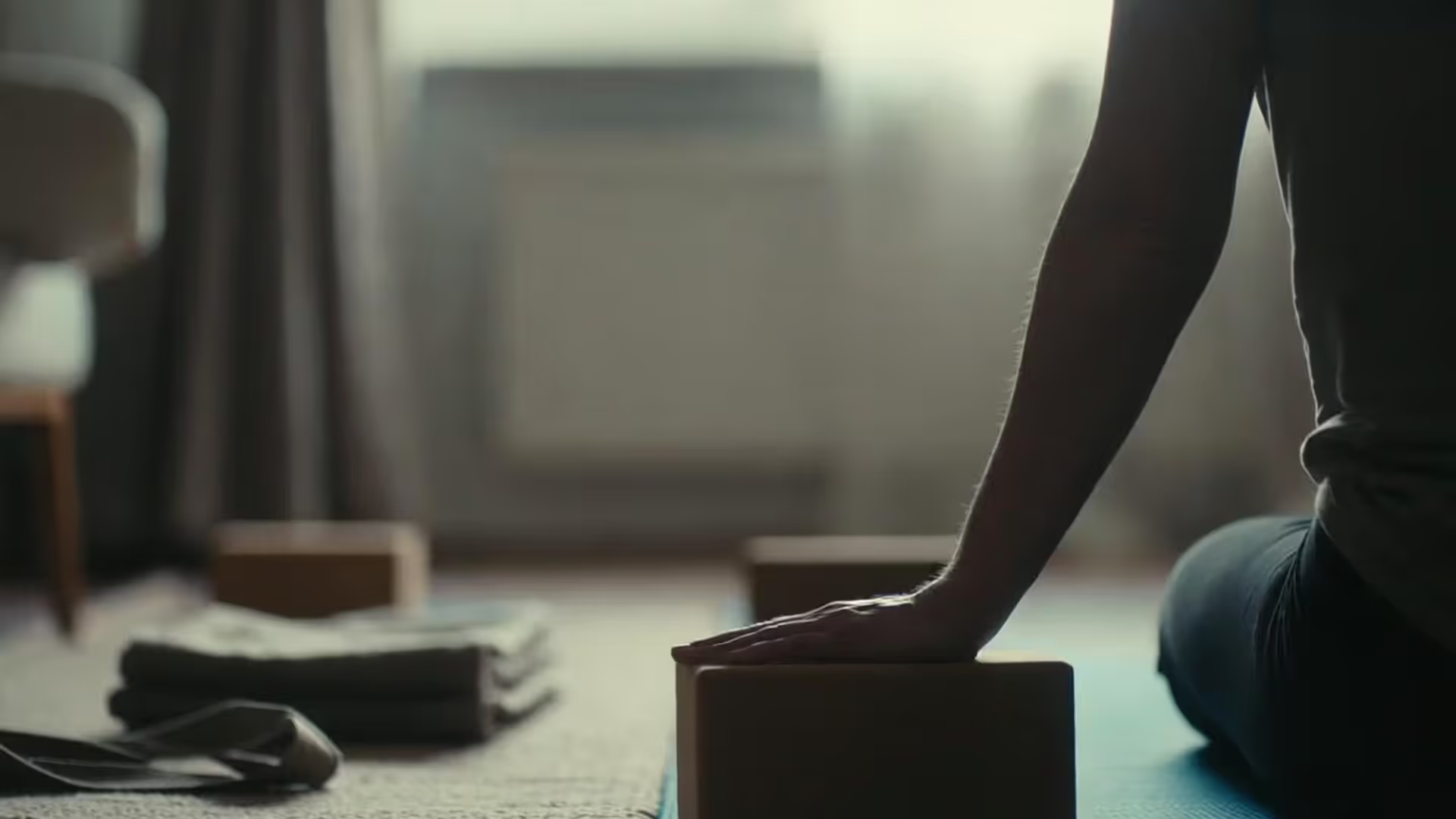
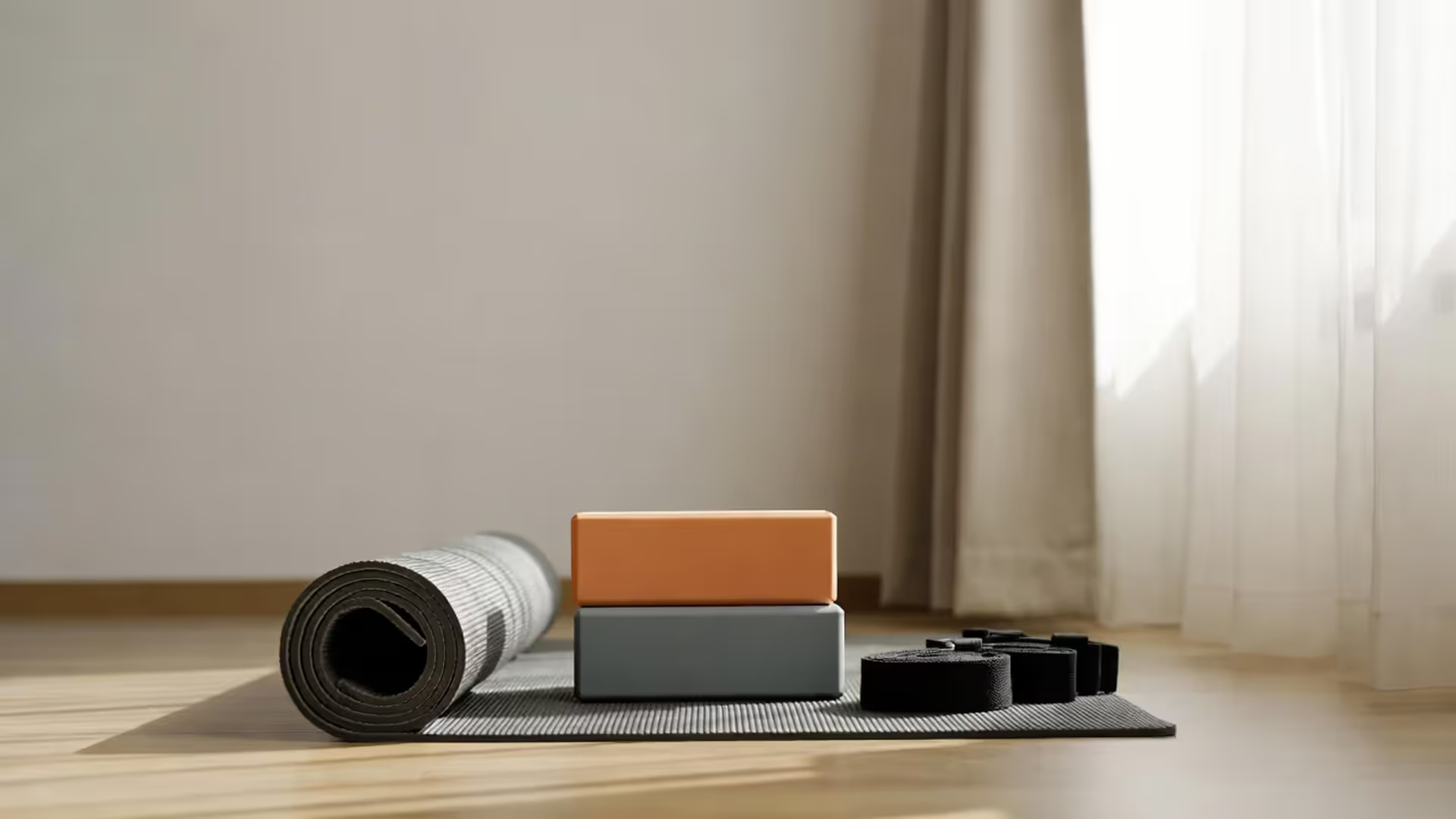
This sequence works whether you're establishing morning calm or unwinding before bed. Move slowly, taking at least five breaths in each pose. You'll need a mat and possibly blocks or folded blankets.
Minutes 0-2: Begin in Child's Pose with knees wide and arms extended forward. Focus on deepening your breath, making each exhale slightly longer than each inhale. This signals your shift from doing mode into being mode.
Minutes 2-4: Move to hands and knees for Cat-Cow rounds. Inhale as you arch your spine, lifting chest and tailbone up (Cow). Exhale as you round your spine, tucking chin and tailbone down (Cat). Let movement flow naturally with breath rather than counting mechanically.
This mobilizes your spine and establishes breath-movement connection—the foundation of all yoga practice.
Minutes 4-7: Step your right foot forward between your hands into a low lunge. Drop your back knee to the mat and sink your pelvis forward, feeling the stretch through your left hip flexor. Raise both arms overhead if that's comfortable. Hold 5-8 breaths, then switch sides.
Hip flexors tighten during stress responses, contributing to lower back pain and restricted breathing.
Minutes 7-10: Return to standing at the front of your mat. Fold forward with bent knees (Standing Forward Fold), holding opposite elbows. Sway gently side to side. After 5-8 breaths, release your arms and slowly roll up to standing, letting your head arrive last. Fold forward again immediately for another 5-8 breaths.
Your second fold typically goes deeper. Your nervous system needs time to assess safety before releasing protective tension.
Minutes 10-12: Lie on your back and draw both knees to your chest. Rock gently side to side, massaging your lower back against the floor. Then move into Reclined Bound Angle with supported thighs. Let your breathing return to its natural, unforced rhythm.
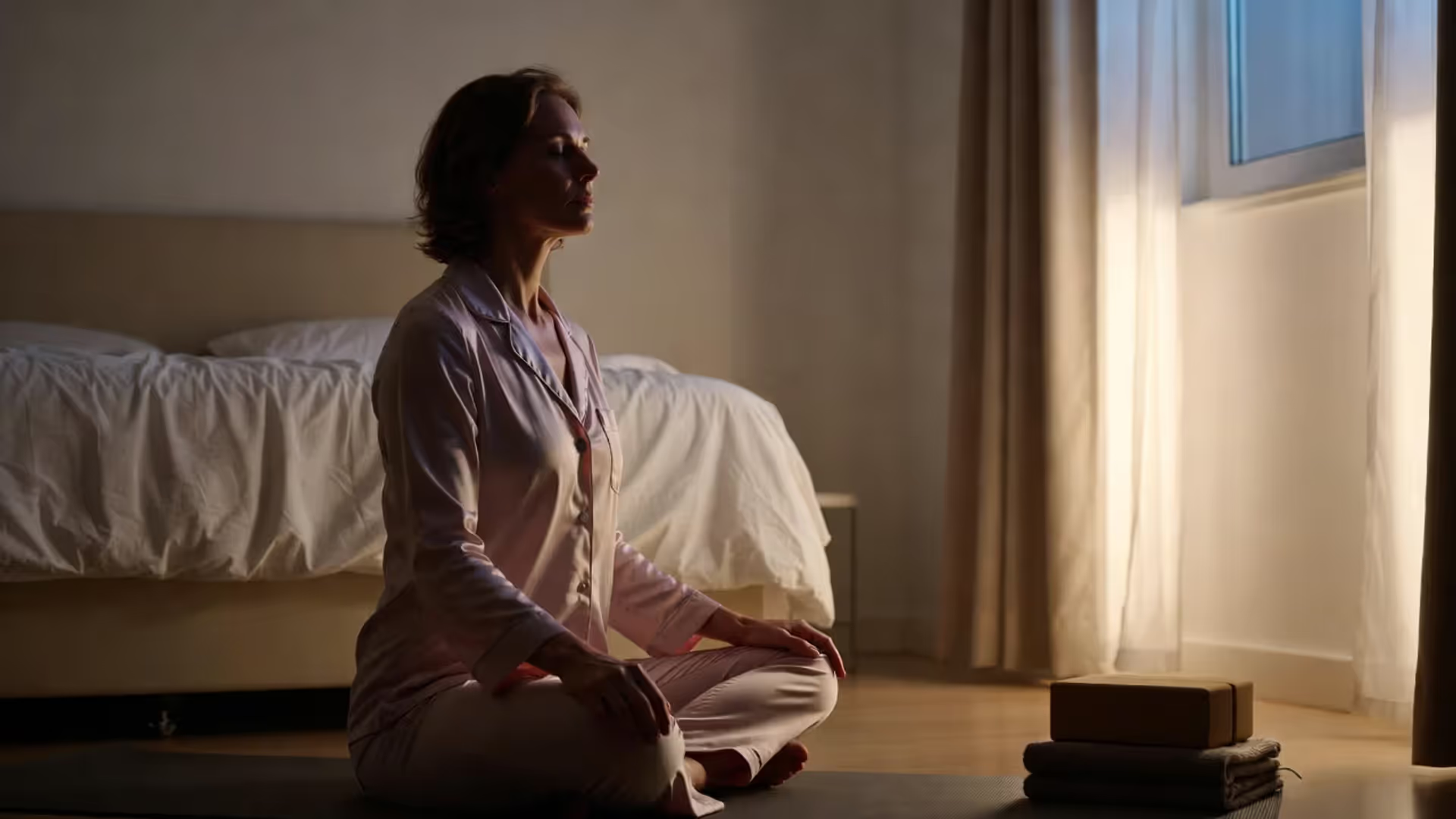
Minutes 12-15: Extend both legs for Savasana, placing a rolled blanket or bolster under your knees. Cover your eyes. Practice extended exhale breathing (inhale four counts, exhale 6-8 counts) for the remaining time.
When your timer sounds, take several natural breaths before you start moving.
Move through this sequence at whatever pace maintains present-moment awareness. Rushing through poses to "finish on time" defeats the entire purpose. Four mindful poses beat eight poses done while mentally composing emails.
Common Mistakes That Make Yoga More Stressful (Not Less)
Author: Caleb Foster;
Source: thelifelongadventures.com
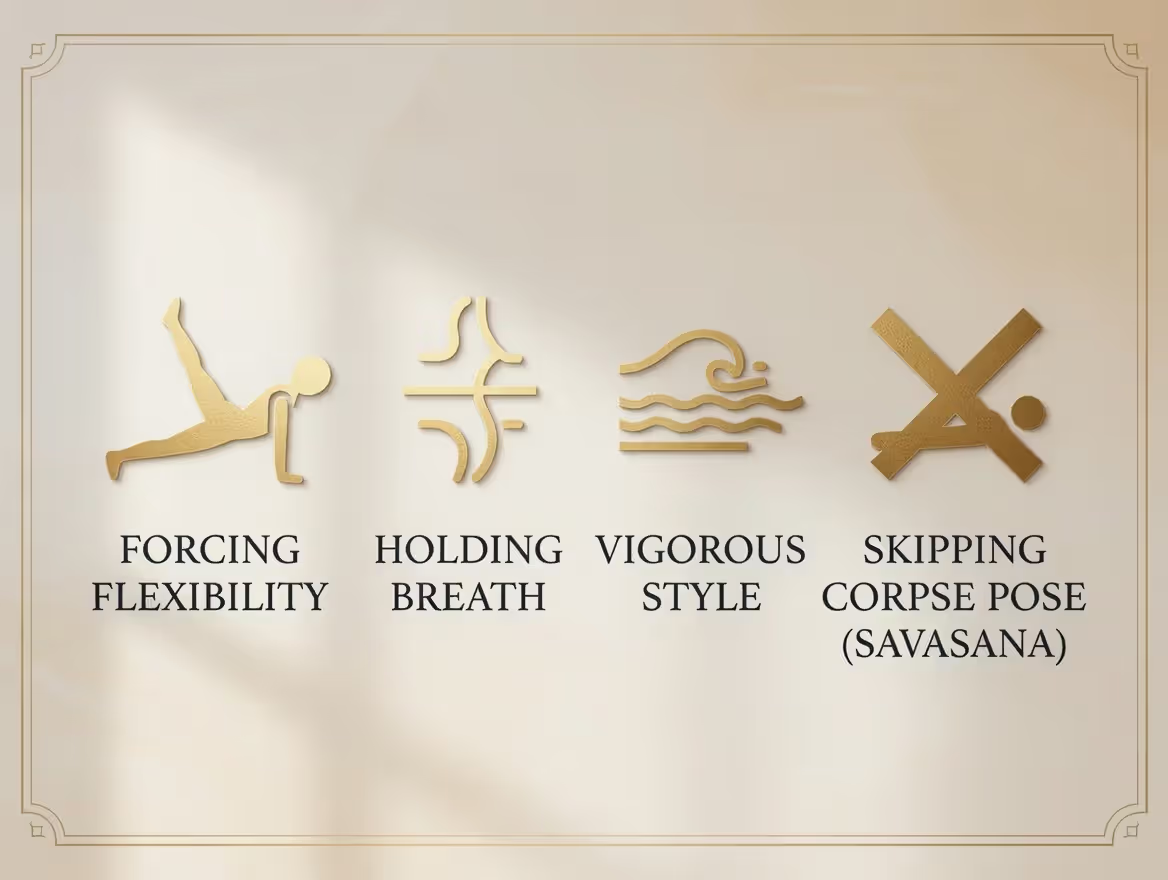
Forcing flexibility beyond current capacity: Instagram images of extreme flexibility look impressive, but straining toward them activates your stretch reflex—a protective mechanism that creates more tension, not less. Use props liberally. Blocks, blankets, and bolsters aren't training wheels you eventually discard. They're what transforms poses into therapeutic experiences instead of performance art.
Holding your breath during challenging positions: When poses get tough, most people unconsciously stop breathing or shift to shallow chest breathing. This signals danger to your nervous system, raising stress hormones. Can't maintain smooth breathing in a pose? You've gone too deep. Back off until full breathing returns.
Choosing vigorous styles when your system is already activated: Vinyasa and power yoga have their place, but not when your nervous system is already redlining. Practicing intense, fast-paced yoga while stressed is like drinking espresso to fix insomnia. Your system needs the opposite: slow, sustained, well-supported poses that give your nervous system permission to downshift.
Cutting short or skipping Savasana: Final relaxation isn't optional luxury—it's when nervous system integration happens. Your body needs stillness time to consolidate practice effects. Minimum five minutes, ideally 10-15. Don't have time for Savasana? Then you don't have time for yoga. Do fewer poses and rest longer.
Sporadic practice combined with expectations of instant transformation: Practicing once during crisis provides some relief, but cumulative benefits come from regularity. Three sessions weekly beats one marathon weekend session. Building nervous system resilience takes consistency, not heroic efforts.
Comparing yourself to others: The person next to you might look blissful in Pigeon Pose while you're grimacing. They might also have different bone structure, more practice history, or less trauma stored in their tissues. Your only job: noticing your own sensations and responding appropriately. Comparison activates the same stress response you're trying to relieve.
Yoga Style
Intensity Level
Cortisol Reduction Effectiveness
Best For
Typical Session Length
Beginner-Friendly
Restorative
Very low
Excellent
Anxiety disorders, insomnia, nervous system recovery
60-90 min
Very accessible
Yin
Low
Excellent
Physical tension patterns, emotional processing
60-75 min
Highly accessible
Yoga Nidra
None (reclining throughout)
Excellent
Racing thoughts, sleep issues, trauma recovery
20-45 min
Very accessible
Hatha
Low to moderate
Good
General stress management, building sustainable practice
45-75 min
Very accessible
Vinyasa
Moderate to high
Moderate (depends on pace)
Physical tension from sedentary work, mild to moderate stress
45-90 min
Moderately accessible
Frequently Asked Questions About Yoga for Anxiety and Stress
How quickly does yoga reduce stress?
You'll feel immediate effects after a single session—lower heart rate, deeper breathing, reduced muscle tension. These acute benefits last several hours. More substantial changes to baseline stress levels and cortisol patterns require weeks of consistent practice. Most research showing measurable cortisol reduction used protocols of three weekly sessions for 8-12 weeks. That said, even one 20-minute session can effectively interrupt an acute stress spiral.
Can yoga replace medication for anxiety?
Yoga can be a powerful component of anxiety treatment but shouldn't replace medication without medical supervision. Some people successfully manage mild to moderate anxiety with yoga combined with other lifestyle approaches. Others need both medication and yoga. Still others benefit from medication, therapy, and yoga together. Severe anxiety disorders typically require professional clinical treatment. Think of yoga as one tool in your wellness toolkit, not a standalone cure. Considering medication changes? Work with your prescriber to adjust safely.
What's the best time of day for stress-relief yoga?
Morning practice sets a calm tone for your day and prevents stress accumulation. Evening practice releases accumulated tension and usually improves sleep quality. The best time is whichever time supports consistent practice. However, avoid vigorous practice within two hours of bedtime—it can be too energizing. Stick to gentle, restorative poses and breathing exercises for late-evening sessions.
Do I need to be flexible to do yoga for stress?
Not at all. Flexibility is a potential side effect of consistent practice, not an entry requirement. The most effective calming yoga exercises—Child's Pose, Legs-Up-The-Wall, Supported Bridge—require zero flexibility. They need props and patience instead. If you're tight, you'll probably benefit more from stress-relief yoga than naturally flexible people because you're likely holding more physical tension. Use blocks, blankets, and modifications freely.
How often should I practice yoga to see results?
Three to four weekly sessions produce measurable changes in cortisol levels and anxiety scores within two months. Daily practice speeds results. Even twice-weekly practice provides benefits, though they build more slowly. Consistency beats duration—fifteen daily minutes outperforms one weekly 90-minute class. Starting out? Begin with two or three weekly sessions and increase frequency once the habit feels sustainable.
Which yoga style is most effective for cortisol reduction?
Research shows strongest cortisol-lowering effects from styles emphasizing longer holds, supported positions, and breath regulation over athletic performance. Restorative yoga, Yin yoga, and Yoga Nidra specifically target nervous system regulation. This doesn't mean other styles don't work—Hatha and gentle Vinyasa can be very beneficial—but slower, more meditative approaches give your parasympathetic nervous system more opportunity to engage.
Stress relief through yoga isn't about achieving picture-perfect poses or emptying your mind completely. It's about creating conditions that allow your nervous system to shift out of survival mode into a state where healing happens naturally.
Physical positions interrupt muscle tension patterns. Breathing techniques reset nervous system balance. Sustained attention trains your mind to stay present rather than spinning catastrophic stories.
Start with ten minutes. Pick three poses from above, practice one breathing technique, and finish with Savasana. Do this three times this week. Notice what shifts—maybe you sleep better, maybe your shoulders drop away from your ears, maybe you respond to family stress with slightly more patience.
These small changes compound into significant transformation when you keep showing up on your mat, especially on days when you don't feel like it.
Your stress response evolved to keep you alive. Yoga teaches it that you're safe right now.
Runners get tight hip flexors, stubborn calves, and underactive glutes from thousands of repetitive strides. This guide shows the best yoga poses for common running issues, when to do dynamic vs recovery yoga, a 15-minute cooldown sequence, and how often to practice for mobility without overstretching.
Struggling with tight hips, hamstrings, or shoulders? This guide explains why yoga improves flexibility better than static stretching—by retraining your nervous system and building strength at end range. Learn 12 essential poses, follow 15/30/45-minute routines, and avoid the mistakes that stall progress.
New to yoga? This beginner guide explains the real, science-backed benefits, the only gear that matters, and how to choose classes or practice at home. Learn 10 foundational poses with form cues, then follow a 20-minute routine—plus common mistakes to avoid and the best styles for your goals.
Back pain is common—but yoga can reduce pain and improve function when done right. Learn why it works for acute vs chronic pain, 8 proven relief poses, how often to practice, mistakes that worsen symptoms, when to seek yoga therapy, and posture/core habits that protect your spine daily.
The content on this website is provided for general informational and educational purposes related to health, yoga, fitness, and overall wellness. It is not intended to replace professional medical advice, diagnosis, or treatment.
All information, workout suggestions, yoga practices, nutrition tips, and wellness guidance shared on this site are for general reference only. Individual health conditions, fitness levels, and medical needs vary, and results may differ from person to person. Always consult a qualified healthcare provider before starting any new exercise program, dietary plan, or wellness routine.
We are not responsible for any errors or omissions, or for any outcomes resulting from the use of information presented on this website. Your health and fitness decisions should always be made in consultation with appropriate medical and fitness professionals.