Here's what happens when you run mile after mile: your hip flexors stay scrunched up with every stride. Seriously—if you're running at 160 steps per minute for an hour, that's 9,600 repetitions of the same shortened position. Your calves, hamstrings, and glutes? They're working hard but never fully lengthening through their complete available range.
This imbalance gets worse over time. Your hip flexors start dominating movements they shouldn't control, while your glutes basically forget how to fire properly. The result cascades downward—your lower back compensates, your knees track incorrectly, and eventually your ankles bear the brunt of dysfunction that started higher up the chain.
Research published in the International Journal of Yoga tracked runners who added just two yoga sessions weekly for ten weeks. These athletes gained measurable balance and flexibility improvements compared to runners who stuck with running alone. But here's the surprising part: their running economy—how much oxygen they burned at specific paces—didn't decline. That's huge, because typical passive stretching routines can actually reduce your power output temporarily.
What makes yoga different from standing in a doorway stretching your quad? You're building proprioception—your body's spatial awareness. You're developing eccentric strength at ranges your muscles rarely experience. You're learning to breathe deliberately while under load. Hold Warrior II properly for a full minute with your knee stacked over your ankle, and you're strengthening positions your body never encounters during straight-ahead running. When you're gutting out mile twenty of a marathon, that stability work pays dividends.
Most running injuries aren't dramatic—no blown-out ACL moments. Instead, you've got IT band syndrome creeping up from repetitive friction. Plantar fasciitis developing because your foot never gets stretched in the opposite direction of running. Patellofemoral pain from thousands of slightly misaligned knee bends. These tissues need chances to lengthen and strengthen outside their normal working range, and yoga delivers that without pounding pavement.
Best Yoga Poses for Common Running Problem Areas
Hip Flexors and IT Band Relief
Author: Logan Brooks;
Source: thelifelongadventures.com
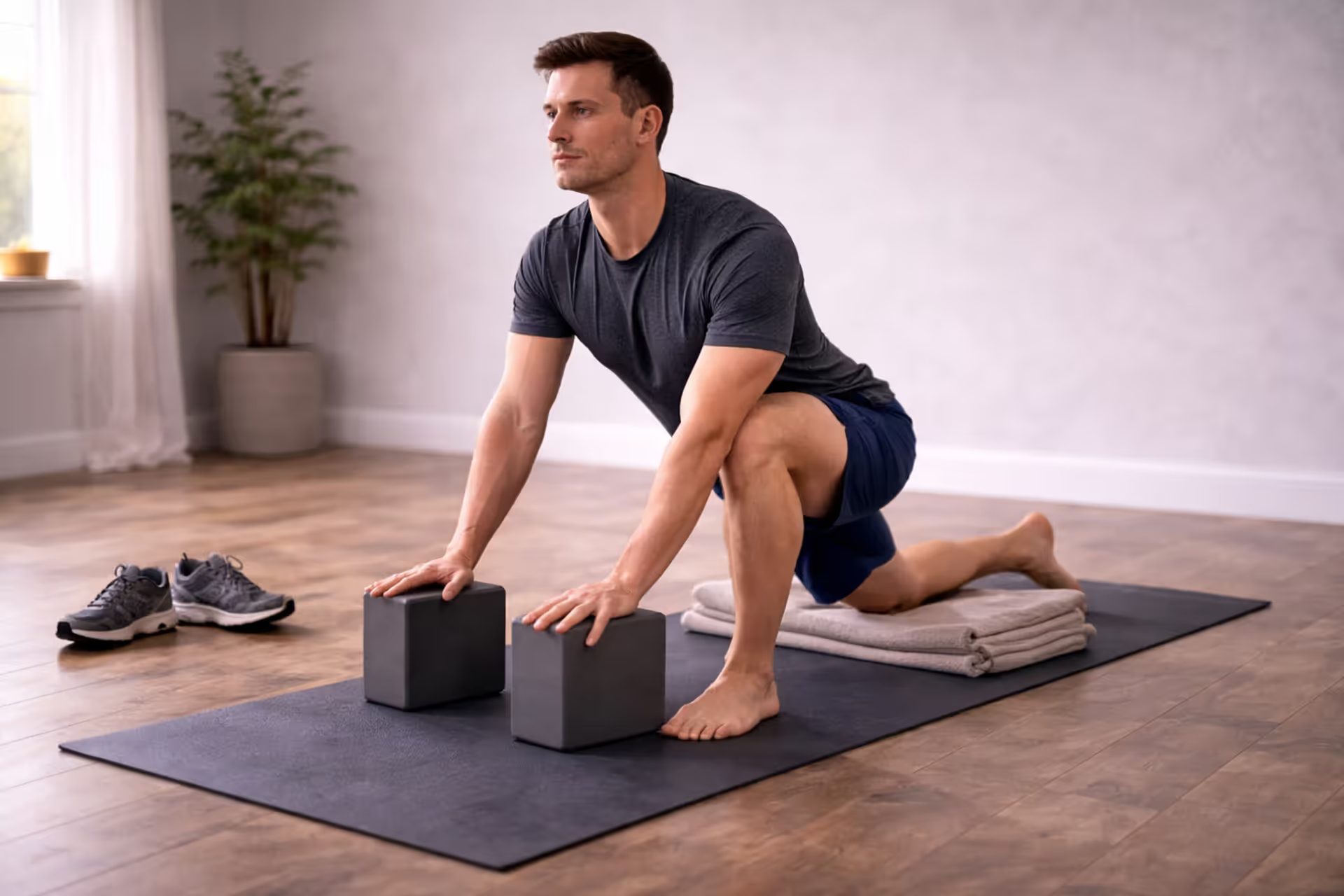
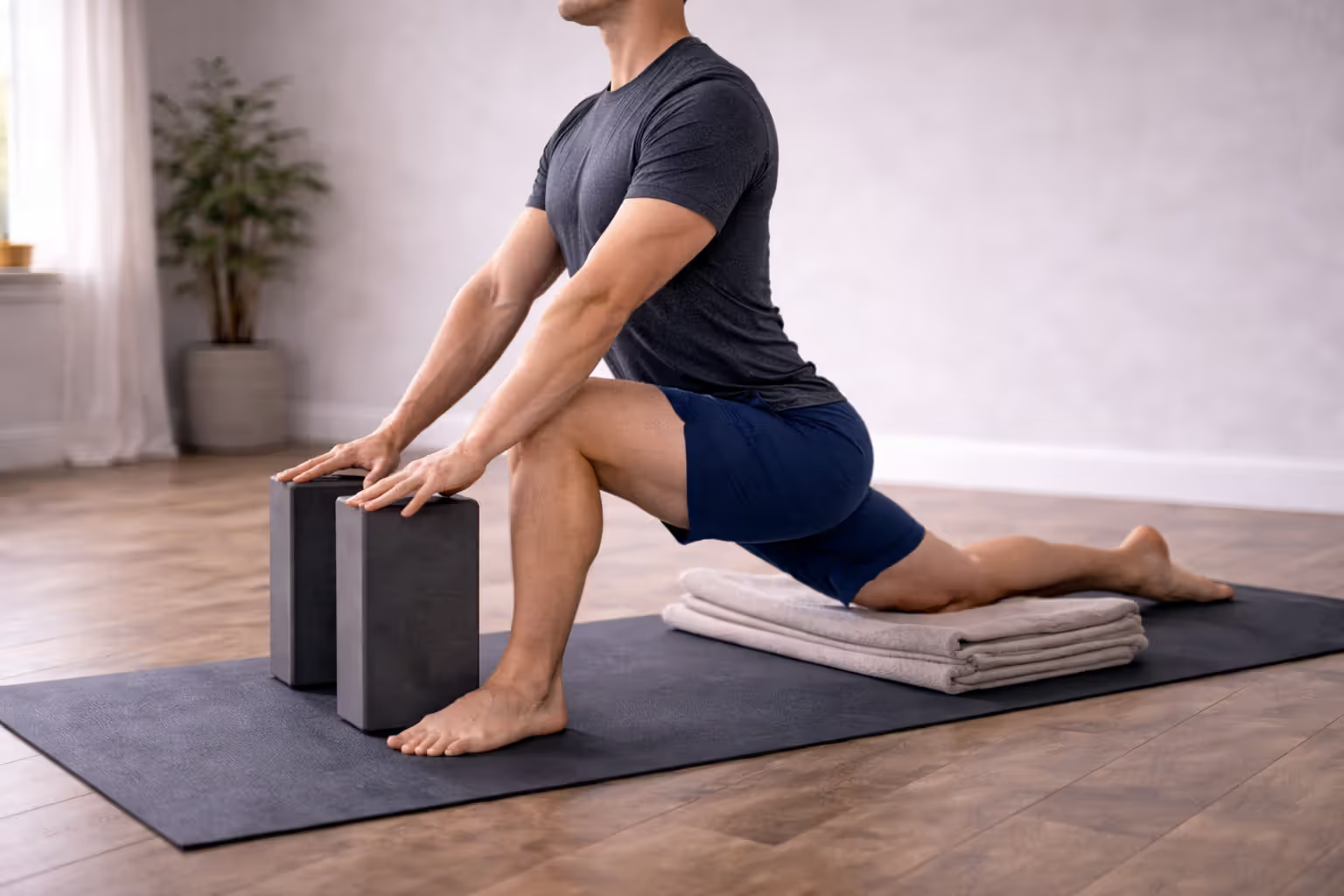
Low Lunge (Anjaneyasana) hits the psoas and rectus femoris directly—those hip flexors cramped from both running and sitting at your desk. Drop your back knee onto something padded (a folded towel works fine), and position your front knee right above your ankle. Here's what most runners get wrong: they lean their torso forward instead of keeping their chest lifted and tilting their pelvis slightly backward. You should feel this along the front of your back leg's hip, not as knee pressure.
Stay here for ninety seconds each side. I know that feels like forever. But connective tissue doesn't respond to quick stretches—it needs sustained tension for at least sixty seconds before it starts adapting.
Pigeon Pose addresses IT band issues indirectly by opening your hip rotators and glute medius. Bring your front shin forward with the knee positioned behind your wrist, then square both hips toward the front. If one hip lifts way off the ground, shove a yoga block or folded blanket underneath. Don't just collapse into this stretch—that's asking for knee trouble.
Thread the Needle (Supine Figure Four) gives you a gentler option when pigeon feels too intense. Lie on your back, cross one ankle over the opposite thigh, and pull the supporting knee toward your chest. This protects your spine while still accessing those external hip rotators that tighten up from running on cambered roads and constantly balancing on one leg.
Hamstring and Calf Lengthening
Pyramid Pose (Parsvottanasana) stretches hamstrings in a standing position that actually resembles running mechanics, unlike sitting on the floor reaching for your toes. Step one foot forward about three feet, keeping both heels grounded. Hinge from your hips—not by rounding your spine—while maintaining length through your back. Most runners feel this at the upper hamstring attachment near the sitting bone, which is exactly where tendinopathy typically shows up.
Downward-Facing Dog works your entire posterior chain when you do it correctly. Press your palms down firmly, engage your quads to lift your kneecaps, and then (and only then) work your heels toward the floor. Bent knees are totally fine here—the goal is a long spine with active shoulders, not getting your heels flat. Hold for ten full breaths, alternating which foot you press down to create dynamic calf stretching.
Reclined Hand-to-Big-Toe Pose (Supta Padangusthasana) isolates hamstring lengthening while preventing your lower back from cheating. Loop a yoga strap or belt around the ball of your foot, but keep your other leg fully extended on the floor. That extended leg matters—it prevents your pelvis from tilting and letting you fake the stretch by bending your lower back instead of actually flexing at your hip.
Author: Logan Brooks;
Source: thelifelongadventures.com
Ankle Stability and Foot Strength
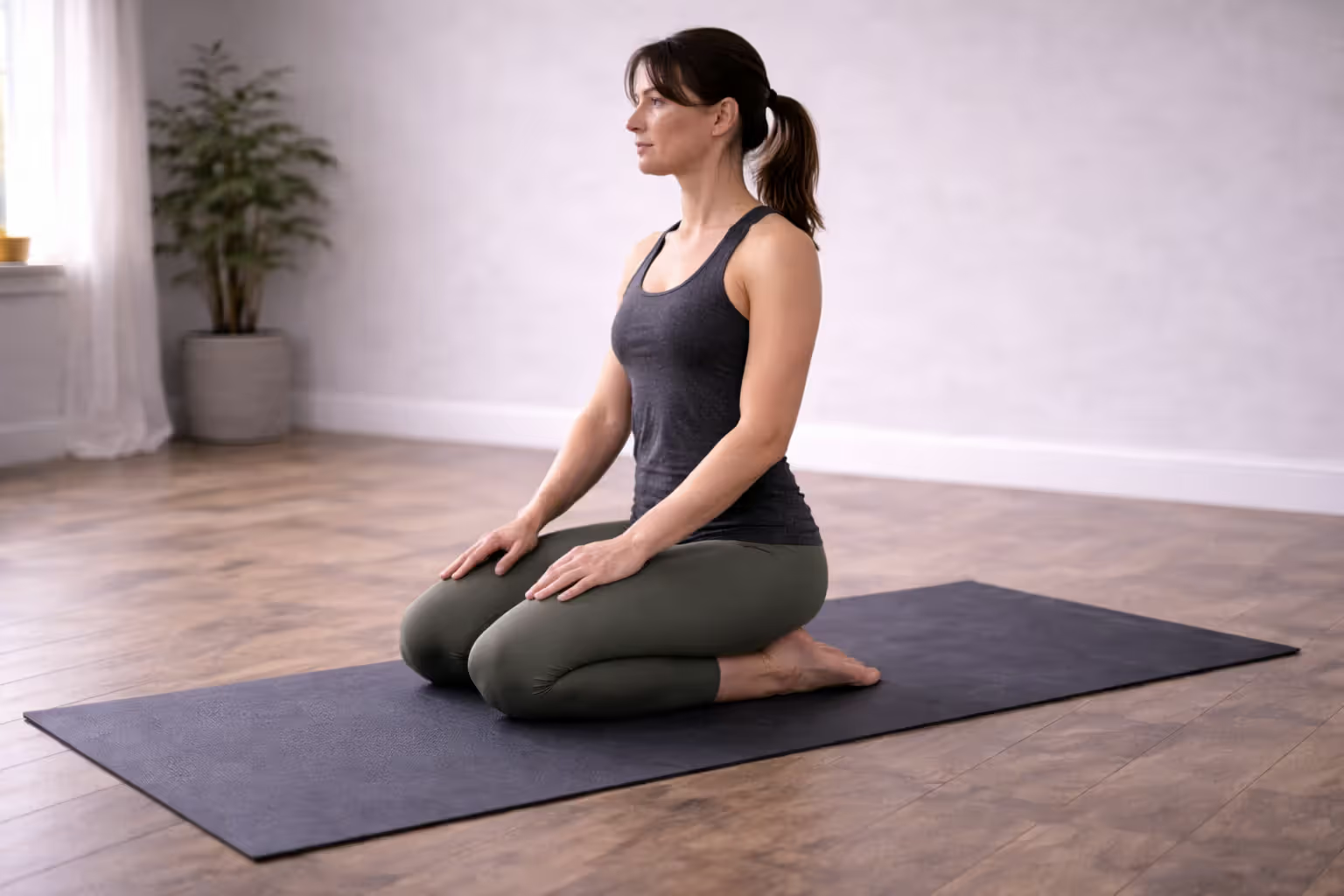
Toe Squat looks ridiculously simple but exposes how stiff most runners' feet have become from living in cushioned shoes. Kneel down with all your toes tucked underneath, then sit your hips back toward your heels. You'll feel intense sensation through your arches and toe flexors. Start with thirty-second holds and work up to two minutes over several weeks. This directly counteracts the foot rigidity that contributes to plantar fasciitis and Achilles problems.
Tree Pose (Vrksasana) builds single-leg stability through your entire kinetic chain. Place one foot against your inner opposite thigh (never pressing directly on the knee joint itself) while staring at one fixed point at eye level. Your standing foot should actively grip the floor—spread your toes wide, lift your arch moderately. This intrinsic foot activation prevents the ankle collapse that leads to knee valgus during running.
Chair Pose (Utkatasana) strengthens your tibialis anterior and peroneal muscles—the controllers of ankle dorsiflexion and preventers of foot drop during swing phase. Sit back like you're lowering into a chair, keeping your weight through your heels with knees tracking over your second and third toes. Hold forty-five seconds, rest, then do three total rounds.
Author: Logan Brooks;
Source: thelifelongadventures.com
Pre-Run vs. Post-Run: When to Practice Which Style
Don't do deep passive stretching before running. Ever. Your nervous system needs activation, not relaxation, before high-impact work. Sun Salutations A and B work perfectly here: they get your heart rate up, move joints through complete ranges, and activate movement patterns without exhausting your muscles.
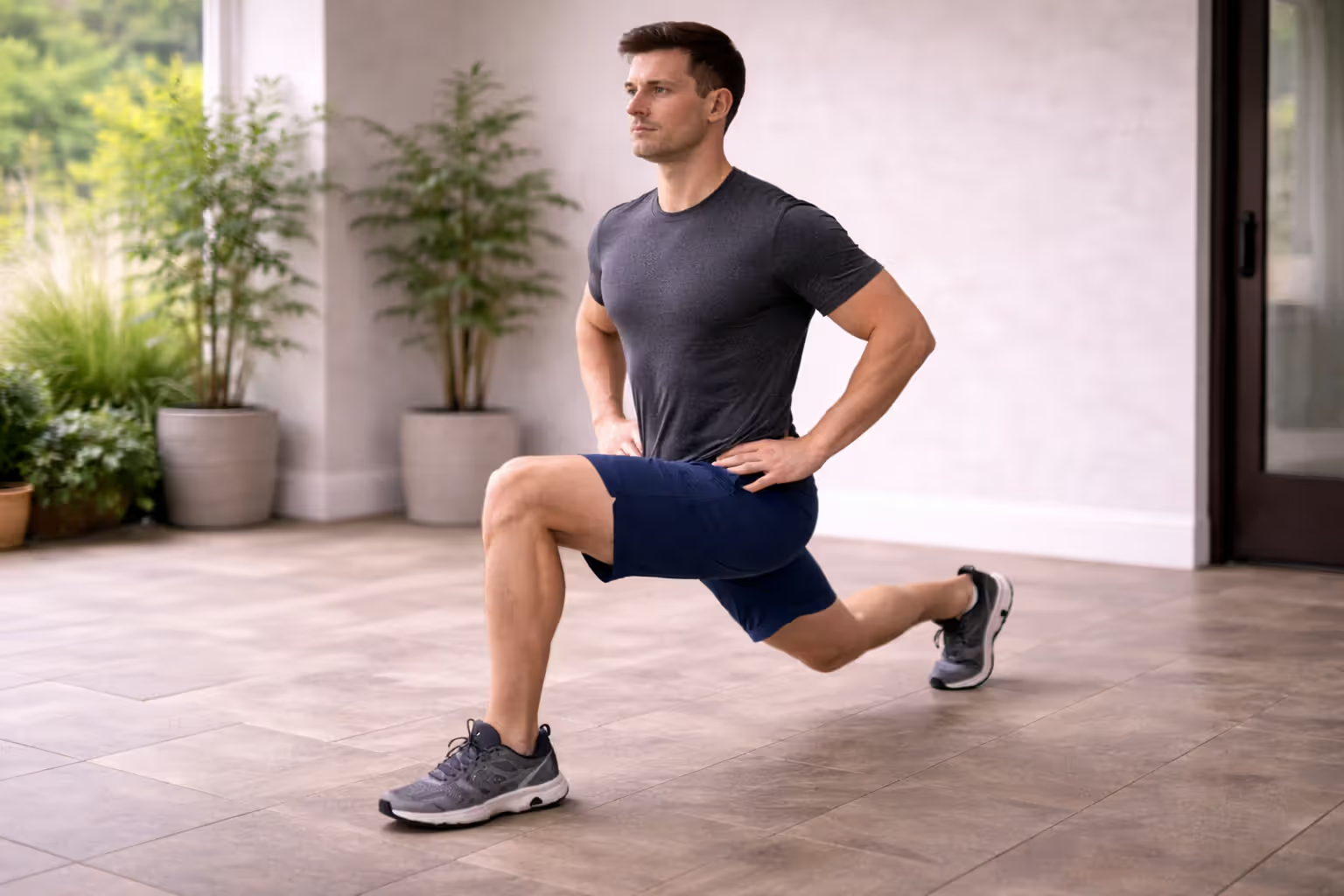
A five-minute pre-run routine might look like five rounds of Sun Salutation A, three sets of low lunge pulses (ten small pulses each side), and ten leg swings forward-and-back plus side-to-side. You're raising tissue temperature and waking up your nervous system, not trying to gain flexibility.
Post-run yoga serves completely different purposes depending on timing. Right after a hard workout or race? Stick with gentle movement and supported positions. Your muscles are inflamed and temporarily weakened from eccentric loading. Aggressive stretching now can actually increase soreness rather than relieving it.
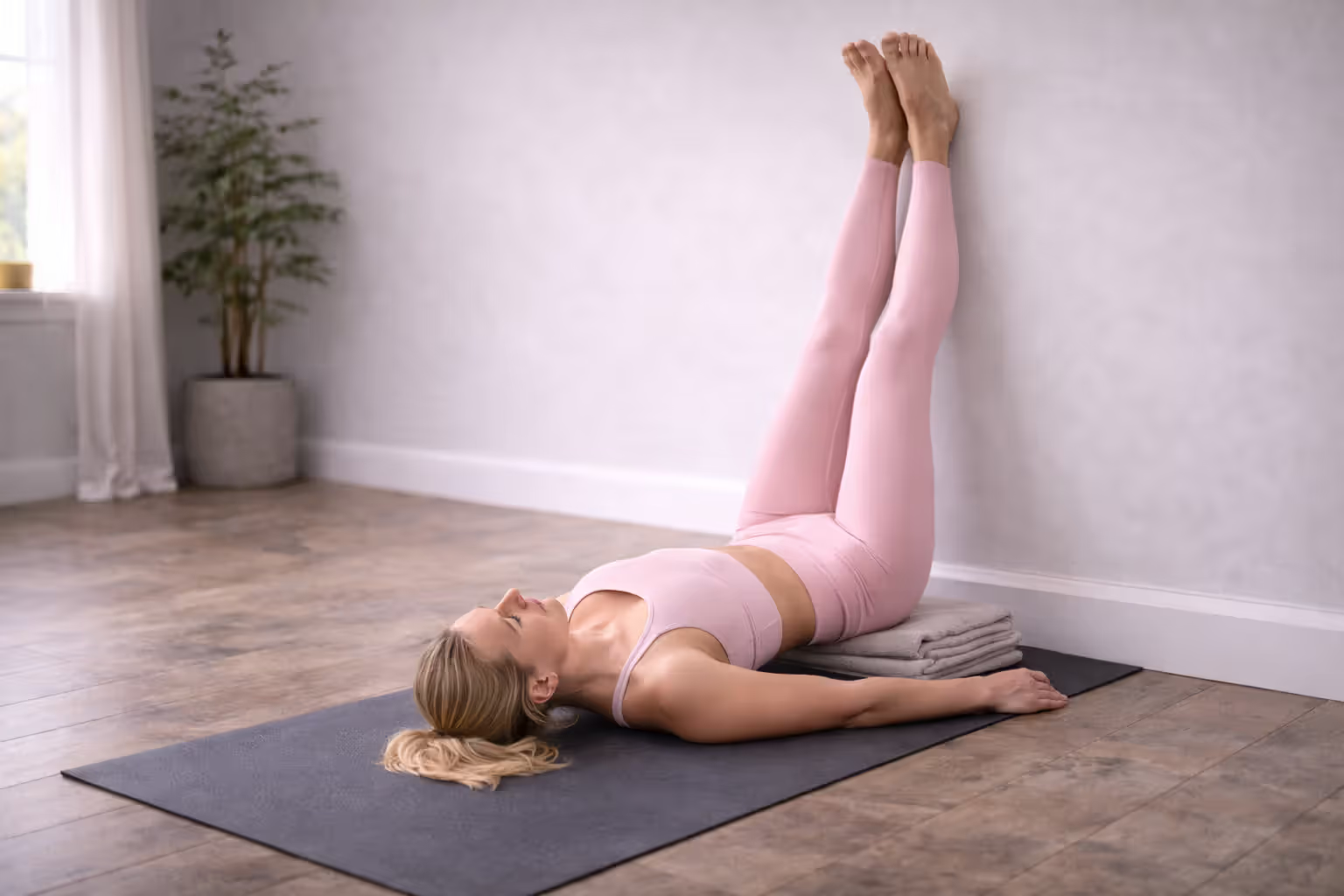
Wait two to four hours after intense running before attempting deeper hip opening or hamstring work. This evening window lets initial inflammation settle while tissues remain warm and responsive. A twenty-minute evening practice might include pigeon pose, supine twists, and legs-up-the-wall to support recovery.
Recovery yoga running sessions—scheduled on rest days or following easy runs—can extend longer with restorative emphasis. These thirty to forty-five minute practices might include yin-style holds (three to five minutes per pose) focusing on hips, hamstrings, and spine. Extended duration creates fascial and connective tissue remodeling that brief stretches simply cannot produce.
Timing
Style/Intensity
Recommended Poses
Duration
Primary Benefit
Before running
Dynamic, activating
Sun Salutations, lunges with small pulses, leg swings in multiple directions, cat-cow flows
5-10 minutes
Raises tissue temperature, wakes up neuromuscular pathways, preps movement patterns
Immediately after
Gentle, passive
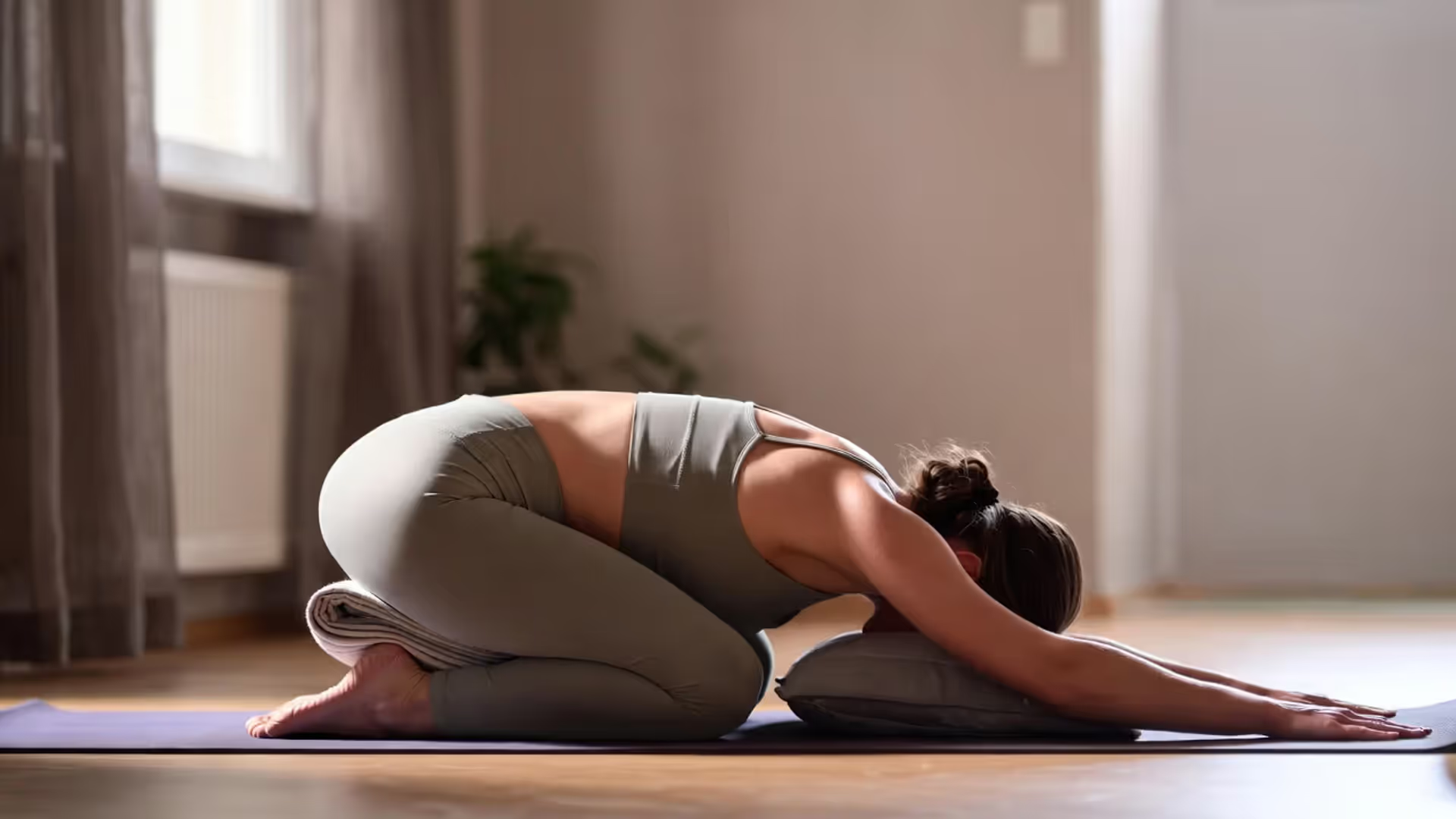
Standing forward fold with bent knees, supine spinal twists, legs elevated against wall, child's pose
5-15 minutes
Boosts circulation, starts recovery process without stressing fatigued tissue
Addresses accumulated tightness after inflammation decreases, prevents next-day stiffness
Author: Logan Brooks;
Source: thelifelongadventures.com
15-Minute Cooldown Sequence After Your Run
This sequence works best after easy to moderate runs. Following intervals or races? Cut hold durations in half and skip pigeon pose entirely.
Standing Forward Fold (2 minutes): Set your feet hip-width with a slight knee bend, letting your torso hang freely. Grab opposite elbows and sway gently side to side. This decompresses your spine and begins hamstring release without forcing anything.
Low Lunge, Right Side (90 seconds): Step your right foot forward between your hands, dropping your left knee to padded ground. Position that right knee directly over your ankle while lifting your chest. Tilt your pelvis slightly backward to access the left hip flexor stretch. Use blocks under your hands if needed to keep your spine long.
Low Lunge, Left Side (90 seconds): Switch sides. Notice any differences—most runners have tighter hip flexors on one side from leg-length discrepancies or always running the same side of the road.
Downward-Facing Dog (10 breaths): From hands-and-knees, lift your hips up and back. Alternate bending each knee to dynamically stretch your calves. Prioritize lengthening your spine over forcing heels toward the ground.
Pigeon Pose, Right Side (2 minutes): From downward dog, bring your right knee forward behind your right wrist. Square your hips and fold forward over the front leg, resting on your forearms or a block. Breathe into areas of resistance.
Pigeon Pose, Left Side (2 minutes): Repeat on the other side. If this feels too intense following long runs, substitute supine thread-the-needle instead.
Supine Twist, Both Sides (1 minute each): Lying on your back, draw your right knee toward your chest before guiding it across your body to the left. Extend your right arm outward while looking toward your right hand. This releases lower back tension and lateral hip structures.
Legs-Up-the-Wall (3 minutes): Sit sideways next to a wall, then rotate your legs upward as you recline backward. Position your hips close to the wall with legs resting vertically. This uses gravity to boost circulation from your legs toward your heart, reducing swelling and fatigue.
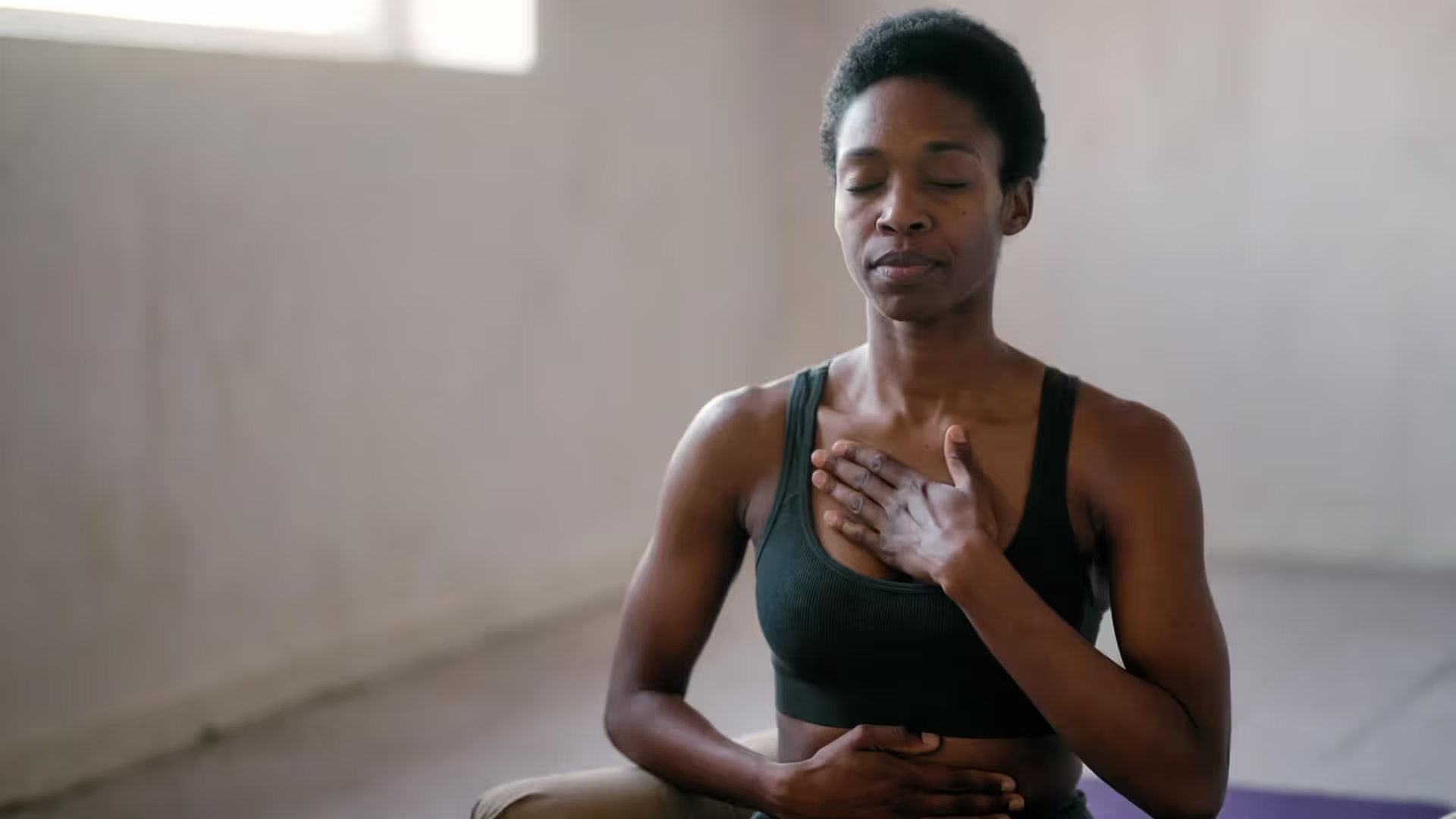
Savasana (2 minutes): Lie fully on your back with legs extended and arms beside your torso, palms facing up. Let your eyes close and breathe slowly—in for four counts, out for six. This final relaxation allows your nervous system to shift from fight-or-flight into rest-and-digest mode, optimizing recovery processes.
Author: Logan Brooks;
Source: thelifelongadventures.com
Building Hip Mobility Without Overstretching
Runners constantly confuse flexibility with mobility. Flexibility is passive range of motion—how far someone else can push your limb. Mobility is active range of motion—how far you can move your limb under your own control. Running performance requires the latter.
Hip mobility yoga runners should focus on combines lengthening with strength at expanded ranges. Try 90/90 Hip Rotations: sit with your right leg bent forward at ninety degrees, left leg bent back at ninety degrees. Instead of passively sinking, actively lift your right knee several inches off the ground and hold for five seconds. Lower and complete five reps before switching sides. You're developing external rotator strength at lengthened positions.
Controlled Articular Rotations (CARs) apply yoga principles to joint health. Lie on your back, lift one knee to ninety degrees, then slowly trace the largest possible circle—initiating from your hip joint, not your lower back. Complete five circles each direction. Movement should look smooth and controlled throughout the complete range.
The overstretching trap catches runners who push into pain, confusing intensity with effectiveness. Stretching should generate sensation—a feeling of tissue lengthening—but never sharp pain or burning. If you're grimacing and holding your breath, you've gone too far. Your nervous system responds to aggressive stretching by protectively contracting muscles, which defeats the whole purpose.
Progressive loading beats forcing depth every time. Spend three weeks holding pigeon pose for ninety seconds per side before attempting king pigeon (the deeper backbending variation). Your body needs time to adapt to expanded motion ranges by developing eccentric strength and improving tissue extensibility.
How Often Should Runners Do Yoga? (By Training Volume)
Recreational runners (15-25 miles weekly) benefit from two thirty-minute sessions each week. Schedule one on a rest day for deeper hip opening and hamstring work. Place the second after your long run, emphasizing recovery poses and gentle movement. This frequency delivers enough stimulus for flexibility improvements without overwhelming your recovery capacity.
Marathon training (40-60 miles weekly) demands more strategic planning. Your body's already managing substantial training stress, so yoga should facilitate recovery rather than adding fatigue. One extended session (forty-five minutes) on a rest day, plus two abbreviated cooldown sequences (10-15 minutes) after moderate runs, proves effective. During peak mileage weeks, cut yoga volume by thirty to forty percent to prioritize running-specific recovery.
Take care of your body. It’s the only place you have to live.
— Jim Rohn
Ultra runners and high-mileage athletes (60+ miles weekly) face a paradox: they need yoga's benefits most yet have minimal recovery bandwidth. Prioritize brief, frequent sessions over extended practices. Three fifteen-minute sequences spread across the week—targeting problem areas like hip flexors and calves—often proves more sustainable than attempting hour-long classes. Consider replacing one easy run monthly with a sixty-minute restorative yoga session to address accumulated tightness.
Watch your body's fatigue indicators. Perpetually sore? Struggling to hit workout paces? Feeling mentally drained? Your combined training load (running plus yoga) exceeds recovery capacity. Yoga should restore you, not deplete you. Reduce session length or frequency before eliminating the practice entirely.
Consistency trumps intensity. Fifteen minutes three times weekly produces better results than sporadic ninety-minute classes. Your nervous system and connective tissues adapt to regular, repeated stimulus. Missing occasional weeks won't undermine progress, but months without practice will.
Frequently Asked Questions About Yoga for Runners
Should I do yoga before or after running?
Dynamic yoga before running, restorative yoga afterward. Pre-run sessions should elevate heart rate and activate muscles through movement—think Sun Salutations and lunges with small pulses. Save deep hip openers, extended hamstring holds, and passive stretches for post-run or rest days. Aggressive stretching before running can temporarily reduce power output and increase injury risk by creating joint instability.
Can yoga replace stretching for runners?
Yoga includes stretching while adding strength, balance, and body awareness that static stretching alone cannot provide. A properly designed yoga practice can completely replace traditional stretching routines. However, if you're only doing gentle, restorative yoga, you'll need to supplement with dynamic stretches or drills before running. The key is matching yoga style to your needs—active flows for warm-ups, extended holds for flexibility development.
How long does it take to see flexibility improvements?
Most runners notice reduced tightness within two to three weeks of consistent practice (two to three sessions weekly). Measurable range-of-motion improvements typically show up around the six-week mark. Substantial changes—like touching your toes for the first time or reaching a deep pigeon pose—generally require eight to twelve weeks. Age, training volume, and injury history all influence this timeline. Runners over forty or those with previous injuries may need longer to see changes, yet improvements still happen with consistent effort.
Is hot yoga safe for runners in heavy training?
Hot yoga (practiced in 95-105°F rooms) elevates injury risk during intense training blocks. Heat makes tissues feel more pliable, encouraging you to push beyond your actual range of motion. When tissues cool down, you're left with overstretched ligaments providing less joint stability. Plus, hot yoga adds dehydration stress on top of running-induced fluid loss. If you love heated classes, schedule them during base-building phases or recovery weeks—never during peak marathon training or the week before a race.
What if I can't touch my toes—can I still do yoga?
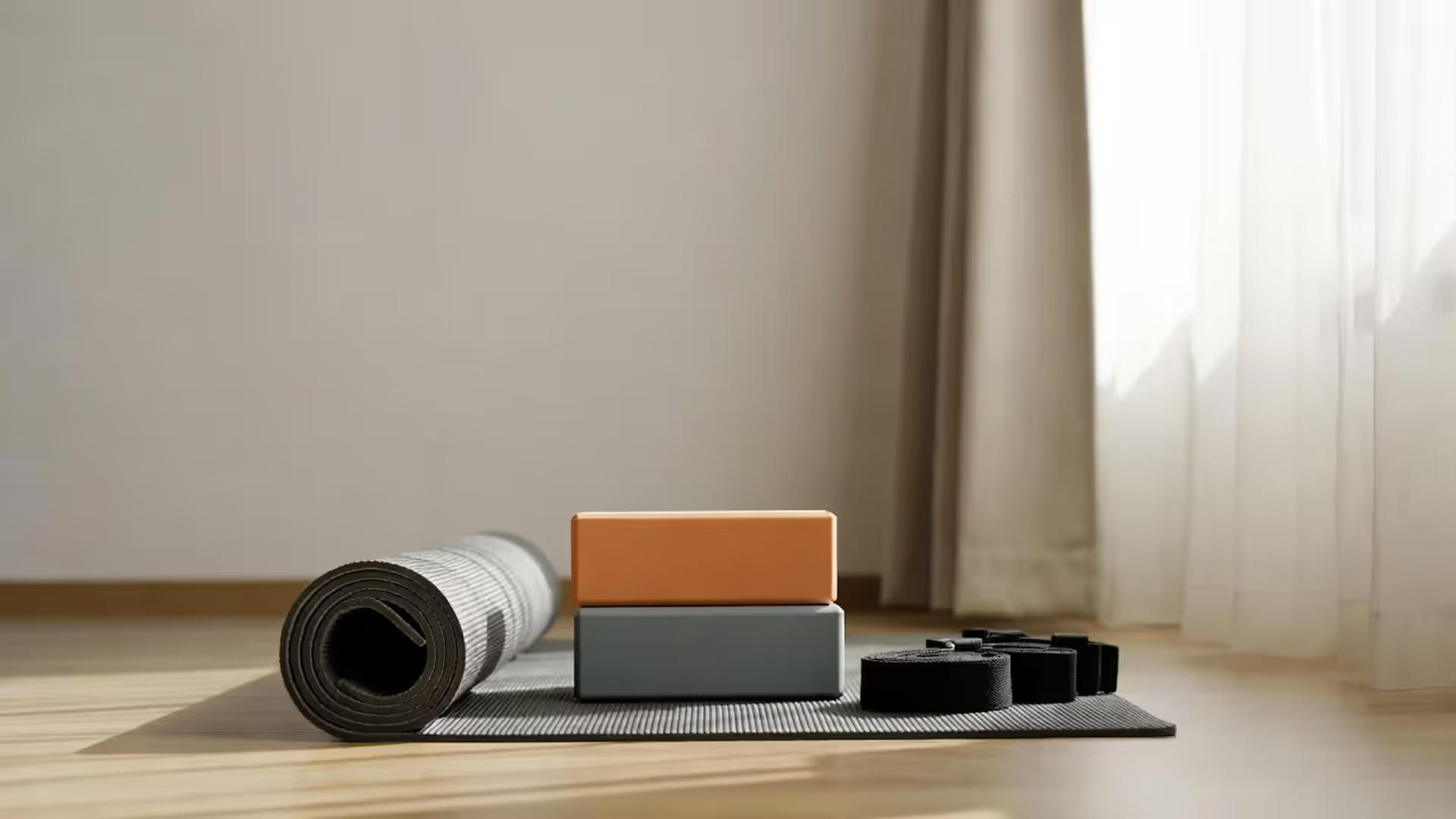
Absolutely. Yoga props exist specifically for inflexible runners. Place blocks beneath your hands in forward folds, loop straps around your feet for hamstring stretches, and position blankets under your hips in seated poses. These modifications enable proper alignment and deliver each pose's benefits without forcing your body into positions it's not ready for. Many elite runners can't touch their toes despite years of training—it's a starting point, not a requirement.
Do I need special equipment or a yoga mat?
A basic yoga mat provides cushioning and traction—budget options under twenty-five dollars work fine. Beyond that, a yoga strap (eight to twelve dollars) and two blocks (twenty dollars for a pair) make most poses accessible. You can substitute a belt or resistance band for the strap and use thick hardcover books for blocks initially. Avoid practicing on carpet without a mat, since it doesn't provide adequate stability for balance poses. Hardwood floors work temporarily but can be slippery and uncomfortable for kneeling positions.
Integrating yoga into your running routine doesn't require hour-long studio classes or expensive memberships. Fifteen focused minutes after your run, addressing the hip flexors, hamstrings, and calves that running tightens most, generates noticeable results within a month. Start with the cooldown sequence outlined here, then progressively add poses addressing your specific problem areas.
Pay attention to how your body responds. Feeling looser during warm-up miles? Does your stride feel smoother? Recovering faster between hard workouts? These subjective markers matter more than whether you can finally touch your toes. Yoga serves your running—the goal is better performance and fewer injuries, not Instagram-worthy poses.
Consider consulting a yoga instructor who understands running biomechanics, even if only for a few sessions to learn proper alignment cues. Many studios now offer "yoga for athletes" or "yoga for runners" classes that skip spiritual elements some runners find unnecessary and focus purely on functional movement. Online platforms provide runner-specific sequences you can follow at home on your schedule.
The runners who benefit most from yoga are often the ones most resistant to trying it—competitive athletes who view anything beyond running as wasted training time. If that's you, commit to six weeks of two brief sessions weekly. Treat it as seriously as your interval workouts. Most runners who give yoga a legitimate trial period continue long-term, not because they've become yoga enthusiasts, but because they run better, hurt less, and recover faster.
Struggling with tight hips, hamstrings, or shoulders? This guide explains why yoga improves flexibility better than static stretching—by retraining your nervous system and building strength at end range. Learn 12 essential poses, follow 15/30/45-minute routines, and avoid the mistakes that stall progress.
New to yoga? This beginner guide explains the real, science-backed benefits, the only gear that matters, and how to choose classes or practice at home. Learn 10 foundational poses with form cues, then follow a 20-minute routine—plus common mistakes to avoid and the best styles for your goals.
Back pain is common—but yoga can reduce pain and improve function when done right. Learn why it works for acute vs chronic pain, 8 proven relief poses, how often to practice, mistakes that worsen symptoms, when to seek yoga therapy, and posture/core habits that protect your spine daily.
Discover how pranayama differs from normal breathing and how to use it safely. Learn 7 essential techniques—diaphragmatic breathing, ujjayi, alternate nostril, kapalabhati, bhramari, sitali, and box breathing—plus timing, common mistakes, and how to blend breathwork with yoga and daily life.
The content on this website is provided for general informational and educational purposes related to health, yoga, fitness, and overall wellness. It is not intended to replace professional medical advice, diagnosis, or treatment.
All information, workout suggestions, yoga practices, nutrition tips, and wellness guidance shared on this site are for general reference only. Individual health conditions, fitness levels, and medical needs vary, and results may differ from person to person. Always consult a qualified healthcare provider before starting any new exercise program, dietary plan, or wellness routine.
We are not responsible for any errors or omissions, or for any outcomes resulting from the use of information presented on this website. Your health and fitness decisions should always be made in consultation with appropriate medical and fitness professionals.