Reaching down to tie your shoes shouldn't feel like an Olympic event. Yet millions of Americans struggle with basic movements because their muscles and connective tissues have adapted to prolonged sitting, repetitive motion patterns, and years of neglecting their body's full range of motion.
Unlike static stretching programs that treat muscles as isolated rubber bands, yoga addresses flexibility as a full-system upgrade. You're not just lengthening tissue—you're retraining your nervous system to feel safe in new ranges, building strength at end ranges, and teaching your body that these expanded movements belong in your daily repertoire.
Why Yoga Works Better Than Static Stretching for Flexibility
When you hold a static stretch for 30 seconds, you're essentially negotiating with your nervous system's protective mechanisms. Your muscle spindles detect the lengthening and send alarm signals. Sometimes they relent; often they don't.
Yoga takes a different approach through dynamic movement paired with conscious breathing. Each inhale creates space in your torso and primes your nervous system for expansion. Each exhale signals safety, allowing your muscles to release another fraction of an inch. This breath-movement synchronization activates your parasympathetic nervous system—the rest-and-digest mode where your body actually permits deeper ranges.
The progressive overload principle applies here too. A well-designed flexibility yoga routine gradually increases time under tension and range of motion across weeks and months. Your first Pigeon Pose might involve stacking three blocks under your hip. Three months later, you're folding forward over that front leg. The adaptation happens because you're consistently asking your body for slightly more than it gave yesterday, but never so much that it triggers a protective lockdown.
Research from the Journal of Strength and Conditioning Research found that participants following a yoga protocol improved hamstring flexibility by 13% more than those doing static stretching alone over eight weeks. The yoga group also maintained their gains longer during a four-week detraining period.
Another advantage: yoga builds strength simultaneously with flexibility. When you hold Warrior II for eight breaths while your inner thighs scream, you're strengthening the muscles that will eventually support deeper hip opening. Static stretching creates length without the muscular infrastructure to control that new range—a recipe for instability and injury.
12 Essential Stretching Yoga Poses for Tight Hips, Hamstrings, and Shoulders
These poses target the areas where most people accumulate the most restriction. Hold times and modifications matter more than how the pose looks.
Author: Caleb Foster;
Source: thelifelongadventures.com
Poses for Hip Flexibility
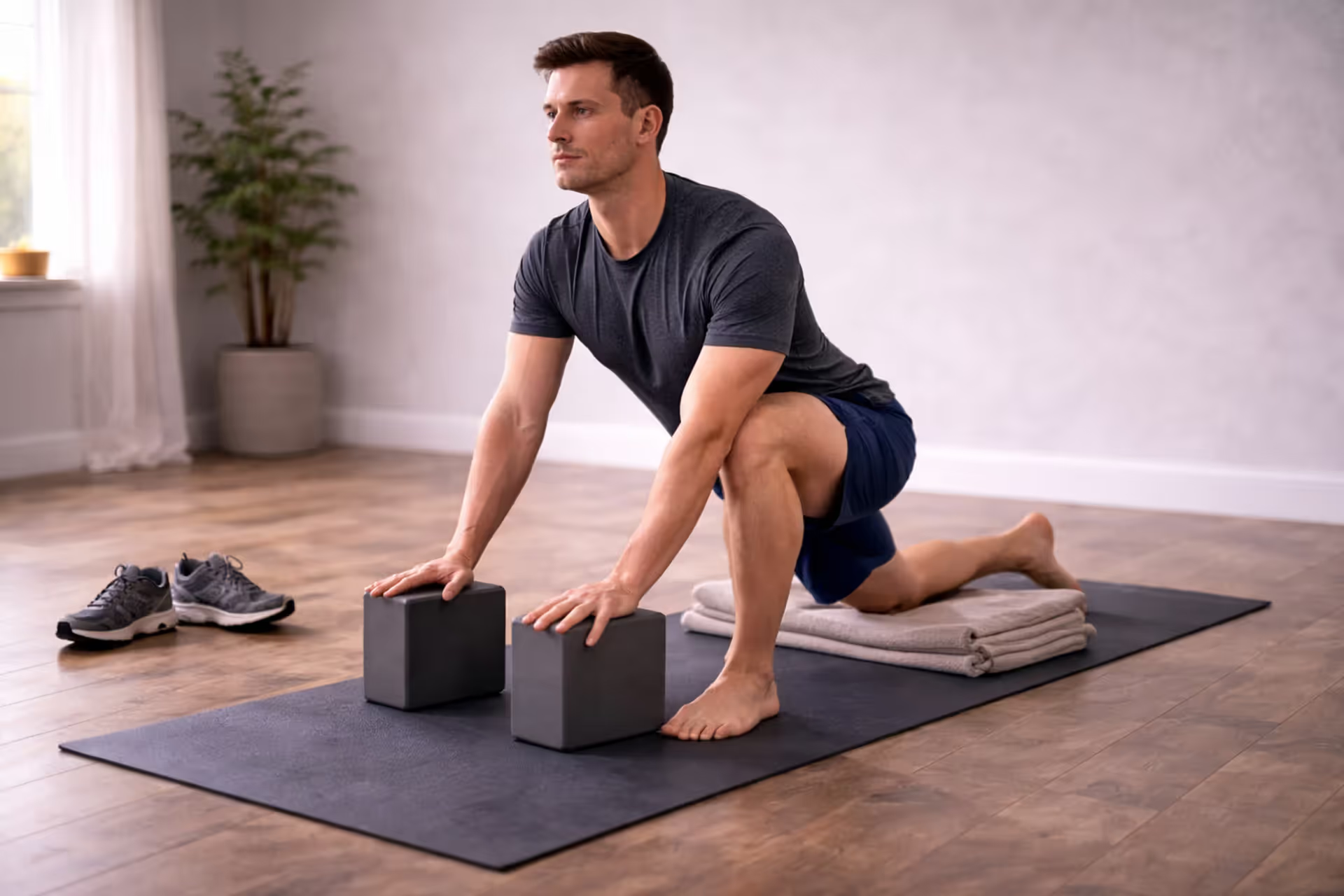
Low Lunge (Anjaneyasana): Targets hip flexors, which tighten from sitting and can pull your pelvis into anterior tilt. Place your back knee on a folded blanket, align your front knee over your ankle, and gently shift your pelvis forward. Hold 90 seconds per side. If you feel pinching in your front hip, you're going too deep—back off slightly.
Pigeon Pose (Eka Pada Rajakapotasana): Addresses external hip rotators and the IT band. Start with your front shin at a 45-degree angle rather than parallel to your mat's front edge. Stack props under your front hip until you feel sensation but not sharp pain. Work up to three-minute holds. Many people never get their shin parallel—that's fine and anatomically normal for some hip socket shapes.
Reclining Hand-to-Big-Toe Pose (Supta Padangulasana): Isolates hip flexion without compensatory lower back arching. Lie on your back, loop a strap around one foot, and extend that leg toward the ceiling while keeping your opposite leg grounded. Hold two minutes per side. This reveals your true hip flexibility without your spine cheating the movement.
Cow Face Pose (Gomukhasana): Stacks your knees to access the outer hips and glutes. Sit on a block if your top knee points toward the ceiling. The goal isn't touching your knees together—it's feeling a sustainable stretch in your outer hip. Hold 90 seconds, then switch sides.
Poses for Hamstring Length
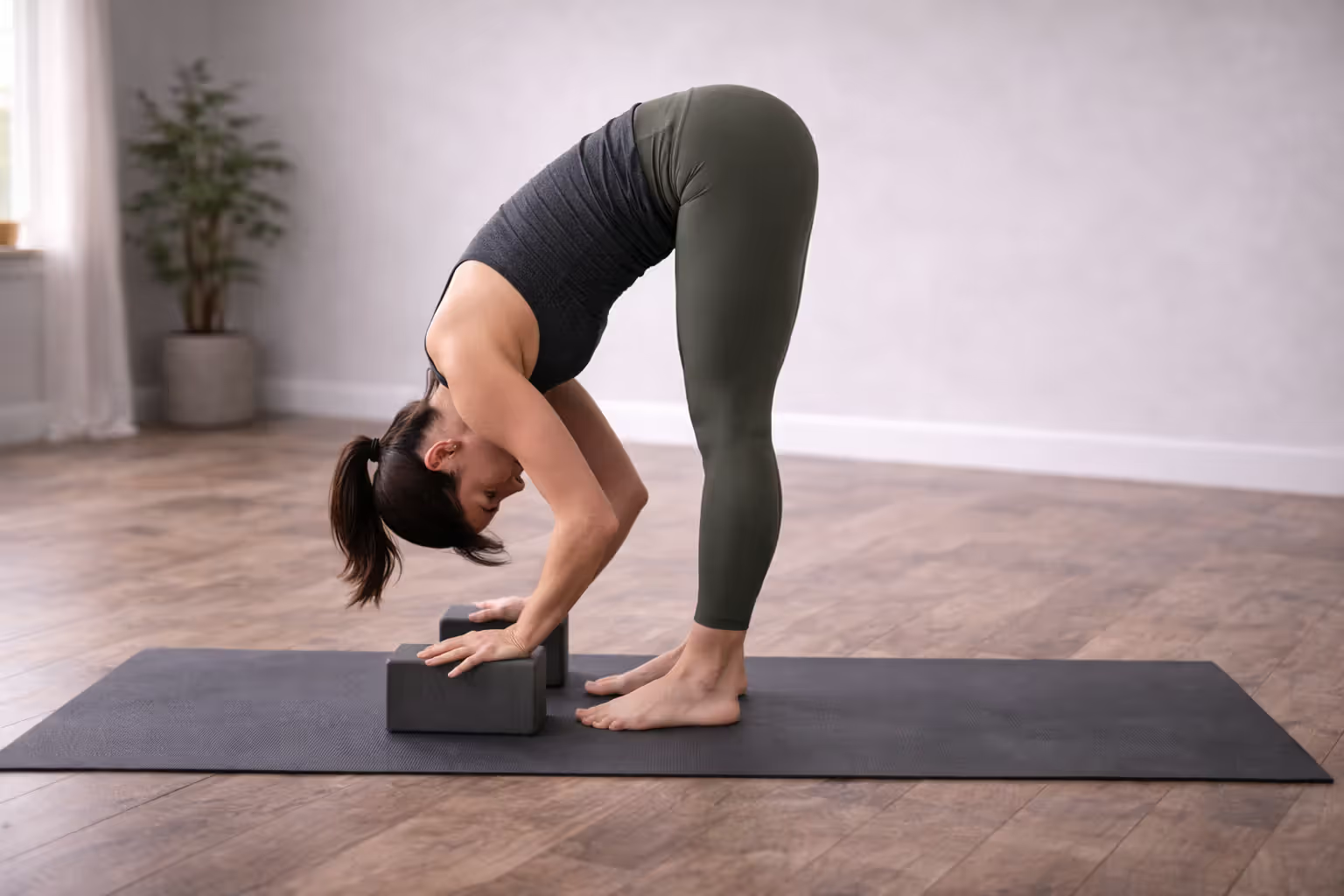
Standing Forward Fold (Uttanasana): Bend your knees generously at first. Place your hands on blocks if they don't reach the floor. Gradually straighten your legs over multiple breaths, but maintain length in your spine rather than rounding to touch your toes. Hold 60 seconds, rest, repeat.
Pyramid Pose (Parsvottanasana): Creates hamstring length while challenging your balance and core stability. Keep your hips level and squared forward—this isn't about folding deeply but about maintaining alignment while your hamstring lengthens. Hold 45 seconds per side.
Wide-Legged Forward Fold (Prasarita Padottanasana): Addresses all three hamstring muscles plus inner thighs. Walk your feet as wide as comfortable, turn your toes slightly inward, and fold from your hips. Let your head hang heavy. Work toward 90-second holds.
Reclining Big Toe Pose variation: From the hip flexion version, guide your strapped leg out to the side for hamstring and inner thigh opening. Keep your opposite hip grounded. Hold 90 seconds per side.
Author: Caleb Foster;
Source: thelifelongadventures.com
Poses for Shoulder and Upper Body Mobility
Thread the Needle: From hands and knees, slide one arm under your body and lower your shoulder to the floor. This rotates your thoracic spine and opens your shoulder's posterior capsule. Hold 60 seconds per side. Add a twist by reaching your top arm toward the ceiling.
Puppy Pose (Uttana Shishosana): Melts your chest toward the floor while your hips stay over your knees. This targets shoulder flexion and thoracic extension—movements that disappear when you're hunched over screens. Hold 90 seconds.
Eagle Arms (Garudasana arms): Wrap your arms like twisted rope, then lift your elbows while dropping your shoulders away from your ears. This accesses the often-neglected space between your shoulder blades. Hold 45 seconds, switch which arm is on top, repeat.
Reverse Prayer (Pashchima Namaskarasana): Bring your palms together behind your back with fingers pointing upward. If that's impossible, hold opposite elbows instead. This opens your chest and shoulder internal rotators. Hold 30-45 seconds.
Author: Caleb Foster;
Source: thelifelongadventures.com
3 Complete Flexibility Yoga Routines You Can Start Today
These sequences build on each other. Master the 15-minute routine before jumping to the 30-minute version.
15-Minute Morning Flexibility Routine for Beginners
Perfect for people new to yoga or working with significant restrictions. Do this daily for the first month.
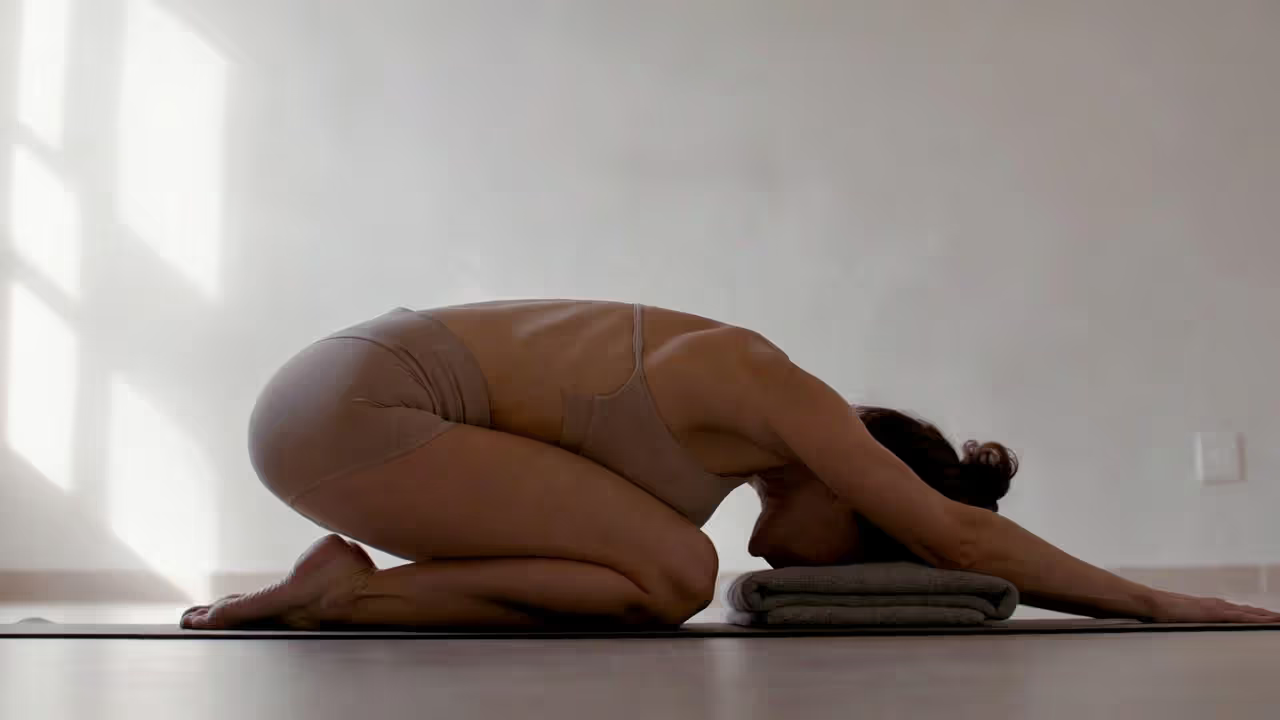
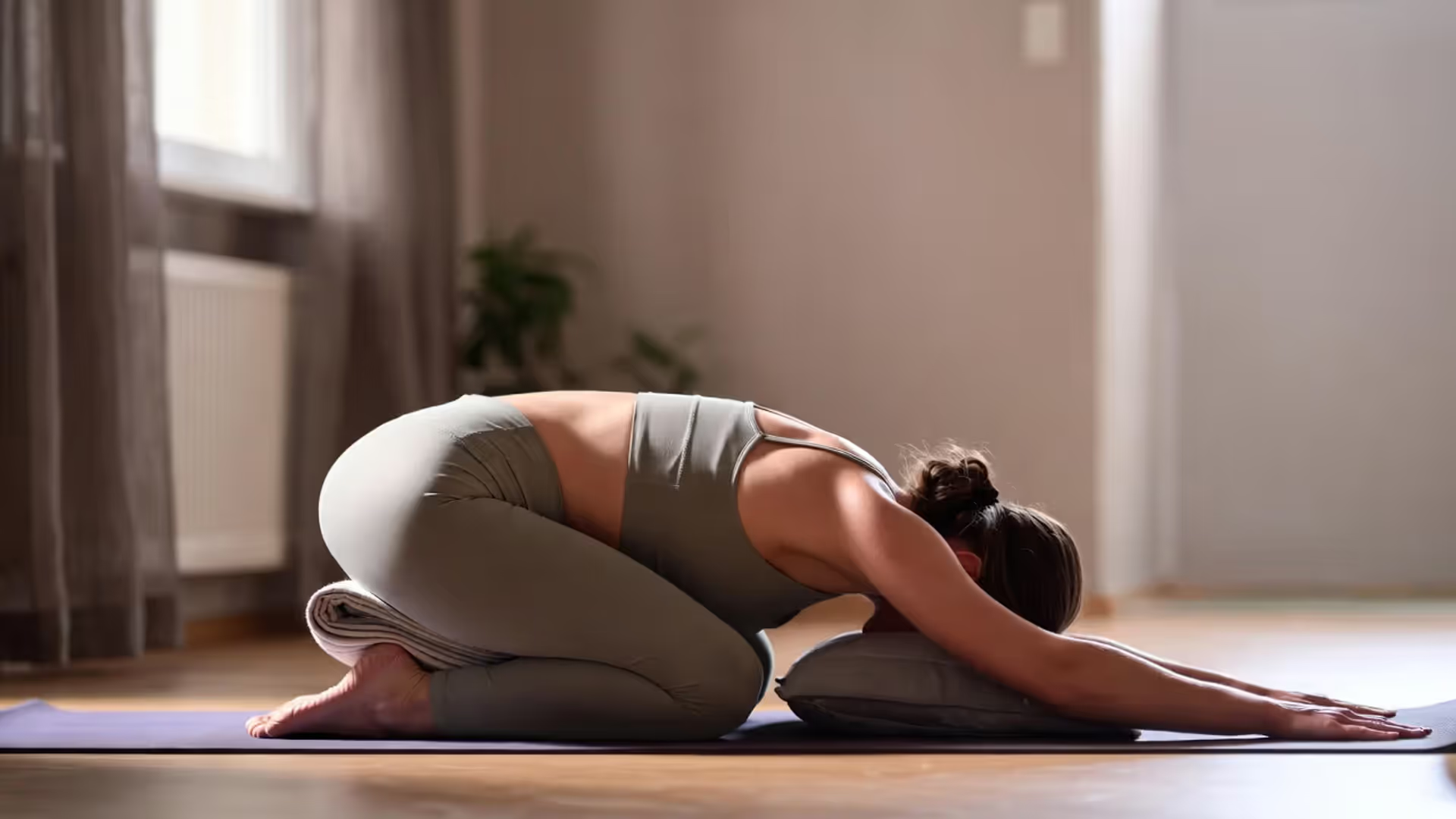
Child's Pose (2 minutes): Knees wide, forehead resting on stacked fists or a block
Cat-Cow (1 minute): 10-12 slow rounds, emphasizing the exhale in Cat
Downward Facing Dog (1 minute): Pedal your feet, bend your knees generously
Low Lunge, right side (90 seconds): Back knee down, gentle pelvic shift forward
Low Lunge, left side (90 seconds)
Standing Forward Fold (1 minute): Knees bent, hands on blocks or shins
Seated Forward Fold (2 minutes): Sit on a folded blanket, knees bent slightly
Reclining Twist, both sides (1 minute each): Knees together, drop both to one side
Reclining Hand-to-Big-Toe, both sides (1 minute each): Use a strap, keep opposite leg bent
Savasana (2 minutes): Let everything release
Author: Caleb Foster;
Source: thelifelongadventures.com
30-Minute Full-Body Mobility Yoga Flow
This mobility yoga flow adds dynamic movements and longer holds. Practice 4-5 times per week.
Cat-Cow to Extended Child's Pose (2 minutes): Flow between the two
Sun Salutation A, modified (5 minutes): 3 rounds, holding Downward Dog for five breaths each
Lizard Pose, both sides (2 minutes each): Front foot near hand's outside edge, back knee up or down
Wide-Legged Forward Fold (2 minutes): Walk hands side to side
Pyramid Pose, both sides (90 seconds each)
Seated Spinal Twist, both sides (90 seconds each)
Cow Face Pose, both sides (90 seconds each)
Supine Figure-Four, both sides (90 seconds each): Ankle crossed over opposite thigh
Happy Baby (2 minutes): Hold feet or use straps
Savasana (3 minutes)
45-Minute Deep Stretch Yoga Flow for Advanced Practitioners
This deep stretch yoga flow uses longer holds and deeper variations. Practice 3-4 times weekly, never on consecutive days.
Meditation and breath work (3 minutes): Establish ujjayi breathing
Supine warm-up sequence (4 minutes): Include core activation
Sun Salutation B (6 minutes): 3 rounds with Warrior I holds
Standing sequence (8 minutes): Warrior II (2 min each side), Extended Side Angle (90 sec each), Triangle (90 sec each)
Balance and hip opening (8 minutes): Tree Pose (1 min each), Standing Hand-to-Big-Toe variations (3 min per leg)
Deep hip openers (8 minutes): Pigeon Pose (3 min per side), Cow Face Pose (1 min per side)
Seated and supine stretches (6 minutes): Seated Wide-Legged Forward Fold (2 min), Reclining Hand-to-Big-Toe all variations (4 min total)
Inversions (2 minutes): Legs up the wall or shoulder stand
Savasana (5 minutes)
How Often Should You Practice Yoga to See Flexibility Improvements?
Author: Caleb Foster;
Source: thelifelongadventures.com
The honest answer: it depends on your starting point, age, genetics, and definition of "improvement."
Someone with moderate tightness practicing four times weekly might touch their toes within six weeks. Someone with severe restrictions and hypermobile joints that compensate might need six months to achieve safe, stable flexibility gains.
A realistic baseline: practice a flexibility yoga routine 3-4 times per week for the first three months. You'll likely notice subjective improvements—less stiffness when getting out of bed, easier time putting on socks—within three weeks. Measurable changes in specific poses typically appear around the six-week mark.
Daily practice accelerates results but increases injury risk if you're not allowing adequate recovery. Your connective tissues need 48 hours to adapt to the stress you've placed on them. Practicing gentle mobility yoga flow daily is fine; doing deep hip openers daily will likely cause inflammation and regression.
After the initial three-month adaptation period, you can maintain your gains with 2-3 sessions weekly. Your body has learned these new ranges and won't forget them quickly, but complete cessation for more than two weeks will start eroding your progress.
Age matters. A 25-year-old might gain hip flexibility twice as fast as a 55-year-old, but the older practitioner often develops better body awareness and avoids the ego-driven pushing that causes injuries. Past injuries, joint hypermobility, and conditions like Ehlers-Danlos Syndrome all affect your flexibility trajectory and should inform your approach.
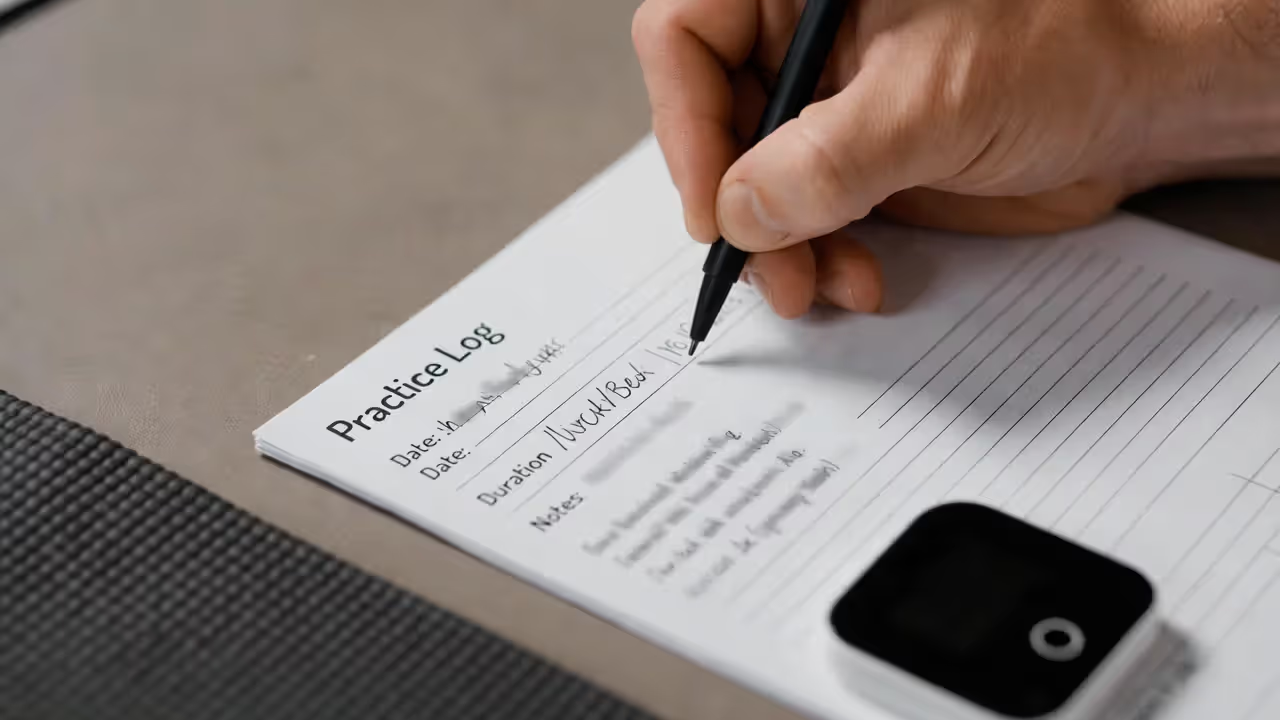
Track your progress with photos or videos every four weeks rather than checking daily. Flexibility improvement yoga requires patience that our instant-gratification culture doesn't encourage.
The body benefits from movement, and the mind benefits from stillness.
— Sakyong Mipham
Common Mistakes That Limit Your Flexibility Progress in Yoga
Skipping the warm-up: Jumping straight into deep stretching yoga poses on cold muscles triggers protective tension. Your nervous system interprets sudden lengthening as a threat and contracts harder. Spend five minutes on gentle movement before attempting your deepest ranges.
Holding your breath: When you hold your breath in a challenging stretch, you activate your sympathetic nervous system—fight or flight mode. Your muscles receive the signal to contract and protect. Conscious breathing, especially emphasizing long exhales, is non-negotiable for flexibility work.
Bouncing or forcing: Ballistic stretching creates micro-tears and triggers the stretch reflex—the opposite of what you want. Ease into positions gradually, respect your edge, and wait for your body to offer more range rather than demanding it.
Comparing yourself to the person next to you: Joint anatomy varies wildly. Some people will never achieve certain shapes due to their bone structure, and that's completely fine. Someone else's Pigeon Pose tells you nothing about your hip health or progress.
Practicing inconsistently: Doing an hour-long session once weekly produces less progress than 15 minutes four times weekly. Flexibility responds to frequent, moderate stimulus better than infrequent intense sessions.
Ignoring strength: Flexibility without strength is instability. If you can sink into splits but have no control coming out, you've created a liability. Include poses that build strength at end ranges, like Warrior III held for 30 seconds or L-sits.
Expecting linear progress: Some weeks you'll feel more open; other weeks you'll feel like you've regressed. Hormonal cycles, stress levels, sleep quality, and hydration all affect your flexibility day to day. The trend over months matters, not daily fluctuations.
Comparison of Yoga Styles for Flexibility Goals
Yoga Style
Flexibility Focus
Intensity Level
Typical Class Length
Best For (Body Areas)
Ideal Experience Level
Yin Yoga
Very High (passive long holds)
Low (meditative)
60-90 minutes
Hips, spine, connective tissue
All levels; requires patience
Vinyasa Flow
Moderate (dynamic movement)
Medium to High
45-75 minutes
Full body, builds heat
Intermediate to advanced
Hatha
High (balanced approach)
Low to Medium
60-90 minutes
Full body, systematic
Beginners to intermediate
Restorative
Low (relaxation focus)
Very Low
60-90 minutes
Nervous system, gentle opening
All levels; injury recovery
Ashtanga
Moderate (structured sequence)
High (athletic)
90 minutes
Hamstrings, shoulders, core
Intermediate to advanced
Frequently Asked Questions About Yoga and Flexibility
Can you improve flexibility with yoga if you're naturally stiff?
Yes, though your starting point and genetics influence how much and how quickly you'll progress. "Natural stiffness" often reflects years of movement patterns, not an unchangeable trait. Someone who's been sedentary for a decade will be stiff; that doesn't mean their tissues can't adapt. However, some people have naturally tighter fascia or joint structures that limit certain ranges regardless of practice. Focus on your personal progress rather than achieving specific shapes. Most people see meaningful improvements within three months of consistent practice.
How long does it take to see flexibility results from yoga?
Subjective improvements like reduced morning stiffness typically appear within 2-3 weeks of practicing 3-4 times weekly. Visible changes in specific poses—touching your toes, deeper lunges—usually emerge around the 6-8 week mark. Significant transformations like comfortable splits or deep backbends require 6-12 months for most people, sometimes longer. Your age, starting flexibility, practice frequency, and genetics all influence this timeline. Tracking progress monthly rather than weekly helps maintain realistic expectations.
Is hot yoga better for flexibility than regular yoga?
Heat allows your muscles to lengthen more easily during class, but this can be deceptive. Artificially warmed tissues stretch beyond their normal range, which feels productive but can lead to overstretching and injury. The flexibility you gain in a 105-degree room often doesn't transfer to normal temperatures. Hot yoga has benefits—increased cardiovascular challenge, mental toughness—but for sustainable flexibility improvement yoga, room-temperature practice builds more reliable, lasting changes. If you enjoy hot yoga, use it occasionally but don't rely on it exclusively.
Should I feel pain when doing stretching yoga poses?
No. Discomfort, sensation, and intensity are normal and necessary. Sharp pain, pinching, or burning are red flags. Learn to distinguish between "good" discomfort (a pulling sensation in the belly of the muscle that rates 5-6 out of 10) and "bad" pain (sharp, localized, or rating above 7). If you're grimacing, holding your breath, or unable to maintain the pose for the intended duration, you've gone too far. Back off slightly until you find a sustainable edge. Pain indicates your nervous system feels threatened, which prevents the relaxation necessary for lengthening.
What's the difference between flexibility and mobility in yoga?
Flexibility is passive range of motion—how far someone else could move your limb. Mobility is active range of motion—how far you can move and control your limb using your own strength. You might have flexible hamstrings (someone could lift your straight leg to 90 degrees while you're lying down) but poor mobility (you can't actively lift that leg to 90 degrees yourself). Yoga develops both by combining stretching with strength at end ranges. A mobility yoga flow emphasizes controlled movement through full ranges, building the neuromuscular coordination that makes flexibility functional.
Can older adults safely use yoga for flexibility improvement?
Absolutely, with appropriate modifications. Older adults often need longer warm-ups, more props, and greater attention to joint stability. However, they frequently develop better body awareness and patience than younger practitioners, which prevents injuries. Research shows adults over 60 can improve flexibility significantly with consistent yoga practice. The key is starting conservatively, using props generously, and prioritizing sustainable practice over impressive-looking poses. Many older adults find Hatha or Yin yoga more appropriate than vigorous Vinyasa classes. Working with an experienced teacher who understands aging bodies helps ensure safe progression.
Building Your Sustainable Flexibility Practice
Flexibility isn't a destination where you arrive and plant a flag. It's a quality you maintain through consistent practice, just like cardiovascular fitness or strength. The good news: maintaining requires less effort than building. Once you've established your new ranges, 2-3 weekly sessions preserve them.
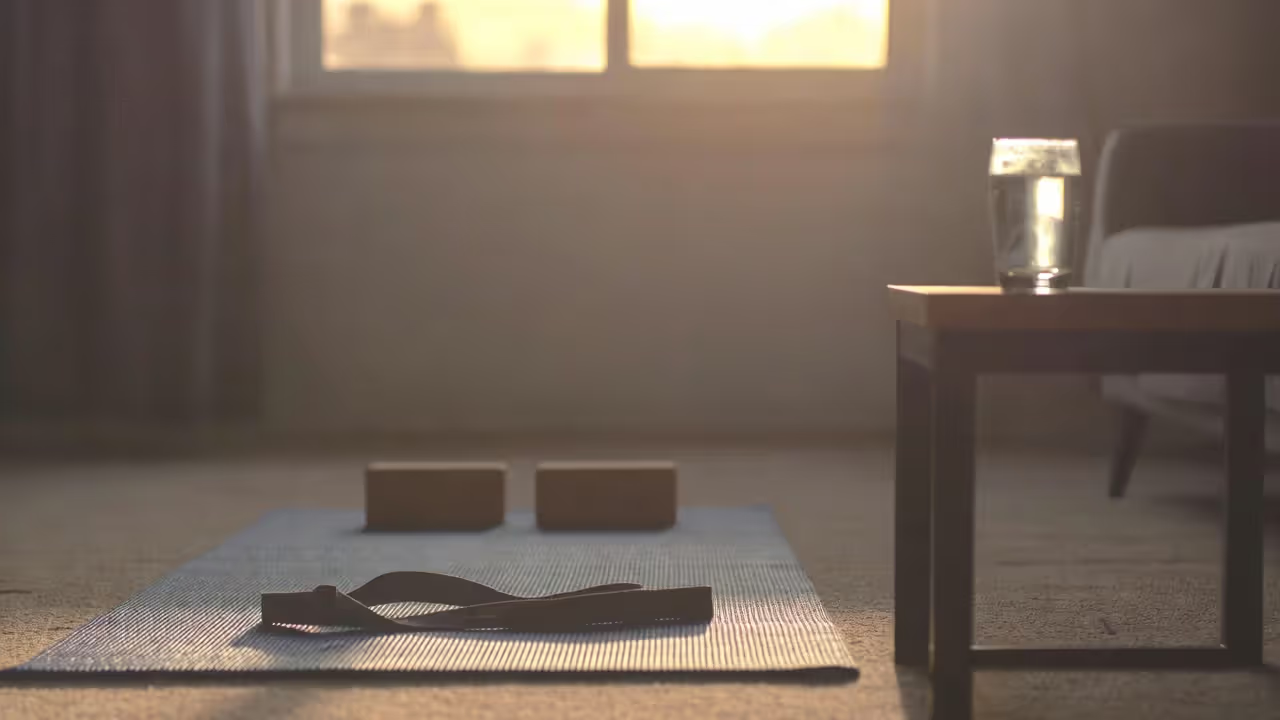
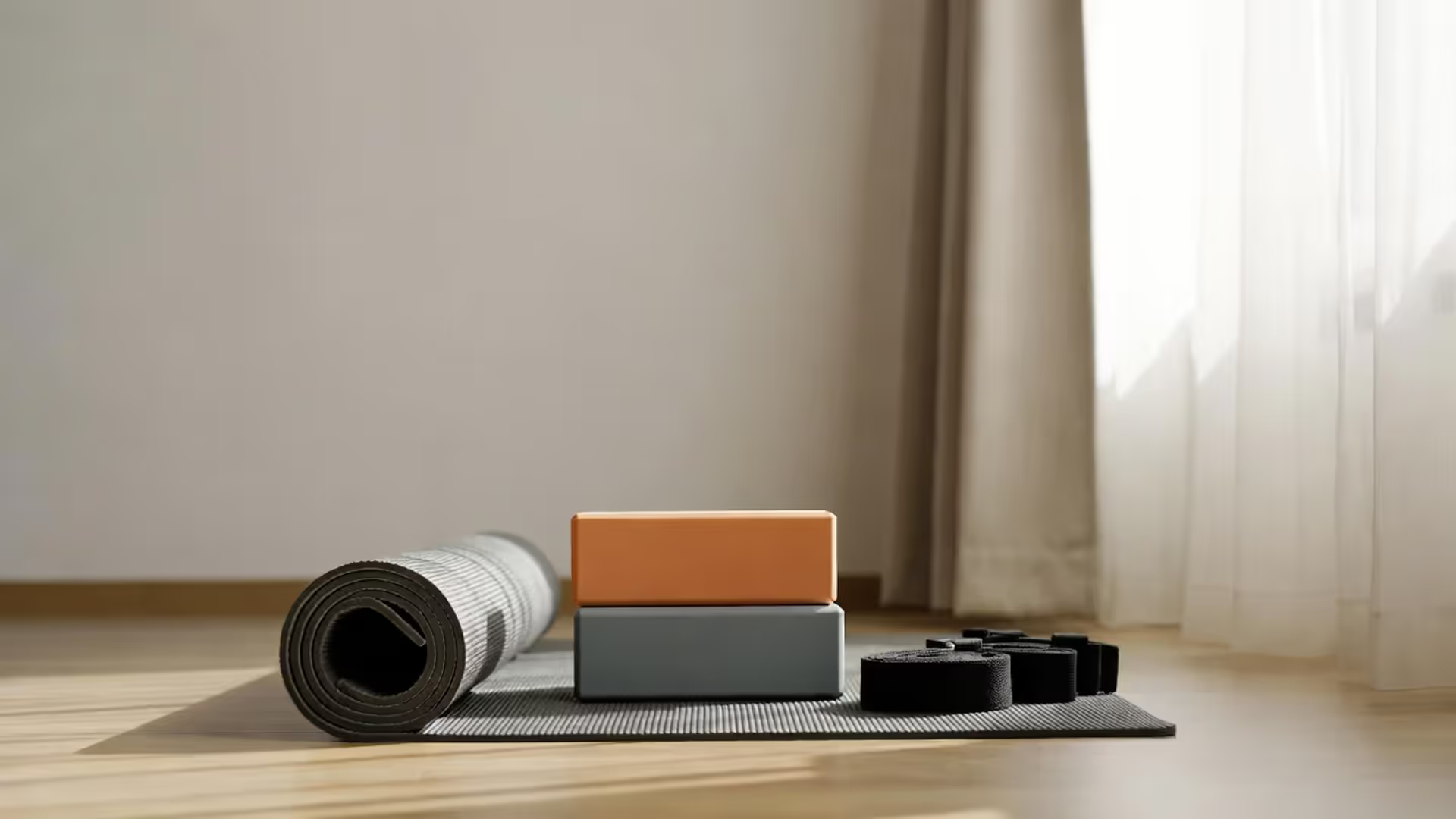
Start with the 15-minute beginner routine if you're new or returning after a long break. Stay there for at least a month before progressing. Use props without shame—blocks, straps, blankets, and bolsters aren't training wheels you graduate from. They're tools that allow you to work at appropriate intensity.
Pay attention to your body's signals rather than following rigid rules. Some days you'll feel open and can explore deeper ranges. Other days you'll need to back off and work more gently. Both types of practice build flexibility over time.
The physical benefits—touching your toes, sitting comfortably on the floor, reaching overhead without restriction—improve your quality of life. The mental benefits—patience, body awareness, acceptance of your current state while working toward growth—extend far beyond your yoga mat.
Your body wants to move through full ranges. You're not fighting against your nature by pursuing flexibility; you're reclaiming capabilities that modern life has temporarily suppressed. Three months from now, movements that currently feel impossible will be part of your normal repertoire. The only requirement is showing up consistently and respecting the process.
Runners get tight hip flexors, stubborn calves, and underactive glutes from thousands of repetitive strides. This guide shows the best yoga poses for common running issues, when to do dynamic vs recovery yoga, a 15-minute cooldown sequence, and how often to practice for mobility without overstretching.
New to yoga? This beginner guide explains the real, science-backed benefits, the only gear that matters, and how to choose classes or practice at home. Learn 10 foundational poses with form cues, then follow a 20-minute routine—plus common mistakes to avoid and the best styles for your goals.
Back pain is common—but yoga can reduce pain and improve function when done right. Learn why it works for acute vs chronic pain, 8 proven relief poses, how often to practice, mistakes that worsen symptoms, when to seek yoga therapy, and posture/core habits that protect your spine daily.
Discover how pranayama differs from normal breathing and how to use it safely. Learn 7 essential techniques—diaphragmatic breathing, ujjayi, alternate nostril, kapalabhati, bhramari, sitali, and box breathing—plus timing, common mistakes, and how to blend breathwork with yoga and daily life.
The content on this website is provided for general informational and educational purposes related to health, yoga, fitness, and overall wellness. It is not intended to replace professional medical advice, diagnosis, or treatment.
All information, workout suggestions, yoga practices, nutrition tips, and wellness guidance shared on this site are for general reference only. Individual health conditions, fitness levels, and medical needs vary, and results may differ from person to person. Always consult a qualified healthcare provider before starting any new exercise program, dietary plan, or wellness routine.
We are not responsible for any errors or omissions, or for any outcomes resulting from the use of information presented on this website. Your health and fitness decisions should always be made in consultation with appropriate medical and fitness professionals.