Your body handles roughly 20,000 breaths daily without conscious input—until you unroll a yoga mat. Suddenly that autopilot function demands your full attention, and you'll probably catch yourself suffocating through warrior pose because you forgot breathing was still part of the deal.
Pranayama (the Sanskrit umbrella term for yoga breathing techniques) does more than keep oxygen flowing during poses. Within 5-10 minutes, these methods can rewire your stress response, expand lung capacity, and fundamentally alter your brain's relationship with anxiety. While desk jobs train us toward shallow, chest-only breathing patterns, pranayama exercises reconnect you with breath as a genuine change agent for both body and mind.
What Makes Yoga Breathing Different from Normal Breathing?
Your default breathing pattern operates on autopilot—shallow, chest-focused, typically unconscious. Stress makes this worse. Quick, upper-chest gasps become the norm, keeping your sympathetic nervous system stuck in overdrive. Most people clock 15-20 breaths per minute while their shoulders inch toward their earlobes, completely unaware.
Breath control yoga flips this script through deliberate intervention at every stage. The term pranayama breaks down into "prana" (vital energy or life force) and "ayama" (to extend or expand). You're not just breathing—you're consciously reshaping breath patterns to redirect energy and transform mental states. These aren't just philosophical concepts; the physiological shifts show up in lab measurements.
Key differences start with the nose-versus-mouth question. Pranayama exercises default to nasal breathing, which filters incoming air, moderates temperature, and generates nitric oxide that boosts oxygen uptake. Your breathing rate drops significantly—sometimes to just 5-6 cycles per minute. The diaphragm gets fully involved, letting your belly expand outward rather than lifting your chest. This shift engages your parasympathetic nervous system, initiating what researchers call the "rest-and-digest" state.
Advanced techniques layer on complexity: holding breath after inhaling or exhaling, switching between nostrils, narrowing the throat passage, or forcing aggressive exhalations. Each variation creates specific effects on heart rate variability, blood pressure readings, and brain wave activity. One 2018 International Journal of Yoga study tracked participants for 12 weeks and found pranayama practice measurably improved lung function compared to control groups using normal breathing.
The bottom line? Pranayama treats breath like an adjustable control panel you can manipulate for specific outcomes—shifting gears deliberately instead of idling indefinitely.
7 Essential Pranayama Exercises for Beginners and Advanced Practitioners
Technique Name
Difficulty Level
Primary Benefit
Best Time of Day
Duration (minutes)
Diaphragmatic Breathing
Beginner
Foundation building, stress relief
Any time works
5-10
Ujjayi
Beginner
Sustaining focus, generating warmth
Throughout your practice
As long as you're moving
Nadi Shodhana
Beginner-Intermediate
Balancing nervous system
Early morning or evening
5-15
Kapalabhati
Intermediate
Quick energy, metabolism boost
Morning only (empty stomach)
3-5
Bhramari
Beginner
Rapid anxiety relief
Evening or pre-sleep
5-10
Sitali
Beginner
Temperature reduction, calming anger
Hot conditions, post-workout
3-5
Box Breathing
Beginner-Intermediate
Handling acute stress
During tense moments
2-10
Diaphragmatic Breathing (Belly Breathing)
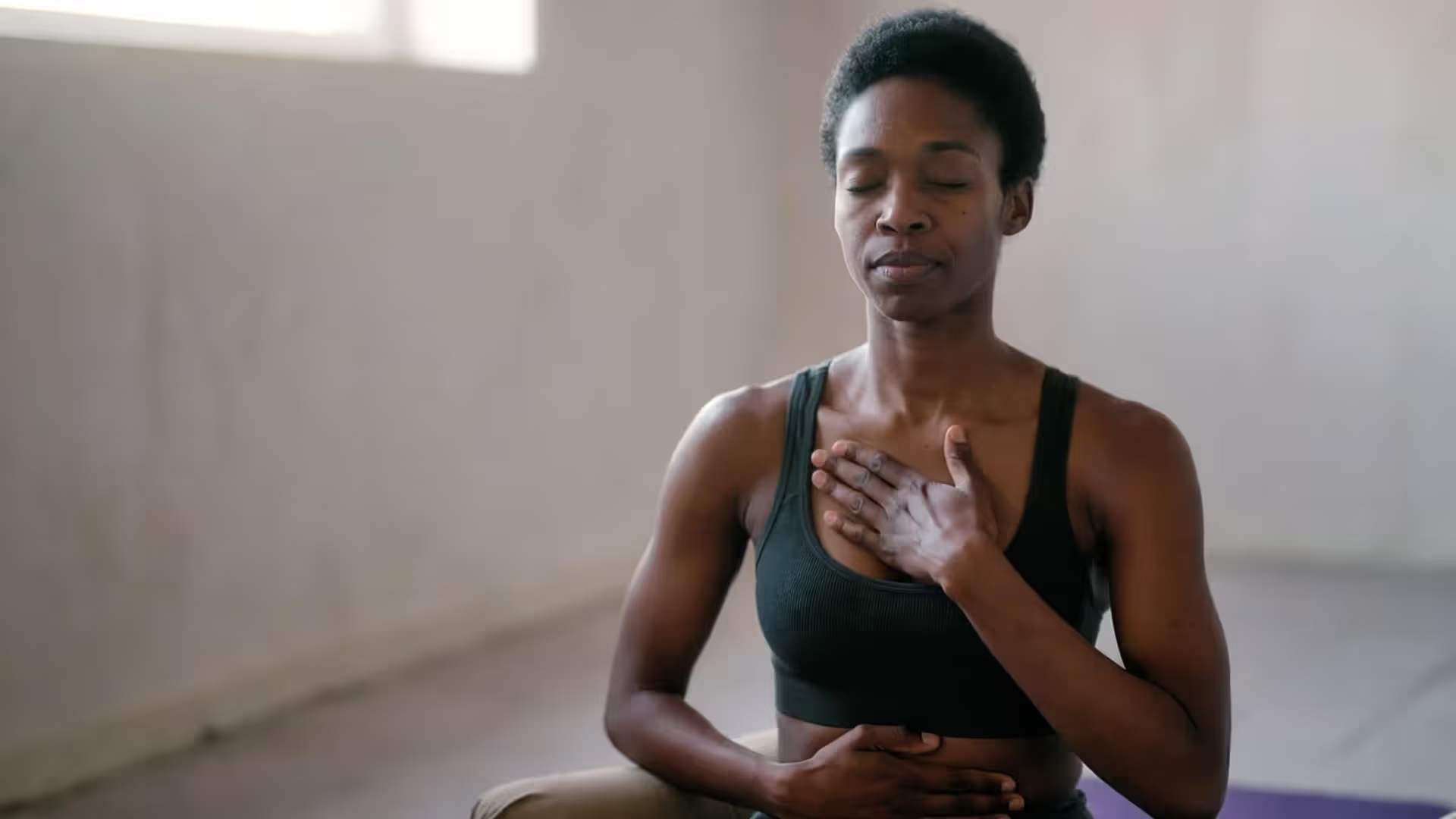
This foundation practice in diaphragmatic breathing yoga retrains your body's breathing default settings.
How to perform: Find a comfortable position lying down or seated upright. Position one palm on your chest, the other on your abdomen. Draw breath in slowly through your nose over a four-count, directing airflow downward so your lower hand rises noticeably while your upper hand stays relatively still. Release that breath through your nose for four counts, feeling your belly sink. Your chest should remain mostly stationary throughout.
Benefits: Cortisol levels drop, oxygen exchange becomes more efficient, and chronically tight neck and shoulder muscles finally get a break from overcompensating. Most people notice a calmer headspace within three minutes of practice.
Common mistakes: Artificially pushing your belly out rather than letting diaphragm movement create natural expansion. Racing through the counts—this technique thrives on slowness. Gripping tension in your shoulders or clenching your jaw.
Best time to practice: Before sleep to improve rest quality, or mid-afternoon when energy flags and you'd normally reach for coffee.
Author: Logan Brooks;
Source: thelifelongadventures.com
Ujjayi (Ocean Breath)
Vinyasa yoga's signature soundtrack comes from ujjayi's oceanic quality, created by partially narrowing your throat.
How to perform: Get comfortable sitting or standing. Breathe in through your nose, then release through an open mouth while making the sound "haaaa"—like you're fogging up glass. Do that several times. Now close your mouth and create that same throat constriction while exhaling nasally—you should hear a soft, rushing quality. Apply identical constriction when inhaling. Both directions should sound smooth, even, and audible only to you at close range.
Benefits: Builds internal heat (helpful in cold studios or early sessions), maintains concentration during tough poses, keeps breath pacing steady during flowing sequences. That sound gives your wandering mind something to anchor to.
Common mistakes: Forcing volume until you sound like a villain from Star Wars—aim for distant surf, not aggressive breathing. Breathing only from your throat without engaging your diaphragm properly. Scrunching your face up.
Best time to practice: Throughout asana practice, especially vinyasa or power yoga formats. Some instructors skip it during yin or restorative sessions where deeper relaxation matters more.
Author: Logan Brooks;
Source: thelifelongadventures.com
Nadi Shodhana (Alternate Nostril Breathing)
This breath control yoga practice balances left-right brain hemispheres and the body's energy pathways.
How to perform: Sit with your spine lengthened. Using your right hand, tuck your index and middle fingers down toward your palm while keeping your thumb, ring finger, and pinky available. Press your thumb against your right nostril to close it. Draw breath in through your left nostril slowly for four counts. Now close your left nostril with your ring finger while releasing your thumb, then exhale through your right nostril for four counts. Inhale through that same right side for four counts. Switch again—thumb closes right nostril, release left, exhale left. That completes one full cycle. Continue for 5-10 complete rounds.
Benefits: Quiets racing thoughts and anxiety, improves cardiovascular markers, brings equilibrium to sympathetic and parasympathetic branches. Especially helpful for people whose minds won't stop chattering during meditation attempts.
Common mistakes: Pressing so hard you create discomfort or completely block airflow. Rushing your counts—maintain even, comfortable pacing. Holding breath between nostril switches (unless you're working with an advanced teacher who specifically instructs this).
Best time to practice: Morning practice centers you before the day begins, or evening sessions help transition from work brain to rest mode. Skip it right after meals.
Author: Logan Brooks;
Source: thelifelongadventures.com
Kapalabhati (Skull Shining Breath)
An energizing pranayama exercise built around rapid, powerful exhalations.
How to perform: Sit with your spine long. Take one deep inhale. Exhale sharply through your nose by quickly contracting abdominal muscles—think sneezing or blowing your nose forcefully. Let the following inhale happen passively and automatically; your only focus goes to those sharp exhales. Begin with 20-30 rapid exhales, then pause for 30 seconds of normal breathing. Repeat this sequence 2-3 times.
Benefits: Clears sinuses effectively, energizes your whole system, stimulates digestive fire, strengthens core muscles. Many practitioners swap their morning coffee for this practice.
Common mistakes: Forcing your inhales instead of allowing natural refill. Creating facial tension or shoulder gripping. Attempting this with congestion (you'll just get a headache). Racing ahead before you've mastered basic mechanics.
Best time to practice: Early morning on a completely empty stomach. Never attempt before bedtime—you'll be too activated to sleep.
Contraindications: Completely avoid during pregnancy, if you have elevated blood pressure, heart issues, hernias, or during menstruation. Stop immediately if dizziness occurs.
Bhramari (Bee Breath)
Named for the buzzing bee sound it creates, this technique soothes your nervous system remarkably fast.
How to perform: Settle into a comfortable seat. Close your eyes. Rest your index fingers gently on the tragus—that piece of cartilage between your cheek and ear canal. Draw a deep inhale through your nose. During your exhale, press that cartilage gently inward and create a high-pitched humming sound—"mmmmm"—with your mouth closed. Feel vibration filling your skull. Inhale again and repeat 5-7 cycles.
Benefits: Blood pressure and heart rate drop within minutes, anger and frustration dissipate, tension headaches ease, concentration sharpens. That vibration essentially massages your brain from the inside.
Common mistakes: Humming too quietly or low-pitched—you want strong vibration throughout your head. Pressing too aggressively on your ears. Tensing your jaw or throat muscles.
Best time to practice: When overwhelmed, before sleeping, or when you need clear thinking but your mind is too agitated.
Sitali (Cooling Breath)
This technique literally drops your body temperature—perfect for hot yoga or summer heat waves.
How to perform: Sit comfortably. Extend your tongue and curl its edges upward to create a tube shape (genetic note: roughly 30% of people can't do this; if you're in that group, just purse your lips into an "O" shape instead). Slowly inhale through your curled tongue or pursed lips, feeling cool air. Close your mouth and exhale through your nose. Repeat 5-10 cycles.
Benefits: Body temperature decreases measurably, anger and frustration cool off, digestion improves, thirst reduces (you'll genuinely notice more saliva production).
Common mistakes: Inhaling too rapidly, which irritates your throat. Practicing in cold weather or heavily air-conditioned spaces (you'll get too chilled).
Best time to practice: Following vigorous exercise, during hot weather, or when feeling emotionally overheated (anger, irritation, frustration).
Contraindications: Skip this if you have low blood pressure, respiratory disorders, or chronic constipation issues.
Box Breathing (Sama Vritti)
Navy SEALs and yogis both favor this technique using equal counts for inhale, retention, exhale, and pause.
How to perform: Sit or lie down comfortably. Inhale through your nose for four counts. Hold with full lungs for four counts. Exhale through your nose for four counts. Hold with empty lungs for four counts. That's one complete box. Repeat for 5-10 boxes. Advanced practitioners extend to five or six counts per side, but four delivers plenty of impact.
Benefits: Rapidly dissolves acute stress and anxiety, sharpens focus before important tasks, regulates heart rate variability. This is your go-to before job interviews or difficult conversations.
Common mistakes: Gripping tension during the holds—your body should stay relaxed throughout. Choosing counts too long for your current capacity, creating strain. Holding breath in your chest rather than belly.
Best time to practice: Before stressful events, during anxiety spikes, or as part of breathing meditation sessions.
How to Practice Breath Control Yoga Safely: Common Mistakes to Avoid
Author: Logan Brooks;
Source: thelifelongadventures.com
Pranayama carries real power, which means misuse creates real problems. Unlike overstretching a hamstring—where pain arrives immediately—breathing errors often show up subtly: dizziness, anxiety spikes, headaches, or disrupted sleep patterns.
Never force anything. Straining, gasping, or feeling desperate for air means you've pushed too far. Pranayama should challenge you while remaining sustainable. Here's a useful benchmark: if you can't return to normal breathing within 30 seconds of stopping, you overdid it.
Take contraindications seriously. Energizing practices like kapalabhati temporarily elevate blood pressure—making them unsuitable for anyone with hypertension, heart conditions, or pregnancy. Breath retention can trigger panic responses in people managing anxiety disorders. If you have any respiratory condition (asthma, COPD, chronic bronchitis), work with a qualified teacher before attempting advanced techniques.
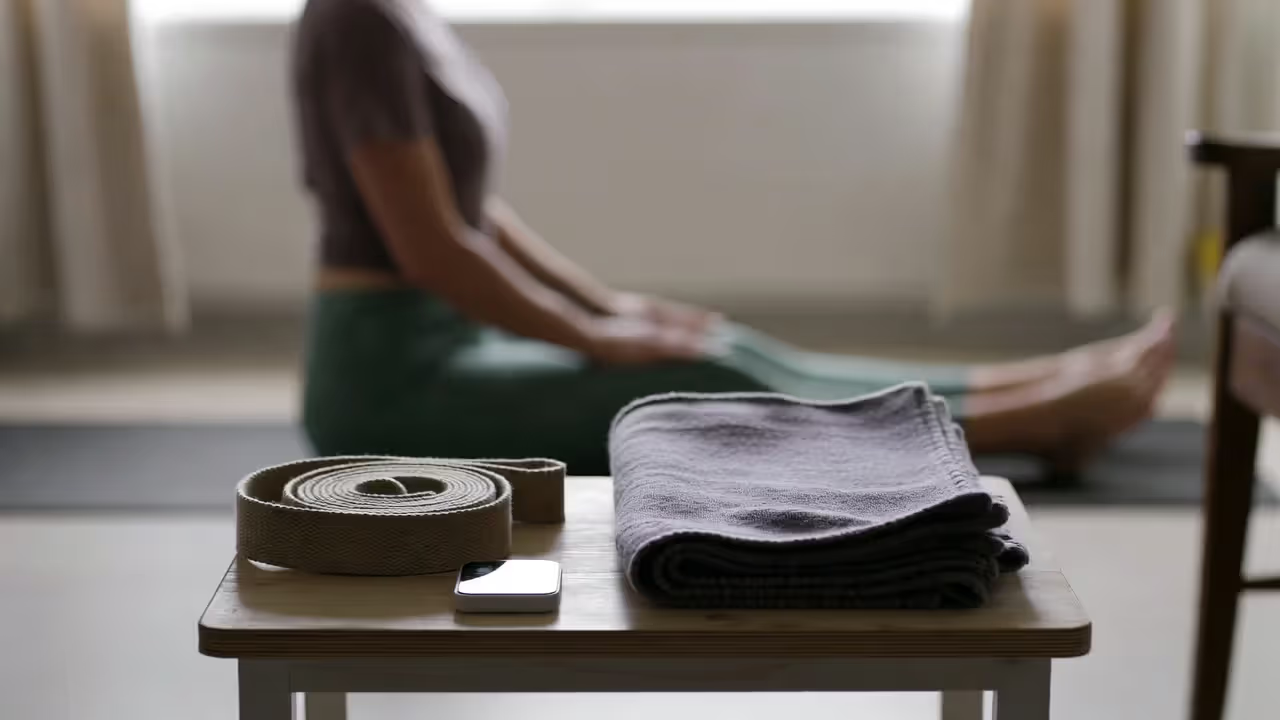
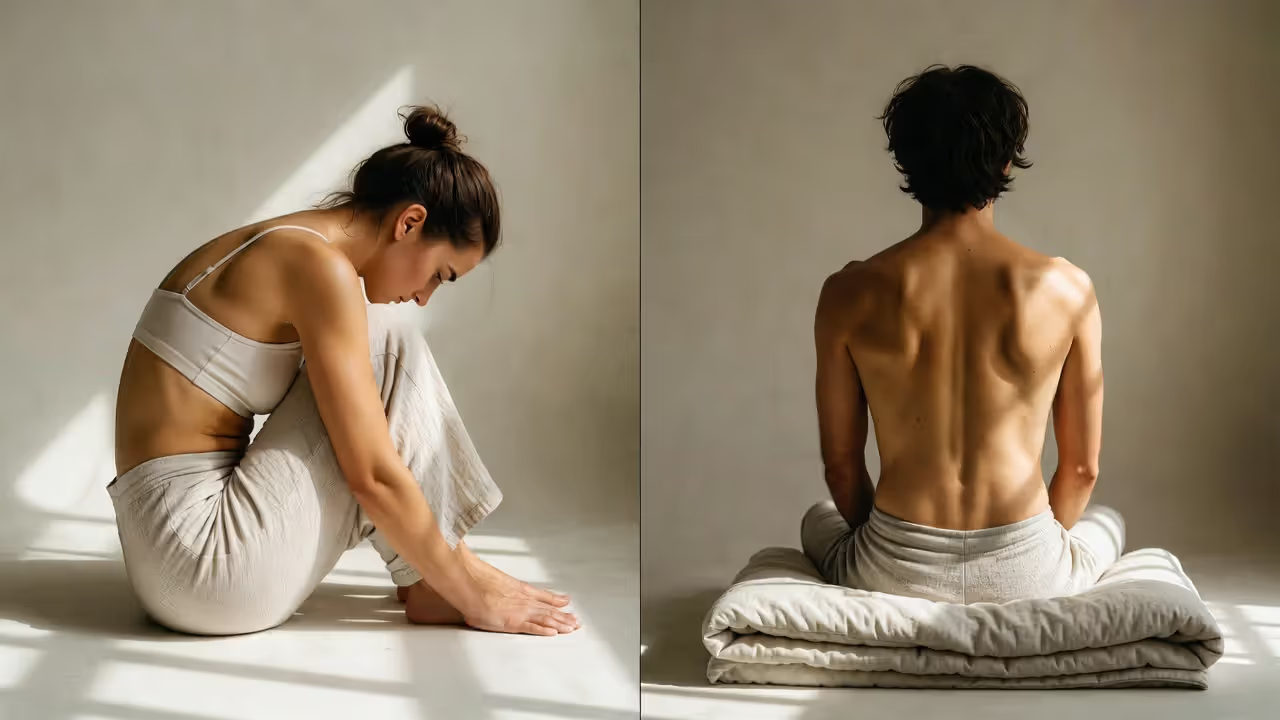
Posture impacts more than you'd think. A slouched spine squashes your diaphragm and restricts lung capacity significantly. Sit on a cushion or folded blanket if that helps tilt your pelvis forward slightly and maintain your spine's natural curves. Your head should balance naturally above your shoulders, not jut forward.
Timing makes a huge difference. Most pranayama exercises work best on an empty stomach—wait at least two hours after substantial meals. Gentle diaphragmatic breathing is the one exception, safe anytime. Practicing energizing techniques (kapalabhati, bhastrika) before bedtime will wreck your sleep.
Watch for warning signals. Mild tingling in your hands or feet during rapid breathing is normal (temporary hyperventilation altering blood pH levels). But sharp pain, sustained dizziness, nausea, chest tightness, or panic attacks signal that technique isn't appropriate for you currently or you're executing it incorrectly.
Build gradually. Don't leap from zero pranayama experience to 30-minute daily sessions. Begin with 5 minutes daily using simple techniques like diaphragmatic breathing. Add one new technique every week or two. Your nervous system needs adaptation time for new breathing patterns.
Skip practice when sick. Congestion, sinus infections, or respiratory illnesses make pranayama uncomfortable and potentially counterproductive. Wait until you've recovered.
Combining Breathing Meditation with Your Yoga Practice
Author: Logan Brooks;
Source: thelifelongadventures.com
Breath-movement synchronization defines yoga fundamentally. Well-designed classes choreograph every transition to specific inhales or exhales. But breathing meditation extends beyond basic coordination.
During asana practice, ujjayi breath functions as both technique and meditation anchor simultaneously. That sound gives your wandering mind something to focus on during a long plank hold. Even pacing prevents rushing through poses impatiently. Try this experiment: next practice session, count breaths in each pose instead of seconds. Five breaths in warrior II creates a completely different experience than 30 seconds—more internally focused, less clock-watching.
Sequencing matters significantly. Traditional practice places pranayama after physical postures but before seated meditation. The reasoning: asanas discharge physical tension and excess energy, making stillness easier. Pranayama then settles mental activity, creating ideal conditions for meditation. If you're practicing at home, even 10 minutes of gentle stretching before breath work creates noticeable differences.
Standalone breathing meditation sessions deliver different benefits than pranayama during asana. Sit comfortably, set a timer for 10-20 minutes, and simply observe your natural breath without controlling anything. Notice air temperature entering your nostrils, the brief pause between breaths, subtle rib movements. When your mind wanders (it absolutely will), gently return attention to breath sensations. This trains metacognition—awareness of your own thinking patterns.
Micro-practices scattered through your day might be pranayama's most practical application from any yoga breathwork guide. Stuck in traffic? Three minutes of alternate nostril breathing. Waiting for a meeting to start? Box breathing. Frustrated with a coworker? Bhramari breath in the restroom. These brief interventions prevent stress accumulation rather than trying to undo eight hours of tension with one evening practice.
Specific breath cues during meditation can deepen your practice considerably. Instead of vague "focus on your breath" instructions, try "notice the precise moment your inhale transforms into an exhale" or "observe the natural pause after exhaling, before your next inhale arrives uninvited." Concrete instructions give your mind specific work to do.
Breathing in, I calm body and mind. Breathing out, I smile.
— Thích Nhất Hạnh
The Science Behind Yoga Breathwork: What Research Shows
Yogis have spent millennia claiming pranayama exercises affect consciousness and physical health. Modern research increasingly validates these assertions through measurable physiological changes.
Autonomic nervous system regulation ranks among the most documented effects. A 2020 meta-analysis in the International Journal of Environmental Research and Public Health reviewed 15 studies and found slow breathing techniques (under 10 breaths per minute) consistently boosted heart rate variability—a key marker of autonomic flexibility and stress resilience. Higher HRV correlates with improved stress management, emotional regulation, and cardiovascular health.
The mechanism centers on the vagus nerve, connecting your brain to most major organs. Slow, deep breathing stimulates vagal activity, shifting your body from sympathetic (stress response) toward parasympathetic (recovery mode) dominance. These aren't subtle effects: blood pressure decreases, cortisol levels drop, and digestion improves within minutes.
Anxiety and depression research shows encouraging results. A 2017 Frontiers in Psychology study found 12 weeks of pranayama practice significantly reduced anxiety scores in participants with generalized anxiety disorder—effects comparable to some medications but without pharmaceutical side effects. The breathing meditation component appears particularly effective; directing attention to breath sensations interrupts the rumination loops fueling anxiety.
Respiratory function improvements occur even in healthy populations. Research from the Journal of Ayurveda and Integrative Medicine discovered regular pranayama practice increased lung capacity, improved oxygen saturation, and strengthened respiratory muscles. For people managing asthma or COPD, supervised pranayama can complement medical treatment (though never substitute for it).
Cognitive benefits extend beyond simple stress reduction. A 2018 Journal of Cognitive Enhancement study found alternate nostril breathing improved spatial memory and cognitive flexibility. Researchers hypothesized that balancing airflow between nostrils affects hemispheric brain activity, though more investigation is needed.
Inflammation markers decrease with regular practice. An Oxidative Medicine and Cellular Longevity study found 12 weeks of pranayama reduced inflammatory cytokines and oxidative stress markers in healthy adults. Since chronic inflammation underlies most modern diseases, this finding carries particular relevance.
Important caveat: Most studies involve consistent practice over weeks or months. A single session produces acute effects (lowered heart rate, reduced anxiety feelings), but structural changes—improved HRV, reduced baseline inflammation, enhanced lung capacity—require sustained practice. Think of it like strength training: one workout feels good, but three months of regular sessions reshapes your body fundamentally.
Frequently Asked Questions About Yoga Breathing Techniques
How long should I practice yoga breathing techniques each day?
Begin with 5-10 minutes daily rather than attempting sporadic longer sessions. Consistency beats duration every time. Once you've established habit, 15-20 minutes provides substantial benefits without overwhelming your schedule. Morning practice typically sticks better—it's finished before daily chaos derails your intentions. If you're weaving pranayama into asana practice, 5-10 minutes of dedicated breathwork before or after physical poses works effectively. Advanced practitioners might spend 30-45 minutes, but that's unnecessary for most people to experience significant benefits.
Can I do pranayama exercises on a full stomach?
Absolutely not, and this is among pranayama's few non-negotiable rules. Wait at least 2-3 hours after substantial meals before practicing. A full stomach compresses your diaphragm, restricting breath capacity and making techniques uncomfortable or impossible to execute properly. More critically, techniques involving abdominal contractions (like kapalabhati) or breath retention can trigger nausea on a full stomach. Light snacks are usually acceptable 30-60 minutes before gentle practices like diaphragmatic breathing, but skip energizing or intense techniques. Early morning practice before breakfast remains ideal for this reason.
Is diaphragmatic breathing yoga safe during pregnancy?
Yes, diaphragmatic breathing is generally safe and beneficial throughout pregnancy stages. It helps manage stress levels, improves oxygen delivery to your developing baby, and prepares you for labor breathing techniques. However, avoid breath retention (holding after inhales or exhales) and energizing techniques like kapalabhati or bhastrika during pregnancy. These can affect blood pressure and oxygen levels in ways that aren't ideal for developing babies. Gentle practices like ujjayi (without retention), alternate nostril breathing (without holds), and simple belly breathing make excellent choices. Always consult your healthcare provider first, especially if you have pregnancy complications.
What's the difference between pranayama and regular breathing meditation?
Pranayama involves deliberately manipulating breathing patterns—altering pace, using specific nostril patterns, adding retention, or creating particular sounds. You're actively controlling breath to achieve specific effects. Breathing meditation typically involves observing your natural breath without changing anything. You simply notice sensations, rhythm, and quality of breathing as it unfolds naturally. Pranayama resembles playing an instrument; breathing meditation resembles listening to music. Both offer value. Pranayama creates specific physiological states; breathing meditation cultivates awareness and presence. Many practitioners do pranayama first to settle their system, then shift to observational meditation.
Why do I feel dizzy when practicing breath control yoga?
Dizziness during pranayama usually signals one of three issues. First, you might be breathing too rapidly or forcefully, causing hyperventilation that alters blood CO2 levels and pH balance. Solution: slow your pace and reduce intensity. Second, you may be holding breath too long, especially after exhales, causing oxygen levels to drop. Solution: shorten retention times or eliminate holds until you build capacity. Third, you might have low blood pressure naturally, and certain techniques lower it further. Solution: avoid cooling or deeply relaxing techniques when dizzy; try energizing practices instead. If dizziness persists despite adjustments, stop that technique and consult a qualified teacher or healthcare provider.
Can yoga breathing techniques help with anxiety and panic attacks?
Yes, with important nuances worth understanding. For chronic anxiety, regular pranayama practice (especially alternate nostril breathing, bhramari, and extended exhales) can reduce baseline anxiety levels over weeks of consistent practice. For acute anxiety or panic attacks, box breathing or extended exhale techniques (inhale for four counts, exhale for six or eight) activate your parasympathetic nervous system and can interrupt panic cycles. However, avoid rapid breathing techniques (kapalabhati, bhastrika) and long breath retention if you're prone to panic—these can trigger anxiety in susceptible individuals. Start with gentle techniques and work with a teacher who understands anxiety. Pranayama complements therapy and medication effectively but shouldn't replace professional mental health treatment for clinical anxiety disorders.
Mastering yoga breathing techniques doesn't demand perfect lotus pose or hours of daily commitment. It requires curiosity about your own breathing patterns, willingness to sit with awkwardness as you learn new skills, and patience while your nervous system adapts to change. Start with one technique addressing your most pressing need—whether that's stress, energy, focus, or sleep quality. Practice it daily for two weeks before layering in another. Notice what shifts: maybe you sleep better, snap at your partner less frequently, or simply feel more present in your own skin. Your breath travels with you everywhere, making it the most accessible transformation tool you'll ever possess. You just need to remember it's there.
Runners get tight hip flexors, stubborn calves, and underactive glutes from thousands of repetitive strides. This guide shows the best yoga poses for common running issues, when to do dynamic vs recovery yoga, a 15-minute cooldown sequence, and how often to practice for mobility without overstretching.
Struggling with tight hips, hamstrings, or shoulders? This guide explains why yoga improves flexibility better than static stretching—by retraining your nervous system and building strength at end range. Learn 12 essential poses, follow 15/30/45-minute routines, and avoid the mistakes that stall progress.
New to yoga? This beginner guide explains the real, science-backed benefits, the only gear that matters, and how to choose classes or practice at home. Learn 10 foundational poses with form cues, then follow a 20-minute routine—plus common mistakes to avoid and the best styles for your goals.
Back pain is common—but yoga can reduce pain and improve function when done right. Learn why it works for acute vs chronic pain, 8 proven relief poses, how often to practice, mistakes that worsen symptoms, when to seek yoga therapy, and posture/core habits that protect your spine daily.
The content on this website is provided for general informational and educational purposes related to health, yoga, fitness, and overall wellness. It is not intended to replace professional medical advice, diagnosis, or treatment.
All information, workout suggestions, yoga practices, nutrition tips, and wellness guidance shared on this site are for general reference only. Individual health conditions, fitness levels, and medical needs vary, and results may differ from person to person. Always consult a qualified healthcare provider before starting any new exercise program, dietary plan, or wellness routine.
We are not responsible for any errors or omissions, or for any outcomes resulting from the use of information presented on this website. Your health and fitness decisions should always be made in consultation with appropriate medical and fitness professionals.