Balance isn't just about standing on one leg without tipping over. It's a complex interplay of muscular control, proprioception, and neural coordination that affects everything from how you navigate uneven sidewalks to whether you can reach for a high shelf without wobbling. Yoga balance poses offer a systematic way to train these systems while building functional strength that translates directly to daily movement.
Unlike isolated balance drills on wobble boards or BOSU balls, yoga integrates breath control, mental focus, and full-body engagement. This creates a more comprehensive training effect that addresses not just the physical mechanics of staying upright, but also the cognitive and sensory components that make balance sustainable under varied conditions.
Why Balance Training in Yoga Matters for Your Body
Your vestibular system—the inner ear mechanism responsible for spatial orientation—deteriorates without regular challenge. Most people spend their days on flat, predictable surfaces, rarely asking their balance systems to adapt or recalibrate. This sensory atrophy accelerates after age 40, contributing to the increased fall risk that sends over 3 million older adults to emergency rooms annually in the United States.
Yoga balance poses force your vestibular system to communicate constantly with your visual system and proprioceptors (sensors in muscles and joints that detect position). When you hold Tree Pose, your brain processes hundreds of micro-adjustments per minute, strengthening these neural pathways. Research published in the Journal of Physical Therapy Science found that eight weeks of balance-focused yoga improved postural stability scores by 34% in adults over 60—more than conventional balance training alone.
The athletic crossover is equally significant. Runners develop better foot strike patterns and reduced injury rates when they incorporate standing balance work. Tennis players improve their change-of-direction speed. Cyclists gain better bike handling on technical terrain. The reason: balance training builds what physical therapists call "dynamic stability"—the ability to maintain control while moving through space, not just while standing still.
Core engagement during balance work differs fundamentally from crunches or planks. When you're balancing, your transverse abdominis (the deep corset-like muscle) fires reflexively to stabilize your spine. Your obliques make constant corrections to prevent rotation. Your pelvic floor activates to support your center of gravity. This functional core training builds the kind of strength that prevents back pain when you're carrying groceries or lifting a child.
The coordination benefits extend beyond physical stability. Balance poses require what neuroscientists call "divided attention"—simultaneously monitoring breath, alignment, muscle engagement, and spatial position. This cognitive load strengthens executive function and has been shown to improve reaction time and decision-making speed in activities far removed from the yoga mat.
Essential Standing Balance Yoga Poses for Beginners to Advanced
Standing balance poses form the foundation of stability training in yoga because they most closely mimic real-world balance demands. You're upright, weight-bearing, and managing your center of gravity in the same orientation you use when walking, climbing stairs, or reaching overhead.
Author: Amanda Reeds;
Source: thelifelongadventures.com
Pose Name
Difficulty Level
Primary Muscles Engaged
Balance Challenge Type
Best Modification for Beginners
Tree Pose (Vrksasana)
Beginner
Hip abductors, glutes, core stabilizers
Single-leg static, hip mobility
Foot at ankle or calf, hand on wall
Warrior III (Virabhadrasana III)
Intermediate
Hamstrings, glutes, entire posterior chain
Single-leg with horizontal torso
Hands on blocks, back foot on wall
Eagle Pose (Garudasana)
Intermediate
Hip external rotators, upper back
Single-leg with joint compression
Toe tap instead of full wrap
Half Moon Pose (Ardha Chandrasana)
Advanced
Obliques, hip abductors, ankle stabilizers
Single-leg lateral, rotation
Bottom hand on block, back against wall
Tree Pose (Vrksasana) and Modifications
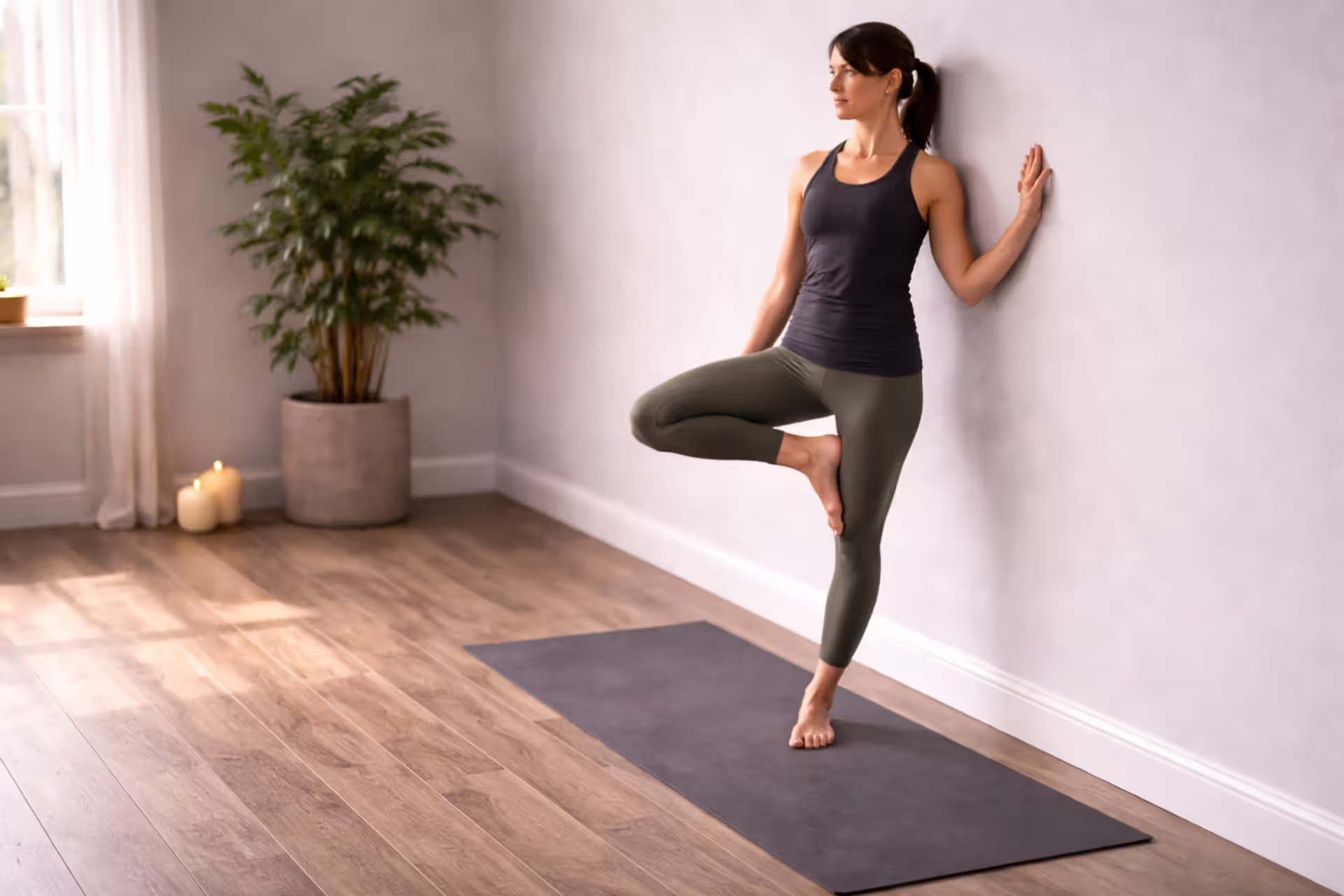
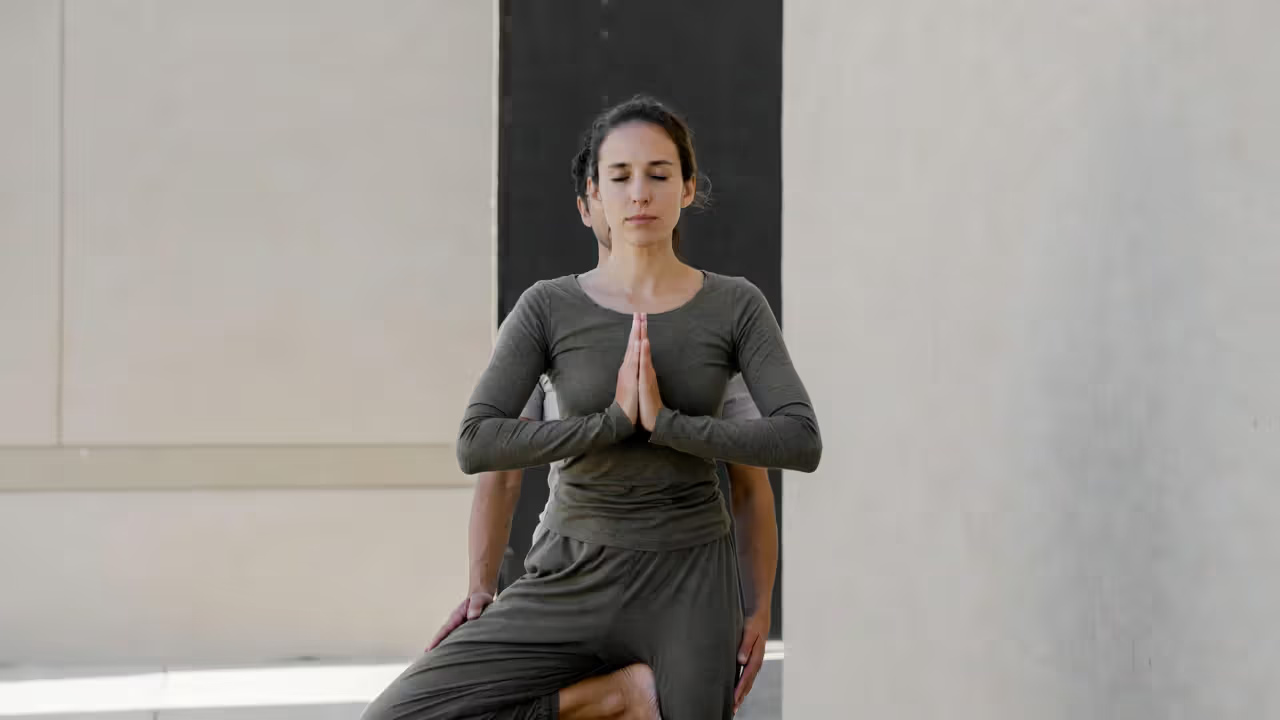
Tree Pose seems deceptively simple until you try holding it for 60 seconds. The key isn't muscling your way into stillness—it's finding the micro-adjustments that let you balance with minimal effort.
Start by grounding through all four corners of your standing foot: base of big toe, base of pinky toe, inner heel, outer heel. Many people collapse into the arch or roll to the outer edge, which makes the ankle work overtime. Press your lifted foot into your standing thigh (never against the knee joint) while simultaneously pressing your thigh back into your foot. This opposing force creates stability through tension.
Your hip on the standing leg wants to jut out sideways—don't let it. Keep your pelvis level by engaging your standing-leg glute medius. Imagine you're standing between two panes of glass, maintaining a single plane from shoulders to hips.
Common mistakes: looking down (which shifts your center of gravity forward), holding your breath (which creates tension and rigidity), and placing your foot too high too soon. If you can't hold the pose for 30 seconds without wobbling significantly, lower your foot position. Better to build solid foundations than to struggle through poor form.
Progression: Once you can hold Tree for 60 seconds with steady breath, try closing your eyes for 10-second intervals. This removes visual input and forces your vestibular system and proprioceptors to work harder. Next, try reaching your arms overhead, which raises your center of gravity. Finally, practice on a folded mat or foam pad to add surface instability.
Author: Amanda Reeds;
Source: thelifelongadventures.com
Warrior III (Virabhadrasana III)
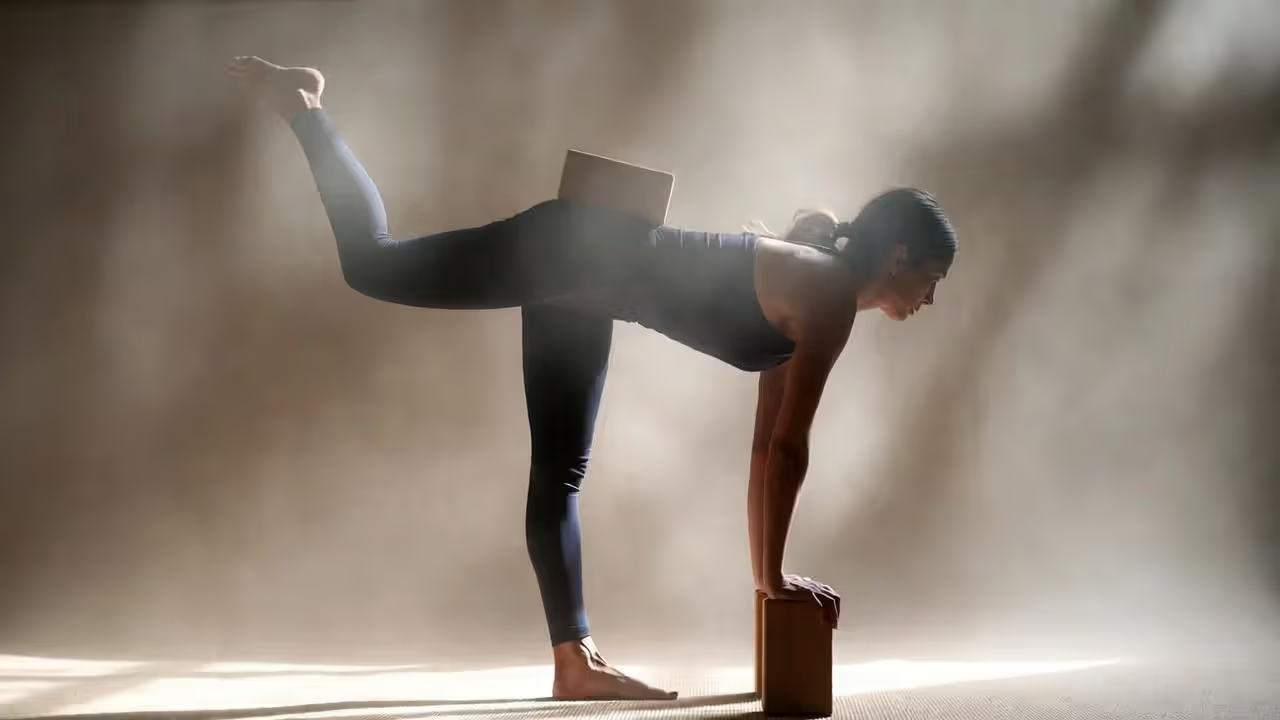
Warrior III builds serious posterior chain strength while demanding precise control of your center of gravity. The challenge isn't just standing on one leg—it's maintaining a horizontal torso position while your lifted leg extends behind you.
From standing, hinge at your hip (not your waist) to bring your torso forward as your back leg lifts. Your lifted leg, torso, and arms should form one straight line from fingertips to back heel. The tendency is to let your back leg drop and your chest lift—this reduces the balance challenge and the strength-building benefit.
Square your hips toward the floor by internally rotating your lifted leg slightly. Your back hip wants to open toward the ceiling; resist this by engaging your glute on the lifted side. Keep your standing leg slightly bent (5-10 degrees) to protect your knee and engage your hamstring.
Your gaze should be down and slightly forward, about two feet ahead of your standing foot. Looking up throws off your alignment and compresses your neck.
The modification that actually helps: place your hands on blocks or a chair back rather than reaching forward. This lets you focus on the hip hinge and leg position without the added challenge of unsupported arms. As you build strength, gradually reduce how much weight you place on the prop.
Author: Amanda Reeds;
Source: thelifelongadventures.com
Eagle Pose (Garudasana)
Eagle Pose wraps your limbs around your midline, creating compression that paradoxically improves balance. The physical challenge is coordination—getting your arms and legs wrapped while maintaining stability—but the balance benefit comes from the narrow base of support and the proprioceptive input from compressed joints.
Bend both knees slightly, then cross your right thigh over your left. If possible, hook your right foot behind your left calf. If not, simply press your right toes into the floor beside your left foot for added stability. The deeper your knee bend, the more you engage your glutes and quads for stability.
For the arms, cross your left arm over your right at the elbows, then bend both elbows and bring your palms together (or backs of hands if palms don't reach). Lift your elbows to shoulder height while drawing your forearms away from your face.
The compression creates what's called "joint approximation"—pressure that activates mechanoreceptors and enhances proprioception. You'll likely feel more stable in Eagle than in Tree Pose, despite the complexity, because your nervous system receives more feedback about where your body is in space.
Common mistake: holding your breath while trying to wrap. Breathe first, wrap second. Take three full breaths in the basic position before attempting the full bind.
Half Moon Pose (Ardha Chandrasana)
Half Moon combines single-leg balance with lateral stability and spinal rotation—three distinct challenges simultaneously. It's genuinely advanced, not because it requires extreme flexibility, but because it demands precise control of multiple movement planes.
From Triangle Pose, bend your front knee and step your back foot forward about 12 inches. Place your bottom hand on the floor or a block about 12 inches in front of your standing foot—not directly underneath your shoulder. This forward placement is crucial; it creates a stable tripod between your foot and hand.
As you straighten your standing leg, lift your back leg until it's parallel to the floor. Stack your top hip over your bottom hip by rotating your torso open. Your lifted leg should be actively engaged, foot flexed, as if you're pressing against a wall behind you.
Most people struggle with Half Moon because they try to rotate too much too soon. Build the pose in stages: first establish stable single-leg balance with your hand down and torso facing the floor. Only after you can hold this for 30 seconds should you begin rotating your chest open.
Your bottom hand isn't a weight-bearing post—it's a sensor providing feedback. Press lightly into it, using just enough pressure to gauge your position, but not so much that you're propping yourself up. If you're white-knuckling the floor, you're using too much hand support.
Core-Focused Balance Poses That Challenge Stability
Author: Amanda Reeds;
Source: thelifelongadventures.com
Standing poses get most of the attention in balance training, but core-focused balancing postures build the deep stabilizers that make standing balance possible. These poses challenge your stability from a different orientation, forcing your core to work against gravity in novel ways.
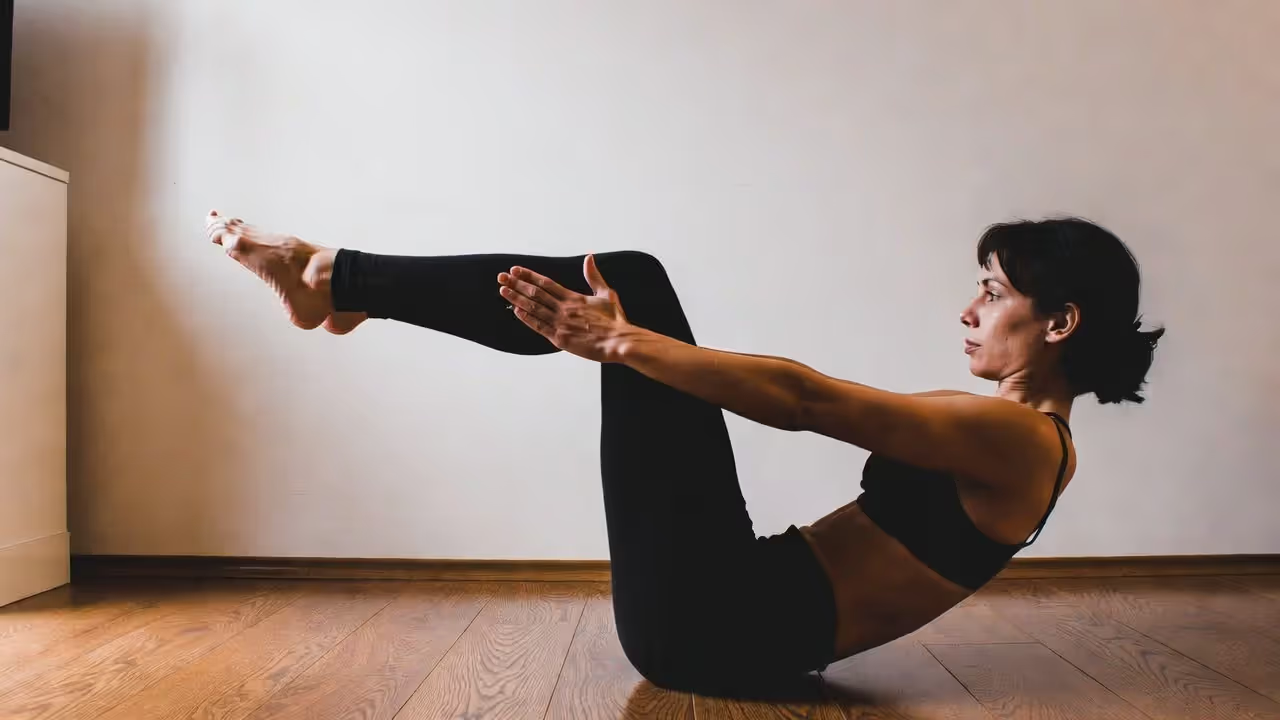
Boat Pose (Navasana) seems like an abdominal exercise, but it's fundamentally a balance pose. You're balancing on your sitting bones with your legs and torso lifted, creating a V-shape. The balance challenge comes from the small base of support and the need to maintain that V without tipping backward or letting your chest collapse.
Start with your knees bent, hands behind your thighs for support. Your chest should be lifted, shoulders back, spine long. Many people round their back to get their legs higher—this defeats the purpose. Better to keep your knees bent with a straight spine than to straighten your legs with a rounded back.
The core engagement in Boat is subtle. You're not crunching or bracing; you're maintaining length while your hip flexors and lower abs work to hold your legs up. Your transverse abdominis should feel engaged, but you should still be able to breathe fully.
Progress by releasing your hands from your thighs and reaching them forward, parallel to the floor. Next, straighten your legs. Finally, hold for longer durations—work up to 60 seconds with steady breathing.
Side Plank variations add lateral stability challenges. Standard Side Plank is already a balance pose—you're on one hand and the edge of one foot, requiring constant micro-adjustments from your obliques and shoulder stabilizers. To increase the balance demand, try lifting your top leg, reaching your top arm overhead, or stacking your feet and lifting your hips.
The balance component in Side Plank comes from preventing rotation. Your body wants to roll forward or backward; your obliques must fire continuously to maintain alignment. Keep your bottom shoulder stacked over your bottom wrist, and push the floor away to prevent sinking into your shoulder joint.
Crow Pose (Bakasana) is an arm balance that demands core control and proprioception. You're balancing your entire body weight on your hands while your knees rest on your upper arms. The fear factor is high—you feel like you'll face-plant—but the actual balance point is surprisingly stable once you find it.
Start in a squat with your hands flat on the floor, shoulder-width apart. Place your knees as high as possible on your upper arms (closer to your armpits than your elbows). Lean forward until your elbows are over your wrists, shifting your weight into your hands. The key moment: when you feel light on your feet, lift one foot, then the other.
The core work in Crow is all about drawing your navel toward your spine and rounding your back slightly. This engages your transverse abdominis and allows you to lift your hips higher, which paradoxically makes the balance easier. Think "compact ball" rather than "extended line."
Common mistake: trying to jump into Crow. This rarely works and increases fear. Instead, practice the weight shift slowly, building confidence in increments. Place a cushion in front of your face if you're worried about falling forward—you probably won't need it, but it helps psychologically.
How to Progress Your Balance Training Safely
Author: Amanda Reeds;
Source: thelifelongadventures.com
Balance improvement isn't linear. You'll have days when Tree Pose feels rock-solid and days when you can barely hold it for 10 seconds. This variability is normal—balance is influenced by fatigue, stress, hydration, even time of day. The key to safe progression is building consistency before adding complexity.
Start with duration. Before attempting harder variations or more difficult poses, establish a baseline: can you hold the basic version of each pose for 45-60 seconds per side with controlled breathing and minimal wobbling? If not, stay with the fundamentals. Many practitioners rush to advanced poses before they've truly mastered the basics, which creates a shaky foundation.
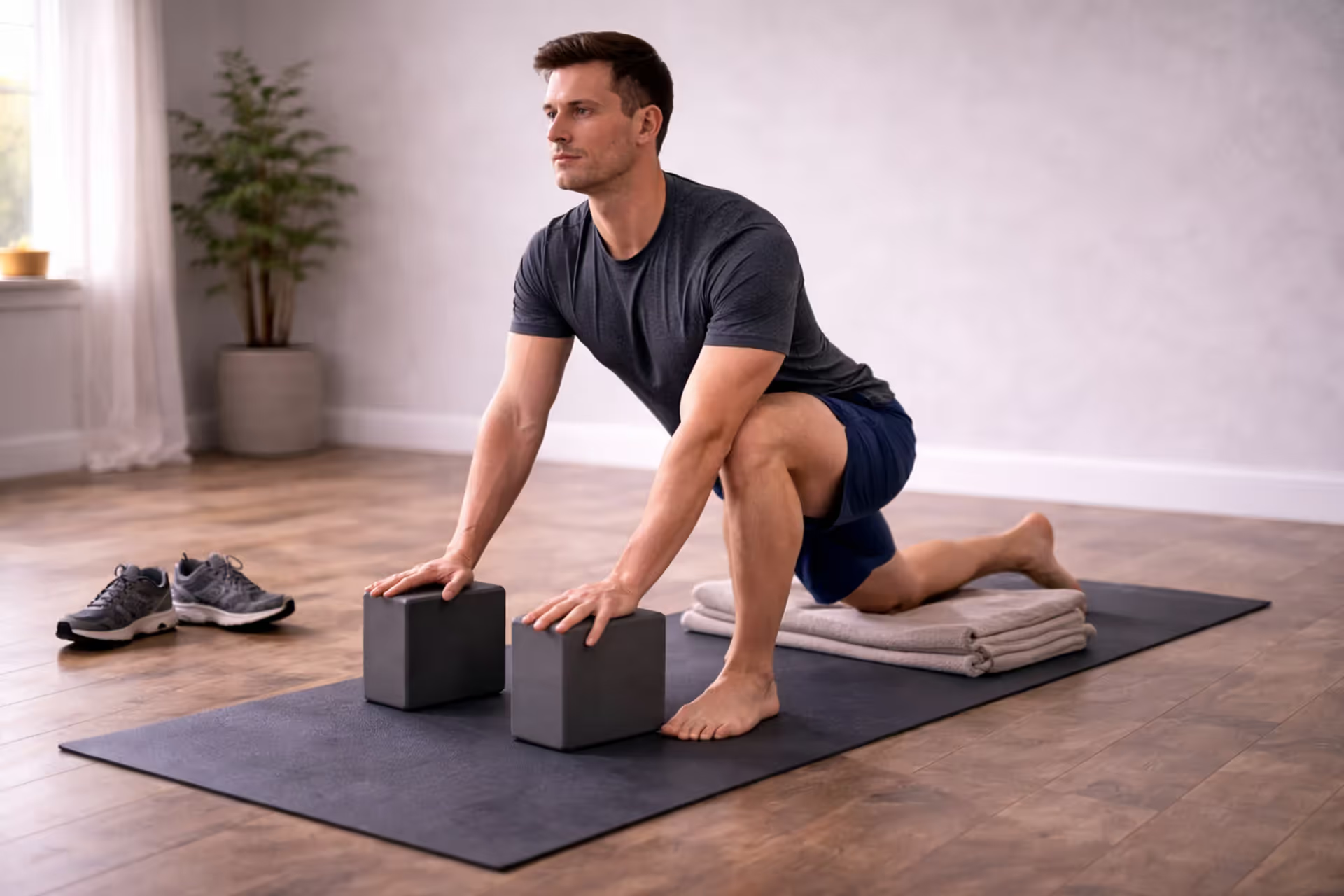
Props aren't training wheels—they're tools that let you access proper alignment while building strength. Using a wall for Tree Pose isn't "cheating"; it's allowing you to practice the hip position and core engagement without the fear of falling. As your stability improves, you'll naturally rely on the wall less.
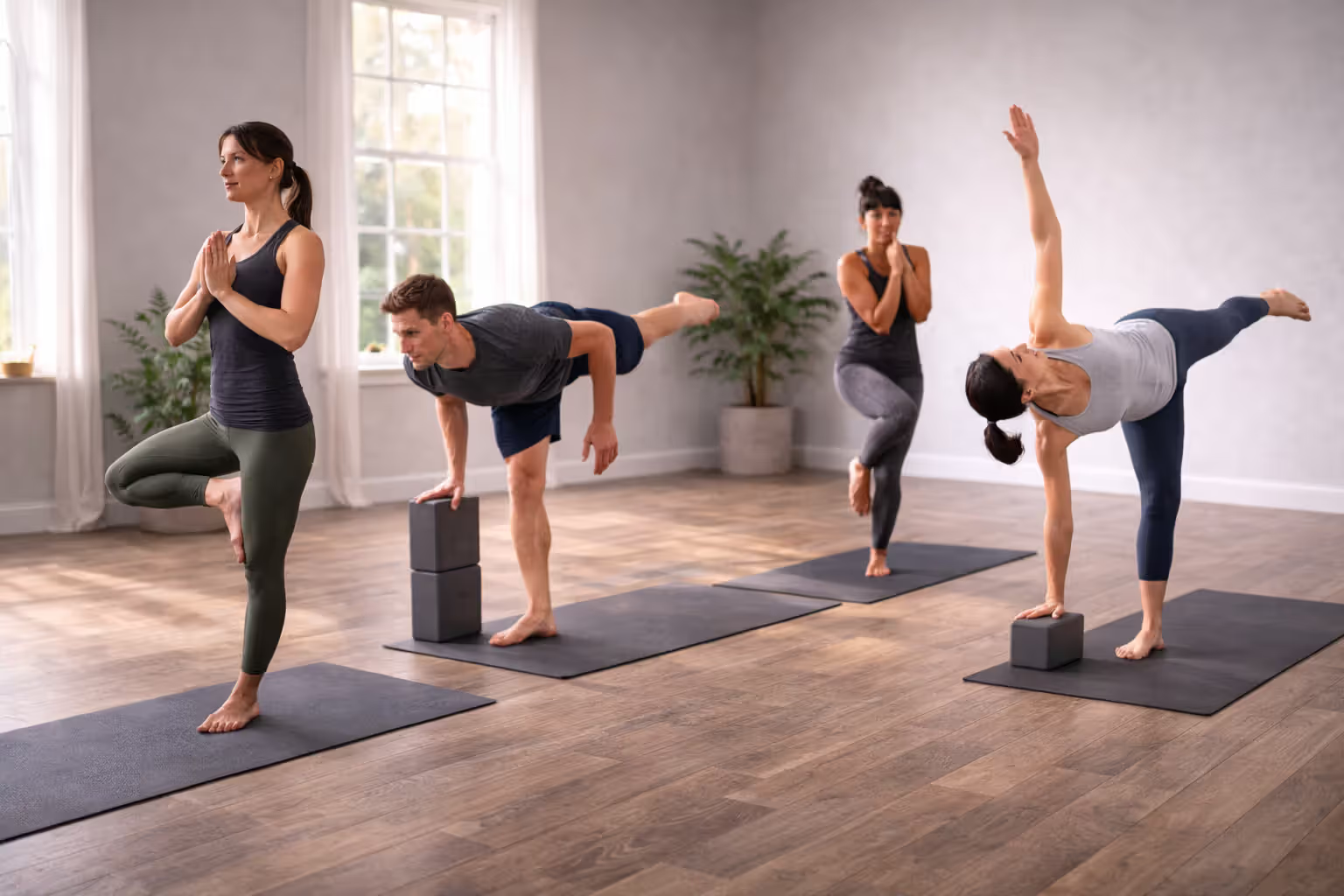
Blocks serve a similar function in poses like Half Moon or Warrior III. By bringing the floor closer to your hand, you can focus on alignment and muscle engagement rather than struggling with flexibility limitations. As your hamstrings lengthen and your balance improves, you can use lower block heights or eventually no block at all.
Closed-eye variations dramatically increase the balance challenge by removing visual input. Your brain typically uses vision as its primary balance reference; take that away and your vestibular system and proprioceptors must compensate. Start with just 5-10 seconds of eyes-closed practice in stable poses like Tree, gradually increasing duration as your confidence builds.
The progression to unstable surfaces—foam pads, wobble cushions, or folded mats—should come late in your training, not early. These tools add variability that's valuable once you've established solid technique on stable ground. If you can't hold a pose steadily on a firm floor, adding surface instability will only reinforce compensation patterns.
Sequencing matters more than most people realize. Balance poses are neurologically demanding; they fatigue your nervous system before they fatigue your muscles. Place balance work early in your practice, after a warm-up but before strength-intensive poses. If you try to balance after a vigorous flow sequence, your stabilizer muscles will be fatigued and your balance will suffer.
A smart progression sequence over 8-12 weeks might look like this: Weeks 1-3, establish 60-second holds in basic standing poses with props as needed. Weeks 4-6, remove props and add arm variations. Weeks 7-9, introduce closed-eye intervals and longer holds (90+ seconds). Weeks 10-12, add unstable surfaces and transition movements between poses.
Balance is not something you find; it’s something you create.
— Jana Kingsford
Common Mistakes That Sabotage Your Balance Practice
Rushing progression is the most common error. Balance requires neural adaptation—your brain literally needs to build new pathways and strengthen existing ones. This takes time, typically 6-8 weeks of consistent practice before you see significant improvement. Attempting advanced poses before you're ready doesn't accelerate this process; it just increases frustration and injury risk.
Improper breathing creates unnecessary tension. When you hold your breath during a balance pose, your muscles tighten reflexively, making the micro-adjustments needed for balance more difficult. Your breath should be steady and even—if you can't maintain a smooth breath pattern, the pose is too challenging. Scale back to a version where you can breathe normally.
Many practitioners breathe too shallowly during balance work, using only the upper chest. This activates your sympathetic nervous system (fight-or-flight response), increasing muscle tension and mental stress. Practice diaphragmatic breathing: inhale into your belly, exhale completely. This engages your parasympathetic nervous system, promoting the relaxed alertness that makes balance easier.
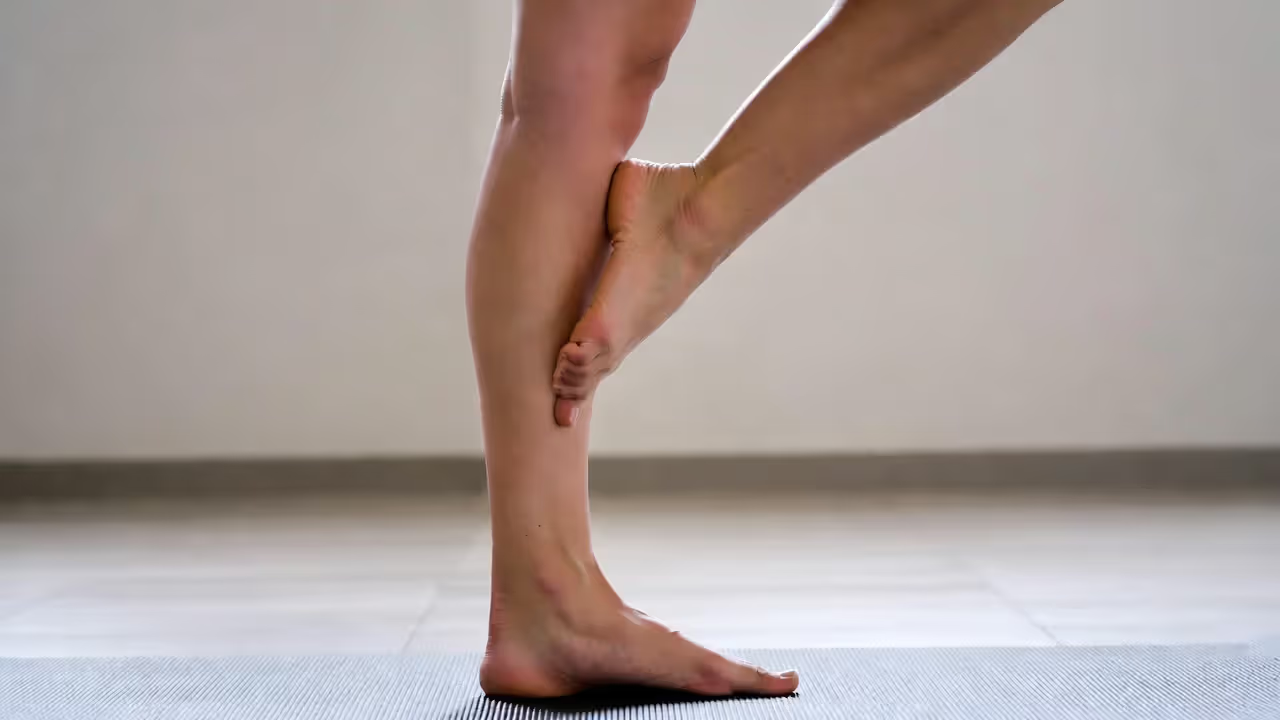
Neglecting ankle strength is a critical oversight. Your ankles are your primary balance adjusters in standing poses—they make constant small corrections to keep you upright. If your ankles are weak or stiff, they can't do this job effectively. Incorporate ankle circles, toe raises, and single-leg heel raises into your warm-up to build ankle stability and mobility.
Poor gaze focus (drishti in yoga terminology) undermines balance immediately. Your eyes should be soft but focused on a non-moving point at eye level or slightly below. Looking around the room, watching other students, or staring at moving objects all disrupt your vestibular system's ability to maintain equilibrium.
The specific gaze point matters less than keeping it steady. Some teachers recommend focusing on a spot on the floor; others suggest eye level. Experiment to find what works for you, but once you choose a point, don't let your eyes wander.
Skipping warm-up is particularly problematic for balance work. Cold muscles don't respond quickly to neural signals, and stiff joints provide poor proprioceptive feedback. Spend at least 5-10 minutes warming up before balance practice: joint rotations (ankles, knees, hips), gentle Sun Salutations, or dynamic stretches that move through full ranges of motion.
Practicing only your "good side" creates and reinforces asymmetry. Everyone has a side that balances better—this is normal and relates to leg dominance, similar to hand dominance. But if you only practice your strong side or give up quickly on your weaker side, the imbalance worsens. Actually spend more time on your challenging side, not less.
Building a 15-Minute Balance-Focused Yoga Routine
A dedicated balance practice doesn't require an hour-long session. Fifteen minutes of focused work, done consistently, produces better results than occasional longer practices. This sample sequence progresses from warm-up through standing poses to core work and closes with a brief integration.
Minutes 0-3: Warm-up and ankle preparation Start standing with feet hip-width apart. Circle each ankle 10 times in each direction. Rise to toes for 5 slow heel raises. Shift your weight side to side, then forward and back, exploring your balance range. Take 5 single-leg balance holds, 10 seconds per leg, just lifting one foot an inch off the floor.
Minutes 3-6: Tree Pose progression Right side Tree Pose: 30 seconds with foot at calf, hands at heart. 30 seconds with arms overhead. 30 seconds with eyes closed (hands at heart). Switch sides and repeat the same progression. Rest for 15 seconds between sides.
Minutes 6-9: Warrior III Right leg Warrior III: 20 seconds with hands on blocks or chair. 20 seconds with arms extended forward. 20 seconds with arms by sides (most challenging arm position). Switch sides and repeat. Rest 15 seconds between sides.
Minutes 9-11: Eagle Pose Right leg Eagle: 30 seconds with toe tap modification. 30 seconds with full wrap if accessible. Switch sides. This shorter duration accounts for the complexity of the pose.
Minutes 11-13: Core balance work Boat Pose: 20 seconds with bent knees, hands supporting. 20 seconds with hands released. 20 seconds with straight legs. Rest 10 seconds. Repeat for one more round.
Minutes 13-15: Integration and closing Stand in Mountain Pose for 30 seconds, noticing how your balance feels after the practice. Take 5 slow, complete breaths. Finish with a forward fold, letting your head hang heavy for 30 seconds, then roll up slowly to standing.
This sequence hits all major standing balance categories and includes core work. The time allocations build in brief rest periods, which are essential—balance work is neurologically fatiguing even when it's not physically exhausting.
Modify this routine based on your level. Beginners might do 20-second holds instead of 30-second holds and skip the closed-eye variations. Advanced practitioners can extend hold times to 60-90 seconds and add unstable surface work.
Practice this routine 3-4 times per week for best results. You can also integrate these poses into longer yoga practices, but having a dedicated balance session ensures you're addressing stability with fresh energy and full attention.
Frequently Asked Questions About Yoga Balance Training
How often should I practice yoga balance poses to see improvement?
Three to four sessions per week produces noticeable improvement within 4-6 weeks. Balance is a neuromuscular skill that requires frequent practice to develop, but it also needs recovery time. Daily practice isn't necessary and may lead to overuse fatigue in stabilizer muscles. If you practice daily, vary the intensity—alternate between challenging sessions and easier maintenance practices. Consistency matters more than duration; 15 minutes four times weekly beats a single 60-minute session.
Why do I wobble more on one side during standing balance poses?
Asymmetry is completely normal and relates to leg dominance, previous injuries, and habitual movement patterns. Most people have a 15-20% strength difference between sides. Your dominant leg (usually the one you'd use to kick a ball) is typically better at dynamic movements, while your non-dominant leg may actually be more stable for standing balance. Hip mobility differences also affect balance—if one hip is tighter, you'll struggle more on that side in poses like Tree or Eagle. Address this by spending more practice time on your weaker side and incorporating hip-opening stretches into your routine.
Can yoga balance training help prevent falls as I age?
Yes, significantly. Research shows that balance-focused yoga reduces fall risk by 30-40% in adults over 65. The combination of strength building, proprioceptive training, and improved reaction time addresses multiple fall risk factors simultaneously. The key is starting before balance becomes a serious problem—balance begins declining in your 40s, so starting a regular practice in midlife provides the best protection. Even if you're already experiencing balance issues, yoga can help, though you should work with an experienced instructor who can provide appropriate modifications.
What should I focus on first: strength or flexibility for better balance?
Strength, particularly in your glutes, hip stabilizers, and ankles. Flexibility helps you access certain poses more comfortably, but strength provides the control that makes balance possible. A person with tight hamstrings but strong glutes will balance better than someone with excellent flexibility but weak stabilizers. That said, extreme tightness can limit your ability to align properly, so work on both simultaneously. Prioritize strength-building holds in standing poses, and add targeted stretches for chronically tight areas like hip flexors and calves.
Do I need special equipment for balance training yoga at home?
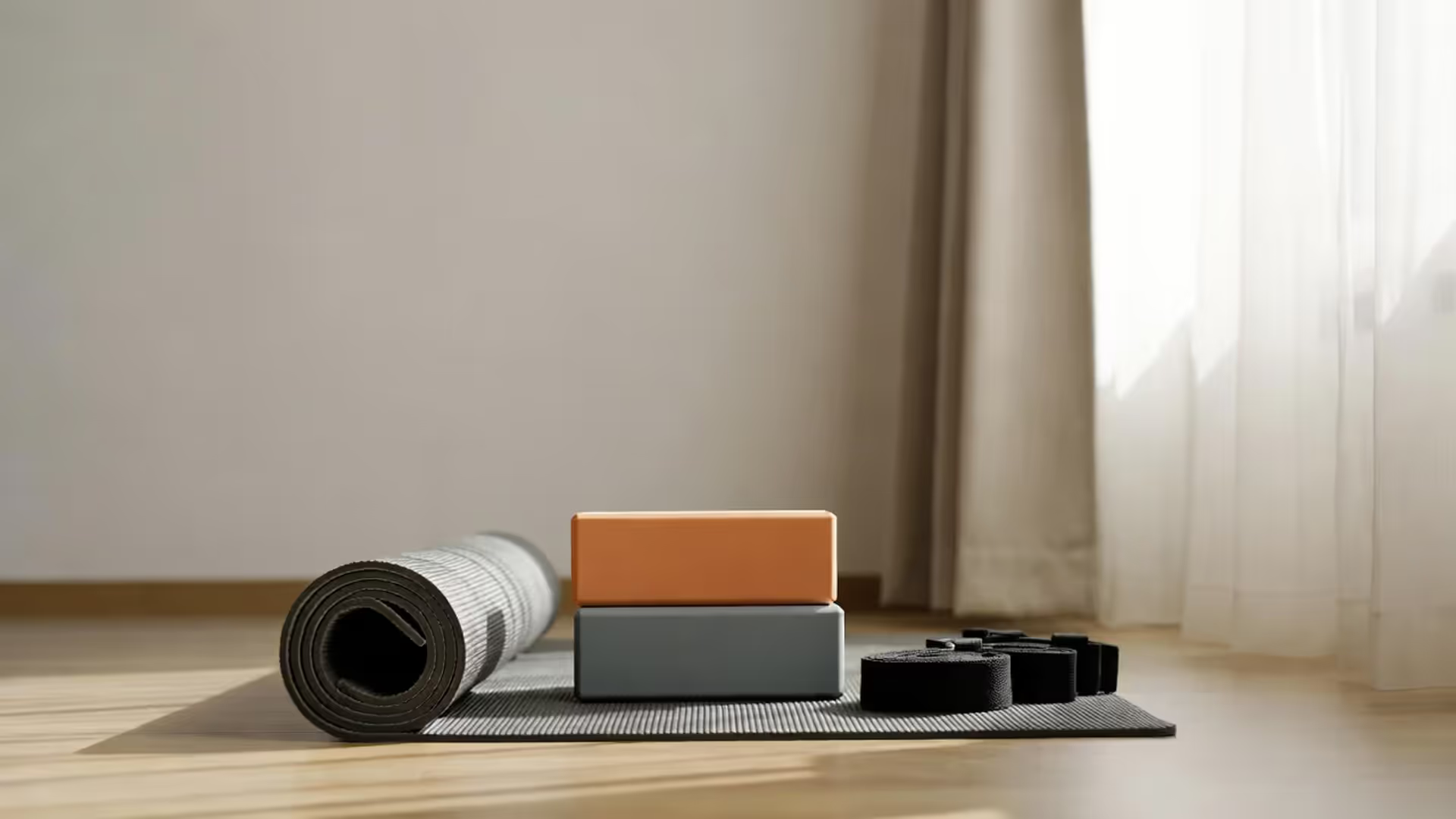
No special equipment is required, though a few items make practice more accessible. A yoga mat provides a stable surface with enough grip to prevent slipping. Two blocks are helpful for poses like Half Moon or Warrior III where you need to bring the floor closer. A wall is your most valuable tool—use it for support as you build confidence. If you want to progress to unstable surface training, a folded blanket or foam pad works fine; you don't need expensive balance equipment. Start with what you have and add props only if they solve a specific problem you're encountering.
How long should I hold each balance pose?
For building stability, aim for 30-60 seconds per side in standing poses. This duration is long enough to fatigue your stabilizer muscles and challenge your nervous system, but not so long that you're just enduring discomfort. If you can't maintain good form and steady breathing for 30 seconds, the pose is too challenging—scale back to an easier variation. As you advance, you can extend holds to 90 seconds or even 2-3 minutes, which builds mental focus alongside physical stability. For dynamic balance practice, shorter holds of 15-20 seconds with multiple repetitions can be effective.
Balance is trainable at any age and any fitness level. The wobbling you experience in your first Tree Pose isn't a sign of failure—it's your nervous system learning and adapting. Each micro-adjustment your ankle makes, each moment you catch yourself before tipping, strengthens the neural pathways that make balance possible.
The benefits extend far beyond the yoga mat. Better balance means more confidence navigating icy sidewalks, carrying heavy objects, or playing with grandchildren. It means reduced injury risk and maintained independence as you age. Most immediately, it means a more focused, present mind—because when you're balancing, you can't think about your to-do list or yesterday's argument. You're fully here, fully engaged in the present moment.
Start with the basics, practice consistently, and trust the process. Your balance will improve, and with it, your overall functional fitness and quality of movement in everything you do.
Runners get tight hip flexors, stubborn calves, and underactive glutes from thousands of repetitive strides. This guide shows the best yoga poses for common running issues, when to do dynamic vs recovery yoga, a 15-minute cooldown sequence, and how often to practice for mobility without overstretching.
Struggling with tight hips, hamstrings, or shoulders? This guide explains why yoga improves flexibility better than static stretching—by retraining your nervous system and building strength at end range. Learn 12 essential poses, follow 15/30/45-minute routines, and avoid the mistakes that stall progress.
New to yoga? This beginner guide explains the real, science-backed benefits, the only gear that matters, and how to choose classes or practice at home. Learn 10 foundational poses with form cues, then follow a 20-minute routine—plus common mistakes to avoid and the best styles for your goals.
Back pain is common—but yoga can reduce pain and improve function when done right. Learn why it works for acute vs chronic pain, 8 proven relief poses, how often to practice, mistakes that worsen symptoms, when to seek yoga therapy, and posture/core habits that protect your spine daily.
The content on this website is provided for general informational and educational purposes related to health, yoga, fitness, and overall wellness. It is not intended to replace professional medical advice, diagnosis, or treatment.
All information, workout suggestions, yoga practices, nutrition tips, and wellness guidance shared on this site are for general reference only. Individual health conditions, fitness levels, and medical needs vary, and results may differ from person to person. Always consult a qualified healthcare provider before starting any new exercise program, dietary plan, or wellness routine.
We are not responsible for any errors or omissions, or for any outcomes resulting from the use of information presented on this website. Your health and fitness decisions should always be made in consultation with appropriate medical and fitness professionals.